
related locations list


Adviesbureau Goslar en Ledermann (Goslar & Ledermann Consultancy)

They provided advice in economic, financial and legal matters to German Jews.[1]

Footnotes

  1. ^ Zie Rian Verhoeven, Anne Frank was niet alleen: het Merwedeplein, 1933-1945, Amsterdam: Prometheus, 2019, p. 33.


American consulate in Rotterdam

The application process was difficult and lengthy for German emigrants, as they had to collect all kinds of data in their country of birth. Moreover, rising tensions between the United States and Germany forced all US consulates in occupied territory to close in early July 1941. On 10 July, the consul in Rotterdam reported to the State Department that he had destroyed the visa stamps as instructed.


Amsterdam

During the 1930s, all the protagonists of the hiding in the Secret Annex gathered in the city: the Frank and Van Pels families, and Fritz Pfeffer. Apart from the commuter Kugler, all were also living there. Miep Gies had lived there since 1924.

Since 1923, Amsterdam was the location of several businesses of Otto Frank and his family. It was the birthplace of Jan Gies and Bep Voskuijl.[1]

Footnotes

  1. ^ Voor een overzicht van honderden adressen in Amsterdam die op de een of andere manier een rol speelden tijdens de Tweede Wereldoorlog, zie Bianca Stigter, Atlas van een bezette stad: Amsterdam 1940-1945, Amsterdam: Atlas Contact, 2019.


Amsterdam Central Station

After liberation, most survivors returned via Amsterdam Central Station. There was a special repatriation centre for registration, medical control and political control at the station.[1]

Footnotes

  1. ^ Zie verder: Bianca Stigter, Atlas van een bezette stad: Amsterdam 1940-1945, Amsterdam: Atlas Contact, 2019, p. 103.


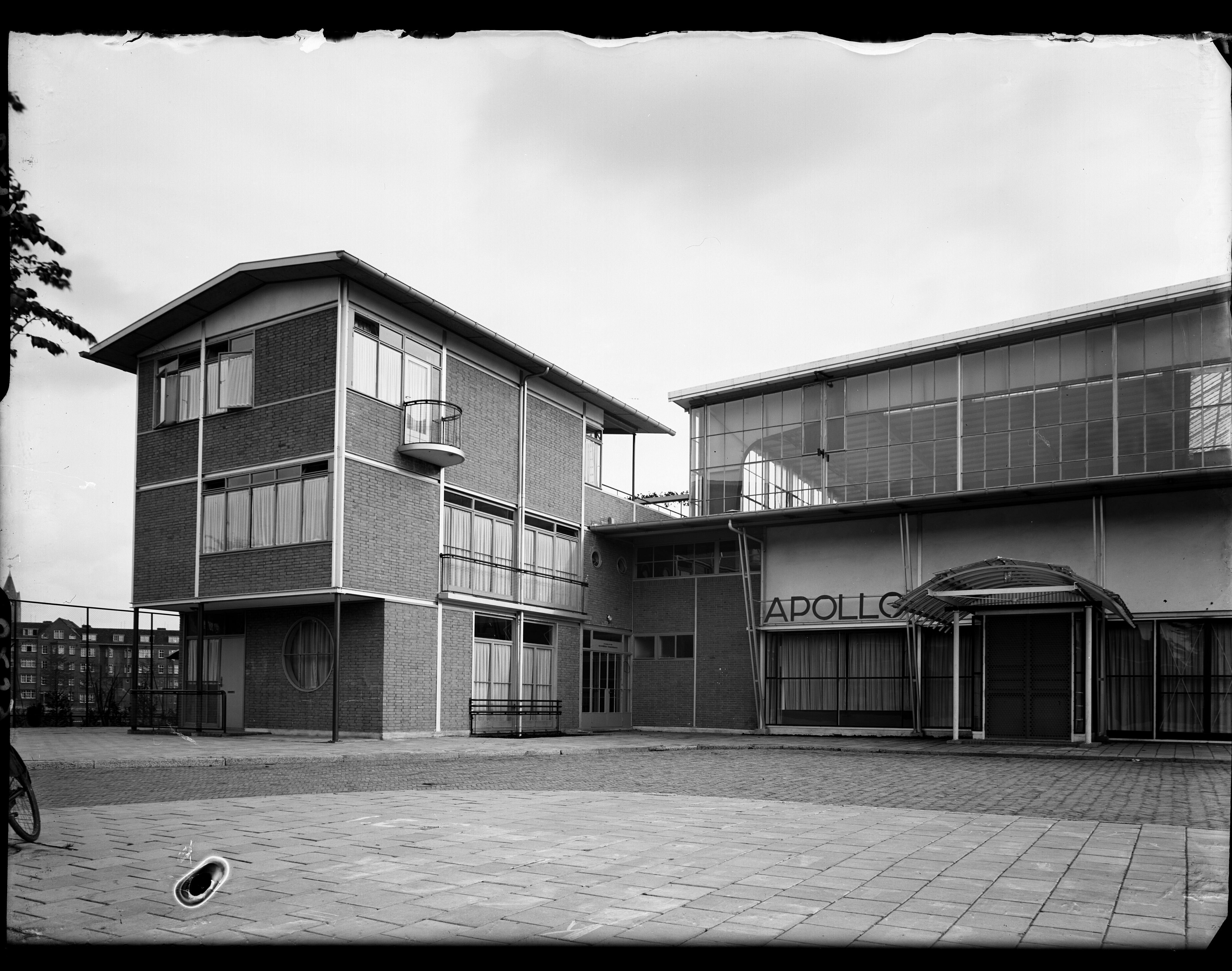
Apollohal (Apollo Hall)

The building opened in 1934 and was used for exhibitions, sporting events and meetings for many years.[1]

Political meetings of all kinds were held there. Following the Nuremberg Laws, the Committee for Special Jewish Interests held a protest meeting in the Apollo Hall on 19 September 1935.[2] The hall also hosted the NSB party after the lost elections of 1937[3], and 'Unity through Democracy' with W. Schermerhorn.[4]

In 1940, the ice rink of the 'N.V. Sportfondsen Kunstijsbaan' at Linnaeusstraat was transferred to the Apollo Hall, and remained in use there until 1949 .[5]

On 13 December 1940, Anne wrote to her grandmother that she goes skating at the Ice Rink in the Apollo Hall.[6] On 13 January 1941, she wrote: "I spend every free minute at the Ice Rink."[7]

Footnotes

  1. ^ Zie https://en.wikipedia.org/wiki/Apollohal (geraadpleegd maart 2012).
  2. ^ “De ontrechting der Joden in Duitschland”, Algemeen Handelsblad, 19 september 1935, ochtendeditie.
  3. ^ “De heer Mussert aan het woord”, Het Vaderland, 28 mei 1937, ochtendeditie.
  4. ^ “Eenheid door Democratie houdt propagandavergadering”, Algemeen Handelsblad, 15 november 1938, ochtendeditie.
  5. ^ Hansje Galesloot, 'Bevroren borstplaat', in: Ons Amsterdam, 179 (2008) 1 (januari), p. 26-29.
  6. ^ Familiearchief Anne Frank-Fonds (AFF), Bazel, Alice Frank, AFF_AlF_corr_18: Anne Frank aan Alice Frank-Stern en Stephan Elias, 13 december 1940.
  7. ^ AFF, Alice Frank, AFF_AlF_corr_18: Anne Frank aan Alice Frank-Stern en Stephan Elias, 13 januari 1941.


Arc’s Advertentie- en Uitgeversbedrijf N.V.

Arc's Advertentie- en Uitgeversbedrijf N.V. was located at Damrak 19-22, Amsterdam.[1] Telephone 44462.[1] This number also appeared with the addition 'Arc' in Otto Frank's 1937 diary.[2]

Arc's had been founded in the late 1920s. Precisely because the business world was in great trouble during those years, the agency was able to thrive: advertisers were quicker to adopt a new approach.[3]

In the summer of 1936, Opekta combined an advertising campaign with a promotion in the newspaper De Telegraaf. Anyone who came in person to the newspaper's counters to submit a 'Speurder' classified advert costing at least a guilder, published between 28 June and 4 July that year, received an Opekta preserving package free of charge. These packages had been made available by the Nederlandsche Opekta Mij. The advertisement announcing this had Arc's company's logo in the margin.[4]

Footnotes

  1. a, b Algemeen Adresboek voor de stad Amsterdam 1938, p. 40.
  2. ^ Anne Frank Stichting, Anne Frank Collectie, Otto Frank Archief, reg. code OFA_001: Agenda Otto Frank 1937.
  3. ^ R.P.M. van Rossum, Van advertentiekruier tot reclameadviesbureau. De ontwikkeling in Nederland, de Verenigde Staten en Duitsland voor de Tweede Wereldoorlog, dissertatie Universiteit van Amsterdam, 2012, p. 244.
  4. ^ Advertentie "Surpriseweek", De Telegraaf, 27 juni 1936.  


Auschwitz I Concentration Camp (Stammlager)

From spring 1942, the Nazis began the systematic mass deportations of Jews from Germany and the occupied territories to death camps. Auschwitz grew into the largest German concentration and extermination camp complex.

Auschwitz's first camp (Auschwitz I) was set up in May 1940 as a prison for political prisoners and prisoners of war. These were mainly Polish and Soviet POWs.[1] As there was too little space for the growing number of prisoners, Birkenau was built a few kilometres away in 1942.[2]

'Arbeit macht frei'

Auschwitz I was located in a former Polish military barracks near the town of Oświęcim, called Auschwitz in German. The large gate that gave access to this camp bore the cynical text Arbeit macht frei, which was meant to give the impression that this was a labour camp.[3]

By November 1943, the Auschwitz complex was so extensive that it was organisationally divided into three camps: Auschwitz I (The Base Camp or Stammlager), Auschwitz II (Auschwitz-Birkenau) and Auschwitz III. A large proportion of the female prisoners were placed in Auschwitz-Birkenau, making Auschwitz I predominantly a men's camp.

When the eight people who had been in hiding in the Secret Annex arrived in Auschwitz on 6 September 1944, SS-Sturmbannführer Richard Baer (1911-1963) was the camp commandant of Auschwitz. Under his predecessor Rudolf Höss (1901-1947), Auschwitz had become one of the centres of mass murder of European Jews.[4]

Block 10

In Block 10 of Auschwitz I, the notorious camp doctor Josef Mengele (1911-1979) and his staff performed medical experiments on prisoners. They were often extremely cruel experiments, in which prisoners were given poisonous injections or deliberately infected with deadly diseases to analyse disease progression. Despite Block 10 being in the men's camp, the experiments were mainly carried out on women and twins.[5]

Zyklon B

In August 1941, experiments with the extremely poisonous prussic acid gas zyklon B were first conducted at Auschwitz I. Around 5 September 1941, larger groups of Russian POWs were murdered for the first time. The first systematic gassings at Auschwitz I took place between late March and early April 1942.

From May 1942, the second camp (Auschwitz-Birkenau) was still under development, but was already being increasingly set up by the camp management as an extermination camp and largely took over the killing from Auschwitz I. In autumn 1942, gassings in the camp crematorium at Auschwitz I ceased. From 1943, Auschwitz-Birkenau became the centre of the Holocaust.[6]

In September 1944, the males from the Secret Annex ended up in Auschwitz-I. Otto would remain a prisoner there until the liberation of the camp in January 1945.[7]

Footnotes

  1. ^ Zie: https://en.wikipedia.org/wiki/Auschwitz_concentration_camp#Auschwitz_I (geraadpleegd 28 november 2023).
  2. ^ Bas von Benda-Beckmann, Na het Achterhuis. Anne Frank en de andere onderduikers in de kampen, Amsterdam: Querido, 2020, p. 126.
  3. ^ De spreuk was al sinds 1933 door de nazi’s in gebruik genomen en werd ook in andere concentratiekampen, zoals Oranienburg, Dachau, Groß-Rosen en Theresienstadt gebruikt. Von Benda-Beckmann, Na het achterhuis, p. 126.
  4. ^ Von Benda-Beckmann, Na het Achterhuis, p. 124.
  5. ^ Von Benda-Beckmann, Na het Achterhuis, p. 125-126.
  6. ^ Von Benda-Beckmann, Na het Achterhuis, p. 128-136.
  7. ^ Von Benda-Beckmann, Na het Achterhuis, p. 158, 190.


Auschwitz-Birkenau Concentration Camp

In late 1941, Auschwitz concentration camp was expanded to include a second site Auschwitz-Birkenau - also known as Auschwitz-II.[1] The camp was located about three kilometres northwest of the Stammlager Auschwitz-I, near the village of Birkenau: the German name for the Polish village of Brzezinka. The decision to murder European Jews prompted modifications to the layout and purpose of this camp. Under the leadership of camp commander Rudolf Höss (1901-1947), the main objective of this camp became the extermination of Jews and the selection of people for labour.[2]

Auschwitz-Birkenau was a vast 175-hectare site built by Russian POWs and forced labourers. After the first group of Russian POWs died almost entirely from starvation and exhaustion, the Nazis brought tens of thousands of Jews to Birkenau as slave workers to continue their work.[3]

A separate women's camp was set up in Birkenau from early August 1942. In September 1944, the females who had been hiding in the Secret Annex also ended up there.

Gas chambers

In the spring of 1942, the construction of gas chambers began in two empty farmhouses to kill Jews immediately on arrival with the extremely toxic prussic acid gas Zyklon B. Despite the fact that the camp was still under construction, it soon took over most of the killing from Auschwitz I.[4]

The first gas chamber at Birkenau, Bunker I, was probably commissioned in mid- or late May 1942. Bunker II was probably ready for use by late June or early July. After Bunker I and II, construction of crematoria and gas chambers II-V followed between March and June 1943. Thus Auschwitz-Birkenau became the centre of the Holocaust from 1943.[4]

Selection

Upon arrival at Auschwitz-Birkenau, SS doctors selected the Jewish people who were fit for forced labour; the rest went directly to the gas chamber. Although the criteria could vary, usually children 15 and under and adults over 50 were selected for the gas chamber. Mothers with children under 15 and pregnant women were also sent directly to the gas chamber.[5]

Auschwitz's best-known camp doctor who carried out the selections was Josef Mengele (1911-1979). In addition to selections for the gas chamber, Mengele also conducted medical experiments on prisoners - mostly women and twins - often with fatal results.[6]

Those who were not selected for the gas chamber were assigned to forced labour and locked up in one of the camp's overcrowded huts. Hygienic conditions were poor and there was too little and poor food. Many prisoners died of exhaustion and from the many diseases that went around.

Evacuation

In the summer of 1944, as the Soviet army advanced from the east and approached the camps in occupied Poland, more and more prisoners were deported to camps in Germany as slave labour. At the same time, Nazi efforts began to erase traces of the Auschwitz massacre. From early November 1944, gassings no longer took place in Birkenau. Gas chambers and crematoria were dismantled and blown up. As the Soviet army moved even closer, the great evacuation transports from Auschwitz followed in January 1945, and 58,000 men and women were forced to go on so-called death marches.[7]

Over 57,000 Jews from the Netherlands were murdered in Auschwitz. Only 970 Dutch Jews returned alive from the camp.

Footnotes

  1. ^ Zie: https://en.wikipedia.org/wiki/Auschwitz_concentration_camp#Auschwitz_II-Birkenau (geraadpleegd 28 november 2023).
  2. ^ Bas von Benda-Beckmann, Na het achterhuis. Anne Frank en de andere onderduikers in de kampen, Amsterdam: Querido, 2020, p. 133.
  3. ^ Von Benda-Beckmann, Na het Achterhuis, p. 132.
  4. a, b Von Benda-Beckmann, Na het Achterhuis, p. 128-136.
  5. ^ Von Benda-Beckmann, Na het Achterhuis, p. 150-151.
  6. ^ Von Benda-Beckmann, Na het Achterhuis, p. 125-126.
  7. ^ Von Benda-Beckmann, Na het Achterhuis, p. 140-141


Auschwitz-Birkenau camp - Infirmary huts

In late October 1944, Anne and Margot were deported to Bergen-Belsen concentration camp. Their mother Edith remained behind in Auschwitz, where she died of exhaustion and illness in January 1945.


Basel

Otto Frank's sister Leni had lived with her family in the Swiss city of Basel from 1929. In 1933, his mother Alice Frank-Stern also settled there. Anne referred to these family members with her designation 'Basel'.[1] In 1952, Otto Frank also moved to Basel. In 1961, he moved to nearby Birsfelden. He lived there until his death.

Footnotes
  1. ^ Anne Frank, Version A, 30 June 1944, in: The Collected Works; [transl. from the Dutch by Susan Massotty; transl. from the German language by Kirsten Warner and transl. from the Dutch language by Nancy Forest-Flier]. London [etc.]: Bloomsbury Continuum, 2019. ISBN 978-1-4729-6491-5.


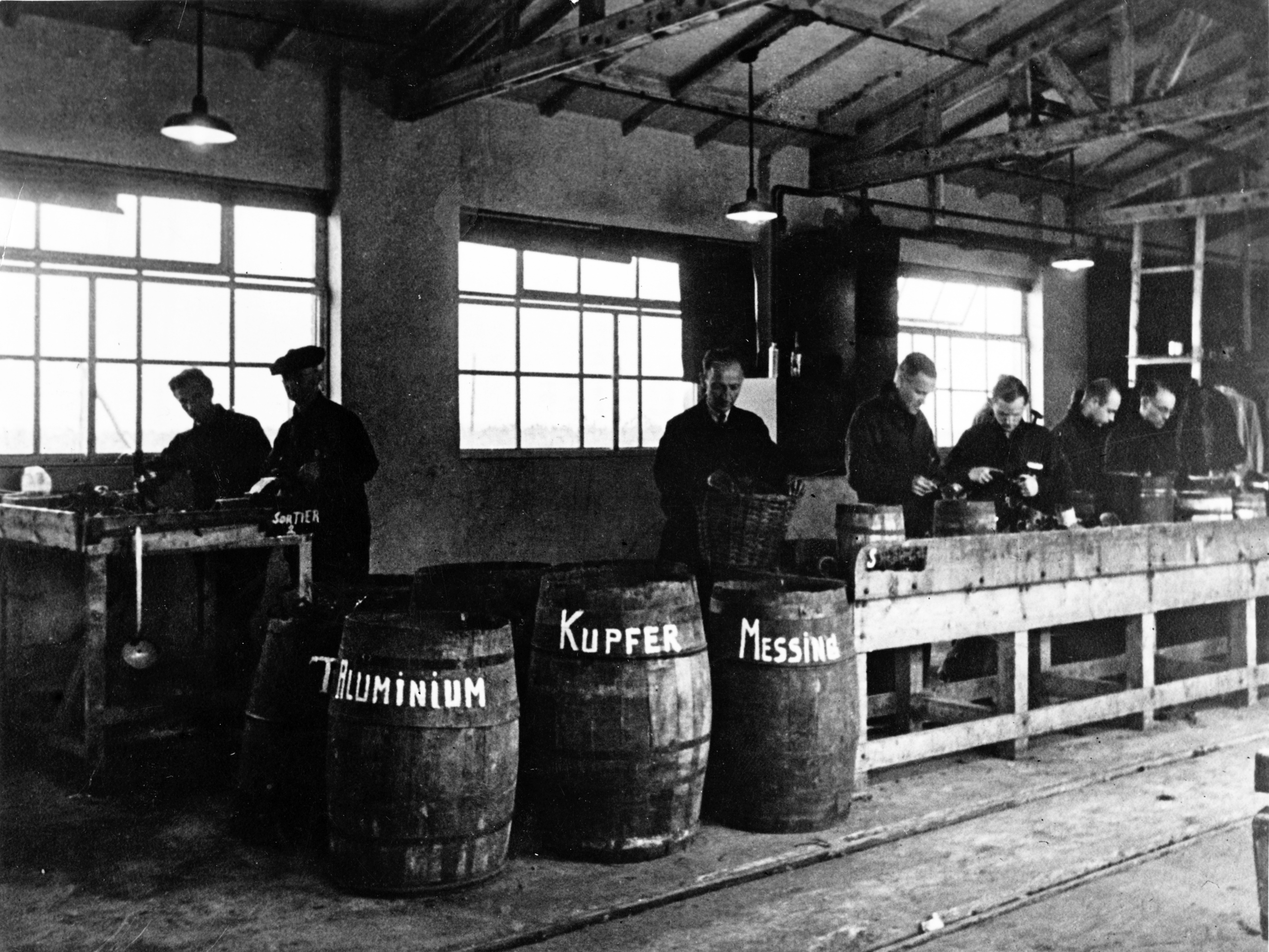
Battery scrapping hut in Camp Westerbork

During their captivity in camp Westerbork, the eight people in hiding had to break open batteries.[1]

Footnotes

  1. ^ Bas Kortholt, Barak 56, Herinneringscentrum Kamp Westerbork: https://kampwesterbork.nl/de-stichting/nieuws/item/column-barak-65 (geraadpleegd 28 november 2023).


Bergen-Belsen Concentration Camp

Bergen-Belsen was originally a large training site for Wehrmacht armoured troops and a barracks complex near the towns of Bergen and Belsen on the Lüneburg Heath.[1] The camp was initially not a labour or extermination camp - there were no gas chambers - and served as a POW camp and 'exchange camp'. From May 1940, French, Belgian, Soviet, and other allied soldiers and resistance fighters from many different countries were imprisoned in the camp.[2]

Sternlager

In April 1943 , the SS took over a large area of the POW camp from the Wehrmacht to set up the Aufenthaltslager Bergen-Belsen, which housed Jews who could be exchanged with German POWs abroad; something that in the end hardly ever happened.[3]

The Sternlager was part of the Austauschlager and consisted of about eighteen barrack huts in which many Dutch Jews were imprisoned. In the Sternlager, families were improsoned together and, for a time, conditions were relatively better than in other camps.[3]

Durchgangslager

In the summer of 1944, Bergen-Belsen also became a Durchgangslager (transit camp) for thousands of women from occupied parts of Eastern Europe who had been transported for forced labour to German sub-camps. In early August 1944, a tent camp was set up on an open plain in the south-west corner of the camp to accommodate the large deportations arriving from mid-August 1944.[4]

Conditions

Over time, conditions deteriorated throughout the camp. Under camp commander Josef Kramer, who had been transferred from Auschwitz to Bergen-Belsen on 2 December 1944, the harsh regime hardened even further. Due to overcrowding, ill-treatment, hunger, the cold winter and infectious diseases, Bergen-Belsen eventually became a place where the Nazis brought Jews only to have them die because of the poor conditions there.[5]

Of the approximately 120,000 prisoners, more than 72,000 perished. Among these were Anne and Margot Frank, who were imprisoned in the camp from 3 November 1944 .


Footnotes

  1. ^ Zie: https://en.wikipedia.org/wiki/Bergen-Belsen_concentration_camp (geraadpleegd 28 november 2023).
  2. ^ Bas von Benda-Beckmann, Na het Achterhuis. Anne Frank en de andere onderduikers in de kampen, Amsterdam: Querido, 2020, p. 119.
  3. a, b Von Benda-Beckmann, Na het Achterhuis, p. 220-221.
  4. ^ Von Benda-Beckmann, Na het Achterhuis, p. 222.
  5. ^ Von Benda-Beckmann, Na het Achterhuis, p. 224-225.


Berlin

Fritz Pfeffer and his girlfriend Charlotte Kaletta lived in Berlin before they fled to the Netherlands in December 1939. The Goslar and Ledermann families also lived in Berlin until their emigration to the Netherlands. From October 1942, Bertus Hulsman, Bep Voskuijl's fiancé, stayed in Berlin, where he worked with a brother and sister-in-law at AEG.


Bijenkorf

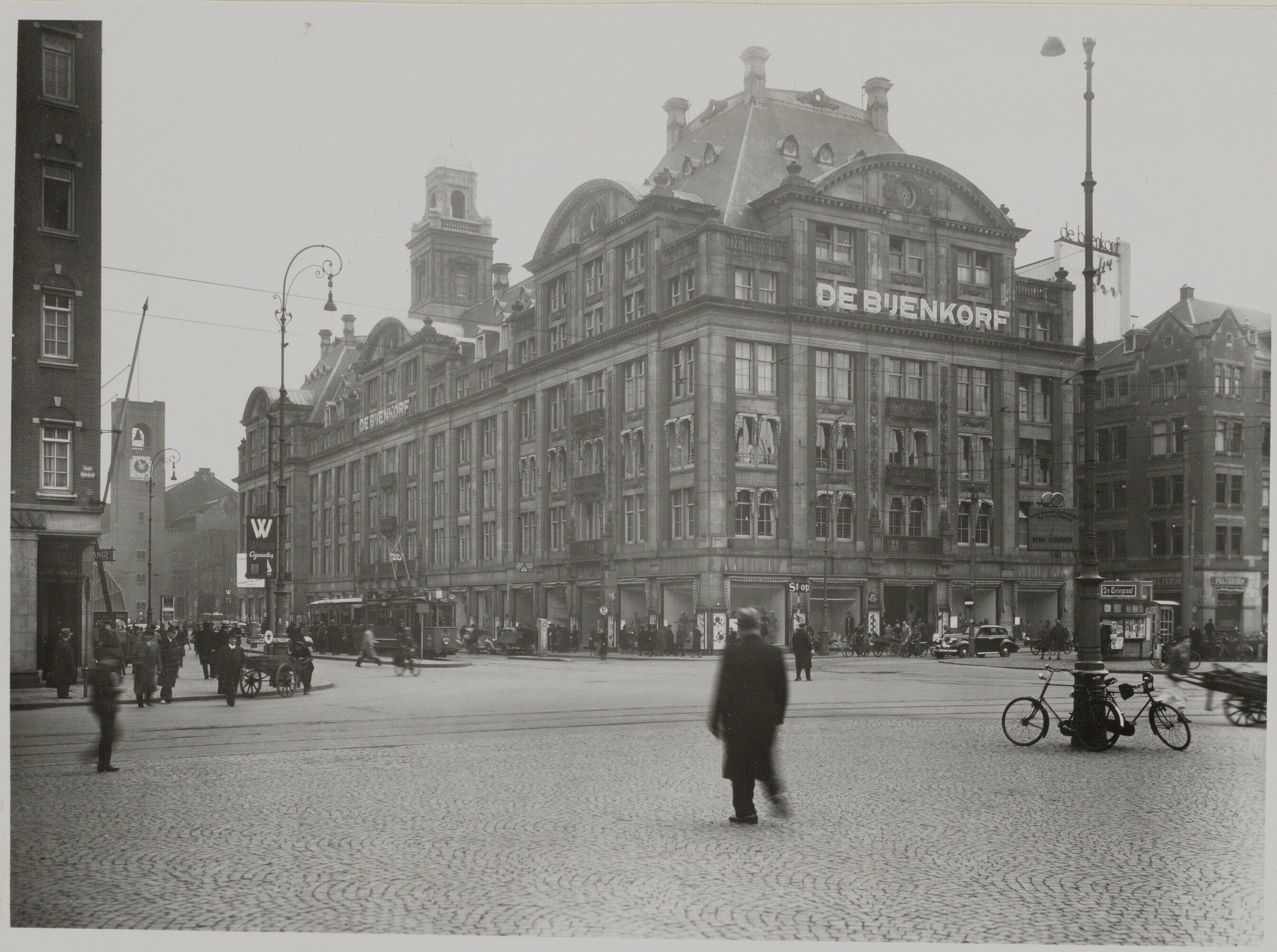
Located on the Damrak in Amsterdam.

The Bijenkorf developed from a small haberdashery shop on Nieuwendijk into a large department store on Damrak.[1] At the end of November and the beginning of December 1938, the Bijenkorf was the target of anti-Semitic actions by National Socialist youths.[2] Tonny Ahlers was also involved.[3] In June 1940, Dutch National Socialists smashed several shop windows of the Bijenkorf.[4] Bep Voskuijl bought new skirts for Margot and Anne Frank in the Bijenkorf. 'The material is tatty, just like sacking', Anne writes.[5] 

Rachel Amerongen - Frankfoorder, one of the women Anne Frank met in Camp Westerbork, worked in the Bijenkorf from 1928 to 1941.[6]

Footnotes
  1. ^ Zie https://en.wikipedia.org/wiki/De_Bijenkorf (geraadpleegd mei 2012).
  2. ^ Stadsarchief Amsterdam, Gemeentepolitie Amsterdam, inv. nr. 7001: Rapporten bureau Warmoesstraat, 28 november (mut. 9.30 v.m.) en 1 december 1938 (mut. 9.45 n.m.).
  3. ^ Gertjan Broek, Weerkorpsen. Extreemrechtse strijdgroepen in Amsterdam, 1923-1942 (proefschrift Universiteit van Amsterdam 2014), p. 239-255.
  4. ^ NIOD Instituut voor Oorlogs-, Holocaust- en Genocidestudies, Amsterdam, Februaristaking 1941, inv. nr. 7a: Afschrift uit p.v.b. 303, 6 juni 1940.
  5. ^ Anne Frank, Diary Version B, 1 October 1942, in: The Collected Works, transl. from the Dutch by Susan Massotty, London [etc.]: Bloomsbury Continuum, 2019.
  6. ^ Willy Lindwer, De laatste zeven maanden. Vrouwen in het spoor van Anne Frank, Hilversum: Gooi & Sticht, 1988, p. 111.


Binnen Gasthuis Hospital

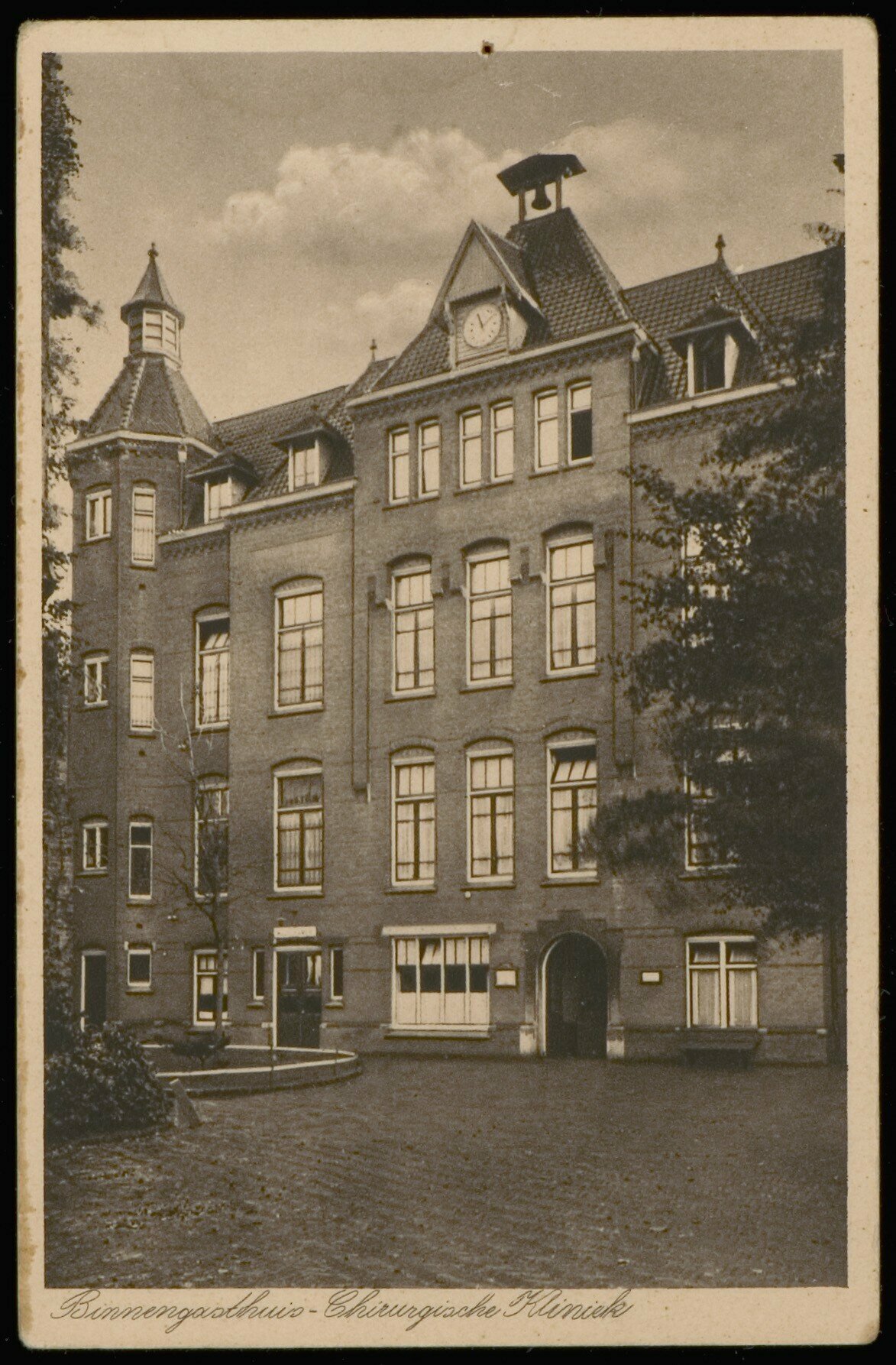
Address: Grimburgwal 10, Amsterdam.[1]

It was the oldest hospital in Amsterdam, whose history dates back to the time of the Reformation.[2] Bep Voskuijl's father, Johan Voskuijl, was admitted to the Binnen Gasthuis during his illness.[3] 

In the 1980s, the hospital moved from the city center to become part of the Academic Medical Center.[4]

Footnotes
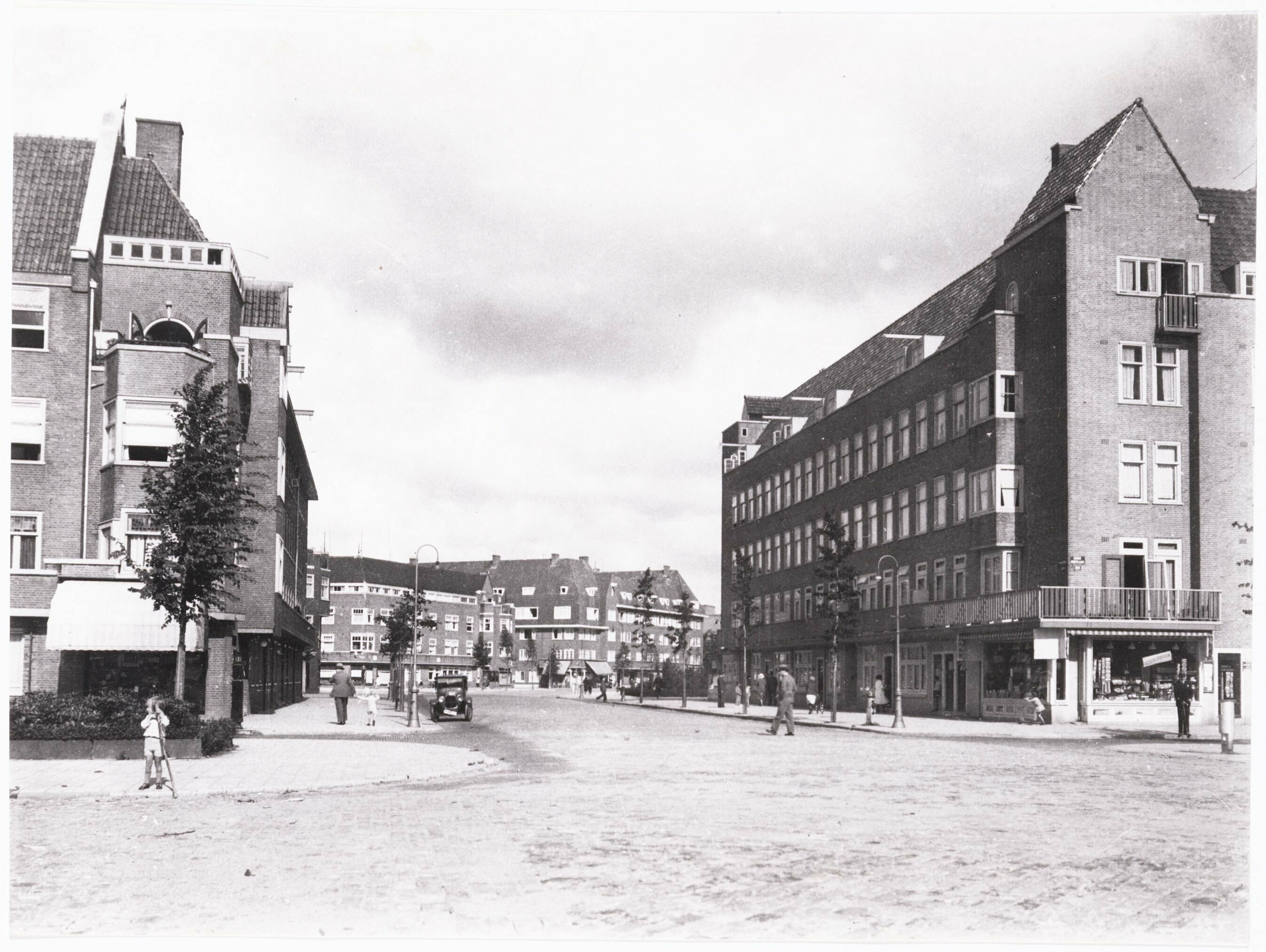
  1. ^ Algemeen Adresboek der stad Amsterdam. 85ste jaargang, 1938-1939, Amsterdam: Ellerman, Harms & Co., p. 22.
  2. ^ “De Amsterdamsche ziekenhuizen”, De Tijd, 5 augustus 1932. Zie ook: https://nl.wikipedia.org/wiki/Binnengasthuis_(Amsterdam) (geraadpleegd 28 november 2023).
  3. ^ Anne Frank, Diary Version B, 27 April 1943, in: The Collected Works, transl. from the Dutch by Susan Massotty, London [etc.]: Bloomsbury Continuum, 2019.
  4. ^ Angela Rijnen, “Met bed en al de bus in”, in: Ons Amsterdam, 58 (2006) 7/8 (juli-augustus).


Blankevoort, Bookshop and Reading Library

Address: Zuider Amstellaan 62, Amsterdam.[1]

This is where the box of cards for the Varieté game came from, which Anne Frank received for her birthday in 1942.[2] It is very likely that the red checkered diary was also bought here, although there is no clear source for this.

The bookshop was owned by Gerrit Blankevoort (1891-1955). He started the company in Groen van Prinstererstraat and moved it to Zuider Amstellaan in 1931.[3]

Footnotes

  1. ^ Algemeen Adresboek der stad Amsterdam. 85ste jaargang, 1938-1939, Amsterdam: Ellerman, Harms & Co., p. 117. De Zuider Amstellaan werd na de oorlog hernoemd tot Rooseveltlaan. 
  2. ^ Anne Frank, Diary Version A, 14 June 1942, in: The Collected Works, transl. from the Dutch by Susan Massotty, London [etc.]: Bloomsbury Continuum, 2019.
  3. ^ Zie http://www.geheugenvanplanzuid.nl/index.php/architectuur/146-de-geschiedenis-van-boekhandel-blankevoort (geraadpleegd 14 september 2022).


Brocades-Stheeman & Pharmacia

Addresses: Meppel; Looiersgracht 27-35, Amsterdam.[1]

Brocades-Stheeman, since 1927 fully N.V. Koninklijke Pharmaceutische Fabrieken v/h Brocades-Stheeman & Pharmacia,[2] was a pharmaceutical company that did business with the Dutch Opekta Mij.[3] The company's owner was P.J. Stheeman.[4] The Brocades commissioners founded N.V. Sangostop on 10 August 1934. This company was named after the astringent manufactured by the company. In addition to this drug, it also made other chemical and pharmaceutical products.[5] Sangostop was produced with pectin from Pomosin.[6]

On Tuesday, 30 November 1934, a representative of Brocades-Stheeman from Meppel demonstrated the Opekta product for the Dutch Christian Women's Union in the Groene-Kruis building in Lisse.[7] As far as we know, this promotion, by a party other than Opekta, was a one-off.

In 1938, Brocades-Stheeman was Opekta's debtor for more than twelve hundred guilders.[8] The Brocades factory in Meppel filled bags with dry pectin for Opekta. In 1940, the company mixed twelve hundred kilos of dry pectin for Opekta, but could no longer manage the packaging.[9]

Bep Voskuijl's sister Willy worked at Brocades during the war. This way she was able to obtain vitamin preparations and other substances, some of which she also gave to Bep.

Footnotes

  1. ^ Algemeen Adresboek der stad Amsterdam. 85ste jaargang, 1938-1939, Amsterdam: Ellerman, Harms & Co., p. 990.
  2. ^ Zie https://nl.wikipedia.org/wiki/Brocades (geraadpleegd 9 november 2023). 
  3. ^ Zie voor een schets van het bedrijf http://www.geheugenvandrenthe.nl/brocades-en-stheeman (geraadpleegd 14 september 2022).
  4. ^ Nationaal Archief (NL-HaNA), Den Haag, Ministerie van Justitie 1915 – 1955 (toegang 2.09.22), inv. nr. 1304: Brief Otto Frank aan Mr. Th.H. de Meester, 9 februari 1946.
  5. ^ NL-HaNA, Handelsregister Kamer van Koophandel Delft (toegang 3.17.19), inv. nr. 508, dossier 16118.
  6. ^ Anne Frank Stichting, Anne Frank Collectie, Otto Frank Archief, reg. code OFA_071: Brief Otto Frank aan Erich Elias, 24 juli 1945.
  7. ^ “Demonstratieavond Vrouwenbond”, Nieuwe Leidse Courant, 21 november 1934.
  8. ^ AFS, AFC, A_Opekta_I_003: Verslag over het boekjaar 1938.
  9. ^ AFS, AFC, A_Opekta_I_005: Verslag over het boekjaar 1940.


California Fruit Company

Address: Hartenstraat 24, Amsterdam.[1]

California Fruit Company was a competitor of Opekta on the Dutch pectin market. The Hartenstraat branch was probably a sales office or agency of the California Fruit Company of the United States, founded in 1931. The company advertised a pectin product under the name Cinella in 1939.[1] In 1940, a shopkeeper in Delft advertised with Opekta, Penjel and Cinella.[2]

In the archive of the Dutch Opekta Mij. there are a few bags of Cinella.[3]

According to Frans Hofhuis, pectin expert, pectin of Californian origin is made from citrus fruits.[4]

Footnotes

  1. a, b Advertentie “Meer en Betere Jams en Geleien”, Algemeen Handelsblad, 12 juli 1939, avondeditie, p. 6.
  2. ^ Advertentie “Voor de inmaak”, Delftsche Courant, 10 augustus 1940, p. 8.
  3. ^ NIOD Nederlands Instituut voor Oorlogs-, Holocaust- en Genocidestudies, toegangsnr, 292, inv. nr. 104: pakje Cinella, zonder datum.
  4. ^ .Anne Frank Stichting, Getuigenverhalen II: interview Frans Hofhuis door Teresien da Silva, 17 november 2011.


Camp Amersfoort

The camp was in use from 18 August 1941 until 19 April 1945 as a concentration camp and transit camp. Camp Amersfoort (German: Polizeiliches Durchgangslager Amersfoort; PDA) held a total of 37,000 registered prisoners in the years 1941-1945, mainly political prisoners, people who had been in hiding and black-marketeers, of whom about 20,000 were deported to German concentration camps or Westerbork. In addition, 13,000 unregistered prisoners were detained at the camp for short periods.[1] Victor Kugler was imprisoned in Camp Amersfoort from 11 September to 26 September 1944, after which he was put on transport for forced labour. Like Kugler, Johannes Kleiman was registered in Camp Amersfoort on 11 September 1944, but was released a week later due to his poor health.

Footnotes

  1. ^ Zie verder de website van Nationaal Monument Kamp Amersfoort: https://www.kampamersfoort.nl/.


Camp Auschwitz-Birkenau - Alte Judenrampe

From 1942 to May 1944, the selections for death or (temporary) survival took place there.


Camp Vught

Camp Vught (German official name: Konzentrationslager Herzogenbusch) was located in the North Brabant town of Vught near the recreational lake the IJzeren Man. It functioned as a concentration camp for over a year and a half.[1]

Footnotes
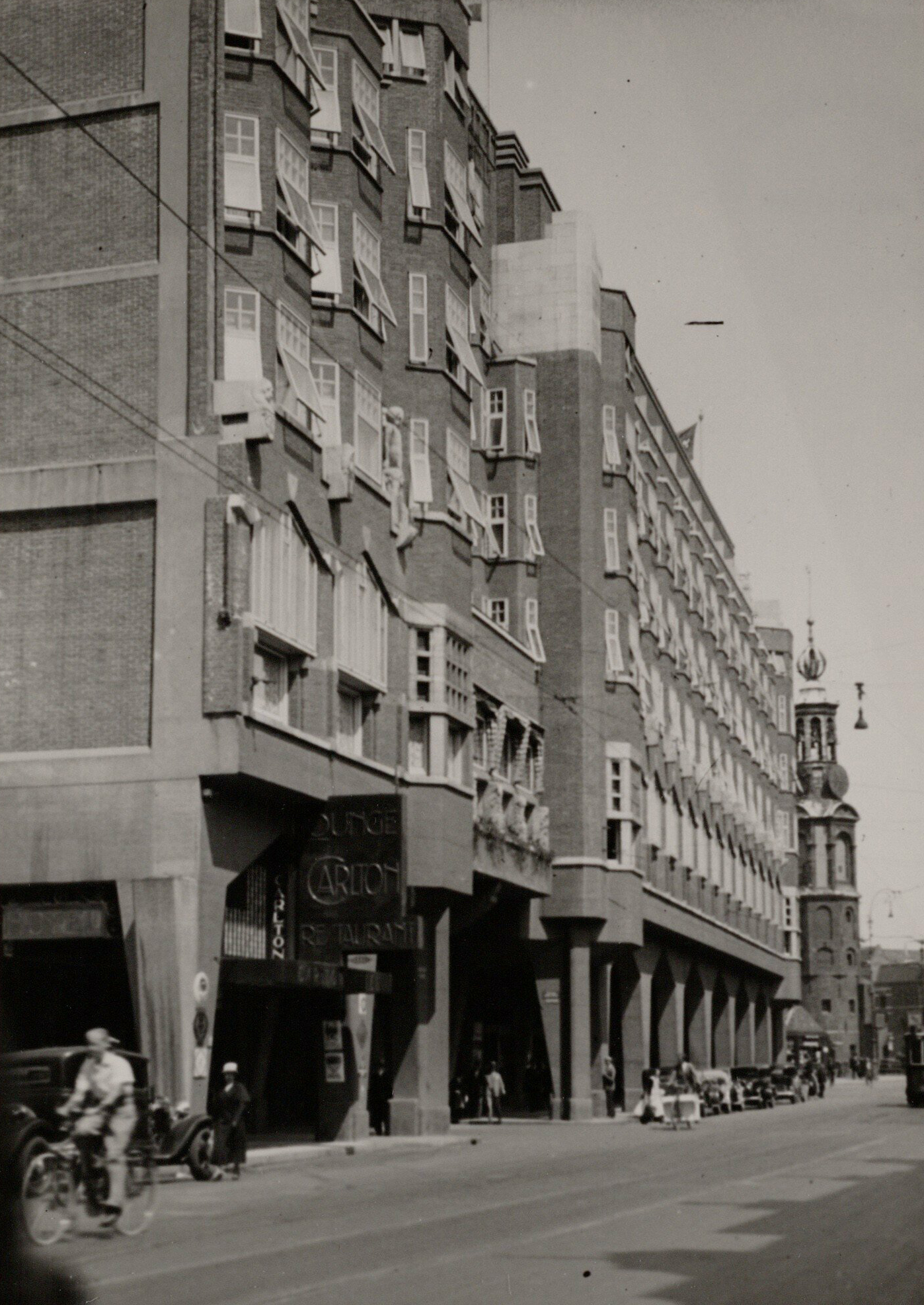
  1. ^ Zie de website van Nationaal Monument Kamp Vught: https://www.nmkampvught.nl/.


Carlton Hotel

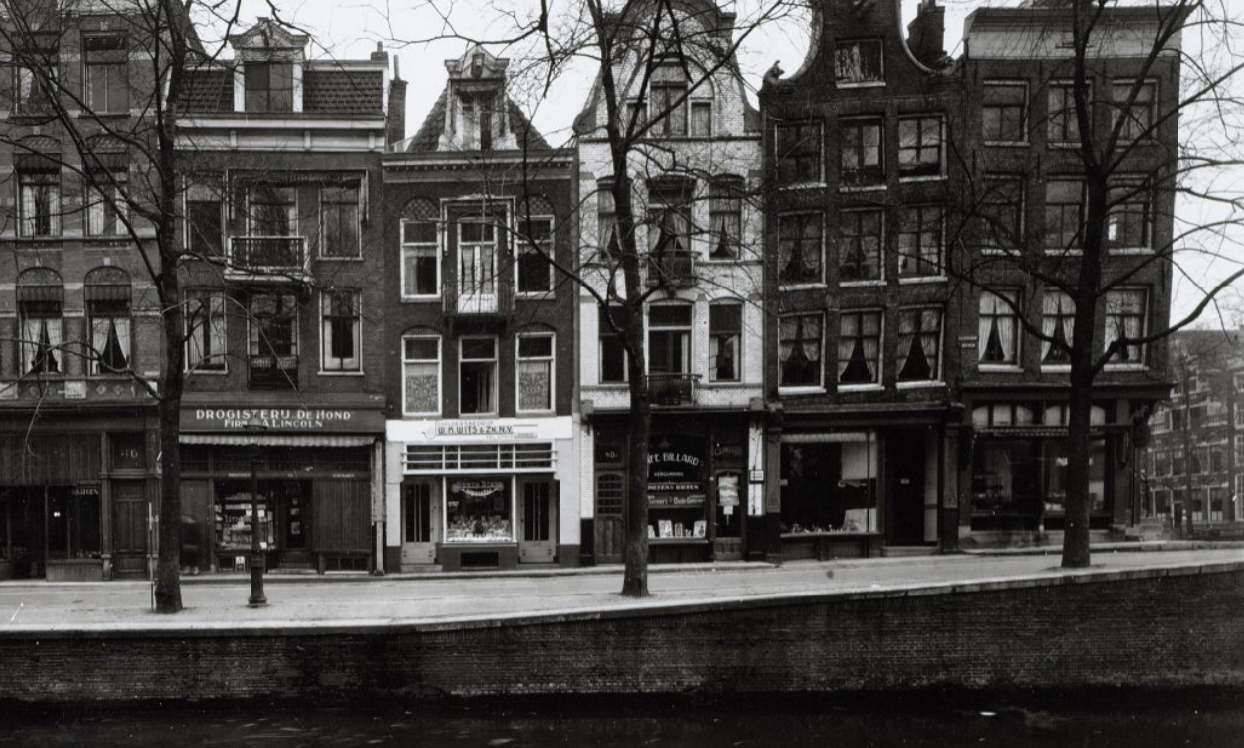
Address: Vijzelstraat 2-14, te Amsterdam.[1]

As one of Amsterdam's more prestigious hotels in the 1930s, the Carlton was the setting for countless concerts, parties, meetings, bridge and chess competitions.[2]

During the war years, the Carlton was used as a Luftgaukommando by the Germans.[3] On the night of 26-27 April 1943, a plane crashed right behind the Carlton in Reguliersdwarsstraat. The hotel and many nearby buildings were destroyed.[4] Anne writes about this in het diary.[5]

Footnotes
  1. ^ Algemeen Adresboek voor de stad Amsterdam 1938, p. 282. Zie ook: https://nl.wikipedia.org/wiki/Carlton_Hotel_(Amsterdam) (geraadpleegd 7 november 2023).
  2. ^ "Bridge-wedstrijd", Nieuw Israëlietisch Weekblad, 12 mei 1933; "Cab Calloway in het Carlton-Hotel", De Telegraaf, 31 maart 1934 (avondeditie); "V.V.V. Amsterdam", De Tijd, 10 november 1938; "Frans chanson in Carlton", Het Volk, 18 maart 1940.
  3. ^ NIOD Instituut voor Oorlogs-, Holocaust- en Genocidestudies: Online inventaris Wehrmachtbefehlhaber in den Niederlanden (toegang 001), onder inv. nr. 5.1; Bianca Stigter, Atlas van een bezette stad: Amsterdam 1940-1945, Amsterdam: Atlas Contact, 2019, p. 202-202.
  4. ^ J.F.M. den Boer en S. Duparc (samenst.), Kroniek van Amsterdam over de jaren 1940-1945, Amsterdam: De Bussy, 1948, p. 98.
  5. ^ Anne Frank, Diary Version B, 27 April 1943, in: The Collected Works, transl. from the Dutch by Susan Massotty, London [etc.]: Bloomsbury Continuum, 2019.


Chemist's A. Lincoln

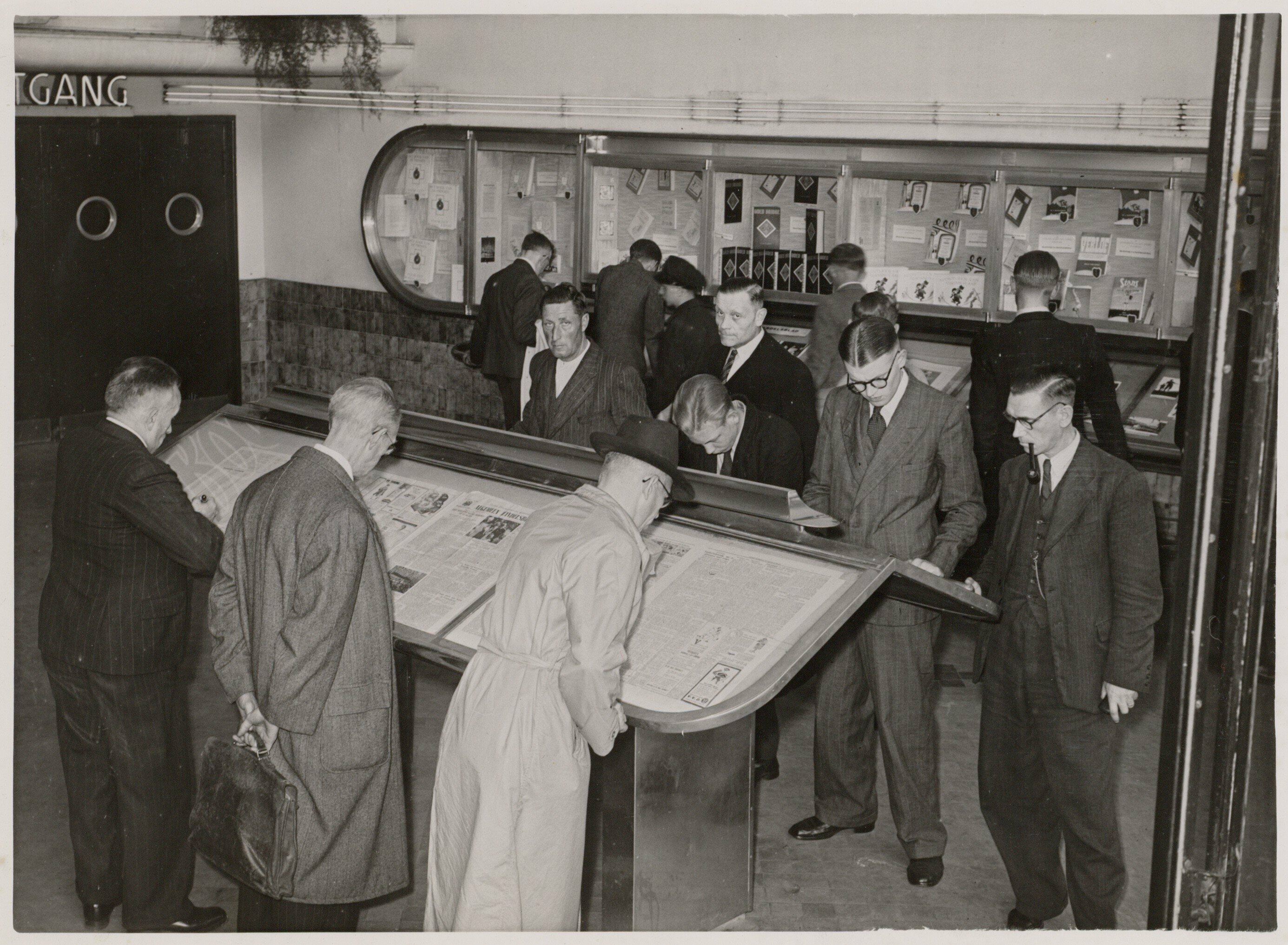
Address: Leliegracht 44, Amsterdam.[1]

Chocolate manufacturers 'Gebroeders Sickesz' ran a wholesale and retail trade in 'dried goods, chemicals, spices, paints, technical poisons and caustic substances' under the name A. Lincoln. In March 1933 they transferred the business to their employee Derk Kollen, who continued at his own expense and risk.[2]

Willem van Maaren stated to the National Department of Criminal Investigation in 1963 that neighbour Jacob Mater had told him during the period in hiding that 'they' sometimes went out to visit the chemist's on the Leliegracht. By 'they', he would have meant people in hiding.[3]

This is the chemist's on the Leliegracht where Johannes Kleiman sent Bep Voskuijl with his wallet on the day of his arrest. 'Kollen-Lincoln' featured on Otto Frank's list of people he wanted to give a diary to in 1947.[4]

Footnotes
  1. ^ Algemeen Adresboek der stad Amsterdam. 85ste jaargang, 1938-1939, Amsterdam: Ellerman, Harms & Co., p. 2473. Ook de naam Kollen staat op deze pagina. Referred to by Anne as: the chemist around the corner. Anne Frank, Diary Version B, 16 September 1943, in: The Collected Works, transl. from the Dutch by Susan Massotty, London [etc.]: Bloomsbury Continuum, 2019.
  2. ^ Noord-Hollands Archief, Haarlem, Handelsregister Amsterdam: Kamer van Koophandel Amsterdam, inv. Nr. 133, dossiernr. 6736.
  3. ^ Nationaal Archief, Den Haag, Centraal Archief Bijzondere Rechtspleging, inv. nr. 23892: Verklaring Van Maaren, p.v.b. 86/1963 v.H.
  4. ^ Anne Frank Stichting, Anne Frank Collectie, Otto Frank Archief, reg. code OFA_ 100.


Cineac Damrak

Cinema on the Damrak.[1] Pathé opened the first Cinema d'Actualité in Paris in 1934, a cinema where newsreels were shown continuously. On March 17, 1938, a branch opened on the Damrak in Amsterdam.[2] Wim Bunjes, who was friends with Miep and Jan Gies, was a projectionist there.[3]

Footnotes

  1. ^ Zie https://nl.wikipedia.org/wiki/Cineac_(Amsterdam) (geraadpleegd 12 november 2022)
  2. ^ '1938 in beeld', fotografisch jaaroverzicht van het Algemeen Handelsblad.
  3. ^ Anne Frank, Diary Version A, 6 October 1942 (with 30 September 1942), in: The Collected Works; transl. from the Dutch by Susan Massotty, London [etc.]: Bloomsbury Continuum, 2019.


City Theater

City Theater was a Dutch cinema chain. The first City Theater was opened in The Hague in 1923. In 1935, the City Theater opened in Amsterdam, the company's fifth cinema.[1]

Footnotes

  1. ^ Zie https://nl.wikipedia.org/wiki/City_Theater_(gebouw_in_Amsterdam) (geraadpleegd 27 november 2023).


Clothing store of Fritz Pfeffer's parents in Gießen

Two Stolpersteine (stumblin stones) in front of Markplatz 11 (former number 6) commemorate Ignatz Pfeffer and his second wife, Anna Kugelmann.[1]

Footnotes

  1. ^ Stadt Gießen - Stolpersteine (geraadpleegd 11 januari 2024).


Committee for Jewish Refugees

The CJV formed part of the Committee for Special Jewish Interests.[1] Its main task was to arrange practical help and shelter for Jewish refugees in Amsterdam. Prof David Cohen, the secretary of the Committee for Special Jewish Interests, was appointed chairman of the Refugee Committee. Initially, the CJV was located at 's Gravenhekje 7, but when that was demolished, the committee moved to Lijnbaansgracht 366, Amsterdam. After 1941, this was an address of the Jewish Council.

Footnotes
  1. ^ Zie https://en.wikipedia.org/wiki/Committee_for_Jewish_Refugees_(Netherlands) (geraadpleegd 17 januari 2024).


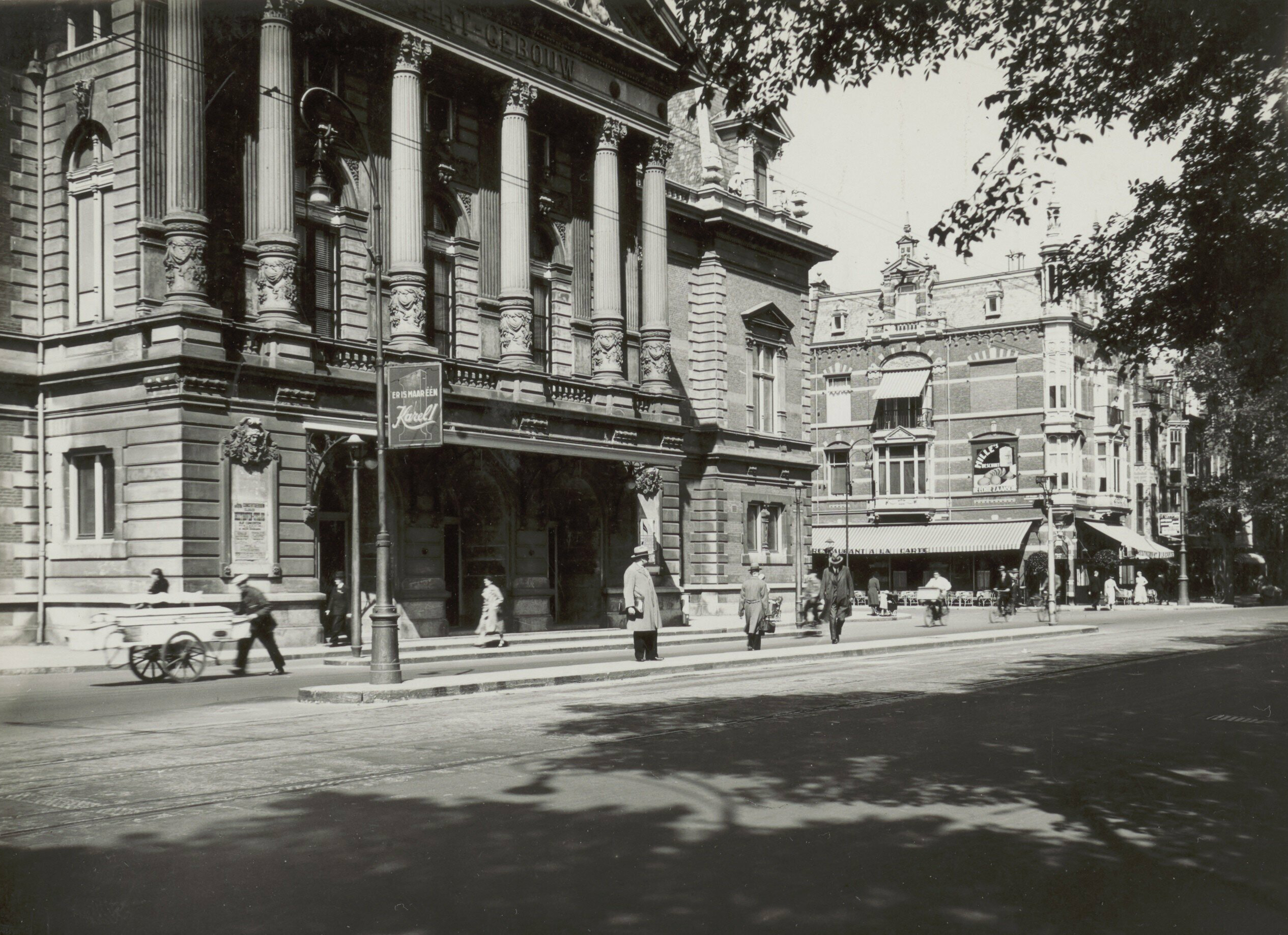
Concertgebouw

Address: Van Baerlestraat 98, Amsterdam.[1]

The first concert in the Amsterdam Concertgebouw was on the occasion of the opening on 11 April 1888, with 120 musicians and five hundred choir members.[2] In addition to concerts, numerous meetings took place in the building. Political organizations such as the CPN (Dutch Communist Party) ,[3]  the NSB (National-Socialist Movement),[4] Eenheid door Democratie (Unity through Democracy),[5] the Nederlandsche Zionistenbond (Dutch Zionist Union)[6] and Nederlandsche Unie (Dutch Union)[7] held meetings there. The ANWB (Royal Dutch Touring Club)[8] and the dubious Winterhulp (Winter Aid)[9] also met there.

During the German occupation, conductor Willem Mengelberg continued to give concerts in the presence of high-ranking Nazi leaders, such as Reichskommissar Arthur Seyss-Inquart. And even though he was committed to his Jewish orchestra members, Mengelberg was severely punished after 1945 for his collaboration with the Germans: he was banned from conducting and his Dutch passport was taken away.[10]

Bep Voskuijl attended two concerts in the Concertgebouw, early 1944.[11] 

Footnotes

  1. ^ Algemeen Adresboek der stad Amsterdam. 85ste jaargang, 1938-1939, Amsterdam: Ellerman, Harms & Co., p. 1560.
  2. ^ Zie https://en.wikipedia.org/wiki/Concertgebouw,_Amsterdam (geraadpleegd maart 2014).
  3. ^ Foto voorpagina, De Tribune, 4 mei 1936.
  4. ^ “N.S.B.-vergadering”, Algemeen Handelsblad, 6 november 1934, ochtendeditie.
  5. ^ “Eenheid door Democratie”, De Tribune, 22 januari 1937.
  6. ^ “Herdenkings-bijeenkomst van den Nederlandschen Zionistenbond”, Nieuw Israëlietisch Weekblad, 3 november 1939
  7. ^ “Openbare vergadering Nederlandsche Unie”, De Tijd, 7 augustus 1940.
  8. ^ “Het gouden feest van den A.N.W.B.”, Het Vaderland, 1 juli 1933, avondeditie.
  9. ^ “Winterhulp Nederland vraaagt een offer”, Nieuws van den Dag, 15 oktober 1942.
  10. ^ Bianca Stigter, Atlas van een bezette stad: Amsterdam 1940-1945, Amsterdam: Atlas Contact, 2019, p. 329-330.  Zie ook https://en.wikipedia.org/wiki/Willem_Mengelberg (geraadpleegd 16 januari 2024).
  11. ^ Anne Frank, Diary Version A, 15 March 1944, in: The Collected Works, transl. from the Dutch by Susan Massotty, London [etc.]: Bloomsbury Continuum, 2019.


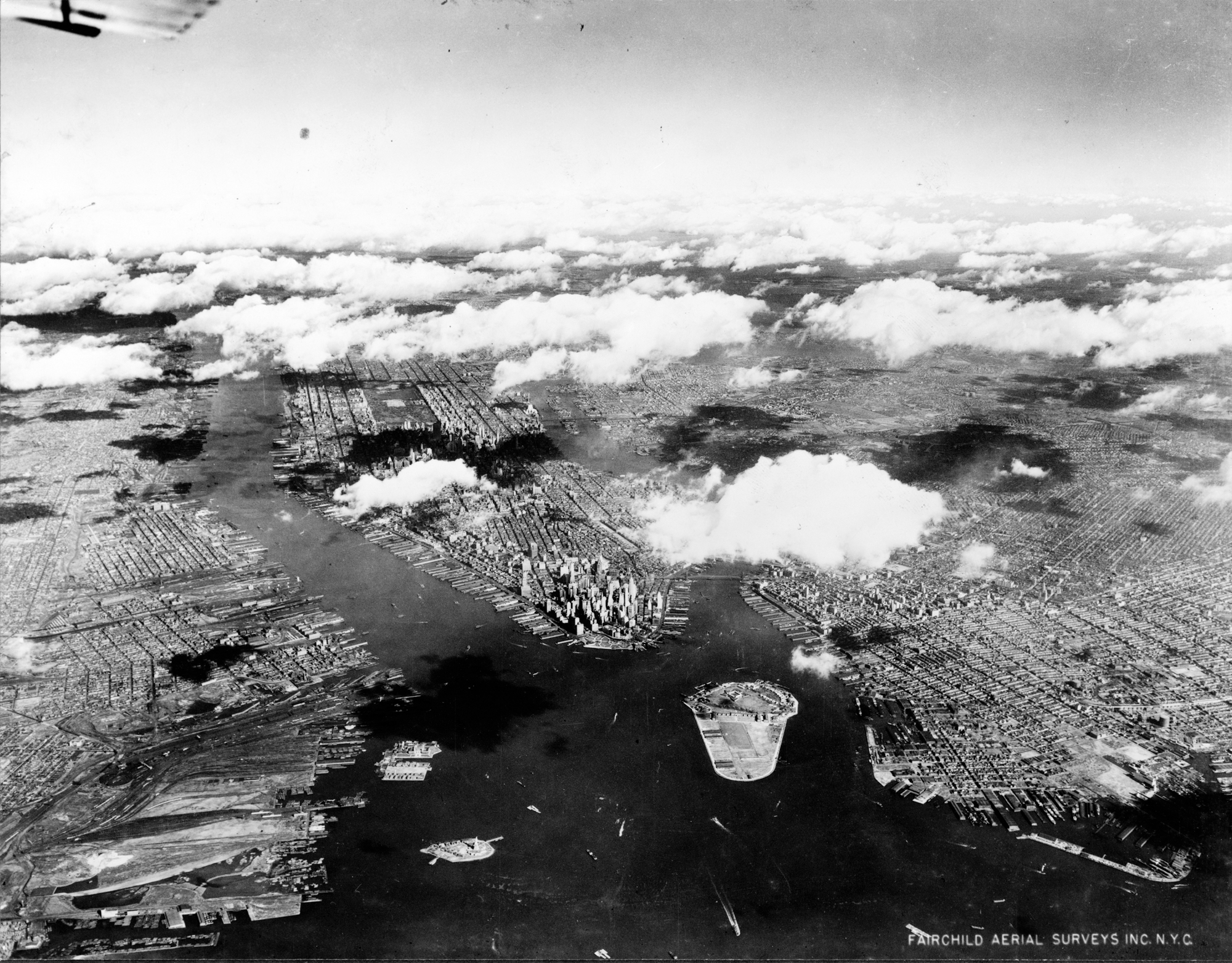
Cort Theatre

The James Earl Jones Theatre, originally the Cort Theatre, is a Broadway theater in Midtown Manhattan's theater district.[1]

Footnotes
  1. ^ Zie https://en.wikipedia.org/wiki/James_Earl_Jones_Theatre (geraadpleegd 27 november 2023).


Cunard Line Pier, New York

The piers are part of the Manhattan Cruise Terminal, formerly known as the New York Passenger Ship Terminal or Port Authority Passenger Ship Terminal is a ship terminal for ocean-going passenger ships in Hell's Kitchen, Manhattan, New York City. It was constructed and expanded in the 1920s and 1930s as a replacement for the Chelsea Piers.[1]

Footnotes

  1. ^ Zie: https://en.wikipedia.org/wiki/Manhattan_Cruise_Terminal (geraadpleegd 29 novembr 2023).


Cursus Zelfontwikkeling

Address: Bosboom Toussaintstraat 46, te Amsterdam.[1]

Cursus Zelfontwikkeling (Self-development course) was an institution that offered correspondence courses used by the people in hiding in the Secret Annex to learn shorthand. Since at least 1916 Zelfontwikkeling offered correspondence courses in modern languages, bookkeeping and shorthand, among others[2] The institution advertised for years in Dutch and Dutch-Indonesian newspapers. The most last known advertisement is - as far as known - from May 1946.[3]

Early 1940, the shorthand course cost sixty-five cents a month.[1] In September 1943 it cost eightyfive cents per month.[4] Before the end of that year, the price had risen to one guilder per month.[5] Bep Voskuijl arranged the course for the people in hiding in her own name.[6]

Footnotes

  1. a, b Herstel. Algemeen Katholiek Weekblad, 16 februari 1940.
  2. ^ Nieuwsblad van het Noorden, 22 april 1916.
  3. ^ Limburgs Dagblad, 22 mei 1946.
  4. ^ Dagblad van Noord-Brabant, 3 september 1943.
  5. ^ Dagblad voor Noord Holland, Schager editie, 3 december 1943.
  6. ^ Anne Frank, Diary Version A, 15 October 1942, in: The Collected Works, transl. from the Dutch by Susan Massotty, London [etc.]: Bloomsbury Continuum, 2019.


Delia Photo Studio

Addresses: Merwedeplein 2a, Amsterdam (’37); Waalstraat 45 (’39); Noorder Amstellaan 92hs (maart ’42).[1]

The advertised activities of the studio were 'Photo School', 'Photo Studio' and 'Photo Service'. The company was founded on 15 March 1937 and registered on 28 June 1937 by Arnold Meyer and Gertrud Helene Posener.[1] However, a number of photos of Margot and Anne Frank that were taken there predate the official registration.[2] 

In 1938, Photo school Delia offered a practical course using a darkroom and studio at Merwedeplein 2a.[3]

The company was dissolved on 1 January 1939. Posener continued the business alone in Waalstraat. From 26 March 1940, Joachim Henry Emanuel Pinkus took part in the company. On 17 March 1942, the studio moved to Noorder Amstellaan 92hs and was closed down by Omnia Treuhand on 1 April 1943 Pinkus restarted the business 12 December 1945.[1] 

Footnotes
  1. a, b, c Noord-Hollands Archief, Haarlem, Handelsregister Amsterdam, toegang 448, inv. nr. 1122: dossier 50109.
  2. ^ Bijv. Anne Frank Stichting, Anne Frank Collectie, reg. code A_AFrank_III_002: Foto van Anne Frank uit 1935;  AFS, AFC, reg. code A_MFrank_III_042: Foto van Margot Frank, Amsterdam, 1935.
  3. ^ “Diverse Lessen en Clubs”, De Telegraaf, 20 maart 1938.


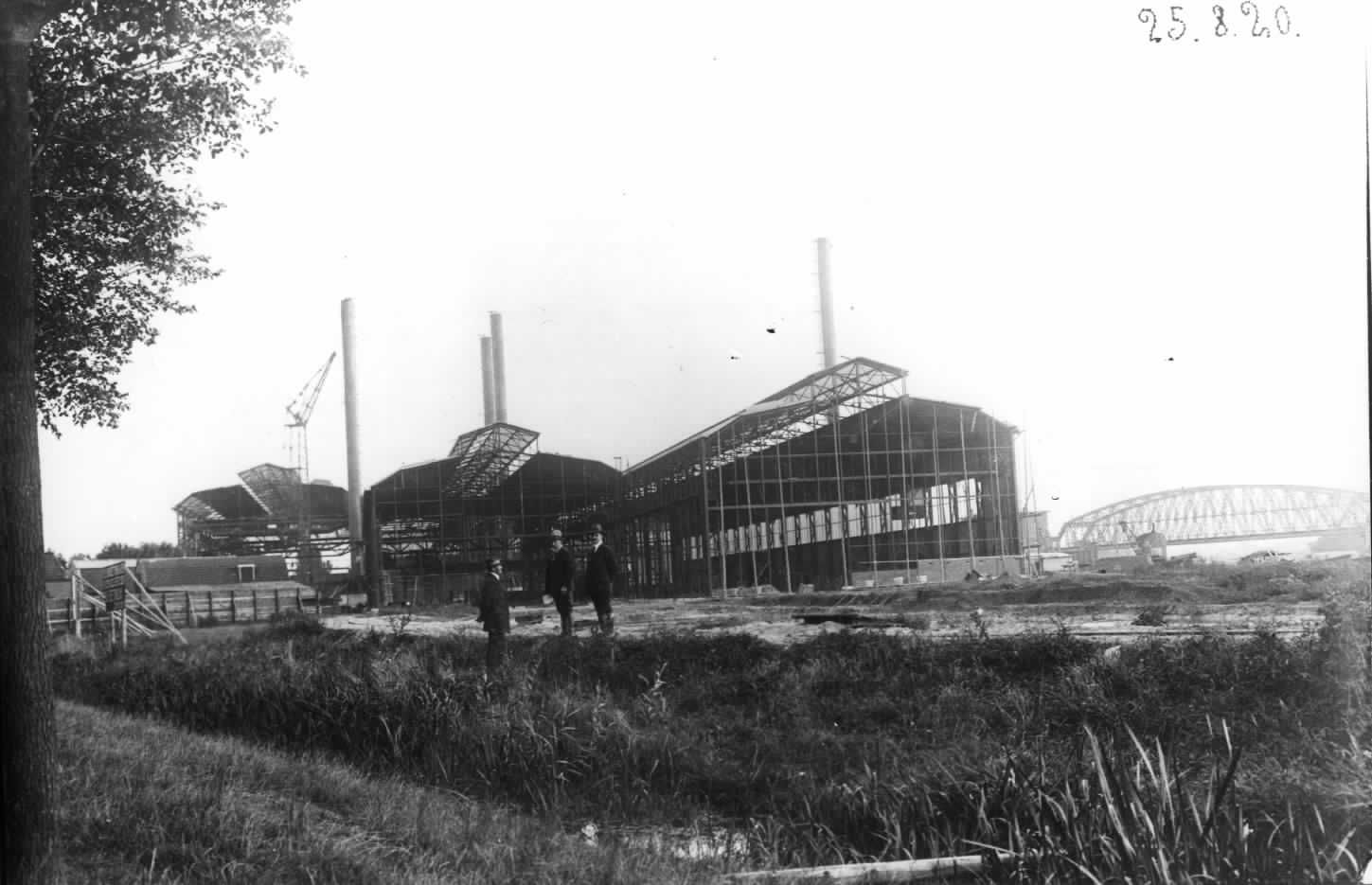
Delphi Tearoom

Address: Daniël Willinkplein 1, Amsterdam.[1]

Delphi was a lunchroom and ice cream parlor that was only accessible to Jews from 1941.[2] Anne Frank went there with her friends for ice cream.[3]

On 25 May 1936, the business was registered as a partnership between Hugo Rosenthal and Siegfried Wechsler. Rosenthal got out on 3 November 1936; Wechsler on 26 January 1940. The new owner was Mozes Zilversmit. As part of the anti-Jewish measures, the case was closed on 3 January 1944.[4]

The anti-Semitic magazine De Misthoorn wrote an article about Zilversmit and Delphi, stating how unpleasant it was 'to see all those stars licking ice'.[5]

Footnotes
  1. ^ Bianca Stigter, Atlas van een bezette stad: Amsterdam 1940-1945, Amsterdam: Atlas Contact, 2019, p. 439. After the war, Daniël Willinkplein was renamed Victorieplein.
  2. ^ Het Joodsche Weekblad, 19 December 1941, p. 18.
  3. ^ Anne Frank, Diary Version B, 20 June 1942 (2nd), in: The Collected Works, transl. from the Dutch by Susan Massotty, London [etc.]: Bloomsbury Continuum, 2019.
  4. ^ Noord-Hollands Archief, Haarlem, Handelsregister Amsterdam: Kamer van Koophandel Amsterdam (toegang 448), inv. nr. 1248, dossier 48365.
  5. ^ "Joodsche viezigheden", De Misthoorn, 6 June 1942.


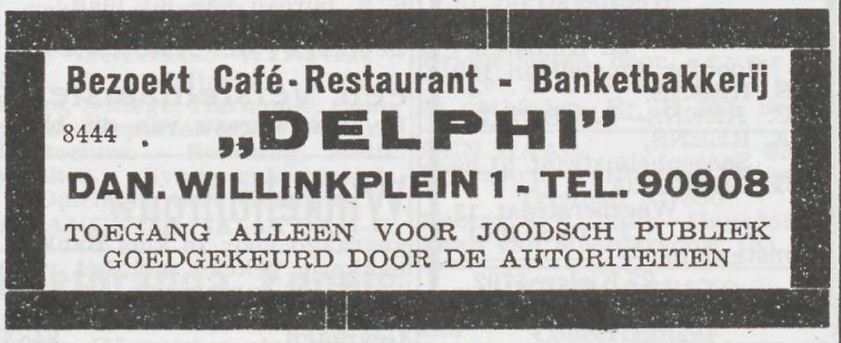
Demka

Demka was the first steel producer in the Netherlands.[1]

Footnotes

  1. ^ Zie https://nl.wikipedia.org/wiki/Demka (geraadpleegd 28 november 2023).


Duisburg

In the early 1920s, Kugler worked in Duisburg as a mechanic at Deutsche Maschinenfabrik A.G. (Demag).


Dutch Chamber of Commerce for Germany

The economic crisis of the 1930s and the National Socialist takeover in Germany in 1933 had not improved trade relations.


Elhoek

Address: Prinsengracht 261, Amsterdam.[1]

The company was located in the neighbouring building at Prinsengracht 263. Elhoek was also a leather goods manufacturer.[2] The name was a combination of the names of business partners Van Elburg and Hoekstra. The workshops were on the second and third floors. When the weather was nice, the staff sometimes ate on the roof at lunchtime. They sometimes heard voices and therefore knew that there were people in the Secret Annex. However, they did not realize that these were people in hiding and they thought that the part of the building belonged to the Keg Tea and Coffee company.[3]

Hendrik Johan van Elburg, one of the business partners, reported that intruders had stolen an amount of six hundred guilders and a typewriter from the company during the night of 7-8 April 1943.[4]

Footnotes

  1. ^ Stadsarchief Amsterdam (SAA), Bevolkingsregister, woningkaarten, inv. nr. 283: Woningkaart Prinsengracht 261. Referred to by Anne as furniture-making shop. Anne Frank, Diary Version B, 11 July 1942, in: The Collected Works, transl. from the Dutch by Susan Massotty, London [etc.]: Bloomsbury Continuum, 2019.
  2. ^ Rijksbureau voor Huiden en Leder, Lijst met namen en adressen der bij het Rijksbureau voor Huiden en Leder ingeschreven (…), Doetinchem: Misset, 1941, p. 89.
  3. ^ Anne Frank Stichting, Getuigenarchief, Pels, H.: Mededeling H. Pels, mei 1995.
  4. ^ SAA, Gemeentepolitie Amsterdam, inv. nr. 7013: Rapport bureau Warmoesstraat, 8-9 april 1943, 17.18 uur.


Fokker, N.V. Dutch Aircraft Factory

Address: Papaverweg 31-33.[1]

Dutch aviation pioneer AnthonyFokker received major orders from the German army leadership after the outbreak of the First World War in 1914. This allowed him to realize his plans for an aircraft factory. In 1918 he came to the Netherlands with supplies and inventory and established his company in Amsterdam-North.[2]

During the Second World War, the factory was confiscated and used for the German war effort.[3] Air raids in July 1943 caused extensive damage to the factory, but especially to the surrounding residential areas. There were many casualties among the civilian population.[4] Anne Frank writes about this in her diary.[5]

Footnotes

  1. ^ Algemeen Adresboek voor de stad Amsterdam 1938, p. 1358.
  2. ^ Rob Hartgers, ‘Ondernemer Anthony Fokker’, in: Ons Amsterdam, 58 (2006) 9 (september). Zie ook: https://en.wikipedia.org/wiki/Anthony_Fokker (geraadpleegd 28 november 2023).
  3. ^ Zie https://en.wikipedia.org/wiki/Fokker (geraadoleegd 28 november 2023).
  4. ^ J.L. van der Pauw, De bombardementen op Amsterdam-Noord. Juli 1943, Amsterdam: Boom, 2009; Bianca Stigter, Atlas van een bezette stad: Amsterdam 1940-1945, Amsterdam: Atlas Contact, 2019, p. 264-265.
  5. ^ Anne Frank, Diary Version B, 19 and 26 July 1944, in: The Collected Works, transl. from the Dutch by Susan Massotty, London [etc.]: Bloomsbury Continuum, 2019.


Frank family address - Dantestrasse 4, Frankfurt am Main

From here Otto went to the Netherlands to establish the Opekta company, while the children stayed with their grandmother.[1]

Footnotes

  1. ^ Jürgen Steen, 'Die Familie Anne Franks: von der Ganghoferstraße in die Emigration', IfS, Frankfurt am Main 1933-1945 (geraadpleegd 12 januari 2024)


Frank family address - Ganghoferstrasse Frankfurt

When Edith Frank and Otto Frank moved to Ganghoferstrasse 24 in March 1931, the family's economic situation had deteriorated. Late December 1932, Otto Frank gave notice of cancelling the lease on Ganghoferstrasse as of 31 March 1933 "as a result of the changed economic circumstances", as stated in the surviving termination letter. The family moved to an apartment in the house built by Otto Frank's parents near Beethovenplatz in Westend, where Otto's mother lives and where Otto Frank grew up.[1]

A memorial plaque commemorates Anne Frank's stay at the Ganghoferstraße address,[2] as well as a memorial installation at Dornbusch subway station.[3]

Footnotes

  1. ^ Jürgen Steen, 'Die Familie Anne Franks: von der Ganghoferstraße in die Emigration', Institut für Stadtgeschichte (IfS), Frankfurt am Main 1933-1945 (geraadpleegd 12 januari 2024).
  2. ^ IfS, Frankfurt am Main 1933-1945, Gedenktafel für Anne Frank, Ganghoferstraße 24 (geraadpleegd 12 januari 2024). 
  3. ^ IfS, Frankfurt am Main 1933-1945, Anne Frank-Gedenkwand (geraadpleegd 12 januari 2024).


Frank family address - Marbachweg, Frankfurt

It seems like an ideal environment for children to grow up in, in which Margot and Anne, born in June 1929, played with children from socially and religiously different families. A particularly warm friendship developed with neighbor Gertrud Naumann, the eldest daughter of a Catholic family. But due to the anti-Semitic hostilities of landlord Otto Könitzer, who lived on the ground floor, and passing SA troops, the Frank family moved in March 1931 to Ganghoferstrasse in the Poet's Quarter, which was characterized by a bourgeois-liberal character.[1]

A memorial column, designed by artist Bernd Fischer, marks the Frank family's home on Marbachweg.[2]

Footnotes

  1. ^ Zie Jürgen Steen, 'Die Familie Anne Franks: der Marbachweg als erwünschte Kinderwelt', Institut für Stadtgeschichte, Frankfurt am Main 1933-1945 (geraadpleegd 12 januari 2024).
  2. ^ Bernd Fischer, Gedenkstele zur Erinnerung an die im Marbachweg 307 geborene Anne Frank, (geraadpleegd 12 januari 2024).


Frank-Loebsche-Haus

The building dates from the 15th century and functioned as an inn from 1601. The inn, called Zur Blum, was run by the related Kempff, Stiehler, Geropp and Schneider families until well into the 19th century. In 1870, owner Georg Friedrich Schneider sold the building to banker Zacharias Frank for 16,000 guilders. The three-storey building included a house with three cellars, three stables, a courtyard, a well, a barrel store, several ovens and four trumeau mirrors.[1] After the death of Zacharias Frank on 27 July 1884, the estate passed to his widow Babette as the sole heir.

Following Babette Frank's death on 10 October 1891, the surviving children became owners of the house, but only daughter Sophie, the widow of Landau banker Leo Loeb, still lived in her birthplace. Michael Frank, one of her brothers, was a banker in Frankfurt. His son Otto was Anne Frank's father.

​In 1901, the property became the exclusive property of Sophie Loeb. Her daughter Olga inherited the building in 1927, but after she fled to Luxembourg in the late 1930s to escape persecution by the Nazis,[2] the city council negotiated about the purchase of the historically significant building, but subsequently decided no to go through with it. A forced auction also ultimately did not take place.

During the war, the house in Kaufhausgasse functioned as one of the three infamous "Jew houses" in Landau, where Jews still living in Landau were put up. On 22 October 1940, the 23 Jews living there were deported to Gurs, a French internment camp, and from there to Auschwitz and Theresienstadt in 1942.

Following the years after Olga Loeb's death on 15 September 1946, the estate was repeatedly offered for sale to the city. As early as 1951, the National Office for the Conservation of Monuments financed urgent repair and restoration work, and in September 1959, the house became the property of the city. However, plans to rename the building "Anne Frank House" and to establish a regional museum and documentation center on the history of the Jewish community of Landau in the building were not realized.

On 25 April 1980, the residents of Landau founded an "Association of Friends of the Frank Loebschen House", which arranged for the renovation and financing of the house and in September 1983 extensive restoration and extension work began. As of 1987, the building has been used as a cultural center and exhibition space[3] and since 2003 a permanent exhibition on the history of the Jews in Landau has been set up here.[4]

Footnotes

  1. ^ Voor de geschiedenis van het Frank-Loebsche-Haus, zie Edith Vierling, Das Frank-Loeb'sche Haus zu Landau in der Pfalz, München: GRIN, 2009
  2. ^ Van daaruit werd ze op 6 april 1943 naar Theresienstadt gedeporteerd. Ze overleefde het en keerde terug naar Luxemburg.
  3. ^ Kulturzentrum Altstadt, Frank-Loebsches Haus (geraadpleegd 24 januari 2024).
  4. ^ Stadt Landau in der Pfalz, Dauerausstellung: Juden in Landau. Vom Mittelalter bis zum Holocaust (geraadpleegd 24 januari 2024). 


Frankfurt am Main

In terms of population, Frankfurt am Main is the fifth largest city in Germany. Frankfurt was granted the status of Freie Reichsstadt in the Middle Ages. From 1816 to 1866, Frankfurt was the seat of the Deutsche Bund; after annexation, the city became part of Prussia. After World War I, the city developed rapidly, especially in cultural and urban planning terms.[1]

Otto Frank's maternal family had been resident in Frankfurt from the early sixteenth century.[2] Otto's father Michael Frank built up a banking business in the city. From the later 1920s, due to the presence of the stock exchange and many banks, Frankfurter Börsenplatz was a popular rally site for the emerging National Socialists. On 1 May 1932, there was a rally at which a harsh tone was struck against the Finanzjudentums.[3]

In late March 1933, the mayor decided to dismiss all Jews from municipal service.[4] In early April 1933, interventions by the new regime expelled 15 Jewish brokers from the Frankfurt stock exchange.[5] Frankfurt University stripped a large number of Jewish professors and private lecturers of teaching qualifications, including the obstetrician Marcel Traugott (who attended the births of Anne and Margot).[6]

More than 11,000 Jewish residents were expelled and/or murdered during the National Socialist period. At the end of World War II, air raids destroyed a very large part of the city.[1]

Footnotes

  1. a, b Zie https://de.wikipedia.org/wiki/Frankfurt_am_Main (geraadpleegd 23 maart 2012).
  2. ^ Jürgen Steen & Wolf von Wolzogen, Anne aus Frankfurt. Leben und Lebenswelt Anne Franks, Frankfurt am Main: Historisches Museum, 1990, p. 12.
  3. ^ Steen & von Wolzogen, Anne aus Frankfurt, p. 53.
  4. ^ Het Vaderland, 29 maart 1933, avondeditie.
  5. ^ Nieuwsblad van het Noorden, 3 april 1933.
  6. ^  Klinische Wochenschrift, 14 oktober 1933.


Fritz Pfeffer's home in Berlin

To this day, the Passauerstraße still has a special character due to the adjacent Kaufhaus des Westens (Department Store of the West: KaDeWe) and as a center of Jewish religion and culture. In the period before the Second World War it was also a center of modern literature and Russian life in exile.[1] Administratively, the street then belonged to three districts, namely Schöneberg, Charlottenburg and Wilmersdorf.

A Stolperstein (stumbling stone) in front of Lietzenburger Straße 20b, then Passauerstraße 33, commemorates Fritz Pfeffer's stay at this address.[2]

Footnotes

  1. ^ Zie https://de.wikipedia.org/wiki/Passauer_Straße_(Berlin) (geraadpleegd 10 januari 2024).
  2. ^ Stolpersteine in Berling (geraadpleegd 10 januari 2024).


Geiringer family's address | Merwedeplein 46-I

After being separated for a while, the family was reunited here.[1]

Footnotes

  1. ^ Zie Rian Verhoeven, Anne Frank was niet alleen: het Merwedeplein, 1933-1945, Amsterdam: Prometheus, 2019, p. 117.


Goldschmidt family home


Goslar family home | Merwedeplein 31-I

There the Goslar family became friends with the Frank family.[1]

Footnotes
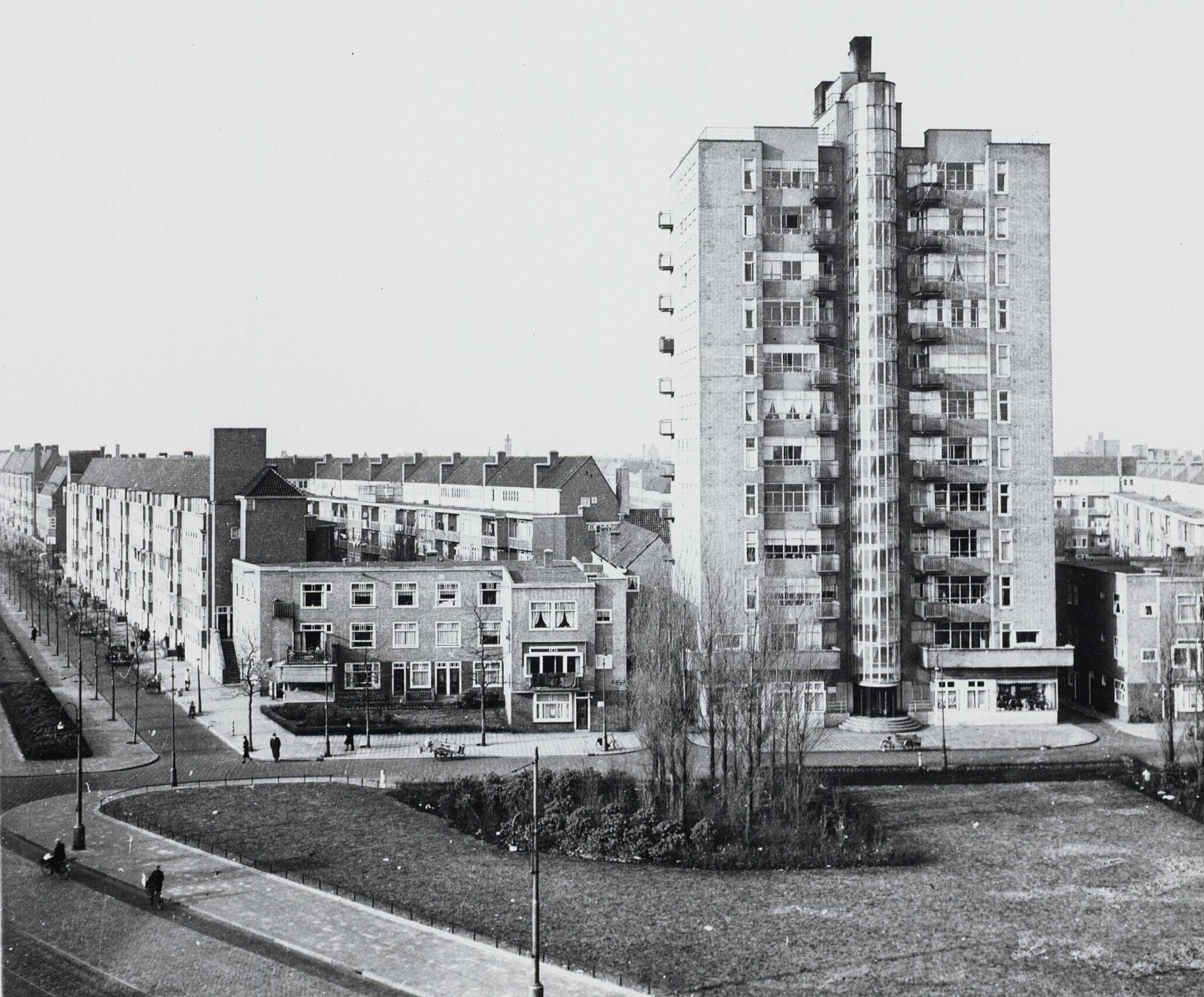
  1. ^ Zie Rian Verhoeven, Anne Frank was niet alleen: het Merwedeplein, 1933-1945, Amsterdam: Prometheus, 2019, p. 33-35.


Goslar family home | Zuider Amstellaan 16

In the context of the construction of Plan-Zuid, the Amsterdam city council decided on March 22, 1923, to call this avenue the Zuider Amstellaan.[1] Hanneli Goslar and Hello Silberberg, among others, lived on the Zuider Amstellaan.

On May 8, 1946, the name was changed to Rooseveltlaan, after American president F.D. Roosevelt.

Footnotes

  1. ^ Stadsarchief Amsterdam, Dienst Bevolkingsregister, Woningkaarten, inv. nr. 432, tabblad.


Großhandlung im Metzgerei-Bedarfsartikelen

Address: Luisenstraße 32, Osnabrück.[1]

This business in butcher shop supplies was set up by Aäron van Pels, the father of Hermann van Pels. Registration with the Chamber of Industry and Commerce took place on 31 July 1922. As a result of the anti-Semitic measures of the National Socialist regime, is was deleted from the register on 19 September 1938.[2] Due to the proximity of the Osnabrücker slaughterhouse, the company was conveniently located.

Hermann worked here approximately from 1932 until his emigration to the Netherlands. He was a sales representative, a full-time job,[3] and he traveled especially to Oldenburg and Ostfriesland.[4] He earned an estimated Reichsmark 500 to RM 600 per month.[1]

Footnotes

  1. a, b Niedersächsisches Landesarchiv (NLA), Standort Hannover: Entschädigungsakten Hermann van Pels, Nds. 110W, Acc. 70/95 Nr. 540, formulier "Schaden im beruflichen Fortkommen", 1 februari 1967.
  2. ^ NLA, Nds. 110W, Acc 70_95 Nr. 538: Beschikking inzake "Entschädigung", 15 januari 1969.
  3. ^ NLA, Entschädigungsakten Hermann van Pels, Nds. 110W, Acc. 70/95 Nr. 540: Verklaring Albert Rose, 23 april 1968.
  4. ^ NLA, Entschädigungsakten Hermann van Pels, Nds. 110W, Acc. 70/95 Nr. 540: "Vermerk zum Vergleich", 310-1.c.


Hamburg

From 24 July to 3 August 1943, the British air force carried out several intensive bombing raids on Hamburg.[1] Given these circumstances, it is logical that the city of Hamburg was mentioned in the Secret Annex.[2]

Footnotes

  1. ^ Zie onder meer: "De luchtaanval op Hamburg", Nieuwsblad van het Noorden 26 juli 1943.
  2. ^ Anne Frank, Diary Version B, 3 August 1943, in: The Collected Works, transl. from the Dutch by Susan Massotty, London [etc.]: Bloomsbury Continuum, 2019.


Holland America Line, Pier 5, Hoboken

A fire at the Hoboken dock on 30 June 1900 had resulted in many deaths. And in 1921, a fire had destroyed Hoboken Piers 5 and 6. A fire in 1944 destroyed Hoboken Pier 4.[1]

Footnotes

  1. ^ Zie: https://en.wikipedia.org/wiki/1900_Hoboken_Docks_fire (geraadpleegd 29 november 2023).


Hollandsche Schouwburg

Located at Plantage Middenlaan 24, in Amsterdam.[1]

Built in 1892 as Artis Schouwburg and renamed Hollandsche Schouwburg after two years.[2] As a result of the measure banning non-Jews and Jews from the same theatres, from June 1941 only Jews were allowed to perform in the building for a Jewish audience and it was renamed the Joodsche Schouwburg.[2]

According to Anne's diary, there was a 'promotion' of the Jewish Lyceum at the Jewish Theatre on 3 July 1942.[3]

From July 1942 to November 1943, the theatre served as an assembly point during the deportation of Jews to Westerbork transit camp and Vught concentration camp.[4] Administrative handling and further care was in the hands of staff of the Jewish Council.[5]

Footnotes

  1. ^ Het Joodsch Weekblad, 16 juli 1943.
  2. a, b Zie http://www.hollandscheschouwburg.nl/geschiedenis/theater (geraadpleegd augustus 2012).
  3. ^ Anne Frank, Diary Version B, 5 July 1942, in: The Collected Works, transl. from the Dutch by Susan Massotty, London [etc.]: Bloomsbury Continuum, 2019.
  4. ^ Zie http://www.hollandscheschouwburg.nl/geschiedenis/jodenvervolging (geraadpleegd augustus 2012); Frank van Vree, Hetty Berg, and David Duindam (eds.), Site of deportation, site of memory. The Amsterdam Hollandsche Schouwburg and the Holocaust, Amsterdam: Amsterdam University Press, cop. 2018.
  5. ^ H. Wielek, De oorlog die Hitler won, Amsterdam: Amsterdamsche Boek- en Courantmaatschappij, 1947, p. 157-161.


Holländer family home, Aachen

From September 1933, Anne and Margot lived with their grandmother in Aachen. Their mother Edith also stayed there a lot. A memorial plaque at the underground parking garage now located on this site marks the former home of Anne Frank's grandmother Rosa Holländer-Stern.[1]

Three Stolpersteine (stumbling stones) commemorate their stay in Aachen.[2]

Footnotes

  1. ^ Zie Wege gegen das Vergessen: Aachen 1933–1945 (geraadpleegd 12 januari 2024).
  2. ^ Zie Wege gegen das Vergessen: Aachen 1933–1945 (geraadpleegd 12 januari 2024).


Home of Aäron van Pels | Domhof, Osnabrück

A Stolperstein (stumbling stone) commemorates Henny van Pels' stay at this address.[1]

Footnotes

  1. ^ Stolpersteine Guide (geraadpleegd 19 januari 2024).


Home of Henny van Pels


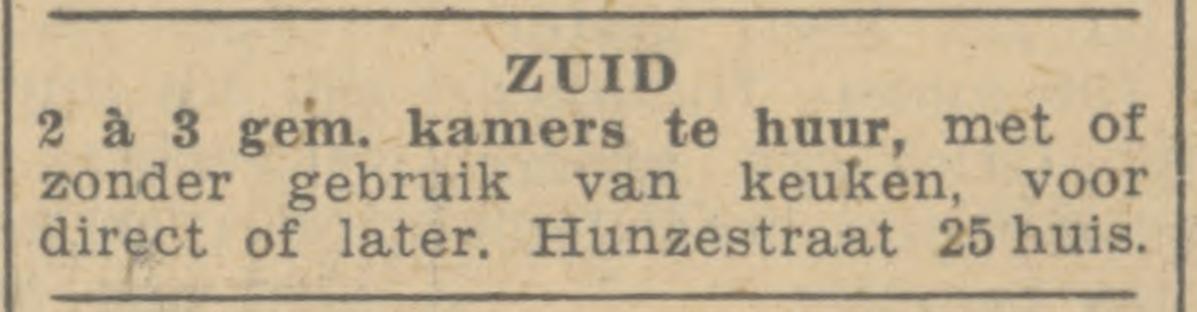
Home of Jan and Miep Gies, Hunzestraat 25, Amsterdam

Hunzestraat 25hs, Amsterdam.

  • Jan Gies was registered at this address from 4 December 1940.
  • Miep was registered here from 16 July 1941 to 1 June 1946.
  • This was Miep's first address after her foster parents' home. According to her memoir Herinneringen, she lived here unmarried with Jan. They lived here with Henderina Stoppelman-van der Reis. Her husband had gone to England in May 1940, so she rented out rooms.
  • Otto Frank had pointed them to the advertisement looking for tenants for these furnished rooms.
  • On 3 June 1945, Otto Frank arrived at 25 Hunzestraat.
  • On 9-10 June 1945, Otto Frank moved with Jan and Miep Gies to Hunzestraat 120, the home of Jan Gies' sister Fenna Gies.


Home of Johannes Kleiman


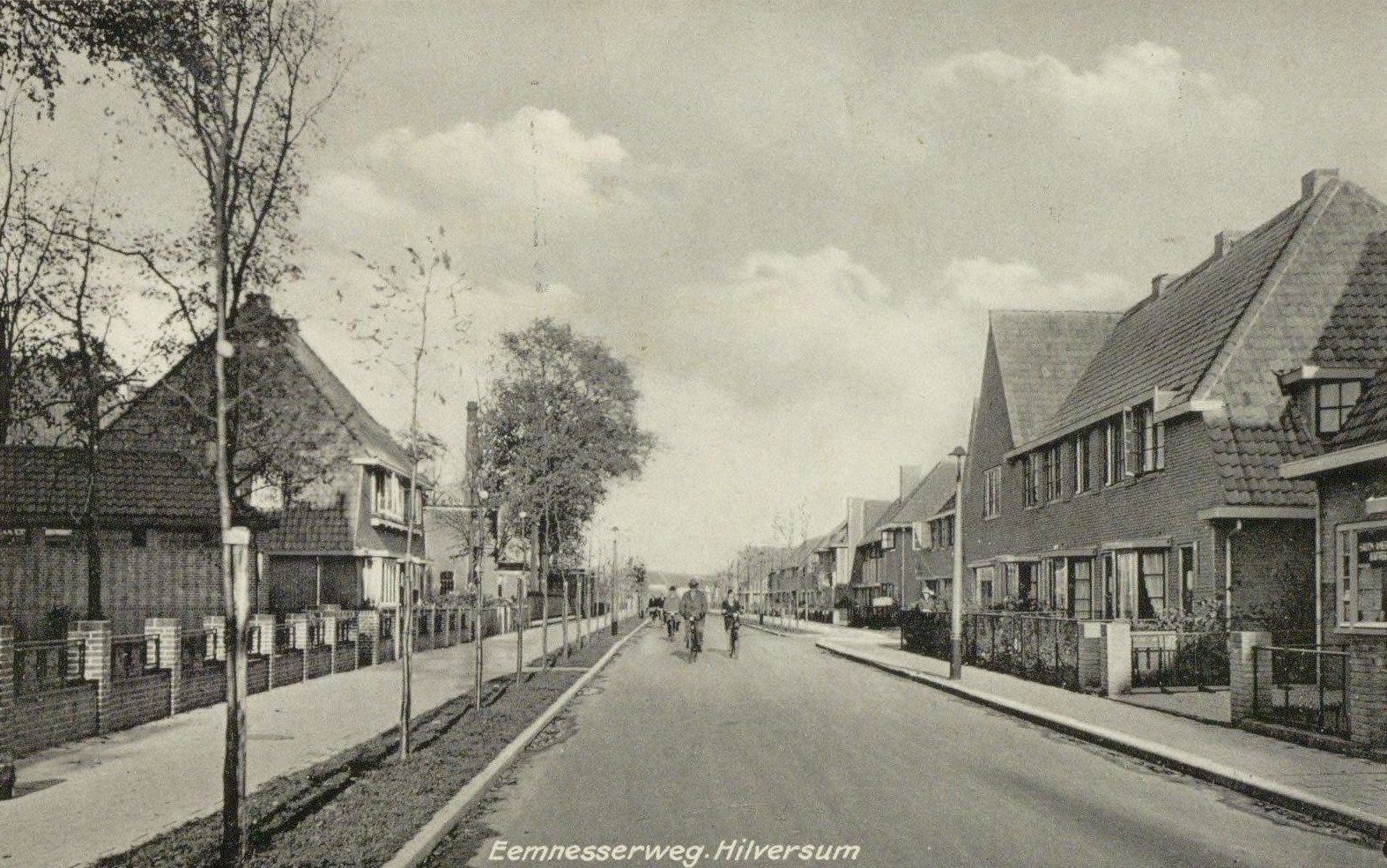
Home of Victor Kugler in Hilversum


Home of Werthauer family in Frankfurt

The Werthauer family lived on on two addresses in Frankfurt before moving to this address in 1932. [1]

Footnotes
  1. ^ Amtlicher Frankfurter Adreßbuch 1932, Frankfurt am Main: August Scherl GmbH, 1932, deel I, p. 770, https://sammlungen.ub.uni-frankfurt.de/periodika (geraadpleegd 22 augustus 2022).


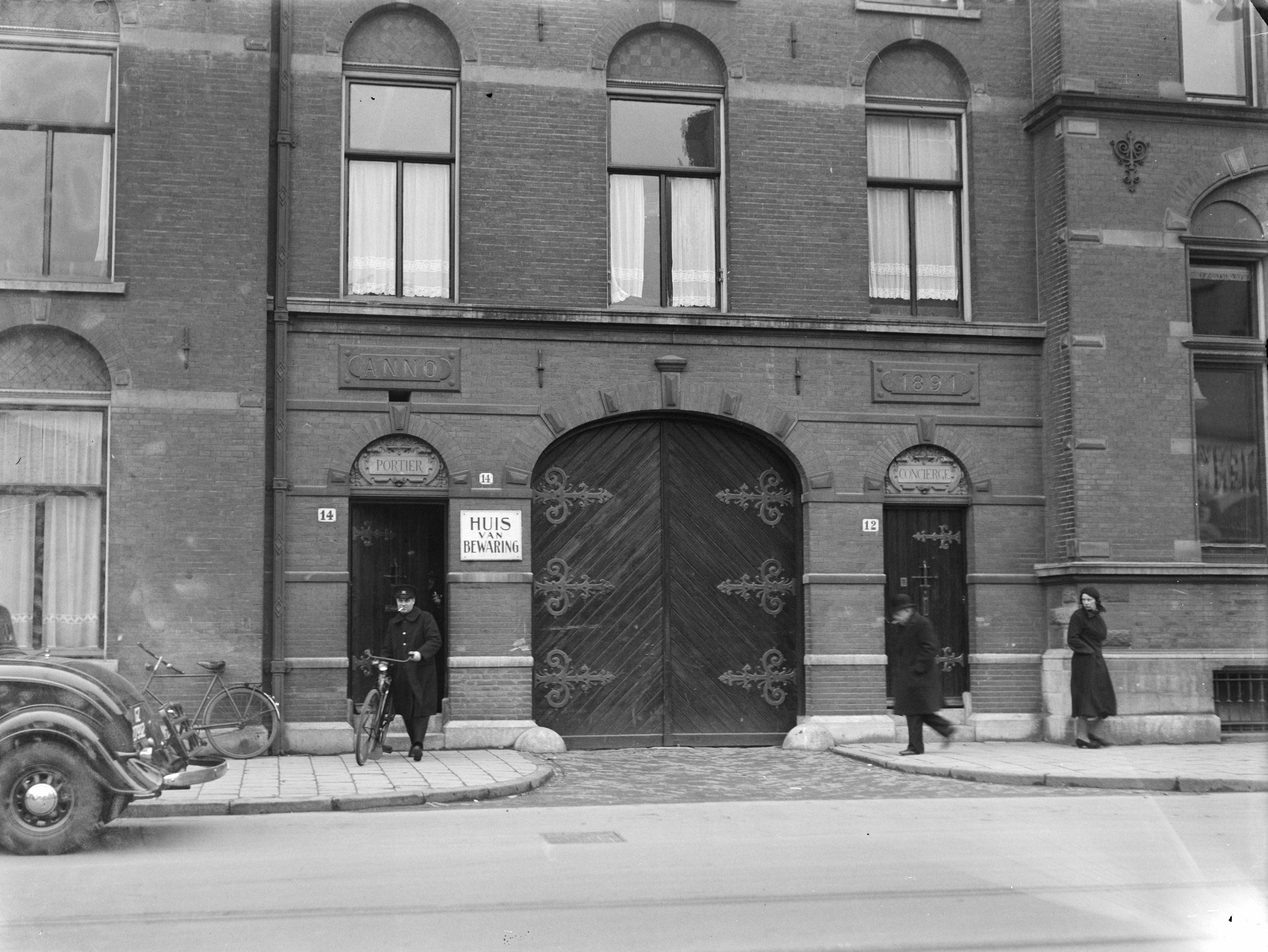
Huis van Bewaring (Detention Centre) I - Kleine-Gartmanplantsoen 14

Huis van Bewaring (Detention Centre) I was located at Kleine-Gartmanplantsoen 14 (between Weteringschans and Leidseplein).[1] During World War II, the Sipo-SD used part of the building as a Polizeigefängnis, to temporarily hold detainees - Jews, resistance fighters, but also black-marketeers - for interrogation. From there, detainees were usually sent on to other holding facilities and camps, such as the Oranjehotel in Scheveningen or concentration and transit camps like Westerbork, Amersfoort and Vught.[2] The prison was closed in 1979 and its inmates transferred to the Bijlmerbajes. The building on Weteringschans was given a new purpose.

Footnotes

  1. ^ Bianca Stigter, Atlas van een bezette stad: Amsterdam 1940-1945, Amsterdam: Atlas Contact, 2019, p. 180-181. Zie ook https://nl.wikipedia.org/wiki/Huis_van_Bewaring_I_(Weteringschans) (geraadpleegd 28 november 2023).
  2. ^ Ralf Futselaar, Gevangenissen in oorlogstijd. 1940-1945, Amsterdam: Boom, 2015.


Huis van Bewaring II (Detention Centre II) - Havenstraat 6 (Amstelveenseweg)

This prison was renamed a Detention Centre before 1940, because the Huis van Bewaring I (Weteringschans) at the Kleine-Gartmanplantsoen had been struggling with a shortage of capacity for years.[1]

After the arrest of the people in the Secret Annex, helpers Johannes Kleiman and Victor Kugler were transferred to Huis van Bewaring II. Resistance fighter Hannie Schaft was in this Huis van Bewaring when she was picked up on 17 April 1945 to be executed in the dunes near Bloemendaal.

Footnotes

  1. ^ Bianca Stigter, Atlas van een bezette stad: Amsterdam 1940-1945, Amsterdam: Atlas Contact, 2019, p. 373-374. Zie ook https://nl.wikipedia.org/wiki/Huis_van_Bewaring_II_(Amstelveenseweg) (geraadpleegd 28 november 2023)


Huize De Biezen

Huize de Biezen was a country house with estate in Barneveld. Before the war it was a work relief camp. During the Second World War, the country house and barracks on the estate were used as a so-called reservation camp for Jews who, according to the German authorities, had a special significance for society.[1]

Footnotes

  1. ^ Zie https://nl.wikipedia.org/wiki/Huize_De_Biezen (geraadpleegd 28 november 2023).


Immigration Department Amsterdam

This department supervised non-Dutch nationals. This included Jewish immigrants, who had to deal with it in the 1930s, but also those Dutch nationals, for example, who served with the Foreign Legion and lost their nationality as a result. The Central Criminal Investigation and Immigration Department offices were at the address Spinhuissteeg 5.


Instituut voor Gymnastiek, Rhytmiek en Massage (Instituut voor Gymnastiek, Rhytmiek en Massage (Institute for remedial gymnastics, rhythmic sports and massage)

Located at Noorder Amstellaan 136 in Amsterdam.[1] The Institute was under the management of S. de Vries and J. de Vries-Leefsma,[2] and also provided massage training.[3]

Anne Frank mistook this institute for a sports club, according to her diary entry of 6 October 1942.[4] It is possible that Anne went there because of her joint problems.[5] However, there are no concrete indications of this.

Footnotes

  1. ^ Algemeen Adresboek voor de stad Amsterdam 1938, p.1532; Het Joodsche Weekblad, 12 juni 1942 en 10 juli 1942.
  2. ^ Het Joodsche Weekblad, 12 juni 1942.
  3. ^ Het Joodsche Weekblad, 10 juli 1942.
  4. ^ Anne Frank, Diary Version A, 6 October 1942, in: The Collected Works, transl. from the Dutch by Susan Massotty, London [etc.]: Bloomsbury Continuum, 2019.
  5. ^ Anne Frank, Diary Version A, 12 January 1944, in: The Collected Works; Anne Frank Stichting, Getuigenarchief, Rinat: Iterview met Ab Rinat door Teresien da Silva, 18 oktober 2006.


Israelitische Elementarschule (Israelite Elementary School), Osnabrück

The school was right next to the synagogue in the Katharinenviertel (Katharinen quarter).[1]

Footnotes
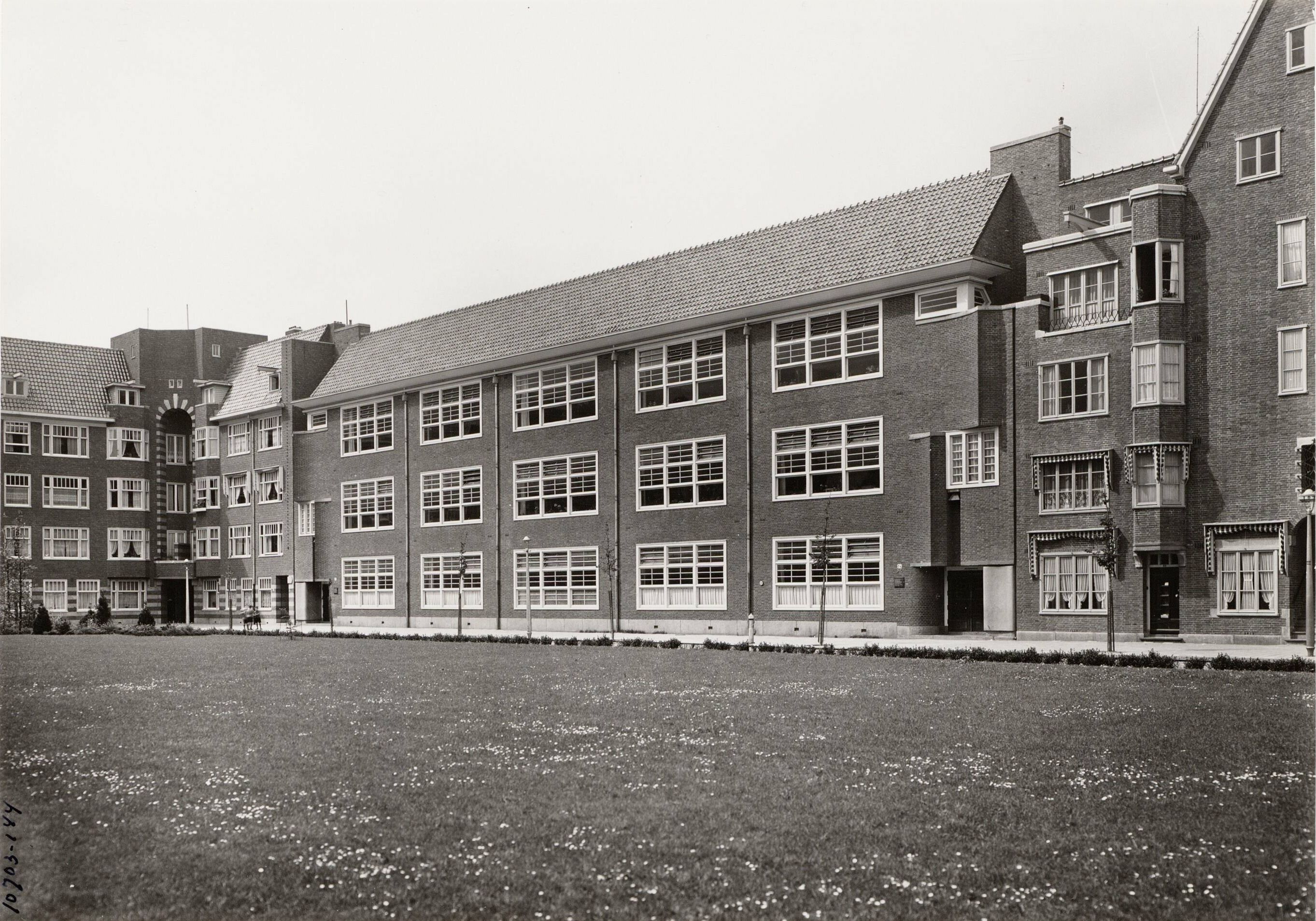
  1. ^ Zie https://de.wikipedia.org/wiki/Katharinenviertel_(Osnabrück) (geraadpleegd 28 november 2023).


Jekerschool

In September 1941, two new Jewish schools for all Jewish children from the area wer established in the building. The non-Jewish children of the old school had to go to other schools in the neighourhood.


Jewish Lyceum

Address: Voormalige Stadstimmertuinen 1, Amsterdam.[1]

On 3 April 1912, the Amsterdam city council decided to give the street between Amstel and Weesperplein the name Voormalige Stadstimmertuin.[2] That name was chosen because of the carpentry workshop or city carpentry garden that was located here from 1660 to 1900.[3]

Before 1940, the Hoogere Burger School (HBS; Higher Civic Scool) with a 5-year course was located at number 2.[4] In 1941, as a result of anti-Jewish measures, in a school building across the street the Jewish Lyceum was established.[5] According to the Meldungen aus den Niederlanden, there were complaints about teachers who gave enormous favour to their Jewish students in order to demonstrate their anti-German attitude. Schools known as 'Judenfreundlich', such as the Amsterdam Lyceum, would therefore have a large attendance. This was seen as an undesirable development by the German authorities.[6]

On 8 August 1941, an ordinance was promulgated stating that as of September 1, Jewish students and teachers were prohibited from attending regular schools and educational institutions. They were housed in separate schools with exclusively Jewish students and teachers. In Amsterdam the municipality was responsible for implementing this decision.[7] The first day of classes was on Wednesday, 15 October 1941.[8] Headmaster of the newly formed Jewish Lyceum Amsterdam was W.H.S. Elte.[9] When there were almost no students and teachers left after the raids of May and June 1943, education at the Jewish Lyceum came to an end in September of that year. [10]

Margot and Anne both went to the Jewish Lyceum. Anne writes that Margot would certainly receive cum laude if that were possible at their school.[11] 

In the first pages of the diary, Anne writes extensively about classmates and teachers.[12] These notes were written before the time in hiding, between 12 June and 6 July 1942. Anne paints her classmate Danka Zajde rather negatively here,[13] but when she thinks back to her a year and a half later, this is no longer the case.[14] In September, after more than two months in hiding, Anne wrote a 'farewell letter' to Jacqueline. After all, she didn't get to say goodbye to her. In this letter she briefly repeats the events of the fifth of July.[15] In her book of Tales Anne writes about various events that took place at the Jewish Lyceum and the people involved.[16]

Footnotes
  1. ^ Bianca Stigter, Atlas van een bezette stad: Amsterdam 1940-1945, Amsterdam: Atlas Contact, 2019, p. 237-238.
  2. ^ Referred to by Anne as Stadstimmertuinen. Anne Frank, Diary Version B, 24 June 1942, in: The Collected Works, transl. from the Dutch by Susan Massotty, London [etc.]: Bloomsbury Continuum, 2019.
  3. ^ Stadsarchief Amsterdam, Dienst Bevolkingsregister, Woningkaarten, via Indexen, eerste kaart (codenr. 1745).
  4. ^ Algemeen Adresboek voor de stad Amsterdam 1938, p. 2215.
  5. ^ Dienke Hondius, Absent. Herinneringen aan het Joods Lyceum Amsterdam 1941-1943, Amsterdam: Vassallucci, 2001, p. 15. Alsoe see: Dienke Hondius, 'Anne Frank was a face in the crowd', in: Anne Frank Magazine 2001, p. 32-37.
  6. ^ J. Presser, Ondergang. De vervolging en verdelging van het Nederlandse Jodendom, 1940-1945, 's-Gravenhage: Staatsuitgeverij, 1965, deel I, p. 135.
  7. ^ Hondius, Absent, p. 39-41.
  8. ^ NIOD Instituut voor Oorlogs-, Holocaust en Genocidestudies, Amsterdam, Archief 181e (W.S.H. Elte), inv. nr. 1: Brief van de rector aan Inspecteur der Lycea, 10 oktober 1941.
  9. ^ Hondius, Absent, p. 70-71.
  10. ^ Hondius, Absent, p. 228.
  11. ^ Anne Frank, Diary Version B, 5 July 1942, in: The Collected Works.
  12. ^ Anne Frank, Diary Version A, 14 June 1942, in: The Collected Works.
  13. ^ Anne Frank, Diary Version A, 15 June 1942, in: The Collected Works.
  14. ^ Anne Frank, Diary Version A, 8 and 18 March 1944, in: The Collected Works.
  15. ^ Anne Frank, Diary Version A, 25 September 1942, in: The Collected Works.
  16. ^ Anne Frank, Tales and events from the Secret Annex, "Do You Remember?", "My First Day at the Lyceum", "A Biology Lesson" and "A Maths Lesson", in: The Collected Works.


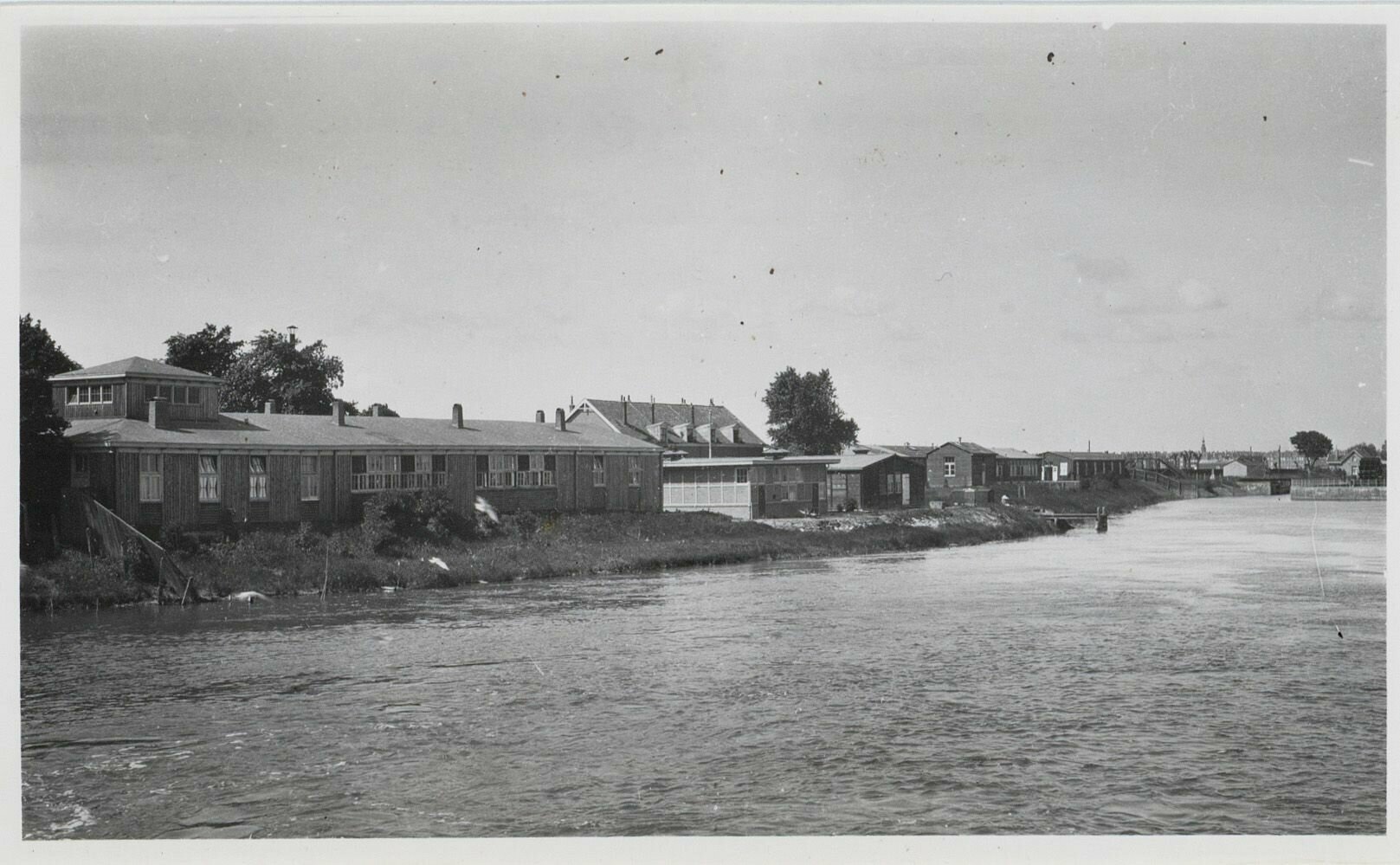
Jewish Refugee Camp, Zeeburg Quarantine Institution

From 1916 onwards, a quarantine facility for infectious patients was in use at the end of the Zeeburgerdijk. The sheds were empty in the early 1930s, but when refugees from Germany started arriving the following years, they were put back into use. This is how the Jewish Refugee Camp Quarantiane Institution Zeeburg came into being. The commander issued a strict Lager- und Dienstordnung on 8 January 1940.[1]

In January 1940, thirty-seven boys, who had previously been in the Gouda orphanage, stayed in one of the barracks.[2]

While waiting for his emigration visa application, Walter Holländer, Edith Frank's brother, stayed here for almost a year, from December '38 to December '39, after which he could leave by ship for the US.[3]

Herman and Herbert Wilp, two brother of whom a photo has been preserved from around 1941 showing them together with Anne Frank, were also in Camp Zeeburg in December '38 and January '39.[4]

Footnotes

  1. ^ Nationaal Archief (NL-Ha-NA), Den Haag: Zorg voor Vluchtelingen uit Duitsland (BiZa / Vluchtelingen Duitsland), nummer toegang 2.04.58, inv. nr. 70: "Lager- und Dienstordnung", 8 januari 1940.
  2. ^ NL-HaNA, BiZa / Vluchtelingen Duitsland, 2.04.58, inv.nr. 70: Rapport 7 januari 1940, p. 1-2.
  3. ^ Stadsarchief Amsterdam (SAA), Dienst Bevolkingsregister, Archiefkaarten (toegangsnr. 30238): Archiefkaart W. Holländer.
  4. ^ SAA, Dienst Bevolkingsregister, Archiefkaarten (toegangsnummer 30238): Archiefkaarten Herman Wilp en Herbert Wilp


Jozef Israëlskade

From 18 July 1919, the quay along the north side of the Amstel Canal had been named after the painter Jozef Israëls. On 14 August 1942, the mayor decided to change the name to Tooropkade, a decision that was revoked on 18 May 1945.[1] The 1942 name change was related to the decision to change the names of streets named after Jews.[2]

During the construction of Plan-Zuid, the municipality established a ferry service between Jozef Israelskade and Amstelkade.[3] When the bridge between Ferdinand Bolstraat and Scheldestraat was put into use, this service ceased to exist. Cornelis Staal then received permission from the municipality to operate the ferry on his own account.[4]

Footnotes
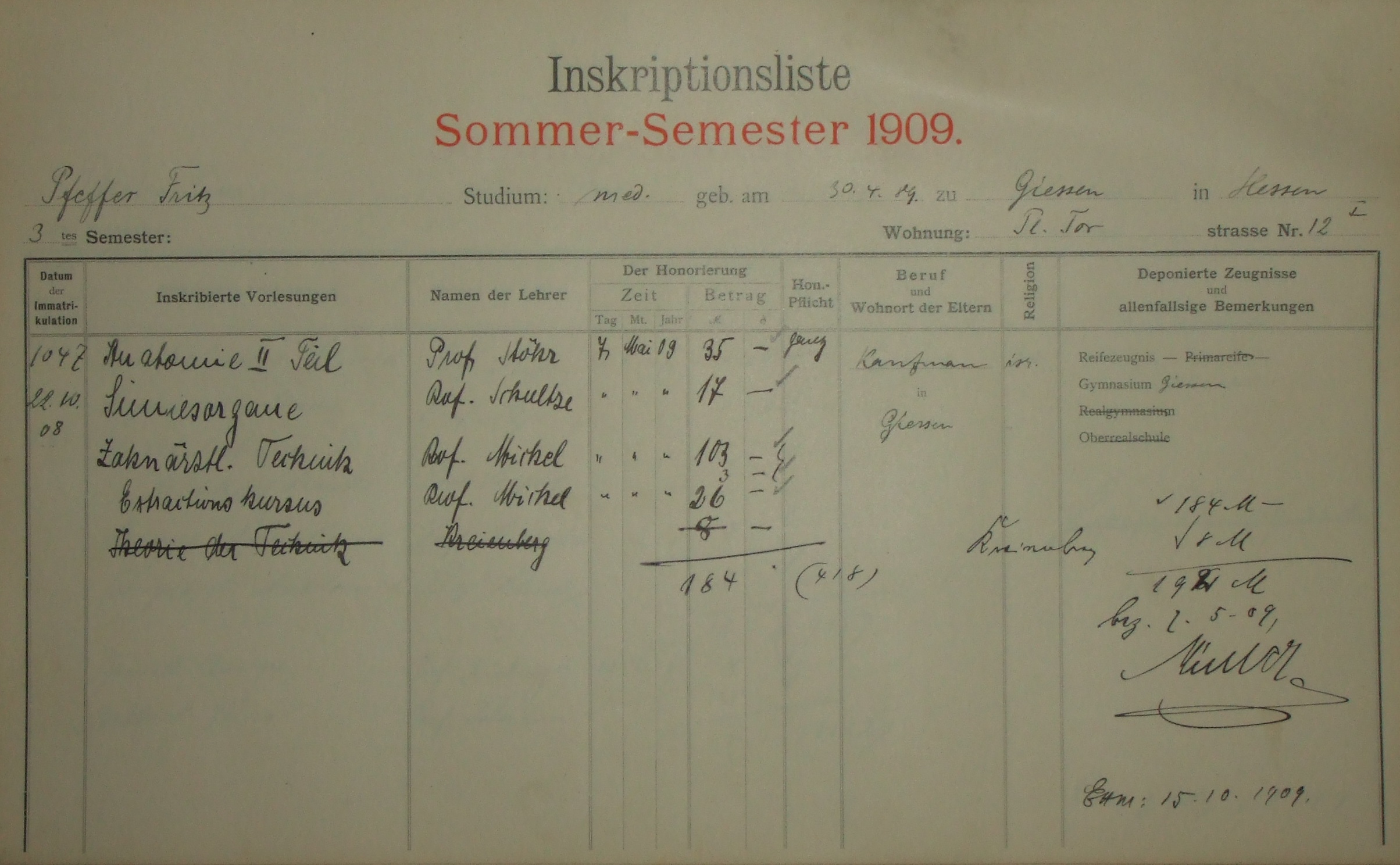
  1. ^ Stadsarchief Amsterdam, Dienst Bevolkingsregister, Woningkaarten, inv. nr. 436, tabblad.
  2. ^ J. Presser, Ondergang. De vervolging en verdelging van het Nederlandse jodendom 1940 – 1945, 's-Gravenhage: Staatsuitgeverij, 1965, deel I, p. 115-116.
  3. ^ Anne writes about this ferry in her diary. Anne Frank, Diary Version B, 24 June 1942, in: The Collected Works, transl. from the Dutch by Susan Massotty, London [etc.]: Bloomsbury Continuum, 2019.
  4. ^ E-mail van Tonny Noël, 2 december 2009. De echtgenoot van mevrouw Noël is een kleinzoon van Staal.


Julius Maximilians University

The Julius Maximilian University of Würzburg is the oldest university of Bavaria.[1]

Footnotes

  1. ^ Zie https://en.wikipedia.org/wiki/University_of_Würzburg (geraadpleegd 27 november 2023).


Jüdische Volksschule, Aachen

In 1938, the year of Kristallnacht, in which the synagogues were set on fire, all Jewish students were expelled from other primary and secondary schools. This meant that the Jewish primary school became the only school that Jewish children in Aachen were still allowed to attend.[1]

Footnotes

  1. ^ Jüdische Schule", Wege gegen das Vergessen Aachen 1933-1945 (geraadpleegd 14 juli 2022).


Kamp Auschwitz-Birkenau - Rampe

This arrival platform at Auschwitz II-Birkenau was not put into operation until May 1944. Before that, the Alte Judenrampe between Auschwitz I and Auschwitz II-Birkenau was the arrival area. A connecting gate was laid from the Alte Judenrampe to the Neue Rampe.


Katowice
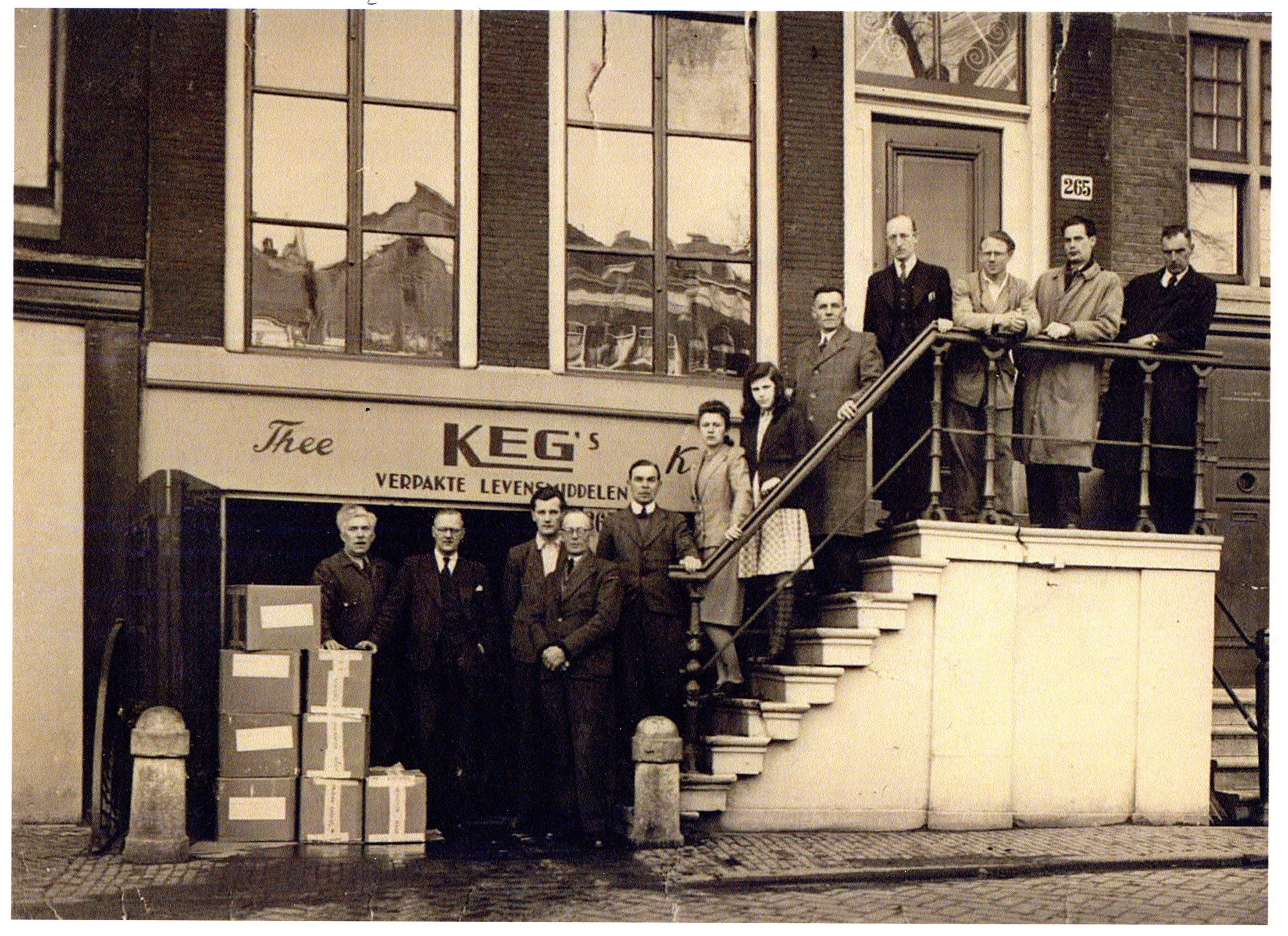


Keg Thee en Koffie, firma C. (C. Keg Tea and Coffee Co.)

This branch of a wholesale company of coffee, tea and packaged foodstuffs was located at Prinsengracht 265, Amsterdam, next to Otto Frank's business premises (as of 1 December 1940).

As well as Opekta and Gies & Co. (and other companies), Keg regularly suffered from burglaries. The staff was therefore assigned night-time guard duty.[1] Before the period in hiding, there were several known burglaries in the building. One of these was committed via the then vacant neighboring building 263.[2] Reports were made by branch manager Jacob Boon and warehouse manager Hendrik Mussche.

Keg also had to contend with crime after the liberation: 'On behalf of N.V. Keg's Groothandel, P 265 in A-dam, a report is made of the theft of 7½ KG raisins, from a shipment of 2900 KG, sent from R-dam to the addressee by expedition. Bijloo.'[3]

Because the building on Prinsengracht had a basement and no ground floor, Keg had a garage at Egelantiersstraat 8.[4]

On 5 February 1940, there was a collision on Columbusplein in which a Keg van, driven by H.J. Mooseker, was involved.[5]

Footnotes

  1. ^ Nationaal Archief, Den Haag, Centraal Archief Bijzondere Rechtspleging, inv. nr. 23892: Rijksrecherche, p.v.b. 86/1963 v.H.
  2. ^ Stadsarchief Amsterdam (SAA), Gemeentepolitie Amsterdam, inv. nrs. 6437 en 6439: Rapporten Marnixstraat van 29 juli en 2 september 1940, en 8 maart 1941.
  3. ^ SAA, Gemeentepolitie Amsterdam, inv. nr. 3274: Meldingsrapp. wachtcomm. recherche 17-18 november 1945, mut. 14.00.
  4. ^ SAA, Gemeentepolitie Amsterdam, inv. nr. 6382: Afschrift rapport Westerstraat, 27 april 1942, 15.00 uur.
  5. ^ SAA, Gemeentepolitie Amsterdam, inv. nr. 5933: Rapport Willem Schoutenstraat, 5-6 februari 1940.


Kerkstraat 225 I and II

On the second floor of Kerkstraat 225 lived Branca Simons. She worked together with Ans van Dijk in betraying Jewish people in hiding. Both women were Jewish themselves, but collaborated with the Sicherheitsdienst (SD). The first floor was used as a decoy address for Jewish people in hiding, who were then handed over to the SD.[1] Erich and Heinz Geiringer were brought to this address by Maria (Miep) Braams-Baerts in early May 1944. Here they were arrested by Sicherheitsdienst investigator Peter Schaap.[2]

Footnotes
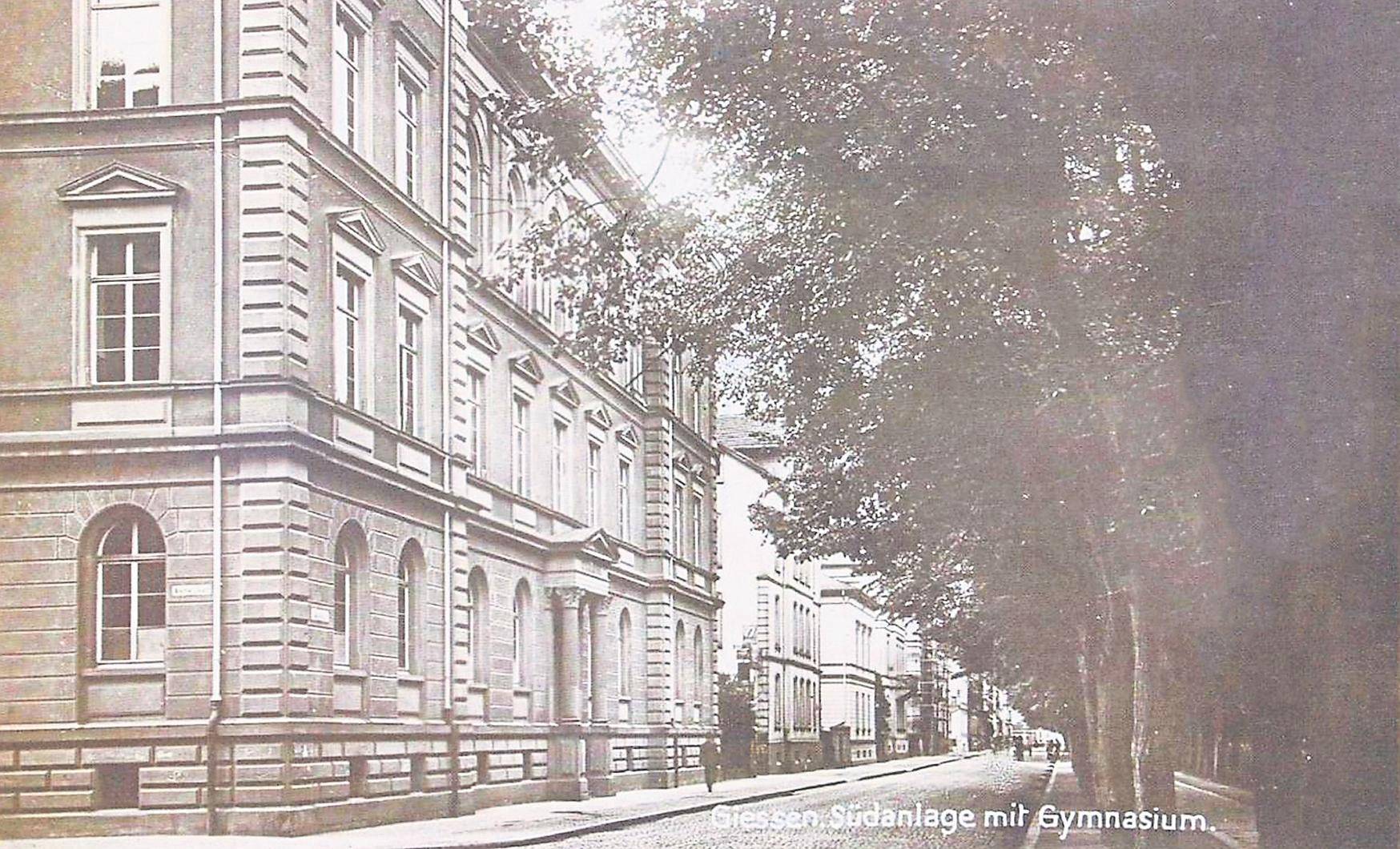
  1. ^ Bianca Stigter, Atlas van een bezette stad. Amsterdam 1940-1945, Amsterdam, Atlas Contact, 2019, p. 180.
  2. ^ Nationaal Archief, Den Haag, Centraal Archief Bijzondere Rechtspleging, inv. nr.: 75212, p. 5-9.


Landgraf-Ludwigs-Gymnasium (Grammar School)

The school was founded in 1605 by Landgrave Ludwig V of Hesse-Darmstadt as a Latin school, making it the oldest high school in Giessen.[1]

Footnotes

  1. ^ Zie https://de.wikipedia.org/wiki/Landgraf-Ludwigs-Gymnasium (geraadpleegd 27 november 2023).


Lessing Gymnasium (Grammar School)

Numerous well-known people were and are connected to the school.[1]

Footnotes
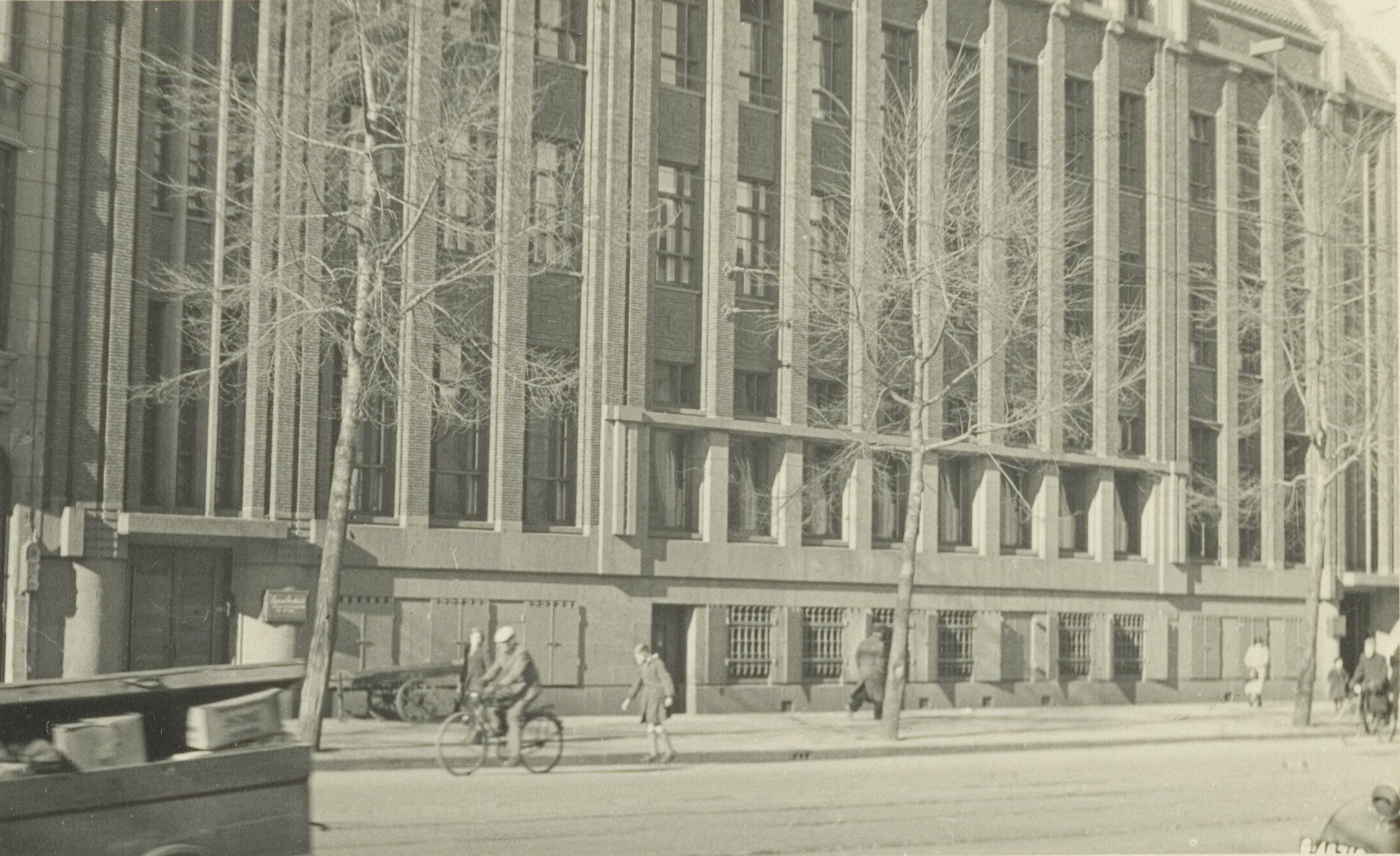
  1. ^ Zie https://de.wikipedia.org/wiki/Lessing-Gymnasium_(Frankfurt_am_Main) (geraadpleegd 27 november 2023).


Lippmann, Rosenthal & Co.

The bank Bank Lippmann, Rosenthal & Co. Sarphatistraat, usually called "LiRo", was founded in 1941 by the German occupier to take money and valuable goods from Jews in the Netherlands. To deceive Jews that it was a branch of the bank Lippmann, Rosenthal & Co. located on the Nieuwe Spiegelstraat in Amsterdam, it was also given that name, but that bank had (almost) nothing to do with the LiRo. The Jewish management of Lippmann, Rosenthal & Co. was fired in 1941 due to Aryanization.

The LiRo was part and parcel of the anti-Jewish policy, aimed at robbing Jews. Colloquially, the bank was also called "German Robbery Bank" or "Nazi Bank".[1] The first LiRo regulation (148/1941) of 8 August 1941 and the second LiRo regulation (58/1942) of 21 May 1942 regulated the mandatory surrender of everything of value: art, precious metals and stones, money, checks, effects etc.[2] 

A LiRo department was also located in Westerbork transit camp. During the registration procedure, incoming prisoners had to exchange a certain amount of money for camp currency. They had to hand over the rest of their money and valuables to LiRo.[3]

The total value of what Otto Frank handed over to the LiRo amounted to approximately 13,000 guilders.

Footnotes

  1. ^ Bianca Stigter, Atlas van een bezette stad: Amsterdam 1940-1945, Amsterdam: Atlas Contact, 2019, p. 234-235. Zie ook https://en.wikipedia.org/wiki/Lippmann,_Rosenthal_%26_Co._(Sarphatistraat) (geraadpleegd 27 november 2023).
  2. ^ Verordeningenblad voor het Bezette Nederlandsche Gebied. Jaar 1941, p. 624-628 en Jaar 1942, p. 289-300.
  3. ^ Het Nederlandse Rode Kruis, Den Haag, Collectie Westerbork en de reconstructie van de lotgevallen na WOII, 1939-2007, inventaris, p. 40 (een bedrag van 250 gulden wordt hier genoemd).


Ludwig Richter Schule

Free learning was the focus here. The director Walter Hüsken, co-founder of the Radical Democratic Party, was one of the first teachers to be fired by the National Socialists in April 1933.


Macy's Herald Square

Its flagship store is located at Herald Square in Manhattan.[1]

Footnotes

  1. ^ Robert M. Grippo, Macy's: the store, the star, the story, Garden City Park, NY: Square One, 2009. Zie ook:  https://en.wikipedia.org/wiki/Macy%27s (geraadpleegd 28 november 2023).


Marseille


Mauthausen Concentration Camp

Mauthausen concentration camp was used by the Nazis as a punishment camp for political prisoners, resistance fighters and Jews.[1] They had to work under harsh conditions in a quarry, mining granite. Through sub-camps, prisoners were put to work in other factories. Of the nearly 200,000 prisoners, 95,000 perished. It was liberated by the US army on 5 May 1945.

Footnotes

  1. ^ Zie: https://en.wikipedia.org/wiki/Mauthausen_concentration_camp (geraadpleegd 28 november 2023).


Mauthausen camp - Sanitätslager

As with most Nazi concentration camps, the living and working conditions for the prisoners were very poor. In the spring of 1944, there were 9,000 prisoners in the main camp, almost half of whom languished without care in the Sanitätslager. At the end of January 1945, most of the prisoners from Auschwitz concentration camp came to the Sanitätslager, followed in February by prisoners from Groß-Rosen and Sachsenhausen. The arrival of evacuated prisoners from the Vienna camps and the Lower Danube in April made the situation even worse.[1]

Footnotes

  1. ^ Zie: https://de.wikipedia.org/wiki/KZ_Mauthausen#Errichtung_des_Lagers_2 (geraadpleegd 28 november 2023).


Melk camp

As the Soviet army approached Auschwitz in mid-January 1945, Peter van Pels was sent on one of the many death marches used to clear the camp. On 25 January 1945, Peter van Pels arrived at Mauthausen camp. After several days of quarantine, Peter was transported to Melk camp on 29 January 1945.[1]

Mauthausen

Melk camp was one of the sub-camps of Mauthausen concentration camp.[2] Mauthausen had been established in 1938 as a camp for male prisoners. They had to perform extremely hard forced labour in the area's stone quarries. The camp was run by camp commander and ss-Standartenführer Franz Ziereis (1905-1945).[3]

Mauthausen was a camp of the toughest category. Due to the harsh regime and hard work in the quarries, mortality rates were extremely high. It was a combination of labour and extermination. The prisoners literally worked themselves to death. The diet was calculated to give a life expectancy of three to four months. Some 190,000 people were deported to Mauthausen, over 90,000 of whom died.[4]

Melk

Melk camp was established as a concentration camp for male prisoners on 21 April 1944. Melk was located in a former barracks, perched on the south-western edge of the town of Melk on the banks of the Danube. The camp commander was Julius Ludolph (1893-1947). The camp held an average of seven thousand prisoners of various nationalities. There were a striking number of young Jewish men under the age of 20 in Melk.[5]

The prisoners had to work as forced labourers on a project code-named Quarz, which involved the prisoners building an underground factory in a mountain to produce machine parts for tanks and aircraft. Due to the increase in Allied air raids in late 1943, aircraft and weapons factories were moved to secret underground locations so that war production could continue.[6]

With the arrival of the 29 January 1945 transport from Mauthausen, Melk had 10,314 prisoners. Between January and April 1945, 3106 people died here due to illness, accidents, beatings, or being shot. In one year, about 5,000 of the approximately 15,000 prisoners in Melk camp died.[7]

Heavy forced labour

It was mainly the extremely hard forced labour to which many prisoners succumbed. In three shifts, the prisoners worked day and night drilling, excavating and shoring up the tunnel corridors, draining (quartz) sand, manufacturing the beams needed to shore up the tunnels, loading and unloading building materials and other construction work in the huge factory complex.[8]

The prisoners worked under the supervision of SS officers, kapos and civilian workers. Each day, the prisoners attended roll call before marching downhill out of the camp in blocks of five by five under the guard of SS officers. The prisoners were forced to march in a line arm-in-arm to prevent anyone from escaping. If any of them made an escape attempt, the whole row was shot.[8]

Medical care was non-existent in Melk. The sick prisoners were left to fend for themselves and in some cases gassed or shot.[9]

Evacuation

In early April 1945, as the Soviet army drew ever closer and was about to capture Vienna, Melk camp was evacuated in great haste. On 11 April 1945, the sick from the infirmary and the young men from the camp were sent back to Mauthausen by train. Peter van Pels was also among them.[10]

On 5 May 1945, a reconnaissance unit of the US Third Army entered Mauthausen camp and Mauthausen was liberated. According to the Mauthausen death book, Peter van Pels died on 10 May 1945.[11]

Footnotes

  1. ^ Bas von Benda-Beckmann Na het Achterhuis. Anne Frank en de andere onderduikers in de kampen, Amsterdam: Querido, 2020, p. 268, 276, 280-281.
  2. ^ Zie: https://de.wikipedia.org/wiki/KZ_Melk (geraadpleegd 28 november 2023).
  3. ^ Von Benda-Beckmann Na het Achterhuis, p. 275.
  4. ^ Von Benda-Beckmann Na het Achterhuis, p. 274 en 276.
  5. ^ Von Benda-Beckmann Na het Achterhuis, p. 281.
  6. ^ Von Benda-Beckmann Na het Achterhuis, p. 275-276, 280.
  7. ^ Von Benda-Beckmann Na het Achterhuis, p. 281.
  8. a, b Von Benda-Beckmann Na het Achterhuis, p. 282-283.
  9. ^ Von Benda-Beckmann Na het Achterhuis, p. 284.
  10. ^ Von Benda-Beckmann Na het Achterhuis, p. 285.
  11. ^ Von Benda-Beckmann Na het Achterhuis, p. 286.


Merwedeplein

As part of the construction of Plan-Zuid (South Plan), the Amsterdam city council took the decision on 16 February 1927 to name the square, bordered by Waalstraat, Jekerstraat and Roerstraat, Merwedeplein.[1] The square has become well known because of the home of Otto Frank and his family, located at number 37 II.[2] They lived there from 1933 until they went into hiding in July 1942. But they were not the only Jewish families on this square and in this neighbourhood. In addition to the many Dutch Jewish families, many foreign Jews lived on this square, many of them German Jewish refugees.[3] The half-Jewish son of the famous German comedian Rudolf Nelson lived at number 23. And at number 59 II lived Michel Velleman with his family. Velleman, better known by the stage name Ben Ali Libi, was a Dutch magician and illusionist. The family of Anne Frank's friend Hanneli Goslar moved into an apartment on Merwedeplein in February 1933 and Fritzi Markovitz, Otto Frank's second wife, also lived on Merwedeplein before the war with her then husband Erich Geiringer, son Heinz and daughter Eva.[4]

Anne Frank referred to the square twice in her diary as 'the Merry'.[5] Daily life in her old neighbourhood provided many memories. She missed the old life on Merwedeplein for all kinds of reasons, but also because of the comfort: she preferred central heating to smoky stoves.[6]

Footnotes

  1. ^ Zie: Wikipedia: Merwedeplein  (geraadpleegd 19 november 2022).
  2. ^ Zie: Geerthe Schilder & Annemarie de Wildt, 'Merwedeplein 37 II', in: Ons Amsterdam, 05/04/2006.
  3. ^ Harriët Salm, 'Wie waren de buren van Anne Frank? Historica Rian Verhoeven zocht het uit', in: Trouw, 28 november 2019; Hanneloes Pen, 'Op zoek naar de buren van Anne Frank', Het Parool, 26/11/2019..
  4. ^ Voor de lotgevalllen van een aantal bewoners van het Merwedeplein, zie Rian Verhoeven, Anne Frank was niet alleen: het Merwedeplein, 1933-1945, Amsterdam: Prometheus, 2019.
  5. ^ Anne Frank, Diary Version B,  8 November 1943 and 7 March 1944, in: The Collected Works, transl. from the Dutch by Susan Massotty, London [etc.]: Bloomsbury Continuum, 2019.
  6. ^ Anne Frank, Diary Version A, 7 November 1942, in: The Collected Works.


Merwedeplein 3

Ruth Offenstadt (9 September 1911 – 27 April 2010) was married to Fritz Toby. Their daughter Hannah was born in 1934. After their emigration to the Netherlands they divorced, and in 1937 Ruth went to live with Hannah on Merwedeplein.[1] In Amsterdam she met Max Nussbaum, a young rabbi from Berlin. They married on 7 July 1938 in Amsterdam and moved to Berlin. They fled to the United States in 1940.[2]

Footnotes

  1. ^ Zie Rian Verhoeven, Anne Frank was niet alleen: het Merwedeplein, 1933-1945, Amsterdam: Prometheus, 2019, p. 75.
  2. ^ Verhoeven, Anne Frank was niet alleen, p.304.


Merwedeplein 37-II, Amsterdam

Anne first wrote in her diary, which she was given for her thirteenth birthday on 12 June 1942, in the apartment. Three weeks later the family went into hiding.

The Ymere housing corporation bought the property in 2004, and restored the building in its original 1930s style in partnership with the Anne Frank House,[1] which became the owner of the Frank’s family former home on Merwedeplein in 2017.

Four Stolpersteine (stumbling stones) commemorate the stay of the Frank family at this address.[2] The interior of the Frank's family former home can be seen in 3D via Google Arts & Culture.[3]

Footnotes

  1. ^ Zie Piet de Rooy e.a., Het andere huis van Anne Frank: geschiedenis en toekomst van een schrijvershuis, Bussum: Thoth, 2006
  2. ^ Zie https://map.stolpersteine.app/nl/amsterdam/locaties/merwedeplein-37-ll-zuid (geraadpleegd 11 januari 2024).
  3. ^ Google Arts & Culture, Anne Frank's family home (geraadpleegd 24 januari 2024).


Municipal Air Raid Precaution Service

Address: Since 1939 established at Keizersgracht 609-611, Amsterdam.[1]

This municipal service was established in 1937. Its task was to limit the number of victims in the event of an air raid as much as possible by making preparations - such as raising alarms, ordering blackouts out and setting up air raid shelters - to provide assistance to those affected and to limit material damage.[2]

On 16 May 1940, the German authorities announced that the initial suspension of air protection had been lifted. Blackouts and unwanted light emissions were strictly monitored.[3] In June 1940, mayor De Vlugt once again emphasized the great importance of adequate blackouts. The police and the Air Protection Service both had a role in monitoring this.[4]

Jacques Presser writes in Ondergang that on 1 July 1940 General-Major der Ordnungspolizei Schumann ordered that (among other things) all Jews should be expelled from the Air Defense before the fifteenth. The reason was that members of the Air Raid Service alledgedly had incited demonstrations on Prince Bernhard's birthday.[5]

Police and Air Raid Wardens could take action if light was emitted during blackout hours. This happened at Prinsengracht 263 on 4 March 1941, when two police officers forced the door open in the evening to turn off a lamp that was still alight.[6]

In January 1942, a German regulation was introduced that tightened air raid precaution measures. Acting in violation of regulations (for example concerning blackouts) could be punished with detention or a fine.[7]

Footnotes

  1. ^ Algemeen Handelsblad, 10 september 1939, ochtendeditie; Bianca Stigter, Atlas van een bezette stad: Amsterdam 1940-1945, Amsterdam: Atlas Contact, 2019, p. 177.
  2. ^ Stadsarchief Amsterdam (SAA), toegangsnr. 5227, Archief van de Luchtbeschermingsdienst: Inleiding op de inventaris van het archief van de Luchtbeschermingsdienst, versie 21.1, 30 mei 2012.
  3. ^ ʼGeen zichtbaar licht!‘, Nieuws van den Dag, 16 mei 1940.
  4. ^ ʼVerduistering moet afdoende zijn‘, Algemeen Handelsblad, 12 juni 1940, ochtendeditie.
  5. ^ J. Presser, Ondergang. De vervolging en verdelging van het Nederlandse Jodendom, 1940-1945, 's-Gravenhage: Staatsuitgeverij, 1965, deel I, p. 18-19.
  6. ^ SAA, Gemeentepolitie Amsterdam, inv. nr. 6439: Rapporten Marnixstraat, 4 maart 1941, mut. 10.00 n.m.
  7. ^ ʼLuchtbeschermingsverordening‘, Verordeningenblad voor het bezette Nederlandsche gebied 1942, p. 57-67, aldaar p. 65; Anne Frank, Diary Version B, 25 March 1943, in: The Collected Works, transl. from the Dutch by Susan Massotty, London [etc.]: Bloomsbury Continuum, 2019.


Municipal Lyceum for Girls

The building now houses the Joke Smit College for adult education.[1]

Footnotes

  1. ^ Eva Bleeker, Het Gemeentelijk Lyceum voor Meisjes, Oneindig Noord-Holland (geraadpleegd 28 november 2023).


Nederlandse Pectine Industrie

Addresses: Rotterdam (1932), Singel 157, Amsterdam (April 1933); Chasséstraat 30 (January 1934); Karel van Gelderlaan 20, Oosterbeek (3 January 1936).[1]

Founded in Rotterdam in 1932 , the company was engaged in the manufacture and sale of pectin and related items. Its product's name was 'Pen-Jel', and the manufacturer competed with Opekta by, among other things, advertising a boiling time of eight minutes ,[2]. whereas Opekta required 10 minutes.[3] In 1939, due to the disappointing fruit harvest, Opekta and Pen-Jel agreed to maintain prices and not give away gifts.[4]

The Nederlandsche Pectine Industrie did business with Sangostop.[5]

The trade  information agency Van der Graaf had doubts about the business integrity of its director in 1936, but a year later the agency was more positive.[6]

In 1950, the company was still located at the address in Oosterbeek, which also housed the 'Ned. Malt Prod. Ind.' [7]

Footnotes

  1. ^ Noord-Hollands Archief, Haarlem, Handelsregister, Kamer van Koophandel Amsterdam, inv. nr. 630, dossier 43299.   
  2. ^ Advertentie, Nieuwsblad van het Noorden, 10 juli 1935
  3. ^ Advertentie (‘Surpriseweek’), De Telegraaf, 27 juni 1936.
  4. ^ Anne Frank Stichting, Anne Frank Collectie, reg. code A_Opekta_I_004: 'Bericht over het boekjaar 1939'.
  5. ^ Stadsarchief Delft, Nederlandse Gist- & Spiritusfabriek (NG&SF) (toegang 188), inv. nr. 4683: kasboek Sangostop 1934 - 1935, post 295.  
  6. ^ NIOD Instituut voor Oorlogs-, Holocaust- en Genocidestudies, Amsterdam, inv. nr. 292, N.V. Nederlandsche Opekta Maatschappij: Rapport over Pen-Jel.
  7. ^ Telefoongids 1950.


Nieuwe De la Mar Theater

After Theater De la Mar ran into financial difficulties in 1950, Wim Sonneveld took over the management of the theater. The name was changed to the Nieuwe De la Mar theater and Wim Sonneveld remained involved with the DeLaMar theater until his death in 1974.[1]

Footnotes

  1. ^ Zie https://nl.wikipedia.org/wiki/DeLaMar (geraadpeegd 27 november 2023).


Oase

Lunchroom and ice cream buffet located at Geleenstraat 1, Amsterdam.[1] The case was registered at the Chamber of Commerce on 4 May 1940 by Max Gallasch.[1] Oase was one of the catering establishments in Amsterdam South where Jews could continue to go.[2] In the evening of May 21, 1941, members of the Hitlerjugend and NSB wanted to invade the shop. Six police officers managed to prevent this.[3]

Footnotes

  1. a, b Noord-Hollands Archief, Haarlem, Handelsregister, Kamer van Koophandel Amsterdam, dossiernr. 33054185; Bianca Stigter, Atlas van een bezette stad: Amsterdam 1940-1945, Amsterdam: Atlas Contact, 2019, p. 428.
  2. ^ Anne Frank, Diary Version A, 30 June and 8 July 1942; Diary Version B, 20 June 1942, in: The Collected Works, transl. from the Dutch by Susan Massotty, London [etc.]: Bloomsbury Continuum, 2019.
  3. ^ Stadsarchief Amsterdam, Gemeentepolitie Amsterdam, inv. nr. 2959: Rapport bureau Pieter Aertszstraat, 22 mei 1941, 22.30.


Odessa

A headline from 30 March 1944 says: Odessa centre of Soviet attack.[1] On the night of 9-10 April, German troops evacuated the city.[2] On 10 April, the Red Army entered Odessa.[3] Odessa was mentioned in Anne's diary because of the battle that raged here at the end of March.[4]

Otto Frank, when returning from Auschwitz on 21 May 1945, left Odessa on the Monowai for Marseille.

Footnotes

  1. ^ Het Vaderland, 30 maart 1944.
  2. ^ De Tijd, 11 april 1944.
  3. ^ L. de Jong, Het Koninkrijk der Nederlanden in de Tweede Wereldoorlog, deel 7Mei ’43 – Juni ’44, tweede helft, 's-Gravenhage: Nijhoff, 1976, p. 1293.
  4. ^ Anne Frank, Version A, 31 March 1944, in: The Collected Works; [transl. from the Dutch by Susan Massotty; transl. from the German language by Kirsten Warner and transl. from the Dutch language by Nancy Forest-Flier]. London [etc.]: Bloomsbury Continuum, 2019. ISBN 978-1-4729-6491-5.


Office of the General Medical Council

From their hometown in Germany, both Fritz Pfeffer and his brother Ernst Pfeffer sent in the mid-1930s a request for registration as a dentist in the United Kingdom to the General Medical Council (GMC) in London.[1] This organization assessed whether refugees with a medical profession were eligible for residence and work permits.[2]

Footnotes

  1. ^ University College London, The survey of London. Former General Medical Council offices, 44–50 Hallam Street, 4 maart 2016: https://blogs.ucl.ac.uk/survey-of-london/2016/03/04/former-general-medical-council-offices-44-50-hallam-street/ (geraadpleegd 20 februari 2024).
  2. ^ The minutes of the General Medical Council (G.M.C. London) Volume 72 - 1935. Reports on Applications for Registration of Foreign dentists under the Dentists Act 1878, p. 245-251; Volume 74 - 1937. Reports on Applications for Registration of Foreign dentists under the Dentists Act 1878, p. 239-242.


Opekta | Prinsengracht 263

It has been home to the Anne Frank House since 1960.


Opekta | Singel

The property previously housed the textile firm Hofhuis & Janus. It was also the home address of Joop Hofhuis in the late 1920s,[1] and his brother-in-law owned it.[2] It therefore looks like Otto Frank was able to move to this location through his business network.

From the summer of 1933, Opekta visited fairs and women's organisations across the country for years to demonstrate the product. In January 1937, its own company kitchen served as a demonstration room. The second class of the Alkmaar household school visited the Singel on the 20th to learn the use of Opekta.[3]

In November of 1940, Opekta and Pectacon moved to Prinsengracht 263. A short time later, the paramilitary Resistance Division (WA) of the National Socialist Movement (NSB) occupied Singel 400 as a Unit House.[4]

Footnotes

  1. ^ Stadsarchief Amsterdam (SAA), Dienst Bevolkingsregisters, Gezinskaarten, toegang 5422, gezinskaart J.A.W. Hofhuijs (een eerder gecorrigeerde verschrijving is bij de digitalering opnieuw overgenomen).
  2. ^ SAA, Gemeentepolitie Amsterdam, toegang 5225, inv. nr. 7055, rapportenboek bureau Warmoesstraat, 24 april 1940, mut. 5.30 uur n.m.
  3. ^ “Huishoud- en industrieschool”, Alkmaarsche Courant, 31 maart 1937, p. 2. 
  4. ^ SAA, Gemeentepolitie Amsterdam, inv. nr. 2956, processen-verbaal inzake gevechten 10 en 11 februari 1941, verklaring P.B. Ruppert, d.d. 18 februari 1941; Bianca Stigter, Atlas van een bezette stad: Amsterdam 1940-1945, Amsterdam: Atlas Contact, 2019, p. 197.


Perry & Co

Perry & Co., N.V. Trading Company was located at Kalverstraat 93-99, Amsterdam.[1] It was a shop selling toys, stationery, household items, and board games, among other things.[2] Anne Frank writes in her diary that she wants to ask Bep Voskuijl to check at Perry's to see if any diaries are still available there.[3]

Footnotes

  1. ^ Algemeen Adresboek der stad Amsterdam. 85ste jaargang, 1938-1939, p. 986. Zie ook: 'Perry begon in 1866 met 'voorwerpen voor huiselijk gebruik', NOS Nieuws, 22 februari 2016.
  2. ^ "Wij zoeken:", Het Volk, 1 september 1944, p. 2.
  3. ^ Anne spelled the name of the shop as Perrij. Anne Frank, Diary Version A, 20 October 1942, in: The Collected Works, transl. from the Dutch by Susan Massotty,  London [etc.]: Bloomsbury Continuum, 2019.


Pier 60- 62, New York

They were part of the Chelsea Piers, a series of piers in Chelsea, on the west side of Manhattan in New York City, the berths for ocean liners on the west side of Manhattan from 1910 to the 1930s.[1]

Footnotes

  1. ^ Zie: https://en.wikipedia.org/wiki/Chelsea_Piers (geraadpleegd 29 november 2023)


Prad, Reclameadvies- en advertentiebureau (Prad Advertising Consultancy and Agency)

Address: Herengracht 168, Amsterdam.[1]

Prad was an advertising agency that Otto Frank was in contact with after the war. Before the war, Maurice Aronson had been very successful with his advertising agency Arc's. When he set up another agency after the war, he again looked for a four-letter name. He considered choosing 'Prograd' ('progression and advertising'), but eventually accepted his wife's suggestion to call the business 'Prad'.[2]

In 1949, Prad agency offered Otto Frank two proof drawings, made by (Arthur) Goldsteen, for the proposed publication of the little story written by Anne while in hiding, Do you remember? [3] [4]

In 1963, Prad was one of the largest advertising agencies in the Netherlands.[5]

Footnotes

  1. ^ Anne Frank Stichting (AFS), Anne Frank Collectie (AFC), Otto Frank Archief (OFA), reg. code OFA_101: M.A. Aronson aan Otto Frank, 3 mei 1949.
  2. ^ R.P.M. van Rossum, Van advertentiekruier tot reclameadviesbureau: de ontwikkeling in Nederland, de Verenigde Staten en Duitsland voor de Tweede Wereldoorlog (proefschrift Universteit van Amsterdam, 2012), p. 215 (noot 78).
  3. ^ Zie noot 1. Uiteindelijk zullen omslag en illustraties gemaakt worden door Kees Kelfkens. In de lente van dat jaar heeft Otto Frank het bureau enkele keren in zijn agenda staan.AFS, AFC, reg. code OFA_006: Agenda Otto Frank 1949 (aantekeningen bij 26 april, 24 mei en 11 juni).
  4. ^ Anne Frank, Tales and Events from the Secret Annex, "Do You Remember?", in: The Collected Works; [transl. from the Dutch by Susan Massotty; transl. from the German language by Kirsten Warner and transl. from the Dutch language by Nancy Forest-Flier]. London [etc.]: Bloomsbury Continuum, 2019. ISBN 978-1-4729-6491-5.
  5. ^ Van Rossum, Van advertentiekruier tot reclameadviesbureau, p. 236 (noot 102).


Pyramide van Austerlitz

The Pyramid of Austerlitz was and still is a popular destination for school excursions.[1]

Footnotes

  1. ^ Zie: https://en.wikipedia.org/wiki/Pyramid_of_Austerlitz (geraadpleegd 29 november 2023).


RKO Palace Theatre

The Palace Theatre is a Broadway theater at 1564 Broadway, facing Times Square, in Manhattan.[1]

Footnotes

  1. ^ Zie https://en.wikipedia.org/wiki/Palace_Theatre_(New_York_City) (geraadpleegd 27 november 2023)


Raguhn camp

On 7 February 1945, Auguste van Pels was transported from Bergen-Belsen concentration camp for work in Raguhn. Raguhn was a relatively small camp located on the western edge of the German village of Raguhn and was one of the sub-camps of Buchenwald concentration camp.[1] The SS-Kommando Heerbrandtwerke AG in Raguhn was headed by SS-Hauptscharführer Herbert Dieckmann (1906-1986) and SS-Obersturmführer Hermann Grossmann (1901-1948). It employed about 45 male and female guards.[2]

Buchenwald

Buchenwald main camp came into existence as early as 1937 and was one of the first and largest concentration camps on German soil. Between 1938 and 1945, around 240,000 people were imprisoned there. Like many other concentration camps, Buchenwald had numerous sub-camps over a large area, which were called outer camps or (outer) commands.[2]

After arriving in Raguhn, the women were re-registered. Since the Raguhn sub-camp was part of Buchenwald concentration camp, they were included in that camp's records and given 'Buchenwald numbers'.[3]

Forced labour

In Raguhn, between five and seven hundred women had to work in an aircraft parts factory of Junkers Flugzeug- und Motorenwerke AG. The women wore striped prisoners' clothing so that they were clearly identifiable. At the factory, the women had to assemble aircraft parts under the supervision of plainclothed supervisors.[3]

Each week, shifts changed between day and night shifts. The work was heavy and inefficient. Due to the chaos of the final phase of the war, the factory faced a constant shortage of materials, which meant there was too little work for all the women in the camp. The prisoners also regularly had to seek refuge in shelters while working because of Allied bombing raids.[4]

Conditions

In Raguhn, the women did not sleep in standard barrack huts, but in a number of former workshops and sanitary rooms. The prisoners were starving and about 10 per cent of the women were too sick to work. Many had already arrived sick from Bergen-Belsen. Over time, typhus fever also broke out in the camp. Women died in the camp from a variety of conditions: pneumonia, heart failure, meningitis and intestinal diseases.[4]

Evacuation

In early April 1945, US troops approached Buchenwald camp and the SS decided to evacuate the Raguhn sub-camp. On 9 April 1945, guards again loaded the women from Raguhn into freight wagons, this time for transport to Theresienstadt. After a chaotic journey, they arrived there on 16 April 1945. Auguste van Pels had died during the train journey.[5]

Footnotes

  1. ^ Bas von Benda-Beckmann, Na het Achterhuis. Anne Frank en de andere onderduikers in de kampen, Amsterdam: Querido, 2020, p. 260.
  2. a, b Von Benda-Beckmann, Na het Achterhuis, p. 261.
  3. a, b Von Benda-Beckmann, Na het Achterhuis, p. 262.
  4. a, b Von Benda-Beckmann, Na het Achterhuis, p. 263, 265.
  5. ^ Von Benda-Beckmann, Na het Achterhuis, p. 265-267.


Rivierenlaan 270-I


Roermond


Rotterdamsche Vacantie School, Hoek van Holland (Rotterdam Holiday School, Hook of Holland)

It was intended for Jewish illegal refugees from Germany. The camp, together with 15 other camps, was a precursor to the central Westerbork reception camp. Ultimately, the men could not stay in the Rotterdam Vacation School and were moved to an empty slaughterhouse along the railway, some distance from the village.[1]

Footnotes

  1. ^ Laura van Vuuren, Joodse illegale vluchtelingen werden in slachthuis weggestopt, Algemeen Dagblad, 5 mei 2020.


Ruprecht-Karls-Universität Heidelberg

The Ruprecht-Karls-Universität in Heidelberg is the oldest university in Germany as it exists today.[1]

Footnotes

  1. ^ Zie https://de.wikipedia.org/wiki/Ruprecht-Karls-Universität_Heidelberg (geraadpleegd 27 november 2023).


Sachsenhausen concentration camp

Sachsenhausen was a concentration camp from 1936 until its liberation by the Red Army on 22 April 1945, located 35 kilometers from Berlin in the town of Oranienburg. The camp was built by prisoners in 1936, during the Olympic Games in Berlin. About 200,000 people were imprisoned in Sachsenhausen from 1939 to 1945. No reliable figures are available for the period from 1936 to 1939. Prisoners included political opponents, prisoners of war, Jews, 'anti-socials', Sinti and Roma, homosexuals and Jehovah's Witnesses.[1]

Footnotes

  1. ^ Zie https://en.wikipedia.org/wiki/Sachsenhausen_concentration_camp (geraadpleegd 19 november 2022).


Schaffelaar Castle

Schaffelaar estate is a park with country house in Barneveld, in Gelderland. Locally it is called Schaffelaar Castle.[1]

Footnotes

  1. ^ Zie: https://nl.wikipedia.org/wiki/Landgoed_Schaffelaar (geraadpleegd 28 november 2023).


Schellekens Borduur- en Plisseerateliers (Schellekens Embroidery and Pleating Studios)

De firma Schellekens' Borduur- en Plisseerateliers was van 1915 tot 1938 gevestigd aan de Nieuwe Herengracht 5-9.[1] Jan Gies werkte hier. Hij woonde in die periode op de adressen Stuyvesantstraat 55 en Maasstraat 10 III, later II.[2] Die adressen in aanmerking genomen, begon hij bij Schellekens tussen eind december 1928 en juli 1931. Hij ging weg tussen september 1931 en januari 1936. Volgens Miep, die Jan hier heeft leren kennen, werkte hij er als boekhouder.[3]

Footnotes

  1. ^ Stadsarchief Amsterdam (SAA), Schellekens Borduur- en Plisseerateliers, toegang 30498: Inleiding op het archief van Schellekens' Borduur- en Plisseerateliers en dochterondernemingen.
  2. ^ SAA, Schellekens Borduur- en Plisseerateliers , inv. nr. 76: Adresboek personeel Schellekens.
  3. ^ Miep Gies & Alison Leslie Gold, Herinneringen aan Anne Frank. Het verhaal van Miep Gies, de steun en toeverlaat van de familie Frank in het Achterhuis, Amsterdam: Bert Bakker, 1987, p. 32-33.


Sixth Montessori school

The Sixth Montessori School is successively located on Dintelstraat, Amsterdam; Niersstraat 43 (kindergarten, May 23, 1934);[1] Niersstraat 41 (primary school).[2]

From 9 April 1934 to 13 July 1935, Anne Frank attended Preparatory School No. 51, the kindergarten of the Sixth Montessori School.[3] In May '34, that school moved from Dintelstraat to Niersstraat.[1] Anne moved it. She was in Miss Baldal's class. Two photos have been preserved showing Anne with Miss Baldal.[4] Head mistress of the school was Bernardina Cohen.[5] She remained so until 1941.[1] As of 1955 the school was called Blauwe Zeedistel.

Anne also received primary education at the Sixth Montessori School. Her mother wrote to a former neighbor in Frankfurt in March 1935: 'Think about it: today I have to register Anne for school; She will probably stay in the Montessori school.'[6] The date of Anne's admission was 16 August 1935.[7]

She was successively taught by Mr. Van Gelder, Miss Godron and Miss Kuperus.[8] According to school records, Anne was in class 6A with Miss Kuperus. Miss Kuperus was head mistress of the primary school.[2]

Anne was actually supposed to attend a seventh year of primary school, but this could not happen due to the exclusion of Jews from regular education. She therefore immediately went on to secondary school, namely the Jewish Lyceum.[8] In September 1941, one hundred and fifty-eight Jewish children had to leave the Sixth Montessori School. After the war, a memorial plaque was placed in the school building. The school was named after Anne Frank on 12 June 1957. [9]

In 1983, a large mural of a passage from Anne's diary was painted on the facade.[10] In translation, it reads: 'I love Holland. I who, having no native country, had hoped it would become my fatherland, and I hope it still will. yours, Anne M. Frank.'

Footnotes

  1. a, b, c Anne Frank Stichting (AFS), Anne Frank Collectie (AFC), reg. code A_Montessori_I_001: Handgeschreven notitie en brief Gemeente Amsterdam, 28 april 1934, voorin inschrijfboek.
  2. a, b Algemeen Adresboek voor de stad Amsterdam 1938, p. 33 (voorwerk).
  3. ^ AFS, AFC, reg. code A_Montessori_I_001: leerlingenregister Voorbereidende school No. 51, volgnummer 293.
  4. ^ AFS, AFC, reg. code A_AFrank_III_055: "Blanco Electro Monster Huishoudboek 1937", nrs. 26 en 28.
  5. ^ Algemeen Adresboek der stad Amsterdam. 85ste jaargang, 1938-1939, Amsterdam: Ellerman, Harms & Co., p. 35.
  6. ^ AFS, AFC, reg. code A_getuigen_I_090: Edith Frank aan Gertrud Naumann, 26 maart 1935.
  7. ^ AFS, AFC, reg. code A_Montessori_I_002: Inschrijvingsregister Montessorischool, volgnummer 109.
  8. a, b Anne Frank, Diary Version A, 16 June 1942, in: The Collected Works, transl. from the Dutch by Susan Massotty, London [etc.]: Bloomsbury Continuum, 2019.
  9. ^ Bas Mol e.a. (red.), 6e Montessorischool Anne Frank. 75 jaar en springlevend!, Amsterdam: 6e Montessorischool Anne Frank, 2008, p. 48.
  10. ^ Schoolgids 6e Montessorischool Anne frank 2010 2011, p  5.


Skyscraper

The Skyscraper, or the 12-storey house, is a striking building in Amsterdam's Plan Zuid due to its height. It is located at Victorieplein, which was named Daniël Willinkplein before the war.[1] Upon completion, the Telegraaf called the building the second skyscraper in Amsterdam. The first one was the Candida building at 120 Nieuwezijds Voorburgwal, where Otto Frank established his Opekta firm in 1933. The materials used were made as much as possible by Dutch industry[2]

Footnotes

  1. ^ Zie http://www.zuidelijkewandelweg.nl/archief/architectuur/submenuwolkenkrabber.htm (geraadpleegd augustus 2014).
  2. ^ "Onze tweede Wolkenkrabber", De Telegraaf, 11 september 1931.


Sobibor extermination camp

Sobibor was not a prison camp, but set up by the Nazis simply to murder Jews. The Jews were brought in by train and gassed shortly after arrival. Almost no one avoided this. The camp operated from April 1942 to October 1943. Between 170,000 and 250,000 people perished, including more than 34,000 Dutch Jews.[1]

Footnotes

  1. ^ Zie: https://en.wikipedia.org/wiki/Sobibor_extermination_camp (geraadpleegd 28 november 2023).


State Inspectorate of Population Registers

Located at Scheveningseweg 17, The Hague.

In the 'Kleijkamp building' on the Scheveningseweg, the Rijksinspectie kept all receipts of issued identity cards, accompanied by passport photos and signatures. This meant that any proof of identity could be quickly verified by the Dutch or German police. For a long time, the Dutch government in London did not sufficiently realise this danger because of inadequate information from the Netherlands. At the insistence of the underground in the Netherlands, a plan was devised to destroy the files. It was not known to this part of the underground that some of the personnel manipulated documents to sabotage the verification.

On Tuesday 11 April 1943, the building was attacked and destroyed by six Mosquitoes at three in the afternoon. 59 employees were killed, including some of the saboteurs. Nevertheless, the destruction of the documents made taking care of people in hiding and forging identity cards much easier.[1]

Anne Frank mentions in her diary that the building was attacked by a bomber and that all Dutch people should get new identity cards.[2]

Footnotes

  1. ^ L. de Jong, Het Koninkrijk der Nederlanden in de Tweede Wereldoorlog : deel 7: mei '43 - juni '44 : tweede helft, 's-Gravenhage: Nijhoff, 1976, p. 797-804.
  2. ^ Anne refers to it as Pub. Registration Office. Anne Frank, Diary Version A, 15 April 1944, in: The Collected Works, transl. from the Dutch by Susan Massotty, London [etc.]: Bloomsbury Continuum, 2019.


São Paulo


T. Peppink & Sons, Machine Factory

Address: Looiersgracht 32-38, Amsterdam.[1]

This factory emerged from an old mill making company. The Peppink family has been practicing this profession since the industry worked on wind power. In 1878, one of the remaining windmills of the old bulwark at the Bloemgracht disappeared. The Peppink company rebuilt it on the Haarlemmerweg on behalf of two timber traders.[2].With the further demise of the windmill, the company started to focus on mechanical engineering, in particular on industrial cross mills.

In the spring of 1941, Peppink set up the Pectacon mill and applied for the necessary licence under the Nuisance Act.[3] Peppink supplied a spice mill of the model 300AN.[4] This mill was suitable for grinding finer products.[5]

On 25 March 1942, the license was transferred to Gies & Co.[3] When the inventory from Pectacon was transferred to Gies & Co. because of the 'Aryanization', the two Peppink mills were included.[6]

Kugler later had a small Peppink mill made of stainless steel in his office.[7] Peppinkmolens users included Bakery. W.J. Siemons and the O.V.V. dairy factory.

From 1997 onwards, the Machine factory G.R. Veerman continues the activities of the Peppink company, under the name Peppink Mills.[8]

Footnotes

  1. ^ J.H. van den Hoek Oostende, De molens van Amsterdam in oude ansichten, deel 3, Zaltbommel: Europese Bibliotheek, 1983, fotobijschrift 2; Stadsarchief Amsterdam (SAA), Dienst Bouw- en Woningtoezicht; afdeling Hinderwet- en Milieuzaken: dossier 24799 betreffende Hinderwetvergunning Prinsengracht 263, 1941-1978.
  2. ^ Van den Hoek Oostende, De molens van Amsterdam, fotobijschrift 2
  3. a, b SAA, Bouw- en Woningtoezicht: dossier 24799
  4. ^ Peppink Mills, Olst: verkooplijst fa. T. Peppink & Zn. voor slagkruismolen model 300AN, 1936-1948, tussen 23 mei en 4 juli 1941.
  5. ^ E-mail van Ruud Veerman (Peppink Mills) aan Gertjan Broek (Anne Frank Stichting), 8 januari 2016.
  6. ^ Anne Frank Stichting (AFS), Anne Frank Collectie: Jinnelt orderboek.
  7. ^ AFS, Getuigenarchief: foto afkomstig van dhr. Van Tellingen. Dit is een model 100AN.E-mail Ruud Veerman, 8 januari 2016.
  8. ^ E-mail Ruud Veerman, 7 januari 2016.


The Goslar familiy's address in Berlin

The street no longer exists, the area has changed significantly and this location is indicated based on an address book from 1932.[1]

The historic street name In den Zelten in Berlin-Tiergarten goes back to linen tents that stood here in the mid-eighteenth century. In this area, Huguenot refugees were the first to receive permission from King Frederick II (aka Frederick the Great) to offer refreshments in this part of the zoo in 1745. The street had a number of prominent residents, including pianist and composer Clara Schumann, writers Bettina von Arnim and Käthe Brodnitz (at number 21), publisher and film producer Willi Münzenberg, and actor Max Reinhardt (also at number 21). The Institut für Sexualwissenschaft was located on the corner of In den Zelten 10 and Beethovenstraße 3, which also served as the home address of sexologist and sexual reformer Magnus Hirschfeld.[2]

Two Stolpersteine ​​(stumbling stones) commemorate the stay of Hans Goslar and his wife at this address.[3]

Footnotes

  1. ^ Berliner Adreßbuch 1932 unter Benutzung amtlicher Quellen, deel 4, Berlijn: August Scherl, 1932, p. 981-982.
  2. ^ Zie https://de.wikipedia.org/wiki/In_den_Zelten (geraadlpeegd 10 januari 2024).
  3. ^ Stolpersteine in Berlin (geraadpleegd 10 januari 2024).


The Ledermann family's address in Berlijn

Genthiner Straße is a street in Berlin-Tiergarten. The location is based on the 1932 address book; due to renumbering, the current number is 5 on the other side.[1] 

Four Stolpersteine ​​(stumbling stones) commemorate the stay of the Ledermann family at this address.[2]

Footnotes

  1. ^ Berliner Adreßbuch 1932 unter Benutzung amtlicher Quellen, deel 4, Berlijn: August Scherl, 1932, p. 273. 
  2. ^ Stolperstein in Berlin (geraadpleegd 10 januari 2024).


The Secret Annex | Prinsengracht 263

They were here from 6 July 1942 until their discovery on 4 August 1944. It belonged to the office and warehouse-workshop of the firms Opekta, Pectacon and Gies & Co.
In May 1960, this hiding place, along with the entire building and the building at Prinsengracht 265, was made accessible to the public as the museum 'The Anne Frank House'.

The physical environment of the people in hiding

According to current views, the annex without a capital letter is the designation for the building part that was built in 1739 behind the front house dating from 1635. The building is a mishmash of rooms, corridors and stairs in which the uninitiated can quickly lose track. The capitalized 'Secret Annex' specifically refers to the top two floors, attic and loft of this building, and therefore refers to the actual hiding place. The Frank and Van Pels families stayed in the Secret Annex for about 25 months, Pfeffer for about 21. During that period they really did not go outside. The Secret Annex and to a lesser extent the rest of the building was the only living environment during that time. The shelter can be interpreted as two floors on which two families lived. However, one family had no bathroom, the other no kitchen. They were therefore even more dependent on each other than was already the case because of their shared fugitive state. The different parts of the house are present in all kinds of diary entries. This topic first covers the different rooms of the Secret Annex, the actual hiding place behind the bookcase, and then the rest of the building. In the other parts of the building, usual business operations continued as usual.

Behind the bookcase

The bookcase was placed in front of the entrance to the Secret Annex in August 1942, because Victor Kugler feared searches for hidden bicycles.[1] That was not a complete exaggeration: the requisition of bicycles by the Wehrmacht was then just beginning. Hauptdienstleiter Schmidt said about this in a speech: 'They [the reluctant Dutch] should not imagine that we do not know where they have those bicycles or how we can get our hands on them.' [2] Risks were carefully avoided, and camouflage of the entrance to the Secret Annex fit into this pattern. Since this placement, the bookcase was the boundary between the inner and outer world, both physically and psychologically.

During the period in hiding, Bep Voskuijl was once locked up in the Secret Annex together with the people in hiding. Because the bookcase was stuck, she couldn't leave. As a result, the people in hiding could not be warned in time for the workman who came to do something about the fire extinguisher in the hall.[3] This hall, the so-called 'intermediate section', had become a dead end when viewed from the front of the house due to the arrival of the bookcase. The door to the front house was locked and the glass on the inside was covered with a plate.[4] The entrance to the Secret Annex could only be reached via the so-called 'helper's stairs'. This means that no one could enter without being allowed in by the office staff.

Bags of dried beans hung on the landing.[5] Behind the landing, to the left behind the stairs was the Frank family's room. This was the family's living room and the Franks' bedroom. There was a bookcase, a table, a stove and Otto and Edith Frank's beds. This meant that the rather small room (just over 15 m2) was quite full. On one wall, the family kept track of their daughters' growth. From D-Day onwards there was also a map on which they followed Allied progress with pins.

Margot and Anne shared the adjacent room (10 m2) until the arrival of Fritz Pfeffer in November 1942. Pfeffer was in fact a boarder of the Frank family. He took the place of Margot, who from now on slept on an accordion bed in her parents' room.[6] Anne had already pasted all kinds of pictures on the walls of the room for decoration.[7]

Adjacent to this room is the laundry room with toilet. This washing facility was for all people in hiding and therefore good logistics were needed: 'it all starts early in the morning, we get up at 7 and line up for the bathroom'[8] In the bathroom there was a washstand that was on the other side of the wall before going into hiding, and had been moved in view of the new function of the rooms. Because the facilities were shared by seven, later eight, people, resentment regularly arose about their use.[9]

The steep staircase in the middle of this floor led to the Van Pels family room. This room (29 m2) was the living room of this family, bedroom of Hermann and Auguste van Pels and also a dining room for all.[10] There was a kitchen sink and a stove[11] Before going into hiding, the room served as a laboratory for Victor Kugler and Arthur Lewinsohn, who conducted experiments for the company Gies & Co. Because of thin walls, everyone withdrew to this room when there was danger, such as when outsiders visited[12] and after the burglary of 9 Apri 1944.[13]

Next to the Van Pels family room was Peter's room. He was the only one who had the luxury of his own room (8 m2). That room did contain the stairs to the attic, so anyone who had something to do there - fetching potatoes, hanging up laundry - came to see him.

The children retreated to the attic (41 m2) and the loft (27 m2) to distance themselves from the adults and be among themselves. Particularly well-known are the romantic gatherings between Anne and Peter, during which they looked out of the dormer window at the rear..[14] Peter spent a lot of time in the attic; he withdrew here with the book he was not allowed to read.[15] The bags of beans from the landing later found a place here, and there was also a pantry made by Van Pels for other supplies. Furthermore, the potato barrels[16] were located in the attic and the laundry was hung to dry there.[17] In the loft above was Mouschi's litter box.[18] Peter did carpentry and chopped wood there.[19] The arched window overlooking the Westertoren was also located here.

Outside the Secret Annex

The private office, the office kitchen and the (large) toilet were located in the annex, but not in the Secret Annex. Regular work was required on the drain and water pipes, and the arrival of the plumber forced silence in the Secret Annex again. The people in hiding used the kitchen partly because it was equipped with a geyser and a small stove.[20] They proved useful for hot water and baths. Anne initially bathed in the office toilet, but later preferred the kitchen.[21] The radio was in the private office next door until the end of July 1943, where the people in hiding gathered for news reports but also for concert broadcasts.[22]

The warehouse and offices of Kleiman and Kugler in the front house were available to the people in hiding after five and at weekends. The girls, Otto Frank, Hermann van Pels, Peter and Pfeffer, took advantage of this circumstance to do some work or to get away from the closet for a while.[23] For security reasons, Pfeffer had to give up his trips to Kugler's office. Edith Frank and Auguste van Pels - at least as far as Anne mentions - only came to the private office to listen to the radio and to the kitchen for the laundry. Anne occasionally went to the attic with Peter and Mouschi.[24] Peter also used the attic as a lookout post during an air raid on the Fokker factory.[25]

For Anne, the building outside the bookcase was often a source of fear. She indicated that she found the dark house creepy. Early 1944, she consciously overcame her fear and went down the stairs alone, despite there being many planes in the sky.[26]

In the business area, all the way down to the street, there were facilities that rarely played a role, but were vital: the energy meters. Nothing is known about the gas meter. But a power fuse blew out at least twice. The first time was before the more practical Van Pelsen arrived, leaving the Frank family in the dark until the next day.[27] The second time, 'the men' immediately solved the problem.[28]

The Secret Annex as a refuge for eight people appeals to the imagination due to the familiarity of what happened there. As evidenced by the many visitors, the building has become an integral part of the history of hiding. Anne's diary can hardly be separated from the place where it was written.

Footnotes

  1. ^ Anne Frank, Diary Version A, 14 August 1942, in: The Collected Works, transl. from the Dutch by Susan Massotty, London [etc.]: Bloomsbury Continuum, 2019.
  2. ^ “Hauptdienstleiter Schmidt over de actueele vraagstukken”, De Telegraaf, 3 augustus 1942.
  3. ^ Anne Frank, Diary Version A, 15 October 1942; Version B, 20 October 1942, in: The Collected Works.
  4. ^ Anne Frank Stichting (AFS) Stichtingsarchief, inv. nr. 432: “Het Anne Frank Huis. Beknopte geschiedenis van huis en omgeving”.
  5. ^ Anne Frank, Diary Version B, 9 November 1942, in: The Collected Works.
  6. ^ Anne Frank, Diary Version B, 10 November 1942, in: The Collected Works.
  7. ^ Anne Frank, Diary Version A, 18 October and 5 November 1942, in: The Collected Works.
  8. ^ Anne Frank, Diary Version A, 1 August 1942, in: The Collected Works.
  9. ^ Anne Frank, Diary Version B, 9 August 1943, in: The Collected Works.
  10. ^ Anne Frank, Diary Version B, 9 July 1942, in: The Collected Works.
  11. ^ Anne Frank, Diary Version A, 30 September 1942, in: The Collected Works.
  12. ^ Anne Frank, Diary Version A, 30 September 1942, in: The Collected Works.
  13. ^ Anne Frank, Diary Version A, 9 (11) April 1944, in: The Collected Works.
  14. ^ Anne Frank, Diary Version A, 23 February 1944, in: The Collected Works.
  15. ^ Anne Frank, Diary Version A, 21 September 1942, in: The Collected Works.
  16. ^ Anne Frank, Diary Version A, 14 February and 10 May 1942, in: The Collected Works.
  17. ^ Anne Frank, Tales and events from the Secret Annex, “Sunday”, 20 February 1943, in: The Collected Works.
  18. ^ Anne Frank, Diary Version A, 10 May 1944, in: The Collected Works.
  19. ^ Anne Frank, Diary Version A, 23 and 28 February 1944, in: The Collected Works.
  20. ^ Anne Frank, Diary Version A, 27 September 1942; Version B, 9 July 1942, in: The Collected Works.
  21. ^ Anne Frank, Diary Version A, 27 September and 2 November 1942, in: The Collected Works.
  22. ^ Anne Frank, Diary Version A, 14 February, 11 and 17 April 1944, in: The Collected Works.
  23. ^ Anne Frank, Diary Version B, 12 December 1942; Version A, 7 November 1942; Diary Version A, 1 March 1944;  Version A, 28 September 1942; Diary Version A, 25 April 1944, in: The Collected Works.
  24. ^ Anne Frank, Diary Version A, 11 April 1944, in: The Collected Works.
  25. ^ Anne Frank, Diary Version B, 26 July 1943, in: The Collected Works.
  26. ^ Anne Frank, Diary Version A, 30 January 1944, in: The Collected Works.
  27. ^ Anne Frank, Diary Version A, 12 July 1942, in: The Collected Works.
  28. ^ Anne Frank, Diary Version A, 10 October 1942, in: The Collected Works.


Thelopharm, N.V.

Addresss: Looiersgracht 25, Amsterdam.[1]

Thelopharm was a pharmaceutical company affiliated with Sangostop[2] and the brothers Max and Benno Brahn.[3] Max Brahn was director of Thelopharm.[4] On 20 March 1936, an annual meeting took place in the building of the Hollandsche Bank Unie, immediately following that of Sangostop.[5]

The company was also affiliated with Brocades Stheeman. It engaged in the manufacturing and trading of pharmaceutical and chemical products. Max Brahn became a commissioner and vice-chairman of the Supervisory Board of Thelopharm in November 1939.[6]

In 1943 the registered capital amounted to one hundred thousand guilders, of which twenty-four thousand had been issued.[7] In 1945, Thelopharm owned a Canadian patent on an insulin application invented by Benno Brahn.[8]

Footnotes

  1. ^ Naamlijst voor den interlocalen telefoondienst, z.p.: Hoofdbestuur der P.T.T., januari 1941, p. 271.
  2. ^ Sangostop was een farmaceutisch bedrijf waarmee Opekta zaken deed.
  3. ^ Zakenrelatie van Otto Frank. Otto Frank heeft Brahns telefoonnummer in zijn agenda's genoteerd van 1937 en 1946 t/m 1952. Anne Frank Stichting, Anne Frank Collectie, Otto Frank Archief, reg. codes OFA_001 en 003 t/m 009.
  4. ^ Stadsarchief Amsterdam, Dienst Bevolkingsregister, Archiefkaarten (toegangsnummer 30238): Archiefkaart M. Brahn.
  5. ^ “Vergaderingen”, Algemeen Handelsblad, 20 maart 1936 (ochtendeditie).
  6. ^ N.E. Onnes Rost wordt voorzitter. “Handelsregister. Wijzigingen November 1939”, Pharmaceutisch Weekblad. Orgaan van de Nederlandsche Maatschappij ter bevordering van de Pharmacie, 6 januari 1940.
  7. ^ Deutsche Zeitung in den Niederlanden, 19 oktober 1943, p. 6.
  8. ^ Canadian Intellectual Property Office, http://brevets-patents.ic.gc.ca/opic-cipo/cpd/eng/patent/425759/summary.html (geraadpleegd 14 juli 2017).


Theresienstadt concentration camp

Theresienstadt concentration camp was mainly a transit camp for Jews who were usually soon shipped on to Auschwitz-Birkenau or other death camps.[1]

Footnotes

  1. ^ Zie: https://en.wikipedia.org/wiki/Theresienstadt_Ghetto (geraadpleegd 28 november 2023).


Tokita Product Companies

Address: Eerste Weteringdwarsstraat 16, Amsterdam.[1]

Since 1934, S.J. Roozendaal Tokita managed this cannery and preserving factory, where pickles, sauces, and canned fish, chicken, rabbit and the like were produced.[2] Commercial intelligence from the Van der Graaf company shows that Tokita wanted to establish business ties with Pectacon. Van der Graaf was not entirely positive about Roozendaal and advised to ensure good guarantees.[3]

In an interview Henk van Beusekom claims that there was collaboration with a food factory in the Weteringstraat area in the late 1930s.[3] Bep Voskuijl also knew Tokita employees.[4] 

During the war years, Tokita's activities came to an end. Supplies, vehicles and machinery became dispersed.[5] Anne Frank writes in her diary that Mr. Rozendaal from Tokita was arrested because he did not have a 'J' in his passport.[6]

Footnotes

  1. ^ Algemeen Adresboek der stad Amsterdam. 85ste jaargang, 1938-1939, Amsterdam: Ellerman, Harms & Co., p. 2328.
  2. ^ Forumlier van Vander Graaf & Co's Sneldienst, 5 oktober 1938 en diverse advertenties, o.a. in Het Vaderland, 21 november 1941 (avondeditie).
  3. a, b Formulier van Van der Graaf & Co’s Sneldienst, 5 oktober 1938.
  4. ^ Anne Frank, Diary Version A, 26 October 1942, in: The Collected Works, transl. from the Dutch by Susan Massotty, London [etc.]: Bloomsbury Continuum, 2019.
  5. ^ Nationaal Archief, Den Haag, Nederlands Beheersinstituut): Beheersdossiers, nummer toegang 2.09.16, inv. nr. 158508: Verklaring J. Engels, 28 januari 1947.
  6. ^ Anne Frank, Diary Version A , 6 October 1942, in: The Collected Works.


Uitgeverij Contact

In 1933, Uitgeverij Contact was founded by Gilles Pieter de Neve. Contact was a distinctly left-wing publishing house during the 1930s, with publications such as We Slaves of Suriname by the anti-colonial writer Anton de Kom. Contact saw it as its mission to warn of the dangers of national socialism and also published many anti-fascist works at the time, such as a biography by the historian Konrad Heiden on Adolf Hitler.[1]

After Nazi Germany invaded the Netherlands, Contact therefore destroyed some print runs as a precaution. Thirty-eight publications of the publishing house were banned during the occupation. Despite its earlier anti-fascist stance, the business was not banned or taken over. Contact took a pragmatic stance during the war and published works that were considered "safe". The proceeds were partly used to finance writers who did not join the Nederlandse Kultuurkamer. This institution was set up in the Netherlands by the occupying forces on 22 January 1941 to control and censor the press and the art world.[2] Artists, journalists and writers had to join the Nederlandse Kultuurkamer to be allowed to publish. Contact's financial support allowed some writers to secretly work on books outside the restrictions of the Nederlandse Kultuurkamer, which Contact could then publish after the war.[3]

On 3 April 1946, the front page of Het Parool featured the article 'Kinderstem' by Jan Romein, in which he wrote about Anne Frank's diary. Otto Frank had taken his daughter's book to several publishers, but was repeatedly turned down. After the publication in Het Parool, Uitgeverij Contact approached him and they started an exchange of letters about a contract.[4]

Contact was keen to publish Het Achterhuis in the Proloog series. This was a book series linked to the literary magazine Proloog, founded in 1945. It was to be a series of books by young authors. Initially, Otto Frank was not in favour of this. This was because the books in this series had a limit of 240 pages and were not illustrated. These objections were met by the publisher. The first edition of the diary was allowed more pages and included some photos and a map of the secret annex. In addition, Otto was keen to have it recorded that once the first edition was sold out there would be a reprint within six months and that the film and translation rights remained with him. These wishes were granted as well before Otto signed the contract.[5]

The basis for the first edition was the typescript II compiled by Otto Frank. In it, he had deliberately left out a number of passages. These included excerpts in which Anne was critical of her parents' marriage. Uitgeverij Contact edited this text and also removed some passages in consultation with Otto. However, there is uncertainty about who exactly made which changes. According to Chris Blom, co-director of Contact, Gilles Pieter de Neve allegedly removed Anne's comments on sexuality and menstruation at Otto Frank's request.[6] In a letter to Chris Blom, Otto wrote that the publisher wished to delete these passages.[7]

The first edition of Het Achterhuis appeared on 25 June 1947 in an edition of 3,000 copies that were sold out with the publisher by early July 1947. The second edition appeared in December 1947 in an edition of 5,000 copies. Two years later in 1949, Contact also published the book Weet je nog, a collection of eight short stories and fairy tales written by Anne Frank. In 1960, Contact also published a wider selection of Anne's stories: Verhalen rondom het Achterhuis.[8]

In 1974, Contact was incorporated into Uitgeverij Bert Bakker. Contact's name was still used for a limited number of publications. Until 1984, Contact's logo still appeared on the cover of Het Achterhuis, but at the 67th edition this was changed to Bert Bakker's logo. Contact made an independent restart in 1985, but Bert Bakker continued to publish Het Achterhuis.[9]

In 1993, Bert Bakker then became part of Prometheus Publishers. Until 2010, Bert Bakker's logo appeared on the cover of The Secret Annexe. That year, with the 58th edition of the 1991 version revised by Mirjam Pressler, this was changed to Prometheus' logo.

Uitgeverij Contact merged with a number of other publishing houses to form Atlas Contact in 2012.[10]

Footnotes

  1. ^ Toef Jaeger, Uitgeverij Contact 1933-2008: een kleine geschiedenis, Amsterda: Uitgeverij Contact, 2007, p. 5-14.
  2. ^ Lisette Lewin, Het clandestiene boek, 1940-1945, 2e druk, Amsterdam: Van Gennep, Amsterdam, 1983, p. 45-49.
  3. ^ Jaeger, Uitgeverij Contact, p. 15-24.
  4. ^ Lisa Kuitert, ‘De uitgave van Het Achterhuis van Anne Frank’, in: De Boekenwereld: Tijdschrift voor Boek en Prent, Jrg. 24, nr. 1 (oktober 2007), p. 25-26.
  5. ^ Anne Frank Stichting (AFS), Anne Frank Collectie (AFC), Otto Frank Archief (OFA), reg. code OFA_090: Correspondentie van Otto Frank met Uitgeverij Contact; Kuitert, ‘De uitgave van Het Achterhuis van Anne Frank’, p. 24-26.
  6. ^ Sandra van Beek, Geschiedenis van het dagboek: Otto Frank en Het Achterhuis, Amsterdam: Pluijm, 2022, p. 58-59; Karen Bartlett, The diary that changed the world: the remarkable story of Otto Frank and the diary of Anne Frank, London: Biteback Publishing, 2022, p. 52-53; Kuitert, ‘De uitgave van Het Achterhuis van Anne Frank’, p. 25.
  7. ^ AFS, AFC, reg. code OFA_109: Otto Frank aan Chris Blom, 6 augustus 1978.
  8. ^ AFS, AFC, reg. code OFA_101: Correspondentie en stukken m.b.t. de uitgave van “Weet je nog” 1949 en “verhalen rondom het Achterhuis” 1960, uitgeverij Contact.
  9. ^ Jaeger, Uitgeverij Contact, p. 29 en 49.
  10. ^ Zie: Wikipedia: Atlas Contact (geraadpleegd 30 januari 2024).


Van Pels-Röttgen family home | Martinistrasse. Osnabrück

Three Stolpersteine (stumbling stones) commemorate the Van Pels family living at this address.[1]

Footnotes

  1. ^ Stolpersteine Guide (geraadpleegd 12 januari 2024).


Varrentrappschule

Nowadays called the Gutenbergschule.[1]

Footnotes

  1. ^ Zie: https://de.wikipedia.org/wiki/Gutenbergschule_Frankfurt_am_Main (geraadpleegd 29 november 2023).


Westerkerk

De Westerkerk op de Prinsengracht 281 te Amsterdam is tussen 1620 en 1631 in opdracht van het stadsbestuur van Amsterdam gebouwd naar ontwerp van Hendrick de Keijser. Het carillon in de toren bevat klokken van de beroemde gieter François Hemony.[1] Vanaf 5 januari 1942 zijn er wekelijks carillonconcerten op de torens van de Zuider-, de Wester- en de Oude Kerk.[2]

De Westerkerk figureert verschillende keren in Annes dagboek. Zo schrijft ze dat ze het geluid van de klok, die elk kwartier sloeg, direct waardeerde, maar dat haar ouders en Margot er niet aan konden wennen.[3] Ook schrijft ze in haar herschreven versie op 10 augustus 1943, dat ze de Westertorenklok niet meer hoorde en dat hij kennelijk was weggehaald voor fabrieksgebruik.[4] Uit een bron blijkt dat eind 1942 de luiklok werd verwijderd, maar dat de slagklokken bleven hangen. Of tussentijds de slagklokken ook buiten werking zijn geweest, vermeldt de bron niet. De luiklok werd uiteindelijk niet omgesmolten. Op 30 juli 1943 werd hij teruggeplaatst en vanaf eind november van dat jaar luidde hij weer.[5]

Op 10 maart 1944 schrijft Anne dat het huwelijk van oud-Opektamedewerker Henk van Beusekom in de Westerkerk werd ingezegend.[6]

Verder beschrijft Anne op 28 februari 1944 in haar dagboek hoe ze hoorde dat 'een klok' Rechtop van lijf, rechtop van ziel speelt.

Vrij Nederland beschrijft hoe op 5 mei 1945 de Nederlandse vlag op de toren van de Westerkerk werd gehesen, waarbij 'door het oude - behouden gebleven - carillon' het Wilhelmus klinkt. 

Footnotes

  1. ^ Zie http://www.westerkerk.nl (geraadpleegd maart 2012).
  2. ^ J.F.M. den Boer en S. Duparc (samenst.), Kroniek van Amsterdam over de jaren 1940 – 1945, Amsterdam: De Bussy, 1948, p. 57.
  3. ^ Anne Frank, Diary Version B, 11 July 1942, in: The Collected Works, transl. from the Dutch by Susan Massotty, London [etc.]: Bloomsbury Continuum, 2019.
  4. ^ Anne Frank, Diary Version B, 10 August 1943, in: The Collected Works.
  5. ^ B. Bijtelaar, De zingende torens van Amsterdam, Amsterdam: De Bussy, 1947,  p. 134.
  6. ^ Anne Frank, Diary Version A, 10 March 1944, in: The Collected Works.


Woning familie Metz in Frankfurt

Address 1933.[1]

Footnotes

  1. ^ Amtlicher Frankfurter Adreßbuch 1933, Frankfurt am Main: August Scherl GmbH, 1933, deel I, p. 464 (https://sammlungen.ub.uni-frankfurt.de/periodika, geraadpleegd 22 augustus 2022).


Zentralstelle für jüdische Auswanderung

The Zentralstelle für jüdische Auswanderung (Central Agency for Jewish Emigration) was located at Adema van Scheltemaplein 1 in Amsterdam.[1] The building was requisitioned from the Christian Hogere Burgerschool (H.B.S; Higher Civic School).[2]

The Zentralstelle was an important body for the German occupier in the organization of the deportations from the spring of 1941 to the fall of 1943..[3] There were similar agencies in Vienna, Prague and Berlin, which were responsible for the deportation of Jews.[4] Ferdinand Hugo aus der Funten and Willy Lages were in charge of this agency in the Netherlands. It organized the relocation of Jews to Amsterdam, sent out calls for Jews to report, picked them up from their homes, conducted raids, tracked down people in hiding, interrogated and abused them. The Zentralstelle was financed by the LiRo bank, the bank that seized money and valuables from all Jews.

At the end of 1941, the order came for all non-Dutch Jews to register with the Zentralstelle for emigration.[5] In the Otto Frank Archive there are documents showing that Otto Frank also registered his family for this mandatory emigration.[6]

After the arrest on 4 August 1944, the eight people in hiding from the Secret Annex and two of their helpers, Victor Kugler and Johannes Kleiman, were interrogated here by the Sipo-SD. They had to stay overnight and were transferred to the Detention Center the next day.

The building was bombed on 26 November 1944, together with the headquarters of the Security Police and SD, in the requisitioned school building opposite on Euterpestraat.

Footnotes

  1. ^ J. Presser, Ondergang. De vervolging en verdelging van het Nederlandse Jodendom, 1940-1945, 's-Gravenhage: Staatsuitgeverij, 1965, deel I, p. 238; Bianca Stigter, Atlas van een bezette stad: Amsterdam 1940-1945, Amsterdam: Atlas Contact, 2019, p. 396-398.
  2. ^ Algemeen Adresboek voor de stad Amsterdam 1938, p. 1501.
  3. ^ Presser, Ondergang, passim; H. Wielek, De oorlog die Hitler won, Amsterdam: Amsterdamsche Boek- en Courantmij., 1947, passim.
  4. ^ Bob Moore, Slachtoffers en overlevenden. De nazivervolging van de Joden in Nederland, Amsterdam: Bert Bakker, 1998, p. 95
  5. ^ Presser, Ondergang, deel I, p. 173.
  6. ^ Anne Frank Stichting, Anne Frank Collectie, Otto Frank Archief, reg. code OFA_059.