
|
|---|
|
|
|---|

|
|---|
|
|---|
|
|---|
|
|---|
|
|---|
760 days | 26 days | 122 days | 148 days |
|---|
On 12 March 1927 Otto Frank, Edith Frank-Holländer and Margot Frank were registered at the address Marbachweg 307-I.[1] They moved here from Mertonstrasse 4 in Frankfurt, the home of grandmother Alice Frank-Stern. On the ground floor of Marbachweg 307 lived the house's owner Könitzer and his family.[2] According to the address book of 1930, 'Kfm (Kaufman)' Otto Frank occupied 'I and II hoog'. The address book of 1931 only gives Marbachweg 307-I as the address. The telephone number was: Zepp. 53306.[3]
Anne came out of the hospital twelve days after her birth on 24 June 1929. From then on she lived with her parents and Margot on Marbachweg.[4] In and around this house, photos were taken of Anne with her parents, Margot, maternity assistant Frl. Dassing,[5] Omi (= Alice Frank-Stern) and housekeepr Kati Stilgenbauer. The two surviving photo albums of Margot contain many photos of Margot in and around this house, also with the neighbouring children.[6]
Edith later referred to 'die Jahre im Marbachweg mit die schönsten'.[7] At this address her contact started with the girl next door Gertrud Naumann, who lived with her family at number 303.[8] Edith in particular corresponded a lot with Gertrud after she left for the Netherlands.[9]
On 25 March 1931, the family moved to Ganghoferstrasse 24.[1]
 Edith Frank, |  Otto Frank, | 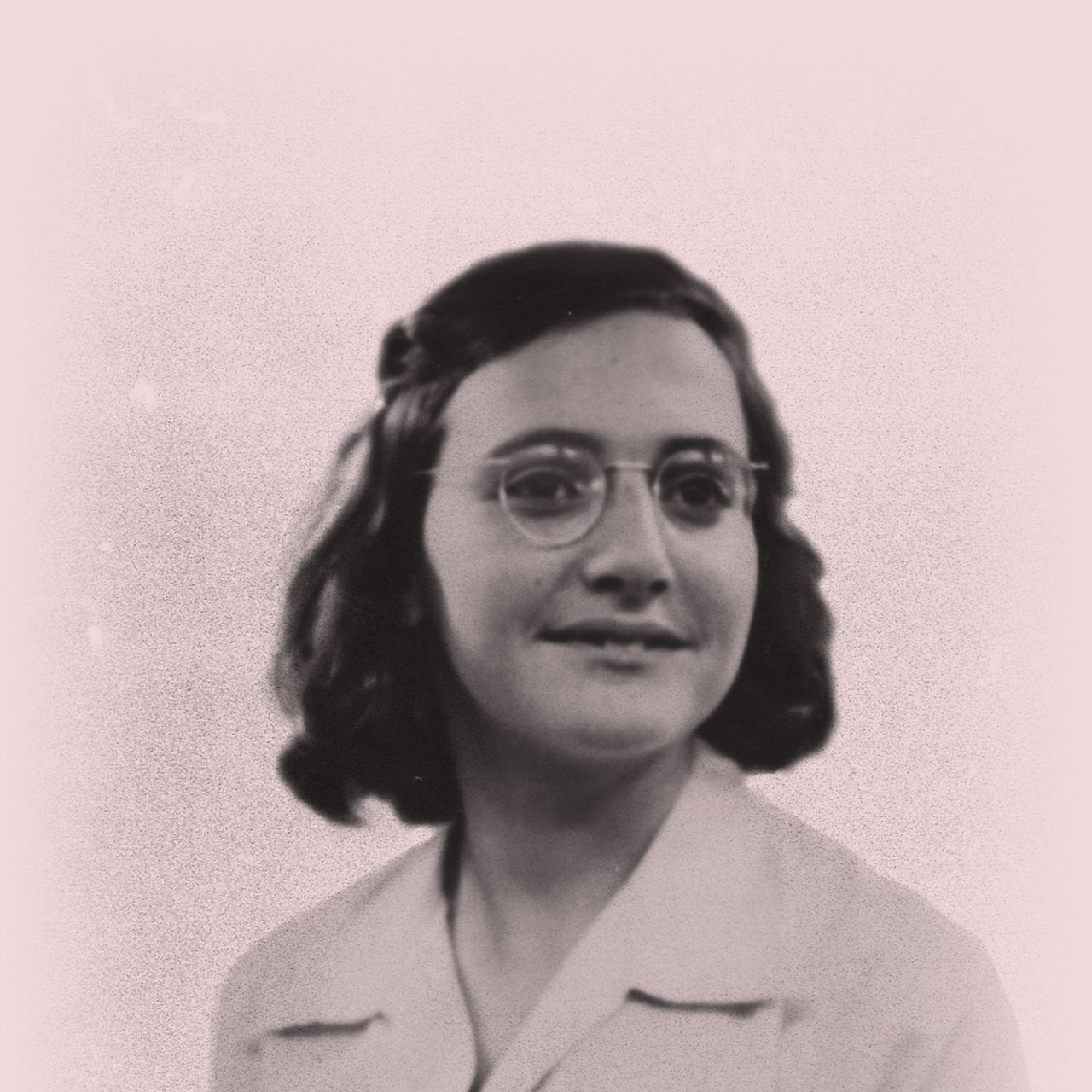 Margot Frank, |  Anne Frank |
|---|
After Alice Frank-Stern, Otto Frank's mother, moved from Frankfurt to her daughter in Basel in September 1933, Anne and Margot went to stay with their other grandmother, Rosa Holländer-Stern at the address Monheimsallee 42-44 in Aachen from September 1933 on.[1] Margot until December 1933; Anne until mid-February 1934. From this address, Margot sent a letter to Gertrud Naumann, a girl who used to live next door to her in Frankfurt am Main.[2] Three Stolpersteine (stumbling stones) commemorate their stay in Aachen.[3]
Otto had already gone to Amsterdam in June to set up Opekta and Edith traveled back and forth between the three cities.[4]
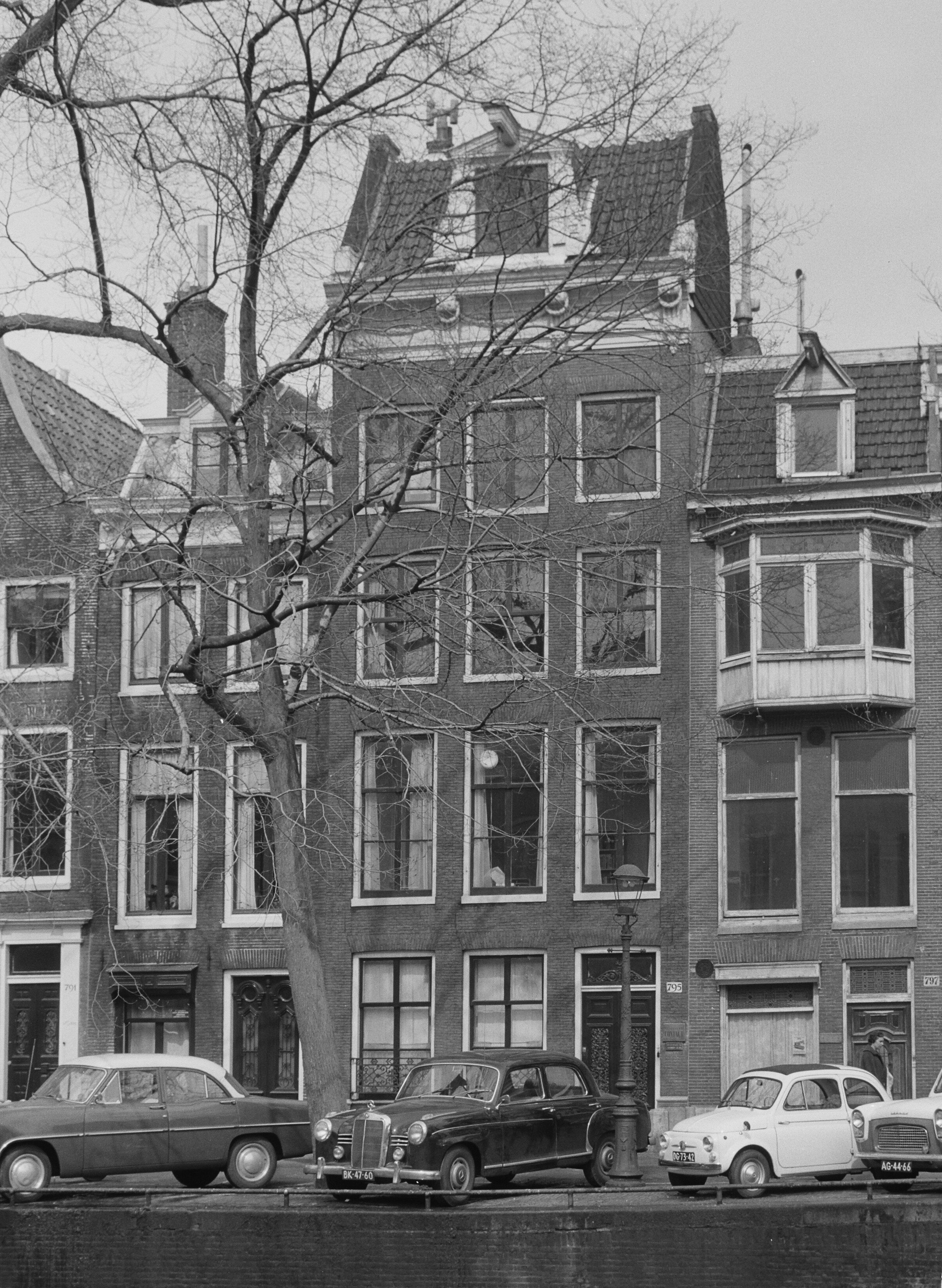
From Aachen, Margot moved to the Netherlands where she was registered as of 7 December 1933 at Merwedeplein 37-II in Amsterdam.[5] Edith Frank wrote to Gertrud Naumann just before Christmas 1933 that her brothers would bring Margot and: "Anne will auch mitkommem. Oma wird's schwer haben, das Kind noch ein paar Wochen dort zu halten."[6]
As of 7 December 1933, Anne Frank was also registered at Merwedeplein 37-II.[5] However, Anne's diaries state that she did not come to Amsterdam until February 1934, Margot's birthday.[1]
After many initial problems, classes at the forcibly founded Jewish Lyceum started on 15 October 1941.[1] Anne was assigned to class 1L2. Besides Hanneli Goslar, whom she had known since kindergarten, Jacqueline van Maarsen was also in this class.[2] Anne and Jacqueline became close friends.
Margot Frank was transferred to the 4th grade of the Jewish Lyceum as a result of the anti-Jewish measures.
From September 1941, Margot Frank could no longer attend the Lyceum for Girls due to anti-Jewish measures. She then had to go to the 4th grade of the HBS of the Jewish Lyceum, located at Voormalige Stadstimmertuin 1, in Amsterdam. She attended school there until she had to go into hiding in the Secret Annex on 6 July 1942.
Amsterdam alderman Franken, according to a letter in April 1941, expected: "measures, which will lead to the Jewish pupils of Amsterdam schools being concentrated in schools, exclusively intended for these pupils".[1]
From 9 to 14 July 1941, Amsterdam school heads had to count their Jewish pupils and report the number to the Central Pupil Enrolment Office.[2]
Margot's transfer to the 4th grade of the Jewish Lyceum was in October 1941.[3] The first day of classes was on 15 October 1941.[4] Margot entered class 4B2 in the school year 1941-1942. Her classmates were:
Margot Frank was friends with Jetteke Frijda. They already knew each other from the Municipal Lyceum for Girls.[6] In the parallel class was Bloeme Emden. She regularly saw and spoke to Margot during her imprisonment in Camp Westerbork and in the huts in Auschwitz Birkenau.[7]
Anne wrote about Margot's progress: "My sister Margot has also gotten her report card. Brilliant, as usual. If we had such a thing as "cum laude" she would have passed with honors, she's so smart".[8]
Among the books Margot read at this school was 'Le Bourgeouis Gentilhomme. Comédie-ballet en cinq actes' by Molière. This book has been preserved. It is an annotated version for school use. On the flyleaf it reads in pencil: M. Frank. Oct. 1941 Jewish Lyceum.[9] Also preserved is the book 'English Passages for Translation', compiled by Dr H.G. de Maar, from Margot's school days. She noted in the front: Margot Frank IV B II.[10]
Anne Frank was given a red checked diary for her thirteenth birthday on Sunday 12 June 1942.[1] Two days later, she wrote in it:
"I'll begin from the moment I got you, the moment I saw you lying on the table among my other birthday presents. (I went along when you were bought, but that doesn't count.) On Friday, June 12th I was awake at six o'clock, which isn't surprising since it was my birthday. (...) A little after seven I went to Daddy and Mama and then to the living room to open my presents, and you were the first thing I saw, maybe one of my nicest presents."[1]
In a letter to Meyer Levin, Otto Frank wrote: "The diary was bought by my wife". In his stage adaptation, Levin made it appear that Hanneli Goslar had given the diary to Anne. Otto did not object to this ("liberty of the writer"), but did note that in reality Edith had bought the diary. [2]
Margot received a call-up to report for transport to Germany on 5 July 1942. Anne wrote in her diary: '(...) At three o'clock the doorbell rang (...) A little while later Margot appeared in the kitchen doorway looking very agitated. "Father has received a call-up notice from the SS".'[1] According to Ilse Ledermann-Citroen, the recipients of these call-ups had to report to the Gestapo the next day (6 July 1942) between eight and nine o'clock, where they were given notice to come to the train station (it's not clear which one) on the 15th at 2.30 in the morning.[2] This call-up prompted the Frank family to immediately go into hiding.[3] Preparations for this had already been made.[4]
Miep Gies took Margot to Prinsengracht by bicycle in the early morning of 6 July 1942. The sources on this show slight differences between them:
On 6 July 1942, the whole family went into hiding in the Secret Annex.[1] The original plan to go into hiding on 16 July 1942 was brought forward ten days by the call-up Margot received to go and work in Germany.[2] Preparations for hiding began much earlier.[3] Otto Frank says: "As a result of the increasingly stringent provisions against Jews, it became necessary for me and my family to go into hiding."[4]
On the day they went into hiding, Otto, Edith and Anne walked from Merwedeplein to Prinsengracht.[5] Margot had already gone on her bicycle earlier that morning.
The raid and arrest on 4 August 1944 put an end to the period of hiding.[6] The period in hiding is also recorded with these start and end dates on Otto's aliens card in the police archives.[7].
A note left behind in the house at Merwedeplein, with an address in Maastricht, was intended to give the impression that the family had left the country. Van Pels told Werner Goldschmidt, the Frank family's subtenant, that an officer - a childhood friend of Otto Frank - was helping him.[8] Unfortunately, it is unclear which address this relates to.
Otto sent a birthday card to Leni (Lunni) in Basel on 5 July 1942, from which it can be deduced that he and his family were about to go into hiding. This is because Leni's birthday is not until September 8. He wrote: "Wir sind gesund u. zusammen, das ist die Hauptsache." [9] He returned to this card in a letter to his family in Basel dated 8 June 1945: "Das ich etwas vorbereitet hattet, konntet Ihr aus meinen letzten Zeilen wohl entnehmen." [10] The letter was apparently returned on 3 July; postal traffic with Switzerland was difficult. This preparation also emerges from the diary: "Papa and Mama had long since got a lot of things out of our house (...)".[1]
Prior to going into hiding, Otto Frank said he had earned enough to support his family. [11]
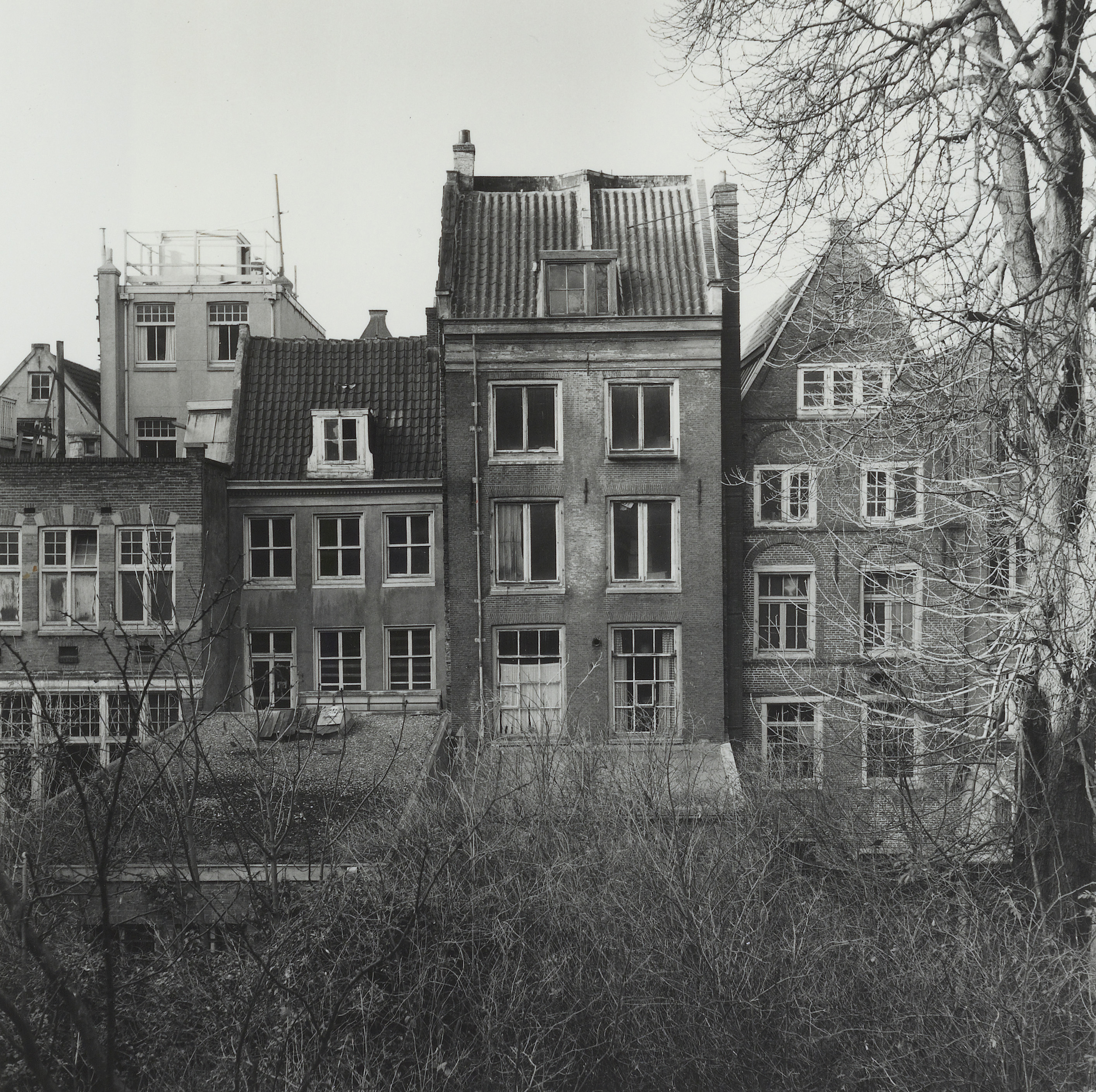
Anne Frank took her red-checked diary with her when she went into hiding. On the first page she wrote: "Oh, I'm so glad I brought you along".[1] When she rewrote her diary on loose sheets (Diary B), she elaborated on this:
"Margot and I started packing our most important belongings into a schoolbag. The first thing I stuck in was this diary, and then curlers, handkerchiefs, schoolbooks, a comb and some old letters. Preoccupied by the thought of going into hiding, I stuck the craziest things in the bag, but I'm not sorry. Memories mean more to me than dresses."[2]
By the end of October 1942, the red checked diary was almost full. She wrote: "I may perhaps ask Bep if she can go to Perrij to see if they sell diaries, otherwise I will soon have to get a notebook, because my diary is getting full, too bad!"[3] The first diary ends with the note of 5 December 1942. Anne did add notes of later dates and (due to lack of space) pasted in pages.
Many of Anne's experiences and opinions from her time in hiding are recorded in her diary entries and some of her short stories.
Anne writes in her diary that she did not hear where they were going until the morning of 6 July 1942. Her parents informed her on the way about the hiding place in the Opekta building, and about the preparations that had been made.[4]
During the period in the Secret Annex, Anne tried to keep up with her schoolwork. In the Secret Annex, she studied English, French, German, shorthand, geometry, algebra, history, geography, art history, mythology, biology, biblical history and Dutch literature.[5]
When the period in hiding began, Anne was 13 years old. Her sexual development was also covered in her diary. She noted in October '42 that she expected to get her first period soon.[6] In early '44, she wrote about it again, by which time it had "only happened three times".[7]
With Peter, Anne talked about the time before going into hiding. A few weeks later, they talked about the early days in hiding, and how they couldn't stand each other then.[8] In March '44, the romance with Peter played out, which faded again after about six weeks.[9]
Anne had a good relationship with Bep Voskuijl. Bep was by far the youngest of the helpers, and two of her sisters were younger than Anne. Besides herself, Margot and Peter, Anne also counted Bep among the youth who were not well understood by the adults in the Secret Annex.[10]
As time progressed, Anne's notes became more introspective. In early '44, she writes about her increased people skills, noting that after six months, she actually thought it was enough.[11] On 7 March 1944, she looks back on her development of about two years. In 1942, she experienced a 'carefree school time', only to be overwhelmed by loneliness and enter into all kinds of conflicts after 6 July. In early '43, she lost herself in grief and loneliness, while in the second half of that year, she grew to become a teenage girl, became more concerned with philosophical questions and got to know God.[12] Moreover, this is when, by her own admission, she started thinking and writing. Her Short Stories are dated from July '43 onwards, except for three. On 20 May 1944, Anne writes that she has finally started writing The Secret Annex, the rewriting of her earlier diary entries with a view to publication.[13] This process was in itself the most extensive reflection on earlier notes and thoughts that appear in the manuscripts.
It goes without saying that Anne too must have found her forced stay in the Secret Annex difficult. About her experience of the time in hiding, her father writes more than 20 years later that she especially looked forward every day to someone bringing news from outside.[14]
Fritz Pfeffer's Amsterdam circle of acquaintances were unaware that - due to the Nuremberg laws - he was not officially married to Charlotte Kaletta. As a result, his status was not that of a mixed married person, but of an unmarried Volljude.He was therefore also forced to go into hiding.
On 16 November 1942, Fritz Pfeffer went into hiding in the annex at Prinsengracht 263. There he remained until the raid of 4 August 1944.[1] He slept in the narrow room, which he shared with Anne Frank, in the back right-hand corner of the second floor of the Secret Annex.[2]
Pfeffer's possible arrival at the Secret Annex was first mentioned in Anne Frank's diary on 21 September 1942.[3] That is about two months before he actually arrived. The A-version does not give an exact date of Pfeffer's arrival. According to this version, Kleiman met Pfeffer at the Main Post Office and they walked to Prinsengracht.[4] In the B version, the arrival was set for 17 November 1942 and Kleiman went by tram: "Kleiman took a streetcar back to the office while Pf. walked on foot".[5]
On 30 November 1942, his landlord Felix Mittwoch reported that Pfeffer had told him that he might have to undergo an operation in an unspecified hospital because of kidney disease. After Mittwoch heard nothing more from his tenant for several days, he notified the police's Immigration Department that he had moved out.[6]
Fritz Pfeffer was a doctor and dentist. He performed dentistry in the Secret Annex.[7] Anne describes how he examined her when she was ill.[8] He moved into the small room where Anne and Margot had slept until then, and thereafter shared it with Anne. Margot moved into her parents' bedroom. At first, Anne writes that the atmosphere in the house was good. Later, there were more reports of conflicts between the people in hiding, and between her and Pfeffer.
Event: Van Pels family goes into hiding in the Secret Annex | 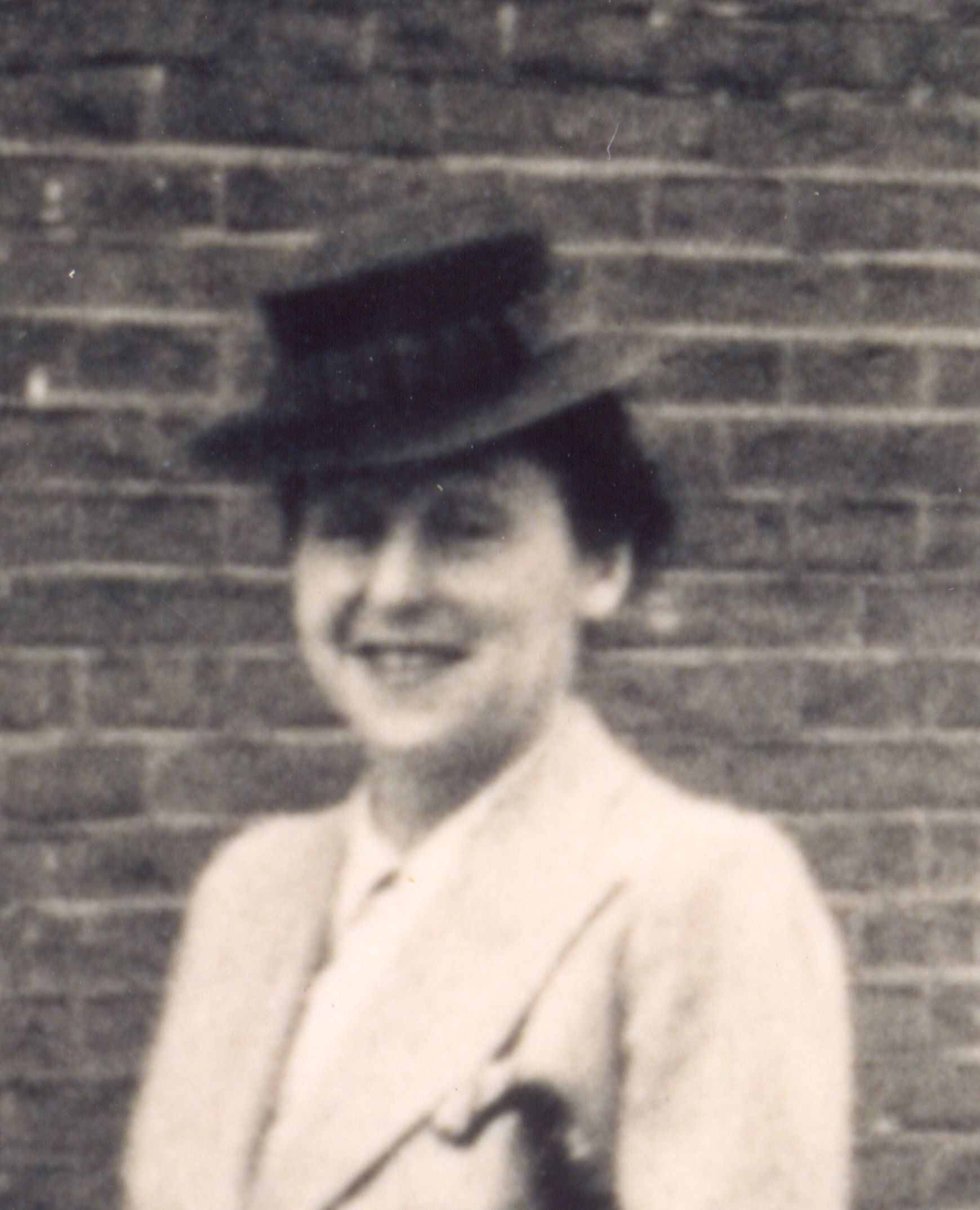 Auguste van Pels was one of the eight people hiding in the Secret Annex. |
|---|
Anne Frank continues to write in notebooks.There is a year between the last entry in the red-checked diary and the next, preserved diary.
Anne Frank's first, red-checked diary (Diary A1) ran until 5 December 1942. Even though it was not full at that point, Anne considered it full and then continued writing in notebooks, with Johannes Kleiman providing the next diary.[1] This diary has been lost - and possibly subsequent diaries as well. The next diary begins on 22 December 1943. On average, a diary covered five months, so it is likely that there were several diaries in between. On 11 November 1943, Anne wrote in the B-version (the A-version is missing here): "When I was thirteen the fountain pen went with me to the Annex, and together we've raced through countless dairies and compositions. I'd turned fourteen and my fountain pen was enjoying the last year of its life with me when .... "[2] From this, one might infer that more than one diary is missing. In the narrative The Dentist, Anne writes about a disinfectant. In a margin note, she notes: "In Dec. I wrote: decificator!"[3] The word 'decificator' cannot be found in the preserved A volumes, which makes it plausible that Anne is referring to an entry in a lost diary.
The surviving diary A2 consists of a black mottled notebook with hard cover. Diary A2 does not connect to diary A1. It shows a gap of one year and begins on Wednesday 22 December 1943: "Dear Kitty, Father has tracked down another diary for me after all, and it is of a respectable thickness, of that, you can, in due course, convince yourself".'[4]
Anne wrote until 17 April 1944 in this diary. Diary A3, written in a green mottled notebook with hard cover, begins on 18 April 1944: "Again there has been a treasure who has taken apart a chemistry notebook for me to get me a new diary, this time it is Margot".[5]
The last diary entry of diary A3 dates from 1 August 1944 and was made three days before the arrest of Anne and the other people in hiding.
In 1944-05-20,Anne Frank planned to publish a book after the war about her time in the Secret Annex.
In response to Minister Bolkestein's appeal on 28 March 1944 on Radio Oranje to keep wartime diaries and letters, Anne Frank decided to rewrite her diary into a novel: "Imagine how interesting it would be if I published a novel of the Secret Annex, from the title alone people would think it was a detective novel." [1]
Anne rewrote and edited her diary on loose sheets of duplicator paper. On Saturday 20 May 1944, she wrote: "Dear Kitty, At last after much contemplation I have begun my 'the Secret Annex', in my head it is already as finished as it can be, but in reality it will be a lot slower, if it ever gets finished at all."[2] Anne's rewritten version, known as Version B, ends with the diary entry of 29 March 1944.
Repeatedly, Anne expressed in her diaries that she wanted to publish a novel and become a writer or journalist.[3]
After the eight people in hiding were arrested on 4 August 1944, helpers Miep Gies and Bep Voskuijl entered the Secret Annex a day later. In an interview with the television programme Meridiaan on 30 June 1958, Miep Gies described what she found there:
'And when we got in there, the chaos was indescribable. The plates were still on the table, there were magazines scattered on the floor, books, newspapers, and then we started looking. I didn't know for what, but we were looking for something, and at one point then I saw the tip of a red checked diary. I said, look Elly [Bep], there's Anne's diary. I'll take that with me. We took it and went downstairs. (...).'[1]
Miep Gies kept the diary in her desk drawer. When the warehouse staff went to clear out the Secret Annex, Miep asked them if they came across any loose papers to bring them to her. This is how more pages of Anne's diary were eventually found and kept by Miep to gikve to Anne for when she might return.
On 18 July 1945, Otto Frank discovered that his daughters had died. Not long after, Miep gave Otto his daughter's diary.[2]
The first edition of Het Achterhuis appeared on 25 June 1947.
The eight people in hiding met all sorts of familiar and new people in Westerbork who testified after the war about their encounters with Anne, Margot, Edith, Otto, Peter, Hermann, Auguste or Fritz. One of them was the then 30-year-old Rachel Frankfoorder (1914-2012).
Rachel Frankfoorder had been caught on the train in the summer of 1944 with a false identity card and ended up in Westerbork.[1] She remembered also meeting the Frank family in the camp's punishment barrack.
In Westerbork, Rachel Frankfoorder worked in 'internal services', scrubbing, cleaning the toilets and when a transport arrived, distributing clogs and overalls to newly arrived prisoners. It was a sought-after job and she remembered Otto Frank asking her to arrange a place in the cleaning team for Anne:
"Otto Frank came to me with Anne and asked if Anne could help me. Anne was very kind and also asked me if she could help. She said: 'I can do anything, I'm so handy,' she was really lovely, a bit older than in the photo we know of her, cheerful and upbeat. Unfortunately, I had no say in that and told her she would have to talk to the barracks management. That was the limit of the attention I could give to that, of course."[2]
Anne eventually continued to work in the battery department.[3]
Rachel Frankfoorder, like Anne, Margot and Auguste van Pels, would end up in Bergen Belsen from Westerbork via Auschwitz and would also remain close to them in those camps.
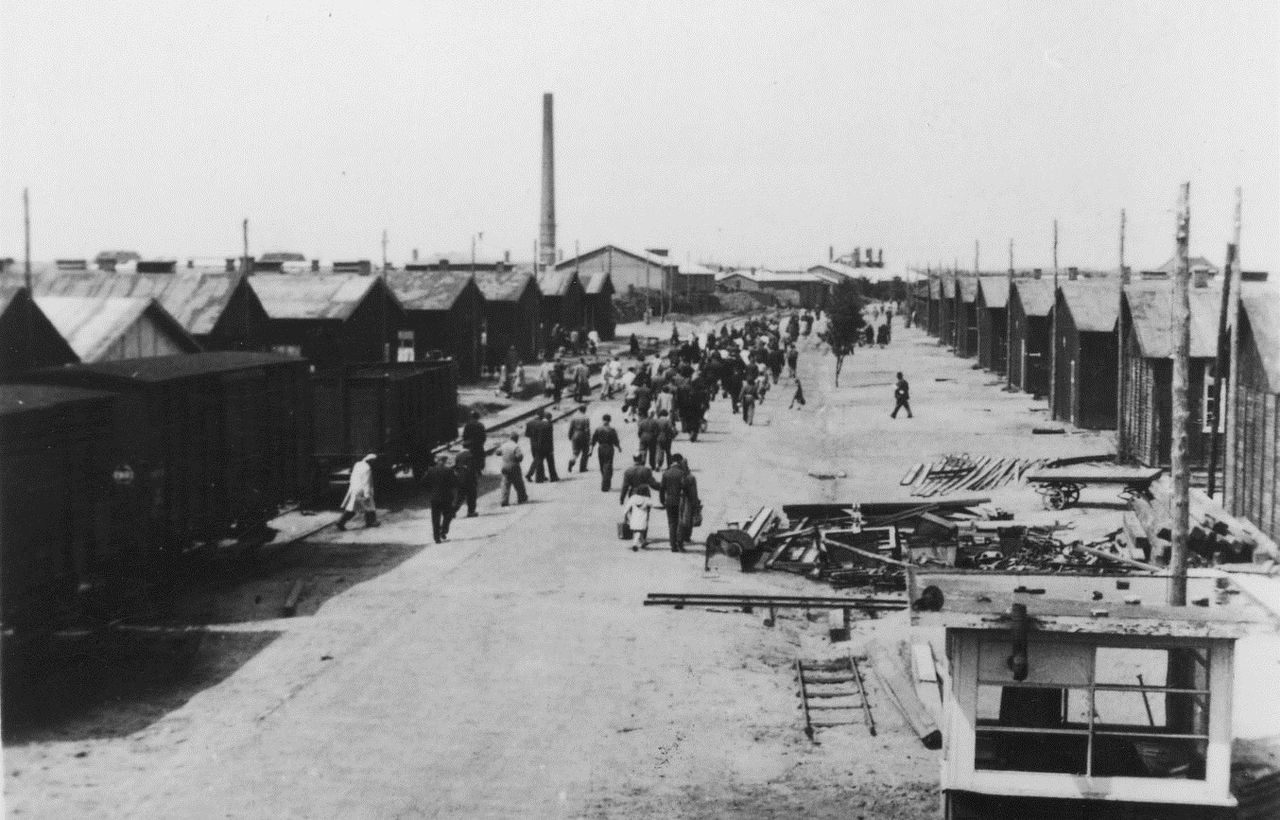
After arrival and selection, the remaining women from the transport were considered potential forced labourers who could be used in the German war industry. The women therefore ended up in the part of Auschwitz-Birkenau that was considered a Durchgangslager (transit camp) for forced labourers.[1] Anne ended up in Frauenblock 29 with her mother and sister Margot and Auguste van Pels.[2]
Bloeme Emden and Lenie de Jong-van Naarden formed a close-knit group in Auschwitz-Birkenau with ten or so other Dutch women. There they had contact with Anne, Margot and Edith. According to Bloeme, Anne, Margot and Edith Frank formed an 'inseparable trinity'.[3] In the barracks, Anne, Margot and Edith were said to have shared a bed together.[4]
Several witnesses recounted that Anne and Margot temporarily stayed in an infirmary barrack because of scabies. Lenie de Jong-van Naarden recalled that it was actually Margot who had to be admitted, but that Anne wanted to stay with her sister and therefore went with her.[5]
The conditions in the scabies barracks were appalling and many sick people were left to fend for themselves. To help Anne and Margot in the Krätzeblock, Edith Frank, together with Frieda Brommet's mother (who was also in the scabies barrack) and Lenie de Jong-van Naarden dug a hole somewhere on the side of the barrack to pass food in to the children.[6]
Moreover, Edith Frank and Frieda Brommet's mother were said to have been hiding in order to avoid being taken on a transport so as to be able to continue caring for their children. Frieda Brommet recalled:
'They dug a hole together. (...) and one day my mother came and she could also speak through that hole, and she said, she would shout: 'Frieda! Frieda!' [...] And said: 'Mrs Frank and I are the only ones here in the camp now. We have been hiding because the group has been put on a transport. But we hid because we wanted to stay with you. And we stole some bread and I'm giving it to you now through the hole and you have to share it between the four of you.' And the four of them was with Margot and Anne.'[7]
On 30 October 1944, there was a selection for a transport of about a thousand women who, although sick, were considered potentially suitable for working in the German war industry.[8] Rosa de Winter told how Anne and Margot were selected for this and that Edith and herself were left behind.[9] The transport left on 1 November and arrived in Bergen-Belsen on 3 November 1944.
In Auschwitz, Anne and Margot, together with Auguste van Pels and about a thousand other women, were selected for a transport to Bergen-Belsen on 30 October 1944.[1] The transport left on the night of 1 November 1944. On departure, everyone was given a piece of bread, sausage or cheese. A barrel of water accompanied each wagon. The train, with about 70 women per locked wagon, regularly stopped and sometimes came under fire.[2] The women did not know the final destination of the transport.[3]
Two days later, on 3 November 1944, the train arrived at a loading platform near Bergen. Witnesses, such as Rachel van Amerongen, Janny Brandes-Brilleslijper and Cato Polak, regularly mentioned Celle as the place of arrival, but the transports arrived at an originally military loading dock, which was 2 kilometres north of the main entrance to the barracks complex, between the towns of Bergen and Belsen, about 6 kilometres from the Bergen-Belsen concentration camp.[4]
The prisoners had to line up in blocks of five by five. Accompanied by armed guards with dogs, the women then walked the approximately seven kilometres to Bergen-Belsen concentration camp.[5]
After a train journey of three days and two nights in cattle wagons, Anne, Margot, Auguste van Pels and about a thousand other women from Auchwitz arrived at Bergen-Belsen concentration camp. For Anne and Margot, this was the first time without their mother.
The women were counted on arrival at the camp and, as in Auschwitz, registered and given a new prisoner number. Registration records from Bergen-Belsen have not survived, but through reconstructions by the Dutch Red Cross we know that the numbers of the 3 November 1944 transport were between 7270 and 7360. It is thought that Auguste van Pels was given the number 7306.[1]
Once in the camp, the women were first housed in tents set up on a flat piece of ground in the south-western part of the camp, next to the Wehrmacht shooting ranges. The women were given a horse blanket and a mess tin or pan, and then had to wait for hours. It was here that Janny Brilleslijper saw Anne and Margot again for the first time since Westerbork and remembered how the two sisters were waiting with the blankets around them.[2]
When it got dark, the women were given some kind of soup and then sent into the tents in groups of four to five hundred women. The tents were leaky and had no beds so everyone lay mixed up on dirty straw. The next day, the women had to be at roll call at six o'clock.[3]
On the fourth night in the tents, a violent storm raged, causing some of the tents to collapse. There were deaths and injuries and the women had to wait in the rain for some time, after which they were confined to a few storage huts for several days.[4] Eventually, the women were moved to different huts in the camp. In this, Anne and Margot ended up in the Kleine Frauenlager.[5]
The exact date of death of Anne and Margot Frank has not been established, but is believed to be in the month of February 1945.[1]
After the war, the Information Bureau of the Netherlands Red Cross (NRK) had the statutory task of establishing the place and date of death of the many missing persons. This was not done on the basis of research, but by approximation.[2]
Camp inmate Lientje Rebling-Brilleslijper stated in 1952 that "Anne Frank died around March 1945", from which the NRK concluded that Anne Frank's date of death must have been somewhere between 1 and 31 March 1945 .[3] The Dutch Ministry of Justice's Committee to Report the Death of Missing Persons adopted this conclusion and fixed the date at 31 March 1945. This date was then published in the Government Gazette.[4] The official death certificate was finally drawn up ten years later on 29 July 1954 in Amsterdam.[5]
On the basis of testimonies, documents and an analysis of the disease progression of typhus, it can be deduced that Anne and her sister Margot presumably died as early as February 1945:
Hanneli Goslar and sisters Martha and Ilse van Collem stated that they had met Anne in February 1945 at the fence separating the Frauenkamp from the Sternlager.[6] As this meeting came about through the mediation of Auguste van Pels, who, according to a transport list, was transported to Raguhn (a subcamp of Buchenwald) on 7 February 1945, this meeting must have taken place in late January or early February 1945.[7] Margot, according to witness statements, was by then too ill to get up.[6] The parcel the girls threw over the fence to Anne contained items from a Red Cross parcel. Hanneli's grandmother had received a Red Cross parcel around 23 January 1945.[8]
Like Auguste van Pels, Rachel van Amerongen and Annelore Daniel, who were staying in the same hut as Anne and Margot Frank, left on a transport to Raguhn on 7 February 1945.[9] Both Rachel and Annelore stated that Anne was ill and showed the symptoms of typhus.[10] Rachel van Amerongen said in a 1988 interview: "(...) that they had typhus was obvious (...). They got those drawn away faces, that skin and bone. (...) The symptoms of typhus clearly revealed themselves in them: that slow fading away, a kind of apathy, mixed with revivals, until they too became so sick that there was no hope (...)."[11] Nanette Blitz, who last met Anne in January 1945, also said in a 2012 interview that Anne and Margot were ill.[12]
Typhus is a disease that is often fatal after about two weeks. After an incubation period of about a week, the first symptoms appear: severe headache, chills, fever and muscle aches. Followed five days later by skin rash and reduced consciousness.[13] Given this course of illness, it is likely that Anne and Margot died as early as February 1945.
Otto Frank
Otto Frank heard on 18 July 1945 that both his daughters had died in Bergen-Belsen.[14] He later recounted: "Eventually I found two sisters who had been in Bergen-Belsen at the same time as them and who then told me about my children's final, fatal illness. Both had been so weakened by hardship that they had fallen prey to the typhus prevalent there."[15] He was referring to sisters Jannie and Lientje Brilleslijper.
The Rectification Department of the Population Register wanted to know from Otto Frank whether there were any witnesses to the death of his daughters in Bergen-Belsen. On 4 October 1945, Otto Frank wrote to Lien Rebling-Brilleslijper asking if she could send him a 'relevant letter'.[16] Lientje Brilleslijper stated on 11 November 1945 that Margot and Anne Frank died around late February, early March 1945.[17] This contradicts statements she and her sister made later in which the date ranges from late February to very shortly before the liberation of Bergen-Belsen on 15 April 1945.[18]
Approaching Soviet troops evacuated Auschwitz in mid-January 1945, with the exception of the infirmary huts. Otto Frank had been admitted to the infirmary hut from November 1944, where he was visited daily by Peter van Pels. In vain, Otto tried to convince Peter not to join the transport, but to hide in the infirmary hut.[1] According to Otto Frank, however, Peter was optimistic about his chances and wanted to join the evacuation transport together with the people he worked with.
Peter van Pels was eventually part of the group of prisoners who left Auschwitz on 18 January 1945 and ended up in the Mauthausen concentration camp in Austria. Samuel Meijer Kropveld (1885-1978), who worked as a doctor in the infirmary huts, also joined the 'healthy' prisoners on the transport and, like Peter, ended up in Mauthausen. Kropveld described in his camp report that he had seriously considered staying behind, but decided to go anyway when he heard that the sick might not be left alive.[2] Peter had probably heard similar rumours and possibly thought his chances of survival were better if he went with the rest.
Otto Frank had remained in the camp after the evacuation of Auschwitz between 17 and 21 January 1945, along with about eight thousand prisoners. Otto had been convinced that he had survived by staying in the sick barracks at all costs and not joining the evacuation marches. Yet it turned out afterwards that there had indeed been plans to kill all those left behind in the camp.[1] On 26 January 1945, just before the liberation of Auschwitz on 27 January 1945, Otto Frank narrowly escaped execution: 'On the 26th we were brought out by the SS to be killed, but the SS was called away before it got that far - a miracle happened.'[2]
The next day, the camp was liberated by the Red Army. After the liberation, Otto Frank obtained a notebook. In it he wrote down all kinds of details about his fellow-sufferers, the events after the liberation and the journey home.[3] The notebook mentions on 27 January: Ruski [4]
There is uncertainty about Peter van Pels' exact date of death. According to his archive card in the Amsterdam population register, he died on 5 May 1945 in Mauthausen.[1] This date was taken from the data of the Dutch Red Cross, which in turn relied on a list drawn up by the US army at the liberation of Mauthausen on 5 May 1945.[2] According to another list drawn up after the liberation of Mauthausen, Peter van Pels died on 10 May 1945.[3]
On 11 April 1945, Peter van Pels was sent back to Mauthausen and ended up in the Sanitätslager (also called Sterbelager or Russenlager), where only deathly ill and those unfit for work were put.[3] Practically no one survived long here; the Sanitätslager was basically just a place to die. The death books of Mauthausen itself kept until liberation do not record the death of Peter van Pels.[4] The Comité International de la Croix-Rouge declared on 9 September1958 that Peter van Pels had died on 10 May 1945 according to the Liste von Verstorbenen nach der befreiung in Mauthausen.[5] The Dutch Red Cross, on the other hand, declared in October 1960 that Peter van Pels had died on 5 May 1945 according to the Liste der Verstorbenen in Mauthausen.[2]
Although it is hard to believe that Peter van Pels could have survived the period from 11 April to 10 May 1945 in the Sanitätslager, we assume 10 May 1945 as his date of death.[6]
The first edition of Het Achterhuis ('The Secret Annex') appeared on 25 June 1947 in publisher Contact's Proloog series. Otto Frank notes on that date in his diary: "I Book".[1]
In late September 1945, Otto Frank made excerpts from the diary for friends and his family to read in translation.[2] This was because he felt there was too much in the original diary that was not intended for others.[3] Around November 1945, he decided to publish his daughter's diary anyway.[4] In retrospect, he said about this that friends had convinced him not to keep this document for himself.[5] But finding a publisher proved difficult.[6]
Otto Frank stated that his friend Werner Cahn (to whom he had read the original manuscript and who worked at Querido publishers) had taken typescript II to Annie Romein-Verschoor without his knowledge.[7] In his diary of 22 March 1946, Otto Frank noted: "Werner Cahn-(Romein)". [8]
Annie Romein had the manuscript read by her husband, Jan Romein. He wrote the article Kinderstem (A Child's Voice) that appeared on the front page of Het Parool on 3 April 1946. After this, Contact Publishers wanted to publish the diary.[9] On 10 September 1946, Otto Frank sent the signed contract back to Contact Publishers. He had stipulated that he himself retained the translation and film rights and that if the diary sold out, the publisher undertook to prepare a new edition within six months.[10]
The basis for the edition was the typescript II compiled by Otto Frank. The publisher edited this text and removed passages related to sexuality. [11] The foreword was by Annie Romein-Verschoor and not, as initially planned, an adapted version of the Parool article Kinderstem.[12] Ab Cauvern later stated that he had written the epilogue and that Otto Frank had adapted it.[13] An advance copy of the diary appeared in De Nieuwe Stem.[14]
The first edition of the diary was published on 25 June 1947 in an edition of 3,000 copies, which were sold out with the publisher by early July 1947.
' Ja, Anne's Buch liegt täglich vor mir, täglich rufen Leute an, ich habe viel Korrespondenz und es halt mich mehr in Atem als das Geschäft. Es geht mir ja auch näher! (...) Der Verlag ist ausverkauft, in Geschäften ist auch schon viel Frage und in vielen die vorhandenen Exemplare weg, Nachlieferung kann ja nicht vorgenommen werden '.[15]
The second edition, in December 1947, had a print run of 5,000.[16]
The Otto Frank Archive contains a list of names of the friends, acquaintances, politicians and dignitaries to whom Otto Frank sent a first edition of the diary.[17] He remained actively involved in publishing the diary even after the first edition was published.[18]
Five years after its first publication in the Netherlands, Anne Frank: The Diary of a Young Girl was released in 1952 in a modest edition of 5,000 copies. After an enthusiastic review by writer Meyer Levin in The New York Times Book Review[1] sales of the book began to take off. A second print run of 15,000 copies soon followed and even a third printing of 45,000 a shorty after. In a short time, the diary went through print run after print run and millions of Americans had read the book.
World premiere of 'The Diary of Anne Frank' on BroadwayOn 5 October 1955, The Diary of Anne Frank premiered at the Cort Theatre in New York. Before the premiere.[1] Otto Frank wished the cast good luck; he himself could not see it, and did not want to. The thought of his family being portrayed on stage was too much for him. The last performance on Broadway was on 22 June 1957. After 717 performances, the play toured the country, beginning a tour of cities across the United States. The Diary of Anne Frank won major awards, including the Pulitzer Prize for Drama, the Tony Award and the New York Drama Critics' Circle Award for Best Play. Footnotes
| Dutch premiere of the play 'The Diary of Anne Frank'The originally American play The Diary of Anne Frank was also performed in many other countries, including the Netherlands. It premiered on 27 November 1956 in the presence of Queen Juliana and Prince Bernhard.[1] The play made a big impression in Germany, where more than two million people came to see it. The audience was often silent for minutes afterwards. The play contributed greatly to the diary's fame in Germany and many other countries. Footnotes
|
|---|
 Frankfurt