|
|---|
|
|
|---|

Anne Frank
|  |
|---|
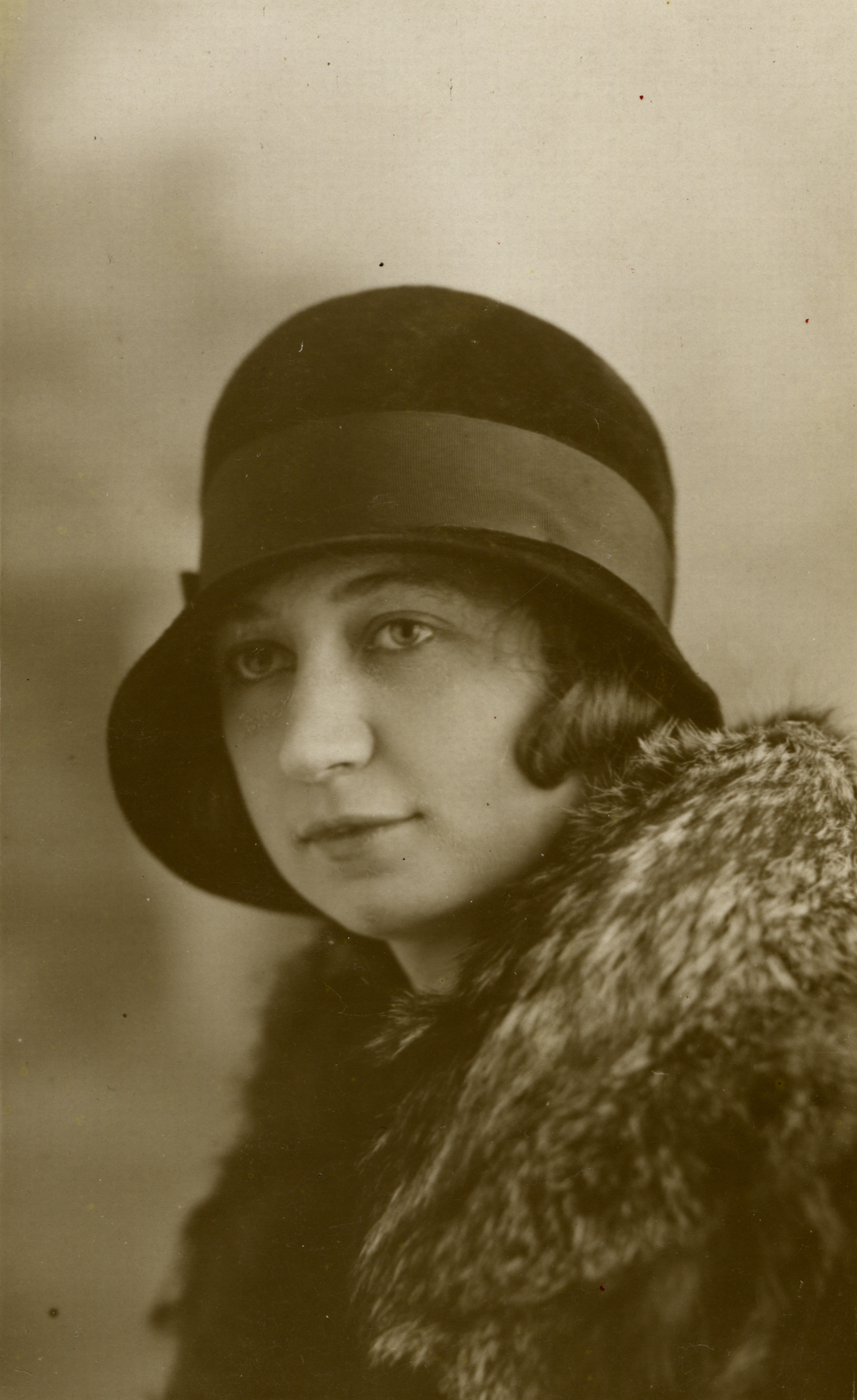
Annelies Marie (Anne) Frank was born on 12 June 1929, in the Germany city Frankfurt am Main.[1] Anne was the second child of Otto Frank and Edith Holländer and was preceded by Margot. Like her sister Margot, Anne was born in the clinic of the Vaterländische Frauenverein.[2] She was 54 centimetres long and weighed 8¼ pounds.[3] A clinic register indicates that 'Saugling' Frank was a 'Junge' (boy) and that Anne remained at the clinic with Edith for twelve days after the birth.[4] According to maid Käthi Stilgenbauer, the obstetrician was Professor Traugott.[5]
After her parents' decision to leave Germany, Anne initially lived with her mother and Margot with her grandmother in Aachen. Margot moved permanently to Amsterdam in December 1933; Anne had to wait until February 1934. From April 1934 to July 1935 she went to the kindergarten class at the 6th Montessori school. In August 1935 Anne went to the first grade of said school. After the sixth grade she was supposed to stay at the school for a seventh year, but due to educational segregation this was not possible. She was accepted at the Jewish Lyceum, and so went to secondary school after all. Anne described her classmates and various incidents at the Jewish Lyceum in her diary and Verhaaltjesboek (Book of tales). Anne's health was not very good. She was often ill and couldn't take part in gymnastics because her arms and legs dislocated easily. This also affected her when she wanted to do gymnastics in the Secret Annex.
Anne was the only person who documented the hiding period in the Secret Annex extensively. Only Otto Frank and Miep Gies have added to and corrected this information. This means that everything we know about the hiding period is highly coloured by Anne's perception. Margot also kept a diary, but it has not survived.
After the arrest on 4 August 1944, Anne ended up in Auschwitz via Westerbork. For the first eight weeks Anne was with her mother and Margot. In late October or early November the girls were put on a transport to Germany and ended up in Bergen Belsen. Like Margot, Anne contracted typhus and died in February 1945, shortly after her sister, at the age of 15.[6]
Margot Frank
|  |
|---|
Margot was born on 16 February 1926 in the Vaterländische Frauenverein clinic in Frankfurt am Main.[1] She was 54 centimetres long and weighed 8 pounds.[2] She was the frst child of Otto Frank and Edith Holländer.
She attended the Ludwig Richterschule from April 1932 to March 1933. In that month she transferred to the Varrentrappschule. This transfer coincided with the family's move to Dantestrasse and was undoubtedly related to it. When her parents decided to leave Germany, Margot first went to stay with her grandmother in Aachen. There she attended the Jüdische Volksschule on Bergdriesch until 22 December.
In Amsterdam Margot went to the Jeker School and subsequently to the Municipal Lyceum for Girls. Pretty soon she was getting good grades in most subjects, which indicates that she had had no trouble mastering the Dutch language. In the summer of 1941, segregation of education was imposed and Margot and her friend Jetteke Frijda had to leave the Girls' Lyceum. They both went to the Jewish Lyceum.
Margot was a sporty person. Among other things, she rowed and played tennis. With some classmates from the Girls' Lyceum, she rowed with a club located under the Berlage Bridge. When Margot and the coach — who was also Jewish — were banned from sports, the other girls also stopped.
On 5 July 1942 Margot was summoned to report for a German labour camp. Her parents decided to accelerate their long-standing plans to go into hiding. On the morning of 6 July, Margot cycled to Prinsengracht 263, accompanied by Miep Gies. The rest of the family followed on foot.
Margot was quiet and withdrawn by nature. In the Secret Annex, she mainly read and did schoolwork. She took a Latin course through LOI, obtaining good marks. What is known about Margot's life in the Secret Annex comes mainly from Anne's diary. Only Otto Frank and Miep Gies have said anything more about it. Miep did not remember having exchanged a word with her during this period. After the arrest on 4 August 1944, Margot was sent via Westerbork to Auschwitz. For the first eight weeks she was with her mother and Anne. In late October or early November, the girls were put on a transport to Germany and ended up in Bergen Belsen. Margot contracted typhus and died in Februay 1945, probably shortly before her 19th birthday.[3]
Edith Frank Holländer
|  |
|---|
According to her birth certificate, Edith Holländer was born on 16 January 1900 in Aachen, at Heinrichsallee 50. She was a daughter of Abraham Holländer and Rosalie Holländer-Stern. Edith was the youngest of four children.[1] She had two brothers: Julius and Walter. Bettina, the only sister, died at the age of 16.
Edith attended the evangelical Viktoriaschule at Warmweiherstrasse in her birthplace. In 1916 she took her school diploma. She was a sporty girl and played tennis. Before her marriage she worked for some time in the family business. The company B. Holländer Rohproduktenhandlung, founded by her grandfather, traded in boilers, equipment and industrial plants as well as old iron, paper and rags. There was a branch in Cologne and from 1914 the company also had a wagon factory near Hanover, where Edith's brother Walter worked. On 12 May 1925 Edith married Otto Frank and moved to Frankfurt. Margot was born in 1926 and Anne followed in 1929. After she and Otto decided to leave Germany in 1933, Edith went to live with her mother in Aachen for a while. She travelled frequently to Amsterdam, where she looked for accommodation. In December 1933 she left for the Netherlands permanently.
The loss of her old life was hard for Edith. She corresponded regularly with Gertrud Naumann, a girl who had lived next door to her in Frankfurt, and otherwise focused on her family. From September 1938 she and Otto tried to bring her mother to the Netherlands. Shortly after Kristallnacht the Ministry of Justice gave permission for this. Edith's brothers Walter and Julius managed to emigrate to America. After the arrest on 4 August 1944, Edith went via Westerbork to Auschwitz. At first she was with her daughters, but after about eight weeks they were sent on to Bergen-Belsen. Edith suffered greatly from this. Little is known about her further fate, but a friend saw her later in a sick bay. She had a high fever and was totally exhausted due to lack of food and illness. She died a few days later at the age of 44.[2]
Otto Frank
|  |
|---|
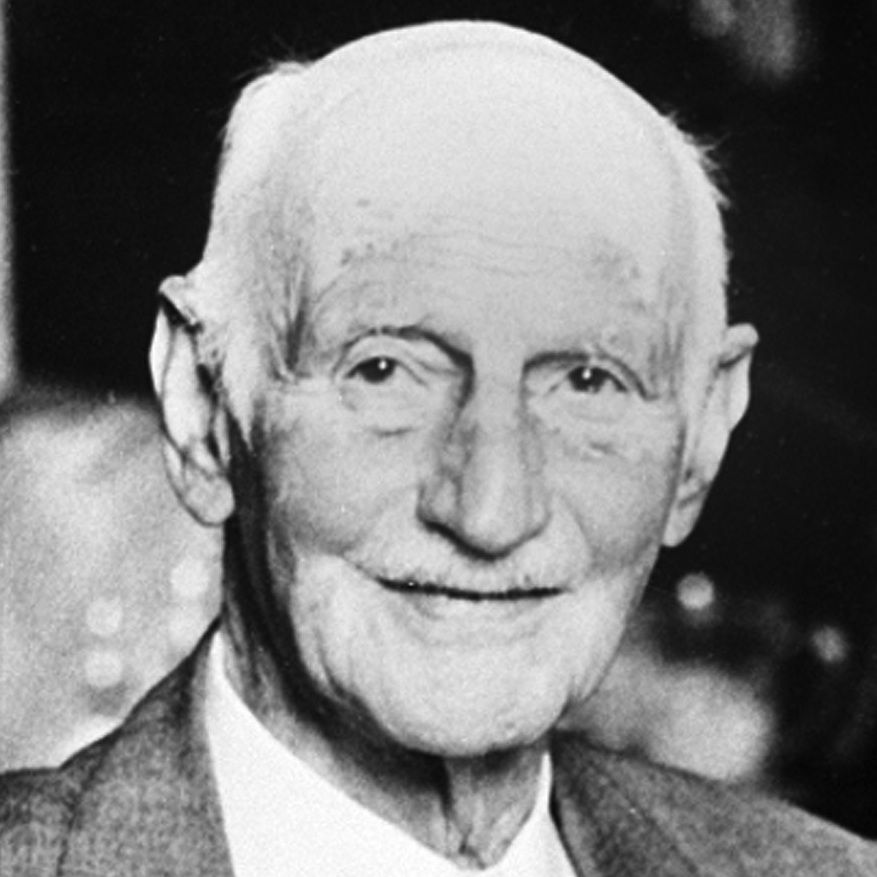
Otto Heinrich Frank was born on Sunday, 12 May 1889 in Frankfurt am Main, the son of Kaufman (merchant) Michael Frank and Alice Betty Frank-Stern.[1] Otto was the second child of a family of four children, all born in Frankfurt am Main. He had two brothers, Robert Hermann and Herbert August, and a sister named Helène. At the time of Otto Frank's birth, the Frank family lived at Gärtnerweg 58 in Frankfurt am Main.
The Jewish Frank family belonged to the wealthy circles of Frankfurt.[2] Otto's father Michael managed to set up a successful banking business in the last decades of the nineteenth century. The family was a typical product of the German Bildungsbürgertum. After attending the Lessing Gymnasium, Otto went to the University of Heidelberg for a summer semester, where he took art history classes. After this he completed an apprenticeship at the Ferdinand Sander bank in Frankfurt. Then he left for New York. He worked as an intern at Macy's and at a bank in the Financial District. Back in Germany, he worked for Fenestra, a manufacturer of various steel constructions and industrial installations. After the outbreak of World War I, Otto worked in a horseshoe factory before joining the army.
In August 1915, he joined the Third Regiment Fussartillerie in Mainz. After his training, his unit ended up in the area of Bapaume. Otto was a telephone operator and observer, so he was at some distance from the actual battle line. After his demobilisation he took over the management of the family bank. The company had fallen on hard times due to the economic and political chaos in Germany. In 1923 Otto and some relatives in Amsterdam founded two companies in the financial sector. Jo Kleiman was involved in both companies as managing director and deputy manager.
In 1925 Otto married Edith Holländer. Her family had a business very similar to Fenestra. The couple had two daughters, Margot and Anne. The economic situation worsened after 1929. The political climate in Germany also deteriorated rapidly. After Hitler's rise to power, Otto and his family moved to Amsterdam. In the summer of 1933 Otto founded the Nederlandsche Opekta Maatschappij. In December 1933 he became a supervisory director of the 'Centrale Maatschappij voor Handel en Industrie', of which Kleiman was a director. At the end of the 1930s, an attempt to set up a business in England came to nothing. The 'Centrale Maatschappij' disappeared, after which Otto and Kleiman concentrated on building up Pectacon.
In the early stages of the war Otto tried to emigrate with his family to the United States, which failed due to the impossible procedure and bureaucracy. When the persecution measures increased, the plan to go into hiding was born. At Kleiman's initiative, the Secret Annex was made ready for this. The family moved into the hiding place on 6 July 1942.
Otto was the only one of the eight people in hiding to return from Auschwitz after the arrest and deportation. He resumed his work and also did a lot to place orphaned Jewish children with relatives or foster families. He also edited Anne's diary and made sure it was published.[3] He saw Anne as a representative of all the murdered Jewish children and hoped that her diary would bring mankind to its senses.
After his return Otto lived with Miep and Jan Gies for seven years. He then moved to Basel and married Elfriede Markovits, who had had similar war experiences. He continued corresponding until an advanced age about Anne and her world of ideas, especially with young people from all over the world. He died in a Swiss hospital at the age of 91.
 Anni van Pels - HaagAnni van Pels - Haag was married to Max van Pels, and was a sister-in-law of Hermann van Pels. | AAron van PelsAäron van Pels was the father of Hermann van Pels and the grandfather of Peter. | Clara van PelsClara van Pels was a younger sister of Hermann van Pels. | Henny van PelsHenny van Pels was an older sister of Hermann van Pels. | Ida van PelsIda van Pels was a sister of Hermann van Pels. | Lina van Pels - VorsängerLina Vorsänger was the mother of Hermann van Pels. | 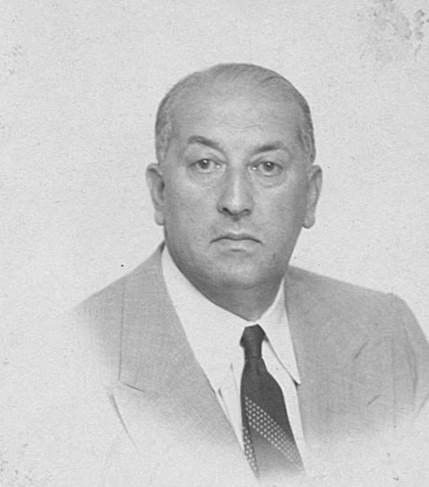 Max van PelsMax van Pels was an older brother of Hermann van Pels. | Meta Haag - van PelsMeta Haag - van Pels was a younger sister of Hermann van Pels. |
|---|
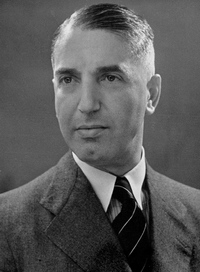
Fritz Pfeffer was born on 30 April 1889 in Giessen as the son of textile merchant Ignatz Pfeffer and Jeanette Hirsch.[1] He had a sister and four brothers: Minna, Julius, Emil, Ernst and Hans.
After attending grammar school in his home town, he trained as a dentist at the University of Würzburg from 1908 to 1911.[2][3] From 1913 to 1938 he had his own practice in Berlin-Charlottenburg.[4]
During the First World War, he was a member of the 116th Infantry Regiment. The division to which this regiment belonged took part in the battles of Verdun and the Somme. Back in Berlin, he resumed his practice. He was also an active sportsman, and was particularly into rowing in the waters around Berlin.
In 1926, Pfeffer married Vera Henriette Bythiner, with whom he had a son named Werner in 1927. The marriage was dissolved in 1933.[5] In the mid-1930s he met Charlotte Kaletta. They could not marry because by now the racist Nuremberg Laws were in effect. Part of this was a ban on marriages between Jews and non-Jewish Germans.
Pfeffer made an attempt to emigrate to the United Kingdom, but on 5 May 1937 his application for registration as a dentist was rejected by the General Medical Council (GMC) in London.[6] His younger brother Ernst Pfeffer had made the same request a year and a half earlier and was admitted.[7] After Kristallnacht (9-10 November 1938), Pfeffer came to the Netherlands. He wanted to go to Chile to work as a horse breeder. In June 1939 minister Goseling rejected his request to be allowed to stay in the Netherlands while awaiting a decision on this. A marriage to Charlotte Kaletta could not be arranged in the Netherlands either, as a treaty from 1902 required permission from the German government.[8] Pfeffer investigated the possibility of marrying in another country, but since he had not held a valid passport since January 1939, that was out of the question.
Otto Frank first met Pfeffer in the spring of 1940. At that time, Pfeffer was living with Otto's childhood friend Stephanie Schuster.[9] Later he moved into a room on the Bernard Zweerskade.[10] Despite the denial of residence in the Netherlands, Pfeffer did not leave. Nor was he deported. He worked in the dental practice of Samuel van der Hoeden. In the autumn of 1942, the situation became dangerous for him, as he did not have the relatively safe status of a mixed marriage. Through the mediation of Miep Gies, who was a patient with him, he was able to move into the Secret Annex. He told his landlady that he had to go to the hospital for a kidney complaint and disappeared. Through Miep, he kept in touch with Charlotte Kaletta.[11]
After the arrest on 4 August 1944, Pfeffer ended up in Westerbork. He was transported to Auschwitz on 3 September 1944. A camp survivor later stated that Pfeffer had left Auschwitz with a transport consisting of dentists and dental technicians to Neuengamme. There Fritz Pfeffer died at the age of 55, according to the death certificate as a result of an intestinal infection.[12]
Jan Gies
|
Miep Gies was an employee of Opekta and one of the helpers of the people hiding in the Secret Annex.Miep Gies was born as Hermine Santrouschitz on 15 February 1909 in Vienna, the daughter of Karoline Santrouschitz.[1] The baptism took place on 19 February 1909 by Father Mayr in a church at Alservorstadt 195. Godmother was Hermine Lindner.[2] According to official documents, only the name of Miep's mother is known, although Johan Eipeldauer (or Apeltauer) recognized paternity in court on 8 April 1909.[3] Because of food shortages in post-war Vienna, she was sent on a transport of Austrian children to the Netherlands in late 1920 to gain strength. She was taken in by the family of Laurens Nieuwenburg and lived with them on Atjehstraat in Leiden. In the spring of 1924 the family moved to Amsterdam and lived at various addresses in the Rivierenbuurt district. In Leiden and Amsterdam, Miep attended public primary school and then went to the three-year ULO (secondary education) course on Mauritskade. After school she went to work as a typist at Schellekens' Borduur- en Plisseerateliers, where she met Jan Gies. By late 1932 she lost her job and after a period of unemployment went to work for Opekta in October 1933. When Austria was annexed by Germany in early 1938, Miep became a German citizen against her will. Marrying Jan Gies in order to become Dutch was impossible, because his first marriage had not yet been annulled. She applied for naturalisation in 1939. At the end of 1940 she withdrew this request, because Jan's divorce was virtually settled. They got married in July 1941, and in 1950 their only child Paul was born. In 1942, Miep was one of the four office employees at Otto Frank's companies. She was therefore asked to contribute to the care of the people in hiding in the Secret Annex. One of her tasks was to collect the shopping list in the morning and to deliver the shopping - if available - at noon. During the raid on 4 August 1944, she was not arrested, despite the suspicions of SS officer Silberbauer. When Otto Frank returned to Amsterdam on 3 June 1945, he first went to live with Miep and Jan Gies. He continued to live with them until he left for Switzerland in 1952. In 1972 she received the Yad Vashem decoration at Otto Frank's nomination. After Frank's death in 1980, Miep took over his public role with regard to Anne's diary to a certain extent. In 1987 her biography, written by Alison Leslie Gold, was published. After Jan's death in 1993, Miep moved to Hoorn. She lived there independently until she was moved to a nursing home after a fall in 2009. There she died shortly before her 101st birthday.[4] Footnotes
| ||
|---|---|---|---|
Johannes Kleiman
| Johannes Hendrik Voskuijl
|
 6-6-1900 , Hohenelbe
 12-14-1981 , Toronto
According to his baptismal record, Victor Kugler was born on 5 June 1900 and baptized on 10 June 1900.[1] A number of sources mention the same date. The place of birth was Hohenelbe.[2] His birthplace Hohenelbe is in the Czech Republic. The area where it is located was part of Austria-Hungary until 1918. The present name is Vrchlabí.[3] Kugler's forged identity card, with the name Johannes Kuinders, had the date of birth as 12 December 1900.[4]
The identity of Victor Kugler's father is unknown. His mother Emilie Kugler married the miner Franz Klose in about 1909. The family moved to Duisburg, where Victor's two half-brothers and two half-sisters were born: Rudolf, Friedrich, Erna en Grete Emilie.[5]
In 1911 he became a pupil at the Rektoratschule Norbertinum. In 1914 he went back to Hohenelbe to do a course at Fachschule für Weberei (Technical School for Weaving).
He worked for a short while at the Kalisyndikat in Berlin. Towards the end of the First World War he was in the Austrian navy, patrolling the Adriatic Sea. As a consequence of Europe's political realignment, he received Czechoslovakian nationality. He then worked for two years as an electrician in a mine in Gladbeck. In 1920 he worked briefly for the Deutsche Maschinenfabrik AG (Demag) in Utrecht. He stayed in Utrecht and married Laua Maria Buntenbach in 1928. Kugler was then employed by Frans van Angeren, owner of a patisserie and lunchroom. Van Angeren also importeded baking ingredients, and so he became involved in the pectine trade.
In July 1933 Kugler met Otto Frank through Van Angeren. He then went to work for Opekta and moved to Hilversum. Somewhere in the twenties Kugler gave up his Czechoslovakian citizenship and opted for German nationality. In 1933 he applied for Dutch naturalisation, which was denied in 1936 but later approved in 1938.
As Otto Frank's business problems increased during the first years of the Second World War, Kugler took over the management of Gies & Co. He was one of the four office workers and therefore fully aware of the plans to go into hiding. As a result of the raid on 4 August 1944, he was arrested and imprisoned in Amsterdam's "Huizen van Bewaring II and I" before being moved to Amersfoort and Zwolle. While in Zwolle he was helped by Gies representative Martin Brouwer. At the end of March 1945 he was in a column of prisoners near Zevenaar when they were subjected to shelling by British planes. He made a run for it and eventually arrived in Hilversum on Good Friday, taking a route through Rheden and Barneveld.
Kugler was widowed at the end of 1952. He later married an Opekta employee and took her and his new in-laws to Canada. He had various jobs there, including working as an insurance agent and an electrician. After he retired, and with the agreement of Otto Frank and the Anne Frank House, he gave a large number of lectures on the history of the Secret Annex and on the diary. In the late seventies his health, especially his mental health, declined. It was during this period that a halting collaboration took place with journalist Helen Shapiro, who wrote his biography. The manuscript remained on the shelf for years, and after Shapiro’s death it was passed on to journalist Rick Kardonne. He edited it and then published it in 2008. Victor Kugler died at the age of 81 in a Canadian hospital.
Addresses: Eemnesserweg 56, Hilversum ('40-'55). Kugler lived in Hohenelbe and at different places in the Ruhr. From 1920 he lived in Utrecht, and from 1933 at different addresses in Hilversum. In 1955 he moved to Canada.[6]