
Persons & Characters


Pronk,Aagje

Aagje Pronk

2-25-1921 | Den Helder , Nederland
5-19-2006 | Heerhugowaard , Nederland

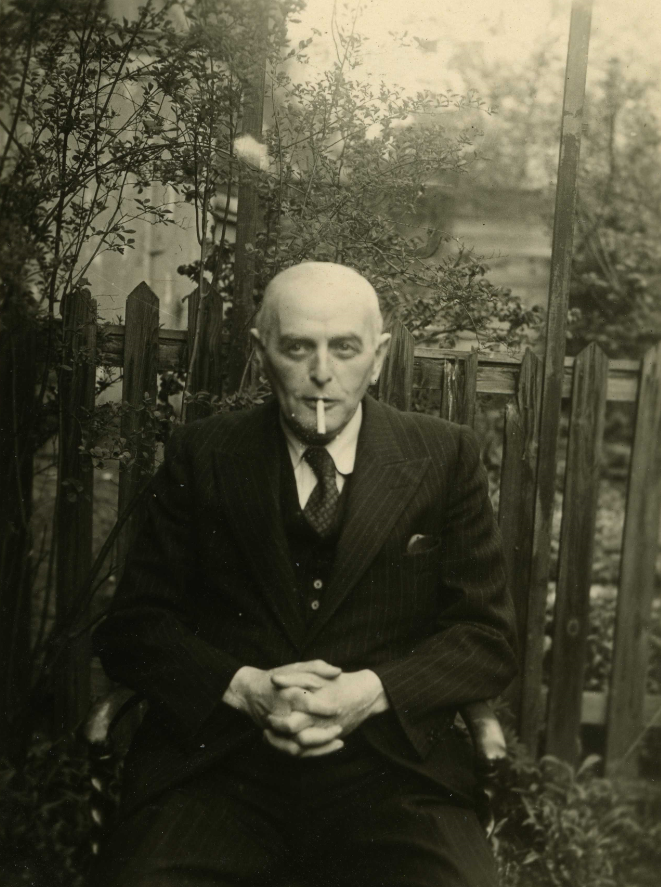
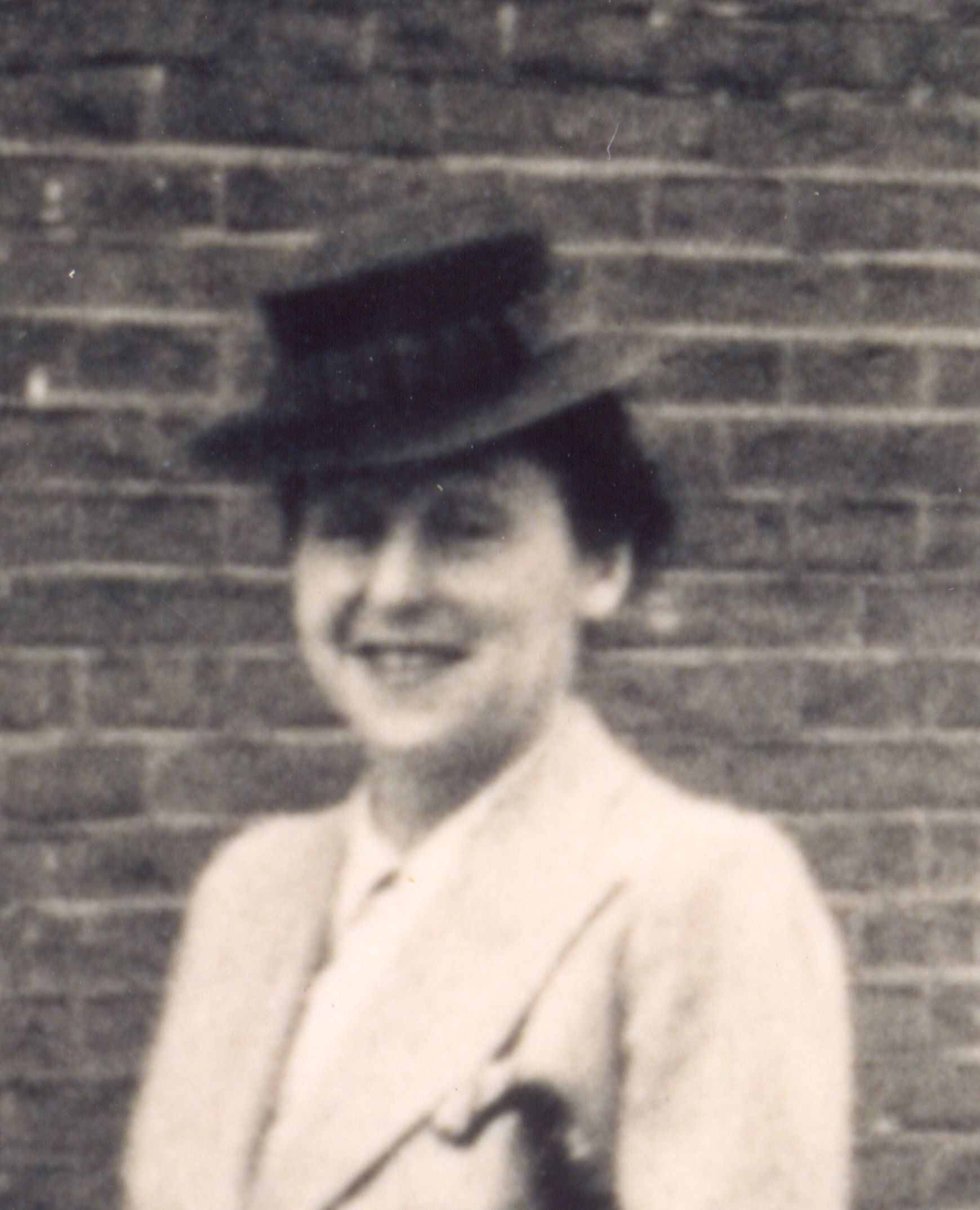
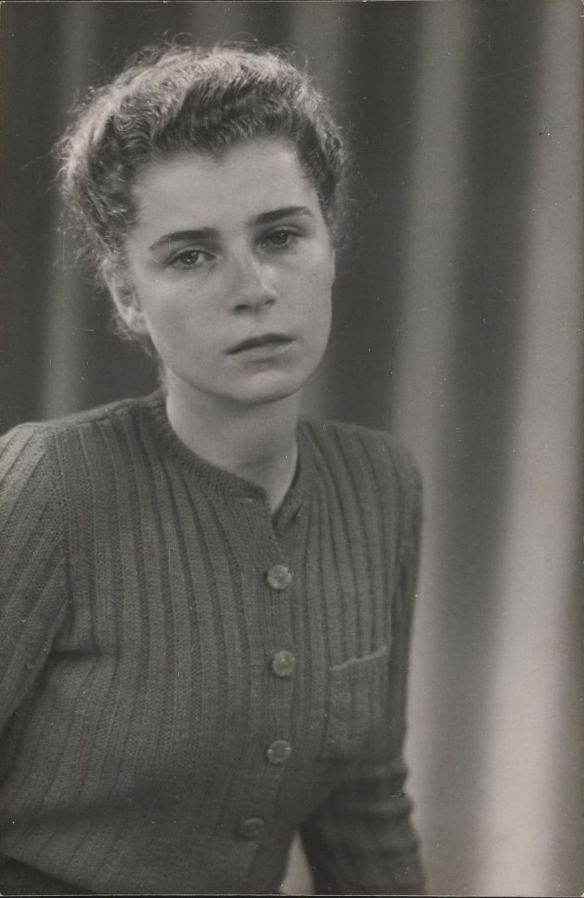
Anne Frank mentions Aagje Pronk in her diary because she married a former Opekta employee in early 1944.

Aagje Pronk[1] came to Amsterdam from Heiloo in November 1942 [2] and married former Opekta employee Henk van Beusekom on 9 March 1944.[3] The ceremony was held in the Westerkerk and Miep Gies was present. The marriage was dissolved on 7 September 1949.[2]

Source personal data.[2] Addresses: 1e Jan van der Heijdenstraat 106 II, Amsterdam (9 November 1942); Ferdinand Bolstraat 81 I (27 December 1943).[2]

Footnotes

  1. ^ Referred to by Anne as Aagje. Anne Frank, 10 March 1944, in: Anne Frank, The Collected Works; transl. from the Dutch by Susan Massotty. - London [etc.]: Bloomsbury Continuum, 2019.
  2. a, b, c, d Centraal Bureau voor Genealogie, Den Haag, Centraal archief van overledenen, Persoonskaart A. Pronk.
  3. ^ Stadsarchief Amsterdam, Dienst Bevolkingsregister, Archiefkaarten (toegangsnummer 30238): Archiefkaart J.H.G. van Beusekom sr. (16 juli 1883).

Cauvern,Abraham

Ab Cauvern

4-4-1909 | Amsterdam , Nederland
6-15-1986 | Hilversum , Amsterdam

Ab Cauvern was an acquaintance of Otto Frank, who was involved in the creation of the typescript of the diary of Anne Frank.

Husband of Isa Monas and acquaintance of Otto Frank. He married Isa Monas in Amsterdam on 17 May 1939. On 27 September 1941 their daughter Ruth was born.[1]  The marriage to Isa Monas was dissolved on 6 April 1943, but they continued to live at the same address.

After the war Otto Frank gave Anne's diary, which he had edited and typed out on the basis of the manuscript, to Cauvern for revision and correction. The latter thus produced "Typescript I". [2] In Otto Frank's naturalisation file, Cauvern is mentioned as one of his social contacts.[3] Office clerk at Nederlandsche Radio Omroep, bookkeeper at VARA, later head of radio plays at VARA.[4]

On 19 July 1962 he married Gerry Hendrika van Bockel in Nijmegen.[5]

Source personal data.[6] Addresses: Johannes Geradtsweg 57, Hilversum (’30); Oude Kerkweg 25, Laren (’39), Jekerstraat 65 II, Amsterdam (’46); Van Linschotenlaan 24, Hilversum (’53).[5]

Footnotes

  1. ^ Stadsarchief Amsterdam (SAA), Dienst Bevolkingsregister, Archiefkaarten (toegangsnummer 30238): Archiefkaarten A. Cauvern en I. Monas. Anne included the card announcing the baby's birth in her diary. Anne Frank, Diary Version A, 28 September 1942, in: Anne Frank, The Diary of Anne Frank: the revised critical edition, prep. by the Netherlands Institute for War Documentation (NIOD);  transl. by Arnold J. Pomerans, B.M. Mooyaaert-Doubleday and Susan Massotty, New York, NY [etc.] Doubleday, 2003.
  2. ^ NIOD, The Diary of Anne Frank.
  3. ^ Nationaal Archief, Den Haag, Ministerie van Justitie, Verbaalarchief, 1915-1955; Kabinetsarchief, 1915-1940, nummer toegang 2.09.22, inv. nr. 13402. volgnr. 2234: Staat van inlichtingen bij naturalisatie, 25 februari 1948, vraag 19.
  4. ^ SAA, Dienst Bevolkingsregister, Archiefkaarten (toegangsnummer 30238): Archiefkaart A. Cauvern.
  5. a, b Centraal Bureau voor Genealogie (CBG), Den Haag, Kopie persoonskaart A. Cauvern.
  6. ^ SAA, Dienst Bevolkingsregister, Archiefkaarten (toegangsnummer 30238): Archiefkaart A. Cauvern; CBG, Kopie persoonskaart A. Cauvern.

Holländer,Abraham

Abraham Holländer

1860-10-27 | Eschweiler , Duitsland
1-19-1927 | Aken , Duitsland

Abraham Holländer was the father of Edith Holländer and grandfather of Anne and Margot Frank.

Abraham Holländer was a son of Benjamin Holländer and Sara Bertha Menken. He married Rosalie Stern on 18 July 1893 in Bad Schwalbach. The marriage produced four children, Julius (1894), Walter (1897), Bettina (1898) and Edith (1900). Bettina died in 1914.

Holländer was co-owner of the company B. Holländer. In this capacity, he founded the Waggonfabrik Heine & Holländer in Elze near Hanover with Karl Heine in 1914.[1] The B. Holländer company initially traded in waste paper, rags and scrap metal, but grew to become a manufacturer and fitter of technical and industrial machinery.

Abraham Holländer died after Margot's birth, but before Anne's. He therefore only knew his eldest grandchild.

Source of personal data.[2] Addresses: Eschweiler; Heinrichsallee 50, Aachen;[3] Liebfrauenstrasse 5.[4]

Footnotes

  1. ^ Werner Beermann, Die Elzer Waggon. Die Geschichte der Fabrik von Heine und Holländer bis Waggonbau Graaff/VTG, Elze: Heimat- und Geschichtsverein Elze und Seiner Ortsteile, 2009, p. 189, 19.
  2. ^ Stadsarchief Amsterdam, Dienst Bevolkingsregister, Archiefkaarten (toegangsnummer 30238): Archiefkaart Rosalie Sara Stern (1866).
  3. ^ Standesamt Aachen I, Geburterbuch, register A II nr. 211: Geburtsurkunde Edith Holländer.
  4. ^ E-mail Angela Pauel (Stadtarchiv Aachen) aan Gertjan Broek (Anne Frank Stichting), 6 oktober 2009. Hieruit blijkt dat de adresboeken in het Stadtarchiv pas vanaf 1912 een privéadres van Abraham Holländer vermeldden. Het is onbekend of het gezin voor 1912 bij het bedrijf woonde.

Horodisch,Abraham

Abraham Horodisch

1898-02-03 | Lodz , Polen
11-7-1987 | Amstelveen , Nederland

Horodisch was a bookseller, publisher, author and also a business associate of Johannes Kleiman.

Abraham Horodisch was a publisher and author. He came from a banking family and studied economics in Berlin and Frankfurt am Main. He was a collector of books, with a particular interest in tyopgraphy. In 1920, he founded a bibliophilic publishing house in Berlin.[1]

Between 1924 and 1932, a Horodisch office was established in Amsterdam. For the first three months, Johannes Kleiman was its proxy-holder, with postal and banking authority.[2]

When Horodisch settled in the Netherlands in 1933, he founded 'Erasmus Antiquariaat en Boekhandel'. In July '42 he fled to Switzerland and stayed in a refugee camp until the end of '45. When he returned to Amsterdam he breathed new life into his business.[1]  

Horodian was also active as an author, and wrote, among other things, De legende van rabbi Elia den Eenvoudige ('The Legend of Rabbi Elijah the Simple'). In 1949, he became a naturalised Dutchman.[3] In 1985 he received an honorary doctorate from the University of Amsterdam.[4]

Source personal data.[5] Addresses: Roompotstraat 15 II, Amsterdam (1933-1942); Rijnstraat 98 ('55-'87).[5]

Footnotes

  1. a, b Zie http://www.ilab.org/eng/booksellers_main_page/Booksellers_in_Exile/Abraham_Horodisch.html (geraadlpeegd mei 2014).
  2. ^ Noord-Hollands Archief, Haarlem, Handelsregister Amsterdam, Kamer van Koophandel & Fabrieken, toegang 448, inv. nr. niet bekend, dossiernr. 21838.
  3. ^ Verslag der Handelingen van de Tweede Kamer der Staten-Generaal, 1948-1949, p. 1331.
  4. ^ Zie http://www.uva.nl/onderzoek/onderzoek-aan-de-uva/hoogleraren/eredoctoraten/eredoctoraten-1981-2000.html (geraadpleegd augustus 2015).
  5. a, b Stadsarchief Amsterdam, Dienst Bevolkingsregister, Archiefkaarten (toegangsnummer 30238): Archiefkaart A. Horodisch.

Gomes de Mesquita,Albert Hijman

Albert Gomes de Mesquita

3-15-1930 | Amsterdam , Nederland
8-28-2020 | Unkown Death Place , Unkown Death Country

Albert Gomes de Mesquita was a classmate of Anne Frank at the Sixth Montessori School and the Jewish Lyceum..

Albert Gomes de Mesquita attended the Sixth Montessori School, just like Anne.[1] The original plan was for him to then move to the Montessori Lyceum.[2] During the war years, he was in hiding for some time with Miss Südfelt, a teacher at the Sixth Montessori School.[3] Around 2007, he wrote an extensive account of his time in hiding, but this has not been published.

Source personal data.[4] Addresses: Zoomstraat 21, Amsterdam.[5]

Footnotes

  1. ^ Anne wrote: "... he is really smart". Anne Frank, Diary Version A, 16 June 1942, in: The Collected Works, transl. from the Dutch by Susan Massotty, London [etc.]: Bloomsbury Continuum, 2019.
  2. ^ Anne Frank Stichting (AFS), Anne Frank Collectie, reg. code A_Montessori_I_002: Inschrijfboek Zesde Montessorischool 1932-1959.
  3. ^ AFS, Getuigenarchief, Gomes de Mesquita: Gesprek met Dineke Stam, 3 juni 1997.
  4. ^ Stadsarchief Amsterdam, Dienst Bevolkingsregister, Archiefkaarten (toegangsnummer 30238): Archiefkaart S. Gomes de Mesquita; https://www.geni.com/people/Albert-Gomes-de-Mesquita/6000000023910857009.
  5. ^ NIOD Instituut voor Oorlogs-, Holocaust en Genocidestudies, Amsterdam, Archief 181e (W.S.H. Elte), inv. nr. 2f: Absentenregister klas 1LII Joods Lyceum, 1 maart – 17 juli 1942.

Lewkowitz,Albert

Albert Lewkowitz

1883-04-06 | Georgenberg , Duitsland
11-10-1954 | Haifa , Israël

Albert Lewkowitz was a neighbour of the Frank family.

Albert Lewkowitz studied in Breslau and Leipzig. From 1914 to 1916 he was a 'Feldrabbiner' with the German army. He married Hildegard Bloch in Breslau on 4 March 1917.[1] He taught at the Jüdisch-Theologischen Seminar in Breslau until it closed in November 1938. He was a teacher of philosophy at the Jewish Council. In 1943, he was deported via Westerbork to Bergen-Belsen.[2]

On 24 October 1939, he held a lecture on 'Jüdische Weltanschauung und der Wille zur Macht' at the Stichting tot gezamenlijke Culturele en Sociale Arbeid van Nederlandse en Duitse Joden ('Foundation for Joint Cultural and Social Work of Dutch and German Jews') at Oosteinde 16.[3] On 4 May 1940, he was deprived of his 'deutschen Staatsangehörigkeit'.

On 29 August 1940, he (and his wife and son) received a certificate of good conduct from the Mayor of Amsterdam, intended for emigration to the United States.[4] This indicated that their application for the US was at a relatively advanced stage. It is not known why the family was ultimately unable to leave.

On 11 June 1941, there was a raid in Amsterdam-Zuid, mainly targeting former residents of Werkdorp Wieringermeer.[5] Among those arrested was Lewkowitz's son Karl Friedrich (1922-1941).[6]

Anne mentions the Lewkowitz family in her diary in connection with the problems with the subtenant Goldschmidt, who stayed behind in their home.[7]

Lewkowitz was on the list of people to whom Otto Frank wanted to send a copy of The Secret Annex in 1947. He was living in Haifa at the time,[8] and was a rabbi there.[9]

Source personal data.[1][2] Addresses: Biesboschstraat 15 III, Amsterdam (June ‘40); 11 III (Feb. ’41); Joubertstraat 21 (May ’43).[1]

Footnotes

  1. a, b, c Stadsarchief Amsterdam (SAA), Dienst Bevolkingsregister, Archiefkaarten (toegangsnummer 30238): Archiefkaart A. Lewkowitz.
  2. a, b Zie https://www.deutsche-biographie.de/pnd101712405.html#ndbcontent_literatur (geraadpleegd 26 januari 2017).
  3. ^ Internationaal Instituut voor Sociale Geschiedenis, Collectie Judaica Nederland, inv. nr. 42, uitnodiging lezing 24 oktober 1939, Oosteinde 16.
  4. ^ SAA, Secretarie, Afdeling Algemene Zaken, toegang 5181, indicateur van aanvragen van verklaringen van Nederlanderschap en goed gedrag, volgnrs. 3447, 3448 en 3449.
  5. ^ Zie http://www.joodsamsterdam.nl/werkdorp-wieringermeer/ (geraadpleegd 27 februari 2018).
  6. ^ NIOD Nederlands Instituut voor Oorlogs-, Holocaust- en Genocidestudies, Archief Joodsche Raad, toegang 182, inv. nr. 263, lijst van de op 11 Juni 1941 gearresteerde Joodsche mannen, p. 2.  
  7. ^ Anne Frank, Diary Version A, 22 August 1942, in: The Collected Works, transl. from the Dutch by Susan Massotty, London [etc.]: Bloomsbury Continuum, 2019.
  8. ^ Anne Frank Stichting, Anne Frank Collectie, Otto Frank Archief, reg. code OFA_100: Lijst met namen en adressen.
  9. ^ Werner Stegmaier und Daniel Krochmalnik (Hrsg.), Jüdischer Nietzscheanismus, Berlijn [etc.]: De Gruyter, 1997, p. 369.

Klee,Alfred

Alfred Klee

1875-01-15 | Berlijn , Duitsland
11-10-1943 | Westerbork , Nederland

Alfred Klee was the grandfather of Hanneli Goslar, a friend of Anne Frank.

Alfred Klee was the grandfather of Hanneli Goslar,[1] a friend of Anne Frank. Immediately after Kristallnacht, his son-in-law Hans Goslar submitted a request for temporary residence in the Netherlands for his parents-in-law. On 23 November 1938 the Department of Justice decided to grant this request.[2]  On 12 August 1940, he was deprived of his 'deutschen Staatsangehörigkeit'.[3] Alfred Klee was a doctor of law,[4] and member of the 'Beirat' of the Jewish Council.[5]

Alfred Klee was a Zionist from his youth and worked with Theodor Herzl and other Zionist pioneers. He passed away on the 10th of November 1943 in Westerbork.[6] The news of his death appeared over two weeks later in a New York magazine.[7] 

Bron persoonsgegevens.[8] Addresses: Tauentzienstraße 13, Berlin;[4] Zuider Amstellaan 16 II, Amsterdam.[9]

Footnotes

  1. ^ Anne referred to him as (one of): Mrs. Goslar's parents. Anne Frank, Diary Version B, 5 July 1942, in: The Collected Works, transl. from the Dutch by Susan Massotty, London [etc.]: Bloomsbury Continuum, 2019.
  2. ^ Nationaal Archief, Den Haag, Ministerie van Justitie, Verbaalarchief, 1915-1955; Kabinetsarchief, 1915-1940, nummer toegang 2.09.22, inv. nr. 14812 (Q3683) en 11583.
  3. ^ Hans Georg Lehmann & Michael Hepp (Einl.), Die Ausbürgerung deutscher Staatsangehöriger 1933 – 45 nach den im Reichsanzeiger veröffentlichten Listen. Band 1. Listen in chronologischer Reihenfolge, München: Saur, 1985, p. 396.
  4. a, b Berliner Adressbuch 1937, p. 1296 (http://adressbuch.zlb.de).
  5. ^ J. Presser, Ondergang. De vervolging en verdelging van het Nederlandse jodendom 1940 - 1945, 's-Gravenhage: Staatsuitgeverij, 1965, deel I, p. 422.
  6. ^ Zie http://www.joodsmonument.nl/person/536347 (geraadpleegd augustus 2012).
  7. ^ "Dr. Alfred Klee, German - Jewish leader, dies in concentration camp in Holland", JTA Daily News Bulletin (Jewish Telegraphic Agency, New York), vol. X, nr. 273, 26 november 1943.   
  8. ^ Stadsarchief Amsterdam (SAA), Dienst Bevolkingsregister, Archiefkaarten (toegangsnummer 30238): Archiefkaart A. Klee; http://www.joodsmonument.nl/person/536347
  9. ^ SAA, Dienst Bevolkingsregister, Woningkaarten, inv. nr. 302: Woningkaart Zuider Amslellaan 16 II.


Frank - Stern,Alice Betty

Alice Frank-Stern

1865-12-20 | Frankfurt am Main , Duitsland
3-19-1953 | Bazel , Zwitserland

Alice Frank-Stern was Otto Frank's mother and grandmother of Anne and Margot.

Alice Frank-Stern was Otto Frank's mother and grandmother of Anne and Margot..[1] On 3 January 1886 she married Michael Frank. The couple had three sons: Robert, Otto and Herbert, and a daughter, Helène.[2] In September '33 she moved from Frankfurt am Main to Basel in Switzerland.[3] 

Source personal data.[4] Addresses: Herbstgasse 11, Basel.[5]

Footnotes

  1. ^ Anne refers to her as Omi. Anne Frank, Diary Version A, 14 June 1942, 19 - 30 June 1942, 2nd, in: The Collected Works, transl. from the Dutch by Susan Massotty, London [etc.]: Bloomsbury Continuum, 2019.
  2. ^ Mirjam Pressler & Gert Elias, Treasures from the attic : the extraordinary story of Anne Frank's family, New York, NY: Doubleday, 2011.
  3. ^ Familiearchief Anne Frank Fonds, Basel, Alice Frank, AFF_AlF_odoc_02: Beëdigde verklaring met boedelbeschrijving inzake verhuizing Frankfurt am Main naar Zwitserland, 21 september 1933.
  4. ^ Anne Frank Stichting (AFS), Anne Frank Collectie (AFC), Otto Frank Archief (OFA), reg. code OFA_010: Agenda Otto Frank 1953.
  5. ^  AFS, AFC, reg. code OFA_071: Otto Frank aan Alice Betty Frank Stern, 5 juli 1942.

Pieron,Alle Frederik Johannes

Alle Frederik Johannes Pieron

1862-12-20 | Goor , Nederland
8-24-1945 | Heemstede , Nederland

Pieron was owner of the building Prinsengracht 263.

Pieron was owner of the building Prinsengracht 263 from 16 September 1901.[1] In the building Pieron had a forge and construction workshop, where among other things he manufactured cots for the 'Mission Hospitals' in the then Dutch East Indies.[2] Later in life he was a pensioner. He sold the premises on 22 April 1943 to Maurits Wessels.[3]

His 36-year-old son, also called Alle Frederik Johannes and a field preacher with the Royal Netherlands East Indies Army (Dutch: Koninklijk Nederlands Indisch Leger), ended up a Japanese prisoner of war. In September 1944 he died when the Junyo Maru was torpedoed.[4]

Source personal data.[5][6] Addresses: Meerweg 45, Heemstede (since 1929).[7]

Footnotes

  1. ^ Anne refers to him as the landlord. Anne Frank, Diary Version B, 27 February 1943, in: The Collected Works, transl. from the Dutch by Susan Massotty, London [etc.]: Bloomsbury Continuum, 2019.
  2. ^ Julienne Pieron, “Het Achterhuis”, in: Personeelsorgaan S.V.B. (juli 1965), p. 15-17.
  3. ^ Kadaster Amsterdam: Koopakte 3305/4, 22 april 1943.
  4. ^ Zie https://oorlogsgravenstichting.nl/persoon/117747/alle-frederik-johannes-pieron (geraadpleegd 22 augustus 2016).  
  5. ^ Stadsarchief Amsterdam, Dienst Bevolkingsregister, Gezinskaarten (toegangsnummer 5421): Gezinskaart A.F.J. Pieron.
  6. ^ Centraal Bureu voor Genealogie, Den Haag, Centraal Archief van Overledenen: Persoonskaart A.F.J. Pieron.
  7. ^ Eerste Heemsteedsche Courant, 31 mei 1929.

Spanier - Marx,Amalie

Amalie Spanier - Marx

1879-09-29 | Grüsen , Duitsland
Unkown Death Date | Unkown Death Place , Unkown Death Country

Amalie Spanier was registered for a number of months at the address of Hermann and Auguste van Pels.

Amalie Spanier was registered from 9 May 1939 to 10 July 1939 at the address of Hermann and Auguste van Pels.

In 1906 she married Adolf Eduard Spanier, who died in 1933. In May 1939, she came to the Netherlands and moved in with the Van Pels family for a few months.[1]

Amalie's daughter Gertrud married Rudolf Stern, who lived in Argentina and was of German origin, by proxy on 8 May 1940. Amalie was not present at this marriage because she lived in the United States.[2]

Gertrud lived at the time of her marriage with the widow Ruth Leeser – Cohn[3] (Fritz Leeser died in 1934). Both Hermann van Pels' sister Clara and Auguste van Pels' sister Else had a husband called Leeser.

Source personal data.[1] Addresses: Enger (Germany); Biesboschstraat 59huis, Amsterdam (1939); Zuider Amstellaan 96-III, Amsterdam; Hardford (VS) (January 1940).[1]

Footnotes

  1. a, b, c Stadsarchief Amsterdam (SAA), Dienst Bevolkingsregister, Archiefkaarten (toegangsnummer 30238): Archiefkaart A. Marx.
  2. ^ SAA, Burgerlijke Stand, toegang 5009, inv. nr. 6604: Register van huwelijksakten 1940, deel 12, 65v, akte 118.
  3. ^ SAA, Dienst Bevolkingsregister, Archiefkaarten (toegangsnummer 30238): Archiefkaart G.S. Spanier (1909).

Frank,Annelies Marie

Anne Frank

6-12-1929 | Frankfurt am Main , Duitsland
Unkown Death Date | Bergen-Belsen , Duitsland

Anne Frank was a Jewish girl who became world-famous thanks to the diary she wrote during the Second World War, while she was in hiding in the Achterhuis (the Annex) on Prinsengracht in Amsterdam.

Annelies Marie (Anne) Frank was born on 12 June 1929, in the Germany city Frankfurt am Main.[1] Anne was the second child of Otto Frank and Edith Holländer and was preceded by Margot. Like her sister Margot, Anne was born in the clinic of the Vaterländische Frauenverein.[2] She was 54 centimetres long and weighed 8¼ pounds.[3] A clinic register indicates that 'Saugling' Frank was a 'Junge' (boy) and that Anne remained at the clinic with Edith for twelve days after the birth.[4] According to maid Käthi Stilgenbauer, the obstetrician was Professor Traugott.[5]

After her parents' decision to leave Germany, Anne initially lived with her mother and Margot with her grandmother in Aachen. Margot moved permanently to Amsterdam in December 1933; Anne had to wait until February 1934. From April 1934 to July 1935 she went to the kindergarten class at the 6th Montessori school. In August 1935 Anne went to the first grade of said school. After the sixth grade she was supposed to stay at the school for a seventh year, but due to educational segregation this was not possible. She was accepted at the Jewish Lyceum, and so went to secondary school after all. Anne described her classmates and various incidents at the Jewish Lyceum in her diary and Verhaaltjesboek (Book of tales). Anne's health was not very good. She was often ill and couldn't take part in gymnastics because her arms and legs dislocated easily. This also affected her when she wanted to do gymnastics in the Secret Annex.

Anne was the only person who documented the hiding period in the Secret Annex extensively. Only Otto Frank and Miep Gies have added to and corrected this information. This means that everything we know about the hiding period is highly coloured by Anne's perception. Margot also kept a diary, but it has not survived.

After the arrest on 4 August 1944, Anne ended up in Auschwitz via Westerbork. For the first eight weeks Anne was with her mother and Margot. In late October or early November the girls were put on a transport to Germany and ended up in Bergen Belsen. Like Margot, Anne contracted typhus and died in February 1945, shortly after her sister, at the age of 15.[6]

Footnotes

  1. ^ Standesamt Frankfurt am Main, Geboorteakte nr. 484, 17 juni 1929.
  2. ^ Het heet nu het Krankenhaus Maingau vom Roten Kreuz. In 1890 opende het 'Vaterländische Frauenverein vom Roten Kreuz' hier het Maingau-Krankenhaus, https://www.rotkreuzkliniken.de/geschichte.html (geraadpleegd december 2015).
  3. ^ Anne Frank Stichting, Anne Frank Collectie, reg. code A_AFrank_III_027: Fotoalbum met foto's gemaakt tussen 1929 en 1942.
  4. ^ Research Von Wolzogen voor: Jürgen Steen, Wolf von Wolzogen, Anne aus Frankfurt. Leben und Lebenswelt Anne Franks, Frankfurt am Main: Historisches Museum, 1990, Historisches Museum Frankfurt am Main, 2.4.1./1. Volgens de notatie van Von Wolzogen komt dit uit het 'Soc.Druck.-Archiv'. Volgens H.P. Dieterich van 'Societäts Verlag' is alle archief in WO2 verwoest (email 17 november 2009). Hij verwijst naar het archief van de kliniek, maar daarvoor geldt hetzelfde.
  5. ^ Ernst Schnabel, Anne Frank. Spur eines Kindes, Frankfurt am Main: Fischer,  1958, p. 15. Dit moet ongetwijfeld zijn professor Traugott, gynaecoloog en verloskundige, die ook bij de geboorte van Margot was. Von Wolzogen noemt ook Traugott (zie noot 4).
  6. ^ Literature: Mirjam Pressler, The story of Anne Frank, London: MacMillan Children's Books, 1999; Carol Ann Lee, Roses from the earth: the biography of Anne Frank, London : Viking, 1999; Francine Prose, Anne Frank: the book, the life, the afterlife, New York, NY: HarperCollins, 2009; Hans Ulrich, Who was Anne Frank? Her life, the Annex and her death: a short biography, Laren: Verbum, 2010; Melissa Müller, Anne Frank: the biography, upd. and exp. ed., London: Bloomsbury, 2013; Aukje Vergeest, Anne Frank in the Secret Annexe: who was who?, Amsterdam: Anne Frank House, 2015; David Barnouw, Frank, Annelies Marie, in: Digitaal Vrouwenlexicon van Nederland, 2018.

Steenmeijer,Anna Gesina

Anneke Steenmeijer

5-30-1926 | Groningen , Nederland
1-2-2010 | Unkown Death Place , Unkown Death Country

Anneke Steenmeijer was active in the Anne Frank House and wrote the book 'Weerklank van Anne Frank' (Eng: 'Anne Frank's resonance') together with Otto Frank and Henri van Praag.

Anneke Steenmeijer had lessons at the School voor Maatschappelijk Werk ('School for Social Work') from Henri van Praag, who was a teacher of 'Spiritual Streams' there. In 1959, she started working for Van Praag. He was active in the Anne Frank Foundation and so Anneke Steenmeijer started archiving the letters that Otto Frank received.[1]

At the end of 1959 she went to Basel to collect a suitcase full of letters. On later visits, Otto Frank himself brought back new consignments.[1] She classified the letters according to country of origin and made excerpts. Van Praag based a ‘Studierapport t.b.v. het bestuur’ ('Study report for the board') on this, dated 1 February 1960.[1]

Because the Anne Frank House was not yet completed, she worked in the office of Van Praag's brother on Weteringschans. When she wanted to work for the International Youth Centre on Prinsengracht in May 1960, Truus Wijsmuller was initially opposed to this. Nevertheless, she was given a place to work in the private office. Steenmeijer worked part-time and part freelance for the Anne Frank Foundation until around 1974.[2]

She edited the book 'Weerklank van Anne Frank' ('Anne Frank's resonance') (1970) together with Otto Frank and Henri van Praag.[3]

 Addresses: Dever 26, Amsterdam (’69);[4] Slochterenlaan 34, Bussum (2010).[5]

Footnotes

  1. a, b, c Anne Frank Stichting (AFS), Getuigenarchief, Steenmeijer, Anneke: Interview door Dineke Stam, 3 december 1996.
  2. ^ AFS, AFC, reg code B_I_189.042 t/m 048; AFS, Getuigenarchief, Steenmeijer, Gesprek Anneke Steenmeijer met Teresien da Silva, 17 juli 2002.
  3. ^ “Weerklank van Anne Frank” meer heiligenleven dan documentaire”, De Tijd, 4 april 1970.

Beem - Daniel,Annelore

Annelore Beem - Daniel

8-20-1927 | Berlijn , Duitsland
11-12-2019 | Unkown Death Place , Unkown Death Country

Annelore Daniel was in camp Bergen-Belsen along with Anne and Margot Frank and Auguste van Pels. Eventually, as with Auguste, Annelore was transported to Raguhn and later to Theresienstadt.

Annelore Daniel was born in Berlin on 20 August 1927. She lived there until 1933 with her father Hans Daniel (1897-1944), mother Selma Daniel-Lion (1897-1944) and her two-year-older sister Ellen (1925-2005). Her father Hans Daniel was an engineer at the Nora-GMBH factories, but was fired immediately with the entry into force of the first anti-Jewish measures on 1 April 1933. He then decided to investigate whether the family could make a living in the Netherlands.[1]

After her father got a position at an electronics engineering firm in Amsterdam, her mother followed, taking over responsibility for administration at the firm, while Annlelore and her sister stayed with an aunt in Schwedt an der Oder.[1] In the summer of 1933, they also came to the Netherlands and the family lived at 37 Parnassusweg in Amsterdam-Zuid. In August 1936, the family moved to Albrecht Durerstraat 25, before moving to a house a street away, at Rubensstraat 64, in April 1939.[2]

Annelore went to Sparta School on Stadionkade immediately after the 1933 summer holidays and learnt Dutch within weeks. When Jewish children had to go to separate schools in 1941, she attended the Jewish MULO school on Christiaan de Wetstraat for a year.[1]

Concentration camps

In early November 1942, the family was taken from their home in the morning and had to wait in the Hollandsche Schouwburg for several days. The family finally arrived at Westerbork camp on 10 November. Although her father's sperre could have protected the family from deportation for a long time, on 21 April 1943 Annelore's parents were put on a transport to Theresienstadt.[3] Annelore and her sister Ellen remained behind in Westerbork and from then on was one of the so-called 'T-children': the children in Westerbork whose parents were in Theresienstadt. After her parents were deported, Annelore worked in the Westerbork hospital on the baby ward.[1]

On 18 January 1944, nine months after their parents were deported, Annelore and Ellen Daniel were also transported to Theresienstadt and reunited with their parents.[4] Annelore recalls: 'and at one point we see father. And he jumped in the air, really, literally and figuratively and ran away. And I don't know, it felt like a very short time later he came back with my mother.'[1] The family eventually spent nine months in Theresienstadt, until they were put on a transport to Auschwitz on 28 October 1944.[5] Once there, both her mother and father were gassed.[3]

The Daniel sisters spent several days in Auschwitz and, like Anne and Margot Frank, were deported from Auschwitz-Birkenau to Bergen-Belsen on the 1 November 1944 transport. According to Janny Brilleslijper (1916-2003), the Daniel sisters, the Frank sisters, Auguste van Pels and several other Dutch prisoners there formed a close-knit group with her and her sister Rebekka Brilleslijper (1912-1988).[6]

Annelore recalled that in the camp huts, Margot and Anne Frank were always inseparable together with Auguste van Pels. She also recalled that Anne, Margot and Auguste were in an apathetic and desperate state in the camp.[1]

On 7 February 1945, like Auguste van Pels and 26 other Dutch women, Annelore was selected for employment at Raguhn, a sub-camp of Buchenwald concentration camp. After three days of travelling, the women arrived and were registered. Annelore was given prisoner number 67099.[7] In Raguhn, the women had to assemble aircraft parts.[8]

Liberation

On 9 April 1945, the women were again transported in Raguhn due to the approaching US troops. After a chaotic journey, Annelore arrived in Theresienstadt on 16 April.[9] Auguste van Pels had died on the train on the way. Annelore recalled that they had lifted Auguste out and laid her next to the railway tracks.[1] On 8 May 1945, Theresienstadt was liberated by the Soviet army.[10]

Annelore was found to have tuberculosis and recovered after the war in Sandpoort, alongside a former classmate of Anne's, Nanette Blitz (1929). When Otto Frank visited Nanette Blitz in 1945 to hear more about the last days of his two daughters, Annelore was able to add to Blitz's story and told Otto about her last meetings with Anne and Margot and the death of Auguste.[11] It eventually took Annelore three years to recover from the illness and, as she herself put it, that is why her liberation did not come until 14 May 1948.[1]

Addresses: Germany, Berlin; Netherlands, Amsterdam: Parnassusweg 37 ('33), Albrecht Durerstraat 25 ('36), Rubensstraat 64 ('39).[2]

Footnotes

  1. a, b, c, d, e, f, g, h Anne Frank Stichting (AFS), Getuigenarchief, Interview met Annelore Beem-Daniel, 19-05-2014.
  2. a, b Stadsarchief Amsterdam, Dienst Bevolkingsregister, Archiefkaarten (toegangsnummer 30238): Archiefkaart Hans Daniel, 27-09-1897, https://archief.amsterdam/indexen/deeds/985333e9-464f-56a3-e053-b784100ade19?person=985333e9-4650-56a3-e053-b784100ade19 (geraadpleegd 8 november 2022).
  3. a, b Arolsen Archives - Internationl Center on Nazi Persecution, Bad Arolsen: Joodsche Raad kaart Hans Daniel, Document ID: 130277498, https://collections.arolsen-archives.org/de/search/person/130277498?s=Hans%20Daniel&t=2574881&p=4 (geraadpleegd 8 november 2022); Joodsche Raad kaart Selma Lion, Document ID: 130277517, https://collections.arolsen-archives.org/de/search/person/130277517?s=Selma%20Lion&t=2574881&p=4 (geraadpleegd 8 november-2022).
  4. ^ Arolsen Archives: Joodsche Raad kaart Annelore Daniel, Document ID: 130277493, https://collections.arolsen-archives.org/de/search/person/130277493?s=Annelore%20Daniel&t=2574881&p=0 (geraadpleegd 8 november 2022).
  5. ^ Arolsen Archives: Transportkaart Annelore Daniel, Document ID: 4967778, https://collections.arolsen-archives.org/de/search/person/4967778?s=Annelore%20Daniel&t=2546967&p=0 (08-11-2022); Joodsche Raad kaart Annelore Daniel, Document ID: 130277493; https://collections.arolsen-archives.org/de/search/person/130277493?s=Annelore%20Daniel&t=2574881&p=0 (08-11-2022).
  6. ^ Bas von Benda-Beckmann, Na het Achterhuis. Anne Frank en de andere onderduikers in de kampen, Amsterdam: Querido, 2020, p. 240.
  7. ^ Arolsen Archives: Registers van gevangenennummers Buchenwald (vrouwen), Document ID: 5403101, https://collections.arolsen-archives.org/de/search/person/5403101?s=Annelore%20Daniel&t=1843630&p=0 (geraadpleegd 8 november 2022).
  8. ^ Von Benda-Beckmann, Na het Achterhuis, p. 263.
  9. ^ Von Benda-Beckmann, Na het Achterhuis, p.265-266.
  10. ^ Von Benda-Beckmann, Na het Achterhuis, p. 266.
  11. ^ Von Benda-Beckmann, Na het Achterhuis, p. 267.

Pels-Haag,Anni

Anni van Pels - Haag

7-21-1900 | Hamburg , Duitsland
Unkown Death Date | Unkown Death Place , Unkown Death Country

Anni van Pels - Haag was married to Max van Pels, and was a sister-in-law of Hermann van Pels.

Anni Haag had become Dutch through her marriage to a Dutchman. In March 1938 she and her husband came from Hamburg to Amsterdam. On 16 June 1938, he and his wife received a certificate of good conduct in connection with emigration to North America,[1] and on 27 August they left on board the S.S. 'Samaria' from Liverpool. The ship arrived in New York on 5 September 1938.[2]

Footnotes

  1. ^ Stadsarchief Amsterdam, Archief van de Secretarie: Afdeling Algemene Zaken, toegang 5181, inventarisnummer 7640: indicateur van aanvragen van bewijzen van Nederlanderschap en van goed gedrag, 1938, volgnrs. 4820 en 4821.
  2. ^ National Archives and Records Administration (NARA), Washington D.C., records of the Immigration and Naturalization Services, list or manifest of alien passengers for the United States Immigrant Inspector at port of arrival, S.S. 'Samaria', passengers sailing from Liverpool, 27 augustus 1938, arrival in New York 5 september 1938.

Springer,Anton Heinrich

Anton Heinrich Springer

Unkown Birth Date | Unkown Birth Place , Unkown Birth Country
Unkown Death Date | Unkown Death Place , Unkown Death Country

Anton Heinrich Springer wrote the five-volume 'Handbuch der Kunstgeschichte'. During the period in hiding, Anne Frank received this series for her fifteenth birthday.

Anton Heinrich Springer (1825-1891) was a German art historian.[1] Hij wrote the five-volume 'Handbuch der Kunstgeschichte'. This series was present in the Secret Annex during the hiding period.[2] Anne wrote in her diary on 13 June 1944 that she received the five Springer books for her fifteenth birthday.[3] There are two copies of this 'Springer' series in the Anne Frank Foundation's museum collection..[4]


Footnotes

  1. ^ Zie http://de.wikipedia.org/wiki/Anton_Springer (geraadpleegd augustus 2013).
  2. ^ Anne Frank, Diary Version A, 6 January 1944, in: The Collected Works, transl. from the Dutch by Susan Massotty, London [etc.]: Bloomsbury Continuum, 2019.
  3. ^ Anne Frank, Diary Version A, 13 June 1944, in: The Colled Works.
  4. ^ Anne Frank Stichting, Anne Frank Collectie, reg. code B_Achterhuis_VII_088 t/m 092.


Mussert,Anton Adriaan

Anton Mussert

1894-05-11 | Werkendam , Nederland
5-7-1946 | Den Haag , Nederland

Anton Mussert was the founder and party leader of the National Socialist Movement in the Netherlands (NSB).

Anton Mussert was the founder and party leader of the National Socialist Movement (NSB).[1] He was a hydraulic engineer with the Province of Utrecht. Later he founded the NSB and led this movement until 1945. In the pre-war period, Mussert was unsuccessful in growing into a serious power factor.[2] During the occupation, he was little more than a figurehead. He was sentenced to death at the end of '45 for aiding the enemy, attacking the constitutional government and trying to bring the Netherlands under foreign rule.[3]

On 10 June 1944, Mussert said at a large meeting in the Concertgebouw:

'There are those who will ask themselves: And where will you, leader, be when the invasion comes here to our country? Is your car ready? I can tell them, my comrades, I have made my decision. When the invasion comes, I will be in Utrecht under all circumstances. This morning I received a new uniform, that of a volunteer soldier in the German Wehrmacht. This uniform I will put on as soon as the invasion comes here.'[4]

At the time of his arrest on 7 May 1945 in The Hague, he was dressed in civilian clothes.[5]

Footnotes

  1. ^ Zie http://nl.wikipedia.org/wiki/Anton_Mussert (geraadpleegd mei 2012).
  2. ^ Anne refers to him as that fat pig. Anne Frank, Diary Version A, 27 June 1944, in: The Collected Works, [transl. from the Dutch by Susan Massotty, London [etc.]: Bloomsbury Continuum, 2019.
  3. ^ Voor recente literatuur, zie: Tessel Pollmann, Mussert & Co. De NSB-leider en zijn vertouwelingen, Amsterdam: Boom 2012.
  4. ^ "Mussert soldaat van de Duitsche Weermacht", Gooi- en Eemlander, 12 juni 1944.
  5. ^ Foto in: Keesing’s Historisch Archief, nr. 725, 7-13 mei 1945.

Reens,Abraham

Appie Reens

7-28-1927 | Amsterdam , Nederland
6-24-1943 | Sobibor , Unkown Death Country

Appie Reens was a classmate of Anne Frank at the Jewish Lyceum.

Appie Reens was a classmate of Anne Frank at the Jewish Lyceum.[1] During the German occupation, he was an employee of the Jewish Council.[2] Anne writes in her diary that Appie is "quite orthodox".[3] In August 1940 he did Bar Mitzvah. A certificate of this occasion is in the collection of the Jewish Historical Museum.[4] 

Appie arrived in camp Westerbork on the 25th of May 1943.[5] On the 24th of June 1943 he was killed in concentration camp Sobibor.[2]

Source personal data.[2] Addresses: Sassenheimstraat 51 huis, Amsterdam.[1]

Footnotes

  1. a, b NIOD Instituut voor Oorlogs-, Holocaust en Genocidestudies, Amsterdam, W.S.H. Elte, toegang 181e, inv. nr. 2f: Absentenregister klas 1LII Joods Lyceum, 1 maart – 17 juli 1942.
  2. a, b, c Stadsarchief Amsterdam, Dienst Bevolkingsregister, Archiefkaarten, toegang 30238, archiefkaart A. Reens.
  3. ^ Anne Frank, Diary Version A, 16 June 1942, in: The Collected Works, transl. from the Dutch by Susan Massotty, London [etc.]: Bloomsbury Continuum, 2019.
  4. ^ Joods Historisch Museum, Amsterdam: Oorkonde uitgereikt aan Abraham Reens ter gelegenheid van zijn bar mitswa, 1940 (objectnummer M000809: https://data.jck.nl/page/aggregation/jhm-museum/M000809).
  5. ^ Joodse Raad kaart Abraham Reens, Document ID: 130360849, Arolsen Archives, https://collections.arolsen-archives.org/de/search/person/130360849?s=Abraham%20Reens&t=2575040&p=0 (geraadpleegd 10 november 2022).


Edel,Arian

Arian Edel

1888-12-16 | Beemster , Nederland
12-8-1957 | Amsterdam , Nederland

Arian Edel was Anne Frank's dentist.

Arian Edel was Anne Frank's dentist.[1] He was on Otto Frank's mailing list when Het Achterhuis was published.[2]

He passed his dental exam on 30 May 1913 in Utrecht.[3] From 1915 to 1922, he was a dentist in Rotterdam.[4] His practice was limited to orthodontics and X-ray diagnostics.[5] As X-ray equipment was not yet available in every dental practice before World War II, Edel also made X-rays for fellow dentists..[6]

His wife J.M.P. Visser was a pharmacist..[7] She spoke at the Meisjeslyceum (Girls' High School) on 16 May 1939 about studying pharmacy.[8]

Source personal data.[7] Addresses: Jan Luykenstraat 94hs, Amsterdam (1922-57).[7]

Footnotes

  1. ^ Anne Frank, Diary Version B, 24 June 1942, in: The Collected Works, transl. from the Dutch by Susan Massotty, London [etc.]: Bloomsbury Continuum, 2019.
  2. ^ Anne Frank Stichting, Anne Frank Collectie, Otto Frank Archief, reg. code OFA_ 100.
  3. ^ Provinciale Noordhollandsche Courant, 4 juni 1913.
  4. ^ Algemeen Adresboek voor de stad Rotterdam 1915-1922.
  5. ^ Algemeen Handelsblad, 19 juli 1940.
  6. ^ G.J. van Wiggen, In meer eerbare banen. De ontwikkeling van het tandheelkundig beroep in Nederland van 1865 – 1940, Amsterdam: Rodopi, 1987, p. 35.
  7. a, b, c Stadsarchief Amsterdam (SAA), Dienst Bevolkingsregister, Archiefkaarten (toegangsnummer 30238): Archiefkaart A. Edel.
  8. ^ SAA, Gerrit van der Veen Scholengemeenschap en rechtsvoorgangers, inv. nr. 162: Verslag over het jaar 1939, p. 8-9.

Hulsman,Arie

Arie Hulsman

9-23-1911 | Amsterdam , Nederland
Unkown Death Date | Unkown Death Place , Unkown Death Country

Arie Hulsman was the brother of Bertus Hulsman, the fiancé of Bep Voskuijl.

Arie Hulsman was the brother of Bertus Hulsman, who was the fiancée of Bep Voskijl for some time. He married D.A. Keijzer on 28 September 1932 in Amsterdam.[1] On 21 October 1942, he left for Berlin with his brothers Bertus and Theodore and his wife Gertrud Herms.[2] He went there to work as a barber's assistant.[3]

Source personal data.[1] Addresses: Orteliusstraat 198 II, Amsterdam.[1]

Footnotes

  1. a, b, c Stadsarchief Amsterdam (SAA), Dienst Bevolkingsregister, Archiefkaarten (toegangsnummer 30238): Archiefkaart A. Hulsman.
  2. ^ Anne Frank, Diary Version A, 22 October 1942, in: The Collected Works, transl. from the Dutch by Susan Massotty, London [etc.]: Bloomsbury Continuum, 2019.
  3. ^ SAA, Gemeente Arbeidsbeurs, inv. nr. 1358, scan A11672000060, 058 en 052: Transportlijst van arbeiders die naar Duitsland gaan, 21 oktober 1942.

Nielson,Arie Cornelis

Arie Nielson

7-8-1912 | Rotterdam , Nederland
1-12-1997 | Unkown Death Place , Unkown Death Country

Arie Nielson was a teacher for the LOI course Elementary Latin that Margot Frank followed while in hiding.

Arie Cornelis Nielson was born on 12 June 1912 as the son of Cornelis Nielson (3 May 1880) and Elisabeth Wilhelmina Nielson-Visser (30 November 1884). He had an older sister Marie Elisabeth Nielson (12 December 1908).[1]

In 1936, Nielson had graduated cum laude from the candidate examination in classical literature at Leiden University.[2] He then became a lecturer at the Leiden Educational Institutions (LOI), where he taught the 'Elementary Latin' course. While Margot Frank was in hiding in the Secret Annex, she took this course in the name of Bep Voskuijl. On her homework, Nielson wrote compliments almost weekly because of her good results.[3]

In his hometown of Rotterdam, Nielson was kyrkvärd (churchwarden) of the Swedish Church.[4]

During the razzia of Rotterdam on 10 and 11 November 1944, he was arrested and deported to Nazi Germany for the forced Labour Deployment. There he was put to work in Dingden, a village near Bocholt. With five hundred other men, he was housed in the ballroom of a local pub. Because of his academic background and commitment to the church, he enjoyed prestige and acted as an ombudsman for the other Dutch men posted there. He also assisted the doctor and pastor. After the war, he returned to Rotterdam.[5]

Otto Frank sent Nielson a copy of The Secret Annex in June 1947. He wrote: "You took great care with the lessons, which gave my daughter Margot great satisfaction […]".

Nielson replied on 17 July 1947, writing: "During the war hundreds of people in hiding [...] attended our lessons. [...] I have kept hundreds of letters from this time as a precious memory of the many frightened and lonely people in hiding, to whom my lessons brought comfort and culture […]” [6]

Nielson regularly translated Latin texts. In 1949, in collaboration with the lawyer A. Dirkzwager, he published a translation of Erasmus's In Praise of Folly.[7] 

Source Personal Data.[8] Addresses: Rodenrijschelaan 37a, Rotterdam.[9]

Footnotes

  1. ^ Stadsarchief Rotterdam, Bevolkingsregistratie, gezinskaarten, toegang 494-03, inv. nr. 851-344: Cornelis Nielson en Elisabeth Visser.
  2. ^ “Academische examens”, Leidsch Dagblad, 3 april 1936.
  3. ^ Anne Frank Stichting (AFS), Anne Frank Collectie (AFC), reg. code A_MFrank_I_073-109, Zie ook: Anne Frank, Diary Version B, 17 november 1943, in: The Cllected Works, transl. by Susan Massotty, London: Bloomsbury Continuum, 2019.
  4. ^ De ‘dominee’ deed z’n best’, Algemeen Dagblad, Rotterdam, 24-11-1984. Via Delpher: https://resolver.kb.nl/resolve?urn=KBPERS01:003032021:mpeg21:p00051 (geraadpleegd 5 februari 2024).
  5. ^ 'De "dominee" deed z'n best', Algemeen Dagblad, Rotterdam, 24-11-1984; Hubert van Hove, Reis naar het einde. Razzia van Rotterdam, Amsterdam, Studentendrukwerk Groningen, 2023.
  6. ^ AFS, AFC, Otto Frank Archief, reg. code OFA_100: Correspondentie Otto Frank-A.C. Nielson, 1947.
  7. ^ Desiderius Erasmus, Moriae Encomium dat is De lof der Zotheid, Amsterdam: Paris, 1949.
  8. ^ Stadsarchief Rotterdam, Burgerlijke Stand Rotterdam, geboorteakten, toegang 999-01, inv. nr. 1912J, folio nr. j059: Arie Cornelis Nielson; Centraal Bureau voor Genealogie, Den Haag, Centraal archief van overledenen: Persoonskaart A.C. Nielson.
  9. ^ AFS, AFC, reg. code A_MFrank_I_061: Schrijven A.C. Nielson, 15 november 1943.


Geiershöfer,Herman

Armand Geiershöfer

1876-05-11 | Neurenberg , Duitsland
8-17-1942 | Luxemburg , Luxemburg

Herman Geiershöfer was married to a cousin of Otto Frank.

Herman (Armand) Geiershöfer was married to Otto Frank's cousin Irma Reinhard. She was a daughter of Caroline Frank, a sister of Otto's father. He ran his father-in-law's glove factory 'Manufacture de Gants Reinhard' in Luxembourg.[1] He was naturalised by law on 26 August 1912 as a Luxembourger.[2] In April and May 1934 Geiershöfer transferred a total of thirty-five hundred guilders to Otto Frank, who confirmed receipt of the transfer on 9 July.[3] He died as a result of tensions caused, among other things, by being deprived of his business.[4]

Source personal data.[5]

Footnotes

  1. ^ Anne refers to him as Hermann in Luxemburg. Anne Frank, Diary Version A, 8 May 1944, 1st, in: The Collected Works, transl. from the Dutch by Susan Massotty,  London [etc.]: Bloomsbury Continuum, 2019.
  2. ^ Memorial de Grand-Duche de Luxembourg, No. 84, 11 november 1912, p. 1177 (op de website van Legilux, geraadpleegd juni 2012).
  3. ^ NIOD Instituut voor Oorlogs-, Holocaust- en Genocidestudies, Amsterdam, inv. nr. 292, N.V. Nederlandsche Opekta Maatschappij (Archief Opekta): Losse map ‘belangrijke zaken Otto Frank’ (kopie bij: Anne Frank Stichting, afd. Collecties: Collectie in handen van derden, Instellingen Nederland).
  4. ^ Familiearchief Anne Frank-Fonds, Bazel, Alice Frank,  AFF_AlF_odoc_05: Alice Frank-Stern aan de Kantonale Fremdenpolizei, 10 maart 1943.
  5. ^ Memorial de Grand-Duche de Luxembourg, No. 84, 11 november 1912, p. 1177 (www.legilux.lu, geraadpleegd 27 september 2022); Yad Vashem, Central Database of Shoah Victims: http://yvng.yadvashem.org/ (geraadpleegd 10 februari 2016).

Keesing,Aäron

Arnold Keesing

1885-03-19 | Amsterdam , Nederland
3-18-1949 | Amsterdam , Nederland

Arnold Keesing was Anne's mathematics teacher at the Jewish Lyceum.

In 1912, Aäron Keesing was the first in the family to marry a non-Jewish spouse. This caused some commotion within the family.[1]

Keesing had a permanent contract with the municipality and taught at the 1st HBS with a five-year course. He also taught at the Handelsschool (on Raamplein). When he had to give details of his Jewish grandparents because of school segregation, he stated that there were 'probably' more than two. He was not more specific because they had all died before he was born. His wife did not have any Jewish grandparents..[2]
In 1942, he began teaching at the Jewish Lyceum.[3]  

Anne describes how he repeatedly gave her punishment work for talking in class.[4] She also describes the whole incident in detail in her story "A Maths Lesson".[5]

Source personal data.[6] Addresses: 1e Helmerstraat 101hs, Amsterdam.[6]

Footnotes

  1. ^ E-mail Miriam Mijatovich-Keesing aan Gertjan Broek (Anne Frank Stichting), 30 november 2009.
  2. ^ Stadsarchief Amsterdam (SAA), Afdeling Onderwijs, toegang 5191, inv. nr. 10830, formulier B, no. 2354 (afschrift), opgave van A. Keesing.  
  3. ^ SAA, Afdeling Onderwijs, inv. nr. 10830, personeelslijst Joods Lyceum, 16 september 1942.
  4. ^ Anne Frank, Diary Version B, 21 June 1942, in: The Collected Works, transl. from the Dutch by Susan Massotty. - London [etc.]: Bloomsbury Continuum, 2019.
  5. ^ Anne Frank, Tales from the Secret Annex, "A Maths Lesson", in The Collected Works.
  6. a, b SAA, Dienst Bevolkingsregister, Archiefkaarten (toegangsnummer 30238): Archiefkaart A. Keesing.

Lewinsohn,Arthur Siegfried

Arthur Lewinsohn

1884-12-31 | Hohensalza , Duitsland
12-5-1971 | Bad Münstereifel , Duitsland

Arthur Lewinsohn was a chemist who carried out experiments for Opekta with Victor Kugler.

Arthur Lewinsohn was a chemist who carried out experiments for Opekta with Victor Kugler at Prinsengracht 263. Lewinsohn appeared in Otto Frank's diaries as "Apo" on his birthday and appointments.[1] He was also on the list of those who Otto Frank wated to give a copy of The Secret Annex to in 1947.[2] According to Anne, he used the name Muller when making phone calls, in connection with anti-Jewish measures.[3] According to Anne, he had a dog called Susi.[4] He married S.F.F. Albinger on 11 September 1946 in Amsterdam.[5] A marriage announcement appeared in Aufbau.[6] He was a chemist, and a consultant.[5]

Source personal data.[5] Addresses: Berlin; Surinamestraat 38, The Hague (late 1939); Biesboschstraat 70 III, Amsterdam (June 1940-June ’45); Churchilllaan 33 I (1945-’69); Bad Münstereifel.[5]

Footnotes

  1. ^ Anne Frank Stichting (AFS), Anne Frank Collectie (AFC), Otto Frank Archief (OFA), reg. code OFA_007: Agenda Otto Frank 1950; OFA_021: Agenda 1964; OFA_022: Agenda 1965.
  2. ^ AFS, AFC, reg, code OFA_100.
  3. ^ Anne Frank, DIary Version A, 1 October 1942, in: The Collected Works; transl. from the Dutch by Susan Massotty, London [etc.]: Bloomsbury Continuum, 2019. Also mentioned in Version A, 30 September 1942, 1st, 6 October 1942, 30 September 1942, 2nd, 5 October 1942, 20 October 1942, 26 October 1942, 7 November 1942, 13 November 1942, and in Version B, 1 October 1942.
  4. ^ Anne Frank, Diary Version A, 5 October 1942, in: The Collected Works.
  5. a, b, c, d Stadsarchief Amsterdam, Dienst Bevolkingsregister, Archiefkaarten (toegangsnummer 30238): Archiefkaart A.S. Lewinsohn.
  6. ^ Aufbau, 18 oktober 1946.

Pels - Röttgen,Auguste

Auguste van Pels - Röttgen

9-29-1900 | Buer , Duitsland
Unkown Death Date | Unkown Death Place , Duitsland of Tsjecho-Slowakije

Auguste van Pels was one of the eight people hiding in the Secret Annex.

Auguste Röttgen was born on 29th of September 1900 in Buer, Germany.[1] She was the daughter of Leo Röttgen and Rosa Röttgen-Rosenau.[2] Auguste had four sisters: Else, Gertrude, Margaretha and Lotte. After the war her sister Margaretha declared that Auguste had studied economics in Cologne and successfully completed this course. According to Cologne university archives, she was deregistered after one semester.[3]

On 5 December 1925, Auguste Röttgen married Hermann van Pels in her hometown of Elberfeld. She automatically received Dutch nationality. On 8 November 1926, her son Peter was born. He remained an only child. In 1937, Auguste and her family came to the Netherlands. After several moves, they ended up in a spacious four-room house on Zuider Amstellaan, furnished with furniture brought from Germany. On 30 October 1942, after they had been in hiding for a few months, the house was cleared out.

In July 1942, Auguste van Pels also went into hiding in the Secret Annex on Prinsengracht. What we know about her from this period comes from Anne's diary, with some corrections and additions from Otto Frank and Miep Gies.

After the arrest on 4 August 1944, Auguste van Pels ended up in Auschwitz via Westerbork. She was later shipped on to Bergen-Belsen and Theresienstadt. Somewhere along the way to Theresienstadt she died. She was 44 years old when she died.[4]

Footnotes

  1. ^ Standesamt Elberfeld (Wuppertal), Huwelijksafkondigingregister nr. 1767, Aktenummer 1374; Anne Frank Stichting (AFS), Anne Frank Collectie (AFC), reg. code A_vPels_I_002): Afschrift (d.d. 14 februari 1996) van trouwakte Hermann van Pels en Auguste Röttgen d.d. 5 december 1925.
  2. ^ Stadsarchief Amsterdam, Dienst Bevolkingsregister, Archiefkaarten (toegangsnummer 30238): Archiefkaarten Leo Röttgen en Rosa Röttgen-Rosenau.
  3. ^ Details over Auguste Röttgens loopbaan in Landesarchiv NRW – Standort Hannover, Nds 110 W Akz 105/93 Nr. 959. Rechtsanwältin Elisabeth Späth aan de Regierungspräsident Hannover, 7 april 1960. Zie ook: Anne Frank Stichting, Anne Frank Colllectie, Otto Frank Archief, reg. code OFA_079: Rechtsanwaltin Elisabeth Späth aan Otto Frank, 27 februari 1961; Universitätsarchiv Köln, Zugang 600/64-Röttgen, Auguste. Zie ook schriftelijke toelichting Andreas Freiträger, 5 februari 2020.
  4. ^ Literature: Menno Metselaar, 'An egotistical father, a vain mother and a shy boy. The van Pels family: also in hiding in the Secret Annexe', in: Anne Frank Magazine 1998, p. 8-13;Aukje Vergeest, Anne Frank in the Secret Annexe: who was who?, Amsterdam: Anne Frank House, 2015.

Pels,Aäron David

Aäron van Pels

1869-03-13 | Oude Pekela , Nederland
12-27-1941 | Amsterdam , Nederland

Aäron van Pels was the father of Hermann van Pels and the grandfather of Peter.

Aäron van Pels married Lina Vorsänger on 15 April 1893 in Quakenbrück.[1] They had six children. Because Aaron van Pels had remained a Dutchman, his children were given Dutch nationality.

In 1922, he established a trading company in butcher's supplies in Osnabrück..[2] Lina died on 21 November 1923.[1] His son Hermann worked in his father's business from about 1932 until his emigration in 1937. The business was closed down on 19 September 1938 as a result of National Socialist measures..[2]

In February 1939 he came to Amsterdam. He moved in with his daughter, Henny. Four of his five other children also settled in and around Amsterdam at the end of the 1930s.[3]

On 24 May 1939, he received a certificate of good conduct from the municipality of Amsterdam, because of his intention to leave for South America..[4] He was planning to join his daughter Meta in Brazil, but that country rejected his visa application. An application to the United States failed because of the rigidity of the procedure.[5] 

Source personal data.[1][6] Addresses: Gehrde; Osnabrück; Okeghemstraat 6 I, Amsterdam (Feb. ’39); Zuider Amstellaan 114c III (June ’39); Minervalaan 49 I (3 May 1940).[1]

Footnotes

  1. a, b, c, d Stadsarchief Amsterdam (SAA), Dienst Bevolkingsregister, Archiefkaarten (toegangsnummer 30238): Archiefkaart A.D. van Pels.
  2. a, b Niedersächsisches Landesarchiv Hannover (NLH), Entschädigungsakten Hermann van Pels, Nds. 110W, Acc. 70/95 Nr. 538, beschikking inzake "Entschädigung", 15 januari 1969.
  3. ^ SAA, Dienst Bevolkingsregister, Archiefkaarten (toegangsnummer 30238): Archiefkaarten A.D. van Pels, D.M. van Pels (1893), H. van Pels (1890, abusief), H. van Pels (1895), I.H. van Pels (1896) en C. van Pels (1900).
  4. ^ SAA, Archief Secretarie, Afdeling Algemene Zaken, toegang 5181, inv. nr. 7641, indicateur van aanvragen van bewijzen van Nederlanderschap en van goed gedrag, 1939, volgnr. 5546.
  5. ^ NLH, Nds 110W, Acc. 75/95 Nr. 538, Entschädigungsakten A.D. van Pels, beëdigde verklaring Ida Selowsky - van Pels, 21 maart 1960.
  6. ^ SAA, Burgerlijke Stand, toegang 5009, inv. nr. 6940, registers van overlijdens 1941, deel 13, akte 382.

Ledermann,Barbara

Barbara Ledermann

9-4-1925 | Berlijn , Duitsland
Unkown Death Date | Unkown Death Place , Unkown Death Country

Barbara Ledermann was friends with Margot Frank.

Barbara Ledermann came to the Netherlands in 1933 with her parents and younger sister Susanne. Her mother was a sister of the artist Paul Citroen (1896-1983).[1]

Like Margot, she attended the Jeker School. Margot was a great help to her with her schoolwork.[1] She had ballet lessons from Hans Snoek, the later founder of the Scapino Ballet.[1] In 1941, a photographer took photos of Barbara and Joyce van der Veen during their ballet exercises.[2]

When the deportations started in July 1942, Barbara was exempted because of connections with the Jewish Council. Nevertheless, her parents had her vaccinated against cholera and typhus, just to be sure.[3]

Later, with the help of friends, she managed to change her identity.[1] She got through the years of occupation under the name Barbara Waarts. In this false identity, the first names of the parents and the date and place of birth were correct. On 5 July 1944 she also received a new identity card under the name Waarts. After the liberation her registration card in the Population Register was labelled 'False'.[4]

Her going into hiding was against the will of her parents. When she lived under the pseudonym Waarts for eight months, she went to visit her parents. Because the neighbours knew her, she put a Jewish star on her clothes. She was at home one evening and night. The next morning, 20 June 1943, the raid took place during which the last large group of Jews in the neighbourhood was picked up. Barbara removed her star and left the house unharmed. Her father, mother and sister Susanne were taken away that day.[5]

In June 1947, Otto Frank sent her a copy of The Secret Annex with an accompanying note. She thanked him on 10 September 1947, writing that she had now succeeded in accepting life as others have accepted religion: without understanding it.[6]

In October 1947, Barbara, who was the only survivor from her family, left for the United States. She married physicist Martin Rodbell and had four children with him.

Barbara Ledermann's story forms one of the personalised tour brochures of the United States Holocaust Memorial Museum in Washington.[7]

Source personal data.[8] Addresses: Berlin; Zandvoort; Noorder Amstellaan 37-III, Amsterdam; Johannes Vermeerstraat 77 boven; Reijnier Vinkeleskade 61 huis (June 1943-1945 under the false identity of Barbara Waarts); Koningslaan 14hs (November 1945); New York (October 1947).[9]

Footnotes

  1. a, b, c, d Anne Frank Stichting (AFS), Getuigenarchief Rodbell - Ledermann: Interview met Barbara Rodbell - Ledermann door Wouter van der Sluis, Amsterdam, 10 november 1993.
  2. ^ AFS, Getuigenarchief Van der Veen: Interview met Joyce van der Veen door Dineke Stam, Los Angeles, 27 maart 1997.
  3. ^ Catherine Yekimov, Inge R, Lizze Vrijsen (vertaling), Letters from the Ledermanns, San Bernardino, CA: Afori Publishing, 2016, p. 8-11.
  4. ^ Stadsarchief Amsterdam (SAA), DIenst Bevolkingsregister, Archiefkaarten (toegangsnummer 30238): Archiefkaart Barbara Waarts, met naoorlogse aantekening “Valsch”.
  5. ^ AFS, Getuigenverhalen I: Transcriptie interview Barbara Rodwell – Ledermann door David de Jongh en Teresien da Silva, 1 en 2 oktober 2008, p. 33 – 34, tijdcode 00:22:32 – 00:26:39. 
  6. ^ AFS, Getuigenarchief Rodbell - Ledermann: Brief Otto Frank aan Barbara Ledermann, juni 1947 en antwoord van Barbara, 9 oktober 1947.
  7. ^ United States Holocaust Memorial Museum, Washington DC, “Identification card” #4191, Barbara Ledermann.
  8. ^ https://www.joodsmonument.nl/nl/page/471142/barbara-ledermann (geraadpleegd 8 maart 2023).
  9. ^ SAA, Dienst Bevolkingsregister, Archiefkaarten (toegangsnummer 30238): Archiefkaart F.A. Ledermann (1889).

Konijn,Barend

Barend Konijn

1899-04-14 | Amsterdam , Nederland
5-14-1964 | Amsterdam , Nederland

Barend Konijn was a fellow prisoner of Otto Frank in Auschwitz.

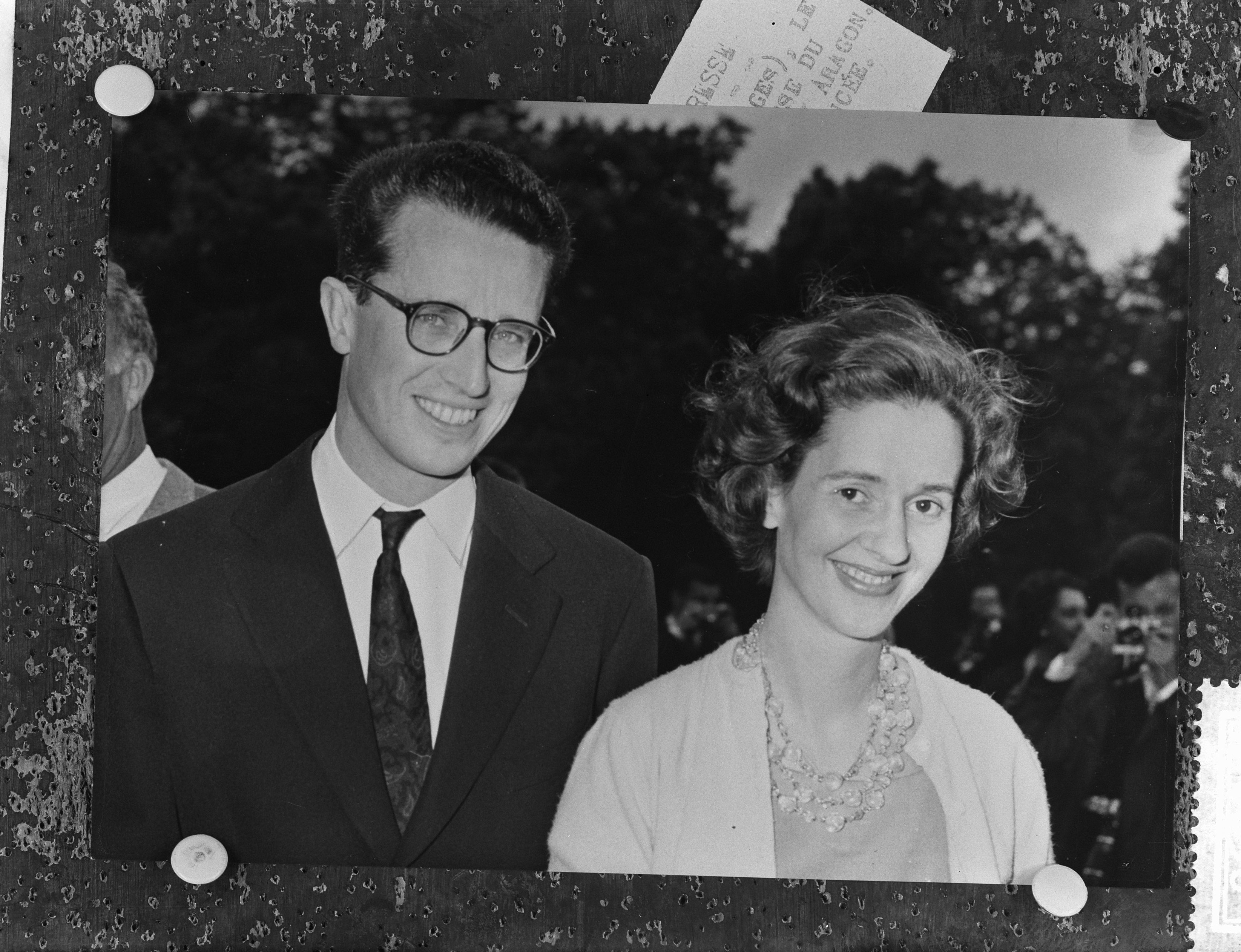
Barend[1] Konijn was a fellow prisoner of Otto Frank in Auschwitz I, and a travelling companion during the repatriation via Odessa and Marseille.

Konijn was married to a non-Jewish woman and was therefore protected against deportation as having a 'mixed marriage'. On 25 June 1944, he was arrested in Heemstede because, according to him, he had refused to work at Schiphol.[2]

Whether it is related to the above is not known, but on 7 July 1944 a Landwachter brought him to the police station on Leidseplein in Amsterdam. He needed medical attention.[3]While he was under guard in the Wester Gasthuis (the name of the Wilhelmina Gasthuis at that time), he was freed in the morning of 18 July 1944. Three men in white coats entered the room and chloroformed the guard. They also took his pistol and cartridges..[4]
On 25 July 1944, Konijn was arrested again in Andreas Schelfhoutstraat, this time by SD officer Pieter Schaap..[5]

On 3 September 1944, Barend Konijn was on the transport from Westerbork to Auschwitz. As a mixed marriage man, he was given the registration number 195348. Mixed married couples had a better status than 'normal' Jewish prisoners. They were identifiable through a different numbering system and they were not selected for the gas chamber. In late October 1944, he was transferred to a sickbay barrack, where he stayed until the liberation of the camp on 27 January 1945.[2] On 15 and 23 March 1945, with the help of the Polish Red Cross, he sent two postcards home.[6] He went on the same repatriation trip as Otto Frank. On the way, it was his birthday, so Otto gave him white bread and butter.[7]

Konijn was a partner in the canning and dried fruit trade De Winter & Konijn, with branches in Amsterdam and Rotterdam.[8];[9]

He acted as a reference during Otto Frank's naturalisation procedure.[10]

Source personal data.[11] Address: Parnassusweg 13-II, Amsterdam.[11]

Footnotes
  1. ^ According to his daughter Joséphine, he was also addressed as Bernard. In anonymous eulogy in her possession, the deceased is also addressed as “Bernard”. Property of Joséphine Konijn: eulogy read by a former fellow prisoner, probably S. van Thijn (23 November 1894), undated (May 1964).
  2. a, b Privébezit Joséphine Konijn: Afschrift verklaring B. Konijn aan NRK, ingekomen 8 juni 1945.
  3. ^ Stadsarchief Amsterdam (SAA), archief Gemeentepolitie Amsterdam (toegang 5225), inv. nr. 6181: Rapport Leidseplein, 7 juli 1944, mut. 20.15 en 23.00 uur.
  4. ^ SAA, Gemeentepolitie Amsterdam, inv. nr. 6181: Rapport Leidseplein, 18 juli 1944, mut. 10.20 uur.
  5. ^ SAA, Gemeentepolitie Amsterdam, inv. nr. 2050: Rapport Hoofddorpplein, 25 juli 1944, mut. 11.00 uur.
  6. ^ Privébezit Joséphine Konijn: Briefkaarten van B. Konijn, 15 en 23 maart 1945.
  7. ^ Anne Frank Stichting, Anne Frank Collectie, Otto Frank Archief, reg. code OFA_040: Notitieboekje januari-3 juli 1945, 14 april 1945.
  8. ^ SAA, Dienst Bevolkingsregister, Gezinskaarten (toegangsnummer. 5422): Gezinskaart B. Konijn.
  9. ^ Naamlijst voor de interlocale telefoondienst, uitgegeven door het Hoofdbestuur der PTT, 1950. Raadpleegbaar via http://www.geneaknowhow.net/script/dewit/tel1950/ (februari 2016).
  10. ^ Nationaal Archief, Den Haag, Ministerie van Justitie 1915 - 1955 (toegang 2.09.22), inv. nr 13402: Brief Otto Frank aan Mr. Th.H. de Meester, 9 februari 1946.
  11. a, b SAA, Dienst Bevolkingsregister, Archiefkaarten (toegangsnummer. 30238): Archiefkaart B. Konijn.

België,Boudewijn

Baudouin of Belgium

9-7-1930 | Brussel , België
7-31-1993 | Motril , Spanje

Baudouin was the crown prince of Belgium.

Prince Baudouin became King of Belgium in 1950, after his father Leopold III was forced to abdicate due to severe criticism of his conduct during the occupation. He married a Spanish princess in 1960.[1]

Footnotes
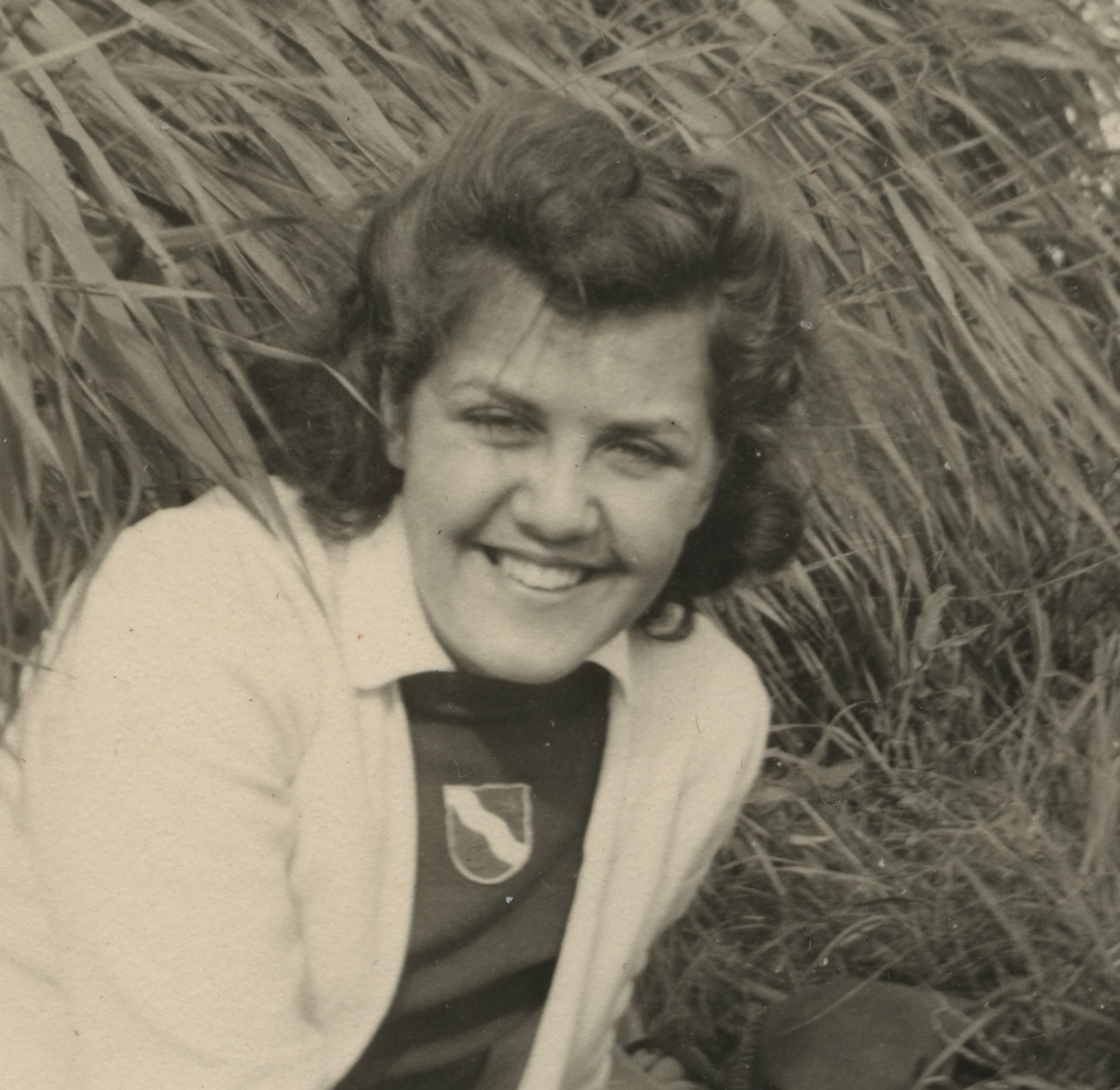
  1. ^ Zie http://en.wikipedia.org/wiki/Baudouin_of_Belgium (geraadpleegd juli 2012). Anne suggests that he might be married off to Princess Margaret. Anne Frank, Diary Version A, 21 April 1944, in: The Collected Works; transl. from the Dutch by Susan Massotty, London [etc.]: Bloomsbury Continuum, 2019.

van der Wilk - Kohlweij,Sibylla

Bella van der Wilk - Kohlweij

11-1-1925 | Amsterdam , Nederland
3-15-2019 | Deventer , Nederland

Bella Kohlweij was a classmate of Margot Frank at the Lyceum for Girls.

Bella Kohlweij was a classmate of Margot Frank at the Municipal Lyceum for Girls. She, Margot Frank, Jaaike van Bork and Anna Harting formed a rowing team, with Rozette van Gelder as their coach.[1] They used the facilities of the VBWJ, an association that promoted watersports among young people. In 1941, Jews were banned from all sports activities, which prevented Rozette van Gelder and Margot from participating. In protest, the rest of the team refused to accept the new coach.[2]

In 1944 Bella graduated from secondary school.[3] She married Hans van der Wilk on 18 August 1952.[4] Her husband died in 1973.[5]

She never realised that Anne Frank was Margot's younger sister until she read her diary. Afterwards, she contacted Otto Frank. On 22 July 1967 she sent him a class photo and a lengthy letter, in which she described the rowing club's protest against the exclusion.[2]

On 15 March 2011 she attended the opening of the temporary exhibition 'Margot, sister of Anne' at the Anne Frank House.[6] She donated to the Anne Frank Foundation a diary from 1940, which included a drawing of the boat and the positions of the rowers.[7] The drawing appears in the book Wie was wie?[1]

Source personal data.[8] Addresses: Derde Helmersstraat 68-II, Amsterdam; De Genestetstraat 13-15 (1929);[9] Molenkamp 25, Bennekom.[2]

Footnotes

  1. a, b Aukje Vergeest, Wie was wie in en om het Achterhuis?, Amsterdam: Anne Frank Stichting, 2013, p. 53.
  2. a, b, c AFS, Anne Frank Collectie (AFC), Otto Frank Archief (OFA), reg. code OFA_085: Bella van der Wilk – Kohlweij aan Otto Frank, 22 juli 1967.
  3. ^ Louise C. Pont et al (red.), Gedenkboek ter gelegenheid van het 25-jarig bestaan van het Gemeentelijk Lyceum voor Meisjes te Amsterdam en het afscheid van Dr Margrita J. Freie als rectrix van deze school, Amsterdam, 1950, p. 109.
  4. ^ Stadsarchief Amsterdam (SAA), Dienst Bevolkingsregister, Archiefkaarten (toegangsnummer 30238): Archiefkaart J.F.H. Kohlweij.
  5. ^ Anne Frank Stichting (AFS), Getuigenarchief, Bella van der Wilk – Kohlweij: Overlijdensbericht Bella Kohlweij, 15 maart 2019).
  6. ^ AFS, Getuigenarchief Van der Wilk – Kohlweij: Brief aan Erika Prins (AFS), 16 maart 2011.
  7. ^ AFS, AFC, reg. code B_Getuigen_I_043: dagboek S. (Bella) Kohlweij.
  8. ^ SAA, Dienst Bevolkingsregister, Gezinskaarten (toegangsnummer 5422): Gezinskaart J.F.H. Kohlweij; AFS, Getuigenarchief, Bella van der Wilk - Kohlweij: Overlijdensbericht Bella Kohlweij, 15 maart 2019.
  9. ^ SAA, Dienst Bevolkingsregister, Gezinskaarten (toegangsnummer 5422): Gezinskaart J.F.H. Kohlweij.


Mussolini,Benito Amilcare Andrea

Benito Mussolini

1883-07-29 | Predappio , Italié
4-28-1945 | Guilino de Mezzegra , Italië

Benito Mussolini was the Fascist dictator of Italy from 1922 to 1943.

Mussolini was an Italian politician, educator, journalist and from 1922 to 1943 fascist dictator. He turned from a socialist to a fascist. In 1922, his supporters marched on Rome. The government fell and Mussolini became the new Prime Minister of Italy. Under Mussolini's regime, Italy attacked Abbysinia and Albania. Mussolini was an ally of Germany during the Second World War. On 25 July 1943, he was deposed and replaced by Badoglio.[1] Freed from captivity, he returned for a short time. Eventually partisans shot him dead near Lake Como.[2]

Footnotes

  1. ^ Anne Frank, Version B, 26 July 1943, in: The Collected Works; [transl. from the Dutch by Susan Massotty; transl. from the German language by Kirsten Warner and transl. from the Dutch language by Nancy Forest-Flier]. London [etc.]: Bloomsbury Continuum, 2019. ISBN 978-1-4729-6491-5. See also: Version B, 10 August 1943.
  2. ^ Zie http://nl.wikipedia.org/wiki/Benito_Mussolini (geraadpleegd november 2012).

Brahn,Benno Benjamin Adolf

Benno Brahn

1877-06-22 | Laurahütte , Duitsland
8-4-1954 | Amsterdam , Nederland

Benno Brahn was a business contact of Otto Frank.

Benno Brahn had a doctorate in natural sciences. He was a supervisory director and vice-chairman of the Supervisory Board of Sangostop.[1] Otto Frank had business links with him.

Brahn married a non-Jewish woman in Berlin in 1921.[2] This earned him the protected status of mixed marriage person during the German occupation. A classmate of Brahn's son, Konrad, wrote: "Brahn Sr. is a very kind, sensitive, gentle man, as is his wife, and they are like two balls of wax melted together.”[3] Konrad was also a classmate of Willem Frederik Hermans.

On 28 April 1937, Brahn applied for a patent in the United States on the use of pectin in the administration of insulin by diabetics.[4] On 20 February 1945, Canada also registered a patent for an insulin application, which Brahn invented, and which was owned by Thelopharm.[5] Thelopharm was a sister company of Sangostop, of which Brahn's older brother Max was director in the 1930s.

Otto Frank had noted Brahn's phone number in his diaries from 1937 and 1946 to 1952.[6]

Source personal data.[2] Adressess: Fasanenstraße 58, Berlin (1931);[7] Vondelstraat 25hs, Amsterdam (May 1934), Paulus Potterstraat 28 boven (Aug. 1934), Watteaustraat 14-II (April 1941).[2]

Footnotes

  1. ^ “Handelsregister. Wijzigingen November 1939”, Pharmaceutisch Weekblad. Orgaan van de Nederlandsche Maatschappij ter bevordering van de Pharmacie, 6 januari 1940.
  2. a, b, c Stadsarchief Amsterdam, Dienst Bevolkingsregister; Archiefkaarten (toegangsnummer 30238): Archiefkaart B.B.A. Brahn.
  3. ^ Willem Otterspeer, De mislukkingskunstenaar, Amsterdam: De Bezige Bij, 2013, p. 245.
  4. ^ US Patent Office, patent 2.294.016 (https://www.google.com/patents/US2294016, geraadpleegd 5 juli 2017).
  5. ^ Canadian Intellectual Property Office, http://brevets-patents.ic.gc.ca/opic-cipo/cpd/eng/patent/425759/summary.html, (geraadpleegd 14 juli 2017).
  6. ^ Anne Frank Stichting, Anne Frank Collectie, Otto Frank Archief, reg. codes OFA_001 en 003 t/m 009.
  7. ^ Jüdisches Adressbuch für Gross-Berlin, Ausgabe 1931, Berlin: arani-Verlag GmbH, 1994, p. 45.

Hofhuis - Timmermans,Elisabeth Adriana Maria

Bep Hofhuis - Timmermans

1898-07-23 | Tilburg , Nederland
1-14-1991 | Hilversum , Nederland

Bep Hofhuis was a friend of Edith Frank.

Elisabeth (Bep) Hofhuis was a friend of Edith Frank. She was the wife of Joop Hofhuis.[1] She helped Edith Frank find her way around Dutch society in 1933 and helped with all kinds of practical matters, such as schools for the children.[2] In 1935 her youngest son Frans was born. On the occasion, Edith wrote her a congratulatory note in Dutch.[3]

Source personal data.[4] Addresses: Singel 400, Amsterdam ('26); Noorder Amstellaan 125 I ('28); Johannes Geradtsweg 108, Hilversum.[1]

Footnotes

  1. a, b Stadsarchief Amsterdam, Dienst Bevolkingsregister, Gezinskaarten (toegangsnummer. 5422): Gezinskaart J.A.W. Hofhuys (een eerder gecorrigeerde verschrijving is bij de digitalering opnieuw overgenomen).
  2. ^ Anne Frank Stichting, Anne Frank Collectie, Otto Frank Archief, reg. code OFA_071: Otto Frank aan Alice Frank-Stern, 1 september 1945.
  3. ^ Privébezit Frans Hofhuis, Edith Frank aan Bep Hofhuis, 30 juni 1935. De brief maakte deel uit van de tijdelijke tentoonstelling "Edith Frank - Holländer, moeder van Anne" in 2011.
  4. ^ SAA, Dienst Bevolkingsregister, Gezinskaarten (toegangsnummer. 5422): Gezinskaart J.A.W. Hofhuys; Centraal Bureau voor Genealogie, Den Haag, Centraal archief van overledenen, Archiefkaart E.A.M. Timmermans.

Roozendaal,Bernard

Bernard Roozendaal

1885-03-14 | Amsterdam , Nederland
12-9-1956 | Amsterdam , Nederland

Bernard Roozendaal was a brother-in-law of Willy Kleiman, the brother of Johannes Kleiman.

Bernard Roozendaal was by his second marriage a brother-in-law of Willy Kleiman, the brother of Johannes Kleiman. According to the Amsterdam population register, he was a merchant and instructor.[1] When mayor Plekker of Haarlem decided that all mixed marriage persons had to leave that city too, Willy arranged for his brother-in-law's family to live in Amsterdam's Antillenstraat.[2] Bernard Roozendaal was a brother of Siegfried J. Roozendaal, who did business with Pectacon and who is mentioned in Anne's diary. The brothers had been separated for years, but came together again during the difficulties of the war years.[3]

According to one of his sons, he was a chess friend of Pieter Paauwe, founder of Paauwe's Patent.

Roozendaal wrote a dialogue between Goebbels and Hitler, entitled Slotstuk van <Menschenjacht> 1942-1943 ('Final Scene of <Manhunt> 1942-1943'), 'inspired by Shakespeare'. He also wrote Een onuitgesproken cantate bij het tienjarig bestaan van de N.S.B. ('An unsung cantata on the occasion of the 10th anniversary of the N.S.B.').[4] Both pieces undoubtedly appeared in print only after the liberation.

Source personal data.[1] Addresses: Teding van Berkhoutstraat 132, Haarlem; Antillenstraat 5hs, Amsterdam (2 March '43).[1]

Footnotes

  1. a, b, c Stadsarchief Amsterdam, Dienst Bevolkingsregister, Archiefkaarten (toegangsnummer 30238): Archiefkaart B. Roozendaal.
  2. ^ Anne Frank Stichting (AFS), Getuigenarchief, Roozendaal: Telefoongesprek met dochter Greta Roozendaal, 22 december 2008.
  3. ^ AFS, Getuigenarchief, Roozendaal:Telefoongesprek met zoon Fried Roozendaal, 15 december 2008.
  4. ^ AFS, Anne Frank Collectie, reg. code A_Gies_I_125: Gedrukte gedichten van B. Roozendaal, Antillestraat 5.

Cohen,Bernardina

Bernardina Cohen

1897-08-04 | Amsterdam , Nederland
7-2-1943 | Sobibor , Unkown Death Country

Bernardina Cohen was a teacher and head of the Sixth Montessori School.

Bernardina Cohen was head of school No. 51 for Preparatory Education (Montessori kindergarten) in Dintelstraat, which moved to Niersstraat 43 in 1934.[1]

From 23 May 1934 until 1941[2] she was a Fröbel teacher and Montessori lead teacher,[3] and held the diploma 'Head of Preparatory Montessori Education'.[4]

Bernardina Cohen is on a list of "Dismissed Jewish Teachers", marked "Rush 20-8" from August 1941.[4] Her card in the population register was marked "(suspended with pay)".[5]

She may be the teacher sitting at the back of the classroom in a picture of a kindergarten class with Anne, Hanneli Goslar and Irene Ceurvorst, among others.[6]

Source personal data.[5] Addresses: Deltastraat 12 huis, Amsterdam (’37);[3] Uiterwaardenstraat 344-II, Amsterdam (juli ’40); Geulstraat 6-I, Amsterdam (juli ’41).[5]

Footnotes

  1. ^ Anne Frank Stiching (AFS), Anne Frank Collectie (AFC), reg. code A_Montessori_I_001: Handgeschreven notitie en schrijven Afdeling Onderwijs van de Gemeente Amsterdam, kenmerk O 2197, 28 april 1934, ingeplakt voorin inschrijfboek Zesde Montessorischool.
  2. ^ AFS, AFC, reg. code A_Montessori_I_001: Inschrijfboek Zesde Montessorischool, handgeschreven notitie en schrijven voorin.
  3. a, b Stadsarchief Amsterdam (SAA), Dienst Bevolkingsregister, Gezinskaarten (toegangsnummer 5422): Gezinskaart B. Cohen.
  4. a, b SAA, Afdeling Onderwijs en rechtsopvolgers (toegang 5191), inv. nr. 10830: lijst “Ontslagen Joodsche leerkrachten, d.d. 20 augustus 1942.
  5. a, b, c SAA, Dienst Bevolkingsregister, Archiefkaarten (toegangsnummer 30238): Archiefkaart B. Cohen.
  6. ^ AFS, AFC, reg. code A_AFrank_III_055_067: Klassefoto School voor V.O. no. 51, 1934.

Bloemendal,Bertha Louise

Berry Bloemendal

8-12-1929 | Den Haag , Nederland
10-1-1942 | Auschwitz , Unkown Death Country

Betty Bloemendal was a classmate of Anne Frank at the Jewish Lyceum.

Bertha Louise (Betty) Bloemendal was a classmate of Anne Frank at the Jewish Lyceum.[1]  Betty was picked up from home in July '42 with her brother and mother. Her father was allowed to stay thanks to a doctor's certificate stating that he had TB. He would die of the disease in early '44 at a hiding place. Betty was a cousin of Philip Bloemendal, who later became the 'voice' of the Polygoon newsreel.[2]

Source personal data.[3] Address: Reinier Claeszenstraat 2 II, Amsterdam.[3]

Footnotes
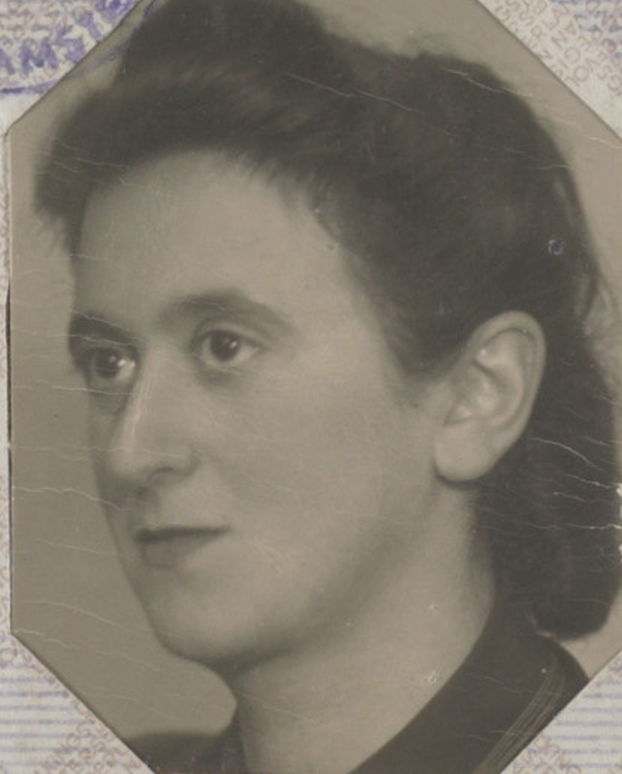
  1. ^ NIOD Instituut voor Oorlogs-, Holocuast- en Genocidestudies, Archief 181e (W.S.H. Elte), inv. nr. 2f: Absentenregister klas 1LII Joods Lyceum, 1 maart – 17 juli 1942; Anne Frank, Diary Version A, 15 June 1942 and 21 September 1942, 1st, in: The Collected Works, transl. from the Dutch by Susan Massotty, London [etc.]: Bloomsbury Continuum, 2019.
  2. ^ Dienke Hondius, "Betty Bloemendal uit Bos en Lommer, klasgenoot van Anne Frank", t.g.v. tentoonstelling in het Stadsdeelkantoor Bos en Lommer, 18 maart 2009.
  3. a, b Stadsarchief Amsterdam, Dienst Bevolkingsregister, Archiefkaarten (toegangsnummer 30238): Archiefkaart B.L. Bloemendal.


Hess,Bertel

Bertel Hess

2-14-1904 | Osnabrück , Duitsland
4-19-2000 | Unkown Death Place , USA

Bertel Hess was a cousin of Hermann van Pels.

Bertel Hess was a cousin of Hermann van Pels. Her mother was Ida Vorsänger, a sister of Hermann's mother Lina. Her father was Jonas Hess.[1] In 1933 she left her birthplace and moved to Leeuwarden. From there she moved to the Jewish Invalid House in Amsterdam on 20 July 1933 as a linen maid.[2] She stayed there for almost ten years.

As a child she played a lot with her cousin Clara van Pels, who was of a similar age. Later, in Amsterdam, she had mainly contact with her cousin Henny, who visited her weekly.[3] Friend and colleague Lena Schrijver (1911-1943) took her to a house on Sarphatistraat. From there she was helped to Heemstede.[4] There she was able to go into hiding with a family and made it to liberation..[5]

On 23 September 1946, she received a certificate of good conduct from the municipality of Amsterdam, with a view to leaving to go abroad.[6] Shortly afterwards, she left for the United States.[7]

Source personal data.[8] Addresses: Osnabrück; Leeuwarden; Nieuwe Achtergracht 98, Amsterdam (1933);[2] Nieuwe Achtergracht 3-II, Amsterdam; Weesperplein 1, Amsterdam (1939); Jacob Obrechtstraat 92, Amsterdam (1945); Newark, USA (1947).[7]

Footnotes
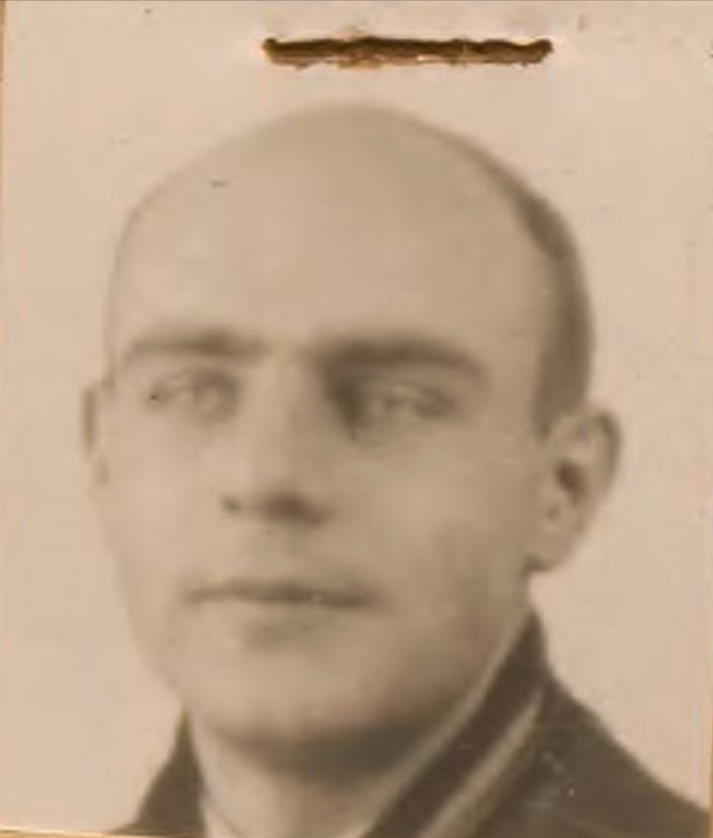
  1. ^ Peter Junk & Martina Sellmeyer, Stationen auf dem Weg nach Auschwitz. Entrechtung, Vertreibung, Vernichtung. Juden in Osnabrück 1900 – 1945, Bramsche: Rasch Verlag, 1988, p. 281.
  2. a, b Stadsarchief Amsterdam (SAA), Archief van het Bevolkingsregister (toegang 5000), inv. nr. 2554: Gestichten, register nr. 14, blad 236, volgnr. 198.
  3. ^ AFS, Getuigenarchief Freund – Hess: Interview 1997-03 22 Bertel Freund – Hess met correcties, p. 15.
  4. ^ AFS, Getuigenarchief Freund – Hess: Interview 1997, p. 22.
  5. ^ Junk & Sellmeyer, Stationen auf dem Weg nach Auschwitz, p. 282.
  6. ^ AFS, Anne Frank Collectie, reg. code B_I_Getuigen_010: Verklaring van goed gedrag no. 15340, 23 september 1946.
  7. a, b SAA, Dienst Bevolkingsregister, Archiefkaarten (toegangsnummer 30238): Archiefkaart B. Hess.
  8. ^ SAA, Dienst Bevolkingsregister, Archiefkaarten (toegangsnummer 30238): Archiefkaart B. Hess; Anne Frank Stichting (AFS), Getuigenarchief, Freund – Hess: Correspondentie 1 Hess, Bertel.

Hulsman,Albertus Johannes

Bertus Hulsman

6-26-1918 | Amsterdam , Nederland
Unkown Death Date | Unkown Death Place , Unkown Death Country

Bertus Hulsman was engaged to Bep Voskuijl for a time.

Bertus Hulsman was engaged to Bep Voskuijl for some time. Anne wrote in her diary on 18 October 1942 that Bertus was going to Germany for work.[1] He left for Berlin on 21 October 1942, together with his brothers Arie and Theodorus and his wife Gertrud Hulsman-Herms. Bertus, Theodorus and Gertrud went to work at AEG.[2]

When The Secret Annex was published, he received a flyer for the book,with a note saying that he appeared in it as "Dirk". He sent it back, adding that he had ordered the book. Bertus was on Java at the time.[3]

Bertus dated Bep. On 25 May 1944 Anne wrote that Bep and Bertus had become engaged.[4] However, the relationship did not last.

Source personal data.[5] Address: Hoofdweg 349 huis, Amsterdam.[6]

Footnotes
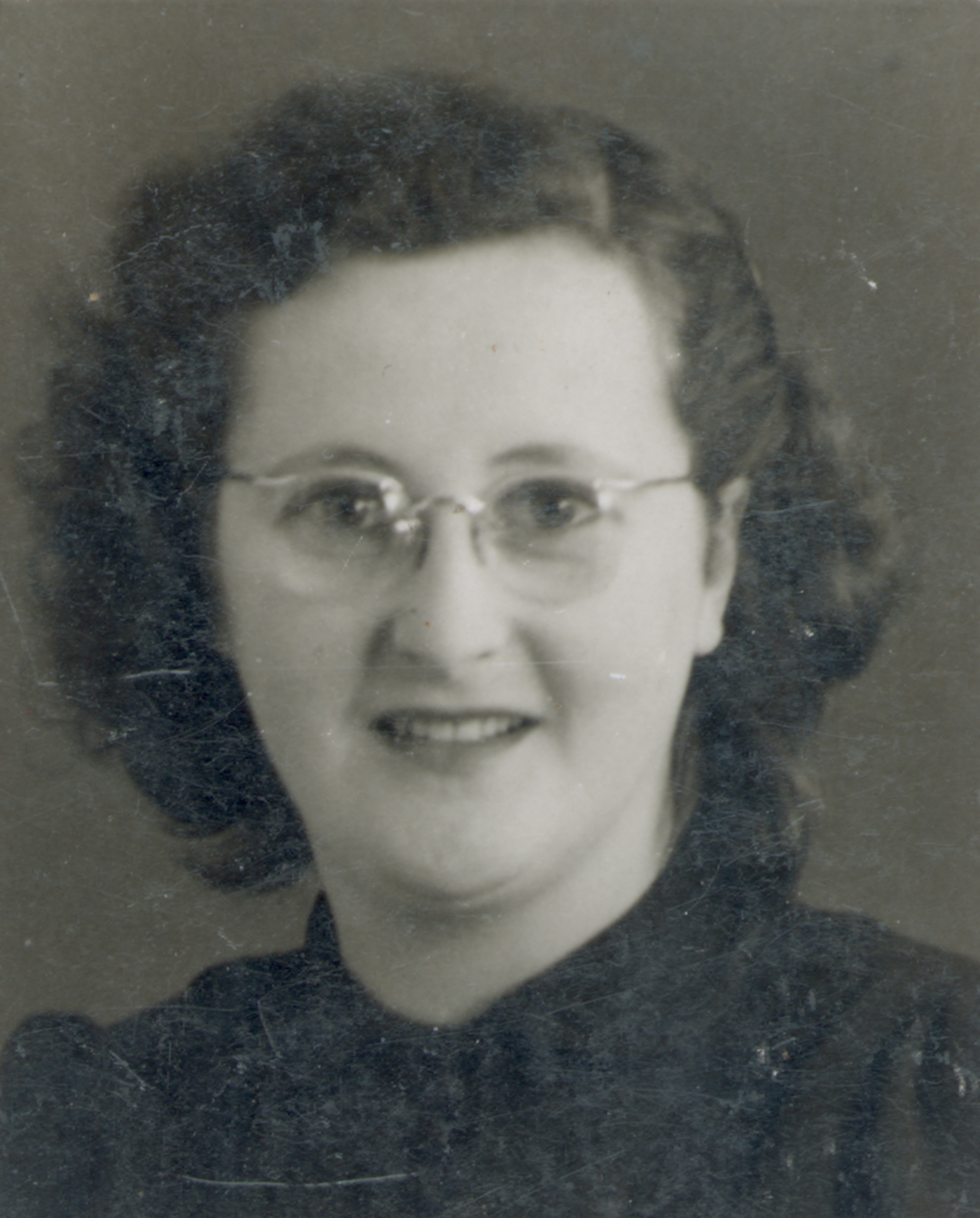
  1. ^ Anne Frank, Diary Version A, 18 October 1943, in: The Collected Works, transl. from the Dutch by Susan Massotty, London [etc.]: Bloomsbury Continuum, 2019.
  2. ^ Stadsarchief Amsterdam (SAA), Gemeente Arbeidsbeurs, inv. nr. 1358, scan A11672000058: Transportlijst van arbeiders die naar Duitsland gaan, 21 oktober 1942. En scans A11672000052 en 060.
  3. ^ Anne Frank Stichting, Anne Frank Collectie, Otto Frank Archief, reg. code OFA_100.
  4. ^ Anne Frank, Diary Version A, 25 May 1944, in: The Collected Works. See also Version A, 30 September 1942, 2nd, 22 October 1942, 2 November 1942, 2nd, 3 October 1944, and Version B, 9 October 1942.
  5. ^ SAA, Dienst Bevolkingsregister, Archiefkaarten (toegangsnummer 30238): Archiefkaart M.J. Hulsman (1880).
  6. ^ SAA, Gemeente Arbeidsbeurs, inv. nr. 1358, scan A11672000058: Transportlijst van arbeiders die naar Duitsland gaan, 21 oktober 1942.

Zendijk - Jakobs,Betje

Betje Jakobs

6-9-1922 | Coevorden , Nederland
9-21-1978 | Unkown Death Place , Nederland

Betje Jakobs was imprisoned in camp Westerbork and Auschwitz together with the people in hiding from the Secret Annex. In the infirmary hut of Auschwitz-Birkenau she witnessed the death of Edith Frank.

Betje (Betty/Bep) Jakobs was born on 9 June 1922 in Coevorden as the eldest daughter of the Jewish couple Herman Israël Jakobs (1896-1945) and Sophie ten Brink (1899-1945). Her sister Minna was born on 18 August 1925,[1] a year later on 28 August 1926 her brother Israel.[2] The family lived at Koestraat 25a in Zwolle. .[3]

In 1942, the family went into hiding with milkman Dekker in Zwolle for a while. Due to unknown circumstances, the family had to leave there and they eventually went into hiding on Prinses Julianastraat (then Louise de Colignystraat).[4] On 25 August 1944, Betje was discovered and arrested together with her parents, brother and sister.[5] The family arrived at camp Westerbork via Arnhem and Velp on 29 August 1944. There they ended up in penal barrack 67, where the people from the Secret Annex were also interned from 8 August 1944.[6]

Auschwitz-Birkenau

Just like the eight people from the Secret Annex, Betje Jakobs and her family were deported to Auschwitz concentration and extermination camp on 3 September 1944.[6] They arrived there on the night of 5-6 September 1944. After the selections, where the men and women were separated, registration followed. She got the number A25149 tattooed on her forearm.[5]

In the camp the women had to do pointless forced labor. In June 1945, Betje Jakobs told the Zwolsch Nieuws- en Advertentieblad about this: ‘Our first job was to carry heavy basalt stones miles away to some construction site, but it was nothing more than bullying, because the next day we had to pick up those heavy pieces of rubble and trudge back again.’[7]

Selections followed around 21 October 1944, during which she was first separated from her mother and then from her sister. After these selections, the work became harder: 'Digging canals and closing them again. Then I got sick, a kind of dysentery.’[7] She ended up in the sick huts and witnessed Edith Frank's death there. On 2 August 1945, Betje told the employees of the Dutch Red Cross that she 'had seen Mrs. Frank from Amsterdam, where her husband owned the Opekta company, die right there near me.'[8]

Liberation

On 27 January 1945, Betje Jakobs was liberated from Auschwitz, but she was more dead than alive. She was sick and weighed only 28 kilos. Initially, she was put on a death list.[9] But as she herself said: 'The Russians already came to collect my body (...). However, they were a bit too early, because I was still showing signs of life. But it would end soon... And yet... as if by divine miracle I recovered.'[5]

Betje Jakobs was the only one from the Jakobs family to survive the war. Once back in Zwolle, she stayed with the Bieringa family for a while and tried to get back the items that had been entrusted to a neighbour. However, these appeared to have been sold. On 11 October 1946, Betje confirmed that she agreed to the settlement of 975 guilders.[10]

In the summer of 1953, Betje Jakobs married David Zendijk (1923-1970).[11] Together they had two daughters.

Source personal data.[12]

Footnotes

  1. ^ Zie https://www.joodsmonument.nl/nl/page/118816/ (geraadpleegd 17 november 2022).
  2. ^ Zie https://www.joodsmonument.nl/nl/page/118815/ (geraadpleegd 17 november 2022).
  3. ^ https://www.joodsmonument.nl/nl/page/38691/koestraat-25-a-zwolle (geraadpleegd 17 november 2022); Arolsen Archives - International Center on Nazi Persecution, Bad Arolsen: Formulier Volksherstel Betty Jakobs, Document ID 130312178, https://collections.arolsen-archives.org/de/search/person/130312178?s=Betje%20Jakobs&t=2574959&p=5 (geraadpleegd 23 november 2022).
  4. ^ Zie details beschrijving foto’s, https://collectieoverijssel.nl/collectie/?mivast=20&mizig=343&miadt=141&milang=nl&mizk_alle=Betje%20Jakobs&miview=gal1 (geraadpleegd 17 november 2022).
  5. a, b, c 'In ’t rijk der levenden teruggekeerd. Zwolsch meisje over het vernietigingskamp Auschwitz’, Zwolsch Nieuws- en Advertentieblad (Ten Heuvel’s Krant), 23 juni 1945. Geraadpleegd via Delpher: https://resolver.kb.nl/resolve?urn=MMNIOD05:000165674:mpeg21:a0008 (23 november 2022).
  6. a, b Arolsen Archives, Joodsche Raad Kaart Betje Jakobs, Document ID 130312177, https://collections.arolsen-archives.org/en/document/130312177 (geraadpleegd 23 november 2022).
  7. a, b 'In ’t rijk der levenden teruggekeerd. Zwolsch meisje over het vernietigingskamp Auschwitz', deel II,  Zwolsch Nieuws- en Advertentieblad (Ten Heuvel’s Krant), 30 juni 1945. Geraadpleegd via Delpher: https://resolver.kb.nl/resolve?urn=MMNIOD05:000165675:mpeg21:p001 (23 november 2022).
  8. ^ Het Nederlandse Rode Kruis (NRK), Den Haag, toegang 2050, inv.nr. 1267, Verklaring Betje Jakobs, 2 augustus 1945.
  9. ^ De naam van Betty Jakobs komt voor op een dodenlijst die na de bevrijding van het kamp werd opgesteld met als doel ‘Checking of identification of unkown dead.’ Uit de lijst blijkt dat ze toch nog ‘alive after liberation’ was. Zie: Arolsen Archives, ‘Evaluation of data on unknown foreign fatalities and unknown fatalities from concentration camps and their grave sites.’, Reference Co DE ITS 5.3.2 Tote 57, https://collections.arolsen-archives.org/de/search/person/84611360?s=Betje%20Jakobs&t=222826&p=3 (geraadpleegd 23 november 2022).
  10. ^ Collectie Overijssel, toegang 0652, inv. 168: ‘Correspondentie betreffende de teruggave van door de familie Jakobs bij een buurman in bewaring gegeven goederen, die blijken te zijn verkocht, 1945 - 1946.’.
  11. ^ ‘Collectie Overijssel, toegang 0652, inv. 172: Huwelijkskaart Bep Jakobs en Dé Zendijk’ 30 augustus 1953; ‘Ondertrouw D. Zendijk en B. Jakobs’, Nieuwe Haarlemsche courant, 17 juni 1953, Geraadpleegd via Delpher: https://resolver.kb.nl/resolve?urn=MMNHA03:179261064:mpeg21:a00032 (23 november 2022); ‘Overlijdensadvertentie David Zendijk’ In: Nieuw Israelietisch weekblad, 27 maart 1970. Geraadpleegd via Delpher: https://resolver.kb.nl/resolve?urn=ddd:010858539:mpeg21:a0074 (23 november 2022).
  12. ^ Drents Archief, Assen Drents Archief, Gemeente Coevorden Bevolkingsregister, Deel 18, 1900-1925, Archiefnummer 2001.05, Inventarisnummer 44: Registratie Betje Jakobs, https://www.drentsarchief.nl/onderzoeken/genealogie/zoeken/deeds/6b16b214-5e5b-40be-a835-b302919481b6?person=d9521146-7b1f-1cd5-dd46-4a31fb078b7d (geraadpleegd 23 november 2022) ;Overlijdensadvertentie Bep Zendijk-Jakobs’ in: Nieuw Israelietisch weekblad, 29 september 1978. Geraadpleegd via Delpher: https://resolver.kb.nl/resolve?urn=ddd:010860044:mpeg21:a0126 (23 november 2022).

Holländer,Bettina

Bettina Holländer

1898-05-22 | Eschweiler , Duitsland
9-22-1914 | Aken , Duitsland

Bettina Holländer was an older sister of Edith Frank.

Bettina Holländer was an older sister of Edith Frank. Bettina died at the address Lütticherstrasse 110.[1] The Franziskus Hospital had been located there since the mid-nineteenth century.[2]

Her cousin Selma Hartog wrote to Otto Frank in 1958 that in her opinion Bettina was also a victim of the First World War, because the hospital was only prepared to admit her under extreme pressure from the family doctor. But by then it was already too late.[3] This letter does not say the illness or disease of which Bettina died.

Source personal data.[1]

Footnotes
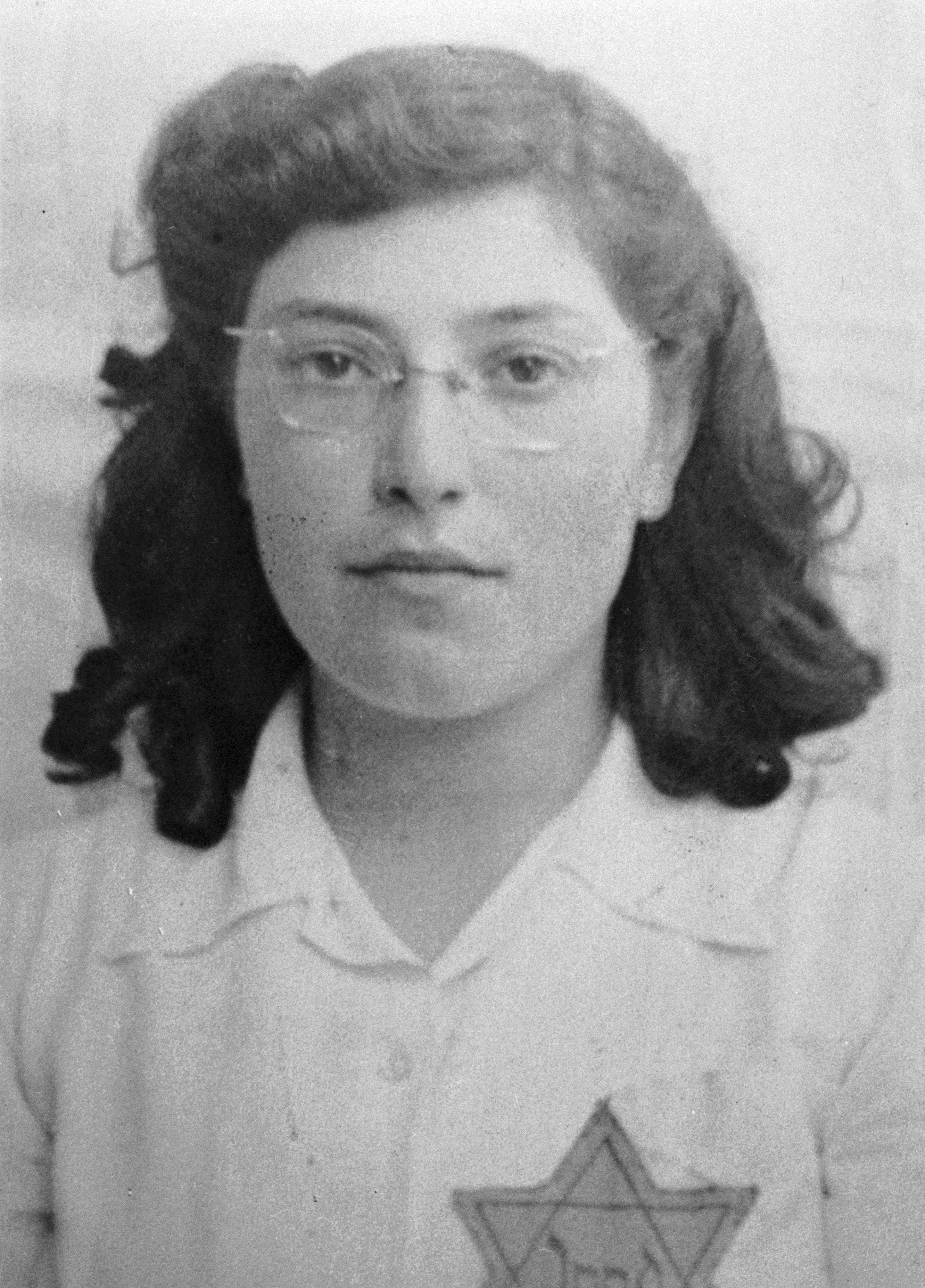
  1. a, b Standesamt Aachen, Overlijdensakte register C, nr. 1612, 23 september 1914 (kopie bij: Anne Frank Stichting, afd. Collecties, Documentatie Holländer. De datum 22 mei komt uit: Melissa Müller, Anne Frank. De biografie, 5e, geh. herz. dr., Amsterdam: Bert Bakker, 2013, p. 469.
  2. ^ Zie http://www.franziskus-hospital.de/unserklinikum/unsere-geschichte/ (geraadpleegd juni 2014).
  3. ^ Anne Frank Stichting, Anne Frank Collectie, Otto Frank Archief, reg. code OFA_073: brief van Selma Hartog aan Otto Frank, 17 maart 1958.

Evers - Emden,Bloeme

Bloeme Evers - Emden

7-5-1926 | Amsterdam , Nederland
7-18-2016 | Herzliya , Israël

Bloeme Emden was a classmate of Margot's at the Jewish Lyceum. She met the Frank family in Westerbork and Auschwitz.

In Westerbork, the eight people in hiding met all sorts of people, both familiar and new, who after the war testified about their encounters with Anne, Margot, Edith, Otto, Peter, Hermann, Auguste and Fritz. One of them was Bloeme Emden, a former classmate of Margot.[1]

Bloeme Emden was born on 5 July 1926 in Amsterdam to a warm and politically aware family.[2] She had a six years younger sister Via Roosje Emden (1932-1943) and lived at Lutmastraat 194 II in Amsterdam.[3] Bloeme grew up in an almost entirely Jewish environment, although her parents were not religiously Jewish.

Anti-Jewish measures

In 1941, because of the anti-Jewish measures, Bloeme, like other Jewish pupils, had to go to the Jewish Lyceum. There she came into contact for the first time with Margot Frank, who was in her parallel class. Bloeme also remembered Anne Frank, but because of the age difference they did not get involved with each other much.[4]

In 1942, when the deportations started, the classes at the Jewish Lyceum became increasingly empty. In July 1942, Bloeme, like Margot Frank, received a summons to report for work in Germany.[5] Her father Emanuel Emden (1889-1943) was so desperate that he went to the Zentralstelle für Jüdische Auswanderung and arranged a sperre (temporary exemption) for his daughter.[2]

In May 1943 Bloeme was taken away from home and taken to the Hollandsche Schouwburg. She managed to avoid being registered and could escape by walking with the children to the crèche across the street and by running with the tram that blocked the view from the theatre. Through friends of her parents' she managed to go into hiding.

Imprisoned

After fifteen hiding places, she was arrested in August 1944 when the resistance group she was with was betrayed. Bloeme had been in hiding for a total of 15 months before she arrived in Westerbork, where she met the Frank family again.[6]

Just like the eight people in hiding in the Secret Annex, Bloeme was transported to Auschwitz concentration camp on 3 September 1944. There Bloeme ended up in the same barracks as Anne, Margot and Edith Frank.[2]

In the barracks Bloeme formed a group with thirteen Dutch women, including Lenie de Jong-van Naarden. The group was able to support each other and helped each other whenever possible. Anne, Margot and Edith Frank were also regular visitors and Bloeme remembered that the three of them were always together.[7]

Bloeme could still remember the last time she had seen the Frank family:

"There had been another selection. I spoke to Mrs. Frank with Margot; Anne was somewhere else, she had Krätze. (...) So Anne couldn't come with our group, and Mrs. Frank, seconded by Margot, said: 'And of course we're going with her.' I remember nodding, that I understood that. That was the last I saw of them."[8]

Bloeme, along with 50 other Dutch Jewish women, was transferred at the end of October 1944 to an Arbeitslager in Libau, Upper Silesia, where she had to perform forced labour.[9] The women worked six and a half days a week and were free on Sunday afternoons. Bloeme remembered that during those free hours, songs were sung that Rozette (Ronnie) van Cleef (1921-2008) wrote to opera and operetta melodies.[10]

They were liberated there on 8 May 1945: "on the first sunny day in May."[11]

Footnotes

  1. ^ Zie https://en.wikipedia.org/wiki/Bloeme_Evers-Emden (geraadpleegd 18 augustus 2023).
  2. a, b, c Anne Frank Stichting (AFS), Getuigenarchief, Interview Bloeme Evers-Emden, 11 maart 2010.
  3. ^ Stadsarchief Amsterdam, Dienst Bevolkingsregister, Archiefkaarten (toegangsnummer 30238): Archiefkaart Emanuel Emden.
  4. ^ Willy Lindwer, De laatste zeven maanden. Vrouwen in het spoor van Anne Frank, Hilversum: Gooi & Sticht, 1988, p. 130.
  5. ^ Anne Frank, Dagboek Dagboek A, 8 juli 1942, in: Verzameld werk, Amsterdam: Prometheus, 2013. Op zaterdag 4 juli 1942 verstuurde de Zentralstelle zulke oproepen aan duizend vooral Duitse en deels heel jonge Joden. Deze jongeren moeten zonder hun ouders vertrekken. L. de Jong, Het Koninkrijk der Nederlanden in de Tweede Wereldoorlog, Deel VI: juli '42 -Mei '43, eerste helft, 's-Gravenhage: Nijhoff, 1975, p. 5.
  6. ^ Lindwer, De laatste zeven maanden, p. 132-134.
  7. ^ Lindwer, De laatste zeven maanden, p. 143.
  8. ^ Lindwer, De laatste zeven maanden, p. 142-143.
  9. ^ Lindwer, De laatste zeven maanden, p. 138, ZIe ook https://smolinski.nl/wp/blog/2016/04/29/krachtbronnen-en-anne-frank/ (geraadpleegd 10 augustus 2022).
  10. ^ Lindwer, De laatste zeven maanden, p. 139; AFS, Getuigenarchief. Interview Bloeme Everts-Emden, 11-maart 2010.
  11. ^ Bloeme was the only one of her family to survive the war. Lindwer, De laatste zeven maanden, p. 145.

Delden,Debora

Bora Delden

11-30-1923 | Amsterdam , Nederland
6-23-1945 | Marseille , Frankrijk

Bora Delden was the sister of Stella Delden, the daughter-in-law of Mrs Stoppelman, the landlady of Jan and Miep Gies.

Debora (Bora) Delden was the sister of Stella Stoppelman-Delden,[1] the daughter-in-law of Mrs. Stoppelman (landlady of Jan and Miep Gies). She was a costume seamstress.[2] Together with her sister and brother-in-law Stoppelman, she went into hiding in Laren. According to her brother-in-law, during a conflict between the person who took them into hiding and her son, she sided with the mother.[3] 

They were arrested on 12 April 1944.[3] In Westerbork she also found her brother and younger sister. The family went together on a transport.[4] Otto Frank noted "Borah Delden" in his notebook on 12 March 1945.[5] Debora Delden died on board the Monowai and was buried in Marseille.[6]  She therefore made the same return journey — until Marseille — as Otto Frank.

Source personal data.[2] Addresses: Waterlooplein 150-152, Amsterdam; Rijnstraat 209 II (’41).[2]

Footnotes
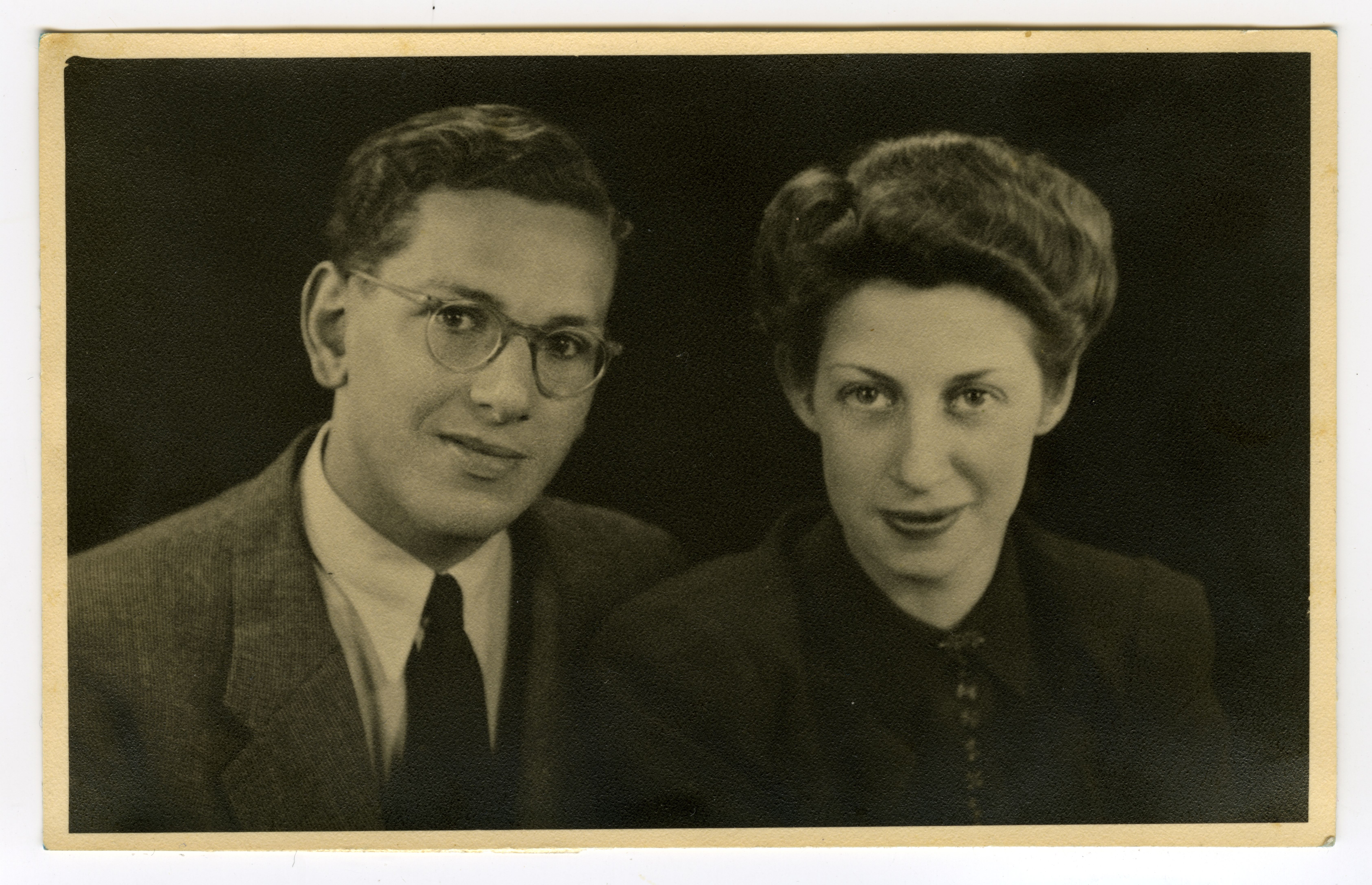
  1. ^ Stadsarchief Amsterdam (SAA), Dienst Bevolkingsregister: Archiefkaarten (toegangsnummer 30238): Archiefkaart S. Delden (’88). Is referred to by Anne as: S's sister. Anne Frank, Diary Version A, 17 April 1944, in: The Collected Works, transl. from the Dutch by Susan Massotty, London: Bloomsbury Continuum, 2019.
  2. a, b, c SAA, Dienst Bevolkingsregister: Archiefkaarten (toegangsnummer 30238): Archiefkaart D. Delden.
  3. a, b USC Shoa Foundation - The Institute for Visual History and Education: Interview Meier Stoppelman, nr. 3780, tijdcode 01.13.00. Geraadpleegd in de Mediatheek van het Joods Historisch Museum.
  4. ^  USC Shoa Foundation, M. Stoppelman, 3780, 01.19.00.
  5. ^ Anne Frank Stichting (AFS), Anne Frank Collectie, Otto Frank Archief, reg. code OFA_040: Notitieboekje Otto Frank.
  6. ^ AFS, Getuigenarchief, Stoppelman: M. Stoppelman aan Hans Westra, 25 augustus 1999.

Asscher,Abraham

Bram Asscher

8-28-1924 | Amsterdam , Nederland
Unkown Death Date | Unkown Death Place , Unkown Death Country

Bram Asscher was a classmate of Margot Frank at the Jewish Lyceum, Amsterdam. He wrote a letter from camp Westerbork to his mother in which he mentions seeing Margot and her family.

In 1941-1942, Abraham (Bram) Asscher was a classmate of Margot Frank in class 4b2 at the Jewish Lyceum, Amsterdam. Together with his brother Jeannot, he was in camp Westerbork from 29 September 1943 to 13 September 1944.[1] Although he was not in the punishment barracks, during this period he saw Margot and her family in the camp and wrote about it to his mother.

Bram Asscher was a nephew (the son of a brother) of Abraham Asscher of the Jewish Council. His mother, Stephanie Fischer, remarried a non-Jew after the death of her first husband (Bram's father). As a result, she had a Sperre — an exemption from deportation — as a mixed marriage. Her sons, however, as children of two Jewish parents, did not have this protection. Together with his brother Jeannot, Bram was transported to the Westerbork transit camp on 29 September 1943. On 13 September 1944 he was deported as part of the 'diamond group' to the Sternlager of Bergen-Belsen concentration camp. Both brothers survived the camps and were liberated in Hillesleben in May 1945.[1]

Letter

Bram was in Westerbork in the 'free' camp section. He was allowed to write a letter or two every fourteen days and to receive parcels. On 25 August 1944, Bram wrote to his mother from Westerbork that Margot, Anne and their parents had been locked up in the punishment barracks in camp Westerbork: 'Mama, do you know that Margot is here? That friend of Trees. You remember her, don't you? She's in the S with her parents and sister. Very sad!' Bram also thanked his mother in the letter for the beautiful toothbrush and other items.[2]

This letter is one of the few personal sources which refer to the presence of the Frank family in Westerbork.

According to Ina Polak, he married Trees Lek..[3] It is not known when.

Source personal data.[4] Addresses: Beethovenstraat 122 II, Amsterdam (’36); Stadionkade 41 hs (’41).[5]

Footnotes

  1. a, b Joodse Raad kaart Abraham Asscher, Document ID: 130252763, Arolsen Archives, https://collections.arolsen-archives.org/en/document/130252763 (10-11-2022).
  2. ^ Herinneringscentrum Kamp Westerbork, RA 1090, Bram Asscher aan familie D.L. Tollenaar, 24 augustus 1944. Zie ook: Eva Moraal, Als ik morgen niet op transport ga... Kamp Westerbork in beleving en herinnering, Amsterdam: De Bezige Bij, 2014, p. 363.
  3. ^  E-mail van Dienke Hondius, 26 februari 2012.
  4. ^ Referred to by Anne as Bram. Anne Frank, Diary Version A, 23 March 1944, in: Anne Frank, The Collected Works, transl. from the Dutch by Susan Massotty. - London [etc.]: Bloomsbury Continuum, 2019.
  5. ^ Stadsarchief Amsterdam, Dienst Bevolkingsregister, Archiefkaarten (toegangsnummer 30238): Archiefkaart Stephanie Fischer.

Nieuwenburg - Boom,Branca

Branca Nieuwenburg - Boom

4-17-1912 | Amsterdam , Nederland
12-20-2004 | Unkown Death Place , Unkown Death Country

Branca Boom was a sister-in-law of Miep Gies.

Branca Boom was a sister-in-law of Miep Gies. She married Miep's foster brother Gerard Nieuwenburg on 19 August 1936. Sister-in-law Miep and brother-in-law Simon Zilverberg were witnesses.[1]

From 1935 to 1937, Branca, in her own words, worked at Opekta. In 2002 she wrote some short memories, including: "Otto Frank and his family were very kind and civilized people. Anne was often in the office, I worked there from 1935 to 1937 I always enjoyed working there." After she left the office, contact between them grew less; she knew nothing about the hiding period.[2]

Her brother Jacob (1916) said at the funeral that as the eldest child she worked hard in the time of crisis to ensure that her brothers and herself had a good education.[3]

Source personal data.[4] Addresses: Vrolikstraat 30-I, Amsterdam; Granaatstraat 8-II (1925);[5]Trompenburgerstraat 18-II (1936); Slochterwaard 236, Alkmaar (1976).[5]

Footnotes

  1. ^ Stadsarchief Amsterdam (SAA), Burgerlijke Stand (toegangsnummer 5009), inv. nr. 6386: Register van huwelijksakten 1936, deel 27, 73f, akte 140.
  2. ^ Anne Frank Stichting (AFS), Getuigenarchief Nieuwenburg – Boom: Herinneringen Branca Boom.
  3. ^ AFS, Getuigenarchief Nieuwenburg – Boom: Tekst bij uitvaart van Jacob Boom, 20 december 2004.
  4. ^ SAA, Dienst Bevolkingsregister, Archiefkaarten (toegangsnummer 30238): Archiefkaart B. Boom; AFS, Getuigenarchief Branca Nieuwenburg – Boom: Brief L. Koning, Alkmaar, aan Anne Frank Stichting, 3 maart 2010. Misschien verwart de buurman datum van overlijden en van uitvaart (zie ook noot 3).
  5. a, b SAA, Dienst Bevolkingsregister, Gezinskaarten (toegangsnummer 5422): Gezinskaart S. Boom (1882).

Elias,Bernd Paul Eric

Buddy Elias

6-2-1925 | Frankfurt am Main , Duitsland
3-16-2015 | Bazel , Zwitserland

Buddy Elias was a first cousin of Anne and Margot Frank.

Bernd Paul Eric Elias (Buddy) was the son of Leni Frank, a sister of Otto Frank, and first cousin of Anne and Margot.[1] Anne fantasised in her diary about a career as an ice dancer together with her cousin Buddy.[2] There are some photographs of Buddy from 1940-41, in which he is depicted as an 'ice clown'.[3] He became an actor in later years, and travelled the world with the 'Holiday on Ice' revue, among others.[4]

Source personal data.[5] Address: Herbstgasse 11, Basel (’41).[5]

Footnotes

  1. ^ See https://en.wikipedia.org/wiki/Buddy_Elias (geraadpleegd 18 augustus 2023). For the life story of Buddy Elias, see: Mirjam Pressler & Gert Elias, Treasures from the attic : the extraordinary story of Anne Frank's family, New York, NY: Doubleday, 2011. Also see: Dineke Stam, "'I would have loved to go skating with her' : from a conversation with Buddy Elias, the cousin of Anne Frank", in: Anne Frank Magazine 2000, p. 4-9.
  2. ^ Anne Frank, Diary Version A, 1 October - 1 November 1942, in: The Collected Works, transl. from the Dutch by Susan Massotty, London [etc.]: Bloomsbury Continuum, 2019. See also: Diary Version A, 19 - 30 June 1942.
  3. ^ Anne Frank Stichting, Anne Frank Collectie, reg. code A_AFrank_III_055: ‘Blanco Monster Electro Huishoudboek 1937’, p. 41, 45.
  4. ^ Familiearchief Anne Frank-Fonds (AFF), Bazel, Stephan Elias, AFF_StE_corr_03.
  5. a, b AFF, Erich Elias, AFF_ErE_odoc_07: Formulier ‘Bürgerrechtsbureau’, gestempeld 17 oktober 1941.

Bruggen,Carry

Carry van Bruggen

1881-01-01 | Smilde , Nederland
11-16-1932 | Laren , Nederland

Carry van Bruggen was a Dutch writer and sister of Jacob Israël de Haan.

Carry van Bruggen was a Dutch writer.[1] Born as Carolina Lea de Haan, she was the sister of Jacob Israël de Haan (Dutch writer, poet, publicist and jurist). For some years, she was married to Kees van Bruggen, whose name she continued to use. In 1919, she wrote Prometheus, een bijdrage tot het begrip der ontwikkeling van het Individualisme in de Literatuur ('Prometheus, a Contribution to the Understanding of the Development of Individualism in Literature').[1] She was a resident of Laren, so the local press published an extensive obituary and a report of the funeral. The fact that the mayor was not present at the funeral led to a small debate in the town council.[2] Anne Frank read Carry van Bruggen's writing in the Secret Annex.[3]

Footnotes

  1. a, b Zie http://dbnl.nl/tekst/bork001nede01_01/bork001nede01_01_0209.php (geraadpleegd juni 2014).
  2. ^  Laarder Courant de Bel, 18, 22 en 25 november 1932.
  3. ^ Anne Frank, Diary Version A, 19-21 April 1944 (Secret code), in: The Collected Works,  transl. from the Dutch by Susan Massotty, London [etc.]: Bloomsbury Continuum, 2019.


Cate,Catharina Elisabeth

Catharina Elisabeth ten Cate

1881-03-09 | Mannheim , Duitsland
10-27-1949 | Amsterdam , Nederland

Catharina ten Cate was a teacher of Miep Gies in the school year 1923 - '24.

Catharina ten Cate was a teacher[1] of Miep Gies in the school year 1923 - ’24.

In 1901 she was appointed teacher at School 109. Starting in 1907, she worked as a teacher at the Bouman School.[2]Years later, she had Hermine Santrouschitz (= Miep Gies) in her class for a while. On her report card for school year 1923 - '24 she noted: 'Proceeds without exam to 4th yr U.L.O.'[3]

In 1925, she became principal of the Amalia School. In 1929, she was transferred to the Admiralengracht School, which she left in 1938 when she failed the medical.[4]

Source personal data.[5] Address: Reijnier Vinkeleskade 37-I, Amsterdam.[1]

Footnotes

  1. a, b Stadsarchief Amsterdam (SAA), Dienst Bevolkingsregister, Gezinskaarten (toegangsnummer 5422): Gezinskaart C.E. ten Cate.
  2. ^ SAA, Gemeentelijk Pensioenbureau (toegangsnummer 5175), inv. nr. 1968: Pensioenkaart C.E. ten Cate.
  3. ^ Anne Frank Stichting, Anne Frank Collectie, reg. code A_Gies_I_031:  Rapport van Hermine Santrouschitz schooljaar 1923/24.
  4. ^ SAA, Afdeling Onderwijs en rechtsvoorgangers (toegangsnummer 5191), inv. nr. 9854: Stamkaarten vast personeel, C.E. ten Cate.
  5. ^ SAA, Dienst Bevolkingsregister, Archiefkaarten (toegangsnummer 30238): Archiefkaart C.E. ten Cate.

Horst - Rambonnet,Catharina

Catharina van der Horst - Rambonnet

1892-02-10 | Velp , Nederland
Unkown Death Date | Unkown Death Place , Unkown Death Country

Mrs. Van der Horst - Rambonnet was an acquaintance of Jan and Miep Gies.

Catharina van der Horst - Rambonnet She was married to Dr. Hendrik van der Horst, director of N.V. Ing. bur. Lemet Chromium in Hilversum.[1] In that company, she held the position of Supervisory Director.[2] She took Mrs. Stoppelman into hiding in 1942.[3] Her second son Kuno Lodewijk went into hiding with Miep and Jan Gies in Hunzestraat.[4]

Source personal data.[1] Addresses: Alexanderlaan 22, Hilversum;[1] Diependaalselaan 27 (now 114).[5]

Footnotes
  1. a, b, c H.P. van den Aardweg, J.P.J.C. Hüllstrung (red.), Persoonlijkheden in het Koninkrijk der Nederlanden in woord en beeld. Nederlanders en hun werk, Amsterdam: Van Holkema & Warendorf, 1938, p. 700.
  2. ^ Laarder Courant de Bel, 25 mei 1937.
  3. ^ Anne Frank, Diary Version A, 10 October 1942, 1st, in: The Collected Works, transl. from the Dutch by Susan Massotty, London [etc.]: Bloomsbury Continuum, 2019.
  4. ^ Anne Frank Stichting, Getuigenarchief, Gies, Miep: Jan Gies in interview 1992.
  5. ^ Schriftelijke mededeling Publiekszaken Gemeente Hilversum, september 2001.

Dickens,Charles

Charles Dickens

1812-02-07 | Landport , Groot-Brittannië
1870-06-09 | Higham , Groot-Brittannië

Charles Dickens was a British writer whose books Otto Frank read in the Secret Annex.

Charles Dickens (1812-1870) was the author of books including David Copperfield and The Posthumous Papers of the Pickwick Club.[1] When the people in hiding had to be quiet, Otto Frank preferred to read the books of Charles Dickens.[2]

Footnotes
  1. ^  Zie verder: http://en.wikipedia.org/wiki/Charles_Dickens.
  2. ^ Anne Frank, Diary Version A, 4 March 1944, in: The Collected Works, transl. from the Dutch by Susan Massotty, London [etc.]: Bloomsbury Continuum, 2019.


Gaulle,Charles André Joseph Marie

Charles de Gaulle

1890-11-22 | Rijsel , Frankrijk
7-9-1970 | Colombey-les-Deux-Églises , Frankrijk

General de Gaulle was leader of the Free French Movement during the Second World War.

De Gaulle was a soldier, politician and president. From 1913, De Gaulle[1] was a French soldier, and in 1916 he was taken prisoner of war by the Germans at the Battle of Verdun. When, in June 1940, Marshal Petain wanted to conclude an armistice with the Germans, De Gaulle ran away to England. He was therefore sentenced to death for desertion by the new French government in Vichy. De Gaulle was the leader of the Free French. After the Allied invasion of North Africa, he established his headquarters in Algiers. Although he joined the Allies, there remained a distance between the general and his allies.[2]

On 6 June 1944, Reuters news agency reported De Gaulle's arrival in England.[3] On 10 June he was received by Queen Wilhelmina.[4]

Footnotes

  1. ^ Anne refers to him as de Gaul. Anne Frank, Diary Version A, 6 June 1944, in: The Collected Works, transl. from the Dutch by Susan Massotty, London [etc.]: Bloomsbury Continuum, 2019.
  2. ^ Zie http://en.wikipedia.org/wiki/Charles_de_Gaulle (geraadpleegd mei 2012).
  3. ^ Nieuwsblad van het Noorden, 7 juni 1944.
  4. ^ Amigoe di Curaçao, 12 juni 1944.

Kaletta,Charlotte Martha

Charlotte Kaletta

6-16-1908 | Ilmenau , Duitsland
6-13-1986 | Amsterdam , Nederland

Charlotte Kaletta was the girlfriend of Fritz Pfeffer.

Charlotte Kaletta was the girlfriend of Fritz Pfeffer.[1] She came to the Netherlands by train via Oldenzaal on 29 December 1938, and went back to Berlin on 30 January 1939. On 30 March 1939, she came to the Netherlands again, via Zevenaar. From June 19 to July 1, she stayed in Brussels, and came back via Roosendaal.[2] Due to the Nuremberg laws, she could not marry Fritz Pfeffer in Germany. Nor could she do so in the Netherlands because of an international treaty dating from 1902.[3] In 1953, the Berlin Senator für Justiz decided to retroactively recognise as legally valid the marriages that had been made impossible. In the case of Charlotte Kaletta, the date of marriage was set at 31 May 1937.[4]

Source personal data.[5] Addresses: Pariserstrasse 21-22, Berlin; Daniël Willinkplein 23, Amsterdam; Brussels; Rivierenlaan 270 I, Amsterdam (at the Meijer-Schuster residence, 15 May 1940).[2]

Footnotes

  1. ^ Anne refers to her as Mrs Pfeffer. Anne Frank, Diary Version A, 14 juni 1942, in: The Collected Works, transl. from the Dutch by Susan Massotty, London [etc.]: Bloomsbury Continuum, 2019. See also Diary Version A, 22 December 1943, 15 April 1944, 17 April 1944; Diary Version B, 1 May 1943.
  2. a, b Stadsarchief Amsterdam (SAA), Gemeentepolitie Amsterdam, inv. nr. 4171: Vreemdelingenkaart M.C. Kaletta.
  3. ^ "Het Duitsche Ariërshuwelijksverbod sluit een huwelijk in Nederland uit", Het Vaderland, 17 september 1935 (avondeditie).
  4. ^ SAA, Dienst Bevolkingsregister, Archiefkaarten (toegangsnummer 30238): Archiefkaart F. Pfeffer.
  5. ^ SAA, Dienst Bevolkingsregister, Archiefkaarten (toegangsnummer 30238): Archiefkaart C.M. Kaletta.

Voskuijl - Sodenkamp,Christina

Christina Voskuijl - Sodenkamp

1899-07-11 | Amsterdam , Nederland
6-19-1990 | Amsterdam , Nederland

Christina Sodenkamp was the mother of Bep Voskuijl.

Christina Sodenkamp was the mother of Bep Voskuijl.[1] She married Johan Voskuijl on 20 February 1919 and together they had seven children.[2]

In June '47 Otto Frank sent Mrs Voskuijl a copy of The Secret Annex with an accompanying letter in which he wrote that her husband — by that time deceased — had been a great help to the people in hiding. She wrote a letter of thanks on 1 August.[3]

Source personal data.[2] Addresses: Lumeijstraat 18 II, Amsterdam (’33); 18 I (Nov. ’44).[2]

Footnotes

  1. ^ Anne refers to her as her mother. Anne Frank, Diary Version A, 25 May 1944, in: The Collected Works, transl. from the Dutch by Susan Massotty, London [etc.]: Bloomsbury Continuum, 2019.
  2. a, b, c Stadsarchief Amsterdam, Dienst Bevolkingsregister, Archiefkaarten (toegangsnummer 30238): Archiefkaart C. Sodenkamp.
  3. ^ Anne Frank Stichting, Anne Frank Collectie, Otto Frank Archief, reg. code OFA_100.

Marxveldt,Cissy

Cissy van Marxveldt

1889-11-24 | Oranjewoud , Nederland
10-31-1948 | Bussum , Nederland

Cissy van Marxveldt was a Dutch writer whose books Anne Frank read.

Cissy van Marxveldt (pen name of Setske Beek-de Haan) was a Dutch writer[1] whose books Anne Frank read in the Secret Annex. From 1915 she published in Panorama. She married Leo Beek in 1916. In 1919 the first part of the successful Joop ter Heul series appeared. For Anne, Van Marxveldt's books were a source of pleasure and inspiration. She regularly writes about them in her diary, and introduces a kind of private Jopopinoloekico club.[2]

The phone number of Cissy van Marxveldt ('van Beek, Bussum') was in Otto Frank's diary for 1946. [3]

Footnotes

  1. ^ Monica Soeting, Cissy van Marxveldt: een biografie, Proefschrift Universiteit Groningen, 2017. Zie ook: http://nl.wikipedia.org/wiki/Cissy_van_Marxveldt (geraadpleegd 28 oktober 2011).
  2. ^  Anne Frank, Diary Version A, 28 September 1942 (10th), 4 and 6 October 1942, in: The Collected Works, transl. from the Dutch by Susan Massotty, London [etc.]: Bloomsbury Continuum, 2019.
  3. ^ Anne Frank Stichting, Anne Frank Collectie, Otto Frank Archief, reg. code OFA__003: Agenda Otto Frank 1946.

Ehbrecht,Clara Wilhelmina Elisabeth Hendrika

Clara Ehbrecht

7-6-1910 | Amsterdam , Nederland
Unkown Death Date | Unkown Death Place , Unkown Death Country

Clara Ehbrecht was on the same transport as the Frank family from Westerbork to Auschwitz. After the liberation, she made the repatriation trip via Odessa to the Netherlands, just like Otto Frank.

Clara Ehbrecht was a camp mate of the Frank family. She was a half sister of Gerdina Selma Gendering.[1] Her profession was nurse, with the qualifications 'the white cross' (basic nurse), 'little stork' (maternity nurse) and 'the black cross' (psychiatric nurse). Under this last qualification, she worked in the 'Apeldoornsche Bos' before 1935.[2]

Between 1935 and 1953 she lived at many different addresses in Amsterdam, including the address of the Central Israeli Hospital, the Jewish Old People's Home, the Portuguese-Israeli Hospital and the Jewish Invalid Home.[3]

On 21 August 1944, she was arrested by SD detective Maarten Spaans from The Hague. As a member of the Documentation Department of the The Hague police, Spaans was a notorious 'Jew hunter'.[4] He delivered her to the Linnaeusstraat office in Amsterdam. In anticipation of being transported to The Hague, an officer brought her to the Amsterdam Headquarters.[5] She was locked up there.[6] 

She was part of the transport from Westerbork to Auschwitz on 3 September 1944. Despite the fact that her father was not Jewish, she had no protected status and belonged to the common 'Häftlinge’.[7] According to her, she was in the same carriage as the Frank family and stayed in the same barrack in Auschwitz-Birkenau with Edith, Margot and Anne Frank. After the liberation, she made the repatriation trip via Odessa to the Netherlands, just like Otto Frank.[8]

In 1955 she married the Polish Holocaust survivor Abram Bergerfraint.[3] After Otto Frank's death, she signed the book of condolence at the Anne Frank House in 1980, briefly mentioning her connection with the Frank family.[8]

Source personal data.[9] Addresses: Amsterdam; Apeldoorn; Jacob Obrechtstraat 92, Amsterdam (CIZ, 1935 – ‘39); Nieuwe Kerkstraat 135, Amsterdam (Joodse Oudelieden Gesticht - Jewish Old People's Home), 1939 – ’40); Plantage Franschelaan 8, Amsterdam (PIZ, 1944); Weesperplein 1, Amsterdam (JI, 1946 – ’53).[10]

Footnotes

  1. ^ Stadsarchief Amsterdam (SAA), Dienst Bevolkingsregister, Archiefkaarten (toegansnummer 30238): Archiefkaarten C.W.E.H. Ehbrecht en G.S. Gendering, beiden dochters van Leentje Gendering.
  2. ^ Arolsen Archives - International Center on Nazi Persecution, Bad Arolsen: Joodse-Raadkaart C.W.E.H. Ebrecht, toegankelijk via https://collections.arolsen-archives.org (geraadpleegd 22 augustus 2019).
  3. a, b SAA, DIenst Bevolkingsregister, Archiefkaarten (toegangsnummer 30238): Archiefkaart C.W.E.H. Ehbrecht.
  4. ^ L. de Jong, Het Koninkrijk der Nederlanden in de Tweede Wereldoorlog VI. Juli ’42 – Mei ’43, Den Haag: Martinus Nijhoff, 1975, p. 328.
  5. ^ SAA, Gemeentepolitie Amsterdam (toegangsnummer 5225), inv. nr. 6283: Rapporten bureau Linnaeusstraat, 21 augustus 1944, mut. 16.10 uur.
  6. ^ SAA, Gemeentepolitie Amsterdam, inv. nr. 7202: fouilleringsregister 21 augustus 1944, mut. 17.45 uur.
  7. ^ Nationaal Archief, Den Haag, Oorlogsarchief Nederlandse Rode Kruis (toegang?), inv. nr.
  8. a, b Anne Frank Stichting, Anne Frank Collectie, Otto Frank Archief, reg. code OFA_066: Condoleanceregister voor Otto Frank, 1980.
  9. ^ SAA, Burgerlijke Stand (toegangsnummer 5009), inv. nr. 7632: Register van geboorteakten, deel 13, 13v, akte 7353.
  10. ^ SAA, Dienst Bevolkingsregister, Persoonskaarten (toegangsnummer 30408): Persoonskaart C.W.E.H. Ebrecht.

Pels,Clara

Clara van Pels

8-31-1900 | Gehrde , Duitsland
4-30-1943 | Sobibor , Unkown Death Country

Clara van Pels was a younger sister of Hermann van Pels.

Clara van Pels was one of six children born to Aaron and Lina van Pels. She married the dentist Herbert Leeser on 21 March 1925 in Osnabrück. Her father and her brother Hermann were witnesses.[1]  She lost her Dutch nationality through this marriage. On 25 December 1925, in Elberfeld, she had a daughter, Trude.[2] The marriage ended in divorce in 1933.[1]

She left Osnabrück in 1938 and settled in Bloemendaal. In May 1940 she moved in with her father and her sister Henny in Amsterdam.[3] By profession she was a solicitor,[1] and later a maid and housekeeper.[4]

In 1941, Clara applied to the municipality of Amsterdam for a certificate of good conduct and a declaration of Dutch citizenship. Both documents were needed because of an intended marriage.[5] The issuing of a declaration of Dutch citizenship seems to indicate that she acquired that nationality again after her divorce. On 2 July 1941 she married Günther Neumann in Amsterdam. Witnesses to the marriage were her father Aaron van Pels and the father of her sister-in-law Auguste, Leo Röttgen.[6] What the consequences of marrying a Jewish German were is not certain. Most probably Clara lost her Dutch citizenship again and eventually became stateless.[7]

She died in Sobibor with her husband.[8] Her daughter Trude survived nine concentration camps and later moved to Brazil.[9]

Source personal data.[4] Addresses: Am Domhof 8, Osnabrück; Merellaan 9, Bloemendaal (Sept. 1938); Minervalaan 49-I, Amsterdam (May 1940); Schubertstraat 46hs (Sept. 1941).[4]

Footnotes

  1. a, b, c Niedersächsischen Landesarchiv, afdeling Osnabrück, Standesamt Osnabrück, Rep 492, nr. 698: huwelijksakten 1925, nr. 84.
  2. ^ Stadsarchief Amsterdam (SAA), Dienst Bevolkingsregister, Archiefkaarten: Archiefkaart G. Neumann (1900); SAA, Dienst Bevolkingsregister, Woningkaarten, toegang 5445, inv. nr. 321: Woningkaart Schubertstraat 46 huis geheel.
  3. ^ SAA, Dienst Bevolkingsregister, Woningkaarten (toegangsnummer 5445), inv. nr. 233: Woningkaart Minervalaan 49-I.
  4. a, b, c SAA, Dienst Bevolkingsregister, Archiefkaarten (toegangsnummer 30238): Archiefkaart C. van Pels.
  5. ^ SAA, Secretarie, afdeling Algemene Zaken (toegang 5181), inv. 7645: indicateur van aanvragen van verklaringen van Nederlanderschap en goed gedrag 1941, volgnrs. 3026 en 4976.
  6. ^ SAA, Burgerlijke Stand (toegang 5009), inv. nr. 6675: register van huwelijksakten 1941, deel 20, 8v, nr. 15.
  7. ^ Zie noot 4. De aanduiding “Ned.” is doorgehaald.
  8. ^ SAA, Dienst Bevolkingsregister, Archiefkaarten (toegangsnummer 30238): Archiefkaarten C. van Pels en G. Neumann.
  9. ^ Anne Frank Stichting, Getuigenarchief: Correspondentie met T. Heymann-Leeser, Sao Paolo.

Stauffenberg,Claus Philipp Maria Schenk, Graf

Claus von Stauffenberg

11-15-1907 | Jettingen , Duitsland
7-21-1944 | Berlijn , Duitsland

Claus von Stauffenberg carried out an unsuccessful attack on Hitler.

Stauffenberg (1907-1944)  joined the Reichswehr in 1926 and became a lieutenant in 1930. In 1939 he took part in the campaign against Poland.

On 20 July 1944, Stauffenberg[1] carried out an attack on Hitler. This should have been accompanied by a coup d'état. The plan failed and Stauffenberg was killed the next day. About two hundred others were accused of complicity and executed, with or without justification.[2] Anne Frank wrote about this in her diary.

Footnotes
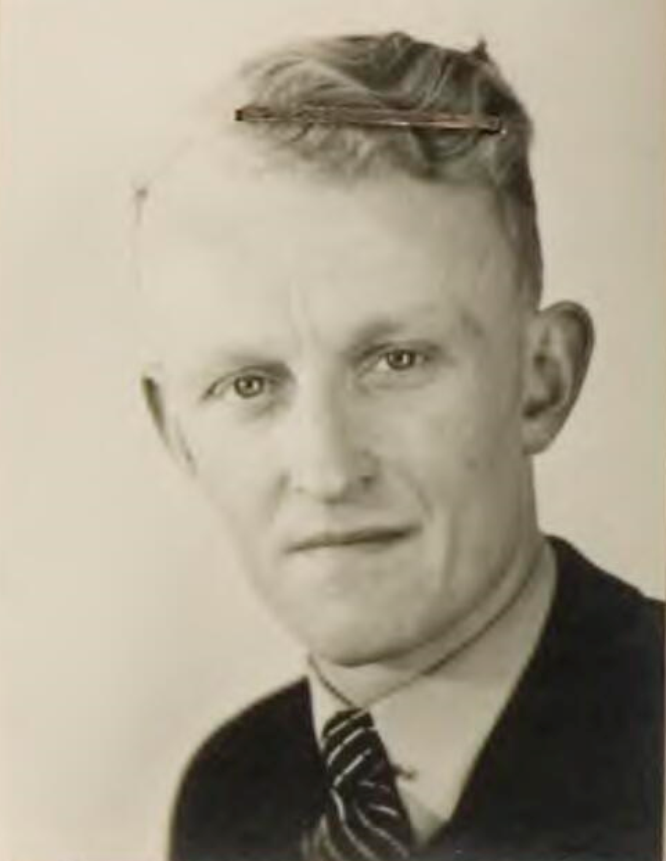
  1. ^ Anne refers to him as the head of the conspiracy. Anne Frank, Diary Version A, 21 July 1944, in: The Collected Works, transl. from the Dutch by Susan Massotty, London [etc.]: Bloomsbury Continuum, 2019.
  2. ^ Zie http://en.wikipedia.org/wiki/Claus_von_Stauffenberg (geraadpleegd april 2014).

Wijk,Cornelis

Cor van Wijk

12-24-1919 | Amsterdam , Nederland
10-28-2002 | Amsterdam , Nederland

Cor van Wijk was the husband of Bep Voskuijl.

Cor van Wijk was married to Bep Voskuijl.[1]

His mother died when he was six years old. His father remarried two years later.

He attended seven years of primary school and then started working as a wallpaper-upholsterer. Due to bad eyesight, he was rejected for military service in 1938. He did not apply for a second examination.[2]

In February 1944, on the recommendation of the director of the Labour Office, he received a passport free of charge in order to work in Germany.[3] He worked as an upholsterer in a furniture factory in Osterode. During his absence in the winter of 1944-1945, Bep stayed with Cor's second mother. When Cor returned from Germany, he met Bep and they started dating.[4]

The civil marriage to Bep took place on 15 May 1946 at half past two in the afternoon. At first, the Van Wijk family had objections to the marriage because of their religious beliefs. The blessing in church took place on 26 May 1946 in the Martelaren van Gorcum Church on Linnaeushof. They had four children: Ton, Joop, Cor and Anne.[5] After Bep's death (1983), Cor married Jacoba Sophia de Haas on 8 August 1985.[6]

Cor's last address was a nursing home called 'Open Hof'. After his death there was a funeral service on 4 November 2002 in the church where the blessing of his marriage with Bep had taken place. Afterwards he was cremated in De Nieuwe Ooster.[7]

Source personal data.[8] Addresses: Joos Banckersweg 12 I, Amsterdam; Jan van Riebeekstraat 9 I (1945); Marco Polostraat 228 II (1946); Lumeystraat 18 I (1948); Galileiplantsoen 119hs (1949); Fizeaustraat 3H (1991).[6]

Footnotes

  1. ^ Stadsarchief Amsterdam (SAA), Dienst Bevolkingsregister, Archiefkaarten (toegangsnummer 30238), inv. nr. 1962: Archiefkaart J.H. van Wijk (1888).
  2. ^ SAA, Secretarie, Militaire Zaken en rechtsvoorgangers, toegang 5182, inv.nr. 4510: lotingsregister 1939, Scholts-Z, volgnr. 6085.
  3. ^ SAA, Secretarie, Algemene Zaken, toegang 5181, inv. nr. 7493: Paspoortaanvragen Wou-Wij: Aanvraag Cornelis van Wijk.
  4. ^ Anne Frank Stichting (AFS), Getuigenarchief, Van Wijk: Handgeschreven notities bij vraaggesprek, ongedateerd, door Dineke Stam.
  5. ^ AFS, Anne Frank Collectie (AFC), A_Voskuijl_I_0004: Stamboek der familie C. v. Wijk – E. Voskuijl.
  6. a, b SAA, Dienst Bevolkingsregister, Persoonskaarten (toegang 30408), inv. nr. 553: Persoonskaart C. van Wijk.
  7. ^ AFS, Getuigenarchief familie Van Wijk: Rouwkaart Cornelis van Wijk.
  8. ^ AFS, AFC, reg. code A_Voskuijl_I_0004: Stamboek der familie C. v. Wijk – E. Voskuijl; AFS, Getuigenarchief familie Van Wijk: Rouwkaart Cornelis van Wijk.

Huij - Trapman,Cornelia Catharina

Cornelia Catharina d’Huij - Trapman

1885-05-22 | Amsterdam , Nederland
3-15-1961 | Amsterdam , Nederland

Cornelia Trapman was a teacher at the Jeker School and taught Margot Frank.

Cornelia Huij-Trapman was a teacher at the Jeker School. Margot Frank was in her class.

C.C. Trapman married the headmaster of the Jeker School, Karel Jacobus d'Huij, on 4 May 1933. On 23 February 1949, she became a widow.[1]

When she ended her teaching career after 32 years, Otto and Edith Frank sent her a plant and letter. Margot also wrote to her. On 29 December 1936 Huij-Trapman wrote back a letter of thanks, in which she called Margot a dear pupil and recalled that during the holidays Margot had often taken care of her plants.[2]

Source personal data.[3] Address: Waalstraat 86-II, Amsterdam.[3]

Footnotes

  1. ^ Stadsarchief Amsterdam (SAA), Dienst Bevolkingsregister, Archiefkaarten (toegangsnummer 30238): Archiefkaart C.C. Trapman; Overlijdensbericht K.J. d’Huij, Algemeen Handelsblad, 24 februari 1949.
  2. ^ Anne Frank Stichting, Anne Frank Collectie, reg. code A_gezinFrank_I_001: C.C. d'Huy-Trapman aan Otto en Edith Frank, 29 december 1936.
  3. a, b SAA, Dienst Bevolkingsregister, Archiefkaarten (toegangsnummer 30238): Archiefkaart C.C. Trapman.

Gies,Cornelis

Cornelis Gies (1868)

1868-02-03 | Nieuwer-Amstel , Nederland
1-7-1949 | Amsterdam , Nederland


Cornelis was the father of Jan Gies. He married Wilhelmina Gezina Steenge on 19 March 1891 in Amsterdam. Cornelis was a diamond cutter at the time.[1] They had three daughters and two sons. Jan is the youngest child.[2] From the end of 1923, the couple did not live together any more.[3] On 2 January 1925 the marriage ended in divorce.[4]

Source personal data.[5] Addresses: Ruijsdaelkade 203hs, Amsterdam (1935).[6]

Footnotes

  1. ^ Stadsarchief Amsterdam (SAA), Burgerlijke Stand, toegang 5009, inv. nr. 1955: Register van huwelijksakten 1891, deel 5, 38f, nr. 463
  2. ^ SAA, Dienst Bevolkingsregister, Archiefkaarten, toegang 30238: Archiefkaart C. Gies (1868).
  3. ^ SAA, Dienst Bevolkingsregister, Gezinskaarten: gezinskaart C. Gies (z.j.).
  4. ^ SAA, Burgerlijke Stand, inv. nr. 1955: Huwelijksakte 38f, nr. 463. De scheiding is in de kantlijn aangetekend.
  5. ^ SAA, Dienst Bevolkingsregister, Archiefkaarten (toegangsnummer 30238): Archiefkaart W.G. Steenge.
  6. ^ SAA, Dienst Bevolkingsregister, Gezinskaarten, toegang 5422: Gezinskaart W.G. Steenge.

Kleiman,Cornelis

Cornelis Kleiman (1860)

1860-12-28 | Ouderkerk aan de IJssel , Nederland
2-20-1945 | Amsterdam , Nederland

Cornelis Kleiman was the father of Johannes Kleiman.

Cornelis Kleiman was the father of Johannes Kleiman. Kleiman Sr. had a smithy on Mariniersstraat 6.[1] According to a grandson, the smithy mainly made ship's fittings.[2] The Image bank of the Municipal Archives shows a photo[3]  of the Kleiman house on Mariniersstraat 4 en 6.

Source personal data.[4] Addresses: Kattenburgerkade 49 ('21);[1] Marinierstraat 4hs, Amsterdam ('23-'45).[4]

Footnotes

  1. a, b Noord-Hollands Archief, Haarlem, Handelsregister Amsterdam, Kamer van Koophandel en Fabrieken Amsterdam, inv. nr. 97, dossier 12674.
  2. ^ Anne Frank Stichting, Getuigenarchief, Kleiman: Gesprekken met Folke Richard Kaales, 10 en 14 augustus 2009.
  3. ^ Stadsarchief Amsterdam (SAA), Beeldbank, fotonummer 010009004826.
  4. a, b SAA, Dienst Bevolkingsregister, Archiefkaarten (toegangsnummer 30238): Archiefkaart C. Kleiman (1860).

Kleiman,Cornelis

Cornelis Kleiman (1892)

1892-06-29 | Koog aan de Zaan , Nederland
4-25-1984 | Amsterdam , Nederland

Cornelis Kleiman was an older brother of Johannes Kleiman.

Cornelis Kleiman was an older brother of Johannes and Willy Kleiman. He was a model maker and work supervisor.[1] He made models for castings at the Verschure shipyard in Amsterdam-North.[2]

Anne's diary tells of the Fokker bombings.[3] The family of Kleiman's brother lived barely a kilometre away. The family was unharmed.

Source personal data.[1] Addresses: Spechtstraat 14 boven, Amsterdam ('35); Slotermeerlaan 1 ('59).[1]

Footnotes

  1. a, b, c Stadsarchief Amsterdam, Dienst Bevolkingsregister, Archiefkaarten (toegangsnummer 30238): Archiefkaart C. Kleiman.
  2. ^ Anne Frank Stichting, Getuigenarchief, Kleiman: Gesprekken met kleinzoon Folke Kaales, 10 en 14 augustus 2009.
  3. ^ Anne Frank, Diary Version B, 26 July 1943, in: The Collected Works, transl. from the Dutch by Susan Massotty, London [etc.]: Bloomsbury Continuum, 2019.

Boef,Cornelis

Cornelis den Boef

4-2-1903 | Rotterdam , Nederland
1-11-1990 | Amsterdam , Nederland

Cornelis den Boef was a policeman serving in the Amsterdam Police Battalion.

Cornelis den Boef enlisted in 1918 (at the age of fifteen!) with the fortification artillery in Naarden. He became unemployed after the capitulation in 1940 and joined the Amsterdam Police Battalion in 1942. He then went on to do regular beat work.[1]

Late in the evening of 9 April 1944, night watchman Slegers drew his attention to a forced door panel at Prinsengracht 263. Den Boef inspected the premises at around a quarter to eleven, but found nothing suspicious inside. In her diary Anne describes how the people in hiding heard footsteps and the rattling of the bookcase.[2] Den Boef reported his findings at half past eleven in the Warmoesstraat office.[3]

In the early morning of 2 March 1945, he and some of his colleagues shot at coal thieves on the grounds of the Westergasfabriek.[4]

Reports for the post-war purges described Den Boef as an untrustworthy person, who had also been a member of the NSB and Rechtsfront. On 11 July 1946, the Minister of Justice decided that all Den Boef's rights to pensions etc. had lapsed because of his disloyalty, as referred to in the Purges Decree 1945.[5]

Source personal data.[6] Addresses: Den Boef lived in the area of Ceintuurbaan from 1940 onwards. On 7 June 1944 he was registered at the address Cornelis Troostplein 23, the barracks of the Amsterdam Police Battalion.[6]

Footnotes

  1. ^ Nationaal Archief (NL-HaNA), Den Haag, Centraal Archief Bijzondere Rechtspleging, inv. nr. 106174: Verhoor van Den Boef, 28 december 1945.
  2. ^ Anne describes Den Boef as a policeman. Anne Frank, Diary Version A, 11 April 1944, in: The Collected Works, transl. from the Dutch by Susan Massotty, London [etc.]: Bloomsbury Continuum, 2019.
  3. ^ Stadsarchief Amsterdam (SAA), Gemeentepolitie Amsterdam (toegangsnummer 5225), inv. nr. 2036: Rapport Warmoesstraat, 9-10 april 1944, mut. 23.25 uur.
  4. ^ SAA, Gemeentepolitie Amsterdam (toegangsnummer 5225), inv. nr. 6676: Rapport Raampoort, 2 maart 1945. mut. 8.45 uur.
  5. ^ NL-HaNA, Binnenlandse Zaken/Zuivering Ambtenaren (toegang 2.04.67), inv. nr. 3408: Dossier C. den Boef.
  6. a, b SAA, Dienst Bevolkingsregister, Archiefkaarten (toegangsnummer 30238): Archiefkaart C. den Boef.

Voskuijl,Cornelia Margaretha

Corry Voskuijl

8-26-1924 | Hilversum , Nederland
9-29-1971 | Amsterdam , Nederland

Corry Voskuijl was the younger sister of Bep Voskuijl.

Corry Voskuijl was the younger sister of Bep Voskuijl. She was a workshop seamstress.[1]

Source personal data.[2]

Footnotes

  1. ^ Stadsarchief Amsterdam (SAA), Dienst Bevolkingsregister, Gezinskaarten (toegangsnummer 5422): Gezinskaart J.H. Voskuijl. Also see: Anne Frank, Diary Version  A, 7 October 1942, 2nd, in: The Collected Works, transl. from the Dutch by Susan Massotty, London [etc.]: Bloomsbury Continuum, 2019.
  2. ^ SAA, Dienst Bevolkingsregister, Archiefkaarten (toegangsnummer 30238): Archiefkaart J.H. Voskuijl; Familiebericht geplaatst door haar moeder in: Het Parool, 1 oktober 1971. Haar huwelijksnaam is hier De Jong.

Gostelie - Zajde,Danka

Danka Gostelie - Zajde

12-17-1928 | Lodz , Polen
3-5-2013 | Amsterdam , Nederland

Danka Zajde was a classmate of Anne Frank at the Jewish Lyceum.

Danka Zajde was a classmate of Anne Frank at the Jewish Lyceum. Danka's parents wanted to leave Poland around 1930. Her father — who was a tailor — travelled ahead. He arrived in Amstrerdam by ship and became enchanted with the city, so the family settled there.[1]

According to a note in Anne's diary dated June 1942, she and Danka did not get along.[2] However, the note also shows that Danka, together with Nanny van Praag and Eefje de Jong, gave her a book for her birthday.

Danka later went into hiding with her father and mother in Hoorn and Heerhugowaard.[3]  She survived the war and obtained Dutch natonality in 1952.[4]

Source personal data.[5] Addresses: P.C. Hooftstraat 50 huis, Amsterdam (1936 until she went into hiding).[6]

Footnotes
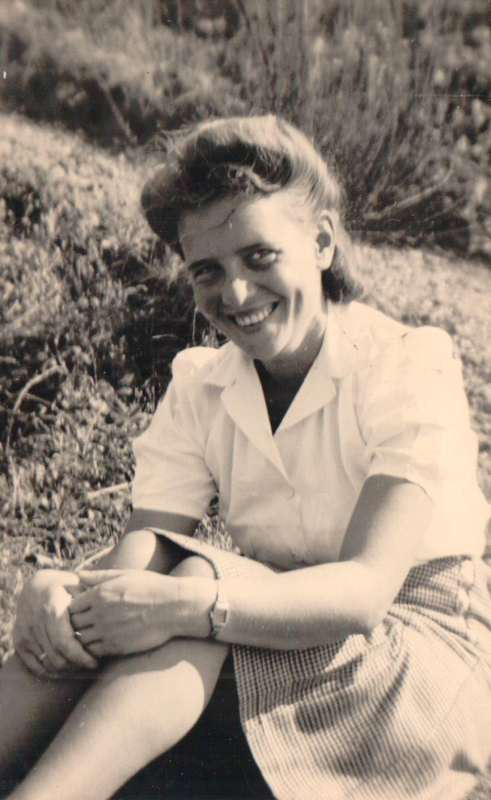
  1. ^ Anne Frank Stichting (AFS), Getuigenarchief, Zadje, Danka: Transcriptie interview Danka Zajde, 18 november 2011, p. 1-2.
  2. ^ Anne Frank, Diary Version A, 15 June 1942, in: The Collected Works, transl. from the Dutch by Susan Massotty, London [etc.]: Bloomsbury Continuum, 2019.
  3. ^ AFS, Getuigenarchief, Zadje, Danka: Transcriptie interview Danka Zajde, 18 november 2011, p. 11-12.
  4. ^ Verslag der Handelingen van de Eerste Kamer der Staten-Generaal, 30 december 1952, p. 49.
  5. ^ Stadsarchief Amsterdam (SAA), Dienst Bevolkingsregister, Archiefkaarten (toegangsnummer 30238): Archiefkaart B. Zajde; Rouwadvertentie, NRC Handelsblad, 9 maart 2013.
  6. ^ SAA, Dienst Bevolkingsregister, Archiefkaarten (toegangsnummer 30238): Archiefkaart B. Zajde.

Gendering,Gerdina Selma

Dien Gendering

1-22-1916 | Amsterdam , Nederland
4-19-2006 | Vlaardingen , Nederland

Gerdina Gendering was registered at the home of Jan and Miep Gies in 1942.

Gerdina (Dien) Gendering was registered at the home of Jan and Miep Gies in 1942. She was a younger half sister of Clara Ehbrecht. Gerdina came into the world in the Wilhelmina Gasthuis hospital.[1] Her mother recognised her on 12 May 1916.[2] After Clara's birth she divorced her husband.

Between the ages of seven and twenty-one she lived in the Jewish children's home Berg Foundation in Laren.[3] Then, from 15 April 1937 to 1 November 1939, she went to work as a domestic help ('kitchen maid') in the Israelite boys' orphanage 'Megadlé Jethomim' on Amstel.[4]

From 1 March to 1 October 1941, she was employed by a Jewish family in Rotterdam. She left there because she preferred to work in an institution rather than in a private household.[5] In March 1942, her address was Hunzestraat 25 in Amsterdam, where Jan and Miep Gies also lived with Mrs Stoppelman.[6]

Like her mother, she was on the Calmeyer list of 8 September 1942.[7]  

In December 1942, she moved in with Mrs Stoppelman's son and daughter-in-law, Meier ('Max') and Esther Stoppelman in the Indische Buurt (Indies District).

After the Liberation, she worked in the kitchen of the Prinsengracht Hospital from 15 June 1945 to 31 December 1947.[8]

Source personal data.[9] Addresses: Amsterdam; Mijdrecht (1916); Rotterdam (1917); Hilversumseweg, Laren (Berg Stichting, 1923);[10] Doodweg 4 (also Berg Stichting); Amstel 21, Amsterdam (N.I. Jongens-Weeshuis, 1937);[3]; Hunzestraat 25hs, Amsterdam (March-December 1942); Majubastraat 5-II.[11]

Footnotes
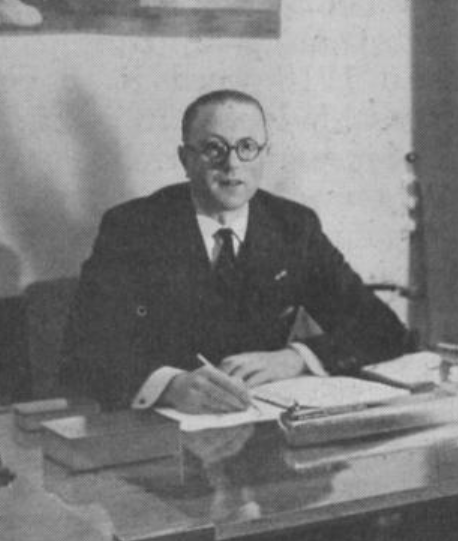
  1. ^ Stadsarchief Amsterdam (SAA), Burgerlijke Stand (toegang 5009), inv. nr. 7768: Register van geboorteakten 1916, deel 2, 78f, akte 920.
  2. ^ SAA, Burgerlijke Stand, inv. nr. 7776: Register van geboorteakten 1916, deel 10, 63v, akte 5522.
  3. a, b SAA, Bevolkingsregister, Gezinskaarten (toegangsnummer 5422): Gezinskaart G.S. Gendering. Rotterdam (1939-1942)
  4. ^ Privébezit familie Nieuwdorp: Getuigschrift S. Hamburger (directrice), 31 oktober 1939.
  5. ^ Privébezit familie Nieuwdorp: Getuigschrift van mw. Tels – Elias, 16 september 1941.
  6. ^ SAA, Dienst Bevolkingsregister, Woningkaarten (toegangsnummer 5445), inv. nr. 138: Woningkaart Hunzestraat 25 huis.
  7. ^ NIOD Nederlands Instituut voor Oorlogs-, Holocaust- en Genocidestudies, Generalkommissariat für das Sicherheitswesen (Höhere SS- und Polizeiführer Nord-West) (toegang 077), inv. nr. 1429: gedrukte lijst met groen omslag d.d. 8 september 1942.  
  8. ^ Privébezit familie Nieuwdorp: Getuigschrift M. Stenvers (directrice), januari 1948. Op 17 november 1947 trouwt ze met Herman van der Hak.
  9. ^ SAA, Dienst Bevolkingsregister, Archiefkaarten (toegangsnummer 30238): Archiefkaart G.S. Gendering; Overzicht van M. Vos-Blekemolen op https://www.genealogieonline.nl/stamboom-vos-huizen-naarden/I7288.php (geraadpleegd 1 mei 2018).
  10. ^ Stadsarchief Rotterdam, Archief van de Gemeentesecretarie Rotterdam, afdeling Bevolking, bevolkingsboekhouding van Rotterdam en geannexeerde gemeenten (toegang 851-146): Gezinskaart G.S. en L. Gendering.
  11. ^ SAA, Dienst Bevolkingsregister, Archiefkaarten (toegangsnummer 30238): Archiefkaart G.S. Gendering.

Saher,August Eduard

Dimitri von Saher

1890-10-04 | Haarlem , Nederland
1-25-1973 | Bilthoven , Nederland

August Eduard (Dimitri) von Saher had various business connections with Otto Frank and his family.

August Eduard (Dimitri) von Saher had various business connections with Otto Frank and his family. From 1921 to 1940, he was a board member of the Nederlandsche Kamer van Koophandel voor Duitschland (Dutch Chamber of Commerce for Germany).[1] At its foundation, Von Saher was commissioner of the Centrale Maatschappij voor Handel en Industrie (Central Association for Trade and Industry).[2] At the Chamber of Commerce and at the Central Association, he worked with Dr. Theodor Metz.[3]

In February 1941, he left for the United States.[2] In 1950, he married the widow of the art dealer Jacques Goudstikker, in New York.[4]

During his lifetime he was made an Officer of the Order of Orange-Nassau, a Commander of the Order of Civilian Merit of Bulgaria and a Doctor of Law at Fordham University in New York.[4] 

Source personal data.[5] Addresses: Haarlem, The Hague, Düsseldorf, Hilversum;[4] Paris; Johannes Vermeerstraat 20hs, Amsterdam (1930); New York (1941).[2]

Footnotes
  1. ^ Dr. Th.M. Metz, Fünfzig Jahre Niederländische Handelskammer für Deutschland, 1905 – 1955, 's-Gravenhage: Deutsch-Niederländische Handelskammer, 1955, p. 288.
  2. a, b, c Stadsarchief Amsterdam (SAA), Dienst Bevolkingsregister, Archiefkaarten (toegangsnummer 30238): Archiefkaart A.E.(D.) von Saher.
  3. ^ Noord-Hollands Archief, Haarlem, Handelsregister Kamer van Koophandel Amsterdam, inv. nr. 430, dossier 19874.
  4. a, b, c Haags Gemeentearchief, Gezinskaarten 1913-1939: Gezinskaart A.E. von Saher.
  5. ^ SAA, Dienst Bevolkingsregister, Archiefkaarten, toegang 30238: Archiefkaart A.E.(D.) von Saher; Familiebericht”, De Telegraaf, 30 januari 1973, p. 8.

Folmer,Dirk

Dirk Folmer

10-4-1930 | Rotterdam , Nederland
Unkown Death Date | Unkown Death Place , Unkown Death Country

Dirk Folmer can be seen together with Anne Frank in a photo taken at Het Kinderhuisje in Laren.

Dirk (Dick or DIckie) Folmer was the son of the ballet dancer Gerie Folmer and the Italian opera singer Luigi Balzan. Because his mother wanted to continue her profession, she brought Dirk and his sister Paola to stay with Mrs. Lohman for a few years in Het Kinderhuisje ('The Children's House') in Laren..[1] In 1938, pictures were taken at the Kinderhuisje where Dirk can be seen in a group together with Anne Frank.[2] When this institution moved to Hilversum in 1939, Dirk and his sister moved with it.[3] During the years that he lived in Het Kinderhuisje, he exchanged letters and postcards with his mother and other family members..[4]

In the autumn of 1940, Gerie Folmer married a doctor from Amsterdam, with whom she moved in with her children..[5]

Dirk first attended the Gooische School in Laren and then the Public Primary School No. 8 in Hilversum.[6] Later he became a psychiatrist. From 1973 until his death in 1980, he worked at Het Bloemendaal, a Christian Psychiatric Centre in The Hague.[7]

Source personal data.[8] Addresses: Van der Schellingstraat 44, Rotterdam; Drift 27, Laren (sept. 1937);[9] ’s Gravelandseweg 132, Hilversum;[3]Prinsengracht 554, Amsterdam (1941).[10]

Footnotes
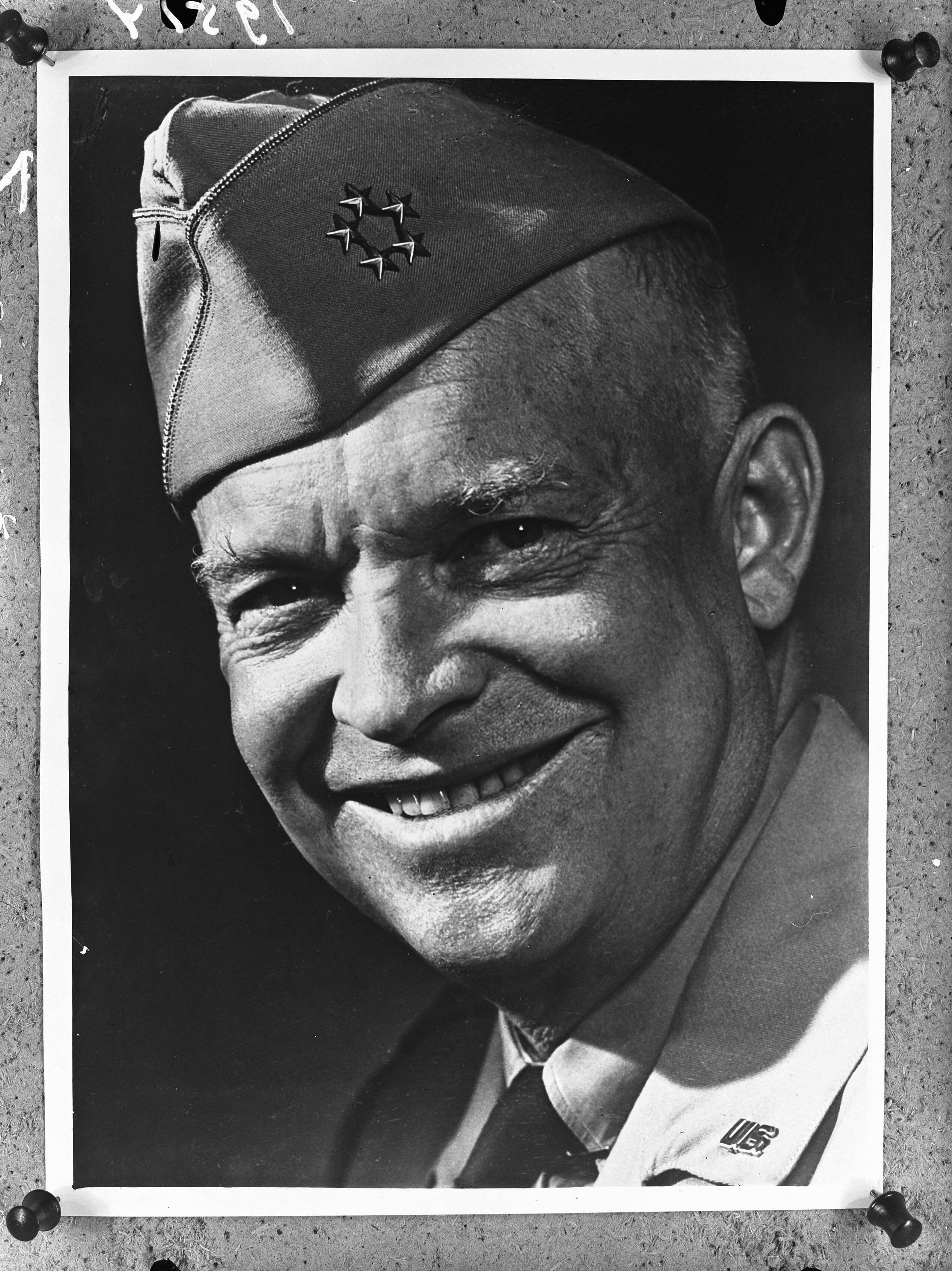
  1. ^ Mededeling M.L. Folmer tijdens bezoek aan de Anne Frank Stichting, 13 maart 2014.
  2. ^ Anne Frank Stichting, Anne Frank Collectie, foto’s 4050_14 en 4050_15.
  3. a, b “Bevolkingsopgaven Laren”, Laarder Courant de Bel, 27 oktober 1939.
  4. ^ Privébezit M.L. Folmer: Brieven en ansichtkaarten van en aan Dirk Folmer, 1937-1940
  5. ^ Stadsarchief Amsterdam (SAA), Dienst Bevolkingsregister, Archiefkaarten (toegangsnummer 30238):  Archiefkaart C. Eggink (1889).
  6. ^ Privébezit M.L. Folmer: rapporten 1937-’38 (Gooische School) en 1940-’41 (No. 8).
  7. ^ Overlijdensbericht, Nieuwe Leidsche Courant, 29 mei 1980.
  8. ^ Stadsarchief Rotterdam (SAR), Rotterdamse Gezinskaarten (1880-1941): Gezinskaart G.L. Folmer (1901); Familiebericht, Nieuwe Leidsche Courant, 27 mei 1980.
  9. ^ SAR, Rotterdamse Gezinskaarten (1880-1941): Gezinskaart G.L. Folmer (1901).
  10. ^ SAA, Dienst Bevolkingsregister, Archiefkaarten (toegangsnummer 30238): Archiefkaart C. Eggink (1889). Het jaartal 1941 is te ontlenen aan de combinatie van een verjaardagskaart getekend “3/10” en het rapport voor 1940-’41 van OLS No. 8 in Hilversum.

Eisenhower,Dwight D.

Dwight D. Eisenhower

1890-10-14 | Denison (Texas) , USA
3-28-1969 | Washington D.C , USA

General Eisenhower was Supreme Commander of the Allied invasion force on D-Day.

General Eisenhower (1890-1969) was commander-in-chief of the Allied invasion force on D-Day. In 1915, he became a lieutenant in the US Army. During the First World War he was not posted to Europe. He remained in the military and was promoted to brigadier general in October 1941. Eisenhower led the American operations in North Africa, and then the invasion of Sicily. In January 1944 he became commander-in-chief of the Western Allies, and had responsibility for the invasion of Normandy on 6 June 1944.[1] In 1953, Eisenhower won the US presidential election over Adlai Stevenson.[2] Otto Frank was in America in the run-up to these elections, and wore a Stevenson button on his lapel.[3]

Footnotes

  1. ^ D-Day and the advance of the Allies were followed closely in the Secret Annex. Anne Frank, Diary Version A, 6, 9 and 13 June 1944, in: The Collected Works, transl. from the Dutch by Susan Massotty, London [etc.]: Bloomsbury Continuum, 2019.
  2. ^ Zie verder: https://en.wikipedia.org/wiki/Dwight_D._Eisenhower
  3. ^ Familiearchief Anne Frank-Fonds, Bazel, Fritzi Frank, AFF_FrF_corr_01: Otto Frank aan Fritzi Frank-Markovits, 30 oktober 1952.  

Frank - Holländer,Edith

Edith Frank - Holländer

1-16-1900 | Aken , Duitsland
1-6-1945 | Auschwitz-Birkenau , Unkown Death Country

Edith Frank-Holländer was the mother of Margot and Anne Frank.

According to her birth certificate, Edith Holländer was born on 16 January 1900 in Aachen, at Heinrichsallee 50. She was a daughter of Abraham Holländer and Rosalie Holländer-Stern. Edith was the youngest of four children.[1] She had two brothers: Julius and Walter. Bettina, the only sister, died at the age of 16.

Edith attended the evangelical Viktoriaschule at Warmweiherstrasse in her birthplace. In 1916 she took her school diploma. She was a sporty girl and played tennis. Before her marriage she worked for some time in the family business. The company B. Holländer Rohproduktenhandlung, founded by her grandfather, traded in boilers, equipment and industrial plants as well as old iron, paper and rags. There was a branch in Cologne and from 1914 the company also had a wagon factory near Hanover, where Edith's brother Walter worked. On 12 May 1925 Edith married Otto Frank and moved to Frankfurt. Margot was born in 1926 and Anne followed in 1929. After she and Otto decided to leave Germany in 1933, Edith went to live with her mother in Aachen for a while. She travelled frequently to Amsterdam, where she looked for accommodation. In December 1933 she left for the Netherlands permanently.

The loss of her old life was hard for Edith. She corresponded regularly with Gertrud Naumann, a girl who had lived next door to her in Frankfurt, and otherwise focused on her family. From September 1938 she and Otto tried to bring her mother to the Netherlands. Shortly after Kristallnacht the Ministry of Justice gave permission for this. Edith's brothers Walter and Julius managed to emigrate to America. After the arrest on 4 August 1944, Edith went via Westerbork to Auschwitz. At first she was with her daughters, but after about eight weeks they were sent on to Bergen-Belsen. Edith suffered greatly from this. Little is known about her further fate, but a friend saw her later in a sick bay. She had a high fever and was totally exhausted due to lack of food and illness. She died a few days later at the age of 44.[2]

Footnotes

  1. ^ Anne Frank Stichting, Anne Frank Collectie, reg. code A_EFrank_I_001: Standesamt Aachen I, Geburterbuch, register A II nr. 211: Geburtsurkunde Edith Holländer (kopie).
  2. ^ Literature: Dineke Stam, 'Who was Edith Frank-Holländer?, in: Anne Frank Magazine 1999, p. 52-55; Aukje Vergeest, Anne Frank in the Secret Annexe: who was who?, Amsterdam: Anne Frank House, 2015.

Stull,Edward Welling

Edward Welling Stull

Unkown Birth Date | Unkown Birth Place , Unkown Birth Country
Unkown Death Date | Unkown Death Place , Unkown Death Country

Stull was the pilot of the bomber that crashed in the Spaarndammer district on 22 March 1944.

Edward Welling Stull (1918-1922) was the pilot of the bomber that crashed in the Spaarndammer district on 22 March 1944.[1] He was the last one to jump out of the plane just before the crash and landed near the Westersuikerfabriek on Van Noordtkade. He was shot at by German soldiers, but remained unharmed. His co-pilot Samuel Showalter however, broke an ankle.[1] Anne wrote about this in her diary.[2]

Footnotes

  1. a, b http://www.emielros.nl/bommenwerper (geraadpleegd maart 2014). Emiel Ros heeft zijn onderzoek naar deze vliegtuigcrash op 20 maart 2014 in een gesprek toegelicht.
  2. ^ Referred to by Anne as: the crew was able to parachute out. Anne Frank, Diary Version A and B, 23 March 1944, in: The Collected Works, transl. from the Dutch by Susan Massotty, London [etc.]: Bloomsbury Continuum, 2019.

Jong,Eva Hansje Elly

Eefje de Jong

7-8-1929 | Eindhoven , Nederland
6-11-1943 | Sobibor , Unkown Death Country

Eefje de Jong was a classmate of Anne Frank at the Jewish Lyceum.

Eva (Eefje) de Jong was a classmate of Anne Frank at the Jewish Lyceum.[1] She was deported in June '43 with a children's transport from Vught to Westerbork..[2]

Source personal data.[3] Address: Sloestraat 15 huis, Amsterdam.[4]

Footnotes

  1. ^ NIOD Instituut voor Oorlogs-, Holocaust en Genocidestudies, Amsterdam, Archief 181e (W.S.H. Elte), inv. nr. 2f: Absentenregister klas 1LII Joods Lyceum, 1 maart – 17 juli 1942; Anne Frank, Diary Version A, 15 and 16 June 1942, in: The Collected Works, transl. from the Dutch by Susan Massotty, London [etc.]: Bloomsbury Continuum, 2019.
  2. ^ J. de Moei, Joodse kinderen in het kamp Vught, Vught: Stichting Vriendenkring Nationaal Monument Vught, 1999, p. 41.
  3. ^ Stadarchief Amsterdam (SAA), Dienst Bevolkingsregister, Archiefkaarten (toegangsnummer 30238): Archiefkaart E.H.E. de Jong; http://www.joodsmonument.nl/person/492300/nl (geraadpleegd december 2011).
  4. ^ SAA, Dienst Bevolkingsregister, Archiefkaarten (toegangsnummer 30238): Archiefkaart E.H.E. de Jong.

Voskuijl - Hoenson,Elisabeth

Eilsabeth Voskuijl - Hoenson

1865-05-15 | Wieringerwaard , Nederland
4-23-1920 | Amsterdam , Nederland

Elisabeth Hoenson was the mother of Johan Voskuijl and the grandmother of Bep Voskuijl.

Elisabeth Hoenson was the mother of Johan Voskuijl and the grandmother of Bep Voskuijl. Initially she came from Anna Paulowna to Amsterdam in 1882 as a servant.[1] There she married Johannes Hendrik Voskuijl (1865) on 1 December 1887.[2] In doing so, she followed in the footsteps of her sister Trijntje, who came to Amsterdam as a servant a year earlier in 1881 and married Johannes Hendrik Voskuijl's brother Theo in 1884.[3]

Elisabeth and Johannes Hendrik Voskuijl had six children, one of whom died at a young age.[4] On 15 January 1892, son Johan was born, the father of Bep Voskuijl.

Source personal data.[5] Addresses: Anna Paulowna; Daniel Stalpertstraat 13, Amsterdam; Nieuwer-Amstel;[6] Grote Kattenburgerstraat, various nos.; Tweede van Swindenstraat 4-II (1909).[7]

Footnotes
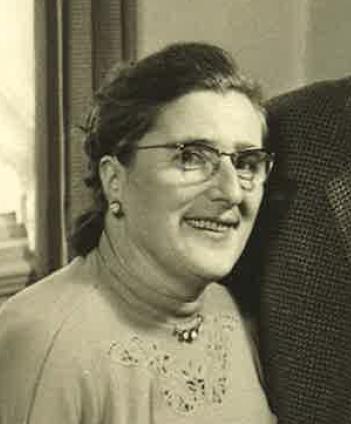
  1. ^ Stadsarchief Amsterdam (SAA), Dienst Bevolkingsregister 1874-1893, toegang 5000, inv. nr. 2154.
  2. ^ SAA, Burgerlijke Stand, inv. nr. 1854: huwelijksakte 1887, akte 2815.
  3. ^ SAA, Burgerlijke Stand, inv. nr. 1755: register van huwelijksakten 1884, deel 21, 10v, akte 1949.
  4. ^ SAA, Dienst Bevolkingsregister, Archiefkaarten (toegangsnummer 30238): Archiefkaart J.H. Voskuijl (1865).
  5. ^ SAA, Dienst Bevolkingsregister, Archiefkaarten (toegangsnummer 30238): Archiefkaart J.H. Voskuijl (1865); SAA, Burgerlijke Stand, toegang 5009, inv. nr. 4182: register van overlijdens 1920, deel 5, 76v, akte 3291.
  6. ^ SAA, Burgerlijke Stand, toegang 5009, inv. nr. 1854: register van huwelijksakten 1887, deel 30, 3f, akte 2815.
  7. ^ SAA, Dienst Bevolkingsregister, Gezinskaarten (toegangsnummer 5422): Gezinskaart J.H. Voskuijl (1865).

Brouwer - Bakker,Elisabeth Godelina Johanna Wilhelmina

Elisabeth Brouwer - Bakker

12-5-1902 | Zwolle , Nederland
8-27-1994 | Zwolle , Nederland

Mrs Bakker was mentioned by Anne Frank in her diary.

Elisabeth Bakker married Martin Brouwer on 8 May 1929.[1] The couple had eight children. Anne Frank mentioned Mrs Bakker in her diary on 23 March 1944,[2] writing that she was expecting a child "any day". In fact this child was born on 29 May 1944.[1]

Source personal data.[1] Addresses: Hortensiastraat 75, Zwolle.[1]

Footnotes

  1. a, b, c, d Centraal Bureau voor Genealogie, Den Haag, Centraal archief van overledenen: Persoonskaart E.G.J.W. Bakker.
  2. ^ Referred to by Anne as Brouwer's wife. Anne Frank, Diary Version A, 23 March 1944, in: The Collected Works, transl. from the Dutch by Susan Massotty, London [etc.]: Bloomsbury Continuum, 2019.

Voskuijl,Elisabeth

Elisabeth Voskuijl (1895)

1895-01-10 | Amsterdam , Nederland
12-27-1927 | Amsterdam , Nederland

Elisabeth Voskuijl was a sister of Johan Voskuijl and an aunt of Bep Voskuijl.

Elisabeth Voskuijl was a sister of Johan Voskuijl and an aunt of Bep Voskuijl. She was born at four o'clock in the morning in the parental home, Groote Kattenburgerstraat 82.[1] On 12 September 1917 she married F.W. Hartsuijker. He was a coach painter at Werkspoor and later became a painter.[2] Her brother Johan was witness to the marriage.[3]

Elisabeth died on 27 December 1927 in the Onze Lieve Vrouwe Gasthuis in Amsterdam while giving birth to her fourth child. Daughter Wilhelmina survived the birth.[2]

Source personal data.[4] Addresses: Groote Kattenburgerstraat 82, Amsterdam; Kattenburgerkruisstraat 6-I; Tweede van Swindenstraat 4-II;[5] Ringdijk 83, Watergraafsmeer; Pieter Lastmankade 87, Amsterdam (1922); Middenweg 96, Schoten (1923).[2]

Footnotes

  1. ^ Stadsarchief Amsterdam (SAA), Burgerlijke Stand, inv. nr. 4604: Register van geboorteakten 1895, deel 2, 35v, no. 420.
  2. a, b, c SAA, Dienst Bevolkingsregister, Gezinskaarten (toegangsnummer 5422): Gezinskaart F.W. Hartsuijker (1894).
  3. ^ SAA, Burgerlijke Stand, inv. nr. 5031: Register van huwelijksakten 1917, deel 40-3g, 46, no. 769.
  4. ^ SAA, Dienst Bevolkingsregister, Gezinskaarten (toegangsnummer 5422): Gezinskaart F.W. Hartsuijker (1894); SAA, Burgerlijke Stand (toegang 5009), inv. nr. 4297: Registers van overlijdens 1927, deel 11, 71v, no. 6813.
  5. ^ SAA, Dienst Bevolkingsregister, Gezinskaarten (toegangsnummer 5422): Gezinskaart J.H. Voskuijl (1865).

Windsor,Elizabeth

Elizabeth Windsor

4-21-1926 | Londen , Groot-Brittannië
9-8-2022 | Balmoral , Groot-Brittannië

Elizabeth Windsor was the British Crown Princess and was crowned Queen of the United Kingdom in 1952.

At the time Anne wrote her diary, Elizabeth was the British Crown Princess. Elizabeth had by then been corresponding for some time with her second cousin Philip, whom she married in 1947.[1] A change in the law on her eighteenth birthday meant that she might be able to rule, despite being a minor.[2] In 1952, she ascended the British throne as Elizabeth II. In 2022, she celebrated 70 years on the throne.[3]  In 1974, Elizabeth heard that Anne had had a picture of her on the wall. She had a lady-in-waiting write to Otto Frank that she hoped that: "perhaps this photograph gave your daughter a moment's pleasure during that dreadful time."[4]

Footnotes

  1. ^ Zie http://en.wikipedia.org/wiki/Prince_Philip,_Duke_of_Edinburgh (geraadpleegd 2 juli 2012).
  2. ^ Anne also wrote about this matter. Anne Frank, Diary Version A, 21 April 1944, in: The Collected Works, transl. from the Dutch by Susan Massotty, London [etc.]: Bloomsbury Continuum, 2019.
  3. ^ Zie http://en.wikipedia.org/wiki/Elizabeth_II.
  4. ^ Anne Frank Stichting, Anne Frank Collectie, Otto Frank Archief, reg. code OFA_383.“Lady-in-waiting” aan Otto Frank, 26 april 1974.

Váhl – de Roos,Elize

Elize Váhl – de Roos

9-5-1911 | Rotterdam , Nederland
Unkown Death Date | Unkown Death Place , Unkown Death Country

Elize Váhl-de Roos was the downstairs neighbour of the Frank family on Merwedeplein.

Elize Váhl-de Roos was the downstairs neighbour of the Frank family on Merwedeplein.[1] She married the Hungarian László Váhl on 2 August 1935 in Voorburg and as a result obtained Hungarian nationality. The couple moved to Budapest and a year and a half later to Amsterdam.[2]

Elize Váhl travelled ahead of her husband to look for a house. She went to her parents in Voorburg on 1 November 1936 to organise the move to Amsterdam.[3] There, on 24 January 1937 and 8 December 1939, János László and Herman Gyula were born.[4] Anne Frank and Toosje Kupers sometimes babysat these boys. Toosje Kupers described Elize Váhl as "a very funny woman."[5]

Anne sent Elize Váhl a postcard from Laren, postmarked 31 July 1940, bearing the inscription "Greetings from Laren by Anne Frank".[6]

When her husband lost Hungarian citizenship in 1947, so did Elize Váhl.[7] He subsequently obtained Dutch citizenship in 1948.[8] This also applied to his wife.

Source personal data.[2] Addresses: Budapest; Merwedeplein 37-I, Amsterdam (December 1936); J.W. Brouwerstraat 17 boven (April 1941); Brink 18b, Muiden.[2]

Footnotes
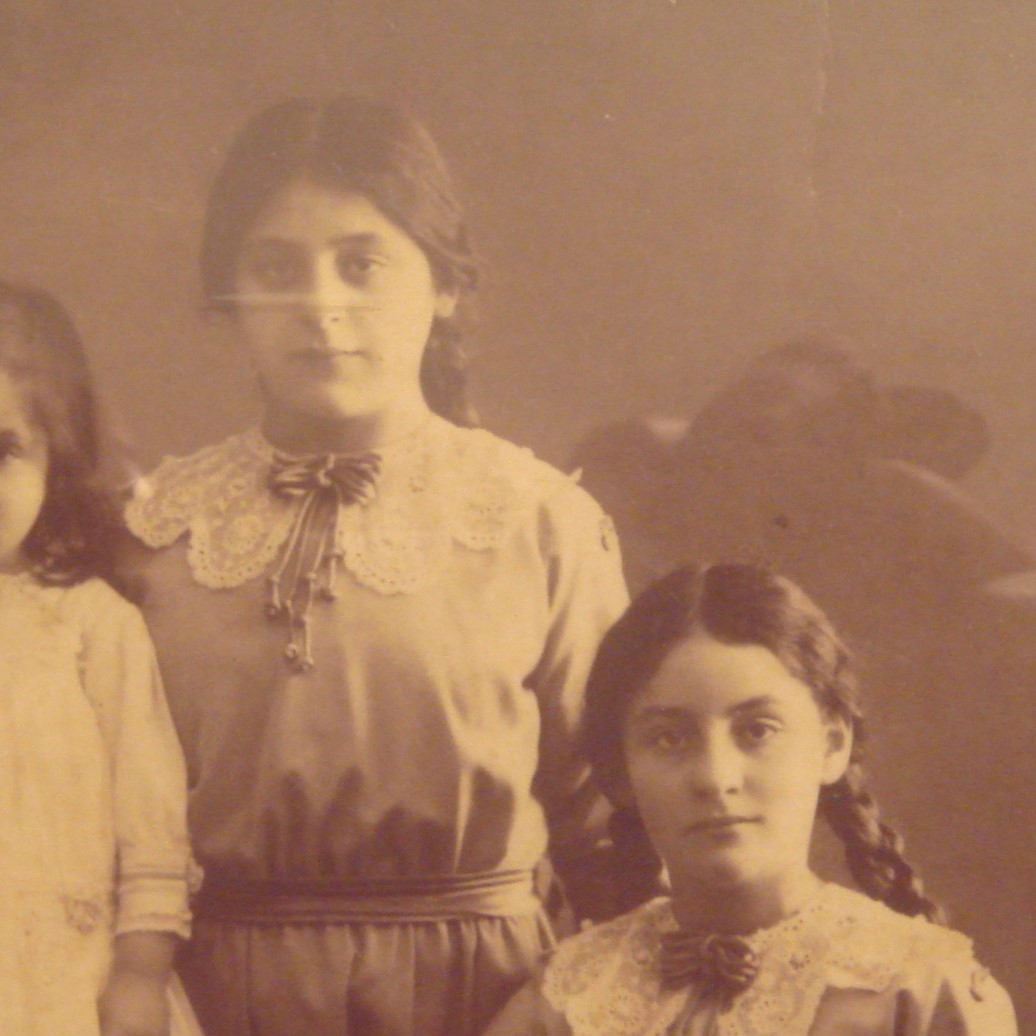
  1. ^ Zie Rian Verhoeven, Anne Frank was niet alleen: het Merwedeplein, 1933-1945, Amsterdam: Prometheus, 2019, p. 66-73 en passim.
  2. a, b, c Stadsarchief Amsterdam (SAA), Dienst Bevolkingsregister, Archiefkaarten (toegangsnummer 30238): Archiefkaart E. de Roos (1911).
  3. ^ Privébezit familie Váhl: opgeschreven herinneringen van Elize de Roos, “Jan”, p. 1-2.
  4. ^ SAA, Dienst Bevolkingsregister, Archiefkaarten (toegangsnummer 30238): Archiefkaart L. Váhl.
  5. ^ Anne Frank Stichting (AFS), Getuigenverhalen I: Transcriptie interview Toos Buiteman – Kupers door Teresien da Silva, 23 oktober 2009, p. 12, tijscode 00:43:26 - 51.
  6. ^ AFS, Anne Frank Collectie, reg. code A_AFrank_I_006: Ansichtkaart met afbeelding van boerderij in Laren, gestempeld 31 juli 1940.
  7. ^ Privébezit familie Váhl: verklaring van de Hongaarse legatie, 11 november 1946.
  8. ^ Verslag der Handelingen van de Tweede Kamer der Staten-Generaal, 1948 – 1949, p. 633.

Leeser - Röttgen,Else

Else Leeser - Röttgen

1897-03-20 | Buer , Duitsland
10-7-1953 | Woodbine, New Jersey , USA

Else Leeser-Röttgen was the oldest sister of Auguste van Pels-Röttgen.

Else Leeser-Röttgen was the first child of Leo Röttgen and Rosa Röttgen-Rosenau and the oldest sister of Auguste van Pels-Röttgen. On 17 May 1920 she married Dr. med. Julius Leeser in Elberfeld.[1] He was born on 5 August 1885 in Bickern, later a part of the town Wanne-Eickel. Together they had two sons, Helmut (Hal) (15 May 1923) and Rolf (Ralph) Manfred (19 May 1925).[2]

After their marriage they lived in Wanne-Eickel, where Else became a member of the Israelitischer Frauenverein and was its chairwoman in the early 1930s. In 1938 they moved to Essen.[3]

Because of the Nazi persecution in Germany, Else and Julius fled on 21 January 1939 with their son Rolf via Vlissingen to the United States, where they arrived in New York on 3 February 1939.[4] Their eldest son Helmut was already living in Washington D.C. at that time. In 1937 he was send to New York with the German Jewish Childrens Aid.[5]

Source personal data.[6] Addresses: Buer-Recklinghausen; Huyssenallee 2, Essen; Vereinstrasse 14, Wuppertal-Elberfeld; Wanne-Eickel; Essen; 570 West 183rd Street, New York; Woodbine, New Jersey.

Footnotes

  1. ^ Stadtarchiv Wuppertal, Elberfelder Heiratsregistern, Reg.-Nr. 959-1920; trouwakte van Julius Leeser en Else Röttgen d.d. 17 mei 1920.
  2. ^ National Archives and Records Administration (NARA), Washington DC, VS, Immigration and Naturalization Dpt.: Declaration of Intention Else Leeser, 5 juli 1939, volgnr. 436376.
  3. ^ https://spurenimvest.de/2020/06/13/leeser-julius/ (geraadpleegd 29 januari 2024).
  4. ^ "New York City, New York, United States records, Aug 4, 2018," images, FamilySearch (https://www.familysearch.org/ark:/61903/3:1:33S7-95NF-9P8P?view=explore : Jan 24, 2024), image 625 and 629 of 700; United States. National Archives and Records Administration. (geraadpleegd 29 januari 2024).
  5. ^ "New York City, New York, United States records," images, FamilySearch (https://www.familysearch.org/ark:/61903/3:1:33SQ-G5FH-9BBL?view=explore : Jan 29, 2024), image 546 and 547 of 797; United States. National Archives and Records Administration (geraadpleegd 29 januari 2024).
  6. ^ Stadtarchiv Wuppertal, Elberfelder Heiratsregistern, Reg.-Nr. 959-1920; trouwakte van Julius Leeser en Else Röttgen d.d. 17 mei 1920; Leeser, Else Roettgen, 20 maart 1897 – 7 oktober 1953, Woodbine Brotherhood Cemetery, Woodbine, Cape May, New Jersey.

Pfeffer,Emil

Emil Pfeffer

1887-04-29 | Gießen , Duitsland
10-23-1956 | Johannesburg , Zuid-Afrika

Emil Pfeffer was an older brother of Fritz Pfeffer.

Emil Pfeffer was the third child of Ignatz Pfeffer and Jeanette Pfeffer-Hirsch and an older brother of Fritz Pfeffer.[1]

In 1926 he married Fanny Süskind (30 Augustus 1892). On 30 December 1928 their daughter Ursula Amanda Jeanette was born.[2]

Emil fled Germany in 1937 because of the Nazi persecution and settled in South Africa. On 20 August 1947 he obtained South African nationality.[3]

Fanny and their daughter temporarily moved in with her sister Meta in Oberdollendorf, before they also fled to South Africa together in March 1939.[1]

Emil passed away in 1956, Fanny in 1960.[4]

Source personal data.[5] Addresses: Marktplatz 6 Gießen; 3 Dalimo Court, Judith Paarl, Johannesburg.

Footnotes

  1. a, b Bernd Lindenthal, 'Fritz Pfeffer war der Zimmergenosse von Anne Frank, Zur Erinnerung an den Zahnarzt aus Gießen', in: Mitteilungen des Oberhessischen Geschichtsvereins Gießen, NF 85, 2000, p. 100.
  2. ^ Brief van Stadtarchiv Gießen aan Bernd Lindenthal, 2 september 1999.
  3. ^ Nationaal Archief, Den Haag, Nederlands Beheersinstituut, toegang 2.09.16,, inv. nr. 4391: Memorandum 252/4, d.d. 14 januari 1955.
  4. ^ "South Africa, Civil Death Registration, 1955-1966", FamilySearch (https://www.familysearch.org/ark:/61903/1:1:6C1J-98DF: Entry for Fanny Suesskind Pfeffer, 8 Mar 1960 (geraadpleegd 18 december 2023).
  5. ^ "South Africa, Civil Death Registration, 1955-1966", FamilySearch (https://www.familysearch.org/ark:/61903/1:1:6C1P-CBXW: Entry for Emil Pfeffer, 23 Oct 1956 (geraadpleegd 18 december 2023).

Bonewit,Emanuel

Emile Bonewit

5-5-1927 | Amsterdam , Nederland
4-2-1943 | Sobibor , Unkown Death Country

Emile Bonewit was a classmate of Anne Frank at the Jewish Lyceum.

Emanuel (Emile) Bonewit was a classmate of Anne Frank at the Jewish Lyceum.[1] He was an only child and died together with his parents in Sobibor.[2]

Source personal data.[2]

Footnotes

  1. ^ Anne writes about him: "He is a bit dull." Anne Frank, Diary Version A, 16 June 1942, in: The Collected Works, transl. from the Dutch by Susan Massotty, London [etc.]: Bloomsbury Continuum, 2019.
  2. a, b  Zie http://www.joodsmonument.nl/person/516368/nl.

Klose - Kugler,Emilie

Emma Klose - Kugler

1877-11-16 | Gabel , Oostenrijk
8-1-1960 | Gladbeck , Duitsland

Emma Klose was the mother of Victor Kugler.

Emilie (Emma) Klose was the mother of Victor Kugler. When her son was born, she was unmarried. She married Franz Klose around 1909 and had two more sons and two daughters with him between 1910 and 1920.[1]

Source personal data.[1]

Footnotes

  1. a, b Stadtarchiv Gladbeck: Meldekartei en Hausstandsbuch Gladbeck.

Kleiman - Vink,Emmetje

Emmetje Kleiman - Vink

1864-07-22 | Alblasserdam , Nederland
6-1-1950 | Amsterdam , Nederland

Emmetje Vink was the mother of Johannes Kleiman.

Emmetje Vink was the mother of Johannes Kleiman. She married Cornelis Kleiman on 12 October 1888 in Alblasserdam. The marriage came to an end due to his death on 20 February 1945.[1] The address shows that she lived with the family of her son Johannes from March 1945 until May 1950.

Source personal data.[1] Addresses: Marinierstraat 4hs, Amsterdam ('23); Wielingenstraat 12 II (March '45); Biesboschstraat 37 I ('49); Middenweg 217hs (May '50).[1]

Footnotes

  1. a, b, c Stadsarchief Amsterdam, Dienst Bevolkingsregister, Archiefkaarten (toegangsnummer 30238): Archiefkaart E. Vink.

Elias,Erich

Erich Elias

1890-11-06 | Zweibrücken , Duitsland
10-2-1984 | Bazel , Zwitserland

Erich Elias was married to Leni Frank, a sister of Otto Frank.

Erich Elias was married to Leni Frank, a sister of Otto Frank, and was therefore the uncle of Anne and Margot.[1] During the First World War he was a telegrapher.[2] Erich Elias was a Bavarian citizen and had lived in Basel, Switzerland, since 13 May 1929.[3] He spent many years trying to obtain Swiss nationality. It was not until 1952 that it was granted.[4]

From 1908 on, Elias worked in Frankfurt am Main, London and Paris in trade and banking. From 1915 to 1918 he took part in the First World War. In 1919 he returned to banking and in 1921 became a 'Teilhaber' at Michael Frank und Söhne. He worked in Amsterdam for six months for this company. In 1927-'28 he worked in banking in Luxembourg. From 1931 to the beginning of '39 he was manager of Opekta A.G., Pektin A.G., Omon A.G. and Rohstoff-Verkehrs A.G. In 1939-'40 he was active in his own pectin business and after an intermezzo with an oil trader, he joined Unipektin A.G. in October '40.[5] He married Helene (Leni) Frank on 16 February 1921 in Frankfurt am Main.[6] They had two sons, Stephan (1921-1980) and Bernd (Buddy) (1925-2015).

During the war years, Erich Elias corresponded about business matters with Johannes Kleiman, who — between the lines — told him something about Otto Frank and his family.[7] In the summer of 1945, Otto Frank made plans with Erich Elias to re-enter the Dutch pectin market.[8]

Source personal data.[9] Addresses: Gundeldingerstrasse 139, Basel.[10]

Footnotes

  1. ^ Anne refers to him as Uncle Erich. Anne Frank, Diary Version A, 14 October 1942, 1e, in: The Collected Works, transl. from the Dutch by Susan Massotty, London [etc.]: Bloomsbury Continuum, 2019.
  2. ^ Familiearchief Anne Frank-Fonds (AFF), Bazel, Erich Elias, AFF_ErE_corr_02, 'Ansichtkaart aan Telegraphist Erich Elias', 18 augustus 1915.
  3. ^ AFF, Erich Elias, AFF_ErE_odoc_07: ‘Domizil- und Leumundszeugnis’, 7 november 1935.
  4. ^ AFF, Erich Elias, AFF_ErE_odoc_07 e.v.: Correspondentie.
  5. ^ AFF, Erich Elias, AFF_ErE_odoc_07: Lebenslauf.
  6. ^ AFF, Erich Elias, AFF_ErE_odoc_07: Formulier ‘Bürgerrechtsbureau’, gestempeld 17 oktober 1941.
  7. ^ AFF, Erich Elias, AFF_ErE_bdoc_04: Diverse correspondentie.
  8. ^ Anne Frank Stichting, Anne Frank Collectie, Otto Frank Archief, reg. code OFA_071: Otto Frank aan Erich Elias, 24 juli 1945.
  9. ^ AFF, Leni Frank, AFF_LeF_pdoc_07: Album ‘Unser Kind’ van Stephan Elias; Melissa Müller, Anne Frank. De biografie, Amsterdam: Bakker, 1998, p. 301.
  10. ^ AFF, Erich Elias, AFF_ErE_odoc_07: Kanton Basel aan Erich Elias, 2 april 1936.

Holländer,Erich

Erich Holländer

1897-12-24 | Eschweiler , Duitsland
6-15-1972 | Heerlen , Nederland

Erich Holländer was a cousin of Edith Frank

Erich Holländer was a cousin of Edith Frank – Holländer.[1] The Aachen Standesamt declared on 19 May 1934 that Erich Holländer and Ilse Grünberg intended to marry. The groom lived in Vaals and the bride in Aachen.[2]

The predecessor of his company supplied mining equipment in Aachen from 1900. In 1937, he started in Limburg with the company N.V. IJzerwerk in Spekholzerheide near Heerlen.

In August 1942, the Holländer couple was called up for labour. They managed to escape by going into hiding.[3]

In autumn 1944, the south of the Netherlands was liberated. The whole IJzerwerk company was gone, but Erich Holländer rebuilt everything "from the ground up".[4] In 1948 he obtained Dutch nationality.[5]

His company manufactured, among other things, packing irons and struts for the mining industry. It advertised with these in various magazines.[6] In 1967, mining company N.V. Laura en Vereeniging entered into a partnership with IJzerwerk. The company then had two hundred employees. Erich Holländer remained a director.[7]

Source personal data.[8] Addresses: Maastrichterlaan 33, Vaals;[2] Bekkerweg 112, Heerlen.

Footnotes

  1. ^ Anne Frank Stichting, Anne Frank Collectie, Otto Frank Archief, reg. code OFA_051V: Kartotheekkaartje van Otto Frank t.n.v. Erich Holländer.
  2. a, b “Aufgebot”, Limburger Koerier, 22 mei 1934.
  3. ^ Fiet van Rooij-Trienekens, Joden in Heerlen in de Tweede Wereldoorlog, Beek-Ubbergen: De Rozet, [1998], p. 30.
  4. ^ ’t Verkeer aan de Locht is overbelast”, Limburgs Dagblad, 7 november 1963.
  5. ^ Handelingen Tweede Kamer, 1947-1948, p. 567.
  6. ^ Advertentie, Steenkool. Bedrijfstijdschrift voor de Nederlandse steenkolenmijnen, 15 mei 1950; idem, Nieuw Israelitisch Weekblad, 9 mei 1958.
  7. ^ “Mijn Laura en Hollander zullen samenwerken", Limburgs Dagblad, 22 juli 1967.
  8. ^ Handelingen Tweede Kamer, 1947–1948, Bijlagen 731, 1-3; Overlijdensadvertentie, Limburgs Dagblad, 16 juni 1972.

Kohnke,Erich

Erich Kohnke

12-1-1900 | Berlijn , Duitsland
9-23-1943 | Auschwitz , Unkown Death Country

Erich Kohnke was the husband of Edith Frank's acquaintance Helene Leyens.

Erich Kohnke married Lotte Bendix in 1926. The marriage was dissolved in 1938. He then married Helene Leyens on 3 January 1940.[1]
He was chapel master, and later bookkeeper.[1] In May 1942, he lived with his wife and child with the Frank family at Merwedeplein. According to Otto Frank, Helene Kohnke-Leyens was a good acquaintance of Edith.[2] In October 1942, Anne wrote in her diary that the Kohnke family had gone into hiding.[3] In January 1943, the Jewish Council requested Kohnke to disclose his "current address".[4]

Source personal data.[5] Addresses: Stieltjesstraat 8, Hilversum.[1] Merwedeplein 37 II, Amsterdam (May '42).[2] Vossiusstraat 50 boven (17 July 1942).[1]


Footnotes

  1. a, b, c, d Stadsarchief Amsterdam (SAA), Dienst Bevolkingsregister, Archiefkaarten (toegangsnummer 30238): Archiefkaart E. Kohnke.
  2. a, b Anne Frank Stichting, Anne Frank Collectie, Otto Frank Archief, reg. code OFA_071: Otto Frank aan ‘Meine Lieben’, 11 augustus 1945.
  3. ^ Anne Frank, Diary Version A, 16 October 1942, in: The Collected Works, transl. from the Dutch by Susan Massotty, London [etc.]: Bloomsbury Continuum, 2019.  For her thirteenth birthday, Anne received a book from "Mr Kohnke". Diary Version A, 14 June 1942.  
  4. ^ Het Joodsche Weekblad, 1 januari 1943.
  5. ^ SAA, Dienst Bevolkingsregister, Archiefkaarten (toegangsnummer 30238): Archiefkaart E. Kohnke; http://www.joodsmonument.nl/person/456666/nl.

Levie,Erich

Erich Levie

6-5-1904 | Gelsenkirchen , Duitsland
3-22-1957 | Amsterdam , Nederland

Erich Levie was an uncle of Anne Frank's boyfriend Hello Silberberg.

Erich Levie was an uncle of Anne Frank's friend Hello Silberberg[1] and a cousin of Joël Levie and Sarah Levie-Salm. He was a merchant in paper and buttons and a leather goods manufacturer.[2]

Source personal data.[2] Addresses: Zuider Amstellaan 191 II, Amsterdam ('33); G. Brandstraat 24hs ('45); Deurloostraat 121 II ('47).[2]

Footnotes

  1. ^ Anne Frank, Diary Version A, 30 June 1942, in: The Collected Works, transl. from the Dutch by Susan Massotty, London [etc.]: Bloomsbury Continuum, 2019.
  2. a, b, c Stadsarchief Amsterdam, Dienst Bevolkingsregister, Archiefkaarten (toegangsnummer 30238): Archiefkaart E. Levie.

Holländer,Ernst

Ernst Holländer

3-4-1902 | Oberhausen , Duitsland
Unkown Death Date | Unkown Death Place , Unkown Death Country

Ernst Holländer was a cousin of Edith Frank.

Ernst Holländer was a cousin of Edith Frank. He married Marthe Herz in Cologne on 2 June 1927.[1] In Cologne, he worked as a branch manager of the company B. Holländer.[2] Before travelling to the United States, he and his wife lived in The Hague for about six months..[1]

On 19 March 1936 he arrived in New York on the passenger ship 'Manhattan' and on 29 April 1942 he applied for American citizenship.[3]

In 1939, he helped his cousins Julius and Walter Holländer to come to the United States. On Walter's death in 1968, he inherited ten thousand dollars.[4]

Source personal data.[1] Addresses: Cologne; Willem Witsenplein 5, The Hague (Sept. ’35 – March ’36);[1] 135 Washington Street, Brighton (Boston), USA (1936);[5] 193 Jamaicaway Tower, Jamaica Plain, Massachussets (1968).[4]

Footnotes

  1. a, b, c, d Haags Gemeentearchief, Bevolkingsregister Den Haag, Gezinskaarten 1913-1939: Gezinskaart E. Holländer.  
  2. ^ Advertentie in Aachener Adressbuch unter Benutzung amtlicher Quellen 1932.
  3. ^ United States Department of Justice, Immigration and Naturalization Service: Petition for Naturalization E. Holländer, 29 april 1942 (vindbaar op www.ancestry.com).
  4. a, b Surrogate’s Court, County of New York: Probate proceeding, Will of Walter Holländer, dossier 6645 (1968, deel 2693, bladzijde 649).
  5. ^ United States Department of Labor, Immigration and Naturalization Service: Declaration of intention E. Holländer, 12 november 1936 (vindbaar op www.ancestry.com).

Katz,Ernst

Ernst Katz

1884-11-08 | Bruchsal , Duitsland
3-20-1943 | Sobibor , Unkown Death Country

Ernst Katz rented a room from the Frank family on Merwedeplein.

Ernst Katz rented a room with the Frank family on Merwedeplein for some time.[1] By profession, he was a tobacco merchant.[2] Describing the period when he rented a room from the Frank family, Anne writes: "This gentleman actually gave us more pleasure than trouble. Every Sunday he brought chocolate for the children and cigarettes for the adults, and more than once he took us all to the cinema. He stayed with us for a year and a half, then moved into his own flat, together with his mother and sister. Later, he used to drop by from time to time and swear that he'd never had such a good time as he'd had with us."[3] Margot calls him Kätzchen in a letter to her grandmother in Switzerland.[4]

On 18 March 1940, he was stripped of his 'deutschen Staatsangehörigkeit'.[5] In November 1941, he was admitted to Pavilion III, the psychiatric ward of the Wilhelmina Hospital.[2]

Source personal data.[6] Addresses: Merwedeplein 37 II, Amsterdam (June ’38); Zuider Amstellaan 32 II (Oct. ’39).[2]

Footnotes

  1. ^ Anne Frank, Diary Version A, 14 and 30 June 1942, in: The Collected Works, transl. from the Dutch by Susan Massotty, London [etc.]: Bloomsbury Continuum, 2019.
  2. a, b, c Stadsarchief Amsterdam (SAA), Dienst Bevolkingsregister, Archiefkaarten (toegangsnummer 30238): Archiefkaart E. Katz.
  3. ^ Anne Frank, Tales and events from the Secret Annex, "Lodgers or Tenants", 13 October 1943, in: The Collected Works.
  4. ^ Anne Frank Fonds, Bazel, Frank en Elias Familiearchief (FEFA), AlF_corr_17_000, Brief van Margot Frank aan Alice Frank-Stern, 18 december 1938.
  5. ^ Hans Georg Lehmann & Michael Hepp (Einl.), Die Ausbürgerung deutscher Staatsangehöriger 1933 – 45 nach den im Reichsanzeiger veröffentlichten Listen. Band 1. Listen in chronologischer Reihenfolge, München: Saur, 1985, p. 295.
  6. ^ SAA, Dienst Bevolkingsregister, Archiefkaarten (toegangsnummer 30238): Archiefkaart E. Katz; http://www.joodsmonument.nl/person/476875 (geraadpleegd februari 2013).

Meijer,Ernst Moritz

Ernst Moritz Meijer

3-3-1907 | Bremen , Duitsland
5-4-1977 | Los Angeles , USA

Ernst Moritz Meijer was an acquaintance of Otto Frank.

Ernst Moritz Meijer was an acquaintance of Otto Frank. He was a rag-and-bone man and came from Bremen to the Netherlands in 1933.[1] In August 1937 he left Maastricht for Amsterdam. After a few months, he married Eva Weijers on 27 April 1938. Eva's sister Kitty Weijers and Walter Lippmann were their witnesses.[2]

The family had three sons: Frank Harry (1939), Paul James (1940) and Ronald Leon (1944).[3] On 6 November 1940, his mother, who lived with them, died in an accident.[4] In 1941, as a German Jew living outside Germany, he lost his nationality. As a mixed married family, they survived the occupation.

In January 1945 he hid some fugitives in his house who were on the run from the Sicherheitsdienst. During his naturalisation from a stateless person to a Dutch citizen, this was put forward as proof that he was 'on the right side'.[5] His naturalisation was approved in the Senate on 2 November 1950.[6]

A year later, the family moved to New York,[3] and later to Los Angeles.[7] When Meijer heard about Otto's intended marriage to Fritzi Markovits he wished them happiness. In the same letter, he wrote about a television broadcast in America about the diary. In particular, he found the characters of Peter, Margot and Otto - all of whom he knew - realistic.[8]

Through Otto Frank, the Meijer family came into contact with the playwrights Albert Hackett and Frances Hackett-Goodrich.[9]

The correspondence between the Meijer family and Otto and Fritzi Frank-Markovits continued for years.[10]

Source personal data.[11] Addresses: Bremen; Botticellistraat 36-II, Amsterdam (Sept. 1934), Alexander Battalaan 72, Maastricht (May 1935);[12] Beethovenstraat 74-III, Amsterdam (Aug. 1937), Slaakstraat 5-III (April 1938), Zuider Amstellaan 38 huis (July 1939); New York (Nov. 1951);[3] 1011 Meadowbrook Avenue, Los Angeles (1952); 907 Hauser Boulevard, LA (1957).[13]

Footnotes

  1. ^ Verslag der Handelingen van de Tweede Kamer der Staten – Generaal, 1949 – 1950, Bijlagen, Kamerstuknr. 1743, ondernr. 3.
  2. ^ Stadsarchief Amsterdam (SAA), Dienst Bevolkingsregister: Gezinskaarten (toegangsnummer 5422): Gezinskaart E.M. Meijer; SAA, Burgerlijke Stand (toegang 5009), inv. nr. 6483: Huwelijksakten 1938, deel 15, 15v, akte 29.
  3. a, b, c SAA, Dienst Bevolkingsregister, Archiefkaarten (toegangsnummer 30238): Archiefkaart E.M. Meijer.
  4. ^ SAA, Archiefkaart Eleonore Cohen; overlijdensbericht, Algemeen Handelsblad, 7 november 1940.
  5. ^ Handelingen Tweede Kamer, 1949 – 1950, Kamerstuknr. 1743, ondernr. 3.
  6. ^ Verslag der Handelingen van de Eerste Kamer der Staten – Generaal, 1950 – 1951, p. 109.
  7. ^ Anne Frank Stichtig (AFS), Anne Frank Collectie (AFC), Otto Frank Archief (OFA), reg. code OFA_085: E.M. Meijer, 25 november 1952 en 31 december 1957.
  8. ^ AFS, AFC, reg. code OFA_085: E.M. Meijer, 25 november 1952.
  9. ^ Wisconsin Center for Theatre Research, Madison, WI, Goodrich and Hackett papers, doos nr. 2, correspondentie 1 december 1953 - 29 december 1955, Otto Frank aan Frances Goodrich en Albert Hackett, 1 januari 1954.
  10. ^ AFS, AFC, reg. code OFA_085: Briefwisseling met het gezin E.M. Meijer, de oudste brief is van 25 november 1952, de jongste van 25 juli 1972. Mogelijk is deze correspondentie niet compleet.
  11. ^ SAA, Dienst Bevolkingsregister, Archiefkaarten (toegangsnummer 30238): Archiefkaart E.M. Meijer; Anne AFS, AFC, reg. code OFA_085: Brief van Rohn Meijer aan Otto en Fritzi Frank, 8 mei 1977.
  12. ^ SAA, Dienst Bevolkingsregister: Gezinskaarten (toegangsnummer 5422): Gezinskaart E.M. Meijer.
  13. ^ AFS, AFC, reg. code OFA_085: brieven van E.M. Meijer, 25 november 1952 en 31 december 1957.

Pfeffer,Ernst Elias

Ernst Pfeffer

1892-10-21 | Gießen , Duitsland
8-15-1944 | Leicester , Engeland

Ernst Pfeffer was a younger brother of Fritz Pfeffer

Ernst Elias Pfeffer was the fifth child of Ignatz Pfeffer and Jeanette Pfeffer-Hirsch and a younger brother of Fritz Pfeffer. Like Fritz, he studied medicine at the University of Würzburg.[1] In 1918 Ernst moved to Berlin, where he completed his dental training in 1920.[2] Between 1929 and 1936 he had a dental practice at Friedrich Wilhelm Straße 12 in Berlin-Tempelhof.[3]

Because of the Nazi persecutions in Germany, Ernst applied to the General Medical Council (GMC) in London for registration as a dentist in the United Kingdom in 1935.[4] His application was approved on 13 November 1935 and he subsequently fled to England in 1936. Here he continued to practice his profession as a dentist. About a thousand Jewish dentists from Nazi Germany and Austria applied for registration with the GMC in the 1930s, just like Ernst, hoping to escape to the United Kingdom that way. Out of a thousand applications, about three hundred were approved. Fritz Pfeffer also started an application, but it was rejected by the GMC on 5 May 1937.[5]

However, Fritz did manage to send his son, Werner Pfeffer, to England on the 1 December 1938 children's transport. Arriving in London via Harwich, Werner was taken in by his uncle Ernst.[6] Werner survived the war.

A birthday card from 1937 or 1938 is known from Fritz addressed to Ernst, written on the back of a photo of Fritz with his son Werner.[7]

Ernst died a natural death in Leicester on 15 August 1944. He was 51 years old at the time.

Source personal data.[8] Addresses: Gießen; Lützowplatz 11 (1926-1930), Lützowplatz 21 (1931-1936), Berlin; 14 Park Lane, London; 2 Highpoint, North Hill, Highgate.[2]

Footnotes

  1. ^ Brief van Stadtarchiv Gießen aan Bernd Lindenthal, 2 september 1999.
  2. a, b John Zamet, German and Austrian refugee dentists. The response of the Britisch authorities 1933-1945, Ph.D. thesis Oxford Brookes University, 2007, p. 273.
  3. ^ Zentral- und Landesbibliothek Berlin, Berliner Adreßbuch für das Jahr 1929 (Berlijn: Scherl, 1903-1943), 2002. https://digital.zlb.de/viewer/image/34115495_1929/2680/ (geraadpleegd 03 januari 2024).
  4. ^ Zarnet, German and Austrian refugee dentists, p. 280; The minutes of the General Medical Council (G.M.C. London) Volume 72 - 1935. Reports on Applications for Registration of Foreign dentists under the Dentists Act 1878, p. 245-251.
  5. ^ Bernd Lindenthal, 'Fritz Pfeffer war der Zimmergenosse von Anne Frank: zur Erinnerung an den Zahnarzt aus Gießen', in: Mitteilungen des Oberhessischen Geschichtsvereins Gießen, NF 85, 2000, p. 100-102.
  6. ^ National Archives, London, Home Office, PRO/HO396/67/439, ‘Regional Advisory Committee’: Advies 13 oktober 1943.
  7. ^ Anne Frank Stichting, Anne Frank Collectie, reg. code A_Pfeffer_III_002.
  8. ^ "Find A Grave Index," database, FamilySearch (https://www.familysearch.org/ark:/61903/1:1:Q2WB-72ZJ: 10 September 2021), Ernst Elias Pfeffer; Burial, Leicester, Leicester Unitary Authority, Leicestershire, England, Gilroes Cemetery and Crematorium; citing record ID 168123291, Find a Grave, http://www.findagrave.com (geraadpleegd 21 december 2021).

Wertheim-Troeder,Esther

Esther Troeder

3-29-1923 | Amsterdam , Nederland
7-2-1943 | Sobibór , Polen

Esther Troeder was an office worker at Opekta.

Esther Troeder was born on 29 March 1923, as the daughter of Hijman Troeder and Saartje Troeder-Voet. She was an only child in a Jewish family and lived at Waterlooplein 85-III in Amsterdam during her youth.[1]

In the mid-1940s, Esther joined Opekta and/or Pectacon. Little is known about Esther's time at Otto Frank's company, but in some photos taken in May 1941 she can be seen with a number of her colleagues, including Bep Voskuijl and Miep Gies, in the office at Prinsengracht 263.

Esther was also present at the wedding of Jan Gies and Miep Santrouschitz on 16 July 1941. In two of the wedding photos, Esther can be seen walking next to Anne Frank. Esther was often mistaken for Margot Frank. However, that day Margot was ill and therefore not present at the wedding. Edith Frank also stayed home to care for her daughter.[2]

Due to the compulsory Aryanization of Jewish companies and the forced dismissal of Jewish employees, it was impossible for Esther to continue working at Opekta at the end of 1941. According to Miep Gies, Esther had already left before Otto Frank discussed his plans to go into hiding with her. After Esther was forced to leave, Miep lost touch with her.[3]

On 12 August 1942, Esther married Meijer Wertheim, a leather worker from Amsterdam. Six months later they moved in together at Tugelaweg 95-I, before moving again two months later to Pretoriusplein 5-I.[1]

They did not live there long either, because on 20 June 1943, Esther and Meijer were arrested and deported to Camp Westerbork. In Westerbork, Esther was sent to barrack 67. The same penal barrack where the Frank family ended up one year later. A stricter regime applied in this barrack. Many people in hiding were therefore placed there. Why Esther as well is unclear. David Lear, who has written a short biography about her, suggests that she may have tried to go into hiding.[4] However, her husband Meijer was not in one of the penal barracks.[5]

Nine days after their arrival in Westerbork, Esther and Meijer were deported to Sobibór extermination camp. They were both murdered there on 2 July 1943, immediately after arrival. Esther was 20 years old at the time.[6]

Source personal data.[1] Addresses in Amsterdam: Waterlooplein 85-III, Iepenplein 18-III, Tugelaweg 95-I, Pretoriusplein 5-I.

Footnotes

  1. a, b, c Stadsarchief Amsterdam (SAA), Dienst Bevolkingsregister, archiefkaarten, toegang 30238, inv. nr. 820: archiefkaart E. Troeder.
  2. ^ Miep Gies & Alison Leslie Gold, Herinneringen aan Anne Frank. Het verhaal van Miep Gies, de steun en toeverlaat van de familie Frank in het Achterhuis, Amsterdam: Bert Bakker, 1987, p. 72.
  3. ^ Anne Frank Stichting, Getuigenarchief Gies, interview Jan en Miep Gies door Wouter van der Sluis en Janrense Boomsma, mei 1992, deel 3, p. 2 en 15.
  4. ^ David Lear, Esther Troeder: a biographical sketch, Monee, IL: Firestone Books, 2022, p. 55-58.
  5. ^ Arolsen Archives - International Center on Nazi Persecution, Bad Arolsen, Incarceration Documents, Document ID: 130398704: Meijer Wertheim.
  6. ^ Arolsen Archives, Incarceration Documents, Document ID: 130398613: Ether Wertheim-Troeder.

Goldberg,Eva

Eva Goldberg (1893)

1893-12-13 | Kielce , Polen
5-31-1943 | Sobibor , Polen

Eva Goldberg was the mother of Anne's classmate Sal Kimel.

Eva Goldberg was the mother of Anne's classmate Sal Kimel.[1] She was married to Felix Kimel.[2] According to Ab Rinat (Reiner), the son of her sister, Lea Goldberg, and good friend of his cousin Sal Kimel, Eva Goldberg was arrested in the street, but he did not give any further details about this in the interview.[3]

Source personal data.[2] Addresses: Berlin; Lutmastraat 15 huis, Amsterdam (’30); Zuider Amstellaan 37 II (March ’33); Daniel Willinkplein 29A hs (18 May 1940); 13 III (June ’40).[2]

Footnotes

  1. ^ Anne refers to her as his mother. Anne Frank, Diary Version A, 6 January 1944, in: The Collected Worksm transl. from the Dutch by Susan Massotty, London [etc.]: Bloomsbury Continuum, 2019.
  2. a, b, c Stadsarchief Amsterdam, Dienst Bevolkingsregister (toegangsnummer 30238): Archiefkaart E. Goldberg.
  3. ^ Anne Frank Stichting, Getuigenverhalen 2010, Ab Rinat, 6b: Transcriptie interview door David de Jongh, 4 mei 2009.

Goldberg,Eva

Eva Goldberg (1929)

2-8-1929 | Görlitz , Duitsland
7-28-1997 | Las Vegas , USA

Eva Goldberg was an acquaintance of Anne Frank.

Eva Goldberg was an acquaintance of Anne Frank and Sanne Ledermann. Eva’s poetry album contains a German-language poem by both of them.[1] There is also a photo which has been preserved of Eva together with Anne and Sanne. Eva's mother, Helene Goldberg-Wechsler, was a sister of Annemarie (Anni) and Henriette (Henni) Wechsler.[2] These aunts of Eva lived on Merwedeplein in Amsterdam.[3] Eva and her parents visited them regularly. Because Eva was German, she was brought into contact with Anne and Sanne, who were also German. In July 1936, Helene Goldberg took a photo of the three girls.[2]

During the family's last visit to Amsterdam, Anne and Sanne wrote a little verse in Eva's poetry album on 29 January 1939.[4] Shortly afterwards, the Goldberg family moved to England.[2] The German government stripped Eva, and presumably also her parents, of her German 'Staatsangehörigkeit' on 12 July of that year.[5] On 24 October she boarded the S.S. Washington from Southampton to the United States. They arrived there on 1 November 1939.[6]

Eva married Czechoslovakian Holocaust survivor Bernard Judd around 1955. She worked at the government department of Motor Vehicles.[7]

In July 1991, she visited the Anne Frank House and donated a print of the photo of herself with Anne and Sanne.[8] Eva Goldberg's poetry album is in the possession of the Holocaust Memorial Museum (USHMM) in Washington, DC.[9]

Source personal data.[10] Addresses: Moltkestrasse 47, Görlitz (D.);[5] Croydon, London (GB); Long Island, New York (USA); Sacramento.[7]

Footnotes

  1. ^ United States Holocaust Memorial Museum (USHMM), Washington DC, collectienummer (accession nr.) 2004.644.1: Poëziealbum Eva Goldberg.
  2. a, b, c Anne Frank Stichting (AFS), Anne Frank Collectie (AFC), reg. code B_Getuigen_I_092.001: brief Eva Goldberg aan Yt Stoker (AFS), 26 oktober 1991.
  3. ^ Stadsarchief Amsterdam (SAA), Dienst Bevolkingsregister, Archiefkaarten (toegangsnummer 30238): Archiefkaarten Annemarie Wechsler (1908) en Henriette Wechsler (1906).
  4. ^ USHMM, collectienummer 2004.644.1: Album Eva Goldberg.
  5. a, b National Archives and Records Administration, Washington D.C., Collection of Foreign Records Seized, Record Group Number 242, Name Index of Jews Whose German Nationality was Annulled by the Nazi Regime (Berlin Documents Center), NARA microfilm publication T355: indexkaart ten name van Eva Goldberg.
  6. ^ New York passenger’s lists, 1820 – 1957: shipping manifest S.S. Washington, 24 oktober 1939 (via ancestry.com, januari 2018).
  7. a, b Survivor ID’s ‘anonymous’ girl in Anne Frank picture”, J. (The Jewish Newsweekly, 23 juli 2004).
  8. ^ AFS, Getuigenarchief, Goldberg, Eva: Ongedateerde notitie bij correspondentie met Eva Goldberg.
  9. ^ Zie ook: Lauren Leiderman, Das Poesiealbum von Eva Goldberg, Berlin: Hentrich & Hentrich, 2021.
  10. ^ New York passenger’s lists, 1820 – 1957: shipping manifest S.S. Washington, 24 oktober 1939; U.S., Social Security Applications and Claims Index, 1936-2007: Eva Goldberg [Eva M Judd], SSN 548340784.

Kaempfer - Wrzesinski,Eva Susanne

Eva Kaempfer - Wrzesinski

12-16-1914 | Berlijn , Duitsland
2-14-1996 | Den Haag , Nederland

Anne Frank and Sanne Ledermann were guests of the Kaempfer family in Beekbergen in the summer of 1941.

Eva Suzanna Wrzesinski married Heinz Kaempfer on 7 June 1936 in Berlin.[1] Their sun Raymond, was born in The Hague on 4 March 1940.[2] Because the family had to leave the coastal region, they rented the house 'Op den Driest' in Beekbergen in 1941. Family and friends could come and have a holiday there, which became a source of income.[3]

In the summer of 1941, Sanne Ledermann and Anne were guests in Beekbergen. Several photos were taken. Eva Kaempfer is In two of them.[4]

Source personal data.[5] Addresses: Sijzenlaan 55, Den Haag (juni 1936);[1] Van der Aastraat 80, Den Haag (oktober 1936);[6] Koningsweg 5, Beekbergen.[3]

Footnotes

  1. a, b Haags Gemeentearchief (HGA), Den Haag, Bevolkingsregister Den Haag Kaas – Kaffa (toegang 0354-01.0590): Gezinskaart Heinz Kaempfer.
  2. ^ “Burgerlijke Stand”, De Standaard. Haagsche editie, 5 maart 1940.
  3. a, b Anne Frank Stichting (AFS), Getuigenarchief, Kaempfer, Raymond: Aantekeningen telefoongesprek van AFS (Yt Stoker?) met R. Kaempfer, 9 november 2006.
  4. ^ AFS, Anne Frank Collectie, reg. code A_AFrank_III_055: Fotoalbum ‘Blanco Monster Electro Huishoudboek 1937’, p. 48.
  5. ^ HGA, Bevolkingsregister Den Haag Kaas – Kaffa (toegang 0354-01.0590): Gezinskaart Heinz Kaempfer; https://www.online-familieberichten.nl/pers/1293497 (geraadpleegd 28 oktober 2019)
  6. ^ Stadsarchief Rotterdam, Bevolkingsboekhouding, inv. nr. 851-228: Gezinskaart Kaempfer.

Meijer - Weijers,Eva

Eva Meijer - Weijers

1-21-1914 | Wiesdorf , Duitsland
5-7-2012 | Ashland, OR , USA

Eva Weijers knew Otto Frank from the pre-war Liberal Jewish Community.

Eva Weijers and her husband and children were good friends of Otto Frank. She was born in Germany. Because her parents were Dutch, she obtained Dutch nationality.[1] When she lived with her sister Katharina (Kitty) in Maastricht, she got to know a few German Jews who had emigrated.[2] After leaving for Amsterdam, she married one of them, Ernst Meijer, on 27 April 1938. Because of this she lost Dutch nationality and on 3 May 1938 she was summoned to surrender her Dutch passport.[3] Witnesses to the marriage were Eva's sister Katharina Weijers and Walter Lippmann.[4]

She signed a petition in May 1938 by which about forty members of the Liberal Jewish Congregation, including Otto Frank, supported the board in its application to be recognised as a church in the sense of the law.[5]

She had three sons: Frank Harry (1939), Paul James (1940) and Ronald Leon (1944). As a mixed marriage with half-Jewish children, the family survived the occupation. However, they were stateless.[6] On 2 November 1950, the Upper House of Parliament granted a naturalisation request.[7]

The family of Eva Meijer-Weijers continued to correspond with Otto Frank for many years.[8]

Source personal data.[9] Addresses: Theodoor Schaepkensstraat 76, Maastricht; Beethovenstraat 74-III, Amsterdam (March ’38),[3] Slaakstraat 5-III (April ’38), Zuider Amstellaan 38 huis (July ’39), New York (’51).[10]

Footnotes

  1. ^ E-mail van Rohn Meijer aan Erika Prins (Anne Frank Stichting (AFS)), 17 mei 2012.
  2. ^ E-mail van Louise van Tuijl aan Gertjan Broek (AFS), 6 november 2017.
  3. a, b Stadsarchief Amsterdam (SAA), Dienst Bevolkingsregister, Gezinskaarten (toegangsnummer 5422): Gezinskaart E. Weijers. 
  4. ^ SAA, Burgerlijke Stand (toegang 5009), inv. nr. 6483: Register van huwelijken 1938, deel 15, p. 15v, akte no. 29.
  5. ^ Nationaal Archief, Den Haag, Ministerie van Justitie, Dossiers Kerkgenootschappen, toegang 2.09.35.01, inv. nr. 68: petitie, 27 mei 1938.
  6. ^ Handelingen Tweede Kamer, 1949 – 1950, Bijlagen, Kamerstuknr. 1743, ondernr. 3.
  7. ^ Handelingen Eerste Kamer, 1950 – 1951, p. 109.
  8. ^ AFS, Anne Frank Collectie, Otto Frank Archief, reg. code OFA_085: briefwisseling met het gezin E.M. Meijer, de oudste brief is van 25 november 1952, de jongste van 25 juli 1972. Mogelijk is deze correspondentie niet compleet. 
  9. ^ SAA, Dienst Bevolkingsregister, Archiefkaarten (toegangsnummer 30238): Archiefkaart E. Weijers; E-mail van Rohn Meijer aan Erika Prins (Anne Frank Stichting (AFS), 17 mei 2012.
  10. ^ SAA, Dienst Bevolkingsregister, Archiefkaarten (toegangsnummer 30238): Archiefkaart E. Weijers.

Schloss - Geiringer,Eva Minnie

Eva Schloss

Unkown Birth Date | Unkown Birth Place , Unkown Birth Country
Unkown Death Date | Unkown Death Place , Unkown Death Country

Eva Schloss is the daughter of Otto Frank's second wife Fritzi Markovits.

Eva Schloss is the daughter of Otto Frank's second wife Fritzi Markovits. She spent the first years of her life in 1930s Vienna. After the 'Anschluss' in 1938, she went to live in Brussels with her brother and mother. Her father Erich was a shoe manufacturer, like his father.[1]

Around February 1940, Eva arrived at Merwedeplein with her brother and parents. She attended the nearby Vondel School.[2] One of her classmates was Sanne Ledermann. She had to leave that school in 1941 and attended sixth grade at a Jewish primary school.[3]

In 1942, Eva went into hiding with her mother. They were at different addresses. The last hiding place of her brother Heinz and father Erich was with Gré Katee-Walda on Noorderweg in Soest.[4] Eva and Fritzi regularly visited them by train, even though they knew they were taking a big risk by doing so. They sent postcards to Katee under the names Annie and Elly. This was how they announced visits or passed on other messages for husband and brother. On 23 November 1943, they wrote that Eva ('Elly') had been vaccinated against diphtheria.[5] And another letter shows that they wanted to visit on 23 December 1943.[6]

When Eva and her mother wanted to go to a temporary hiding place in Amsterdam in May 1944, they fell into the hands of the Sichterheitsdienst through betrayal, as did her father and brother.[7] The whole family was shipped to Auschwitz via Westerbork. They were part of the 19 May 1944 transport. Only Eva and her mother survived and made the same repatriation journey across Odessa and Marseille as Otto Frank.

Eva went to the Amsterdam Lyceum after her return and entered the 'Extra Work Class' in mid-June 1945.[8] As a side job, she worked at the Institute of Light Pictures on Herengracht.[9]

In July 1949, she went to the World Union for Progressive Judaism congress in London as a delegate of the Liberal Jewish Congregation. As a result, she was not present at the ceremonial closing of her school.

Otto Frank knew someone in London with a photography studio and she was able to go there as an apprentice. Later, she devoted herself to photographing children. She married Israeli H. ('Zvi') Schloss on 17 July 1952. The couple continued to live in London and had three daughters. Zvi died in 2016.

In 1972, Eva started an antiques business.[10] It was located on Whitchurch Lane in Edgeware and was called Edgeware Antiques.[11]

Eva opened The World of Anne Frank exhibition in London in 1986.[12] It was the first time she appeared in public regarding anything Anne Frank-related. Then in 1988, in collaboration with journalist Evelyn Julia Kent, she published her own story entitled Eva's story. A survivor's tale by the stepsister of Anne Frank.[13] In Dutch, it appeared in 1995 as Herinneringen van een Joods meisje.

The Faculty of Health, Social Work and Education at the University of Northumbria (Newcastle) awarded her a Degree of Honorary Doctor of Civil Law in July 2001. This is because of the high recognition she has received internationally for her educational activities. She is therefore permitted to put 'Hon DCL' after her name.[14]

In January 2012, Queen Elizabeth made her a Member of the Order of the British Empire (MBE) for her educational work and her role in the Anne Frank Trust UK.

Eva Schloss decided to reacquire Austrian citizenship in June 2021 after decades. Since her now-deceased husband wanted nothing to do with his originally German nationality, she initially had doubts. Austria also awarded her the Medal of Merit, an award similar to the British MBE.[15]

Addresses: Lautenbachgasse 18, Vienna,[16]  Brussels; Merwedeplein 46-I, Amsterdam (February 1940); 8 Olive Road, London (1953).[17]

Footnotes

  1. ^ Eva Schloss, Herinneringen van een Joods meisje 1938 – 1945, 3e druk, Breda: De Geus, 2005, p. 23.
  2. ^ Tot 1938 was dat de Jekerschool, de school die Margot Frank bezocht.
  3. ^ Stadsarchief Amsterdam (SAA), Het Amsterdams Lyceum, toegang 902, inv. nr. 2713: Notitie in leerlingendossier van Eva Minni Geiringer.
  4. ^ Nationaal Archief (NL-HaNA), Den Haag, Centraal Archief van de Bijzondere Rechtspleging (CABR), toegang 2.09.09, inv. nr. 75212: p.v.b. no. 188, Politieke Recherche Afdeling van de Gemeentepolitie Soest.
  5. ^ Familiearchief Anne Frank Fonds (AFF), Bazel, Familiearchief Frank-Elias, OtF_pdoc_019, tien kaarten aan Katee-Walda, 1943; privécollectie Eva Schloss-Geiringer: kaart aan Katee-Walda, 1943. Hier: OtF pdoc 019: kaart 23 november 1943.
  6. ^ AFF, OtF pdoc 019: kaart 19 december 1943.
  7. ^ NL-HaNA, CABR, inv. nr. 75212: p.v.b. no. 188, p. 9.
  8. ^ SAA, Het Amsterdams Lyceum, toegang 902, inv. nr. 2713: Leerlingendossier van Eva Minni Geiringer.
  9. ^ AFS, Getuigenverhalen: Transcriptie interview Eva Schloss-Geiringer door David de Jongh, 12 en 13 november 2008, tijdcode 1:01:16.
  10. ^ AFS, Getuigenverhalen: transcriptie interview Evan Schloss-Geiringer, tijdcode 00:26:42.
  11. ^ AFS, AFC, reg. code OFA_074: Notitie Eva Schloss op briefpapier van de zaak, ongedateerd.
  12. ^ 'Eva Schloss: Anne Frank was gewoon meisje', Het Parool, 13 februari 1986.
  13. ^ 'De terugkeer van Eva Schloss', Trouw, 22 april 1984.
  14. ^ AFS, AFC, Getuigenarchief E. Schloss-Geiringer: E-mail Hilary Dixon van Northumbria, 18 juni 2021. 
  15. ^ https://www.bbc.com/news/uk-england-london-57518071, (geraadpleegd 23 juni 2021).
  16. ^ Wiener Adressbuch. Lehmann’s allgemeiner Wohnungs-Anzeiger I, Wenen: Österreichische Anzeige-Gesellschaft AG, 1935, p. 353.
  17. ^ Anne Frank Stichting (AFS), Anne Frank Collectie (AFC), Otto Frank Archief (OFA), reg. code: OFA_010: Agenda 1953, Adressen.

Werthauer,Evelina

Evelina Werthauer

7-30-1925 | Frankfurt am Main , Duitsland
5-2-2010 | White Rock, NM , USA

In November 1933, Evelina Werthauer moved with her mother and brother from Frankfurt to Amsterdam, where her father had already been living for some months. She was friends with Anne and Margot Frank and was in Margot's class at primary school.

Evelina Werthauer was photographed during a fancy-dress party,  probably to celebrate Purim, together with Anne, Margot, Barbara Ledermann and some other children in early 1934 in the Frank family's home on Merwedeplein.[1] Like Barbara and Margot, Evelina attended the Jeker School. She and her classmates appear in the photo taken during a school trip to the Pyramid of Austerlitz.[2] In September 1936 she left for France as 'Evelyne' Werthauer to play a small role in the Dutch film production De man zonder hart (The man without a heart).[3]

After primary school she went to a different school than Margot. In April 1941, she fled to New York with her parents and brother.[4]

In the later years of her life, she lived in Los Alamos, New Mexico, USA.

Source personal data.[5] Addresses: Wiesenau 8 II, Frankfurt am Main,[6] Diezestraat 7-I, Amsterdam (1933); Stadionweg 90-III (1935);[7] 41 Central Park West, New York.[4]

Footnotes

  1. ^ Anne Frank Stichting (AFS), Anne Frank Collectie (AFC), reg. code A_AFrank_III_027.057.
  2. ^ Klassenfoto vierde klas Jekerschool in Austerlitz, 9 juli 1936, AFS, AFC, reg. code B_Getuigen_III_031.
  3. ^ Fotobijschrift 'Jeugdige filmsterren', Delftsche Courant, 5 september 1936 (achterpagina).
  4. a, b National Archives and Records Administration (NARA), Washington DC, VS, Immigration and Naturalization Dpt.: Declaration of Intention F.M. Werthauer, 11 december 1941, volgnr. 511377.
  5. ^ Stadsarchief Amsterdam (SAA), Dienst Bevolkingsregister, Gezinskaarten (toegangsnummer 5422): Gezinskaart F.M. Werthauer; https://www.mykeeper.com/profile/EvelynSLatimer/ (geraadpleegd 21 november 2023).
  6. ^ Amtlicher Frankfurter Adreßbuch 1932, Frankfurt am Main: August Scherl GmbH, 1932, deel I, p. 770, https://sammlungen.ub.uni-frankfurt.de/periodika, (geraadpleegd 22 augustus 2022).
  7. ^ SAA, Dienst Bevolkingsregister, Gezinskaarten (toegangsnummer 5422): Gezinskaart F.M. Werthauer.

Mittwoch,Felix

Felix Mittwoch

1887-04-01 | Schrimm , Duitsland
Unkown Death Date | Unkown Death Place , Unkown Death Country

Felix Mittwoch was Fritz Pfeffer's landlord in Amsterdam in 1942.

Felix Mittwoch was Fritz Pfeffer's landlord. Pfeffer lived with him in the attic on Bernard Zweerskade. On 30 November 1942, Mittwoch wrote to the Amsterdam Aliens Police that Pfeffer had told him he had to go to hospital because of a kidney complaint.[1]

Before coming to the Netherlands, Mittwoch was a lawyer. He was 'Dr. jur., ‘Justitiar des Hilfsvereins der Juden in Deutschland’.[2] In the Netherlands, he held a position with the Jewish Council.

Source personal data.[3] Addresses: Oranje Nassaulaan 45hs, Amsterdam (18 November '38); Okeghemstraat 41 I (10 February '39); Bernard Zweerskade 20 III (3 April '39).[3]

Footnotes

  1. ^ Stadsarchief Amsterdam (SAA), Gemeentepolitie Amsterdam, inv. nr. 4046: brief van Mittwoch aan Vreemdelingendienst, 30 november 1942.
  2. ^ C.V.-Zeitung. Allgemeine Zeitung des Judentums, 18 maart 1937.
  3. a, b SAA, Dienst Bevolkingsregister, Archiefkaarten (toegangsnummer 30238): Archiefkaart F. Mittwoch.

Philips,Frank

Frank Philips

Unkown Birth Date | Unkown Birth Place , Unkown Birth Country
Unkown Death Date | Unkown Death Place , Unkown Death Country

Frank Philips was a newsreader at the BBC.

Frank Philips (1901-1980) was a BBC newsreader, singer and broadcaster.[1] Philips was originally a singer by profession, and joined the BBC staff in 1935.[1] When he visited the Netherlands in 1948, he was described as: "A man whose words were worth as much as the meagre daily bread to millions of people in the five years of war behind us […]".[2]

Footnotes

  1. a, b Zie http://www.imdb.com/name/nm0680400/ (geraadpleegd december 2012). Mentioned by Anne in her diary. Anne Frank, Diary Versions A and B, 27 March 1944, in: The Collected Works, transl. from the Dutch by Susan Massotty, London [etc.]: Bloomsbury Continuum, 2019.
  2. ^ Ë®BBC-omroeper Frank Philips met vacantie te Hilversum“, Gooi- en Eemlander, 23 juni 1948.

Angeren,Franciscus Johannes Maria

Frans van Angeren

1893-04-04 | Utrecht , Nederland
7-21-1960 | Utrecht , Nederland

Frans van Angeren was a business partner of Otto Frank.

Frans van Angeren was a confectioner, tea room owner and business partner of Otto Frank. He represented Pomosin Werke in Utrecht, and employed Victor Kugler there for 10 years.[1] 

At the time of Otto Frank's naturalisation procedure, Van Angeren declared himself willing to act as a reference for him.[2] In the 1950s, he shut down his business due to a heart condition and high blood pressure.[3] In early 1959, however, he called Opekta, apparently about the takeover: he was afraid that everything would fall into Pomosin's hands.[4]

Following his death, the Utrechtsch Nieuwsblad published an article about him on 23 July 1960. When Kugler wrote to Otto Frank on 6 April 1973 that he had received the Yad Vashem medal on 4 April, he added: “Herrn van  Anger’n Geburtstag”.[5]

Van Angeren was married to W.J.A. Hofhuis (1893-1986), a sister of Joop. He was the godfather of Joop's son Frans (’35).[6] He was also a brother of the General Secretary and later Minister of Justice J.R.M. van Angeren.

Source personal data.[7] Addresses: Lange Viestraat 14, Utrecht; Biltovenseweg 4, De Bilt (May ’35); Karel Doormanlaan 7, flat 1, 4 hoog (May ’58).[7]

Footnotes

  1. ^ Anne Frank Stichting (AFS), Anne Frank Collectie (AFC), Otto Frank Archief (OFA), reg. code OFA_100: Otto Frank aan J.R.M. van Angeren, 6 februari 1948.
  2. ^ Nationaal Archief, Den Haag, Ministerie van Justitie, Verbaalarchief, 1915-1955; Kabinetsarchief, 1915-1940, nummer toegang 2.09.22, inv. nr. 13402: Otto Frank aan Th. de Meester, 9 februari 1946.
  3. ^ AFS, AFC, reg. code OFA_085: Joop Hofhuis aan Otto Frank, 15 oktober 1959.
  4. ^ AFS, AFC, reg. code OFA_085: Jeanne Kwakernaak aan Otto Frank, 12 februari 1959.
  5. ^ AFS, AFC, reg. code OFA_080: Victor Kugler aan Otto Frank, 6 april 1973.
  6. ^ Mededeling van Frans Hofhuis, 12 juli 2011.
  7. a, b Het Utrechts Archief, Utrecht, Handelsregister Utrecht, Kamer van Koophandel en Fabrieken Utrecht, dossier 2470.

Klose,Franz

Franz Klose

1879-08-17 | Prettgrund (Schatzlar) , Oostenrijk-Hongarije
3-30-1956 | Gladbeck , Duitsland

Franz Klosewas the foster father of Victor Kugler.

Franz Klose was Victor Kugler's foster father. Klose received a card, postmarked 16 November 1916, from Victor Kugler when he was at the K.u.K. Matrosenschule.[1] He also signed his report cards during the school years at the Norbertinum. Around 1909 he married Emilie Kugler.[2]

Source personal data.[2] Addresses: Bohnekampstrasse 49, Gladbeck (Westfalia, 1916).[1] Tunnelstrasse 12; Hermannstrasse 16.[2]

Footnotes

  1. a, b Anne Frank Stichting, Anne Frank Collectie, reg. code A_Kugler_I_019.
  2. a, b, c Stadtarchiv Gladbeck: Meldekartei en Hausstandsbuch Gladbeck.

Ledermann,Franz Anton

Franz Ledermann

1889-10-18 | Hirschberg , Duitsland
11-18-1943 | Auschwitz , Unkown Death Country

Franz Ledermann was the father of Anne's friend Sanne and Margot's friend Barbara.

Franz Ledermann was the father of Anne's friend Susanne (Sanne) and Margot's friend Barbara. He married the Dutch Ilse Luise Citroen, a sister of the Dutch painter Paul Citroen, on 16 October 1924. Their two daughters were born in 1925 and 1928.[1]

In 1933, he left Berlin with his family. After a short stay in Zandvoort, he registered in Amsterdam on 14 December 1933.[1] Together with Hans Goslar he founded a legal, economic and financial consultancy firm.[2] They focused, among other things, on exchanging houses, mortgages and businesses in the Netherlands for factories, wholesalers and retailers in Germany.[3] They also represented the Palestine Land Development Company Ltd.[4]

Although he had a doctorate, he took the candidate examination in law at the University of Amsterdam at the end of 1935.[5] He then acted as trustee in bankruptcies, among other things.[6]

On 11 June 1941, there was a raid in Amsterdam-South, mainly targeting former residents of Werkdorp Wieringermeer.[7] One of those arrested was Ernst Kaufmann, at that time staying with Ledermann. (1911 – 1941).[8]

Franz Ledermann, his wife and his youngest daughter Susanne were arrested on 20 June 1943 and taken to Westerbork. From there they went to Auschwitz on 16 November 1943.
An attempt, from Westerbork, to qualify for emigration to Palestine did not succeed.

Source personal data.[1][9][2] Addresses: Genthiner Strasse 5a, Berlin;[10] Zandvoort; Noorder Amstellaan 37-III, Amsterdam (’33).[1]

Footnotes

  1. a, b, c, d Stadsarchief Amsterdam (SAA), Dienst Bevolkingsregister, Archiefkaarten (toegang 30238): Archiefkaart F.A. Ledermann.
  2. a, b Advertentie “Bemiddeling”, Nieuw Israëlietisch Weekblad, 1 januari 1934.
  3. ^ Advertentie “Tausch mit Deutschland”, Limburger Koerier, 4 mei 1936.
  4. ^ ”Advertentie “Palestine Land Development Company Ltd.”, Nieuw Israëlietisch Weekblad, 26 februari 1937.
  5. ^ “Academische examens”, De Tijd, 7 december 1935.
  6. ^ “Faillissementen”, Gooi- en Eemlander, 28 maart 1939.
  7. ^ Zie http://www.joodsamsterdam.nl/werkdorp-wieringermeer/ (geraadpleegd 27 februari 2018).
  8. ^ NIOD Nederlands Instituut voor Oorlogs-, Holocaust- en Genocidestudies, Archief Joodsche Raad (toegang 182), inv. nr. 263: Lijst van de op 11 Juni 1941 gearresteerde Joodsche mannen, p. 2.
  9. ^ Zie https://www.joodsmonument.nl/nl/page/183780/franz-anton-ledermann.
  10. ^ Jüdisches Adressbuch für Gross-Berlin 1931, Berlijn: arani-Verlag, 1994, p. 228.

Roozendaal,Siegfried Jozeph

Fried Roozendaal

1894-03-12 | Almelo , Nederland
3-31-1944 | Unkown Death Place , Unkown Death Country

Fried Roozendaal was the brother of Bernard Roozendaal and a brother-in-law of Willy Kleiman, who was Johannes Kleiman's brother.

Siegfried (Fried) Roozendaal was the brother of Bernard Roozendaal and a brother-in-law of Willy Kleiman, who was Johannes Kleiman's brother.[1]

Roozendaal was a salesman in gentlemen's clothing[2] and a director of ‘The Derby Cap Factory’ (early 1920s).[1] He married E. Gosschalk in 1922. The marriage ended in divorce in 1933. On 22 April 1942 he married Henriette Klijn. He had a daughter from his first marriage; Rosalie was born in 1924.[3] Just like his daughter Rosalie and his brother Isidor, Roozendaal was hard of hearing, a familial condition.[4]

In 1930 Roozendaal submitted to the United States a patent for the invisible repair of textiles.[5] According to a relative, he had appropriated it since the actual discovery was made by his brother Bernard.[6]

He was picked up in October 1942. In contrast to what Anne writes in her diary,[7] it seems that this was the consequence of betrayal by Jan Engels, his business partner and confidant.[8] Engels had witnessed his marriage to Henriette Klijn.[9]

Source personal data.[3] Addresses: Zuider Amstellaan 115 huis, Amsterdam (1939); Roerstraat 107 huis (May 1942).[3]

Footnotes

  1. a, b Noord-Hollands Archief, Haarlem, Handelsregister Amsterdam, inv. nr. 168, volgnr. 21013.
  2. ^ Stadsarchief Amsterdam (SAA), Dienst Bevolkingsregister, Gezinskaarten (toegangsnummer 5422): Gezinskaart S.J. Roozendaal.
  3. a, b, c SAA, Dienst Bevolkingsregister, Archiefkaarten (toegangsnummer 30238): Archiefkaart S.J. Roozendaal.
  4. ^ Anne Frank Stichting, Getuigenarchief, Roozendaal: Telefoongesprek met Gretha Roozendaal door Gertjan Broek, 22 december 2008.
  5. ^ United States Patent Office, reg. nr. 1765098, 17 juni 1930.
  6. ^ E-mail van Fried Roozendaal (neef), 21 mei 2010.
  7. ^ Anne Frank, Diary Version A, 6 and 26 October 1942, in: The Collected Works, transl. from the Dutch by Susan Massotty, London [etc.]: Bloomsbury Continuum, 2019.
  8. ^ Nationaal Archief, Den Haag, Nederlands Beheersinstituut: Beheersdossiers, nummer toegang 2.09.16, inv. nr. 158508: Verklaring Rosalie Roozendaal, 1945(?).
  9. ^ SAA, Burgerlijke Stand, toegang 5009, inv. nr. 6729: register van huwelijksakten 1942, deel 21, 30v, akte 55.  
 

Menco - Brommet,Frieda

Frieda Menco - Brommet

8-11-1925 | Amsterdam , Nederland
2-22-2019 | Amsterdam , Nederland

Frieda Brommet knew the Frank family from the neighbourhood and had contact with them in the various concentration camps. Together with Anne and Margot Frank, she spent some time in the scabies barrack in Auschwitz.

Frieda Brommet was born on 11 August 1925 in Amsterdam, where she grew up at Zuider-Amstellaan 74-I (now Rooseveltlaan) in the Rivierenbuurt neighbourhood. Her mother Rebecca Ritmeester-Brommet (1897-1989) was a housewife; her father Joel (Jo) Brommet (1896-1945) was a window dresser for De Bijenkorf, among others.[1]

Frieda went to the Dintel School, at 5-7 Dintelstraat. After that, she went to the three-year Trade School. When she was in the third grade there, the war broke out in the Netherlands and she became aware of her Jewishness for the first time. As she would often say later: "On 10 May, I became Jewish."[2]

Hiding and betrayal

After the third grade, Frieda continued at the Secondary Trade School. When she transferred there to the fifth grade, she had to leave school because of anti-Jewish measures and went to the HBS School on Mauritskade, which was specially set up for Jewish students.[3]

In early July 1942, Frieda received a call-up to report for labour. Like Margot Frank, she was 16 when she received the call-up. Frieda's father got the idea of faking scarlet fever and went to the Zentralstelle on 14 July 1942, arranging a postponement. On the way home from the Zentralstelle, there was an unexpected raid and Jo Brommet was rounded up, along with 700 other Jewish people. He eventually managed to escape and decided to go into hiding with his family.[4]

The Brommet family had to pay large sums of money for hiding and were not given enough to eat. In the spring of 1944, it was therefore decided to find another solution. This came through the daughter of the family hiding them. She had contacts with a couple who could take the Brommet family to Switzerland for a fee. But after paying 15,000 guilders, there was no trace of the couple and instead, on 29 June 1944, the Sicherheitsdienst (SD) raided the house and the Brommet family was arrested. The Brommet family had been betrayed by two notorious SD infiltrators: married couple Jeanne Valkenburg and Joop Bom.[5]

Deportation

Frieda was first taken with her father and mother to Euterpestraat in Amsterdam for interrogation. The family was then detained in the prison on Weteringschans. Here Frieda met the poet Rozette (Ronnie) Goldstein-van Cleef (1921-2008), with whom she became good friends. She helped her write poems for the men in prison.[2]

On 1 July 1944, Frieda arrived at Camp Westerbork. A month later, the Frank family was also brought there and they met in the staff barracks.[6] Before going into hiding, the Brommet family and the Frank family lived close together and knew each other from the neighbourhood.[7] Like the Frank family, Frieda and her mother were put to work on the batteries.[8]

On 3 September 1944, Frieda was put on a transport to Auschwitz with her parents, like the people from the Secret Annex. At the selection at the Rampe, she saw her father for the last time. After registration, the women were shaved bald and had a number tattooed on their arm. Frieda's number was A25080, her mother's A25079. Once in the Auschwitz-Birkenau camp, Frieda, like her mother, had to perform forced labour. They lugged stones from one side of the camp to the other side, and back again. Ronnie van Cleef wrote a poem for her about it.[9]

After her arrival in Auschwitz-Birkenau, Frieda Brommet soon found herself in the Krätzeblock. Ronnie van Cleef had already been admitted there with scarlet fever; Frieda also became infected and was put in the Krätzeblock with her and the Frank sisters. Conditions in the Krätzeblock were bad. To help their daughters, Frieda Brommet and Edith Frank's mother, and helped by Lenie de Jong, dug a hole somewhere along the side of the hut to give food to the children.[10] Frieda recalled how she was fed through the hole:

''And during that period when Ronnie and I were there together, the thing is that my mother and Mrs Frank, Edith, formed a kind of couple. Because together they stole things they ... They dug a hole together. (...) One day my mother came and she could also speak through that hole, and she said, she would shout, 'Frieda! Frieda!' (...) And said: 'Mrs Frank and I are the only ones here in the camp now. We have been hiding because the group has been put on a transport. But we hid because we wanted to stay with you. And we stole some bread and I am giving it to you now through the hole and you have to share it between the four of you.' And that four was with Margot and Anne (...).'[2]

In the Krätzeblock, Frieda soon became even sicker, contracting typhus fever, Durchfall (diarrhoea) and eventually pleurisy. She thus ended up in several infirmary huts and was reunited with her mother who had also fallen ill. In mid-January 1945, Auschwitz was cleared for the approaching Soviet army. Frieda and her mother remained in the infirmary hut and were liberated by the Soviet army on 27 January 1945.[11]

After liberation

It took Frieda months to recover from the illnesses she contracted in Auschwitz. She therefore devoted the first years after the war to her recovery, as well as attending various courses and evening grammar school. She also got work as a telephone operator, which she could perform lying down while recovering.[12] In January 1951, she married Herman Samuel Menco (1925-2002), who had also survived Auschwitz. They had two sons together.[13]

Frieda later recounted her war experiences in schools and in interviews. She said about this: "What I can still do today, against indifference and against injustice. For me, that is the basis of everything."[2]

On 15 March 2011, Frieda was at the Anne Frank House for the opening of the exhibition Margot, sister of Anne.[14]

Source personal data.[15][14] Addresses: Amsterdam, Zuider-Amstellaan 74-I (until summer '42);[16] Tilburg (May-June '45);[17] Amsterdam, Henry Polaklaan 8-10 (summer '45); Henry Polaklaan 27II (24 Mar '47).[18]

Footnotes

  1. ^ Ad van Liempt, Frieda. Verslag van een gelijmd leven. Herinneringen aan kamp Westerbork, Hooghalen: Herinneringscentrum Kamp Westerbork, 2007, p. 7.
  2. a, b, c, d Anne Frank Stichting (AFS), Getuigenarchief, interview Frieda Menco-Brommet, 12-februari 2010.
  3. ^ Vanaf het school jaar 1941/1942 moesten Joodse leerlingen naar een aparte Joodse school. Zie https://www.joodsmonument.nl/nl/page/444204/joodsche-5-jarige-hbs-oorspronkelijk-mauritskade-amsterdam (geraadpleegd 16 september 2022);  Van Liempt, Frieda, p. 19; AFS, Getuigenarchief, interview Frieda Menco-Brommet, 12 februari 2010.
  4. ^ Van Liempt, Frieda, p. 27-29.
  5. ^ Frieda zou na de oorlog in het proces tegen dit echtpaar getuigen. Van Liempt, Frieda, p. 35-38, 85-87. Zie ook https://www.joodsmonument.nl/nl/page/600848/verraad (geraadpleegd 2 augustus 2022).
  6. ^ Frieda Brommet zat net als de familie Frank in strafbarak 67. Het Nederlandsche Rode Kruis (NRK), Den Haag: Kaart Frieda Brommet, https://collections.arolsen-archives.org/en/search/person/130267989?s=Frieda%20Brommet&t=2574865&p=0 (geraadpleegd 19 september 2022). 
  7. ^ Van Liempt, Frieda, p. 45-46.
  8. ^ Van Liempt, Frieda, p. 51.
  9. ^ AFS, Getuigenarchief, interview Frieda Menco-Brommet, 12 februari 2010; Van Liempt, Frieda, p. 58.
  10. ^ Van Liempt, Frieda, p. 60-62.
  11. ^ AFS, Getuigenarchief, interview Frieda Menco-Brommet, 12 februari -2010. Van Liempt, Frieda, p. 63-67.
  12. ^ Van Liempt, Frieda, p.83.
  13. ^ Van Liempt, Frieda, p. 90-91.
  14. a, b Zie https://www.annefrank.org/nl/over-ons/nieuws-en-pers/nieuws/2019/2/25/memoriam-frieda-menco-brommet/ (geraadpleegd 30 augustus 2022).
  15. ^ Zie https://www.joodsmonument.nl/nl/page/362370/frieda-menco-brommet (geraadpleegd 30 augustus 2022)
  16. ^ Stadsarchief Amsterdam (SAA), Politierapporten '40-'45, Archiefnummer 5225, inventarisnummer 6650.
  17. ^ Van Liempt, Frieda, p. 79-81.
  18. ^ SAA, DIenst Bevolkingsregister, Archiefkaarten (toegangsnummer  30238): Archiefkaart Rebecca Ritmeester.

Klose,Friedrich

Friedrich Klose

2-10-1913 | Duisburg-Rührort , Duitsland
Unkown Death Date | Unkown Death Place , Unkown Death Country

Friedrich Klose was a half-brother of Victor Kugler.

Friedrich Klose was a son of Franz Klose and Emilie Kugler[1] and a half-brother of Victor Kugler.

Source personal data.[1]

Footnotes

  1. a, b Stadtarchiv Gladbeck: Meldekarte und Hausstandsbuch Gladbeck.

Schiller,Johann Christoph Friedrich

Friedrich Schiller

1759-11-10 | Marbach am Neckar , Duitsland
1805-05-09 | Weimar , Duitsland

Schiller was a German writer whose tragedies Anne Frank read in the Secret Annex.

Schiller (1759-1805) was a German playwright, philosopher and poet. His works included the historical tragedy 'Don Carlos',[1] from which Otto read to Anne during the period in hiding.[2]

Footnotes

  1. ^ Zie http://nl.wikipedia.org/wiki/Friedrich_von_Schiller (geraadpleegd april 2014).
  2. ^ Anne Frank, Diary Version B, 29 October 1942, in: The Collected Works, transl. from the Dutch by Susan Massotty, London [etc.]: Bloomsbury Continuum, 2019.


Werthauer,Fritz Martin

Fritz Martin Werthauer

1892-08-15 | Bielefeld , Duitsland
Unkown Death Date | Unkown Death Place , Unkown Death Country

Fritz Martin Werthauer emigrated from Frankfurt am Main to Amsterdam in 1933.

Fritz Martin Werthauer lived in Rotterdam for a few months from the summer of 1919, where he traded in machines. Towards the end of the year he left for Danzig (now Gdansk in Poland). In June 1920 he married in Berlin, and the couple's children were born in Frankfurt am Main in 1922 and 1925.

In July 1933, Werthauer initially left without his family for Amsterdam, where he moved into a room for a few months. Reunited with his wife, son and daughter, Werthauer lived from November 1933 onwards in the Rivierenbuurt (River District), a few hundred metres away from the Frank family. In February 1934, the daughters of both families attended a party, in fancy dress. There, a photo was taken of them with Barbara Ledermann and two unknown children. After about two years, the Werthauer family moved to Stadionweg.

In mid-April 1941, a few weeks before it closed for good, the American consulate in Rotterdam issued the family with emigration visas. On 22 May 1941 they left Bilbao on board the Marquẽs de Comillas for New York. They arrived there on 10 June and took up residence in a flat near Central Park.

Address: Wiesenau 8 II, Frankfurt am Main.[1]

Footnotes

  1. ^ Amtlicher Frankfurter Adreßbuch 1932, Frankfurt am Main: August Scherl GmbH, 1932, deel I, p. 770, https://sammlungen.ub.uni-frankfurt.de/periodika, (geraadpleegd 22 augustus 2022)

Pfeffer,Fritz

Fritz Pfeffer

1889-04-30 | Gießen , Duitsland
12-20-1944 | Neuengamme , Duitsland

Fritz Pfeffer was one of those hiding in the Secret Annex.

Fritz Pfeffer was born on 30 April 1889 in Giessen as the son of textile merchant Ignatz Pfeffer and Jeanette Hirsch.[1] He had a sister and four brothers: Minna, Julius, Emil, Ernst and Hans.

After attending grammar school in his home town, he trained as a dentist at the University of Würzburg from 1908 to 1911.[2][3] From 1913 to 1938 he had his own practice in Berlin-Charlottenburg.[4]

During the First World War, he was a member of the 116th Infantry Regiment. The division to which this regiment belonged took part in the battles of Verdun and the Somme. Back in Berlin, he resumed his practice. He was also an active sportsman, and was particularly into rowing in the waters around Berlin.

In 1926, Pfeffer married Vera Henriette Bythiner, with whom he had a son named Werner in 1927. The marriage was dissolved in 1933.[5] In the mid-1930s he met Charlotte Kaletta. They could not marry because by now the racist Nuremberg Laws were in effect. Part of this was a ban on marriages between Jews and non-Jewish Germans.

Pfeffer made an attempt to emigrate to the United Kingdom, but on 5 May 1937 his application for registration as a dentist was rejected by the General Medical Council (GMC) in London.[6] His younger brother Ernst Pfeffer had made the same request a year and a half earlier and was admitted.[7] After Kristallnacht (9-10 November 1938), Pfeffer came to the Netherlands. He wanted to go to Chile to work as a horse breeder. In June 1939 minister Goseling rejected his request to be allowed to stay in the Netherlands while awaiting a decision on this. A marriage to Charlotte Kaletta could not be arranged in the Netherlands either, as a treaty from 1902 required permission from the German government.[8] Pfeffer investigated the possibility of marrying in another country, but since he had not held a valid passport since January 1939, that was out of the question.

Otto Frank first met Pfeffer in the spring of 1940. At that time, Pfeffer was living with Otto's childhood friend Stephanie Schuster.[9] Later he moved into a room on the Bernard Zweerskade.[10] Despite the denial of residence in the Netherlands, Pfeffer did not leave. Nor was he deported. He worked in the dental practice of Samuel van der Hoeden. In the autumn of 1942, the situation became dangerous for him, as he did not have the relatively safe status of a mixed marriage. Through the mediation of Miep Gies, who was a patient with him, he was able to move into the Secret Annex. He told his landlady that he had to go to the hospital for a kidney complaint and disappeared. Through Miep, he kept in touch with Charlotte Kaletta.[11]

After the arrest on 4 August 1944, Pfeffer ended up in Westerbork. He was transported to Auschwitz on 3 September 1944. A camp survivor later stated that Pfeffer had left Auschwitz with a transport consisting of dentists and dental technicians to Neuengamme. There Fritz Pfeffer died at the age of 55, according to the death certificate as a result of an intestinal infection.[12]

Source personal data.[13][14]

Footnotes

  1. ^ Stadsarchief Amsterdam (SSA), Dienst Bevolkngsregister, Archiefkaarten (toegangsnummer 30238): Archiefkaart Fritz Pfeffer; Nationaal Archief, Den Haag, Ministerie van Justitie: Rijksvreemdelingendienst (RVD) en Taakvoorgangers, nummer toegang 2.09.45, inv. nr. 1031:  Fritz Pfeffer aan 'Comité de Proteccion a los Immigrantes Israelitas' in Santiago de Chile, 13 januari 1939.
  2. ^ Schularchiv Landgraf-Ludwigs-Gymnasium, Gießen: Fritz Pfeffer, Zeugnis der Reife zum Besuch der Universität, 26 februari 1908.
  3. ^ Universitätsarchiv, Universität Würzburg, Archiv des Rektorats (ARS), signatuurnrs. 4190, 4192, 4196 en 4198.
  4. ^ Berliner Adreßbuch 1913. Unter Benutzung von Amtlicher Quellen, jaargangen 1913-1938 (http://adressbuch.zlb.de).
  5. ^ Stadhuis Sopot, Polen, Archief Standesamt Zoppot, Huwelijksakten 1926, akte B 48, 30 april 1926; SAA, Dienst Bevolkingsregister, Archiefkaarten (toegangsnummer 30238): Archiefkaart Fritz Pfeffer; SAA, Dienst Bevolkingsregiser, Archiefkaarten (toegangsnummer 30238): Archiefkaart Vera H. Bythiner.
  6. ^ The minutes of the General Medical Council (G.M.C. London) Volume 74 - 1937. Reports on Applications for Registration of Foreign dentists under the Dentists Act 1878, p. 239-242.
  7. ^ The minutes of the General Medical Council (G.M.C. London) Volume 72 - 1935. Reports on Applications for Registration of Foreign dentists under the Dentists Act 1878, p. 245-251.
  8. ^ "Het Duitsche Ariërhuwelijksverbod sluit een huwelijk in Nederland uit", Het Vaderland, 17 september 1935 (avondblad), p. 13.
  9. ^ SAA, Gemeentepolitie Amsterdam (toegang 5225), inv. nr. 4046, Vreemdelingenkaart Fritz Pfeffer.
  10. ^ Stadsarchief Amsterdam (SAA), Gemeentepolitie Amsterdam, inv. nr. 4046: Vreemdelingenkaart Fritz Pfeffer; SAA, Dienst Bevolkingsregister, Archiefkaarten (toegangsnummer 30238): Archiefkaart Fritz Pfeffer.
  11. ^ Miep Gies & Alison Leslie Gold, Herinneringen aan Anne Frank. Het verhaal van Miep Gies, de steun en toeverlaat van de familie Frank in het Achterhuis, Amsterdam: Bert Bakker, 1987.
  12. ^ Gedenkstätte Neuengamme, "Häftlings-Toten-Nachweis", 17.12.1944-19.1.1945 (kopie: Anne Frank Stichting (AFS), Anne Frank Collectie (AFC), reg. code A_Pfeffer_I_0150).
  13. ^ SAA, Dienst Bevolkngsregister, Archiefkaarten (toegangsnummer 30238): Archiefkaart Fritz Pfeffer
  14. ^ Literature: Menno Metselaar, "'He was all alone': Fritz Pfeffer, the roommate of Anne Frank", in  Anne Frank Magazine 1999, p. 44-49; ; Bernd Lindenthal, 'Fritz Pfeffer war der Zimmergenosse von Anne Frank: zur Erinnerung an der Zahnartz aus Gießen', in: Mittteilungen des Oberhessischen Geschichtsvereins, (2000) NF 85, p. 97-131; Nanda van der Zee, The roommate of Anne Frank, Soesterberg: Aspekt, 2003; Jürgen Dauernheim, 'Dr. Fritz Pfeffer aus Gießen: Anne Franks "Dr. Dussel": (eine Ergänzung)', in: Mitteilungen des Oberhessischen Geschichtsvereins, (2012) NF 97, p. 221-227; Aukje Vergeest, Anne Frank in the Secret Annexe: who was who?, Amsterdam: Anne Frank House, 2015.

Geiringer - Markovits,Elfriede Edith

Fritzi Markowitz

2-13-1905 | Wenen , Oostenrijk
10-2-1998 | Londen , Groot-Brittannië

Fritzi Markovits lost her husband and son in Mauthausen. She married Otto Frank in 1953.

Fritzi Markovits was born in the Austrian capital Vienna and died in London at the age of 93. Her parents were Rudolf Markovits (1874-1951) and Helene Schubert (1879-1963). She had a younger sister Sylvia Renée (1910-1977).

On 27 May 1923, she married Erich Geiringer in Vienna. They had two children: Heinz Felix on 12 July 1926 and Eva Minni on 11 May 1929.[1] After Austria's Anschluss in 1938, the family left Vienna. Erich settled in Loon op Zand in the Netherlands, and Fritzi went to Brussels with the children.[2] There she was issued a passport by the German embassy on 18 November 1938. On 22 March 1939, her passport was stamped that the name Sara was added 'ex officio'.[3] Erich visited his family regularly.[4]

They later moved to Amsterdam, where the Civil Register registered them on 4 April 1940.[5] She invested the proceeds of sold properties in jewellery, which she managed to smuggle into the Netherlands. Once there, she and her husband also bought houses and securities.[6] The German consulate in Amsterdam renewed Fritzi's passport once more on 21 September 1940.[3]

In September 1942, Fritzi and her family went into hiding. She and her daughter ended up in a different place from her husband and son: Fritzi and Eva stayed at an address in Amsterdam-Zuid, Erich and Heinz with the Katee-Walda couple in Soestdijk. They did keep in touch; under the name 'Annie' (Akkerman), Fritzi sent postcards to pass on information and announce visits.[7]

After problems with Katee-Waldas, the family wanted to move to a different address. When they tried to go into hiding again, they were betrayed. The whole family was put on a transport to Auschwitz on 19 May 1944. Fritzi's husband and son both perished in Mauthausen concentration camp,[8] she and her daughter survived. She and Eva made the same repatriation trip as Otto Frank, leaving Odessa on the Monowai on 21 May 1945. They sailed via Istanbul to Marseille, arriving there on 27 May 1945. Fritzi was able to return to her home on Merwedeplein because it was in someone else's name.[9]

The aftermath of the persecution involved several proceedings for Fritzi. As the Netherlands considered her an 'enemy subject', the Beheersinstituut administered her assets. After an elaborately argued request, she regained the disposal of her assets with effect from 24 May 1947.[10] In May 1949, she testified before the Special Court about the betrayal of her husband and son. She became so upset that she was led out of the courtroom.[11]

Fritzi met Otto on the journey home from Auschwitz. Later he visited her at Merwedeplein. The name 'Geiringer' appeared repeatedly in Otto's diaries in the following years and an intimate relationship developed. This is evident in correspondence from autumn 1952, when he spent some time in the US.[12]

On 10 November 1953, she married Otto Frank in Amsterdam. The witnesses were Miep Gies and Jo Kleiman.[13] Three days earlier, they signed a prenuptial agreement and both also had a will drawn up.[14] Otto was already living in Basel by then, and she joined him. Fritzi became more prominent in the public eye in later years, participating in interviews on a number of occasions.[15] She also had a major role in answering the many letters Otto Frank received.[16]

Due to all the persecution and the death of her husband and son, Fritzi remained averse to Germany. Otto travelled to the Netherlands via Germany in 1954, but Fritzi stayed at home because she wanted to avoid that country.[17]

She was widowed again by his death on 19 August 1980. She remained in contact with some of the regular letter writers for a long time afterwards, such as Zofia and Adam Kukulski, whom Otto met shortly after the liberation of Auschwitz.[18]

Source personal data.[19] Addresses: Vienna; Brussels; Merwedeplein 46-I, Amsterdam; Basel (Birsfelden).

Footnotes

  1. ^ Stadsarchief Amsterdam (SAA), Dienst Bevolkingsregister, Archiefkaarten (toegangsnummer 30238): Archiefkaart E.E. Geiringer.
  2. ^ Eva Schloss, Herinneringen van een Joods meisje, 3e druk, Breda: De Geus, 2005, p. 22-24.
  3. a, b Privébezit familie Schloss: ‘Reisepass’ nr. 1680 t.n.v. Elfriede Geiringer.
  4. ^ Privébezit familie Schloss: ‘Reisepass’ nr. 1237/N38 t.n.v. Erich Geiringer.
  5. ^ SAA, Dienst Bevolkingsregister, Archiefkaarten (toegangsnummer 30238): Archiefkaart E.E. Geiringer.
  6. ^ Nationaal Archief (NL-HaNA), Den Haag, Nederlandsch Beheersinstituut (NBI), toegang 2.09.16.05, inv. nr. 79002: rapport NBI, 26 juni 1946.
  7. ^ Familiearchief Anne Frank Fonds (AFF), Bazel, OtF_pdoc_019, tien kaarten aan Katee-Walda, 1943; privécollectie Eva Schloss-Geiringer: kaart aan Katee-Walda, 1943. De schuilnaam Akkerman noemt Katee-Walda in een naoorlogs verhoor. 
  8. ^ SAA, Dienst Bevolkingsregister, Archiefkaarten: (toegangsnummer 30238): Archiefkaarten E. Geiringer en H. Geiringer.
  9. ^ Schloss, Herinneringen, p. 197-198.
  10. ^ NL-HaNA, NBI, inv. nr. 79002: beschikking NBI, 24 mei 1947.
  11. ^ 'Werkte “Miep” voor vriend en vijand?  Het Parool, 14 mei 1949.
  12. ^ AFF, Otto Frank, AFF_OtF_corr_005; Anne Frank Stichting (AFS), Anne Frank Collectie (AFC), Otto Frank Archief, reg. code OFA_074.
  13. ^ Gemeente Amsterdam, afdeling Burgerlijke Stand: huwelijksakte 149, 10 november 1953.
  14. ^ Alle drie de stukken zijn opgemaakt door notaris Jacob van Hasselt en hebben in zijn repertorium over dat jaar de nummers 393, 394 (Fritzi) en 395 (Otto). Telefonische mededeling van de waarnemer van opvolgend notaris A.E. Blom, Kees-Jan van Zijden aan Gertjan Broek (AFS), 17 juni 2021.
  15. ^ Zie b.v. AFS, AFC, reg. code OFA_2011:Iinterview met Otto Frank door Arthur Unger, 1979. In dit interview komt Fritzi geregeld aan het woord. 
  16. ^ AFS, AFC, Getuigenverhalen: interview met Eva Schloss door David de Jongh en Teresien da Silva, Amsterdam, 12 en 13 november 2008, tijdcode 00.27.08 e.v., 00.33.05 e.v.
  17. ^ AFS, AFC, A_Gies_I_139a: Otto Frank aan Jan en Miep Gies, 26 mei 1954.
  18. ^ AFS, AFC, reg. code OFA_040: Notitieboekje van Otto Frank, 1945. Zofia Kukulska noteert kennelijk zelf en met eigen pen haar naam en adres. Het is althans met inkt en zeker niet het handschrift van Otto Frank. Correspondentie in OFA en notitie in ‘rode boekje’
  19. ^ SAA, Dienst Bevolkingsregister, Archiefkaarten (toegangsnummer 30238): Archiefkaart E.E. Markovits; 'Obituary: Fritzi Frank', The Independent, 8 oktober 1998.

Cohen - Stoppelman,Froukje Saartje

Froukje Cohen - Stoppelman

1-21-1914 | Amsterdam , Nederland
9-30-1942 | Auschwitz , Unkown Death Country

Froukje Stoppelman was the daughter of Mrs Stoppelman, the landlady of Jan and Miep Gies.

Froukje Stoppelman was the daughter of Mrs Stoppelman,[1] the landlady of Jan and Miep Gies. Froukje Stoppelman married Louis Cohen on 15 August 1934. The couple had two children: Lida (1935) and Freddy (1937).[2] In 1942 the whole family was arrested at the Central Station when they tried to leave for Hilversum. The parents were sent on, the children were taken by an unknown person to Hunzestraat 25. Various stories circulate about the reason for this separation of the family.[3]

Source personal data.[4] Addresses: Deurloostraat 49hs, Amsterdam; Vaartweg 44, Hilversum; Hunzestraat 25, Amsterdam.[4]

Footnotes

  1. ^ Anne refers to her as Her daughter. Anne Frank, Diary Version A, 17 April 1944, in: The Collected Works, transl. from the Dutch by Susan Massotty, London [etc.]: Bloomsbury Continuum, 2019.
  2. ^ Stadsarchief Amsterdam (SAA), Dienst Bevolkingsregister, Archiefkaarten (oegangsnummer 30238): Archiefkaart L.S. Cohen.
  3. ^ Anne Frank Stichting, Getuigenarchief, Stoppelman: Interview Gerlof Langerijs met M. Stoppelman, 2003.
  4. a, b SAA, Dienst Bevolkingsregister, Archiefkaarten (toegangsnummer 30238): Archiefkaart F.S. Stoppelman.

Waterman - Hollander,Froukje Esther

Froukje Esther Waterman - Hollander

10-25-1915 | Amsterdam , Nederland
2-28-1943 | Auschwitz , Unkown Death Country

Froukje Hollander was the daughter of sports reporter Han Hollander.

Froukje Hollander was the daughter of Han Hollander. In her diary, Anne mistakenly referred to Han Hollander's son.[1] She married H.A. Waterman in Amsterdam on 18 March 1942.[2]

Source personal data.[2] 

Footnotes

  1. ^ Anne Frank, Diary Version A, 6 October 1942, in: The Collected Works, transl. from the Dutch by Susan Massotty, London [etc.]: Bloomsbury Continuum, 2019.
  2. a, b Zie http://www.joodsmonument.nl/person/542555/nl (geraadpleegd augustus 2014).

Hirsch,Georg

Georg Hirsch

5-29-1902 | Berlijn , Duitsland
Unkown Death Date | Unkown Death Place , Unkown Death Country

Georg Hirsch was an acquaintance of Otto Frank.

Georg Hirsch was an acquaintance of Otto Frank and possibly also of Fritz Pfeffer. Hirsch came from a very assimilated family, but became a Zionist under the influence of General Ludendorff. During the First World War, the general ordered a count of the number of Jewish soldiers in the German army. Hirsch's brother was serving at the time.[1]

In 1924, he left for Palestine, where he worked on a citrus plantation that was guarded at night. Later he was employed by an import company in Haifa. Back in Berlin, he experienced the introduction and consequences of the Nuremberg Laws (1935). He left for Amsterdam in 1938 with his mother, who by then had been a widow for some time.[2]

There he married Berta Heller on 14 March 1940. He was a merchant and later worked at the emigration department of the Jewish Council.[3] Having lost his German nationality, he managed to obtain Haitian nationality.[4] He lived on Bernard Zweerskade in Amsterdam with Felix Mittwoch before Fritz Pfeffer moved in.[5]

In anticipation of an exchange to Palestine, Hirsch and his wife went into hiding. On 10 May 1944 they were arrested and taken to the SD. After a week in the detention house on Weteringschans they were deported to Westerbork.[6] Both were on the transport to Auschwitz on 3 September 1944.[7]

Otto Frank mentioned Georg Hirsch, with the address of Professor Heringa on Euterpestraat, in the notebook he kept from the liberation of Auschwitz.[8] It was at this address that Hirsch had lived and gone into hiding, and where he and his wife had agreed to meet again.[9] In 1950, he obtained Dutch nationality.[10]

Hirsch wrote an obituary in 1959 on the occasion of the death of Hanneli Pick-Goslar's uncle Hans Klee.[11]He was widowed by his wife's death on 15 October 1970.[12]

Source personal data.[3] Addresses: Berlin; Tel Aviv; Bernard Zweerskade 20-III; Amsterdam, Euterpestraat 173hs; Amsterdam, [----] Michelangelostraat 61-III, Amsterdam.[3]

Footnotes

  1. ^ Jakob Volker & Annet van der Voort, Anne Frank was niet alleen. Levensgeschiedenissen van Duitse joden in Nederland, Amsterdam: Arbeiderspers, 1990, p. 40.
  2. ^ Volker & Van der Voort, Anne Frank was niet alleen, p. 42-43.
  3. a, b, c Stadsarchief Amsterdam (SAA), Dienst Bevolkingsregister, Archiefkaarten (toegangsnummer 30238): Archiefkaart G. Hirsch.
  4. ^ Verslag der Handelingen van de Tweede Kamer der Staten-Generaal 1949 - 1950, Kamerstuknr. 1473, ondernr. 3.
  5. ^ SAA, Dienst Bevolkingsregister, Woningkaarten (toegangsnummer 5445): Woningkaart B. Zweerskade 20-III.
  6. ^ Volker & Van der Voort, Anne Frank was niet alleen, p. 43-44.
  7. ^ Nederlandse Rode Kruis (NRK), Bureau Oorlogsnazorg, inv. nr. 1066: transportlijst Westerbork – Auschwitz, 3 september 1944, volgnr. 63 en 64.
  8. ^ Anne Frank Stichting, Anne Frank Collectie, Otto Frank Archief, reg. code OFA_040: verslag 1945 (ongepagineerd), vierde bladzijde.
  9. ^ Volker & Van der Voort, Anne Frank was niet alleen, p. 47.
  10. ^ Handelingen Eerste Kamer, 1949 – 1950, p. 539 – 540.
  11. ^ “Hans Klee”, Nieuw Israelietisch Weekblad, 5 juni 1959.
  12. ^ SAA, Dienst Bevolkingsregister, Archiefkaarten (toegangsnummer 30238): Archiefkaart B. Heller (1905).

Verenigd Koninkrijk,George VI

George VI of the United Kingdom

1895-12-14 | Sandringham , Groot-Brittannië
2-6-1952 | Sandringham , Groot-Brittannië

George VI was King of the United Kingdom of Great Britain and Northern Ireland.

George VI (1895-1952) was the second son of King George V. After his brother Edward had to give up the British throne, George became king in 1936.[1] The period of his reign covered the Second World War and the period of decline of the British Empire.[2]

Footnotes

  1. ^ Anne refers to him as king of England. Anne Frank, Diary Version A, 6 June 1944, in: The Collected Works, transl. from the Dutch by Susan Massotty, London [etc.]: Bloomsbury Continuum, 2019.
  2. ^ Zie http://en.wikipedia.org/wiki/George_VI (geraadpleegd mei 2012).

Bredero,Gerbrand Adriaensz.

Gerbrand Adriaensz. Bredero

1585-03-16 | Amsterdam , Nederland
1618-08-23 | Amsterdam , Nederland

Bredero was a seventeenth-century Dutch poet.

Bredero (1585-1618) was a Dutch poet of the sixteenth and seventeenth centuries. 't Kan verkeren' (Things can change) was Bredero's motto.[1]He was a member of the rederijkerskamer 'D'Eglentier' ('Eglentier Chamber of Rhetoric'). Under the leadership of Samuel Coster, some dissidents founded the Nederduytsche Academie. Bredero also followed Coster. In 1622 the 'Boertigh, amoreus, en aendachtig groot lied-boeck van G.A. Brederode, Amsteldammer' (Good, Amusing and Attentive Songbook by G.A. Brederode, Amsteldammer), appeared posthumously.[2] His best-known play is 'De Spaanschen Brabander' (The Spanish Brabander). It premiered in the Nederduytse Academie. Bredero's participation in the Academy guaranteed a large audience. Bredero sketched a picture of a city overrun by foreigners, and the decay that resulted.[3]

Footnotes

  1. ^ Anne also uses this quote. Anne Frank, Diary Version A, 24 januari 1944, in: The Collected Works, transl. from the Dutch by Susan Massotty, London [etc.]: Bloomsbury Continuum, 2019.
  2. ^ Zie http://www.kb.nl/dichter-op-het-scherm/dichters-uit-het-verleden/gerbrand-adriaensz-bredero-1585-1618 (geraadpleegd mei 2014).
  3. ^ Mieke B. Smits-Veldt, "24 september 1617: Inwijding van de Nederduytse Academie", in: M.A. Schenkeveld-van der Dussen (hoofdred.), Nederlandse literatuur, een geschiedenis, Groningen: Nijhoff, 1993, p. 196-201, aldaar p. 200.

Einstein,Gerda

Gerda Einstein

10-1-1913 | Ulm , Duitsland
11-29-1984 | Manchester, NH , USA

Gerda Einstein was a nanny who lived with the Frank family for several months in 1936.

Gerda Einstein was registered on 18 February 1936 by the Aliens Department of the Amsterdam police. In addition to her work as a domestic help to the Frank family she was nanny to Bruno Asch's family on Stadionweg in Amsterdam.[1]

Early in 1937 she was nanny to the Elias family, where their son Peter Robert was born on 29 March. She then lived with them on Deltastraat and emigrated with them to the United States. On 9 February 1938 she left Southampton with mother and son Elias on board the 'Aquitania'. The ship arrived in New York six days later.[2]

Gerda wrote to Albert Einstein on 8 February 1939. Her father Ernst Einstein had been arrested during the pogroms of 11 November 1938. On his release, he had been told to leave Germany. Gerda pointed out to Albert Einstein that they had a common name and that they were both from Ulm. She and several friends had already provided affidavits, but since the support of a distinguished scholar carried weight, she asked Albert Einstein to make such a declaration as well.[3] 

In Pittsburgh, Gerda met Herbert Höxter, who had also spent a few months in a camp before escaping to the US. They married and went to live in New Hampshire in 1945.[4]

Footnotes

  1. ^ Stadsarchief Amsterdam, Gemeentepolitie, inv. nr. 3919: Vreemdelingenkaart G. Einstein.
  2. ^ Ancestry.com: Aquitania ship’s manifest 9 – 15 februari 1938.
  3. ^ Hebrew University of Jerusalem, Albert Einstein Archive, signatuur 52-854: Gerda Einstein aan prof. Albert Einstein, 8 februari 1939, http://alberteinstein.info/vufind1/Record/EAR000035416/TOC#tabnav.
  4. ^ Zie https://collections.ushmm.org/search/catalog/pa1168797 (geraadpleegd 8 juli 2019).

Bolkestein,Gerrit

Gerrit Bolkestein

1871-10-09 | Amsterdam , Nederland
9-8-1956 | Den Haag , Nederland

Gerrit Bolkestein was Minister of Education in the Dutch government in exile in London.

Gerrit Bolkestein was Minister of Education in the Dutch government in exile in London. He became Minister of Education in the De Geer Cabinet in 1939 and remained so until 1945. He went to London in May of 1940. In 1943, he called on Dutch students not to sign the declaration of loyalty.[1]

On 28 March 1944, he announced via Radio Oranje that a collection of diaries and other personal documents from the period of occupation would be established after the war. He said: "If posterity is to fully appreciate what we as a people have endured and overcome in these years, then we need just the simple items: a diary, letters from a worker in Germany, [...] speeches from a minister."[2] Anne heard this broadcast, and got the idea to write a novel about her experiences in hiding.[3] Otto Frank reminded Bolkestein of his appeal in a letter on 6 February 1946 and asked for an interview. Bolkestein referred him two days later to the (then) RIOD.[4] In June 1947, Otto Frank sent Bolkestein a copy of The Secret Annex, saying that the minister was mentioned in the note of 29 March 1944. Bolkestein wrote a thank-you note on 30 June 1947.[4]

Addresses: Amstelkade 169 huis, Amsterdam (’37); Groenhovenstraat 32, The Hague (’39).[5]

Footnotes

  1. ^ Zie http://www.parlement.com/id/vg09llivmezb/g_gerrit_bolkestein (geraadpleegd maart 2012).
  2. ^ NIOD Instituut voor Oorlogs-, Holocaust- en Genocidestudies, Collectie Dagboeken en Egodocumenten: Inleiding inventaris "Europese dagboeken en egodocumenten", http://www.archieven.nl/nl/zoeken?miview=inv2&mivast=0&mizig=210&miadt=298&micode=244&milang=nl#inv3t3.
  3. ^ Anne Frank, Diary Versions A and B, 29 March and 14 April 1944, in The Collected Works, transl. from the Dutch by Susan Massotty, London [etc.]: Bloomsbury Continuum, 2019.
  4. a, b Anne Frank Stichting, Anne Frank Collectie, Otto Frank Archief, reg. code OFA_100: Correspondentie.
  5. ^ Stadsarchief Amsterdam, Dienst Bevolkingsregister, Archiefkaarten (toegangsnummer 30238): Archiefkaart G. Bolkestein.

Jongert,Gerrit

Gerrit Jongert

12-31-1906 | Amsterdam , Nederland
9-29-1990 | Bergen (NH) , Nederland

Gerrit Jongert lived above the Opekta office at Singel 400.

Gerrit Jongert was a painter. He lived above the Opekta office at Singel 400. Jongert was initially a driver-mechanic and joined the 18th Regiment Infantry in 1926. He remained in service until 1931, but was on extended leave a few times.[1] In early 1940, Jongert was mobilised and lived with his unit in Haarlem. During his absence, a fire broke out in his studio. According to a police report, this was probably because his five-year-old son had escaped his mother's attention. The damage was limited to the panelling and a few paintings.[2] The ground floor was still occupied by Opekta at that point. There was only water damage.[3]

Jongert's name is in Otto Frank's diary, on 29 June 1945.[4] Before he left for Switzerland in 1952, Otto Frank had two paintings varnished by Jongert.[5] Jongert's name is also listed in Otto Frank's diary on 4 February 1954.[6]

When Jongert's wife died in 1964, Otto Frank sent him a letter of condolence from Basel: "The news of the death of your dear wife has touched me deeply and makes me think back to earlier times".[7]

Source personal data.[8] Addresses: Singel 400-II+III, Amsterdam; Brouwersgracht 128 (1941); Bergen (1971).[8]

Footnotes

  1. ^ SAA, Archief van de Secretarie; Afdeling Militaire Zaken en rechtsvoorgangers (toegang 5182), inv. nr. 4459: Lotingsregister 1926, G – K, volgnr. 2912.
  2. ^ SAA, Gemeentepolitie Amsterdam (toegang 5225), inv. nr. 7055: Rapportenboek bureau Warmoesstraat (moet zijn: Singel), 24 april 1940, mut. 5.30 uur n.m.
  3. ^ "Brand in het atelier van een kunstschilder", Utrechts Volksblad, 25 april 1940.
  4. ^ Anne Frank Stichting (AFS), Anne Frank Collectie (AFC), Otto Frank Archief (OFA), reg. code OFA_002: Agenda van Otto Frank, 29 juni 1945.
  5. ^ AFS, AFC, reg. code OFA_085: Brief van Otto Frank aan Jongert, 3 februari 1961.
  6. ^ AFS, AFC, reg. code OFA_011: Agenda van Otto Frank, 4 februari 1954.
  7. ^ AFS, AFC, reg. code OFA_085: Kaartje van Otto Frank in envelop, gestempeld 20 oktober 1964. 
  8. a, b SAA, Dienst Bevolkingsregister, Archiefkaarten (toegangsnummer 30238): Archiefkaart G. Jongert.

Kleijn,Gerrit

Gerrit de Kleijn

11-15-1912 | Amsterdam , Nederland
4-18-1992 | Amsterdam , Nederland

Gerrit de Kleijn was a warehouseman at Prinsengracht 263 after the war.

Gerrit de Kleijn was a warehouseman at Prinsengracht 263 after the war. He got this job because he was a neighbour of Kleiman's.[1] De Kleijn is the man in the dustcoat in a photo[1]  in  the Anne Frank House's museum catalogue.[2]

Source personal data.[3] Address: Biesboschstraat 35hs, Amsterdam.[3]

Footnotes

  1. a, b Anne Frank Stichting (AFS) (samenst. en red.), Anne Frank Huis: een museum met een verhaal, Amsterdam: Anne Frank Stichting, 1999, p. 54.
  2. ^ AFS, Getuigenarchief, Krans-Kwakernaak: Mededeling 15 december 2000.
  3. a, b Stadsarchief Amsterdam, Dienst Bevolkingsregister, Archiefkaarten (toegangsnummer 30238): Archiefkaart.G. de Kleijn.

Gellicum,Geertruij Johanna Jacoba

Gertie van Gellicum

2-28-1925 | Amsterdam , Nederland
2-23-2006 | Unkown Death Place , Unkown Death Country

Gertie van Gellicum was a classmate of Margot at the Municipal Lyceum for Girls.

Gertie (Gert) van Gellicum was a classmate of Margot Frank at the Municipal Lyceum for Girls.

After her birthday in 1941, Gertie's father, who was a police inspector, brought Margot home.[1] Bringing Margot home over such a small distance was possibly related to unrest in the city around the February strike.

In 1945 she passed her HBS final exams.[2]

When The Secret Annex was published in 1947, Otto Frank sent her a flyer from the publisher, on which he wrote that Margot often talked about that last birthday.[1]

Source personal data.[3] Adressen: Linnaeusparkweg 78, Amsterdam; Valeriusstraat 179, Amsterdam (1930); Biesboschstraat 83-III, Amsterdam (1930);[4] Van der Vinnestraat 15 rood, Haarlem (1950).

Footnotes

  1. a, b Anne Frank Stichting (AFS), Anne Frank Collectie (AFC), AFS.01581: Promotiefolder Uitgeverij Contact bij Het Achterhuis met toevoeging van Otto Frank.
  2. ^ Louise C. Pont e.a. (red.), Gedenkboek ter gelegenheid van het 25-jarig bestaan van het Gemeentelijk Lyceum voor Meisjes te Amsterdam en het afscheid van Dr Margrite J Freie, als rectrix van deze school, Amsterdam, 1950, p. 109.
  3. ^ Stadsarchief Amsterdam (SAA), Dienst Bevolkingsregister, Gezinskaarten (toegangsnummer 5422)L Gezinskaart A.M. van Gellicum (1895); https://www.online-begraafplaatsen.nll (geraadpleegd 24 februari 2020).
  4. ^ SAA, Dienst Bevolkingsregister, Gezinskaarten (toegangsnummer 5422): Gezinskaart A.M. van Gellicum (1895).

Hulsman - Herms,Gertrud Herta

Gertrud Herta Hulsman - Herms

5-1-1913 | Unkown Birth Place , Unkown Birth Country
Unkown Death Date | Unkown Death Place , Unkown Death Country

Gertrud Hulsman was a sister-in-law of Bertus Hulsman, who was the fiancé of Bep Voskuijl for some time.

Gertrud Hulsman was the sister-in-law of Bertus Hulsman, who was for some time the fiancé of Bep Voskuijl. She married Theodorus Hulsman on 20 November 1941 in Berlin.[1] She left with her husband and brother-in-law Bertus Hulsman on 21 October 1942 for Berlin to work for AEG. Her brother-in-law Arie Hulsman also left for Berlin the same day.[2]

Source personal data.[3] Addresses: Berlin; Hoofdweg 349hs, Amsterdam (March '42); 396hs (May '42) Fannius Scholtestraat 1 II, Marco Polostraat 187 (Sept. '45); Lelystad ('80).[3]

Footnotes

  1. ^  Stadsarchief Amsterdam (SAA), Dienst Bevolkingsregister, Archiefkaarten (toegangsnummer 30238): Archiefkaart M.J. Hulsman (1880).
  2. ^ SAA, Gemeente Arbeidsbeurs, inv. nr. 1358, scan A11672000052 plus scan A11672000052, 058 en 060. Transportlijst van arbeiders die naar Duitsland gaan, 21 oktober 1942; Anne Frank, Diary Version A, 22 Ocktober 1942, in: The Collected Works, transl. from the Dutch by Susan Massotty, London [etc.]: Bloomsbury Continuum, 2019.
  3. a, b SAA, Dienst Bevolkingsregister, Archiefkaarten (toegangsnummer 30238): Archiefkaart G.H. Herms.

Trenz-Naumann,Gertrud

Gertrud Naumann

3-28-1917 | Frankfurt am Main , Duitsland
12-1-2002 | Frankfurt am Main , Duitsland

As a child, Gertrud Naumann lived next door to the Frank family in Frankfurt am Main.

As a child Gertrud Naumann lived next door to the Frank family on Marbachweg in Frankfurt.[1] After the Frank family left in 1933, Edith Frank still wrote to her regularly. To a lesser extent Otto, Anne and Margot also wrote to her. Relatives in Basel and Aachen also corresponded with her.[2] After the war Otto Frank and Gertrud re-established contact. They corresponded regularly.[3]

Gertrud appears on several photos from these years that ended up in the family albums.[4]

Soucre personal data.[5] Addresses: Marbachweg 303, Frankfurt am Main;[6] Bergerstrasse 290 ('51);[7] Eschenheimer Landstrasse 308 ('55).[8]

Footnotes

  1. ^ Zie: Heide Kramer, Zum 90. Geburtstag von Gertrud Naumann am 28. März 2007, hagalil.com/01/de/Juden.php?itemid=662 (geraadpleegd 7 juli 2023).
  2. ^ Anne Frank Stichting (AFS), Anne Frank Collectier (AFC), reg. code A_Getuigen_I_042 t/m 126: Post aan Gertrud Naumann.
  3. ^ AFS, AFC, reg. code A_Getuigen_I_021 t/m 040: Poststukken van Otto Frank aan Gertrud Naumann.
  4. ^ AFS, AFC, reg. code A_Getuigen_I_018: Gertrud Naumann met Margot, zomer 1928.
  5. ^ AFS, Getuigenarchief: Interview Katharina Maly, 21 juni 2012; AFS, Getuigenarchief, Naumann: (Concept-)condoleancebrief 18 december 2002.
  6. ^ AFS, AFC, reg. code A_Getuigen_I_045-01: Envelop brief van Edith Frank, december 1936; Amtlicher Frankfurter Adreßbuch 1931, Frankfurt am Main: August Scherl GmbH, 1931, deel I, p. 517, onder Jean Naumann, 'Lehrer', https://sammlungen.ub.uni-frankfurt.de/periodika (geraadpleegd 22 augustus 2022).
  7. ^ AFS, AFC, reg. code A_Getuigen_I_021: Envelop aan Gertrud Naumann.
  8. ^ AFS, AFC, reg. code A_Getuigen_I_039: Envelop aan Gertrud Naumann, 20 oktober 1955.

Feuchtwanger - Röttgen,Gertrude

Gertrude Feuchtwanger - Röttgen

1898-04-04 | Buer (Recklinghausen) , Duitsland
1-12-2001 | Miami, Florida , Verenigde Staten

Trude was an older sister of Auguste van Pels.

Gertrude (Trude) Feuchtwanger-Röttgen was the second daughter of Leo Röttgen and Rosa Röttgen-Rosenau and an older sister of Auguste van Pels. She emigrated to the US, where she acquired citizenship and worked as a couturier and fashion designer. For Auguste, she filed an Entschädigungsantrag.[1] Her husband Berthold Feuchtwanger died in Peru in 1944.[2] Trude was a sister-in-law of the author Lion Feuchtwanger (1884-1958), the author of Jud Süss. Lion wrote a recommendation for publication of Anne Frank's diary to a German publisher (Rowohlt or Huebsch) in 1947.[3]

Source: personal data.[1] Addresses: Huyssenallee 2, Essen (1904); Vereinstrasse 14, Wuppertal-Elberfeld (1914); 875 West End Avenue, New York, United States.[1]

Footnotes

  1. a, b, c Niedersächsisches Landesarchiv (NLA), Hannover, Nds 110W, Acc. 105/93 Nr. 959: Aanvraagformulier voor schadevergoeding inzake Auguste van Pels-Röttgen, 11 april 1957.
  2. ^ Zie https://www.geni.com/people/Berthold-Feuchtwanger/6000000019895216161 (geraadpleegd 23 juli 2020).
  3. ^ Anne Frank Stichting, Anne Frank Collecties, Otto Frank Archief, reg. code OFA_154: Aanbeveling Lon Feuchtwanger, geadresseerd aan Rowohlt, Hamburg (concept of doorslag). Dit document bevindt zich tussen correspondentie met personen en bedrijven in de VS.

Gringhuis,Gezinus

Gezinus Gringhuis

1895-09-28 | Onstwedde , Nederland
11-5-1975 | Winschoten , Nederland

Gringhuis was one of the detectives who raided the premises at Prinsengracht 263 on 4 August 1944.

Gezinus Gringhuis was one of the detectives who raided the building at Prinsengracht 263 on 4 August 1944.[1] He joined the Amsterdam police force in 1918. He worked there until the German occupation of the Netherlands began.

He was a member of the Jewish Affairs Bureau from 21 August 1942 to 27 April 1943 and then of the Sicherheitsdienst (SD) until 30 April 1944.[2] In the latter office, he supervised the storage of confiscated household effects of Jewish households in Amsterdam. From 1 May to 1 November 1944, he belonged to the Special Branch (also known as Gruppe V) of the Criminal Investigation Department in The Hague. This meant that, although the department was under the actual leadership of SD staff, he was not a member of the SD during the raid on the Secret Annex, and was not charged with tracking down people in hiding, Jewish or otherwise.[3]

After working at the Special Branch, he returned to the Amsterdam police force. There, he worked for the Economic Affairs department. On 1 May 1945 — less than a week before he was sentenced — he filed a police report against an Amsterdammer who transported a batch of wheat without a licence.[4]

After an initial death sentence, Gringhuis received a life sentence on appeal. He was also deprived of various rights: to hold office, to serve in the armed forces and to vote and stand for election.[5]

Source personal data.[6]

Footnotes

  1. ^ Stadsarchief Amsterdam (SAA), Dienst Bevolkingsregister, Archiefkaarten (toegangsnummer 30238): Archiefkaart G. Gringhuis.
  2. ^ For more information about Gringhuis' activities during the war: Ad van Liempt & Jan Kompagnie, Jodenjacht. De onthutsende rol van de Nederlandse politie in de Tweede Wereldoorlog, Amsterdam: Balans, 2011.
  3. ^ Nationaal Archief, Den Haag (NL-HaNA), Zuivering Politie, inv. nr. 2212: Brief Burgemeester Amsterdam inzake pensioenrechten aan het Hoofd Afdeling Politie (Zuivering) Ministerie van Justitie, 3 juni 1948.
  4. ^ SAA, Gemeentepolitie Amsterdam, inv. nr. 2087: Rapport HB. S. VI. Economische Zaken, 1 mei 1945, mut. 9.00.
  5. ^ NL-HaNA, Centraal Archief van de Bijzondere Rechtspleging, inv. nr. 75395: Exploit d.d. 16 december 1947.
  6. ^ SAA, Dienst Bevolkingsregister, Archiefkaarten (toegangsnummer 30238): Archiefkaart G. Gringhuis; Melissa Müller, Anne Frank. De biografie, 5e, geheel herziene druk, Amsterdam: Bert Bakker, 2013, p. 358.

Amende - Zaaiman,Lammegien

Gien Amende - Zaaiman

1887-09-28 | Hoogezand , Nederland
12-20-1978 | Amsterdam , Nederland

The Frank family placed a quantity of goods in storage with the Amende family during the period in hiding.

The Frank family placed a quantity of goods in storage with the Amende family during the period in hiding..[1] Gien Zaaiman married H.J. Amende on 28 July 1909 in Amsterdam.[2]There is a photo of the kitchen of the guest house she ran at Amsteldijk 11. In the photo are Gien Amende, her daughter Jo Bunjes-Amende, an unknown woman and the dog Thor.[3] There is also a photo of Mr and Mrs Amende with their daughter and son-in-law.

Source personal data.[2] Addresses: Amsteldijk 11 bovenhuis, Amsterdam; Rijnstraat 238 III (December 1938).[2]

Footnotes

  1. ^ Anne Frank, Diary Version A, 24 January 1944, 3 February 1944, in: The Collected Works, transl. from the Dutch by Susan Massotty, London [etc.]: Bloomsbury Continuum, 2019.
  2. a, b, c Stadsarchief Amsterdam, Dienst Bevolkingsregister, Archiefkaarten (toegangsnummer 30238): Archiefkaart L. Zaaiman.
  3. ^ AFS, Getuigenarchief, Bunjes-Amende, foto’s: Amsteldijk 11 voorkant.

Klose,Grete Emilie

Grete Emilie Klose

7-20-1920 | Gladbeck , Duitsland
Unkown Death Date | Unkown Death Place , Unkown Death Country

Grete Emilie Klose was the half-sister of Victor Kugler.

Grete Emilie Klose was a daughter of Franz Klose and Emilie Kugler, and thus a half-sister of Victor Kugler.[1] In 1978, the German state invited Victor Kugler for a five-day visit. He also wanted to visit his sister and niece.[2] Since the only other (half) sister of Kugler had died as a child, this must have been Grete Emilie.

She was married to Heinz Minnasch and had a daughter named Ursula in 1938.[3]

Source personal data.[1]

Footnotes

  1. a, b Stadtarchiv Gladbeck: Meldekartei und Hausstandsbuch Gladbeck.
  2. ^ Anne Frank Stichting, Anne Frank Collectie, Otto Frank Archief, reg. code OFA_080: Loes en Victor Kugler aan Otto en Fritzi Frank, 9 september 1978.
  3. ^ Stadtarchiv Gladbeck: Hausstandsbuch Gladbeck,Tunnelstraße 12.

Goldschmidt,Günter

Günter Goldschmidt

8-22-1923 | Elberfeld , Duitsland
4-1-2013 | Calgary, Alberta , Canada

Günter Goldschmidt was a first cousin of Peter van Pels.

Günter Goldschmidt was the son of Max Goldschmidt and Margareta Röttgen, a sister of Auguste van Pels-Röttgen, and therefore a first cousin of Peter van Pels. He came with his parents and sister from Germany to the Netherlands in 1938. On 10 July 1942, his father reported to the police that Günter had left the house on the 8th and had since disappeared without a trace.[1] This could indicate that he too received a call to report in those days and had reason to disappear.

From the summer of that year, Günter was involved in various illegal groups under the name 'Guus', initially in Nijmegen and later in Het Gooi. After the liberation he was still part of the Stoottroepen, with which he left for Indonesia in connection with the war of independence there. Like Günter, his parents survived the war. His sister Doris was arrested and murdered near Auschwitz. As a Dutch citizen Guus van Wielingen, he left Asia for Canada in 1951. He raised a family there and never talked about his experiences.[2]

Source personal data.[3] Addresses: Argonautenstraat 4 II, Amsterdam (6 January 1938); Parnassusweg 23 II (Jan. '40).[3]

Footnotes

  1. ^ Stadsarchief Amsterdam (SAA), Gemeentepolitie Amsterdam, inv. nr. 6563: Meldingsrapport Overtoom, 10 juli 1942, mut. 15.00.
  2. ^ 'Gus van Wielingen; een man met een geheim’, Kwartaalbericht Historische Kring Laren, jaargang 40 (2021), nr. 156, p. 12-30.
  3. a, b SAA, Dienst Bevolkingsregister, Archiefkaarten (toegangsnummer 30238): Archiefkaart M. Goldschmidt.

Klein,Julius Dagobert Günther

Günther Klein

1898-01-19 | Berlijn , Duitsland
5-5-1984 | La Colle sur Loup , Frankrijk

Günther Klein was a friend of Fritz Pfeffer from Berlin.

Günther Klein was a friend of Fritz Pfeffer from Berlin. They were both members of the rowing club 'Undine'.[1] Klein moved to Amsterdam in 1921 and started a clothing factory there. On 20 April 1937, he married Eva Schuit. They had two daughters.[2]

Towards the end of 1939, Klein declared himself willing to stand surety for his old friend Fritz Pfeffer as long as he had to stay in the Netherlands pending his departure for South America.[3]

The Klein family wanted to emigrate to the United States. When the American consulate was destroyed on 14 May 1940, all application files of prospective emigrants to the US were burned.[4] Klein also had to collect all the necessary documents again. While reconstructing the waiting list, some administrative employees smuggled forged documents into the procedure in return for payment. Klein was on a list of seventeen applicants who tried to get a higher place on the list this way.[5]

Eva Klein-Schuit died in Auschwitz on 2 November 1942.[6] Günther Klein remarried in 1949[2] and was also granted Dutch citizenship in that year.[7]

Source personal data.[2] Addresses: Berlin; Amsterdam (1921), Raphaëlstraat 6 huis (1939), Beethovenstraat 9a I (October 1945), Albrecht Dürerstraat 25 huis (March 1946), Keizersgracht 27 I (1975).[2]

Footnotes

  1. ^ Email van dochter Renée Arena – Klein aan Gertjan Broek (Anne Frank Stichting), 21 januari 2017.
  2. a, b, c, d Stadsarchief Amsterdam (SAA), Dienst Bevolkingsregister, Archiefkaarten (toegangsnummer 30238): Archiefkaart J.D.G. Klein.
  3. ^ Nationaal Archief, Den Haag, Justitie / Rijksvreemdelingendienst, 2.09.45, inv.nr. 1031: Verklaring G. Klein, 20 december 1939.
  4. ^ United States National Archives and Records Administration (NARA), Washington DC), General Records of the Department of State (RG 59), Decimal File 1940-44, Box 903: Rapportage No. 418 van consul John H. Lord aan het Foreign Department, 11 juni 1940, p. 11.
  5. ^ NARA, Department of State, Box 903: Memorandum No. 2 van consul R.S. Huestis inzake de arrestatie van consulair personeel, 6 februari 1941, p. 7.
  6. ^ SAA, Dienst Bevolkingsregister, Archiefkaarten (toegangsnummer 30238): Archiefkaart E. Schuit (1912).
  7. ^ Verslag der Handelingen van de Eerste Kamer der Staten-Generaal, 1948 – 1949, p. 100 en 102.
 

Noorwegen,Haakon VII

Haakon VII of Norway

1872-08-03 | Charlottenlund , Noorwegen
9-21-1957 | Oslo , Noorwegen

Haakon VII was King of Norway.

Haakon VII (1872-1957) was King of Norway.[1] He was the son of the Danish King Frederick VIII. When Norway left the personal union with Sweden in 1905 and became independent, Haakon VII ascended the throne. After the Germans occupied Norway in April 1940, the king refused to recognise Quisling's collaborationist government. He fled to London and led the Norwegian government in exile.[2]

Footnotes

  1. ^ Anne refers to him as king Haackon of Norway. Anne Frank, Diary Version A, 6 June 1944, in: The Collected Works, transl. from the Dutch by Susan Massotty, London [etc.]: Bloomsbury Continuum, 2019.
  2. ^ Zie http://en.wikipedia.org/wiki/Haakon_VII_of_Norway (geraadlpeegd mei 2012).

Hollander,Han

Han Hollander

1886-10-05 | Deventer , Nederland
7-9-1943 | Sobibor , Unkown Death Country

Han Hollander was a well-known sports reporter and neighbour of the Frank family.

Hartog (Han) Hollander was a neighbour of the Frank family[1] and a legendary sports reporter.[2]

Address: Amstelkade 118 huis, Amsterdam.[3]

Footnotes

  1. ^ Anne refers to him as Mr Holland. Anne Frank, Diary Version A, 6 October 1942, in: The Collected Works, transl. from the Dutch by Susan Massotty, London [etc.]: Bloomsbury Continuum, 2019.
  2. ^ Een korte biografie staat op: http://www.inghist.nl/Onderzoek/Projecten/BWN/lemmata/bwn2/hollanderh.
  3. ^ Stadsarchief Amsterdam, Dienst Bevolkingsregister, Archiefkaarten (toegangsnummer 30238): Archiefkaart H. Hollander.

Goslar,Hannah Elisa

Hanneli Goslar

11-12-1928 | Berlijn , Duitsland
10-28-2022 | Jeruzalem , Israël

Hanneli Goslar was a friend of Anne Frank's from the early years at the Montessori School. In Bergen-Belsen camp, she met Anne on the other side of the fence on several occasions.

Hannah (Hanneli or Lies) Elisabeth Pick-Goslar was born on 12 November 1928 in Berlin to a religious Jewish family.[1] The family fled to the Netherlands in 1933 and came to live at Merwedeplein 31-I in early 1934.[2] There, Hanneli got to know the Frank family right in the first week.[3] The Goslar and Frank families became good friends and visited each other very regularly. According to Hanneli, Edith Frank and her mother were 'like sisters' and her father and Otto Frank also got along well.[4]

School

From 3 September 1934, Hanneli went to the school for Preparatory Education No. 51, where Anne Frank had been at school for some time.[5] Hanneli remembers the first day of school well: ' My mother brought me to school, I didn't know the language yet and my mother was so afraid how it would go, how I would react. But I came in and Anne stood opposite the door by the bells and made them ring. She turned around and I flew into her arms and my mother was at ease to go home.'[4]

On 13 July 1935, Hanneli was transferred to the Sixth Montessori School.[5] Anne was also enrolled there from 16 August 1935. Despite changing class compositions, Hanneli and Anne were in the same class for six years.

On 8 August 1941, an ordinance was issued stipulating that Jewish students could only be taught by Jewish teachers from 1 September. Hanneli and Anne subsequently went to the Jewish Lyceum and were in class 1L2 together. Hanneli remembered well how she and Anne were always together at school and chatted a lot.[6]

On 25 June 1938, Hanneli was deprived of the 'deutschen Staatsangehörigkeit'.[7]

Hanneli's younger sister Rahel Gabriële Ida (Gabi) Goslar was born on 25 October 1940.[8] Having a young child and the fact that her mother Ruth Judith Klee was pregnant again two years later meant that going into hiding was not an option for the Goslar family. On 27 October 1942, Hanneli's mother died in childbirth, the baby having been stillborn a day earlier.[9] Anne wrote about the loss of the Goslar's baby in her diary on 2 November 1942.[10] She probably did not know then that Hanneli's mother had also died.[11]

On 20 June 1943 during the big raid in Amsterdam South, the Goslar family was rounded up and taken to Camp Westerbork. From there, Hanneli, her father and her sister Gabi were deported to Bergen-Belsen on 15 February 1944. There Hanneli was put in the Sternlager.

Encounters with Anne

A year later, in February 1945, Hanneli heard that Anne was in the camp section next to the Sternlager, called Kleines Frauenlager. A fence ran between the camp sections separating the Sternlager from the Frauenlager. Hanneli remembered hearing the voice of Auguste van Pels, who then put her in touch with Anne. Ilse and Marty van Collem may also have been present at the meetings at the fence a few times.[12]

According to Hanneli, when they first met, she and Anne stood at the fence crying and related their experiences to each other. For instance, Hanneli recalled Anne telling her that she thought her parents were dead. Hanneli herself had been under the impression that Anne was in Switzerland with her family.

Because conditions in the Sternlager were relatively better than in the Frauenlager, after the first meeting, Hanneli collected a parcel with food and clothes for Anne. The next evening, she threw a parcel over the fence. An unknown woman caught the parcel and ran off with it, much to Anne's frustration. A few days later, Hanneli had put together another parcel. This time it did reach Anne. It was the last contact between Anne and Hanneli.[13] They had met at the fence three times.

Since the first meeting with Anne came about through the intervention of Auguste van Pels, it must have taken place in late January or early February 1945. In fact, according to a transport list, Auguste was been deported to Raguhn (sub-camp of Buchenwald) as early as 7 February 1945.[14] Moreover, the parcel contained items from a Red Cross parcel. Hanneli's grandmother had received a Red Cross parcel around 23 January 1945.[15]

After her father's death on 25 February 1945, Hanneli and her sister were transported to Theresienstadt in early April 1945. Eventually, the train stranded near the villages of Tröbitz and Schilda and they were liberated there.

Return

In July 1945, Hanneli returned to the Netherlands and first spent a few months in the hospital in Maastricht because of typhus fever.[16] Otto Frank visited her there in early August and told her that Anne was no longer alive.[17] Shortly afterwards, she moved to the Joodse Invalide in Amsterdam. Otto Frank also visited her there.[18] With Otto Frank's help, she and her sister Gabi were reunited with her uncle Hans Klee in Switzerland on 5 December 1945.[19] Even after Hanneli emigrated to Israel, she stayed in contact with Otto Frank.[20]

Hanneli Goslar is frequently mentioned in Anne's diary. In the diary, Hanneli is also referred to as 'Lies Goosens' by Anne.

Source personal data.[21] Addresses: Berlin; Nieuwe Hoogstraat 9-11, Amsterdam (Hotel Hiegentlich), Merwedeplein 31-I, Zuider Amstellaan 16 II.[22]

Footnotes

  1. ^ For the life story of Hannah Goslar, see: Alison Leslie Gold, Memories of Anne Frank: reflections of a childhood friend, New York, NY: Scholastic Press, 1997;  Hannah Pick-Goslar with Dina Kraft, My friend Anne Frank, London: Rider, 2023
  2. ^ Stadsarchief Amsterdam (SAA), Dienst Bevolkingsregister, Archiefkaarten (toegangsnummer 30238): Archiefkaart Hans Goslar; Willy Lindwer, De laatste zeven maanden. Vrouwen in het spoor van Anne Frank. Hilversum: Gooi en Sticht, 1988, p. 25.
  3. ^ Lindwer, De laatste zeven maanden, p. 25.
  4. a, b Lindwer, De laatste zeven maanden, p. 27.
  5. a, b Anne Frank Stichting (AFS), Anne Frank Collectie (AFC),A_Montessorischool_I_0001: leerlingenregister School No. 51, volgnr. 308.
  6. ^ Lindwer, De laatste zeven maanden, p. 35-36.
  7. ^ Hans Georg Lehmann & Michael Hepp (Einl.), Die Ausbürgerung deutscher Staatsangehöriger 1933 – 45 nach den im Reichsanzeiger veröffentlichten Listen. Band 1. Listen in chronologischer Reihenfolge, München: Saur, 1985, p. 59.
  8. ^ SAA, Dienst Bevolkingsregister, Archiefkaarten (toegangsnummer 30238): Archiefkaart H. Goslar en Arciefkaart Rahel Gabriële Ida Goslar.
  9. ^ Op 26 oktober 1942 om 10 uur ’s ochtends beviel Ruth Goslar-Klee van een kind, dat bij de Burgerlijke Stand als levenloos werd aangegeven (SAA, reg. 14, fol. 4: Akte van overlijden, 26 oktober 1942.) Een dag later, op 27 oktober 1942 om acht uur ’s avond overleed Ruth Goslar Klee zelf ook (SAA, Burgerlijke Stand (toegang 5009), inv. nr. 6960: register van overlijdensakten 1942, deel 14, 4v, akte 19 en 6v, akte 31).
  10. ^ Anne Frank, Verson A, 2 November 1942, 2nd, in: The Collected Works; [transl. from the Dutch by Susan Massotty; transl. from the German language by Kirsten Warner and transl. from the Dutch language by Nancy Forest-Flier]. London [etc.]: Bloomsbury Continuum, 2019. ISBN 978-1-4729-6491-5.
  11. ^ Lindwer, De laatste zeven maanden, p. 39 en 45; AFS, Getuigenverhalen I: transcriptie interview met Hanneli Pick - Goslar, afgenomen op 6 mei 2009 door David de Jongh, p. 68, Interview deel e, tijdcode 08:44:05.
  12. ^ Hanneli Goslar in: Jon Blair (regie & prod.), Anne Frank remembered, London: The Jon Blair Film Company, 1995; AFS, Getuigenarchief, Getuigen Verhalen I, interview, Martha Dotan van Collem, 2011; Getuigenarchief, getuigen Verhalen II, interview, Ilse Zilversmit - van Collum. 2013.
  13. ^ Lindwer, De laatste zeven maanden, p. 44-46.
  14. ^ International Tracing Service (ITS), Bad Arolson, Archivnummer: 5792, Abschrift Überstellungsliste von KL Bergen-Belsen an KL Buchenwald/Raguhn.
  15. ^ ITS, docnr. 3396827#1 (1.1.3.1/0025/0071), Commission Mixte de Secours de la croix-rouge internationale, brief aan Generalführer hartmann, 23 januari 1945.
  16. ^ AFS, Getuigenverhalen I, transcriptie interview Hanneli Pick – Goslar door David de Jongh, 6 mei 2009, p. 2-3, tijdcode 12:37:10– 12:39:31.
  17. ^ AFS, AFC, reg. code OFA_002: agenda 1945, 1 - 3 augustus.
  18. ^ AFS, AFC, Otto Frank Archief, reg. code OFA_002: agenda 1945, 25 en 29 september, 6, 9 en 12 oktober en 1 november.
  19. ^ AFS, Getuigenverhalen I, transcriptie interview Hanneli Pick – Goslar door David de Jongh, 6 mei 2009, p. 2, tijdcode 12:38:24 – 12:39:31.
  20. ^ Lindwer, De laatste zeven maanden, p. 50-51.
  21. ^ SAA, Dienst Bevolkingsregister, Archiefkaarten (toegangsnummer 30238): Archiefkaart Hans Goslar; 'Holocaust survivor Hanna Pick-Goslar passes away at 93', Jerusalem Post, 28 oktober 2022, https://www.jpost.com/j-spot/article-720903.
  22. ^ SAA. Dienst Bevolkingsregister, Archiefkaarten (toegangsnummer 30238): Archiefkaart Hans Goslear en Archiefkaart Ruth Judith Klee.

Goslar,Hans

Hans Goslar

1889-11-04 | Hannover , Duitsland
2-25-1945 | Bergen-Belsen , Duitsland

Hans Goslar was the father of Anne's friend Hanneli and a friend of Otto Frank.

Hans Goslar was the father of Anne's friend Hanneli and a friend of Otto Frank.[1] In Germany, he worked as a journalist and later as Press Secretary of the Prussian Interior Ministry. He was also active as a Zionist and social democrat.[2] 

He held his position as press secretary for thirteen years, but on 1 October 1932 he was relieved of his post after a period of leave. This was due to pressure from the National Socialists.[3] In 1933, he fled with his family to the Netherlands and came to live at Merwedeplein 31-1 from the beginning of 1934. There the Goslar family became friends with the Frank family.[4] 

Together with Franz Ledermann, he worked as a consultant in the Netherlands.[5] They ran a Beratungsbüro for German Jews.[6] In the Netherlands, Goslar used a letterhead stating the positions 'Former Undersecretary in Berlin', 'Financial Advice', 'Foreign Exchange and Transfer Affairs' and 'Chief Representative of the Industrial & Financial Corporation of Palestine Ltd.' at the top.[7]

On 25 June 1938, Hans Goslar was stripped of his 'deutschen Staatsangehörigkeit'.[8] On 26 July 1938, he received a certificate of good conduct from the municipality of Amsterdam, requested because of intended emigration.[9] No destination was indicated.

On 28 August 1940, he wrote to publisher Van Loghum Slaterus to offer his services for possible translations into German. In his letter, he referred to contacts with the illustrator Jo Spier and explained how he could make himself useful as a translator and proofreader. The publisher replied on 30 August that they did not publish many German-language editions.[10]

He was a member of the beirat of the Jewish Council.[6] The Goslar family was religiously strict and adhered to all proscriptions and prohibitions.[11] His first address in the Netherlands, Hotel Hiegentlich, advertised itself as a hotel "under rabbinical supervision".[12]

On 20 June 1943, during the big round-up raid in Amsterdam South and East, he and his family were arrested and transported to camp Westerbork. From there they were deported to Bergen-Belsen on 15 February 1944. He was first put in a quarantine barracks, which separated him from his two daughters, Hanneli and Gabi. On 25 February 1945, he died from illness and exhaustion.[13]

Source personal data.[6] Addresses: In den Zelten 21a, Berlin.[14] Nieuwe Hoogstraat 9-11, Amsterdam (Hotel Hiegentlich, December ‘33); Merwedeplein 31 I (February '34).[15]Zuider Amstellaan 16 II (’37).[6]

Footnotes

  1. ^ Anne Frank, Diary Version A, 22 Augustus 1942 and 2 November 1942, 1st; Diary Version B, 5 July 1942, in: The Collected Works, transl. from the Dutch by Susan Massotty, London [etc.]: Bloomsbury Continuum, 2019.
  2. ^ Zie http://www.berlin-judentum.de/geschichte/goslar.htm (geraadpleegd januari 2012).
  3. ^ "Hans Goslar, Jewish press chief for thirteen years, is definitely dismissed from post", JTA Daily News Bulletin (Jewish Telegraphic Agency, New York), vol. IX, 19 september 1932.
  4. ^ Willy Lindwer, De laatste zeven maanden. Vrouwen in het spoor van Anne Frank. Hilversum: Gooi en Sticht, 1988, p.25-26.
  5. ^ Advertentie in Limburger Koerier, 4 mei 1936. Deze verscheen dezelfde dag ook in het Nieuwsblad van het Noorden en de Haagsche Courant.
  6. a, b, c, d Stadsarchief Amsterdam (SAA), Dienst Bevolkingsregister, Archiefkaarten (toegangsnummer 30238): Archiefkaart H. Goslar.
  7. ^ NIOD Instituut voor Oorlogs-, Holocaust- en Genocidestudies, Comité voor Joodsche Vluchtelingen (toegang 181b), inv. nr. 21: Hans Goslar aan R.H. Eitje, 19 december 1938.
  8. ^ Hans Georg Lehmann & Michael Hepp (Einl.), Die Ausbürgerung deutscher Staatsangehöriger 1933 – 45 nach den im Reichsanzeiger veröffentlichten Listen. Band 1. Listen in chronologischer Reihenfolge, München: Saur, 1985, p. 59.
  9. ^ SAA, Algemene Zaken (toegang 5181), inv. nr. 7641: register van afgegeven verklaringen van goed gedrag, Nederlanderschap en kostwinnerschap, volgnr. 8588.
  10. ^ Literatuurmuseum (Den Haag), signatuur VLS/MM1989L-005133: Brief Hans Goslar aan de heer Van Tricht, directeur van Uitgevers My N.V. Loghum Slaterus, 28 augustus 1940 en antwoord van de uitgeverij, 30 augustus 1940 (doorslag).
  11. ^ Hanneli Goslar in: Het Klokhuis: Anne Frank (uitgezonden door de NOS op 30 en 31 oktober 2005) (transcriptie bij: Anne Frank Stichting, Getuigenarchief, Goslar).
  12. ^ Nieuw Israelietisch Weekblad, 5 april 1935 en 26 februari 1937.
  13. ^ Willy Lindwer, De laatste zeven maanden, p. 39-46
  14. ^ Jüdisches Adressbuch für Gross-Berlin 1931, p. 18.
  15. ^ SAA, Dienst Bevolkingsregister, Gezinskaarten (toegangsnummer 5422): Gezinskaart H. Goslar.

Klee,Hans

Hans Klee

Unkown Birth Date | Unkown Birth Place , Unkown Birth Country
5-22-1959 | Genève , Zwitserland

Hans Klee was an uncle of Anne Frank's friend Hanneli Goslar.

Dr Hans Klee was a brother of Ruth Goslar-Klee and an uncle of Hanneli.

After Kristallnacht, Hans Klee's parents joined his sister Ruth's family in Amsterdam. On 21 November 1938, his brother-in-law Hans Goslar tried to draw attention to the dangers to which Hans Klee was also exposed.[1] It is not known if this had any effect, but Klee, who was still in Berlin at the time, eventually fled to Switzerland.

There he became a member of the Zionist Action Committee in 1946 and later vice-president of the Swiss Zionist Federation and a member of the European Executive of the World Confederation of General Zionists and of the World Union of Oeuvre de Secours aux Enfants.[2]

In the summer and autumn of 1945, Otto Frank worked to ensure that Hans Klee was reunited with his nieces Hanneli and Gabi Goslar in Switzerland.[3] That finally happened on 5 December 1945.[4]In January 1946, several meetings with Klee were noted in Otto's diary.[5]

Klee also appreared in Otto's diaries in March and August 1947.[6]

Upon his death, an obituary by Georg Hirsch was published in the Nieuw Israelietisch Weekblad.[7]

Source personal data.[2]

Footnotes

  1. ^ Nationaal Archief, Den Haag, Verbaalarchief Ministerie van Justitie, 1915 - 1955 (toegang 2.09.22), inv. nr 11583: bijlage bij verbaal 1193: Brief mr. M. Schorlesheim aan A. van Zoelen (Rijksveldwacht), 21 november 1938.
  2. a, b “Hans Klee, zionist leader, dies in Switzerland; escaped from nazi’s”,  JTA Daily New Bulletin (Jewish Telegraphic Agency, New York), jaargang 41, nr. 100, 25 mei 1959.
  3. ^ Anne Frank Stichting (AFS), Anne Frank Collectie (AFC), Otto Frank Archief (OFA), reg. code OFA_004: Agenda 1945, 25 en 29 september, 6, 9 en 12 oktober en 1 november.
  4. ^ AFS, Getuigenverhalen I, transcriptie interview Hanneli Pick – Goslar door David de Jongh, 6 mei 2009, p. 2, tijdcode 12:38:24 – 12:39:31.
  5. ^ AFS, AFC, reg. code OFA_003: Agenda 1946, 15 en 17 januari, 13 september.
  6. ^ AFS, AFC, reg. code OFA_004: Agenda 1947, 7, 8 en 10 maart, 22 augustus.
  7. ^ “Hans Klee”, Nieuw Israelietisch Weekblad, 5 juni 1959.  

Rauter,Johann Baptist Albin

Hanss Albin Rauter

1895-02-04 | Klagenfurt , Duitsland
3-25-1949 | Den Haag , Nederland

Rauter was 'Generalkommissar für das Sicherheitswesen' in the Netherlands.

In early 1921, Hanss Albin Rauter joined a volunteer corps in Silesia. From 1927, he was an active National Socialist in Austria. From May 1940 on, Rauter was[1] 'Generalkommissar für das Sicherheitswesen' in the Netherlands, and in that capacity played an important role in the deportation of Jews, the deployment of forced labourers and the fight against illegal activity. On 6 March 1945, he was severely injured during an attack.[2] A few weeks later, Het Parool, at that time still an illegal paper, reported that earlier reports about Rauter's death were incorrect.[3]

On 25 March 1949, the death sentence that had been pronounced against Rauter was carried out.[4]

Footnotes

  1. ^ Referred to by Anne as some German bigwig. Anne Frank, Diary Version B, 27 March 1943, in: The Collected Works, transl. from the Dutch by Susan Massotty,  London [etc.]: Bloomsbury Continuum, 2019.
  2. ^ Zie http://de.wikipedia.org/wiki/Hanns_Albin_Rauter (geraadpleegd juli 2012).
  3. ^ Het Parool, 27 maart 1945.
  4. ^ De Waarheid, 25 maart 1949.


Schaap,Harry Max

Harry Max Schaap

4-19-1929 | Amsterdam , Nederland
11-13-1942 | Auschwitz , Unkown Death Country

Harry Schaap was a classmate of Anne Frank at the Jewish Lyceum.

Harry Schaap was a classmate of Anne Frank at the Jewish Lyceum.[1] Harry was killed in Auschwitz together with his mother and sister.[2]

Source personal data.[3] Address: Pythagorasstraat 101 huis, Amsterdam.[3]

Footnotes

  1. ^ NIOD Instituut voor Oorlogs-, Holocaust en Genocidestudies, Amsterdam, Archief 181e (W.S.H. Elte), inv. nr. 2f: Absentenregister klas 1LII Joods Lyceum, 1 maart – 17 juli 1942; Anne Frank, Diary Version A, 16 June 1942, in: The Collected Works, transl. from the Dutch by Susan Massotty, London [etc.]: Bloomsbury Continuum, 2019.
  2. ^ Stadsarchief Amsterdam (SAA), Dienst Bevolkingsregister, Archiefkaarten (toegangsnummer 30238): Archiefkaarten Sara Mulder (1902) en Henriette Metz (1926).
  3. a, b SAA, Dienst Bevolkingsregister, Archiefkaarten, toegang 30238, Archiefkaart H.M. Schaap.

Eisenstaedt - Czarlinsky,Hedda

Hedda Eisenstaedt - Czarlinsky

3-22-1907 | Karthaus (Kartuzy) , Duitsland
Unkown Death Date | Unkown Death Place , Unkown Death Country

Hedda Eisenstaedt-Czarlinsky was an acquaintance of Edith Frank.

Hedda Eisenstaedt-Czarlinsky was an acquaintance of Edith Frank. She was a gymnastics teacher and masseuse and married N.W. Eisenstaedt on 28 December 1934 in Berlin.[1] In February 1937, she and her husband left for South America.[1] On 24 December 1937, Edith Frank wrote to her, informing her of the events in her family. Edith also mentioned the Ledermanns, the Goslars and 'Frl. (Rosel) Goldschmidt'. She also wrote about Otto's business initiative in England and that she too might move on with her family.[2]

On 17 June 1963, she wrote to Otto Frank that she was with her daughter in Switzerland. When she visited the Anne Frank House, she had Edith's letter with her. She was advised to contact Otto Frank directly. In the letter she also wrote that at the time she was a gym teacher teaching Anne, Margot, Hanneli and Sanne.[3]

Her 90th birthday was reported in the magazine Aufbau.[4]

Source personal data.[1] Addresses: Nassauische Strasse 24, Berlin-Wilmersdorf; "Aufgebot"[5], Jan van Eijckstraat 1 I, Amsterdam (10 July 1934);[1] Lavalle 357, Dep. 86, piso 8, Buenos Aires, Argentina (1937).[2]

Footnotes

  1. a, b, c, d Stadsarchief Amsterdam, Dienst Bevolkingsregister, Gezinskaarten (toegangsnummer 5421): Gezinskaart N.W. Eisenstaedt.
  2. a, b Familiearchief Anne Frank-Fonds, Bazel, Otto Frank, AFF_OtF_pdoc_16: Edtih Frank aan Heda Eisenstaedt, 24 december 1937.
  3. ^ Anne Frank Stichting, Anne Frank Collectie, Otto Frank Archief, reg. code OFA_100: Hedda Eisenstaedt - Czarlinsky aan Otto Frank, 17 juni 1963.  
  4. ^ "Personalia", Aufbau, jrg. LXIII, nr. 6, 14 maart 1997, p. 19.
  5. ^ "Aufgebot", Algemeen Handelsblad, 8 december 1934.

Koch - Oppenheimer,Hedwig

Hedwig Koch - Oppenheimer

1862-07-27 | Königstadten , Duitsland
1-13-1943 | Amsterdam , Nederland

Hedda Oppenheimer was an acquaintance or relative of Otto Frank from Frankfurt am Main.

Hedda Oppenheimer was an acquaintance or relative of Otto Frank from Frankfurt am Main. She was a daughter of David Oppenheimer and Emma Vogel.[1] The Oppenheimer family was related to Otto Frank's family. She married Karl Koch in Königstadten on 26 October 1882.[2]

Anne does not mention her in her diary, but Otto Frank added a note in The Secret Annex that on 5 July 1942, the day of Margot's call, he was visiting old people in the Jewish Invalid Home. In a list compiled for Ernst Schnabel: Im ‘Achterhuis’ genannte Personen Otto Frank wrote: Alte Leute im Joodse Invalide: Koch aus Frankfurt a/M †.[3] Karl Koch died on 3 July 1942. It is likely that Otto's visit was related to this.

Source personal data.[2] Addresses: Frankfurt am Main; Weesperplein 1, Amsterdam (20 April 1940).[2]

Footnotes

  1. ^ Stadsarchief Amsterdam (SAA, Burgerlijke Stand (toegang 5009), Overlijdensregister 1943, deel 2, 35v, akte 206.
  2. a, b, c SAA, Dienst Bevolkingsregister, Archiefkaarten (toegangsnummer 30238): Archiefkaart H. Oppenheimer.
  3. ^ Deutsches Literaturarchiv, Marbach am Neckar, Collectie Schnabel, namenlijst d.d. 3 juni 1957.

Jaulus,Heinrich

Heinrich Jaulus

Unkown Birth Date | Unkown Birth Place , Unkown Birth Country
1-19-1927 | Unkown Death Place , Unkown Death Country

Heinrich Jaulus, teacher and rabbi, known to Edith and Otto Frank.

Heinrich Jaulus (1847-1927) was a teacher and rabbi. From 1868 to 1875 he was a member of the Breslau Seminar. From 1 April 1876 till 1 August 1925 he served as a Rabbi in Aachen.[1] He was also a teacher of religion at the Viktoriaschule.[2] Jaulus attended the wedding of his former pupil Edith Holländer in 1925 and gave a speech there.[3]

Source personal data.[1] 

Footnotes

  1. a, b Herbert Lepper, Von der Emanzipation zum Holocaust. Die Israelitische Synagogengemeinde zu Aachen 1801 - 1942, Aachen: Verlag der Mayer'schen Buchhandlung, 1994, p. 1038.
  2. ^ Aachener Adressbuch unter benutzung amtlicher Quellen 1914.
  3. ^ Familiearchief Anne Frank-Fonds, Bazel, Alice Frank, AFF_AlF_pdoc_09: Aachener-Frankfurter Tageblatt.

Sauerbrey,Heinrich Siegfried

Heinrich Siegfried Sauerbrey

Unkown Birth Date | Unkown Birth Place , Unkown Birth Country
Unkown Death Date | Unkown Death Place , Unkown Death Country

Heinrich Siegfried Sauerbrey was director of Pomosin.

Heinrich Siegfried Sauerbrey was director of Pomosin. Kleiman sent Erich Elias a postcard ('Plikarte'), postmarked 16 April 1943, on which he wrote that Sauerbrey had visited him shortly before to discuss new deliveries.[1] According to Anne's diary, Otto Frank listened to the conversation from the room above the private office.[2] He later judged Sauerbrey's conduct in the business matter as correct.[3]

His name is on the list of "Im 'Achterhaus" genannte Personen' before Ernst Schnabel.[4]

Footnotes

  1. ^ Familiearchief Anne Frank-Fonds, Bazel, Erich Elias, AFF_ErE_bdoc_04: 'Plikarte' van Kleiman aan Elias, gestempeld 16 april 1943.
  2. ^ Anne refers to him as (one of) the gentlemen from Frankurt. Anne Frank, Diary Version B, 1 April 1943, in: The Collected Works, transl. from the Dutch by Susan Massotty, London [etc.]: Bloomsbury Continuum, 2019.
  3. ^ Anne Frank Stichting, Anne Frank Collectie, Otto Frank Archief, reg. code OFA_071: Otto Frank aan Erich Elias, 24 juli 1945.
  4. ^ Deutsches Literaturarchiv, Marbach am Neckar, collectie E. Schnabel, lijst d.d. 3 juni 1957.

Geiringer,Heinz Felix

Heinz Geiringer

7-12-1926 | Wenen , Oostenrijk
4-26-1945 | Ebensee , Oostenrijk

Heinz Geiringer was the son of Erich Geiringer and Fritzi Markovits, Otto Frank's second wife.

Heinz Geiringer was the eldest child of Erich Geiringer and Fritzi Geiringer-Markovits. He was born on 12 July 1926 in Vienna. His sister Eva was born three years later.

At the age of seven, Heinz suffered an eye infection, which led to him going blind in one eye.[1]

After the Anschluß of Austria with Germany in 1938, his mother fled to Brussels with him and Eva. His father had already left for the Netherlands. In early 1940, Fritzi traveled to the Netherlands with the children and the family was reunited. In April 1940 they moved into an apartment at Merwedeplein 46-I in Amsterdam.[2]

There Heinz went to the Amsterdamsch Lyceum.[3] However, in the summer of 1941, the anti-Jewish measure was introduced that prohibited Jewish children from attending public school. He then had to go to the 4th grade of the gymnasium of the Jewish Lyceum.[4] Margot Frank was in the same year as him. They were not in the same class, but his sister Eva remembers that Heinz and Margot were friends and did homework together.[5]

On 5 July 1942, Heinz received a call to report to a German labour camp. The Geiringer family then decided to go into hiding. The family split up and Heinz went into hiding with his father in The Hague and later in Soestdijk with the Katee-Walda family. His mother and sister went into hiding together in Amsterdam.[6]

Heinz was artistic and musically inclined. While in hiding he made at least twenty oil paintings and wrote almost two hundred poems in Dutch, German and French. Heinz's first poems mainly concern memories of life before going into hiding and everything he had to miss. For example, he wrote poems about his sister and about the piano in their house on Merwedeplein, which he could no longer play. Later poems describe the feeling of exclusion and a desire to live. Themes that also return in his paintings.[7]

A conflict over money with the Katee-Walda family forced Erich and Heinz to find another hiding place. They also wanted to be closer to the rest of the family and were housed in a house on Kerkstraat 225 in Amsterdam. However, they were betrayed and arrested by the Sicherheitsdienst.[8] Fritzi and Eva were also arrested.[9] The entire family was deported to Auschwitz via Westerbork on 19 May 1944.

When Auschwitz was evacuated in January 1945, Heinz and his father were sent on one of the many 'death marches'. They arrived in Mauthausen on 25 January 1945. On Heinz's registration card, his occupation was noted as 'Hilfsschlosser', assistant locksmith.[10] Four days later, on 29 January 1945, they were both send to the subcamp Ebensee. He died there on 26 April 1945 at the age of eighteen.[11]

While in hiding in Soest, Heinz hid a number of paintings and poems under the floor. After Eva and Fritzi's return from Auschwitz, they collected these works.[12] In 2019, a trilingual collection with a selection of Heinz's poems and paintings was published.[13]

Source personal data.[14] Addresses: Vienna; Brussels; Amsterdam: Merwedeplein 46-I.

Footnotes

  1. ^ Eva Schloss, Herinneringen van een Joods meisje, 3e druk, Breda: De Geus, 2005, p. 22.
  2. ^ Stadsarchief Amsterdam (SAA), Dienst Bevolkingsregister, Archiefkaarten (toegangsnummer 30238): Archiefkaart E Geiringer & Archiefkaart E.E. Markovits.
  3. ^ SAA, Het Amsterdams Lyceum, toegang 902, inv. nr. 2714: Leerlingendossier van Heinz Felix Geiringer.
  4. ^ Dienke Hondius, Absent. Herinneringen aan het Joods Lyceum Amsterdam, 1941-1943, Amsterdam: Vassallucci, 2001, p. 282-283.
  5. ^ Schloss, Herinneringen van een Joods meisje, p. 35.
  6. ^ Nationaal Archief (NL-HaNA), Den Haag, Centraal Archief Bijzondere Rechtspleging (CABR), inv. nr.: 75212, p. 2.
  7. ^ Heinz Geiringer, Gepeins in het donker – Pondering in the dark – Grübeln im Dunkeln, met een inleiding van Martha van der Bly, Amsterdam.: Rose Rebel Publications, 2019, p. 25-29.
  8. ^ Bianca Stigter, Atlas van een bezette stad: Amsterdam 1940-1945, Amsterdam: Atlas Contact, 2019, p. 180.
  9. ^ NL-HaNA, CABR, inv. nr.: 75212, p. 5.
  10. ^ Arolsen Archives, Incarceration Documents, Document ID: 1455284: Heinz Geiringer.
  11. ^ Zeitgeschichte Museum & KZ- Gedenkstätte Ebensee: Totenliste vom 26.4.145. Bron: Muzej narodne revolucije, Zagreb.
  12. ^ Geiringer, Gepeins in het donker, p. 29-30.
  13. ^ Geiringer, Gepeins in het donker.
  14. ^ Zeitgeschichte Museum & KZ- Gedenkstätte Ebensee: Totenliste vom 26.4.145; SAA, Burgerlijke Stand van de Gemeente Amsterdam, toegang 5009, inv. nr. 7411: Register van Algemene Akten van overlijden, aktenummer 50; SAA, Dienst Bevolkingsregister, Archiefkaarten (toegangsnummer 30238), Archiefkaart Heinz Felix Geiringer. In deze akte staat als overlijdensdatum 10 mei 1945 genoteerd.

Kaempfer,Heinz

Heinz Kaempfer

4-20-1904 | Posen , Polen
Unkown Death Date | Auschwitz , Unkown Death Country

Heinz Kaempfer was a cousin of Anne Frank's friend Sanne Ledermann.

Heinz Kaempfer was a cousin of Anne's friend Sanne Ledermann. He lived with his mother Käthe Kaempfer-Ledermann — a sister of Franz Ledermann and father of Sanne Ledermann — in Berlin in the early 1930s.[1] In early June 1936, he left for The Hague, and also lived briefly in Rotterdam. There he was registered as a merchant in etchings. On 7 June 1936, he married Eva Wrzeszinski in Berlin.[2]

Heinz Kaempfer tried to get his mother to come to the Netherlands in 1938. The first attempt was on 23 September 1938. Initially, the request was rejected on 20 October. She was granted permission for a temporary stay on 14 November.[3]

The Kaempfer family had a son Raymond (Ray), who was born in The Hague on 4 March 1940.[4] Because the family had to leave the coastal region, Kaempfer rented the house 'Op den Driest' in Beekbergen in 1941. Family and friends could come and spend their holidays there, which also became a source of income.[5] Anne Frank spent some time there in 1941 with the family of her friend Sanne Ledermann. There are several photos of that holiday. According to the captions, Anne called him "Uncle Heinz".[6]

Source personal data.[7] Addresses: Potsdamer Strasse 109, Berlin;[1] Sijzenlaan 55, The Hague (June 1936);[2] Westzeedijk 108a, Rotterdam (Aug. 1936), Van der Aastraat 80, The Hague (October 1936);[8] Koningsweg 5, Beekbergen.[5]

Footnotes

  1. a, b Jüdisches Adressbuch für Gross – Berlin. Ausgabe 1931, Berlijn: arani-Verlag GmbH, 1994, p. 190.
  2. a, b Haags Gemeentearchief, Den Haag Bevolkingsregister Den Haag Kaas – Kaffa (toegang 0354-01.0590): gezinskaart Heinz Kaempfer.
  3. ^ Nationaal Archief, Den Haag, Verbaalarchief Ministerie van Justitie (1853) 1915 – 1955 (1963) (toegang 2.09.22), inv nr. 14812: Agenda 2e Afdeeling A, 1938 Q, volgnr. 2798.
  4. ^ “Burgerlijke Stand”, De Standaard. Haagsche Editie, 5 maart 1940.
  5. a, b Anne Frank Stichting (AFS), Getuigenarchief Kaempfer, Raymond: Aantekeningen telefoongesprek van AFS (Yt Stoker?) met R. Kaempfer, 9 november 2006.
  6. ^ AFS, Anne Frank Collectie, reg. code A_AFrank_III_055: fotoalbum ‘Blanco Monster Electro Huishoudboek 1937’, p. 48 – 49.
  7. ^ Stadsarchief Rotterdam (SAR), Gemeentesecretarie Rotterdam, afdeling Bevolking, Bevolkingsboekhouding Rotterdam en geannexeerde gemeenten (toegang 494-03), inv. nr. 851-228: Gezinskaart H. Kaempfer; AFS, Getuigenarchief Kaempfer, Raymond: Aantekeningen telefoongesprek van AFS (Yt Stoker?) met R. Kaempfer, 9 november 2006.
  8. ^ SAR, Bevolkingsboekhouding, inv. nr. 851-228: gezinskaart Kaempfer.

Kupers - Gielen,Helena Josephina Maria Catharina

Helena Kupers - Gielen

1893-03-29 | Den Bosch , Nederland
1-19-1964 | Raalte , Nederland

Helena Kupers was a neighbour of the Frank family on Merwedeplein.

Helena Kupers was a neighbour of the Frank family on Merwedeplein.[1] In 1921, She married J.A.M. Kupers, who died on 30 October 1953. In 1962, she lived for a short time with the family of her daughter Toosje and son-in-law Jan Buitemen.[2] In the film footage of the wedding of Mr and Mrs Van Kalken-Burger, some members of the Kupers family can be seen looking out of the window at the bride and groom.[3] In June '47 the Kupers family received a copy of The Secret Annex with an accompanying letter in which Otto mentioned that on "8.6.42" (he must mean 8 July) they appear in the diary as 'the neighbours'.[4] This passage is about caring for Anne's cat Moortje.

Source personal data.[5] Addresses: Merwedeplein 39 III, Amsterdam (May ’36).[6]; Lodykestraat 9 IV (’62); Raalte (’62).[7]

Footnotes

  1. ^ Referred to by Anne as the neighbors. Anne Frank, Diary Version B, 8 July 1942, in: The Collected Works, transl. from the Dutch by Susan Massotty, London [etc.]: Bloomsbury Continuum, 2019.
  2. ^ Centraal Bureau voor Genealogie, Den Haag, Centraal archief van overledenen: Persoonskaart H.J.M.C. Gielen.
  3. ^ Anne Frank Stichting (AFS), Anne Frank Collectie (AFC), Otto Frank Archief (OFA), reg. code A_AFrank_IV_002a.
  4. ^ AFS, AFC, reg. code OFA_100: Otto Frank aan de familie Kupers.
  5. ^ Stadsarchief Amsterdam (SAA), Dienst Bevolkingsregister, Archiefkaarten (toegangsnummer 30238): Archiefkaart H.J.M.C. Gielen; Overlijdensadvertentie, De Tijd, 20 januari 1964.
  6. ^ SAA, Dienst Bevolkingsregister, Gezinskaarten (toegangsnummer 5421): Gezinskaart J.A.M. Kupers. 41 huis (’43)
  7. ^ SAA, Dienst Bevolkingsregister, Archiefkaarten (toegangsnummer 30238): Archiefkaart H.J.M.C. Gielen.

Silberberg,Helmut

Hello Silberberg

6-8-1926 | Gelsenkirchen , Duitsland
6-26-2015 | Sag Harbor, New York , USA

Hello Silberberg was Anne Frank's boyfriend for a short time.

Helmut (Hello, Ed) Silberberg, from Germany, was Anne Frank's boyfriend during the summer of 1942.[1] In the 1930s he often visited his grandparents Joël Levie (1877) and Sarah Levie-Salm (1873) and his grandfather preferred the name Hello to Helmut. Those around him in Amsterdam adopted this name.[2] When he was twelve, just after Kristallnacht, in November 1938, he moved to Amsterdam and moved in with his grandparents on Zuider Amstellaan. He also went to school in Amsterdam Zuid and to the synagogue in Lekstraat. During the occupation he joined his parents in Belgium, where he had an identity card in the name of Edmond Mertens.[2] 

On 19 December 1947 Hello migrated from Antwerp to the United States. He arrived on 3 January 1948 in New York and went to live there with his uncle Max Silverberg.[3] He took on the name Edmond (Ed) Silverberg.[4]

Source personal data.[5] Addresses: Zuider Amstellaan 191 (registered 15 February 1939);[6]  137, 41 169th St., Jamaica, Long Island, New York.

Footnotes

  1. ^ Anne Frank, Diary Version A, 14 June 1942, 30 June 1942, 8 July 1942 and 25 September 1942, 2nd; Version B, 5 July 1942, in: The Collected Works, transl. from the Dutch by Susan Massotty, London [etc.]: Bloomsbury Continuum, 2019.
  2. a, b AFS, Getuigenarchief, Silberberg: Kopie identiteitskaart.
  3. ^ “New York, United States records, Aug 4, 2018," images, FamilySearch (https://www.familysearch.org/ark:/61903/3:1:3QS7-894V-J4B7?view=explore : Jan 24, 2024), image 542 and 543 of 688; United States. Immigration and Naturalization Service, New York, New York Passenger and Crew Lists, 1909, 1925-1957: Helmuth Silberberg, 1947, Doc ID: 007254651 (geraadpleegd op 24 januari 2024).
  4. ^ Helmut Silberberg is one of Anne's friends portrayed in: Janny van der Molen, Vergeet mij niet. Anne Franks vrienden en vriendinnen, Amsterdam: Ploegsma, 2022.
  5. ^ Anne Frank Stichting (AFS), Getuigenverhalen II: Transcriptie interview Edmond Silverberg (Helmut Silberberg) door Teresien da Silva, 1 september 2012, p. 1; The Southampton Press, 6 juli 2015.
  6. ^ Stadsarchief Amsterdam, Dienst Bevolkingsregister, inv. nr. 303, Woningkaarten: Woningkaart Rooseveltlaan 191.

Amende,Hendricus Johannes

Hendricus Johannes Amende

1885-03-22 | Amsterdam , Nederland
3-3-1948 | Amsterdam , Nederland

The Frank family had placed a quantity of goods in storage with the Amende family.

The Frank family had placed a quantity of goods in storage with the Amende family.[1] Amende was a radio mechanic and doorman.[2] He married Lammegien Zaaiman on 28 July 1909 in Amsterdam.[2] His daughter Johanna Amende married Wim Bunjes in 1937.[2] Otto Frank noted Amende's funeral in his diary.[3]

Source personal data.[2] Addresses: Amsteldijk 11 bovenhuis, Amsterdam; Rijnstraat 238 III (December ’38).[2]

Footnotes

  1. ^ Anne Frank, Diary Version A, 3 February 1944, in: The Collected Works, transl. from the Dutch by Susan Massotty, London [etc.]: Bloomsbury Continuum, 2019.
  2. a, b, c, d, e Stadsarchief Amsterdam, Dienst Bevolkingsregister, Archiefkaarten (toegangsnummer 30238) : Archiefkaart H.J. Amende.
  3. ^ Anne Frank Stichting, Anne Frank Collectie, Otto Frank Archief, reg. code OFA_005: Agenda Otto Frank, 6 maart 1948.

Voskuijl,Hendrik Johannes

Hendrik Johannes Voskuijl

1896-11-29 | Amsterdam , Nederland
4-17-1900 | Amsterdam , Nederland

Hendrik Johannes Voskuijl was a brother of Johan Voskuijl who died young.

Hendrik Johannes Voskuijl was a brother of Johan Voskuijl who died young. He was born at eleven o'clock in the evening in the parental home on Groote Kattenburgerstraat.[1] He died of tuberculosis at the age of three, at four in the morning, in the Emma Children's Hospital on the Sarphatistraat in Amsterdam.[2]

Source personal data.[3] Addresses: Groote Kattenburgerstraat 82, Amsterdam; Kattenburgerkruisstraat 6-I.[4]

Footnotes

  1. ^ Stadsarchief Amsterdam (SAA), Burgerlijke Stand (toegang 5009), inv. nr. 4625: Register van geboorteakten 1896, deel 11, 134f, no. 13599.
  2. ^ SAA, Burgerlijke Stand, inv. nr. 3905: Register van overlijdensakten 1900, deel 3, 96f, no. 3545; SAA, Emma Kinderziekenhuis (toegang 1063), inv. nr. 99: patiëntenboek Hoofdgebouw 1899-1904, 1900, volgnr. 122.
  3. ^ SAA, Burgerlijke Stand (toegang 5009), inv. nr. 4625: Register van geboorteakten 1896, deel 11, 134f, no. 13599; SAA, Burgerlijke Stand, inv. nr. 3905: Register van overlijdensakten 1900, deel 3, 96f, no. 3545.
  4. ^ SAA, Dienst Bevolkingsregister; Gezinskaarten (toegangsnummer 5422): Gezinskaart J.H. Voskuijl (1865).

Pels,Hendrik Marinus

Hendrik Marinus Pels

12-18-1924 | Amsterdam , Nederland
Unkown Death Date | Unkown Death Place , Unkown Death Country

Hendrik Marinus Pels worked as an upholsterer for the firm Elhoek at Prinsengracht 261, which was the building next to Otto Frank's business Opekta at Prinsengracht 263.

Hendrik Marinus Pels worked from 1939 to 1943 as an upholsterer for the firm Elhoek at Prinsengracht 261 in Amsterdam, which was building next to Otto Frank's business Opekta, at Prinsengracht 263. He had learned upholstery at the vocational school on Laurierstraat in Amsterdam. The Elhoek firm's workshops were on the second and third floors. When the weather was nice, Pels and his colleagues would sit in the sun in the roof gutter between 261 and 263. They would sometimes hear voices coming from the back of the neighbouring building, but they never thought about people in hiding. He thought that building 263 belonged to the Keg company at 265.[1]

He was given a passport to work in Germany on 30 June 1943.[2] He left on 2 July 1943 to work as a wallpaper decorator near Berlin and Potsdam.[3] From that moment on, his work at the Elhoek company stopped.

Source personal data.[4] Address: Nicolaas Beetsstraat 95 II, Amsterdam.[2]

Footnotes

  1. ^ Anne Frank Stichting, Getuigenarchief H. Pels: Gespreksverslag door Dineke Stam, mei 1995.
  2. a, b Stadsarchief Amsterdam (SAA), Secretarie, Algemene Zaken, toegang 5181, inv. nr. 7428: paspoortaanvraag H.M. Pels.
  3. ^ SAA, Gemeente Arbeidsbeurs, toegang 5236, inv. nr. 1294: loonstaat Gewestelijk Arbeidsbureau H.M. Pels, 1943.
  4. ^ SAA, Dienst Bevolkingsregister, Gezinskaarten (toegangsnummer 5422): Gezinskaart D. Pels (1888).

Mussche,Hendrik

Hendrik Mussche

1890-12-09 | Zwartsluis , Nederland
12-3-1956 | Amsterdam , Nederland

Hendrik Mussche was the warehouse manager of the Keg company, which was established in the neighbouring building on Prinsengracht.

Hendrik Mussche was a warehouse manager[1] and shipping manager.[2] He worked at Keg, a wholesaler in coffee, tea and dried food, which was located at Prinsengracht 265 in the building next to Otto Frank's business and hiding place.[3]

On 29 July 1940, Mussche discovered that the Keg company at Prinsengracht 265, where he was warehouse manager at the time, had been broken into.[4] On 1 November 1940, he reported another attempted break-in at the company.[4] On a photo of the Keg staff taken around 1948 in front of the building at Prinsengracht 265, he is standing at the far right.[5]

The police report by State Investigator Van Helden from 1963-64 mentions a neighbour of Willem van Maaren who worked for Keg. Perhaps Van Helden was referring to Mussche, but as he died in 1956, Van Helden cannot have interviewed him in person.[6]

Source personal data.[1] Addresses: Palmgracht 9hs, Amsterdam; Schoffelstraat 9hs (Nov. '40).[1]

Footnotes

  1. a, b, c Stadsarchief Amsterdam (SAA), Dienst Bevolkingsregister, Archiefkaarten (toegangsnummer 30238): Archiefkaart H. Mussche.
  2. ^ SAA, Gemeentepolitie Amsterdam, inv. nr. 6437: Rapport Marnixstraat, 29 juli 1940, mut. 10.00.
  3. ^ Anne refers to him as the warehouse manager at the Keg company next door. Anne Frank, Diary Version B, 25 March 1943, in: The Collected Works, transl. from the Dutch by Susan Massotty, London [etc.]: Bloomsbury Continuum, 2019.
  4. a, b SAA, Gemeentepolitie Amsterdam, inv. nr. 6438: Rapporten Marnixstraat, 1 november 1940, mut. 11.35.
  5. ^ Anne Frank Stichting, Getuigenarchief: Foto’s Ank Boon.
  6. ^ Nationaal Archief, Den Haag, Centraal Archief Bijzondere Rechtspleging, inv. nr. 23892: Rijksrecherche, p.v.b. No. 86/1963 v.H., 35.

Daatzelaar,Hendrik Pieter

Hendrik Pieter Daatzelaar

1887-03-14 | Baarn , Nederland
8-8-1956 | Haarlem , Nederland

Hendrik Daatzelaar was a representative of Gies & Co. and a supplier of rationing coupons to the Secret Annex.

Hendrik Daatzelaar was a representative of Gies & Co. and a supplier or rationing coupons to the Secret Annex.[1]

He married Jannetje Hagen on 22 January 1919 in The Hague. [2]  She died on 9 May 1944.[3]  He remarried in 1949.[4]

On 10 March 1944, the Zwolle police picked up Daatzelaar in Haarlem to bring him to Zwolle. He admitted having bought five to six thousand rationing coupons from Martin Brouwer. He was released on Wednesday 22 March 1944.[5] The justice department in Haarlem prosecuted Daatzelaar for violating the Distribution Regulations. The case was scheduled for 26 July 1944, but was adjourned indefinitely at the hearing. The Public Prosecutor recorded this the same day as a dismissal.[6]  

Daatzelaar was an NSB member from 1940 to 1943 and was therefore interned after the war. Kugler made exculpatory statements and on 2 July 1946, it was conditionally declared that Daatzelaar would not be prosecuted. He was fined 250 guilders and disqualified from voting for ten years.[7]

Source personal data.[8] Addresses: Schouwburgstraat (= Wilhelminastraat) 59, Haarlem (1944);[5]  Nieuwe Groenmarkt 2 rood.

Footnotes

  1. ^ Anne refers to him as Daatselaar or D. Anne Frank, Diary Version A, 20 October 1942, 12 March 1944, 14 March 1944, 23 March 1944, in: The Collected Works, transl. from the Dutch by Susan Massotty, London [etc.]: Bloomsbury Continuum, 2019.
  2. ^ Haags Gemeentearchief (HGA), Den Haag, Burgerlijke Stand: Huwelijksakten 1919, nr. A76.
  3. ^ HGA, Burgerlijke Stand: Overlijdensakten 1944, nr. 1115.
  4. ^ Centraal Bureau voor Genealogie (CBG), Den Haag, Centraal archief van overledenen: Persoonskaart H.P. Daatzelaar.
  5. a, b Historisch Centrum Overijssel, Zwolle, Archief Gemeentepolitie Zwolle, inv. nr. 25: Dag- en nachtrapporten van de afdeling Bijzondere Wetten en Economische Dienst.
  6. ^ Noord-Hollands Archief, Haarlem, Arrondissementsrechtbank Haarlem 1940-'49, inv. nr. 155 (register terechtzittingen); Parket van de Officier van Justitie Haarlem 1929-'49, inv. nr. 290 (weeklijstregisters).
  7. ^ Sytze van der Zee, Vogelvrij. De jacht op de joodse onderduikers, Amsterdam: De Bezige Bij, 2010, p. 60-61.
  8. ^ CBG, Centraal archief van overledenen: Persoonskaart H.P. Daatzelaar; Stadsarchief Amsterdam, Dienst Bevolkingsregister, Gezinskaartet (toegangsnummer 5422): Gezinskaart H.P. Daatzelaar. De naam wordt in officiële stukken soms met een z, soms met een s geschreven. De z is juist;

Hoeve - Scholten,Hendrika Wilhelmina

Hendrika Wilhelmina van Hoeve - Scholten

8-19-1912 | Amsterdam , Nederland
6-28-1975 | Amsterdam , Nederland

Hendrika Scholten was the wife of greengrocer Henk van Hoeve, who delivered vegetables to the helpers of the people in hiding in the Secret Annex.

Hendrika Scholten was the wife of greengrocer Henk van Hoeve, whom she had married on 1 September 1937.[1] After the arrest of her husband and the two people they had been hiding (Richard and Ruth Weisz) on 25 May 1944, she continued the business. In July 1944, she delivered nine kilos of peas to the people in hiding in the Secret Annex.[2]

After the arrest of her husband and the people in hiding, she received two more letters (on Westerbork paper) from Richard Weisz, in which the couple asked her to send clothing that had been left behind. From the second letter we can conclude that she answered the first one and did not yet know about her husband's fate.[3]

Source personal data.[1] Address: Leliegracht 58, Amsterdam.[1]

Footnotes

  1. a, b, c Stadsarchief Amsterdam, Dienst Bevolkingsregister, Archiefkaarten (toegangsnummer 30238). Archiefkaart H.W. Scholten.
  2. ^ Anne refers to her as (one of) our vegetable suppliers and (one of the) married couple with the torch. Anne Frank, Diary Version A, 29 March 1944, 11 April 1944, 8 July 1944, in: The Collected Works, transl. from the Dutch by Susan Massotty, London [etc.]: Bloomsbury Continuum, 2019.
  3. ^ Privécollectie S. van Hoeve: Brieven van R. Weisz aan H.C. van Hoeve - Scholte, 11 juni 1944 en 29 juni 1944.

Schultink,Hendrik

Henk Schultink

4-23-1924 | Amsterdam , Nederland
1-7-2017 | Bilthoven , Nederland

Henk Schultink can be seen with Anne Frank in some of the photos.

Hendrik (Henk) Schultink can be seen together with Anne Frank in some photos taken in 1938 in Laren near Het Kinderhuisje children's home. He had no memories of her and said: "I am still amazed that I ever met Anne Frank".[1]

He was the eldest son of an artillery captain. In 1937, he was kept back in the first year of a grammar school in The Hague. That summer he went for the first time to Het Kinderhuisje children's home in Laren. He enjoyed it so much that he went again the following year, but was disappointed. He found it childish there.[1] On 24 November 1938, Henk, his younger brother Robbie and their mother sent a postcard with a drawing of bowling cats to the residents of Het Kinderhuisje.[2]

After grammar school he studied language and literature in Leiden. He graduated cum laude in 1951.[3] In 1961 he obtained his doctorate with a thesis on 'the morphological valence of the infinitive adjective in modern Dutch'.[4] From 1962 to 1986 he was Professor of General Linguistics in Utrecht.[5]

Source personal data.[6] Address: Sadéestraat 17, THe Hague (1934).[7]

Footnotes

  1. a, b E-mail H. Schultink aan Gertjan Broek (Anne Frank Stichting), 18 maart 2014.
  2. ^ Privébezit M.L. Folmer: Ansichtkaart met opschrift, d.d. 24 november 1938.
  3. ^ “Academische examens”, Algemeen Handelsblad, 13 januari 1951.
  4. ^ H. Schultink, De morfologische valentie van het ongelede adjectief in modern Nederlands, Den Haag: Van Goor & Zn, 1962.
  5. ^ Thijs Pollmann, “Ter introductie”, in: H. Schultink, Het Nederlands in 2002, 2002, Utrecht: Bureau Studium Generale, Universiteit Utrecht, p. 3-6, daar 4.
  6. ^ Haags Gemeentearchief, Den Haag, Dienst Bevolkingsregister Den Haag, Gezinskaarten 1913-1939: Gezinskaart J.F. Schultink (1890); Catalogus Professorum' op: https://profs.library.uu.nl/index.php/profrec/getprofdata/1878/47/65/0 (geraadpleegd 2 maart 2018).
  7. ^ Haags Gemeentearchief, Dienst Bevolkingsregister Den Haag, Gezinskaarten 1913-1939: Gezinskaart J.F. Schultink (1890).

Beusekom,Jan Hendrik Gerrit

Henk van Beusekom

6-14-1919 | Amsterdam , Nederland
12-29-2004 | Uithoorn , Nederland

Henk van Beusekom worked for Otto Frank and Opekta for several years.

Henk van Beusekom was employed by Otto Frank for several years as a boy. From 16 October 1933 to 7 January 1938 he worked at the Nederlandsche Opekta Maatschappij. He was let go due to unfavourable economic conditions.[1] He then worked at the Public Prosecutor's Office at the Cantonal Court.[2]

On 8 March 1944, Anne wrote that Mrs Van Pels asked Bep why she had not married Henk and advised her to wait until he was divorced again. Henk van Beusekom married Aagje Pronk on 9 March 1944.[3] The marriage was dissolved in 1949; he married Hermina Berendina Derks on 5 September 1953.[4] She died on 8 June 2008 at the age of 86.

Van Beusekom said in 1994 that Bep Voskuijl was in love with him at the time. However, it was not mutual.[2] This is in line with Mrs Van Pels' remarks to Bep at the time of Henk's first wedding.[5]

Source personal data.[3] Addresses: Ferdinand Bolstraat 120 huis, Amsterdam;[4] 81 I (’42).[3]

Footnotes

  1. ^ Anne Frank Stichting (AFS), Anne Frank Collectie, Otto Frank Archief, reg. code A_Opekta_I_011: Getuigschrift voor de "Heer J.H.G. V. Beusekom": 3 januari 1938.
  2. a, b AFS, Getuigenarchief, Beusekom, Henk van: Interview met Henk van Beusekom door Dineke Stam en Rian Verhoeven, september 1994.
  3. a, b, c Centraal Bureau voor Genealogie, Den Haag, Centraal archief van overledenen: Persoonskaart J.H.G. van Beusekom.
  4. a, b Stadsarchief Amsterdam, Dienst Bevolkingsregister, Gezinskaarten (toegangsnummer 5422(: Gezinskaart J.H.G. van Beusekom sr. (1883).
  5. ^ Anne Frank, Version A, 8 and 10 March 1944, in: The Collected Works; [transl. from the Dutch by Susan Massotty; transl. from the German language by Kirsten Warner and transl. from the Dutch language by Nancy Forest-Flier]. London [etc.]: Bloomsbury Continuum, 2019. ISBN 978-1-4729-6491-5.

Hoeve,Hendrikus

Henk van Hoeve

1-24-1901 | Amsterdam , Nederland
4-12-1977 | Amsterdam , Nederland

Henk van Hoeve was a greengrocer who supplied vegetables to the people in hiding in the Secret Annex.

Hendrikus (Henk) van Hoeve was a potato and vegetable trader who delivered vegetables to the helpers.[1]

Van Hoeve went to Nijmegen for the KNIL training at the Colonial Reserve in 1926.[2] In 1928, he joined the French army. This step cost him his Dutch citizenship.[3]  
In 1933 he returned from Algiers to Amsterdam as a stateless person.[2] In 1951, he became a naturalised Dutch citizen.[3]

On 1 September 1937 he married Hendrika Wilhelmina Scholten in Amsterdam.[4] With his greengrocer's shop, Van Hoeve was one of the food suppliers to the people in hiding in the Secret Annex. On the evening of 9 April 1944, as he walked past, he saw a hole in the door of Prinsengracht 263. The next day he spoke to Jan Gies about it.[5]  
At the end of May 1944, Van Hoeve was arrested by the SD because he was hiding Jewish people.[6] He was taken to the Weteringschans holding cells and then on to Vught prison, and subsequently ended up in Oranienburg and Wensleben, among other places.[7]

In the 1959 George Stevens film The Diary of Anne Frank, Henk van Hoeve plays himself.[8]

Source personal data.[4] Addresses: Prinsengracht 130, Amsterdam (Sept. '37); Leliegracht 58hs (February ’39).[2]

Footnotes

  1. ^ Anne refers to him as (one of): our vegetable suppliers and (one of the) married couple with a torch. Anne Frank, Diary Version A, 29 March 1944, 11 April 1944, 25 and 26 May 1944; Diary Version B, 4 March 1943, in: The Collected Works, transl. from the Dutch by Susan Massotty, London [etc.]: Bloomsbury Continuum, 2019.
  2. a, b, c Stadsarchief Amsterdam (SAA), Dienst Bevolkingsregister, Gezinskaarten (toegangsnummer 5422): Gezinskaart H. van Hoeve.
  3. a, b Handelingen Tweede Kamer 1950 – 1951, Kamerstuknummer 2077, ondernummer 3.
  4. a, b SAA, Dienst Bevolkingsregister, Archiefkaarten (toegangsnummer 30238). Archiefkaart H. van Hoeve.
  5. ^ Anne Frank, Diary Version A, 9 April 1944, in: The Collected Works.
  6. ^ Anne Frank, Diary Version A, 25 May 1944, in: The Collected Works.
  7. ^ Anne Frank Stichting, Getuigenarchief, Van Hoeve: Verslag van oorlogsbelevenissen door H. van Hoeve, “Groenteman van Anne Frank”.
  8. ^ Zie http://nl.wikipedia.org/wiki/The_Diary_of_Anne_Frank_(1959) (geraadpleegd 5 februari 2012).

Metz,Henriette Rebecca

Henny Metz

8-10-1929 | Amsterdam , Nederland
6-11-1943 | Sobibor , Unkown Death Country

Henny Metz was a classmate of Anne Frank at the Jewish Lyceum.

Henriette Rebecca (Henny) Metz was a classmate of Anne Frank at the Jewish Lyceum.[1] In June 1943 she was deported with a children's transport from Vught to Westerbork.[2]

Source personal data.[3] Address: Dintelstraat 33 I, Amsterdam.[3]

Footnotes

  1. ^ NIOD Instituut voor Oorlogs-, Holocaust en Genocidestudies, Amsterdam, Archief 181e (W.S.H. Elte), inv. nr. 2f: Absentenregister klas 1LII Joods Lyceum, 1 maart – 17 juli 1942; Anne Frank, Diary Version A, 15 June 1942, in: The Collected Works, transl. from the Dutch by Susan Massotty, London [etc.]: Bloomsbury Continuum, 2019.
  2. ^ J. de Moei, Joodse kinderen in het kamp Vught, Vught: Stichting Vriendenkring Nationaal Monument Vught, 1999, p. 56.
  3. a, b Stadsarchief Amsterdam, Dienst Bevolkingsregister, Archiefkaarten (toegangsnummer 30238): Archiefkaart H.R. Metz.

Pels,Henny

Henny van Pels

1895-04-30 | Gehrde , Duitsland
9-17-1943 | Auschwitz , Unkown Death Country

Henny van Pels was an older sister of Hermann van Pels.

Henny van Pels was one of six children born to Aaron and Lina van Pels and was an older sister of Hermann van Pels. She was not married and was the owner of a tailor's workshop at Möserstrasse 5 in Osnabrück. She was the first of the Van Pels family to levae Osnabrück for Amsterdam, where she worked as a seamstress.[1] In May 1940, her sister Clara moved in with her.[2]

On 2 September 1942, she married Erich Marx, a Jewish resident of Weesp 15 years her junior, in Amsterdam. Witnesses were her brother-in-law Günther Neumann and Auguste van Pels' father Leo Röttgen.[3] Marx was an immigrant who, together with his father, had owned a sausage factory in Weesp since 1938. In the last years of his life he suffered from TB, and he died in Sobibor on 21 May 1943.[4]

Henny eventually became a furrier for the German Wehrmacht.[5] As a result, she belonged to the group of approximately 3,800 Rüstungsjuden. This group received protective "stamps" from 21 September 1942 for working in industries of great importance to the war effort. In the end, all the stamps proved to be worthless.[6] Albeit relatively late, Henny van Pels also perished in Auschwitz.

Source personal data.[7] Addresses: Am Domhof 8, Osnabrück; Okeghemstraat 6, Amsterdam (1935); Minervalaan 49-I (April 1940).[5]

Footnotes

  1. ^ Stadsarchief Amsterdam (SAA), Dienst Bevolkingsregister, Gezinskaarten (toegangsnummer 5422): Gezinskaart H. van Pels (1895).
  2. ^ SAA, Dienst Bevolkingsregister, Archiefkaarten (toegangsnummer 30238): Archiefkaart C. van Pels.
  3. ^ SAA, Burgerlijke Stand, inv. nr. 6764: register van huwelijksakten 1942, deel 56, 2v, nr. 3.
  4. ^ D. van Zomeren, Geschiedenis van de Joodse gemeenschap in Weesp, Weesp: Heureka, 1983, p. 37-38.
  5. a, b SAA, Dienst Bevolkingsregister, Archiefkaarten (toegangsnummer 30238): Archiefkaart H. van Pels (1895).
  6. ^ J. Presser, Ondergang. De vervolging en verdelging van het Nederlandse Jodendom 1940 – 1945, Den Haag: Staatsuitgeverij, 1985, Deel I, p. 290-291, 296.
  7. ^ SAA, Dienst Bevolkingsregister, Archiefkaarten (toegangsnummer 30238): Archiefkaart H. van Pels (1895); SAA, Burgerlijke Stand (toegang 5009), inv. nr. 7396: A-register 85, 76v, nr. 450.

Cohen,Henri

Henri Cohen

1891-01-13 | Arnhem , Nederland
2-23-1973 | Amsterdam , Nederland

Henri Cohen was the father of Rob Cohen, a classmate of Anne Frank.

Henri Cohen was the father of Rob Cohen,[1] a classmate of Anne Frank. He was an interior designer,[2] and ran an interior design shop. In 1942, he went into hiding in Zeist.[3] On 13 August 1945, he reported the theft of his furniture from the house on Ceintuurbaan to the Pieter Aertszstraat police station. It was assumed that the woman who occupied the house after his departure took the furniture away shortly before Dolle Dinsdag ('Mad Tuesday' - 5 September 1944).[4]

Source personal data.[2] Addresses: Ceintuurbaan 376 boven, Amsterdam (‘33-’45 (’42)); Waterigeweg 34, Zeist (’45).[2]

Footnotes

  1. ^ Anne refers to him as Rob's father. Anne Frank, Tales and events from the Secret Annex, "Do You Remember? Memories of my schooldays at the Jewish Lyceum", in: The Collected Works, transl. from the Dutch by Susan Massotty, London [etc.]: Bloomsbury Continuum, 2019.
  2. a, b, c Stadsarchief Amsterdam (SAA), Dienst Bevolkingsregister, Archiefkaarten (toegangsnummer 30238): Archiefkaart H. Cohen.
  3. ^ Anne Frank Stichting, Getuigenarchief, Cohen: Verslag van gesprek met Atie Cohen-Zaalberg, 14 september 2006.
  4. ^ SAA, Gemeentepolitie Amsterdam, inv. nr. 6657: Rapport Pieter Aertszstraat, 13 augustus 1945, mut. 11.30.

Mooseker,Henricus Johannes

Henricus Johannes Mooseker

1891-04-26 | Amsterdam , Nederland
3-5-1977 | Amsterdam , Nederland

Henricus Johannes Mooseker was a driver for the Keg company, which was established in the neighbouring building on Prinsengracht.

Henricus Johannes Mooseker was cart driver by trade[1] and worked as a driver for the Keg company, a wholesaler in coffee, tea and dried food, which was located at Prinsengracht 265 (next to Otto Frank's business and hiding place).[2] Mooseker worked at Keg at least from the early 1940s.[3] After leaving Keg, he ran a grocery shop that was supplied by Keg, located on the corner of Eerste Hugo de Grootstraat and Van Oldenbarneveltstraat in Amsterdam. Mooseker is not in the post-war photo of the Keg staff in front of the building at Prinsengracht number 265.[3]

Source personal data.[1] Addresses: Orteliusstraat 134, Amsterdam; Eerste Hugo de Grootstraat 11hs (26 June 1946).[1]

Footnotes

  1. a, b, c Stadsarchief Amsterdam (SAA), Dienst Bevolkingsregister, Archiefkaarten (toegangsnummer 30238): Archiefkaart H.J. Mooseker.
  2. ^ SAA, Gemeentepolitie Amsterdam, inv. nr. 5933: Rapport Willem Schoutenstraat, 5 februari 1940, mut. 7.00.
  3. a, b Mededeling van mw. Ank Boon, dochter van de 'chef van Keg', aan Gertjan Broek (Anne Frank Stichting), 15 november 2013.  

Arnold,Henry Harley

Henry Harley Arnold

1886-06-25 | Gladwyn (Pennsylvania) , USA
1-15-1950 | Sonoma (Californië) , USA

Hap Arnold was Commander-in-Chief of the US Air Force.

Henry Harley (Hap) Arnold (1886-1950) joined the military at the age of 17. During the Second World War, he was Commander-in-Chief of the US Air Force.[1]

Footnotes

  1. ^ See http://en.wikipedia.org/wiki/Henry_H._Arnold (consulted in May 2012). Anne mentions him in her diary. Anne Frank, Diary Version A, 13 June 1944, in: The Collected Works, transl. from the Dutch by Susan Massotty, London [etc.]: Bloomsbury Continuum, 2019.

Clinge Doorenbos,Johannes Pieter Jacobus Helmich

Hens Clinge Doorenbos

Unkown Birth Date | Unkown Birth Place , Unkown Birth Country
Unkown Death Date | Unkown Death Place , Unkown Death Country

Hens Clinge Doorenbos was a Dutch poet quoted by Anne Frank.

Hens Clinge Doorenbos (1884-1978) was a Dutch journalist, singer and poet. Starting in 1921, Doorenbos wrote a daily poem in De Telegraaf on a current event.[1] Anne quotes two of these poems in her diary, on 5 May and 9 June 1944.[2]

Footnotes

  1. ^ Zie http://nl.wikipedia.org/wiki/Clinge_Doorenbos (geraadpleegd mei 2012).
  2. ^ Anne Frank, Diary Version A, 5 May 1944 and 9 June 1944, in: The Collected Works, transl. from the Dutch by Susan Massotty, London [etc.]: Bloomsbury Continuum, 2019.

Frank,Herbert August

Herbert August Frank

1891-10-31 | Frankfurt am Main , Duitsland
3-20-1987 | Unkown Death Place , Unkown Death Country

Herbert Frank was the youngest brother of Otto Frank.

Herbert Frank was the youngest brother of Otto Frank.[1] He married the American Hortense Rah Schott, who lived in Aachen, on 12 April 1922. The marriage was dissolved on 16 August 1932.[2] In April 1932 Herbert was arrested for a transaction that violated the regulations for trading securities with foreign countries that had been in force since 1931. When he was released on 14 May 1932, he left for Paris. He informed the court that he was suffering material and mental harm because of how long the case has dragged on.[3]  Herbert stayed in France for about twenty years. During the war, he ended up in a camp for stateless refugees in Gurs. In 1955, he joined his family in Switzerland.[4]

Source personal data.[5]

Footnotes

  1. ^ Anne refers to him as Herbi. Anne Frank, Diary Version A, 14 October 1942, 1st, in: The Collected Works, transl. from the Dutch by Susan Massotty, London [etc.]: Bloomsbury Continuum, 2019.
  2. ^ Mirjam Pressler, "Groeten en liefs aan allen". Het verhaal van de familie van Anne Frank, Amsterdam: Bert Bakker, 2010, p. 128.
  3. ^ "Die verschobene Million", Die Neueste Zeitung, 12 oktober 1932.
  4. ^ Nederlands Instituut voor Oorlogsdocumentatie (NIOD) (samenst.), De dagboeken van Anne Frank, 5e, verb. en uitgebr. dr., Amsterdam: Bert Bakker, 2001, p. 4.
  5. ^ Melissa Müller, Anne Frank. De biografie, Amsterdam: Bert Bakker, 1998, p. 301.


Frijda,Herman

Herman Frijda

1887-07-22 | Amsterdam , Nederland
10-3-1944 | Auschwitz , Unkown Death Country

Herman Frijda was the father of Jetteke Frijda, one of Margot Frank's best friends. He was imprisoned in Auschwitz-I together with Otto Frank.

Herman Frijda was born in Amsterdam on 22 July 1887.[1] After obtaining his HBS and Gymnasium diplomas, he went on to study law at Leiden University. There he obtained his Ph.D. in law in 1911. In 1914 he also obtained a Ph.D. in political sciences with his thesis De theorie van het geld en het Nederlandsche geldwezen (The theory of money and the Dutch financial system). In 1921 he became professor of political economics and statistics at the University of Amsterdam. He became rector magnificus of the same university in 1938. On 9 September 1938, Herman Frijda acted as Queen Wilhelmina's supervisor for her promotion to Doctor of Economic Sciences.[2]

On 26 October 1922, Herman Frijda married Dora Hermance Charlotte Frank (1901-1997).[3] Together they had three children: Leo (1923-1943), Jetteke (1925-2016), Nico (1927-2015). From 16 September 1929, the family was registered at Corellistraat 3 in Amsterdam.[1]

His daughter Jetteke became friends with Margot Frank from 1938 onwards, through which Herman Frijda got to know the Frank family.[4]

According to Jetteke Frijda, her father was part of an Academisch Steun Comité (Academic Support Committee), showing, according to her: 'he was concerned [...] about the people, the professors, who wanted or had to leave Germany and he tried to help those people find work here.'[5]

At the end of November 1940, Herman Frijda was dismissed as a professor due to anti-Jewish measures introduced by the German occupier. Shortly afterwards, in February 1941, he was approached by Abraham Asscher (1880-1950) and David Cohen (1882-1967) to take a seat on the Jewish Council, which he refused on principle.[6]

Like the other members of his family, Herman Frijda eventually went into hiding. On 1 October 1943, his son Leo was shot in the dunes near Overveen after the resistance group CS-6, of which Leo was a member, was rolled up.[7]

Auschwitz

Almost a year later, on 19 July 1944, Herman Frijda was arrested at his hiding place in Leeuwarden. On 26 August 1944, he arrived in Westerbork and, like the eight people in hiding from the Secret Annex, had to be transported to Auschwitz concentration camp.[8]

When he arrived in Auschwitz, Herman Frijda probably ended up in the Straßenbau command, just like Hermann van Pels. Fellow camp inmate and physician Eddy de Wind (1916-1987) remembered Herman Frijda and the conditions in which he had to work: 'He had only been able to endure dragging carts all day long for a few weeks and that is how he ended up in the hospital.'[9]

Another inmate and physician Elie Aron Cohen (1909-1993) also wrote about his encouter with Herman Frijda in Auschwitz. He remembered: 'In a Stube of Block 9 lay Professor Frijda, Queen Wilhelmina's tutor. In just a few weeks of knowing him, I became good friends with him. He spoke proudly about his son, who had fallen in battle for the Netherlands.'[10]

According to both Eddy de Wind and Elie Cohen, it was impossible to do anything for Herman Frijda after he ended up in the sick barracks. Eddy de Wind remembered: 'We couldn't declare that he was well. Then he would be summarily dismissed and the man could not even walk a hundred meters.'[11]

Data from the Red Cross and various testimonies show that Herman Frijda was gassed on 3 October 1944.[12]

His wife, daughter and youngest son survived the war in hiding. Jetteke Frijda remembered that after the war Otto Frank told her that he had met her father in Auschwitz.[13]

Footnotes

  1. a, b Stadsarchief Amsterdam (SAA), Dienst Bevolkigsregister, Archiefkaarten (toegangsnummer 30238): Archiefkaart Herman Frijda, https://archief.amsterdam/indexen/deeds/98414cd6-03f6-1927-e053-b784100afe78?person=98414cd6-03f7-1927-e053-b784100afe78 (geraadpleegd 8 december 2022).  
  2. ^ https://resources.huygens.knaw.nl/bwn1880-2000/lemmata/bwn2/frijda (geraadpleegd 20 december 2022).
  3. ^ SAA, Dienst Bevolkingsregister, Archiefkaarten (toegangsnummer 30238): Archiefkaart Jetta Sandra Frijda, https://archief.amsterdam/indexen/deeds/985333f1-65fe-56a3-e053-b784100ade19?person=985333f1-65ff-56a3-e053-b784100ade19 (geraadpleegd 8 december 2022).
  4. ^ Anne Frank Stichting (AFS), Getuigenarchief: Interview Jetteke Frijda, 9 maart 2009; SAA, Gerrit van der Veen Scholengemeenschap en rechtsvoorgangers, toegang 623, inv. nr. 307: rapportenregisters klas 1B, 1938-'39.
  5. ^ AFS, Getuigenarchief: Interview Jetteke Frijda, 9 maart 2009. Ook Martin Fase schrijft in het stuk ‘Herman Frijda: onderwijspionier en grondlegger van de sociale economie in de zesde faculteit van de UvA’ dat Herman Frijda: ‘Vanaf 1933 was hij actief betrokken bij protesten tegen de behandeling van de joden in Duitsland en zette hij zich daadwerkelijk in voor hulp aan joodse vluchtelingen uit dit land.’ Zie: https://www.tpedigitaal.nl/sites/default/files/bestand/Herman-Frijda-onderwijspionier-en-grondlegger-van-de-sociale-economie-in-de-zesde-faculteit-van-de-UvA.pdf (geraadpleegd 19 december 2022).
  6. ^ Bart van der Boom, De politiek van het kleinste kwaad. Een geschiedenis van de Joodse Raad voor Amsterdam, 1941-1943, Amsterdam: Boom, 2022, p. 27.
  7. ^ https://www.eerebegraafplaatsbloemendaal.eu/leo-herman-frijda (geraadpleegd 8 december 2022).
  8. ^ Arolsen Archives - Internationl Center on Nazi Genocide, Bad Arolsen, Joodsche Raad Kaart Herman Frijda, Document ID: 130289631, https://collections.arolsen-archives.org/en/search/person/130289631?s=Herman%20Frijda&t=2574923&p=1 (geraadpleegd 19 december 2022).
  9. ^ Eddy de Wind, Eindstation Auschwitz. Mijn verhaal vanuit het kamp (1943-1945), heruitg. Amsterdam: Meulenhoff, 2020, p. 156.
  10. ^ Elie Cohen Beelden uit de nacht. Kampherinneringen, Baarn: De Prom, 1992, p. 88.
  11. ^ De Wind, Eindstation Auschwitz, p. 158.
  12. ^ De Wind, Eindstation Auschwitz, p, 158. Het Nederlands Rode Kruis (NRK), Den Haag, dossier EU 85.297, Herman Frijda. Op zijn Joodsche Raadkaart staat ‘bij een selectie in Auschwitz vergast’.NRK, cartotheek van de Joodsche Raad, kaart H. Frijda. Er zijn ook enkele andere overlevenden van het transport van 3 september die Frijda noemen en de twee selecties voor de gaskamer van begin oktober 1944. NRK 2050, verklaringen van Leo Maurits Muller (inv.nr. 1284), Philip Felix de Jong (inv.nr. 1268), Andries Max Cats (inv.nr. 1249).
  13. ^ AFS, Getuigenarchief: Interview Jetteke Frijda, 9 maart 2009.

Koopman,Herman Louis

Herman Koopman

4-29-1928 | Amsterdam , Nederland
Unkown Death Date | Den Haag , Nederland

Herman Koopman was a classmate of Anne Frank at the Jewish Lyceum

Herman Koopman was a classmate of Anne Frank at the Jewish Lyceum.[1] Through family contacts, his parents brought him and his brother Johan to different hiding addresses. Johan was arrested after being betrayed, and he was killed in Auschwitz in February 1944. Herman had problems at two addresses with the people who were hiding him, but eventually ended up at a farm outside Amsterdam. There he stayed relatively comfortably until the liberation. His parents survived too.

He completed the HBS in a shortened course and studied economics in Amsterdam. Later, his work as an accountant took him to Curaçao and Colombia. After that, he lived in The Hague. Herman Koopman was married twice. He had two sons and an adopted daughter. He is buried in The Hague.[2]

Source personal data.[3] Addresses: President Steynstraat 16 I, Amsterdam; Louis Bothastraat 5 II (October 1945); Rokin 10 III (December 1945).[4]

Footnotes

  1. ^ NIOD Instituut voor Oorlogs-, Holocaust en Genocidestudies, Amsterdam, Archief 181e (W.S.H. Elte), inv. nr. 2f: Absentenregister klas 1LII Joods Lyceum, 1 maart – 17 juli 1942; Anne Frank, Diary Version A, 16 juni 1942, in: The Collected Works, transl. fron the DUtch by Susan Massotty, London [etc.]: Bloomsbury Continuum, 2019.
  2. ^ Anne Frank Stichting (AFS), afd. Collecties, Brief van Rutger Koopman, 7 oktober 2011 (documenten naar datum: 16 juni 1942).
  3. ^ Stadsarchief Amsterdam (SAA), Dienst Bevolkingsregister, Archiefkaarten (toegangsnummer 30238): Archiefkaart Hijman Koopman; AFS, afd. Collecties, Brief van Rutger Koopman, 7 oktober 2011 (documenten naar datum: 16 juni 1942.
  4. ^ SAA, Dienst Bevolkingsregister, Archiefkaarten (toegangsnummer 30238): Archiefkaart Hijman Koopman.

Göring,Hermann

Hermann Göring

1893-01-12 | Rosenheim , Duitsland
10-15-1946 | Neurenberg , Duitsland

Hermann Göring was the second-in-command of Nazi Germany.

Hermann Göring (1893-1946)[1] was the founder of the Gestapo and the German Luftwaffe, and second-in-command of Nazi Germany.[2]

Footnotes

  1. ^ Anne mentions him once. Anne Frank, Diary Version A, 4 October 1942, in: The Collected Works, transl. from the Dutch by Susan Massotty, London [etc.]: Bloomsbury Continuum, 2019.
  2. ^ Zie http://en.wikipedia.org/wiki/Hermann_Göring (geraadpleegd 22 september 2011).

Mag-Staab,Hilde

Hilde Mag-Staab

5-20-1921 | Frankfurt am Main , Duitsland
Unkown Death Date | Frankfurt am Main , Duitsland

Hilde Staab lived next door to the Frank family in Frankfurt am Main as a child. Together with her sister Marianne, she played a lot with Margot Frank.

Hilde Staab/Stab was born 20 May 1921 in Frankfurt am Main. She was the daughter of Johann Ferdinand Staab and Ida Staab-Hendel. She had a younger sister Marianne Staab.

Between 1927 and 1931, the Frank family lived on the first floor of Marbachweg 307. This flat was rented out by Otto Könitzer, who lived on the ground floor with his family. The Staab family were their neighbours, living at number 305. Both houses together formed a semi-detached house, which had been designed and built by Hildes' father. Ferdinand Staab worked as an architect at the construction company Philipp Holzmann AG.[1]

Hilde regularly played with her neighbour's girl Margot Frank, who was a few years younger than her. They did not go to the same primary school. Hilde attended the Holzhausenschule and Margot was first at the Ludwig Richterschule and then the Varrentrappschule.[2] Hilde grew up in a Catholic family. In a 2012 interview, she said that she and her sister and Margot re-enacted Catholic Mass, with Hilde being priest and Margot being altar server.[3] After Hilde's first communion in 1931, Margot also attended a party for the neighbourhood children. A photo of this has been preserved.[4] There is also a picture showing Hilde lying on the floor next to Margot with a can of polishing wax.[5] A number of photos show Hilde and Margot together with other neighbourhood children.[6]

After the Frank family moved to Ganghoferstraße 24 on 25 March 1931 and later emigrated to the Netherlands, contact faded away. Her neighbour Gertrud Naumann, who lived at 303 Marbachweg, did keep in touch with the Frank family through letters and cards. Hilde remembers Gertrud sometimes reading these letters from the Frank family to her.[7]

Hilde's mother passed away in 1941. In the same year, Hilde got married. Because of the Allied bombing of Frankfurt am Main in early 1944, Hilde fled to Korbach in northern Hesse. She was pregnant with her second child at the time, who was born there. She stayed here with her children until the end of 1944. Then they moved in with her parents-in-law in Oberusel, a town bordering Frankfurt am Main. In 1945, she returned to Marbachweg where she went to live at number 355.[8]

Source personal data.[9] Addresses: Marbachweg 305, Marbachweg 355, Frankfurt am Main.

Footnotes

  1. ^ Anne Frank Stichting (AFS), Getuigenarchief, Mag-Staab, Hilde, transcriptie interview Hilde Mag-Staab door Menno Metselaar, 21 juni 2012, p. 10 en 18; Getuigenarchief, Könitzer, Otto, brief van Otto Könitzer aan de Anne Frank Stichting, 7 december 1994.
  2. ^ AFS, Getuigenarchief, Mag-Staab, Hilde, transcriptie interview Hilde Mag-Staab door Menno Metselaar, 21 juni 2012, p. 2.
  3. ^ AFS, Getuigenarchief, Mag-Staab, Hilde, transcriptie interview Hilde Mag-Staab door Menno Metselaar, 21 juni 2012, p. 7-8.
  4. ^ AFS, Anne Frank Collectie (AFC), reg. code A_MFrank_III_046.068: Foto uit een album van Margot Frank tijdens de Communie van haar buurmeisje Hilde Staab.
  5. ^ AFS, AFC, reg. code A_MFrank_III_046.063.
  6. ^ AFS, AFC, reg. code A_MFrank_III_027.017; A_MFrank_III_046.033; A_MFrank_III_046.055; A_MFrank_III_046.067 en A_MFrank_III_055.038.
  7. ^ AFS, Getuigenarchief, Mag-Staab, Hilde, transcriptie interview Hilde Mag-Staab door Menno Metselaar, 21 juni 2012, p. 19-20.
  8. ^ AFS, Getuigenarchief, Mag-Staab, Hilde, transcriptie interview Hilde Mag-Staab door Menno Metselaar, 21 juni 2012, p. 25-26.
  9. ^ AFS, Getuigenarchief, Mag-Staab, Hilde, transcriptie interview Hilde Mag-Staab door Menno Metselaar, 21 juni 2012.

Lewkowitz - Bloch,Hildegard

Hildegard Lewkowitz - Bloch

1897-05-18 | Breslau , Duitsland
Unkown Death Date | Unkown Death Place , Unkown Death Country

Hildegard Lewkowitz-Bloch was an acquaintance of the Frank family.

Hildegard Lewkowitz-Bloch was an acquaintance of the Frank family. Hildegard Bloch married Albert Lewkowitz on 4 March 1917 in Breslau.[1] On 4 May 1940, she was stripped of her 'deutschen Staatsangehörigkeit'.[2] She worked as a machine knitter for the Jewish Council.[1]

Anne mentions her in her diary in connection with the problems relating to the subtenant Werner Goldschmidt, who stayed behind in their home.[3]

Source personal data.[1] Addresses: Biesboschstraat 15 III, Amsterdam (June ‘40); 11 III (Feb. ’41); Joubertstraat 21 (May ’43).[1]

Footnotes

  1. a, b, c, d Stadsarchief Amsterdam, Dienst Bevolkingsregister, Archiefkaarten (toegangsnummer 30238): Archiefkaart H. Bloch.
  2. ^ Hans Georg Lehmann & Michael Hepp (Einl.), Die Ausbürgerung deutscher Staatsangehöriger 1933 – 45 nach den im Reichsanzeiger veröffentlichten Listen. Band 1. Listen in chronologischer Reihenfolge, München: Saur, 1985, p. 326.
  3. ^ Anne Frank, Diary Version A, 22 August 1942, in: The Collected Works, transl. from the Dutch by Susan Massotty, London [etc.]: Bloomsbury Continuum, 2019.

Pierlot,Hubert Marie Eugène

Hubert Pierlot

1883-12-23 | Cugnot , België
12-13-1963 | Ukkel , België

Hubert Pierlot was Prime Minister of Belgium and led the government in exile in London during the war years. ​

Hubert Pierlot (1883-1963) was a doctor of law and a member of parliament for the Parti Catholique from 1925 on. Between 1934 and 1939, he was, among other things, Minister of the Interior and Minister of Agriculture. From 1939 he was Prime Minister of Belgium[1] and led the government in exile in London during the war years. Once back in Belgium, his cabinet fell in February 1945.[2]

Footnotes

  1. ^ Anne refers to him as the Prime Minister of Belgium. Anne Frank, Diary Version A, 6 June 1944, in: The Collected Works, transl. from the Dutch by Susan Massotty, London [etc.]: Bloomsbury Continuum, 2019.
  2. ^ Zie http://premier.fgov.be/nl/biografie/hubert-pierlot (geraadpleegd mei 2012).

Haluschka,Hélène

Hélène Haluschka

1892-12-10 | Montbéllard , Frankrijk
12-20-1974 | Graz , Oostenrijk

Hélène Haluschka was a writer whose books Anne Frank read.

Hélène Haluschka (1892-1974) was an Austrian writer of French origin. Anne read her books.[1] Her book 'Was sagen Sie zu unserem Evchen?' was published in Munich in 1936[2] A Dutch version was published by De Toorts of Heemstede in 1937 as 'Hoe vindt U het moderne jonge meisje?'.

Footnotes

  1. ^ Anne refers to her as: writer. Anne Frank, Diary Version A, 15 July 1944, in: The Collected Works, transl. from the Dutch by Susan Massotty, London [etc.]: Bloomsbury Continuum, 2019.
  2. ^ Zie http://de.wikipedia.org/wiki/Helene_Haluschka (geraadpleegd april 2012).

Elias - Neu,Ida

Ida Elias - Neu

1868-04-11 | Unkown Birth Place , Unkown Birth Country
1-15-1957 | Basel , Zwitserland

Ida Elias-Neu was the mother of Erich Elias and mother-in-law of Leni Elias-Frank.

Ida Elias-Neu was the mother of Erich Elias and mother-in-law of Leni Elias-Frank, Otto Frank's younger sister. Otto Frank noted her death and her funeral in his diary. Two days after her death, she was buried at a quarter to twelve on Thursday 17 January 1957.[1]

Footnotes

  1. ^ Anne Frank Stichting, Anne Frank Collectie, Otto Frank Archief, reg. code OFA_014: agenda Otto Frank, 15 en 17 januari 1957.

Pels,Ida Henriëtte

Ida van Pels

1896-06-23 | Gehrde , Duitsland
5-13-1977 | Lugano , Zwitserland

Ida van Pels was a sister of Hermann van Pels.

Ida van Pels was a sister of Hermann van Pels. She worked in the business of her father and brother.[1] After Kristallnacht she moved to Bloemendaal, on the border of Aerdenhout and Bentveld, in December 1938. On 9 November 1939 she moved to Amsterdam, where she moved in with her sister Henny. On 30 November 1939 the Amsterdam Register of Births, Deaths and Marriages deregistered her in the context of emigration to Chile.[2] There she married a Mr Selowsky.

After the war, she instituted proceedings for compensation for her persecuted and murdered family members.[3]

Source personal data.[4] Addresses: Gehrde; Georgstrasse 6, Osnabrück, Domhof 8 (1932), Kaiserwall 14 (1936);[5] Westerduinweg 6, Bloemendaal; Okeghemstraat 6-I, Amsterdam; Chile.[2]

Footnotes

  1. ^ Peter Junk & Martina Sellmeyer, Stationen auf dem Weg nach Auschwitz. Entrechtung, Vertreibung, Vernichtung. Juden in Osnabrück 1900 – 1945, Bramsche: Rasch Verlag, 1988, p. 300.
  2. a, b Stadsarchief Amsterdam (SAA), Dienst Bevolkingsregister, Archiefkaarten (toegangsnummer 30238): Archiefkaart I.H. van Pels.
  3. ^ Niedersächsisches Landesarchiv Hannover, Nds 110W, Acc. 75/95 Nr. 538: Entschädigungsakten A.D. van Pels en nr. 540: Hermann van Pels.
  4. ^ SAA, Dienst Bevolkingsregister, Archiefkaarten (toegangsnummer 30238): Archiefkaart I.H. van Pels; Junk & Sellmeyer, Stationen auf dem Weg nach Auschwitz, p. 299.
  5. ^ Anne Frank Stichting, Anne Frank Collectie, reg. code A_vPels_I_007: Registratiekaart Synagogegemeinde Osnabrück.

Pfeffer,Ignatz

Ignatz Pfeffer

1857-03-16 | Tarnow , Oostenrijk
10-8-1942 | Theresienstadt , Unkown Death Country

Ignatz Pfeffer was the father of Fritz Pfeffer.

Ignatz Pfeffer, father of Fritz Pfeffer,[1] was a textile and clothing merchant. In 1883 he married Jeanette Hirsch. The marriage resulted in one daughter and five sons: Minna (1884), Julius (1885), Emil (1887), Fritz (1889), Ernst (1892) and Hans (1894).[2] Jeanette died on 27 December 1925.[3]

On 5 August 1927, the widow Anna Kugelmann (1882-1944) moved in with him. In the summer of 1933, both of them went to Wiesbaden and returned to Giessen in December. Until the summer of 1942 they lived on Marktplatz, but then they were forced to move. On 9 September 1942, they married. One week later they were taken to Darmstadt with other Jews. Deportation to Theresienstadt followed on 27 September 1942, where Ignatz died of exhaustion and malnutrition..[3]

When Fritz Pfeffer went into hiding in the Secret Annex, his father had already died.

Source personal data.[3] Addresses: Marktplatz 6, Giessen; Walltorstrasse 42 (1942).

Footnotes

  1. ^ Anne refers to him as his father in Germany. Anne Frank, Diary Version A, 13 November 1942, in: The Collected Works, transl. from the Dutch by Susan Massotty, London [etc.]: Bloomsbury Continuum, 2019.
  2. ^ Bernd Lindenthal, Fritz Pfeffer war der Zimmergenosse von Anne Frank, Zur Erinnerung an den Zahnarzt aus Gießen, in: Mitteilungen des Oberhessischen Geschichtsvereins Gießen, NF 85, 2000, p. 99-101.
  3. a, b, c Christel Buseck, Marktplatz 6 (ehem. Marktpltaz 6) – Ignatz und Anna Pfeffer op: giessen.de (geraadpleegd 15 juni 2021).

Wagner,Ilse

Ilsa Wagner

1-26-1929 | Hamburg , Duitsland
4-3-1943 | Sobibor , Unkown Death Country

Ilse Wagner was a classmate of Anne Frank at the Jewish Lyceum.

Ilse Wagner was a classmate of Anne at the Jewish Lyceum.[1]  She owned a ping-pong game, which was used by the club 'Kleine Beer minus 2' (Little Dipper Minus Two) to which she belonged.[2]

Ilse Wagner and her family did not survive the Second World War, but little else is known about her. In an eight-part series, three podcast makers tried to reconstruct her life.[3]

Source personal data.[4] Addresses: Grevelingenstraat 11 I; President Steijnplantsoen 11 II (May ’42).[5]

Footnotes

  1. ^ NIOD Instituut voor Oorlogs-, Holocaust en Genocidestudies, Amsterdam, Archief 181e (W.S.H. Elte), inv. nr. 2f: Absentenregister klas 1LII Joods Lyceum, 1 maart – 17 juli 1942; Anne Frank, Diary Version A, 14 - 16 June 1942, 19 June 1942, 30 June 1942 and 25 September 1942, 2nd, in: The Collected Works, transl. from the Dutch by Susan Massotty, London [etc.]: Bloomsbury Continuum, 2019.
  2. ^ Anne Frank, Diary Version B, 20 June 1942, in: The Collected Works.
  3. ^ Audiodroom podcastproducties, Weggegumd: de zoektocht naar Ilse Wagner, de verdwenen vriendin van Anne Frank, 2023.
  4. ^ Stadsarchief Amsterdam (SAA), Dienst Bevolkingsregister, Archiefkaarten (toegangsnummer 30238): Archiefkaart I. Wagner.
  5. ^  SAA, Dienst Bevolkingsregister, Archiefkaarten (toegangsnummer 30238): Archiefkaart S.A. Wagner.

Zilversmit - van Collem,Ilse

Ilse Zilversmit - van Collem

9-26-1926 | Amsterdam , Nederland
6-23-2016 | Montreal, Quebec , Canada

Ilse van Collem knew the Frank family from the Liberal Jewish Congregation and attended Jewish classes together with Margot Frank. In Bergen-Belsen, she is said to have heard Anne through the fence.

Ilse van Collem was born in Amsterdam on 26 September 1926. She lived with her father Henri van Collem (1894-1945), mother Lotte van Collem-Randerath (1900-1993), and sister Marty van Collem (1929) at Stadhouderskade 127 above the Wilhelmina billiards factory.[1] Her father held the position of proxy holder there for her great uncle who had founded the factory in 1898.[2] From 1934, the Van Collem family took in several people who had fled Nazi Germany. From these refugees, the Van Collem family learned stories about the treatment of Jewish people by the Nazis, and the concentration camps.[3]

Ilse van Collem attended Montessori education since kindergarten: first at the Wilhelmina-Catherina School at Weteringschans 263, then at the Montessori Lyceum and later, because of anti-Jewish measures, at the Jewish Montessori Lyceum.[4]

Liberal Jewish Congregation

Ilse van Collem's parents were involved in setting up the Liberal Jewish Congregation (LJG), which had been founded in Amsterdam on 31 October 1931.[5] At the LJG, the Van Collem family also got to know the Frank family. Ilse was the same age as Margot; her younger sister Marty was the same age as Anne. The families would see each other regularly in synagogue and visit each other on (religious) holidays.[3] Ilse said in an interview with the Anne Frank House that she went to weekly Jewish classes and met Margot there. During the week, Ilse and Margot had no contact; they were at a different school and did not live near each other.[4]

Deportation

The Van Collem family was rounded up on 20 June 1943 during the large raid in Amsterdam South and East. From Amsterdam, they were deported that same day by train to Camp Westerbork. The Van Collem family stayed there for almost seven months. Ilse had to harvest potatoes and, when the harvest season was over, worked with her mother at the laundry.[4]

In Westerbork, Ilse met her future husband Gunther Ludwig Zilversmit (1926-1987). Gunther Zilversmit asked her every Tuesday morning if she wanted to go with him to the performance on Tuesday night. The Tuesday performances were organised to provide distraction when a transport left that day.[6] Gunther and Ilse became good friends but separated when the Van Collem family were transported to Bergen-Belsen camp on 1 February 1944.[3] Gunther would only meet Ilse again after the war.[6]

Bergen-Belsen

In Bergen-Belsen, the Van Collem family ended up in the Sternlager.[3] There, Ilse's mother became a hut supervisor. Together with her mother, she worked in the kitchen there for a few months. Ilse was thus able to smuggle out extra food which helped the family suffer less hunger.[4]

After Ilse stayed in the Sternlager for about a year, her sister Marty heard from camp companion Hanneli Goslar that Anne Frank was also in Bergen-Belsen.[7] At the time, Anne was staying in the Kleine Frauenlager, which was adjacent to the Sternlager, but separated by a fence with wire netting and barbed wire with straw or reeds in between.[8] Marty recalled how she had contact with Anne there. Her older sister Ilse and Hanneli Goslar were also there, according to Marty.[9] Ilse herself said she heard Anne through the fence, but otherwise remembered little of the exact details

The lost transport

On 3 April 1945, Ilse's father died in Bergen-Belsen. On 10 April, Ilse was put on a transport with her sister and her mother which was intended to go to Theresienstadt, but it never arrived there. This train journey is also known as the "lost transport". For thirteen days, the train with 2,500 prisoners roamed more than six hundred kilometres through Germany, finally being liberated on 23 April 1945 by the Soviet army near the town of Tröbitz.[10]

After the train journey, a typhus epidemic broke out among the former prisoners.[11] Ilse and her sister also contracted it and were hospitalised by Soviet soldiers after 14 days of fever. Their mother was also seriously ill with phlebitis (arteritis) on her leg and was sent to a hospital in Liège. With the help of the Dutch Red Cross, Ilse and her sister arrived back in the Netherlands in late June 1945.[12]

Back in the Netherlands

Once back in the Netherlands, Ilse's mother was in good contact with Otto Frank. Her sister Marty recalled being shown around the Secret Annex with Ilse by Otto Frank in the summer of 1945.[13]

On 3 November 1945, by chance, Ilse and Gunther found each other again in The Hague. Gunther Zilversmid wrote the following about this meeting in his memoirs:

'When I asked her who the young lady was she told me: her name is Ilse van Collem. I blushed and Mrs. Sonnenfeld immediately reacted with: 'You know the girl!!?' When I asked 'Is she the daughter of Mr. van Collem who owns Pento Cosmetics?' she said yes, but that she had lost her father in Bergen Belsen. I was utterly delighted to meet her again. (...) The weekend came, November 3, 1945 and there she was, head covered and as good looking as I remembered her. The old spark was still there and re-ignited the old fire. To make a long story short, we hit it off just fine.'[14]

On 6 July 1949, Ilse van Collem married Gunther Zilversmit in Amsterdam. A baby daughter was born in 1950. In October 1951, the young family emigrated to Montreal, Canada.[6]

Addresses: Stadhouderskade 127hs, Amsterdam. From October 1951 Montreal, Canada.

Footnotes

  1. ^ Stadsarchief Amsterdam, Dienst Bevolkingsregister, Archiefkaarten (toegangsnummer 30238): Archiefkaart Henri van Collem, https://archief.amsterdam/indexen/deeds/985333f1-248f-56a3-e053-b784100ade19?person=985333f1-2490-56a3-e053-b784100ade19; Archiefkaart Lotte Randerath, https://archief.amsterdam/indexen/deeds/985333ee-4285-56a3-e053-b784100ade19?person=985333ee-4286-56a3-e053-b784100ade19.
  2. ^ De Biljartfabriek Wilhelmina was in handen van Izak Barend Salomon (1863-1945) die getrouwd was met Wilhelmina Bloemgarten (1874-1962). Zij was een zusje van Julie Bloemgarten (1866-1943), de oma van Marty van Collem. De fabriek heette Wilhelmina vanwege de naam van zijn vrouw en het kroningsjaar van koningin Wilhelmina (1880-1962) in het jaar van de oprichting. Zie https://www.wilhelmina-billards.nl/over-ons/# (geraadpleegd 13 september2022).
  3. a, b, c, d Anne Frank Stichting (AFS), Getuigenarchief, interview Ilse Zilversmit - van Collem, 25 mei 2013; interviews Martha Dotan - van Collem, 12 oktober 2006 en 5 mei2009.
  4. a, b, c, d AFS, Getuigenarchief, interview Ilse Zilversmit - van Collem, 25 mei 2013.
  5. ^ AFS, Getuigenarchief, interview Ilse Zilversmit - van Collem, 25 mei 2013. Zie ook https://www.ljgamsterdam.nl/nl/geschiedenis-0 (geraadpleegd 6 september 2022).
  6. a, b, c AFS, Getuigenarchief, interview Ilse Zilversmit - van Collem, 25 mei 2013; Gunther Zilversmit, From Holland and back, Montreal: Concordia University, 2001, http://migs.concordia.ca/memoirs/zilversmit/Zilversmit.htm (geraadpleegd 12 september 2022).
  7. ^ AFS, Getuigenarchief, interview Ilse Zilversmit - van Collem, 25 mei  2013; interview Martha Dotan - van Collem, 12 oktober 2006.
  8. ^ Bas von Benda-Beckmann, Na het Achterhuis. Anne Frank en de andere onderduikers in de kampen, Amsterdam: Querido, 2020, p. 244.
  9. ^ Hanneli Goslar kon zich in een interview met de Anne Frank Stichting echter niet herinneren dat de zussen Van Collem bij de ontmoetingen aan het hek waren. AFS, Getuigenarchief, interview Ilse Zilversmit-van Collem, 25 oktober 2013; interviews Martha Dotan - van Collem, 12 oktober 2006 en 5 mei 2009; interview Hanneli Pick-Goslar, 6 mei 2009.
  10. ^ Zie https://www.joodsamsterdam.nl/het-verloren-transport/ (geraadpleegd 7 september 2022); AFS, Getuigenarchief, interview Ilse Zilversmit - van Collem, 25 mei 2013; interviews Martha Dotan - van Collem, 12 oktober 2006 en 5 mei 2009.
  11. ^ Uiteindelijk overleefden meer dan 500 van de gevangenen deze reis niet, onder andere door de vlektyfusepidemie die onderweg uitbrak.
  12. ^ Zie https://www.joodsamsterdam.nl/marty-van-collem/ (geraadpleegd 6 september 2022); AFS, Getuigenarchief, interview Ilse Zilversmit - van Collem, 25 mei 2013; interviews Martha Dotan - van Collem, 12 oktober 2006 en 5 mei2009.
  13. ^ Ook Ilse herinnerde zich een rondleiding van Otto Frank, maar noemde daarbij geen datum. AFS, Getuigenarchief, interview Ilse Zilversmit - van Collem, 25 mei 2013; interviews Martha Dotan - van Collem, 12 oktober 2006 en 5 mei 2009.
  14. ^ Zilversmit, From Holland and back..

Bythiner - Auerbach,Irma

Irma Bythiner - Auerbach

1882-04-29 | Krotoschin , Duitsland
5-7-1943 | Sobibor , Unkown Death Country

Irma Auerbach was the mother of Fritz Pfeffer's first wife.

Irma Auerbach was the mother of Vera Henriette, Fritz Pfeffer's first wife, and grandmother of Werner Pfeffer. She was married to Joseph Bythiner.

Source personal data.[1] Addresses: Milan; Amsterdam (Sept. '36, various addresses); Theophile de Bockstraat 29 I (April '37 - ± '42).[2]

Footnotes

  1. ^ Stadsarchief Amsterdam (SAA), Dienst Bevolkingsregister, Archiefkaarten (toegangsnummer 30238): Archiefkaart I. Bythiner-Auerbach.
  2. ^ SAA, Dienst Bevolkingsregister, Gezinskaarten (toegangsnummer 5422): Gezinskaart J. Bythiner.

Cauvern - Monas,Isidora

Isa Cauvern - Monas

1-19-1914 | Amsterdam , Nederland
6-27-1946 | Amsterdam , Nederland

Isa Cauvern was an employee of Opekta in the 1930s. After the war, she was involved in writing the typescript of Anne Frank's diary.

Isidora (Isa) Cauvern was an employee at Opekta from about 1935 to 1939. She featured with Miep Gies in the Opekta film.[1] In 1936, Job Jansen Jr. gave her flowers for her birthday, for which she wrote him a letter of thanks.[2]

Isa had a twin sister, Sietske, and two younger brothers, Max and Isidore.[3] When she lived with her parents in Laren, she played with Sietske in a local korfball team.[4] Anne and Margot Frank visited the Cauverns in Laren many times. There is a photo depicting Anne with Isa's dog Dopey.[5]

She married Ab Cauvern in Amsterdam on 17 May 1939. On 27 September 1941, their daughter Ruth was born.[6] The Court in Amsterdam pronounced their divorce on 8 October 1942, which was registered by the Registry of Births, Deaths and Marriages on 6 April 1943.[7] Nevertheless, according to the population register, they continued to live at the same address.[3]

She was on the Calmeyer list of 8 September 1942.[8]

Her brother Max worked for some time after the liberation at the Police Investigation Service (POD), and later the Police Criminal Investigation Department (PRA).[9]  

It was Isa Cauvern through whom Otto Frank came into contact with Lien Brilleslijper in July 1945 and thus learned of the fate of his daughters.[10] Otto took the diary to Ab and Isa in December 1945 for corrections and final editing.[11] She retyped 'Typescript I' after editing by Ab and others, thus creating 'Typescript II'.[12]

Bron persoonsgegevens.[3] Addresses: Laren (1927-1931);[13]  Zaaiersweg 113 huis, Amsterdam (1938); Oude Kerkweg 25, Laren (1939); Jekerstraat 65 II, Amsterdam (February 1946).[3]

Footnotes

  1. ^ Anne Frank Stichting (AFS), Anne Frank Collectie (AFC), reg. code A_Opekta_IV_001a: Opekta-reclamefilm.
  2. ^ Privébezit familie Jansen: Brief "Isa" aan "Beste Job", 20 januari 1936. 
  3. a, b, c, d Stadsarchief Amsterdam (SAA), Dienst Bevolkingsregister, Archiefkaarten ( toegangsnummer 30238): Archiefkaart I. Monas.
  4. ^ "Korfbal", Laarder Courant de Bel, 11 februari 1930.
  5. ^ AFS, AFC, reg. code A_AFrank_III_055/098.
  6. ^ Anne included the card announcing the birth in her diary. Anne Frank, Diary Version A, 28 September 1942, in: The Diary of Anne Frank: the revised critical edition, prep. by the Netherlands Institute for War Documentation (NIOD); transl. [from the Dutch] by Arnold J. Pomerans, B.M. Mooyaaert-Doubleday and Susan Massotty. New York, NY [etc.] Doubleday, 2003.
  7. ^ SAA, Burgerlijke Stand (toegang 5009), inv. nr. 6588: register van huwelijksakten, deel 65-W I, akte 157.
  8. ^ NIOD Nederlands Instituut voor Oorlogs-, Holocaust- en Genocidestudies, Generalkommissariat für das Sicherheitswesen (Höhere SS- und Polizeiführer Nord-West) (toegang 077), inv. nr. 1429: gedrukte lijst met groen omslag d.d. 8 september 1942.
  9. ^ SAA, Dienst Bevolkingsregister, Archiefkaarten (toegnangsnummer 30238): Archiefkaart M. Monas (1919).
  10. ^ AFS, AFC, Otto Frank Archiet (OFA), reg. code OFA_071: Otto Frank aan Robert en Lottie Frank, 26 juli 1945; AFS. AFC, reg. code OFA_002: Agenda Otto Frank, 18 juli 1945.
  11. ^ AFS, AFC, reg. code  OFA_072: Otto Frank aan Alice Frank-Stern, 12 december 1945.
  12. ^ NIOD, The Diary of Anne Frank.
  13. ^ SAA, Dienst Bevolkingsregister, Gezinskaarten (toegangsnummer 5422): Gezinskaart I. Monas (1887).

Löwenbach,Isidor

Isidor Löwenbach

1885-06-05 | Madfeld , Duitsland
Unkown Death Date | Unkown Death Place , Unkown Death Country

Isidor Löwenbach was the father of Ursula Löwenbach. She was friends with Hello Silberberg, Anne Frank's boyfriend.

​Isidor Löwenbach was the father of Ursula Löwenbach.[1] Ursula[2] was friends with Hello Silberberg, who was Anne Frank's boyfriend for a while. Isidor Löwenbach was a merchant by profession.[1] His son Ernst Salomon Löwenbach (1923) was killed.[3] The rest of the family left for Oakland, USA in 1947.[1]

Source personal data.[1] Address: Roerstraat 106 I, Amsterdam (May ’38).[1]

Footnotes

  1. a, b, c, d, e Stadsarchief Amsterdam, Dienst Bevolkingsregister, Archiefkaarten (toegangsnummer 30238): Archiefkaart I. Löwenbach (1885).
  2. ^ Anne refers to him as Ursul. Anne Frank, Diary Version A, 30 June 1942, in: The Collected Works, transl. from the Dutch by Susan Massotty, London [etc.]: Bloomsbury Continuum, 2019.
  3. ^ Zie http://www.joodsmonument.nl/person/496484/nl (geraadpleegd 14 oktober 2011).

Carvalho,Israël

Israël Carvalho

1886-04-26 | Amsterdam , Nederland
4-18-1965 | Amersfoort , Nederland

Israël Carvalho was a teacher of German at the Jewish Lyceum.

Israël Carvalho was a teacher of German at the Jewish Lyceum.[1] Carvalho also taught German to Anne's class.[2] He advertised his services in October 1941 as a German teacher 'for all exams'.[3] His wife died in Sobibor in July 1943.[4]

Source personal data.[4] Address: Stadionweg 222 III, Amsterdam.[4]

Footnotes

  1. ^ Dienke Hondius, Absent. Herinneringen aan het Joods Lyceum Amsterdam 1941– 1943, Amsterdam: Vassallucci, 2001, p. 290. Anne refers to him as (one of) my teachers, 9 in all, 7 masters and 2 mistresses. Anne Frank, Diary Version B, 21 June 1942, in: The Collected Works, transl. from the Dutch by Susan Massotty,  London [etc.]: Bloomsbury Continuum, 2019.
  2. ^  E-mail Jacqueline Sanders-van Maarsen, 4 september 2012.
  3. ^ Het Joodsche Weekblad, 3 oktober 1941.
  4. a, b, c Stadsarchief Amsterdam, Dienst Bevolkingsregister, Archiefkaarten (toegangsnummer 30238): Archiefkaart I. Carvalho.

Bork,Jaaike Sjoerdtje

Jaaike Sjoerdtje van Bork

7-11-1925 | Amsterdam , Nederland
7-6-2019 | Unkown Death Place , Unkown Death Country

Jaaike van Bork attended the Gemeentelijk Lyceum voor Meisjes (Municipal High School for Girls) in Amsterdam, just like Margot Frank. They also rowed together at the same rowing club.

Jaaike van Bork attended the Gemeentelijk Lyceum voor Meisjes (Municipal High School for Girls) in Amsterdam, just like Margot Frank. They also rowed together at the same rowing club. In the Anne Frank House collection, there are several rowing photos from 1941 of a group of girls at Kikkereiland on the western side of the Ronde Hoep. In one photo, Margot is sitting next to Jaaike, smiling. On the back is an inscription: "Jaaike is licking the yoghurt".[1] Bella Kohlweij drew the positions of the rowers in her boat in a notebook: Roos van Gelder (coach), Bella Kohlweij (4e), Anna Harting (3e), Margot Frank (2e) en Jaaike van Bork (1e ).[2]

Jaaike was the daughter of a fireplace manufacturer and an anthropologist.[3] She graduated from high school in 1944 and went on to study medicine in Leiden.[4] She became a doctor and married André Wegener Sleeswijk.[5]

Source personal data.[6] Addresses: Apollolaan 50, Amsterdam;[7] Lijsterstraat 29, Leiden.[8]

Footnotes

  1. ^ Anne Frank Stichting, Anne Frank Collectie,  reg. code AFS.01520 en AFS.01521.
  2. ^ Aukje Vergeest, Wie was wie in en om het Achterhuis, Amsterdam: Anne Frank Stichting, 2013, p. 53.
  3. ^ Stadsarchief Amsterdam (SAA, Dienst Bevolkingsregister, Archiefkaarten (toegangsnummer 30238): Archiefkaarten J.J. van Bork (1881) en J.A. Feltkamp (1893).
  4. ^ Louise C. Pont et al. (red.), Gedenkboek ter gelegenheid van het 25-jarig bestaan van het Gemeentelijk Museum voor Meisjes te Amsterdam en het afscheid van Dr Margrita J. Freie, als rectrix van deze school, Amsterdam 1950, p. 67.
  5. ^ "Familiebericht", NRC, 9 juli 2019.
  6. ^ SAA, Dienst Bevolkingsregister, Gezinskaarten (toegangsnummer 5422): Gezinskaart J.J. van Bork (1881); "Familiebericht", NRC, 9 juli 2019.
  7. ^ SAA, Dienst Bevolkingsregister, Archiefkaarten (toegangsnummer 30238): Archiefkaart J.J. van Bork (1881).
  8. ^ Pont, Gedenkboek, p. 99.

Meijer,Jacob

Jaap Meijer

11-18-1912 | Winschoten , Nederland
7-9-1993 | Heemstede , Nederland

Jaap Meijer was Anne Frank's history teacher at the Jewish Lyceum.

Jacob (Jaap) Meijer was a historian, writer[1] and history teacher at the Jewish Lyceum.[2] Anne Frank was taught by him.[3] There he taught his pupils about the Romans, the Greeks and the Assyrians, among others.[4] Meijer and his family survived Bergen-Belsen.[1] He remembered Anne's friendship with Hanneli Goslar. Otto Frank gave him a copy of The Secret Annex "soon after it was published".[2]

Source personal data.[1]

Footnotes

  1. a, b, c Centraal Bureau voor Genealogie, Den Haag, Centraal archief van overledenen: Persoonskaart J. Meijer.
  2. a, b Dienke Hondius, Absent. Herinneringen aan het Joods Lyceum Amsterdam 1941 – 1943, Amsterdam: Vassallucci, 2001, p. 290.
  3. ^ Anne refers to him as (one of) my teachers, 9 in all, 7 masters and 2 mistresses. Anne Frank, Diary Version B, 21 June 1942, in: The Collected Works, transl. from the Dutch by Susan Massotty, London [etc.]: Bloomsbury Continuum, 2019.
  4. ^ Evelien Gans, Jaap en Ischa Meijer. Een joodse geschiedenis 1912 - 1956, Amsterdam: Bert Bakker, 2008, p. 459.

Boon,Jacob

Jacob Boon

5-19-1910 | Zaandam , Nederland
1-27-1982 | Laren , Nederland

Jacob Boon was a manager at the Keg food company.

Jacob Boon was branch manager of the Keg company,[1] wholesale trading company in coffee, tea and dried food, which was located at Prinsengracht 265, next to Otto Frank's business and hiding place. He was in charge of tea trading.[2] He lived in South Africa for some time in the mid-1930s and upon his return became a manager at the Keg company.[3] In this capacity, he reported many burglaries and thefts, as well as attempted burglaries, at Prinsengracht 265.[4] 

On 3 May 1942, Boone's brother Jasper Hendrik was among the seventy-two Dutch who were killed in Sachsenhausen for involvement with the OD.[5] On 23 August of that year, his son was born, whom he named after his brother.[2] Due to the many break-ins in business premises, Boon slept in the Keg building more than once during the war years as a precaution.[6] Otto Frank's list of names on the occasion of the publication of The Secret Annex also includes 'Keg — Boon', with a reference to 11 July 1942​​​​​​​.[7] The Keg company is mentioned in The Secret Annex on that date.[8]

Source personal data.[9] Address: Nassaukade 107 II, Amsterdam (’37-’69).[2]

Footnotes

  1. ^ Anne refers to him as the manager of Keg's. Anne Frank, Diary Version A, 18 and 25 April 1944, in: The Collected Works, transl. from the Dutch by Susan Massotty, London [etc.]: Bloomsbury Continuum, 2019.
  2. a, b, c Stadsarchief Amsterdam (SAA), Dienst Bevolkingsregister, Archiefkaarten (toegangsnummer 30238): Archiefkaart J. Boon.
  3. ^ SAA, Dienst Bevolkingsregister, Gezinskaarten (toegangsnummer 5422): Gezinskaart J. Boon.
  4. ^ SAA, Gemeentepolitie Amsterdam, inv. nrs. 6437 en 6439: Rapporten Marnixstraat van 29 juli en 2 september 1940, en 8 maart 1941.
  5. ^ Erelijst van Gevallenen 1940 – 1945, p. 433; L. de Jong, Het Koninkrijk der Nederlanden in de Tweede Wereldoorlog. Deel 5: maart '41 - juli '42 : tweede helft, Den Haag: Nijhoff, 1974, p. 969.
  6. ^ Telefoongesprek Gertjan Broek met Ank Boon, 2 oktober 2013.
  7. ^ Anne Frank Stichting, Anne Frank Collectie, Otto Frank Archief, reg. code OFA_100.
  8. ^ Anne Frank, Diary Version B, 11 July 1942, in: The Collected Works.
  9. ^ SAA, Dienst Bevolkingsregister, Archiefkaarten (toegangsnummer 30238): Archiefkaart J. Boon; Centraal Bureau voor Genealogie, Den Haag, Centraal archief van overledenen: Persoonskaart J. Boon.

Licht,Jacobus

Jacobus Licht

1897-11-07 | Amsterdam , Nederland
3-24-1976 | Amsterdam , Nederland

Jacobus Licht was a colleague of Jan Gies at the Municipal Bureau for Social Support.

Jacobus Licht was a former colleague of Jan Gies, who founded COMO in early 1941.[1] Licht had been a clerk at the Municipal Bureau for Social Support since 1 January 1927. In 1931, he became an information officer and civil servant for social work there. He was dismissed on 30 April 1941.[2] This was related to the February strike. According to Jan Gies, Licht worked with him at the Social Support Department, and he started COMO after being dismissed in connection with the February Strike.[3]

Licht started a reading material lending service on 30 April 1941, which developed into the COMO bookshop and library.[4] In April 1942, he was issued with a (mandatory) Forbidden for Jews sign for his business.[5] On 8 May 1945, an advertisement appeared in which COMO thanked people for their support: 'In the difficult time after the February Strike 1941'.[6]

On 7 May 1945, he was again employed by the Municipality of Amsterdam as a social affairs official. By restoration of rights, his employment was restored with retroactive effect from 1 May 1941. An honourable dismissal finally followed on 6 May 1947.[2]

Source personal data.[7] Address: Dintelstraat 95hs, Amsterdam.[7]

Footnotes

  1. ^ Ambtenaar voor sociale arbeid. Algemeen Adresboek voor de stad Amsterdam 1938-1939, p. 21.  
  2. a, b Stadsarchief Amsterdam (SAA), Gemeentelijk Pensioenbureau (toegang 5175), inv. nr. 1994: Pensioenkaart J. Licht.
  3. ^ Anne Frank Stichting, Getuigenarchief, Santrouschitz: Interview 1992, band 7 kant a.  
  4. ^ Kamer van Koophandel Amsterdam, Handelsregister dossier 33055685. Dit afgesloten dossier is nog in beheer van de KvK in Amsterdam en zal op een nog onbekend moment overgaan naar het Noord-Hollands Archief in Haarlem.
  5. ^ SAA, Gemeentepolitie Amsterdam, inv. nr. 6605: Rapport d.d. 14 april 1942.  
  6. ^ Advertentie, Nieuw Christelijk Sociaal Cultureel Dagblad, 8 mei 1945.


Heuskin,Jacques

Jacques Heuskin

1876-12-22 | Kruibeke , België
Unkown Death Date | Unkown Death Place , Unkown Death Country

Jacques Heuskin was a proxy holder with limited powers at Michael Frank & Zonen.

Jacques Heuskin was a proxy holder of the 'Banque de Commerce et d'Industrie Bernhard Kahn' in Luxembourg. This power of attorney expired on 22 October 1921.[1]

He was an office worker and on 9 April 1924 was appointed director of the Centrale Maatschappij voor Handel en Industrie in Amsterdam, like Johannes Kleiman. On 25 June 1925, he was deregistered as director.[2] From 12 May 1924, Heuskin was a proxy holder with limited powers at Michael Frank & Sons. This was a collective power of attorney with Johannes Kleiman. His authority expired on 9 July 1925.[3]

Source personal data.[4] Addresses: Luxembourg; Westermarkt 10, Amsterdam (April 1924); Luxembourg (April 1926).

Footnotes

  1. ^ Mémorial du Grand-Duché de Luxembourg, nr. 78, 28 november 1921, p. 1303.
  2. ^ Noord-Hollands Archief, Haarlem, Handelsregister Kamer van Koophandel en Fabrieken Amsterdam (toegang 448), inv. nr. 430: Akteletters A en C, dossier 19874.
  3. ^ NIOD Nederlands Instituut voor Oorlogs-, Holocaust- en Genocidestudies, Anne Frank (toegang 212c), inv. nr. 6a: Handelsregister Kamer van Koophandel en Fabrieken Amsterdam, dossier 19006, akteletters b en c.
  4. ^ Stadsarchief Amsterdam, Dienst Bevolkingsregister, Gezinskaarten (toegangsnummer 5422): Gezinskaart J. Heuskin.

Kokernoot,Jacques

Jacques Kokernoot

7-18-1929 | Amsterdam , Nederland
9-17-1943 | Auschwitz , Unkown Death Country

Jacques Kokernoot was a classmate of Anne Frank at the Jewish Lyceum.

Jacques Kokernoot was a classmate of Anne Frank at the Jewish Lyceum.[1] In June 1943, he went on a children's transport from Vught to Westerbork.[2]

Source personal data.[3] Address: 2e Jan Steenstraat 34, Amsterdam.[1]

Footnotes

  1. a, b NIOD Instituut voor Oorlogs-, Holocaust en Genocidestudies, Amsterdam, Archief 181e (W.S.H. Elte), inv. nr. 2f: Absentenregister klas 1LII Joods Lyceum 1 maart – 17 juli 1942. Anne refers to him as Kocernoot. Anne Frank, Diary Version A, 16 June 1942, in: The Collected Works, transl. from the Dutch by Susan Massotty, London [etc.]: Bloomsbury Continuum, 2019.
  2. ^ J. de Moei, Joodse kinderen in het kamp Vught, Vught: Stichting Vriendenkring Nationaal Monument Vught, 1999, p. 45.
  3. ^ Stadsarchief Amsterdam, Dienst Bevolkingsregister, Archiefkaarten (toegangsnummer 3023): Archiefkaart J. Kokernoot.

Frank,Jakob

Jakob Frank

1882-08-13 | Karlsruhe , Duitsland
12-29-1947 | Luxemburg , Luxemburg

Jakob Frank was a cousin of Otto Frank.

Jakob Frank was a cousin of Otto Frank.[1] He was the son of Emile Frank, a brother of Otto Frank's father. He was an industrialist by profession and 'Administrateur-delegué Banque Commerciale';[2]  ‘Commissions – Representations’;[2]  bank manager.[3]

On 5 June 1914, 'Eugen genannt Jakob Frank', in the French version 'Eugène dit Jacques Franck', was granted Luxembourg nationality.[4] In 1922 he was involved in the ‘Banque Commerciale’, with partners A.A. Dreher and Erwin Lindenlaub.[5] In the 1930s, he was a 'membre suppleant' of 'Groupe 4. — Banques' of the Luxembourg Chamber of Commerce.[5]

On 25 July 1945 Julius Holländer wrote to Otto Frank that his (OF's) uncle J. Frank was on his way to Luxembourg.[6] The above business connections justify the conclusion that Anne is referring to this Jakob in her note of 8 May 1944. With his wife he gave Erich and Leni Elias a 'money gift' on the occasion of their engagement.[7]

Source personal data.[4]

Footnotes

  1. ^ Anne refers to him as Jacob [...] in Luxemburg. Anne Frank, Diary Version A, 8 May 1944, in: The Collected Works, transl. from the Dutch by Susan Massotty,  London [etc.]: Bloomsbury Continuum, 2019.
  2. a, b Mémorial du Grand-Duché de Luxembourg, 19 juli 1920.
  3. ^ Mémorial du Grand-Duché de Luxembourg, 15 mei 1937.
  4. a, b Memorial du Grand-Duché de Luxembourg, No. 39, 15 juni 1914, p. 731.
  5. a, b Mémorial du Grand-Duché de Luxembourg, 12 juni 1933 en 15 mei 1937.
  6. ^ Anne Frank Stichting, Anne Frank Collectie, Otto Frank Archief, reg. code OFA_073: Julius Holländer aan Otto Frank, 25 juli 1945.
  7. ^ Familiearchief Anne Frank-Fonds, Bazel, Leni Frank, AFF_LeF_pdoc_02: Gastenboek.

Sleeswijk,Jan Gerard

Jan Gerard Sleeswijk

1879-10-07 | Amsterdam , Nederland
Unkown Death Date | Unkown Death Place , Unkown Death Country

Jan Gerard Sleeswijk was a professor at the Technical High School in Delft. Anne Frank wrote about one of his articles in her diary.

Jan Gerard Sleeswijk (1879-1969) was a professor of 'technical hygiene' at the Technical College in Delft from 6 December 1910.[1] On 7 June 1944, an article by Sleeswijk about the danger of bacterial contamination resulting from kissing appeared in De Telegraaf. This article was ridiculed the next day in the same newspaper by Clinge Doorenbos. Anne Frank referred to this article in her diary.[2]

After the Second World War, Sleeswijk pointed out the importance of annexing German territories for the health of the Netherlands, because of the healing springs there.[3]

Footnotes

  1. ^ Nancy Stieber, Housing design and society in Amsterdam. Reconfiguring urban order and identity, 1900 – 1920, Chicago, IL [etc.]: University of Chicago Press 1998, p. 301 (noot 19).
  2. ^ Anne refers to Sleeswijk as Prof. Dr Sleeswijk. Anne Frank, Diary Version A, 9 June 1944, in: The Collected Works, transl. from the Dutch by Susan Massotty, London [etc.]: Bloomsbury Continuum, 2019.
  3. ^ NIOD Instituut voor Oorlogs-, Holocaust en Genocidestudies, Amsterdam, Archief, Inventaris annexatie, onder a4.

Gelder,Jan Gerrit Enno

Jan Gerrit Enno van Gelder

1893-02-22 | Gouda , Nederland
5-26-1980 | Amsterdam , Nederland

Van Gelder was a teacher of Anne Frank at the Sixth Montessori School.

Jan Gerrit Enno van Gelder was a teacher of Anne Frank at the Sixth Montessori School.[1] In June 1947 Otto Frank gave him a copy of the first edition of Het Achterhuis with an accompanying note.[2]

Source personal data.[3] Addresses: Weesperzijde 122 boven, Amsterdam (’38); Reitdiepstraat 10 III (March ’40); Hunzestraat 45 III (Sept. '40).[3]

Footnotes

  1. ^ Anne refers to him as Mr van Gelder. Anne Frank, Diary Version A, 16 June 1942, in: The Collected Works, transl. from the Dutch by Susan Massotty, London [etc.]: Bloomsbury Continuum, 2019.
  2. ^ Anne Frank Stichting, Anne Frank Collecties, Otto Frank Archief, reg. code OFA_100: Otto Frank aan J.G.E. van Gelder, juni 1947.
  3. a, b Stadsarchief Amsterdam, Dienst Bevolkingsregister, Archiefkaarten (toegangsnummer 30238): Archiefkaart J.G.E. van Gelder.

Gies,Jan Augustus

Jan Gies

8-18-1905 | Amsterdam , Nederland
1-26-1993 | Amsterdam , Nederland

Jan Gies, like his wife Miep, helped the people in hiding in the Secret Annex.

Jan Augustus Gies was born on 18 August 1905 in the parental home Rustenburgerstraat 191, Amsterdam as the son of Cornelis Gies and Wilhelmina Gezina Steenge.[1] He was the youngest of five children and was preceded by: Rosina Wilhelmina (Ro), Cornelis, Fenna Gesiena and Johanna Augusta.[2]

The Gies family lived at various addresses in the Pijp area, and from 1917 to 1919 in the then independent Watergraafsmeer. Jan's parents divorced in 1925.[3] He continued to live with his father until his first marriage, except for the period April — October 1927, which he spent in Eindhoven.

On 13 December 1928, he married M.M.G. Netten. From January 1936 they no longer lived in the same house, but the marriage was not officially dissolved until the end of 1940. After the divorce Jan Gies lived in the boarding house of the Amende family on the Amsteldijk. When the boarding house moved to Rijnstraat, he moved with them.

He met his second wife Miep when they both worked at Schellekens Borduur- en Plisseerateliers. They could not marry for many years because of Jan's first marriage. In the course of the 1930s Jan met Otto Frank, by then Miep's employer.

Around 1939, Jan started working for the Social Support Department of the municipality of Amsterdam. During the war years he became involved in the civil servants' resistance movement. His work made it relatively easy to deliver goods and documents to all sorts of addresses. One of his contacts was Social Support Department colleague Jacob Licht, who had to find other work after the February Strike. His reading material lending service business grew to become the COMO reading library. Every week Jan collected books here for the people hiding in the Secret Annex. As the husband of Miep and the commissioner of the firm Gies & Co, Jan was closely involved with the people in hiding. After Jan had been suspended by the leadership of his organisation due to danger, and the people in hiding had been arrested, the last months until the liberation passed relatively peacefully for him.

After the liberation, he was seconded for some time to the Volksherstel (Restoration of People) organisation. Later he resumed his old work. In the 1980s, Miep often related her story, but Jan kept more in the background. In 1972 he received the Yad Vashem decoration at the intercession of Otto Frank. He died at the age of 87 in Amsterdam.[4]

Footnotes

  1. ^ Stadsarchief Amsterdam (SAA), Burgerlijke Stand (toegang 5009), inv. nr. 7508: register van geboorteakten 1905, deel 17, 5f, no. 9649.
  2. ^ SAA, Dienst Bevolkingsregister, Gezinskaarten (toegangsnummer 5422): Gezinskaart C. Gies (1868)
  3. ^ SAA, Dienst Bevolkingsregister, Archiefkaarten (toegangsnummer 30238): Archiefkaart W.G. Steenge.
  4. ^ Literature: Aukje Vergeest, Anne Frank in the Secret Annexe: who was who?, Amsterdam: Anne Frank House, 2015.

Gies,Jan Augustus

Jan Gies

8-18-1905 | Amsterdam , Nederland
1-26-1993 | Amsterdam , Nederland

Jan Gies, like his wife Miep, helped the people in hiding in the Secret Annex.

Jan Augustus Gies was born on 18 August 1905 in the parental home Rustenburgerstraat 191, Amsterdam as the son of Cornelis Gies and Wilhelmina Gezina Steenge.[1] He was the youngest of five children and was preceded by: Rosina Wilhelmina (Ro), Cornelis, Fenna Gesiena and Johanna Augusta.[2]

The Gies family lived at various addresses in the Pijp area, and from 1917 to 1919 in the then independent Watergraafsmeer. Jan's parents divorced in 1925.[3] He continued to live with his father until his first marriage, except for the period April — October 1927, which he spent in Eindhoven.

On 13 December 1928, he married M.M.G. Netten. From January 1936 they no longer lived in the same house, but the marriage was not officially dissolved until the end of 1940. After the divorce Jan Gies lived in the boarding house of the Amende family on the Amsteldijk. When the boarding house moved to Rijnstraat, he moved with them.

He met his second wife Miep when they both worked at Schellekens Borduur- en Plisseerateliers. They could not marry for many years because of Jan's first marriage. In the course of the 1930s Jan met Otto Frank, by then Miep's employer.

Around 1939, Jan started working for the Social Support Department of the municipality of Amsterdam. During the war years he became involved in the civil servants' resistance movement. His work made it relatively easy to deliver goods and documents to all sorts of addresses. One of his contacts was Social Support Department colleague Jacob Licht, who had to find other work after the February Strike. His reading material lending service business grew to become the COMO reading library. Every week Jan collected books here for the people hiding in the Secret Annex. As the husband of Miep and the commissioner of the firm Gies & Co, Jan was closely involved with the people in hiding. After Jan had been suspended by the leadership of his organisation due to danger, and the people in hiding had been arrested, the last months until the liberation passed relatively peacefully for him.

After the liberation, he was seconded for some time to the Volksherstel (Restoration of People) organisation. Later he resumed his old work. In the 1980s, Miep often related her story, but Jan kept more in the background. In 1972 he received the Yad Vashem decoration at the intercession of Otto Frank. He died at the age of 87 in Amsterdam.[4]

Footnotes

  1. ^ Stadsarchief Amsterdam (SAA), Burgerlijke Stand (toegang 5009), inv. nr. 7508: register van geboorteakten 1905, deel 17, 5f, no. 9649.
  2. ^ SAA, Dienst Bevolkingsregister, Gezinskaarten (toegangsnummer 5422): Gezinskaart C. Gies (1868)
  3. ^ SAA, Dienst Bevolkingsregister, Archiefkaarten (toegangsnummer 30238): Archiefkaart W.G. Steenge.
  4. ^ Literature: Aukje Vergeest, Anne Frank in the Secret Annexe: who was who?, Amsterdam: Anne Frank House, 2015.

Siemons,Jan

Jan Siemons

1891-06-21 | Amsterdam , Nederland
3-20-1952 | Amsterdam , Nederland

Jan Siemons was a business relation of Johannes Kleiman and bread supplier during the hiding period.

Jan Siemons was director of the firm Wed. W.J. Siemons. This bakery had a number of other branches besides the main establishment at Elandsgracht 51.[1] He was a business relation of Johannes Kleiman and a bread supplier during the hiding period.[2]

In September '45, Siemons wanted to bake long-life bread in the American way. Kleiman and Otto Frank asked Erich Elias whether he could obtain raw materials and machines via Switzerland.[3]

Source personal data.[4] Address: Pieter de Hoochstraat 3 boven, Amsterdam.[4]

Footnotes

  1. ^ Telefoongids Amsterdam 1941.
  2. ^ Anne Frank, Diary Version A, 5 November 1942, 3 February 1944, in: The Collected Works, transl. from the Dutch by Susan Massotty, London [etc.]: Bloomsbury Continuum, 2019.
  3. ^ Anne Frank Stichting, Anne Frank Collectie, Otto Frank Archief, reg. code OFA_072: Otto Frank aan Erich Elias, 14 september 1945.
  4. a, b Stadsarchief Amsterdam, Dienst Bevolkingsregister, Archiefkaarten (toegangsnummer 30238): Archiefkaart J. Siemons.

Smuts,Jan Christiaan

Jan Smuts

1870-05-24 | Riebeeck West , Zuid-Afrika
9-11-1950 | Irene, Centurion , Zuid-Afrika

Jan Christiaan Smuts was a South African soldier and politician.

Jan Christiaan Smuts (1870-1950) was a South African soldier and politician.[1] Under his government, conscription was introduced in South Africa in early 1941. Since the Boer War, the white population had had strong anti-British sentiments. The Netherlands was popular because of the support it had provided in this conflict. In 1939, Smuts found it difficult to persuade his country to join the British side. Many in his country saw him as a turncoat, while the Dutch participation in the coalition against Germany was not well received either.

Smuts[2] had a great deal of influence on the British Prime Minister Churchill,[3] in whose company and that of the Chief of the British General Staff he visited in the war zone in France in June 1944.[4]

Footnotes

  1. ^ Zie https://en.wikipedia.org/wiki/Jan_Smuts.
  2. ^ Anne refers to him as Smutz. Anne Frank, Diary Version A, 13 June 1944, in: The Collected Works, transl. from the Dutch by Susan Massotty, London [etc.]: Bloomsbury Continuum, 2019.
  3. ^ L. de Jong, Het Koninkrijk der Nederlanden in de Tweede Wereldoorlog : deel 7: mei '43 - juni '44 : eerste helft, Den Haag, Nijhoff, 1976, p. 404; tweede helft, Den Haag, Nijhoff, 1976, p. 701-702.
  4. ^ Churchill bezoekt Frankrijk, Amigoe di Curaçao, 13 juni 1944.

Dorp,Jan

Jan van Dorp

Unkown Birth Date | Unkown Birth Place , Unkown Birth Country
Unkown Death Date | Unkown Death Place , Unkown Death Country

Jan van Dorp was pastor of the Dutch Reformed Church in London.

Jan van Dorp (1888-1948) was pastor of the Dutch Reformed Church in London.[1] He preached in the old church at Austin Friars, which had been used by the congregation since 1550.[2] On 31 May 1940, Van Dorp conducted the christening ceremony of Princess Irene at Buckingham Palace, shortly before she left for Canada with her mother, Queen Juliana.[3]

On 10 May 1944, a remembrance service for the German invasion of 1940 was held. After a speech by Prime Minister Gerbrandy, Van Dorp concluded the meeting with a prayer. The BBC broadcast the commemoration.[4] Anne's note of 11 May 1944 shows that the people in hiding listened to this broadcast.[5]

Footnotes

  1. ^ Zie https://www.dutchchurch.org.uk/jan-van-dorp/ (geraadpleegd 22 noember 2022).
  2. ^ L. de Jong, Het Koninkrijk der Nederlanden in de Tweede Wereldoorlog. Deel 2: Neutraal, Den Haag: Nijhoff, 1969, p. 178.
  3. ^ L. de Jong, Het Koninkrijk der Nederlanden in de Tweede Wereldoorlog. Deel 9: Londen: eerste helft, Den Haag: Nijhoff, 1979, p. 13.
  4. ^ Amigoe di Curaçao, 11 mei 1944.
  5. ^ Anne refers to Van Dorp as clergyman. Anne Frank, Diary Version A, 11 May 1944, 2e, in: The Collected Works, transl. from the Dutch by Susan Massotty, London [etc.]: Bloomsbury Continuum, 2019.

Brilleslijper,Marianne

Jannie Brandes - Brilleslijper

10-24-1916 | Amsterdam , Nederland
8-15-2003 | Amsterdam , Nederland

Jannie Brilleslijper and her sister Rebekka were in the same transport as the Frank family to Auschwitz-Birkenau.

Marianne (Jannie) Brilleslijper and her sister Rebekka witnessed Anne and Margot in the infirmary barracks in Bergen Belsen.

Jannie Brilleslijper was born at Nieuwe Kerkstraat 81.[1] She grew up in a Jewish family that lived at various addresses in the centre of Amsterdam. In 1936 they moved to the still new district of Bos en Lommer. Jannie's father was a fruit merchant and in her younger years she worked as a servant and as a dressmaker.[2]

On 9 August 1939 she married Cornelis Teunis (Bob) Brandes in Amsterdam.[3] His parents were against the marriage. Witnesses to the marriage were an uncle of Marianne and her sister Rebekka.[4] With her husband, Jannie was involved in socialist and communist groups.[5]

On 10 July 1944, she and her brother, sister and future brother-in-law were arrested during a raid on her home in Naarden. The party of nine was taken to the Police Headquarters in Amsterdam at ten minutes to six in the afternoon.[6] The following day, Jannie's parents followed.[7]

She arrived in Westerbork at the end of July 1944[8] and from there, on 3 September 1944, was deported to Auschwitz on the last transport from the Netherlands. Her sister, her parents, and the people from the Secret Annex were also on this transport. Like her sister, Jannie was a mixed marriage member of the 'Schutzhäflinge', a group with a different status from the rest.[9]

Jannie and her sister left Auschwitz-Birkenau as part of mass transports of women who were more or less fit for work to Bergen-Belsen from late October 1944. Anne and Margot Frank were also among them. They were all part of a group of mostly Dutch women who spent a lot of time together. Jannie witnessed the illness, but not the death of Anne and Margot.[10]

The Brilleslijper sisters were still in Bergen-Belsen when British troops liberated the camp on 15 April 1945.[11]

In October 1945, Jannie stayed at a sanatorium in Bloemendaal. Through her sister she came into contact with Otto Frank, who was looking for people who knew more about the death of his children.[12] This was necessary in order to be able to obtain an official death certificate. On 13 January 1946, she wrote and signed a note in which she made a statement to this effect.[13]

When Ernst Schnabel was working on his book about Anne Frank in 1958, for unknown reasons he was unable to talk to Jannie. Otto Frank wanted her to record her memories of Anne and found Lewinsohn willing to make the recordings.[14] It is not known whether this plan was implemented.

The story of Jannie Brilleslijper and her sister Rebekka was turned by Roxane van Iperen into a novel, which was published in 2018.[15]

Source personal data.[16]

Addresses: Bloys van Treslongstraat 35, Amsterdam (1936);[2] Bankastraat 131, The Hague (Jan. 1939); Nieuwe Achtergracht 14-II, Amsterdam (March 1939); Bazarlaan 70, The Hague (Aug. 1939); 78 (Jan. 1940); Driftweg 2, Naarden (May 1943); Amstel 101, Amsterdam (Nov. 1945).[17]

Footnotes

  1. ^ Stadsarchief Amsterdam (SAA), Burgerlijke Stand, inv. nr. 7788, akte 12428.
  2. a, b SAA, Dienst Bevolkingsregister, Gezinskaarten (toegangsnummer 5422): Gezinskaart J. Brilleslijper (1891).
  3. ^ “Familieberichten”, Zaans Volksblad. Sociaal-democratisch dagblad, 9 augustus en 10 oktober 1939.
  4. ^ SAA, Burgerlijke Stand (toegang 5009), inv. nr. 6552: Register van huwelijksakten 1939, deel 29, 16v, aktenr. 31.
  5. ^ Willy Lindwer, De laatste zeven maanden van Anne Frank. Het ongeschreven laatste hoofdstuk van het Dagboek, Hilversum: Gooi & Stichting, 1988, p. 59-60.
  6. ^ SAA, Gemeentepolitie Amsterdam (toegang 5225), inv. nr. 7202: fouilleringsregister 22 mei – 31 augustus 1944, 10 juli 1944, 17.50 uur.
  7. ^ SAA, Gemeentepolitie Amsterdam, inv. nr. 7202: 11 juli 1944, 21.00 uur.
  8. ^ Het Nederlanse Rode Kruis (NRK), Den Haag, Bureau Oorlogsnazorg, inv. nr. (?): Lijst van personen die van 23. Juli t/m 29 Juli 1944 in het Lager Westerbork zijn gearriveerd, volgnr. 8.
  9. ^ NRK, Bureau Oorlogsnazorg, inv. nr. 1066: Transportlijst Westerbork – Auschwitz, 3 september 1944, nrs. 225-227, 306-309, 555-558, 788 en 884.
  10. ^ Lindwer, De laatste zeven maanden, p. 90-91.
  11. ^ Lindwer, De laatste zeven maanden, p. 92-93.
  12. ^ Anne Frank Stichting (AFS), Anne Frank Collectie (AFC), Otto Frank Archief (OFA), reg. code OFA_085: Brief (doorslag) Otto Frank aan Lien Rebling–Brilleslijper, 4 oktober 1945 en Lien Rebling–Brilleslijper aan Otto Frank, 24 oktober 1945.
  13. ^ AFS, AFC, reg. code AFS.01205: Brief J. Brandes – Brilleslijper, 13 januari 1946.
  14. ^ AFS, AFC, reg. code OFA_085: Brief (doorslag) Otto Frank aan Jannie Brandes – Brilleslijper, 8 september 1957.
  15. ^ Roxane van Iperen, ’t Hooge Nest, Amsterdam: Lebowski Publishers, 2018.
  16. ^ SAA, Burgerlijke Stand (toegang 5009), inv. nr. 7788: register van geboorten 1916, deel 22, 42f, akte 12428; AFS, Getuigenarchief, Brandes – Brilleslijper: Rouwkaart Jannie Brilleslijper.
  17. ^ SAA, Dienst Bevolkingsregister, Persoonskaarten (toegangsnummer 30408): Persoonskaart M. Brilleslijper.

Pfeffer-Hirsch,Jeanette

Jeanette Pfeffer-Hirsch

1859-01-20 | Kirtorf , Duitsland
12-27-1925 | Gießen , Duitsland

Jeanette Pfeffer-Hirsch was the mother of Fritz Pfeffer.

Jeanette/Johannette Hirsch married Ignatz Pfeffer in 1883. Together they run a women's and children's clothing store at Marktplatz 6 in Gießen. The marriage resulted in one daughter and five sons: Minna (1884), Julius (1885), Emil (1887), Fritz (1889), Ernst (1892) and Hans (1894).[1]

In addition to an undated portrait photo of Jeanette, there is a known photo from 1915 of her together with her husband, daughter and two of her grandchildren.[2]

She passed away on 27 December 1925, at the age of 66.[3]

Source personal data.[1] Addresses: Marktplatz 6, Gießen.[3]

Footnotes

  1. a, b Bernd Lindenthal, 'Fritz Pfeffer war der Zimmergenosse von Anne Frank, Zur Erinnerung an den Zahnarzt aus Gießen', in: Mitteilungen des Oberhessischen Geschichtsvereins Gießen, NF 85, 2000, p. 99.
  2. ^ Hanno Müller, Fotos Gießener Juden, Gießen: Magistrat der Universitätsstadt Gießen, Stadtarchiv, 2019, p. 165.
  3. a, b Christel Buseck, Marktplatz 11 (ehem. Marktpltaz 6) – Ignatz und Anna Pfeffer, op: Stadt Gießen - Stolpersteine (geraadpleegd 14 december 2023).

Jansen - Bremer,Jetje

Jetje Jansen - Bremer

1895-12-18 | Amsterdam , Nederland
10-16-1962 | Amsterdam , Nederland

Jetje Bremer worked as a demonstrator for Otto Frank's company Opekta.

Jetje Bremer married J.M. Jansen in 1915. She was just twenty and still a minor. The couple had six children.[1]

In the mid 1930s, she worked as a demonstrator for Opekta. She travelled the country and gave demonstrations at local branches of women's organisations on how to make jam, pudding and cake filling. As far as can be ascertained, she did this work between November 1934 and July 1936.[2] Her husband and one of their sons also worked for Opekta occasionally during this period.[3] From about 1938, she and her husband had a flower shop on Amstelveenseweg, where they also lived.

Jetje Bremer was Jewish and her marriage to a non-Jewish man protected her from deportation during the occupation. The marriage was not very harmonious, however, and in the 1930s the estrangement became greater due to her husband's increasingly close links with the NSB. During the occupation, he left her, but as the marriage was not dissolved, she retained the status of a mixed wife. Seven of her siblings were killed in extermination camps in 1943.[4]

In 1946, she declared to the Political Investigation Department that she wanted nothing more to do with her husband.[5] The marriage was dissolved in 1950.[6]

Source personal data.[7] Addresses: Warmondstraat 111 huis, Amsterdam (’32), Amstelveenseweg 72 huis (’38);[8] Stationsplein 22-II, The Hague (1950).[6]

Footnotes

  1. ^ Stadsarchief Amsterdam (SAA), Dienst Bevolkingsregister, Archiefkaarten (toegangsnummer 30238): Archiefkaart J.M. Jansen.
  2. ^ Nederl. Vereeniging van Huisvrouwen. Demonstratie met Opekta”, Woerdensch Weekblad, 1 december 1934; Varsseveld”, De Graafschapbode, 24 februari 1936; Provinciaal nieuws”, Nieuwsblad van het Noorden, 18 juli 1936.
  3. ^ Nationaal Archief (Nl-HaNA), Den Haag, Centraal Archief Bijzondere Rechtspleging (CABR), inv. nr. 23834, p.v.b. PRA A’dam, Verklaring Otto Frank; privébezit familie Jansen: brieven van M. Santrouschitz en I. Monas aan J.M. Jansen jr., 20 januari en 21 februari 1936.
  4. ^ Zie http://www.bremermisjpoge.nl/nederlands/bremer_jetje_3448.html (geraadpleegd 1 december 2015).
  5. ^ Nl-HaNA, CABR, inv. nr. 23834: p.v.b. PRA tegen J.M. Jansen, doss. 8082, p. 6.
  6. a, b SAA, Dienst Bevolkingsregister, Archiefkaarten (toegangsnummer 30238): Archiefkaart J. Bremer.
  7. ^ SAA, Dienst Bevolkingsregister, Archiefkaarten (toegangsnummer 30238): Archiefkaart J. Bremer;  http://www.bremermisjpoge.nl/nederlands/bremer_jetje_3448.html.
  8. ^ SAA, Dienst Bevolkingsregister, gezinskaarten (toegangsnummer 5422): Gezinskaart J.M. Jansen.

Frijda,Jetta Sandra

Jetteke Frijda

12-1-1925 | Amsterdam , Nederland
12-7-2016 | Amsterdam , Nederland

Jetteke Frijda was a good friend of Margot Frank. They attended the Municipal Lyceum for Girls and the Jewish Lyceum together. Jetteke knew the Frank family well and regularly visited their home on Merwedeplein.

Jetta (Jetteke) Sandra Frijda was born on 1 December 1925 in Amsterdam as the second child of the Jewish couple Herman Frijda (1887-1944) and Dora Frank (1901-1997).[1] She had an older brother Leo (1923-1943) and a younger brother Nico (1927-2015).[2]  The family lived at Corellistraat 3 in Amsterdam.[1]

After primary school, the Open Air School in Cliostraat, Jetteke went to the Municipal Lyceum for Girls at Reijnier Vinkeleskade 62 after the summer of 1938.[3] She was a classmate of Margot Frank, with whom she became good friends.[4]

After anti-Jewish measures prohibited Jewish students from attending public schools in 1941, Jetteke, like Margot, went to the Jewish Lyceum. They also received math and physics tutoring together during the holidays because they were behind due to the change of school.[5] They also rowed together in the same boat.[4]

Around 1941, Margot wrote in Jetteke's friendship book.[6]

On 6 July 1942, the Frank family went into hiding. Jetteke recalled in an interview:

'One day Margot Frank was suddenly gone. I then went to their home on Merwedeplein. I wanted to know what exactly was going on and take a look. Rumour had it that the Frank family had fled to Switzerland. I don't remember who told me that, maybe the neighbour. The door was ajar. All the stuff was still there. I was alone in her room, looked around and took a book off the shelf to remember her by. I chose a book with Dutch poets because we were both interested in literature. I quickly left again, because what I did was dangerous.'[4]

Not long afterwards, in August 1942, Jetteke herself also went into hiding. She ended up hiding at various addresses throughout the war. Including on the Veluwe in a children's home, in Zeist and in Amsterdam.[4]

On 1 October 1943, her brother Leo was shot after the resistance group CS-6, of which he was a member, was rolled up.[7]

Almost a year later on 19 July 1944, Jetteke's father was arrested at his hiding place in Leeuwarden.[8] On 26 August 1944, he arrived in Westerbork and, like the eight people from the Secret Annex, he was deported to Auschwitz concentration camp.[9] He was probably gassed there on 3 October 1944.[10]

After the war, Otto Frank visited Jetteke at her work in the Public Library in The Hague. She recalled that he had met her father in Auschwitz. He also talked about the death of his wife and children.[4]

Regular contact remained between Jetteke and Otto Frank. Jetteke remembered a conversation with him after the diary was published in which she said to him: 'I think it's wonderful what you do for Anne, but I think it's too bad that it's not more about Margot. She is also worthy of being mentioned.’[4]

Jetteke died on 7 December 2016 at the age of 91.[11]

Footnotes

  1. a, b Stadsarchief Amsterdam (SAA), Dienst Bevolkingsregister, Archiefkaarten (toegangsnummer 30238): Archiefkaart Jetta Sandra Frijda, https://archief.amsterdam/indexen/deeds/985333f1-65fe-56a3-e053-b784100ade19?person=985333f1-65ff-56a3-e053-b784100ade19 (geraadpleegd 8 december 2022).
  2. ^ SAA, Dienst Bevolkingsregister, Archiefkaarten (toegangsnummer 30238): Archiefkaart Herman Frijda, https://archief.amsterdam/indexen/deeds/98414cd6-03f6-1927-e053-b784100afe78?person=98414cd6-03f7-1927-e053-b784100afe78 (geraadpleegd 8 december 2022).
  3. ^ SAA, Gerrit van der Veen Scholengemeenschap en rechtsvoorgangers, toegang 623, inv. nr. 307: rapportenregisters klas 1B, 1938-'39. 
  4. a, b, c, d, e, f Anne Frank Stichting, Getuigenarchief: Interview Jetteke Frijda, 9 maart 2009.
  5. ^ Op het Meisjes Lyceum duurde de opleiding een jaar langer dan gebruikelijk.
  6. ^ Privécollectie Jettetke Frijda, Poëziealbum Jetteke Frijda.
  7. ^ https://www.eerebegraafplaatsbloemendaal.eu/leo-herman-frijda (geraadpleegd 8 december 2022).
  8. ^ https://resources.huygens.knaw.nl/bwn1880-2000/lemmata/bwn2/frijda (geraadpleegd 19 december 2022).
  9. ^ Arolsen Archives - International Center on Nazi Genocide, Bad Arolsen, Joodsche Raad Kaart Herman Frijda, Document ID: 130289631, https://collections.arolsen-archives.org/en/search/person/130289631?s=Herman%20Frijda&t=2574923&p=1 (geraadpleegd 19 december 2022).
  10. ^ Bas von Benda-Beckmann, Na het Achterhuis. Anne Frank en de andere onderduikers in de kampen, Amsterdam: Querido, 2020, p. 164.
  11. ^ ‘Overlijdensbericht Jetteke S. Frijda’ In: NRC Handelsblad, 7 december 2016.

Bunjes - Amende,Johanna Maria

Jo Bunjes - Amende

4-15-1912 | Amsterdam , Nederland
7-25-2006 | Bronckhorst , Nederland

The Bunjes family was friends with Miep and Jan Gies.

The family of Jo Bunjes-Amende was friends with Jan and Miep Gies. Her parents had a boarding house at these addresses; Jan Gies had lived there after getting an official separation from his first wife.[1]

Jo Amende married W.J. Bunjes on 27 January 1937.[2] The birth of their first child is mentioned in Anne's diary.[3]

Source personal data.[4] Adresses: Amsteldijk 11; Rijnstraat 238 III (1939), Amsterdam.[2]

Footnotes

  1. a, b, c  Stadsarchief Amsterdam, DIenst Bevolkingsregister, Archiefkaarten (toegangsnummer 30238): Archiefkaart J.M. Amende.
  2. ^ Centraal Bureau voor Genealogie, Den Haag, Centraal archief van overledenen: Persoonskaart J.M. Amende.
  3. ^ Anne Frank Stichting, Getuigenarchief, Bunjes: Interview met Joke en Martin Bunjes, 28 mei 2009.
  4. ^ Anne Frank, Diary Version A, 6 October 1942 (with 30 September 1942), in: The Collected Works, transl. from the Dutch by Susan Massotty, London [etc.]: Bloomsbury Continuum, 2019.

Ammers - Küller,Johanna

Jo van Ammers - Küller

1884-08-13 | Noordeloos , Nederland
1-23-1966 | Bakel , Nederland

Jo van Ammers-Küller was a Dutch writer whose books were read by Anne Frank.

Jo van Ammers-Küller (1884-1966) was a Dutch writer.[1] Her best-known titles are De Opstandigen (The Rebel Generation, 1925) and Heeren, Knechten en vrouwen (The House of Tavelinck, published in three volumes from 1934), a family novel from the French period.[2] This work was republished in 1941 as De Tavelincks (The Tavelincks). She also wrote the biography Twintig interessante Vrouwen (Twenty Interesting Women, 1933). In 1940, she gave a series of lectures on the work of German People's Development and was thanked by the Nationalsozialistische Partei-Korrespondenz for her loyalty to Germany. Several of her works were translated into German. After the war, there was a ban on publication of her work that stayed in place until 1 June 1951.[3]

Footnotes

  1. ^ Zie https://en.wikipedia.org/wiki/Jo_van_Ammers-Küller (geraadpleegd 22 november 2022).
  2. ^ Books read by Anne Frank. Anne Frank, Diary Version A, 18 October 1942, in: The Collected Works, transl. from the Dutch by Susan Massotty, London [etc.]: Bloomsbury Continuum, 2019.
  3. ^ K. ter Laan, Letterkundig woordenboek voor Noord en Zuid, Den Haag: Van Goor, 1952.

Rieke,Joachim

Joachim Rieke

Unkown Birth Date | Unkown Birth Place , Unkown Birth Country
Unkown Death Date | Unkown Death Place , Unkown Death Country

Joachim Rieke was a lawyer and worked for Pomosin.

Joachim Rieke was a lawyer and worked for Pomosin.[1] In the summer of 1945, Otto Frank wrote to his brother-in-law Erich Elias that he blamed Rieke for his earlier attitude towards Elias.[2] Riekes' name was on the list of "Im 'Achterhaus' genannte Personen" prepared for Ernst Schnabel.[3]

Footnotes

  1. ^ Anne refers to him as (one of) the gentlemen arrived from Frankfurt. Anne Frank, Diary Version B, 1 April 1943, in: The Collected Works, transl. from the Dutch by Susan Massotty, London [etc.]: Bloomsbury Continuum, 2019.
  2. ^ Anne Frank Stichting, Anne Frank Collectie, Otto Frank Archief, reg. code OFA_071: Otto Frank aan Erich Elias, 24 juli 1945.
  3. ^ Deutsches Literaturarchiv, Marbach am Neckar, collectie E. Schnabel, lijst d.d. 3 juni 1957.

Jansen jr.,Josephus Marinus

Job Jansen jr

12-27-1916 | Amsterdam , Nederland
10-10-2016 | Diemen , Nederland

Job Jansen jr. was a temporary employee of Otto Frank's company Opekta.

Job Jansen jr. was a temporary employee of Otto Frank's company Opekta. He was the son of Job Jansen sr. and Jetje Bremer. His mother worked as a demonstrator at Opekta, and his father also worked there occasionally. In the summers of 1934 and 1935 he worked at Opekta, in shipping and in the office. Because of the seasonal nature of the work, he was let go after the summer.[1]

In January 1936, he gave Isa Monas flowers for her birthday, for which she wrote him a letter of thanks.[2] In February 1936 he also gave Miep Santrouschitz (Miep Gies) flowers for her birthday. Miep also wrote him a thank-you letter.[3]

Source personal data.[4]

Footnotes

  1. ^ Privébezit familie Jansen: getuigschrift ondertekend door Otto Frank t.n.v. J.M. Jansen jr., d.d. 31 augustus 1935.
  2. ^ Privébezit familie Jansen: brief “Isa” aan “Beste Job”, 20 januari 1936.
  3. ^ Privébezit familie Jansen: brief “mej. Santos” aan “Beste Job”, 21 februari 1936.
  4. ^ Stadsarchief Amsterdam, Dienst Bevolkingsregister, Gezinskaarten (toegangsnummer 5421): Gezinskaart J.M. Jansen (1887); Familiebericht van familie Jansen op: http://familieberichten.nl/nl/card/Overlijden/JosephusMarinus-Jansen/294846 (geraadpleegd maart 2017).

Jansen sr.,Josephus Marinus

Job Jansen sr.

1887-06-28 | Hellevoetsluis , Nederland
9-28-1952 | Unkown Death Place , Unkown Death Country

Job Jansen Sr. worked occasionally for Otto Frank's company Opekta in the mid-1930s.

Job Jansen Sr. worked occasionally for Otto Frank's company Opekta in the mid-1930s. He married in 1906. The marriage broke down ten years later.[1] Around 1916, he worked as an administrator at Herman Heijermans' theatre company, where he also had the opportunity to play small roles. This is how he met Jetje Bremer, who worked at Centraal Theater; they got married in 1915.[2] Around the mid 1930s, she worked as a demonstrator at Opekta. This also enabled Jansen to work occasionally as a booth builder.[3] At this time he already sympathised with the NSB.[4]

In February '41, Jansen attended the funeral of Hendrik Koot, who had been fatally wounded in a street fight, as a WA member. Together with another WA member, he took a Jewish passer-by, who in their view did not behave respectfully enough, to the Singel office. There they threatened the policemen who were there because they refused to arrest the man.[5]

In March '41, Jansen met Otto Frank on Rokin. Otto Frank knew that Jansen was 'not dismissive' of the NSB. They talked about the state of the war, during which Frank said he was negative about Germany's prospects. A few weeks later, a visitor called Ahlers came to his office. He showed a letter in which this conversation was reported to the leadership of the NSB, with a request to forward this letter to the SD. Frank saw Jansen's name and NSB member number 29992 under the letter, and he also recognised the handwriting.[6] Otto Frank paid Ahlers for the information, kept the letter and had it read by several members of staff, an agent of the immigration service and Mr. Dunselman. Dunselman destroyed the letter.[6]

On 21 March 1949, the Amsterdam subdistrict court convicted Jansen of various offences, including denouncing Otto Frank and threatening the police officers at the Singel office. He was sentenced to four and a half years' internment. He was released on 30 September 1949 after deduction of time served in pre-trial detention.[7]

Source personal data.[8] Addresses: Warmondstraat 111 huis, Amsterdam (9132), Amstelveenseweg 72 huis (1938);[9] Kazernestraat 16 II (1941), Ptolemaeusstraat 10 bv (July 1942), Den Haag (July1942).[1]

Footnotes

  1. a, b Stadsarchief Amsterdam (SAA), Dienst Bevolkingsregister, Archiefkaarten (toegangsnummer 30238), Archiefkaart J.M. Jansen.
  2. ^ Nationaal Archief (NL-HaNA), Den Haag, Centraal Archief Bijzondere Rechtspleging (CABR), inv. nr. 23834, rapport Pro Justitia, 10 februari 1949, p. 2.
  3. ^ NL-HaNA, CABR, inv. nr. 23834, p.v.b. PRA A’dam, verklaring Otto Frank.
  4. ^ NL-HaNA, CABR, inv. nr. 23834, rapport Pro Justitia, p. 3.
  5. ^ SAA, Gemeentepolitie Amsterdam, inv. nr. 6730, rapport bureau Singel, 17 februari 1941, mut. 9.55.
  6. a, b NL-HaNA, CABR, 23834, PRA A’dam, verklaring O. Frank.
  7. ^ NL-HaNA, CABR, 23834, PRA A’dam, uitspraak Kantongerecht 21 maart 1949.
  8. ^ SAA, Dienst Bevolkingsregister, Archiefkaarten (toegangsnummer 30238): Archiefkaart J.M. Jansen; Sytze van der Zee, Vogelvrij. De jacht op de joodse onderduiker, Amsterdam: De Bezige Bij, 2010, p. 83.
  9. ^ SAA, Dienst Bevolkingsregister, Gezinskaarten (toegangsnummer 5421): Gezinskaart J.M. Jansen.

Broks,Johan Marie Joseph

Johan Broks

1896-03-31 | Amsterdam , Nederland
2-5-1972 | Womerveer , Nederland

Johan Broks was a travelling salesman and representative of Opekta.

Johan (John) Broks was by profession: travelling salesman in chocolate, commercial agent for foodstuffs[1] and from about 1936 representative of Opekta.[2] He married Ans Bossen on 12 March 1941, after the divorce from his first wife had been pronounced in February. In 1946, a son was born. His first marriage produced five children, one of whom died very young. ​​​​​​[1] Otto Frank wrote to Ernst Schnabel at the end of the 1950s that he had spent the night at Broks when he was in danger.[3] This was probably related to the arrests of German Jews in Amsterdam-Zuid following a bomb attack (on Bernard Zweerskade 18) in June '41.[4] Broks had stored goods belonging to the Franks in his house on Overamstelstraat.[5]

In July 1944, Broks was responsible for shipments of strawberries, a large part of which ended up with the people in hiding.[6] On 16 January 1945, he reported the theft of 70 kilos of sugar at the Singel police station on behalf of Gies & Co.[7] 

In the 1950s, John Broks set up a company in soap and soap holders (Provendi) alongside his work for Opekta. He and his wife kept in touch with Otto Frank for a long time. The last known letter from them to Otto Frank dates from 8 April 1970.[8] He was on the list of people to whom Otto Frank wanted to give a copy of The Secret Annex when it was first published.[9]

Source personal data.[10] Addresses: Lekstraat 20 huis, Amsterdam; Nieuwendijk 48 boven (Oct. ’40); Overamstelstraat 23 II (March ’41).[1]

Footnotes

  1. a, b, c Stadsarchief Amsterdam (SAA), Dienst Bevolkingsregister, Archiefkaarten (toegangsnummer 30238): Archiefkaart J.M.J. Broks.
  2. ^ Anne Frank Stichting (AFS), Getuigenarchief, map 3: Gespreksverslag d.d. 29 september 1994 van Dineke Stam met Broks’ zoon.
  3. ^ Deutsches Literaturarchiv, Marbach, Archief Ernst Schnabel: ‘Bemerkungen’ Otto Frank bij manuscript Schnabel (kopie bij: AFS, afd. Collecties, map Schnabel).
  4. ^ "Straf voor aanslag met springstof", Nieuws van den Dag, 14 juni 1941.
  5. ^ Anne Frank, Diary Version A, 22, 26 and 28 September 1942, 1 October 1942; Diary Version B, 25 September 1942, in:The Collected Works, transl. from the Dutch by Susan Massotty, London [etc.]: Bloomsbury Continuum, 2019.
  6. ^ Anne Frank, Diary Version A, 8 July 1944, in: The Collected Works.
  7. ^ Website Stadsarchief Amsterdam, Politierapporten 40-45: NL-SAA-20114873.
  8. ^ AFS, Anne Frank Collectie (AFC), Otto Frank Archief (OFA), reg. code OFA_085: Correspondentie.
  9. ^ AFS, AFC, reg. code OFA_100.
  10. ^ SAA, Dienst Bevolkingsregister, Archiefkaarten (toegangsnummer 30238): Archiefkaart J.M.J. Broks; Centraal Bureau voor Genealogie, Centraal archief van overledenen: Persoonskaart J.M.J. Broks.

Steenvelt,Johan Henri Alexander

Johan Henri Alexander van Steenvelt

1882-01-06 | Padang , Nederlands-Indië
9-8-1946 | Amsterdam , Nederland

Johan van Steenvelt was a brother-in-law of Jan Gies.

Johan van Steenvelt was a brother-in-law of Jan Gies. He worked as a proxy holder.[1] On 17 August 1916 he married Rosina Wilhelmina Gies in Amsterdam. Their daughter Willy Lucie was born on 27 July 1917. On 13 December 1928, he was witness to the first marriage of his brother-in-law Jan Gies with M.M.G. Netten.[2]

On 6 May 1944, the engagement party of their daughter Lucie with Victor Bernard took place in their house on Amstelveenseweg.[3] Jan and Miep Gies were present. Anne Frank wrote in her diary what Miep said about the party.[4]

Source personal data.[1] Address: Amstelveenseweg 334-II, Amsterdam.[1]

Footnotes

  1. a, b, c Stadsarchief Amsterdam (SAA), Dienst Bevolkingsregister, Archiefkaarten (toegangsnummer 30238): Archiefkaart J.H.A. van Steenvelt.
  2. ^ SAA, Burgerlijke Stand (toegang 5009), inv. nr. 5852: register van huwelijksakten 1928, deel 55-3g, 44v, akte 769.
  3. ^ Privébezit familie Den Drijver – Bernard: verlovingskaartje Lucie van Steenvelt en Victor Bernard.
  4. ^ Anne Frank, Diary Version A, 8 May 1944, in: The Collected Works, transl. from the Dutch by Susan Massotty, London [etc.]: Bloomsbury Continuum, 2019.

Voskuijl,Johan Hendrik

Johan Voskuijl

1892-01-15 | Amsterdam , Nederland
11-27-1945 | Amsterdam , Nederland

Johan Voskuijl was the warehouse manager of Otto Frank's companies.

Johan Voskuijl was the father of Bep Voskuijl, one of the helpers of the people in hiding in the Secret Annex.[1] He was born on 15 January 1892 in the parental home at Groote Kattenburgerstraat 122 in Amsterdam[2] as the third of seven children of Johannes Hendrik Voskuijl and Elisabeth Hoenson.[3] His brothers and sister were: Wilhelmina, Johanna Hendrika, Neeltje, Elisabeth, Hendrik Johannes and Wilhelm.[4] Johan Voskuijl's father worked as a carpenter and dock worker.[4]

Voskuijl worked from 1908 as a correspondent for Houthandel en Meubelindustrie v/h Van Griethuijsen & Koch, but was dismissed in 1917 due to a reorganisation. He later worked at the Dutch branch office of the Voss & Sasse furniture factory. Through his daughter Bep he became warehouse manager of the companies at Prinsengracht 263. In August 1942, at Kugler's initiative, he made the bookcase for the rear entrance. On 29 September 1942 he visited the Secret Annex on the occasion of Auguste van Pels' birthday.[5]

Johan Voskuijl received long-term treatment for stomach complaints. First, Anne wrote that he probably had a stomach ulcer for which he spent time in the Binnengasthuis hospital.[6] A few months later, she wrote that during an operation the doctors diagnosed untreatable stomach cancer.[7] After he left the company, according to Anne, he occasionally visited the Secret Annex, but was burdened by his poor prospects.[8] In the end, he lived for another two years.

In the spring of 1943, the eight people in hiding discussed what they would do first when they were able to go outside again: Otto Frank then said that the first thing he wanted to do was visit Voskuijl.[9]

Footnotes

  1. ^ See: Joop van Wijk-Voskuijl & Jeroen De Bruyn, The last secret of the Secret Annex: the untold story of Anne Frank, her silent protector, and a family betrayal, New York, NY & London: Simon & Schuster, 2023.
  2. ^ Stadsarchief Amsterdam (SAA), Burgerlijke Stand (toegang 5009), inv. nr. 884: register van geboorteakten 1892, deel 2, 53v, no. 632..
  3. ^ SAA, Dienst Bevolkingsregister, Archiefkaarten (toegangsnummer 30238): Archiefkaart J.H. Voskuijl (1865).
  4. a, b SAA, Dienst Bevolkingsregister, Gezinskaarten (toegangsnummer 5422): Gezinskaart J.H. Voskuijl (1865).
  5. ^ Anne Frank, Diary Version A, 30 September 1942 (2nd), in: The Collected Works, transl. from the Dutch by Susan Massotty, London [etc.]: Bloomsbury Continuum, 2019.
  6. ^ Anne Frank, Diary Version B, 1 & 29 April 1943, in: The Collected Works.
  7. ^ Anne Frank, Diary Version B, 15 June 1943, in: The Collected Works.
  8. ^ Anne Frank, Diary Version B, 16 September 1943, in: The Collected Works.
  9. ^ Anne Frank, Diary Version B, 23 July 1943, in: The Collected Works.


Briels,Johanna Antonia Francisca

Johanna Briels

10-9-1908 | Tilburg , Nederland
6-17-1950 | Amsterdam , Nederland

Johanna Briels was a lodger with the Frank family in the house on Merwedeplein.

Johanna Briels was a lodger with the Frank family in the house at Merwedeplein 37-II. She was an older sister of the actor and director Carel Briels.[1] She worked as a shorthand typist and later as secretary of the Deutsche Zeitung.[2] In 'Lodgers or Tenants' from Anne's Tales from the Secret Annex, she appears as 'Salvation Army Josephine'.[3] She married former Olympic rower L.H.F. Gunther on 12 August 1942. The marriage lasted until December 1946.[2]

Source personal data.[2] Address: Merwedeplein 37 II (28 November 1939 - 28 May 1940).[2]

Footnotes

  1. ^ Stadsarchief Amsterdam (SAA), Dienst Bevolkingsregister, Archiefkaarten (toegangsnummer 30238): Archiefkaarten J.A.F. Briels en C.A. Briels.
  2. a, b, c, d SAA, Dienst Bevolkingsregister, Archiefkaarten (toegangsnummer 30238): Archiefkaart J.A.F. Briels.
  3. ^ Anne Frank, Tales and events from the Secret Annex, "Lodgers or Tenants", 15 October 1943, in: The Collected Works, transl. from the Dutch by Susan Massotty, London [etc.]: Bloomsbury Continuum, 2019.

Voskuijl,Johanna Christina

Johanna Christina Voskuijl

7-27-1920 | Amsterdam , Nederland
11-14-1993 | Amsterdam , Nederland

Johanna Christina Voskuijl was a sister of Bep Voskuijl.

Johanna Christina Voskuijl (1920-1993) was a younger sister of Bep Voskuijl.[1] She married Cornelis Groen on 29 March 1945.[2]

Source personal data.[2][3] Addresses: Lumeijstraat 18 II, Amsterdam (’33); 18 I (Nov. ’44); Dr. D. Bakkerlaan 38, Bloemendaal (Nov. '45); Planciusstraat 51, Velsen (Feb. '46); Da Costalaan 44, Velsen (Aug. '48).

Footnotes

  1. ^ Anne refers to her as (one of the) Voskuijl girls. Anne Frank, Diary Version A, 25 May 1944, in: The Collected Works, transl. from the Dutch by Susan Massotty, London [etc.]: Bloomsbury Continuum, 2019.
  2. a, b Stadsarchief Amsterdam (SAA), Dienst Bevolkingsregister, Archiefkaarten, toegangsnummer 30238, inv. nr. 1923: Archiefkaart J.C. Voskuijl (1920).
  3. ^ SAA, Dienst Bevolkingsregister, Archiefkaarten, toegangsnummer 30238, inv. nr. 880: Archiefkaart J.H. Voskuijl (1892); http://www.genealogieonline.nl/stamboom-familie-groen/I1481.php (geraadpleegd mei 2012).

Voskuijl,Johanna Hendrika

Johanna Hendrika Voskuijl

1890-07-10 | Amsterdam , Nederland
12-15-1984 | Amsterdam , Nederland

Johanna Hendrika Voskuijl was an aunt of Bep Voskuijl.

Johanna Hendrika Voskuijl was a sister of Johan Voskuijl and an aunt of Bep Voskuijl. She was born at nine AM in the parental home at Groote Kattenburgerstraat 122.[1]

No profession or job is known for her. She went to live with her father, brother and sister in Watergraafsmeer. Her father died in 1940.[2] In 1953 her brother Wilhelm also died. She placed an obituary for him in the Algemeen Handelsblad 'on behalf of all of us'.[3] After his death she took in lodgers until early 1961. Together with her sister Neeltje, who also lived at home, she moved to a nursing home in Amsterdam-West in 1967.[4]

Source personal data.[5] Addresses: Groote Kattenburgerstraat 122, Amsterdam; Kattenburgerkruisstraat 6-I (1897);[6] Voltaplein 42; Cornelis Outshoornstraat 60.[7]

Footnotes

  1. ^ Stadsarchief Amsterdam (SAA), Burgerlijke Stand (toegang 5009), inv. nr. 865: register van geboorteakten 1890, deel 8, 14v, no. 7364.
  2. ^ SAA, Dienst Bevolkingsregister, Woningkaarten (toegangsnummer 5445), inv. nr. 374: Woningkaart Voltaplein 42.
  3. ^ Familiebericht, Algemeen Handelsblad, 5 januari 1953.
  4. ^ SAA, Dienst Bevolkingsregister, Woningkaarten (toegang 30461), inv. nr. 284: Woningkaart Voltaplein 42.
  5. ^ SAA, Burgerlijke Stand (toegang 5009), inv. nr. 865: register van geboorteakten 1890, deel 8, 14v, no. 7364: SAA, Dienst Bevolkingsregister, Archiefkaarten (toegangsnummer 30238): Archiefkaart J.H. Voskuijl.
  6. ^ SAA, Dienst Bevolkingsregister, Gezinskaarten (toegangsnummer 5422): Gezinskaart J.H. Voskuijl (1865).
  7. ^ SAA, Dienst Bevolkingsregister, Archiefkaarten (toegangsnummer 30238): Archiefkaart J.H. Voskuijl.

Biegel,Johanna Hermine

Johanna Hermine Biegel

1889-03-30 | Groningen , Nederland
6-1-1943 | Westerbork , Nederland

Johanna Biegel was a teacher who taught biology at the Barlaeus Gymnasium and then at the Jewish Lyceum.

Johanna Biegel was a 'gymnasium' (grammar school) teacher [1] and secretary of the ‘Nederlandse Dalton-Vereeniging’ (Dutch Dalton Association).[2] Miss Biegel taught biology at the Jewish Lyceum[3] after she was fired from the Barlaeus Gymnasium. Anne describes a run-in with her in the story 'A Biology Lesson'.[4] Anne also reflects her manner of speaking, explaining that Miss Biegel is 'from The Hague!'.[5]  She lived in The Hague only from March 1941.[1] In his 'De nacht der Girondijnen' (Night of the Girondines), Jacques Presser referred to her as 'Miss Wolfson'. According to Presser, she had sworn not to let herself be taken away from the Netherlands. She ended her life with poison.[6]

Source personal data.[1] Addresses: Amsterdam (1932-1941); The Hague (1941-1942); Jan Luykenstraat 41hs, Amsterdam (30 September 1942).[1]

Footnotes

  1. a, b, c, d Stadsarchief Amsterdam, Dienst Bevolkingsregister, Archiefkaarten (toegangsnummer 30238): Archiefkaart J.H. Biegel.
  2. ^ Algemeen Adresboek voor de stad Amsterdam 1938, p. 1910.
  3. ^ Referred to by Anne as (one of) my teachers, 9 in all, 7 masters and 2 mistresses. Anne Frank, Diary Version B, 21 June 1942, in: The Collected Works,  transl. from the Dutch by Susan Massotty, London [etc.]: Bloomsbury Continuum, 2019.
  4. ^ Anne Frank, Tales and events from the Secret Annex, "A Biology Lesson", 11 August 1943, in: The Collected Works.
  5. ^ Anne Frank, Tales and events from the Secret Annex, "My First Day at the Lyceum", 11 August 1943, in: The Collected Works.
  6. ^ Peter Hermans, Niet voor de school, niet voor het leven. De joodse leerlingen en docenten van het Barlaeus Gymnasium 1940-1945, Amsterdam: Barlaeusgymnasium van Amsterdam, 2004, p. 39.

Kleiman,Johanna

Johanna Kleiman

8-9-1927 | Amsterdam , Nederland
1-18-2023 | Unkown Death Place , Nederland

Johanna Kleiman was a daughter of Johannes Kleiman.

Johanna Kleiman was a daughter of Johannes Kleiman. She played hockey and had a busy social life with all kinds of clubs.[1] Her father took books from her to the Secret Annex under the pretext that they were for Bep Voskuijl's sisters.[2] On 27 May 1948 she married J.C. van den Broek.[3]

Source personal data.[3] Addresses: Generaal Vetterstraat 43 huis, Amsterdam; Wielingenstraat 12 II (1943).[4]

Footnotes

  1. ^ Anne Frank, Version A, 24 December 1943, 3 February 1943, in: The Collected Works; [transl. from the Dutch by Susan Massotty; transl. from the German language by Kirsten Warner and transl. from the Dutch language by Nancy Forest-Flier]. London [etc.]: Bloomsbury Continuum, 2019. ISBN 978-1-4729-6491-5.
  2. ^ Anne Frank, Version A, 10 October 1942, in: The Collected Works
  3. a, b Stadsarchief Amsterdam (SAA), Dienst Bevolkingsregister, Archiefkaarten (toegangsnummer 30238): Archiefkaart J. Kleiman (1896).
  4. ^ SAA, DIenst Bevolkingsregister, Archiefkaarten (toegangsnummer 30238): Archiefkaart J. C. Reuman.

Baldal,Johanna Maria

Johanna Maria Baldal

1-22-1908 | Rotterdam , Nederland
10-13-1995 | Amsterdam , Nederland

Johanna Maria Baldal was Anne Frank's kindergarten teacher at Preparatory School No. 51, the kindergarten section of the Sixth Montessori School.

Johanna Maria Baldal was Anne Frank's kindergarten teacher at Preparatory School No. 51, the kindergarten section of the Sixth Montessori School. There is a class photo from 1934 showing Baldal together with her pupils, including Anne. Jan Wiegel based his film De Klas on this photo.[1]

On 1 April 1954 she was promoted to the position of Head of Preparatory Education. She retired on 16 January 1972.[2]

She lived with her mother until she died on 14 March 1970.[3] After that, she lived alone for the rest of her life.

Bron persoonsgegevens.[4] Addressses: Stadionweg 248-II, Amsterdam (1933 – ’58); Reijnier Vinkeleskade 31-III, Amsterdam.[5]


Footnotes

  1. ^ Jan Wiegel (regie & productie), De klas, 1969.
  2. ^ Stadsarchief Amsterdam (SAA), Gemeentelijk Pensioenbureau (toegang 5175), inv. nr. 1959: pensioenkaart J.M. Baldal.
  3. ^ SAA, Dienst Bevolkingsregister, Archiefkaarten (toegangsnummer 30238): Archiefkaart J.M. Maronier (1881).
  4. ^ “Familieberichten. Overlijden”, Het Parool, 14 oktober 1995.
  5. ^ SAA, Dienst Bevolkingsregister, Persoonskaarten (toegang 30408): Persoonskaart J.M. Baldal.

Voskuijl,Johannes Hendrik

Johannes Hendrik Voskuijl

1865-07-16 | Amsterdam , Nederland
2-18-1940 | Amsterdam , Nederland

Johannes Hendrik Voskuijl was the grandfather of Bep Voskuijl.

Johannes Hendrik Voskuijl was the father of Johannes (Johan) Hendrik Voskuijl (1892) and the grandfather of Bep Voskuijl. He was born in Grote Wittenburgerstraat.[1] On 1 December 1887 he married Elisabeth Hoenson, who died on 23 April 1920.[2] By profession he was a carpenter and dockworker. The family were members of the Dutch Reformed church.[3] At the time of his death, his unmarried children Neeltje, Johanna Hendrika and Wilhelm were still living at home.[4]

Source personal data.[1][2] Address: Voltaplein 42 boven, Amsterdam.[2]

Footnotes

  1. a, b Stadsarchief Amsterdam (SAA), Burgerlijke Stand (toegang 5009), inv. nr. 612: register van geboorteakten 1865, deel 5, 44f.
  2. a, b, c SAA, Dienst Bevolkingsregister, Archiefkaarten (toegangsnummer 30238): Archiefkaart J.H. Voskuijl (1865).
  3. ^ SAA, Dienst Bevolkingsregister, Gezinskaarten (toegangsnummer 5422): Gezinskaart J.H. Voskuijl (1865).
  4. ^ SAA, Dienst Bevolkingsregister, Woningkaarten (toegangsnummer 5445), inv. nr. 374: Woningkaart Voltaplein 42 1, 2 en bovenhuis.


Kok,Johannes Jacobus

Johannes Jacobus de Kok

9-14-1901 | Amsterdam , Nederland
3-21-1984 | Amsterdam , Nederland

Johannes Jacobus de Kok was a warehouse worker at Gies & Co.

Johannes Jacobus de Kok worked as an acrobat, navvy, sailor, buffet chef, cook, hotel and warehouse clerk, among other things.[1] In the mid-1920s, he spent quite some time in the prisons on Pompstationweg (The Hague) and Havenstraat (Amsterdam).[2] In late '42 he was working on cargo boats on the Rhine.[3]

In 1943, he worked for a few months in the warehouse of Gies & Co. with Willem van Maaren as manager. He participated in his thefts of granulated sugar and soap ingredients, and occasionally received money from him for this.[4] On 21 February 1945, De Kok was arrested for complicity in receiving stolen goods.[5] He no longer had any connections with Prinsengracht 263 at that point.

In 1963, his name came up in the treason investigation by the National Criminal Investigation Department. Otto Frank stated that he had never heard De Kok's name before.[6] Anne did know his name. She writes: "Mr. Van Maaren, the man with the shady past, and Mr. De Kok have gone home for lunch".[7]

Source personal data.[1] Addresses: 1e Jan Steenstraat 21hs, Amsterdam (1943); Anjelierstraat 176hs (1963).

Footnotes

  1. a, b Stadsarchief Amsterdam (SAA), Dienst Bevolkingsregister, Archiefkaarten (toegangsnummer 30238): Archiefkaart J.J. de Kok.
  2. ^ Haags Gemeentearchief, Den Haag (HGA), Gezinskaarten J.J. de Kok (http://www.denhaag.nl/digitale-stamboom.htm).
  3. ^ SAA, Secretarie, afdeling Algemene Zaken, inv. nr. 7389: Paspoortaanvraag 21 oktober 1942.
  4. ^ Nationaal Archief, Den Haag (NL-HaNA), Centraal Archief Bijzondere Rechtspleging (CABR), inv. nr. 23892: Verklaring d.d. 26 november 1963, p.v.b. No. 86/1963 v.H.
  5. ^ SAA, Gemeentepolitie Amsterdam, inv. nr. 6912: Rapport bureau Stadhouderskade, 21 februari 1945, mut. 14.00 uur.
  6. ^ NL-HaNA, CABR, inv. nr. 23892: P.v.b. No. 86/1963 v.H., p. 2.
  7. ^ Anne Frank, Diary Version B, 5 August 1943, in: The Collected Works, transl. from the Dutch by Susan Massotty, London [etc.]: Bloomsbury Continuum, 2019.


Kleiman,Johannes

Johannes Kleiman

1896-08-17 | Koog aan de Zaan , Nederland
1-28-1959 | Amsterdam , Nederland

Johannes Kleiman was one of the helpers of the people in hiding in the Secret Annex.

Johannes Kleiman was born on 17 August 1896 as the son of Cornelis Kleiman and Emmetje Vink.[1] He was the third of four children. He had two brothers, Cornelis (Cor) and Willem Jacobus (Willy), and a sister, Agatha, who died young.

In 1896, the Kleiman family lived at Domineespad, now called Zuiderkerkstraat, in Koog aan de Zaan. A few months after the birth of Johannes, the family moved to Nijmegen. Kleiman married Johanna Catharina Reuman in July 1923. Their daughter Johanna was born in 1928. During the hiding period he and his family lived at 12 II Wielingenstraat in Amsterdam.

The first contacts with Otto Frank date back to 1923, when Kleiman became proxy holder at the Amsterdam branch of the family bank. Around the same time he became managing director of the Centrale Maatschappij voor Handel en Industrie, in which some of Otto's relatives and acquaintances had an interest. Otto himself was a supervisory director from December 1933. From the mid 1930s, Kleiman was also a commissioner at the Paauwe clock factory, and together with brother Willy he had a pest control company called Cimex.

Kleiman played a very important role in the establishment of Pectacon in 1938, and was director of Opekta from its 'aryanisation' in the autumn of 1940. He was the initiator of the hiding period in the Secret Annex, and was one of the helpers during the entire period. His name appears several times in Anne's diary. During the raid on 4 August 1944, Kleiman was also arrested and spent several weeks incarcerated. Thanks to the mediation of the Red Cross he was released because of his poor health. Until his death — at his desk — he remained a director of Opekta. For several years he also represented Otto Frank on the board of the Anne Frank House. In 1972 Otto Frank applied for the Yad Vashem decoration for all the helpers - posthumously in the case of Kleiman. [2]

Footnotes

  1. ^ Gemeentearchief Zaanstad, geboorteakten 1896, nr. 51.
  2. ^ Literature: Aukje Vergeest, Anne Frank in the Secret Annexe: who was who?, Amsterdam: Anne Frank House, 2015.

Weiss,Johannes Stephanus Antonius

Johannes Weiss

8-31-1900 | Amsterdam , Nederland
3-18-1986 | Amsterdam , Nederland

Johannes Weiss was commissioned by Otto Frank to make the models of the Secret Annex.

Johannes Weiss worked as a carpenter, doorkeeper and later usher at the Town Hall.[1] Otto Frank commissioned him to make 1:7 scale models of the Secret Annex in 1961-1962. They show how the rooms were fitted out during the years of hiding.[2] This was in response to many requests from visitors to the Anne Frank House.[3]

Since Weiss put a lot of work into the production, there were some guests present at the unveiling.[4] This unveiling took place on 23 May 1962 at 4:30 p.m. in the Anne Frank House.

Source personal data.[1] Addresses: Ringdijk 28E bovenhuis; Javaplantsoen 30-I (April 1940).[1]

Footnotes

  1. a, b, c Stadsarchief Amsterdam (SAA), Dienst Bevolkingsregister, Archiefkaarten (toegangsnummer 30238): Archiefkaart J.S.A. Weiss.
  2. ^ Anne Frank Stichting (AFS), Anne Frank Collectie (AFS), Otto Frank Archief (OFA), reg. code OFA_379: Overdracht maquette, 23 mei 1962.
  3. ^ AFS, AFC, reg. code OFA_379: Uitnodiging door AFS-directeur R. Eldering, 15 mei 1962.
  4. ^ AFS, AFC, reg. code OFA_379: Brief Otto Frank aan bestuur AFS, 12 april 1962.

Angeren,Johannes Regnerus Maria

Johannes van Angeren

1894-05-09 | Utrecht , Nederland
3-19-1959 | Den Haag , Nederland

Johannes van Angeren was a top justice official in the late 1930s and a minister for more than two years during the war.

Johannes van Angeren was Secretary-General of the Ministry of Justice at the end of the 1930s. In this office, he made things very difficult for the National Socialists in the Netherlands, and moreover, under his leadership, many cases of espionage were dealt with harshly. Therefore, in May 1940, he was one of the few top civil servants who fled with the cabinet to London. There he was Minister of Justice from February 1942 until July 1944. Back in the Netherlands, he became Secretary-General again.[1]

On 6 February 1948 Otto Frank sent him a copy of The Secret Annex, partly because Van Angeren knew Kugler, who had been working for his brother for ten years, personally.[2] Two days later, Van Angeren wrote a letter of thanks, saying: "From barbarism to civilisation, therefore, a path of centuries has been travelled, from civilisation back to barbarism ce n'est qu'un pas".[3]

Source personal data.[1] Addresses: Van Imhoffstraat 35, Den Haag (1923).[1]

Footnotes

  1. a, b, c Zie http://www.parlement.com/id/vg09llircfwd/j_r_m_jan_van_angeren (geraadpleegd juni 2014).
  2. ^ Anne Frank Stichting (AFS), Anne Frank Collectie (AFC), Otto Frank Archief (OFA), reg. code OFA_100: Otto Frank aan J.R.M. van Angeren, 6 februari 1948.
  3. ^ AFS, AFC, reg. code OFA OFA_100: J.R.M. van Angeren aan Otto Frank, 8 februari 1948.

Erp,Johannes Petrus

Johannes van Erp

1897-04-20 | Amsterdam , Nederland
7-1-1988 | Amsterdam , Nederland

Johannes van Erp was the accountant for Otto Frank's companies: Opekta, Pectacon and Gies & Co.

Johannes van Erp[1] was the accountant of Opekta, Pectacon and Gies & Co, the companies of Otto Frank.[2] He made a statement on 14 January 1948 in the investigation by the Political Investigation Department against Willem van Maaren, but could not provide any useful information.[3]

Source personal data.[4] Address: Valeriusstraat 14 huis, Amsterdam.[4]

Footnotes

  1. ^ Referred to by Anne as v. Erp. Anne Frank, Diary Version A, 8 July 1944, in: The Collected Works, transl. from the Dutch by Susan Massotty, London [etc.]: Bloomsbury Continuum, 2019.
  2. ^ Nationaal Archief (Nl-HaNA), Den Haag, Centraal Archief van de Bijzondere Rechtspleging (CABR) (toegang 2.09.09), inv. nr. 23892. Afschrift schrijven J. Kleiman aan POD, februari 1945 (moet zijn: 1946).
  3. ^ Nl-HaNA, CABR, 23892. Proces-verbaal PRA contra Van Maaren, 16 april 1948.
  4. a, b Stadsarchief Amsterdam (SAA), Dienst Bevolkingsregister: Archiefkaarten (toegang 30238). Archiefkaart J.P. van Erp.

Bunjes,Joke Regina

Joke Bunjes

10-1-1942 | Amsterdam , Nederland
Unkown Death Date | Unkown Death Place , Unkown Death Country

The Bunjes family was friends with Miep and Jan Gies.

Joke Bunjes was the daughter of Wim and Johanna Bunjes-Amende.[1] Anne mentions her birth in her diary.[2] The parents of Joke Bunjes were good friends of Jan and Miep Gies. Jan knew the family because he was a lodger with them for many years. Joke also knew Otto Frank, and wrote to him in 1957 asking if he could help her find a German correspondent.[3] It is not known whether he replied to this request.

 Source personal data.[1] Addres: Rijnstraat 238 III, Amsterdam.[1]

Footnotes

  1. a, b, c  Stadsarchief Amsterdam, toegangsnummer 30238: Archiefkaart W.J. Bunjes.
  2. ^ Anne Frank, Diary Version A, 6 October 1942 (with 30 September 1942), in: The Collected Works, transl. from the Dutch by Susan Massotty, London [etc.]: Bloomsbury Continuum, 2019.
  3. ^ Anne Frank Stichting, Anne Frank Collectie, Otto Frank Archief, reg. code OFA_308, Joke Bunjes aan Otto Frank, 11 februari 1957.

Kleiman - Reuman,Johanna Catharina

Joke Kleiman - Reuman

1897-02-10 | Den Helder , Nederland
12-4-1978 | Amsterdam , Nederland

Joke Reuman was the wife of Johannes Kleiman.

Johanna (Jo, Joke) Reuman was the wife of Johannes Kleiman.They got married on 12 July 1923. Their daughter Johanna was born on 9 August 1927.[1] Joke knew about the people hiding in the Secret Annex.[2] She came to visit on 26 September 1942, and was also planning to come on Peter's birthday.[2] In Otto Frank's diary of 1971, her address and telephone number are listed in the Leo Polak House, with bus and tram connections.[3]

Source personal data.[4] Addresses: Generaal Vetterstraat 43 huis, Amsterdam (1940); Wielingenstraat 12 II (1943); Biesboschstraat 37 II (1949); Ookmeerweg 268 (1972); Schoenerstraat 11 (1975).[4]

Footnotes

  1. ^ Stadsarchief Amsterdam (SAA), Dienst Bevolkingsregister, Archiefkaarten (toegangsnummer 30238): Archiefkaart J.Kleiman.
  2. a, b Anne Frank, Diary Version A, July 1942, 26 September 1942 and 5 November 1942, in: The Collected Works, transl. from the Dutch by Susan Massotty, London [etc.]: Bloomsbury Continuum, 2019. See also: Diary Version A, 22 and 24 December 1943, 3 February 1944 and 23 March 1944.
  3. ^ Anne Frank Stichting, Anne Frank Collectie, Otto Frank Archief, reg. code OFA_028: Agenda Otto Frank 1971.
  4. a, b SAA, DIenst Bevolkingsregister, Archiefkaarten (toegangsnummer 30238): Archiefkaart J.C. Reuman.

Voskuijl,Johannes Hendrik

Joop Voskuijl

2-22-1928 | Amsterdam , Nederland
3-19-1949 | Adjibarang , Nederlands-Indië

Joop Voskuijl was a brother of Bep Voskuijl.

Joop Voskuijl was a son of Johan Voskuijl and a brother of Bep.[1] He was a carpenter by trade.[2] He went to the Dutch East Indies as a soldier in the Royal Army and was killed there at the age of 21.[3] On 22 March 1949, his mother placed an obituary in Het Parool.[4] The Civil Registry Office registered the death certificate on 30 May 1949, and stated as the place of death 'near Tjilongok in Indonesia'.[5]

His death occurred between the end of the second police action (5 January 1949) and the first agreement between the Netherlands and the Republic of Indonesia (‘Van Roijen-Roem Agreement’, 7 May 1949).

Source personal data.[2] Addresses: Solostraat 10-III, Amsterdam; Fraunhoferstraat 34bv (1930); Lumeijstraat 18-II (1933);[6] Lumeijstraat 18-I (1944).[2]

Footnotes

  1. ^ Anne Frank, Diary Version A, 12 January 1944, in: The Collected Works, transl. from the Dutch by Susan Massotty, London [etc.]: Bloomsbury Continuum, 2019.
  2. a, b, c Stadsarchief Amsterdam (SAA), Dienst Bevolkingsregister, Archiefkaarten (toegangsnummer 30238): Archiefkaart J.H. Voskuijl.
  3. ^ “Gevallen voor recht en vrijheid”, Nieuwsblad voor Sumatra, 8 april 1949.
  4. ^ Familiebericht, Het Parool, 22 maart 1949.
  5. ^ SAA, Burgerlijke Stand (toegang 5009), inv. nr. 7094: register van overlijdensakten 1949, deel 8, 84v, no. 499.
  6. ^ SAA, Dienst Bevokingsregister, Gezinskaarten (toegangsnummer 5422): Gezinskaart J.H. Voskuijl (1892).
 

Suurenbroek - Gies,Johanna Augusta

Jopie Suurenbroek - Gies

5-1-1904 | Amsterdam , Nederland
Unkown Death Date | Unkown Death Place , Unkown Death Country

Jopie Gies was an older sister of Jan Gies.

Johanna (Jopie) Gies was an older sister of Jan Gies, the husband of Miep Gies and helper of the people in hiding in the Secret Annex.

Jopie Gies was born at two o'clock in the afternoon in the parental home at Rustenburgerstraat 191. [1] She married J.G. Suurenbroek by proxy in Amsterdam on 1 May 1929. He was an office clerk at 's Lands Kina- en Theebedrijven and at that time lived in Pengalengan, Dutch East Indies. On 29 May 1929 she sailed on the S.S. Insulinde from Rotterdam to Batavia,[2] and moved in with her husband in Pengalengan.[3]

In 1936 she returned to the Netherlands.[4] On 28 July of that year, her daughter Marijke was born in NH Diaconesseninrichting in Amsterdam.[5] In February 1938, she left for the Dutch East Indies again.[4] During the Japanese occupation she was imprisoned in a camp on West Java with her husband. She was prisoner number 14789.[6]

In 1947 she came to the Netherlands again and stayed with her family at her sister Ro's house on Amstelveenseweg. Later on Jopie and daughter Marijke lived for ten months with her other sister Fenna. The family then moved to Bussum. On 8 July 1980 her husband died after a long period of illness and disability.[7]

Source personal data.[8] Addresses: Eikenweg 20-II, Amsterdam,[3] Roelof Hartstraat 3-II, Dutch East Indies (1929-1936; 1938-1947, 1948-1952);[9] Hunzestraat 120;[4]. Prinses Beatrixplantsoen 18, Bussum.[7]

Footnotes

  1. ^ Stadsarchief Amsterdam (SAA), Burgerlijke Stand, inv. nr. 7476: akte 1904, 34f, nr. 5197.
  2. ^ “Passagierslijst”, De Indische Courant, 24 juni 1929.
  3. a, b SAA, Dienst Bevolkingsregister, Gezinskaarten (toegangsnummer 5422): Gezinskaart C. Gies (1868).
  4. a, b, c SAA, Dienst Bevolkingsregister, Archiefkaarten (toegangsnummer 30238): Archiefkaart J.A. Gies (1904)
  5. ^ “Nagekomen familieberichten”, De Telegraaf, 28 juli 1936.
  6. ^ NIOD Nederlands Instituut voor Oorlogs-, Holocaust- en Genocidestudies, IC 038.309 (verbeterd en alfabetisch gesorteerd).
  7. a, b “Familieberichten”, De Telegraaf, 10 juli 1980.
  8. ^ SAA, Burgerlijke Stand (toegang 5009), inv. nr. 7476: register van geboorteakten 1904, deel 5, 34f, nr. 5197.
  9. ^ SAA, Dienst Bevolkingsregister, Archiefkaarten (toegangsnummer 30238): Archiefkaart J.G. Suurenbroek.

Beer,Joseph

Jopie de Beer

1-5-1928 | Amsterdam , Nederland
11-19-1943 | Auschwitz , Unkown Death Country

Jopie de Beer was a classmate of Anne Frank at the Jewish Lyceum.

Jopie de Beer was a classmate of Anne Frank at the Jewish Lyceum.[1]

Source personal data.[2] Address: Amsteldijk 104hs, Amsterdam.[2]

Footnotes

  1. ^ NIOD Instituut voor Oorlogs-, Holocaust en Genocidestudies, Amsterdam, Archief 181e (W.S.H. Elte), inv. nr. 2f: Absentenregister klas 1LII Joods Lyceum, 1 maart – 17 juli 1942; Anne Frank, Diary Version A, 16 June 1942, in: The Collected Works, transl. from the Dutch by Susan Massotty, London [etc.]: Bloomsbury Continuum, 2019.
  2. a, b Stadsarchief Amsterdam, Dienst Bevolkingsregister, Archiefkaarten (toegangsnummer 30238): Archiefkaart J. de Beer.


Cohen,Josef

Josef Cohen

1886-01-02 | Deventer , Nederland
7-12-1965 | Unkown Death Place , Unkown Death Country

Josef Cohen was a writer whose books were read by Anne Frank.

Josef Cohen was a Dutch writer whose books were read by Anne, including the two-volume​ '​​Nederlandse Sagen en Legenden' (Dutch Sagas and Legends).[1] Besides being a man of letters, he was a librarian.[2]

Footnotes

  1. ^ Anne Frank, Diary Version A, 14 June 1942, in: The Collected Works, transl. from the Dutch by Susan Massotty, London [etc.]: Bloomsbury Continuum, 2019.
  2. ^ Zie http://www.schrijversinfo.nl/cohenjosef.html (geraadpleegd juli 2014).

Bythiner,Joseph

Joseph Bythiner

1872-05-14 | Samter , Duitsland
5-7-1943 | Sobibor , Unkown Death Country

Joseph Bythiner was the father of the first wife of Fritz Pfeffer.

Joseph Bythiner was the father of Vera Henriette Bythiner, the first wife of Fritz Pfeffer, and grandfather of Werner Pfeffer. According to an entry in the Amsterdam Register of Births, Deaths, and Marriages, he was a 'Danziger'.[1] From 1918 until the invasion of Poland in September 1939, the city of Danzig (Gdansk) was under the administration of the League of Nations and therefore did not belong to Germany or Poland. Residents of the city therefore had a separate status.

In 1936 the Amsterdam Aliens Police registered two men and a woman as 'Danziger'. In 1937 this category was no longer explicitly mentioned.[2] The three people in 1936 must have been the Bythiner couple and their son Klaus Franz Joachim (1916).

Source personal data.[3] Addresses: Milaan, Italië; Schubertstraat 40hs, Amsterdam (1936); Beethovenstraat 69bhs (Sept. 1936); Theophile de Bockstraat 29 I (5 April 1937).[3]

Footnotes

  1. ^ SAA, Dienst Bevolkingsregister, Gezinskaarten (toegangsnummer 5422): Gezinskaart J. Bythiner.
  2. ^ SAA, Gemeentepolitie Amsterdam, toegang 5225, inv. nr. 7637: Jaarverslag Vreemdelingendienst 1936, p. 3 en Jaarverslag 1937, p. 2.
  3. a, b Stadsarchief Amsterdam (SAA), Dienst Bevolkngsregister, Archiefkaarten (toegangsnummer 30238): Archiefkaart J. Bythiner.


Stalin,Jozef

Joseph Stalin

1878-12-18 | Gori , Georgië
3-5-1953 | Koentsevo (Moskou) , Rusland

Joseph Stalin was the leader of the Soviet Union from 1928 until his death in 1953.

Josef Stalin (1878-1953) seized power in the Soviet Union after Lenin's death in 1924. In the thirties, major purges followed across society. When the war with Germany broke out in 1941, the results of these purges became clear: there was a huge shortage of capable officers.[1]

In February 1945, Stalin, Churchill and Roosevelt held a conference in Yalta where they discussed the future of Europe. The conference was followed by the Potsdam Conference in July.[2] Stalin is mentioned once by Anne in her diary.[3]

Footnotes

  1. ^ Zie http://en.wikipedia.org/wiki/Joseph_Stalin (geraadpleegd april 2014).
  2. ^ Zie http://en.wikipedia.org/wiki/Yalta_Conference (geraadpleegd april 2014).
  3. ^ Anne Frank, Diary Version A, 31 March 1944, in: The Collected Works, transl. from the Dutch by Susan Massotty, London [etc.]: Bloomsbury Continuum, 2019.

Wolf,Joseph Matthijs

Joseph Wolf

1878-04-16 | Amsterdam , Nederland
7-9-1951 | Bloemendaal , Nederland

Joseph Wolf was a travelling companion of Otto Frank during the repatriation from Auschwitz.

Joseph Wolf was Otto Frank's travelling companion during the repatriation from Auschwitz.

Until May 1940, Wolf lived on the edge of the part of Rotterdam that was destroyed by the bombing. He worked as a diamond cutter, commercial traveller [1] and metal goods manufacturer, among other things.[2] From Westerbork he went on the transport of 3 September 1944 to Auschwitz.[2]

Without being in the mixed marriage category, he survived the arrival selection, despite his advanced age. His wife Rebecca Minden did not pass this selection.[3] Joseph Wolf accompanied Otto Frank when he was repatriated from Auschwitz. Otto wrote in his notebook on 16 April 1945: J. Wolf's birthday (67). They were in Czernowitz at that time.[4]

Source personal data.[5] Addresses: Plantageweg 59b, Rotterdam (May1937), Burgemeester Meineszlaan 75b, Rotterdam (21 May1940).[5] Graaf Florisstraat 112a, Amsterdam (1947); Smaragdstraat 5 II (1948); Bloemendaal (1951).[1]

Footnotes

  1. a, b Stadsarchief Amsterdam, Dienst Bevolkingsregister, Archiefkaarten (toegangsnummer 30238): Archiefkaart J. Wolf.
  2. a, b Nederlandse Rode Kruis, Bureau Oorlogsnazorg, document WBK 1066: Transportlijst Westerbork – Auschwitz, 3 september 1944.
  3. ^ Stadsarchief Rotterdam (SAR), Burgerlijke Stand, overlijdensregisters (toegang 999-09), inv. nr. 1952V1, folio V1-054v, akte 1952.318: overlijdensakte Rebecca Minden.
  4. ^ Anne Frank Stichting, Anne Frank Collectie, Otto Frank Archief, reg. code OFA_040: Notitieboekje 1945, 16 april 1945.
  5. a, b SAR, Archief van de gemeentesecretarie, afdeling Bevolking (toegang 494-03), Bevolkingsboekhouding van Rotterdam en geannexeerde gemeenten: Gezinskaart J.M. Wolf.

Monasch,Josephina Maria

Josephina Maria Monasch

11-23-1905 | Kopenhagen , Denemarken
11-11-1998 | Amstelveen , Nederland

Josephina Maria Monasch was Anne Frank's gym teacher at the Jewish Lyceum in Amsterdam.

Josephina Monasch was Anne Frank's gym teacher at the Jewish Lyceum in Amsterdam. She went there in 1941 because as a Jew she was no longer allowed to teach at the Barlaeus Gymnasium (Grammar School).[1] She taught the girls[2] and made sure that Hanneli Goslar and Anne Frank were put in the same class and able to sit next to each other.[3] After the liberation, she went back to Barleus.[4]  

Source personal data.[1][5] Addresses: Van Eeghenstraat 52 huis, Amsterdam. Ze vertrok in 1967 naar Amstelveen.[1]

Footnotes

  1. a, b, c Stadsarchief Amsterdam, Dienst Bevolkingsregister, Archiefkaarten (toegangsnummer 30238): Archiefkaart J.M. Monasch.
  2. ^ E-mail Jacqueline Sanders-van Maarsen, 4 september 2012.
  3. ^ Anne Frank, Tales and events from the Secret Annex, "My First Day at the Lyceum", 11 August 1943, in: The Collected Works, transl. from the Dutch by Susan Massotty, London [etc.]: Bloomsbury Continuum, 2019.
  4. ^ Peter Hermans, Niet voor de school, niet voor het leven. De joodse leerlingen en docenten van het Barlaeusgymnasium 1940-1945, Amsterdam: Barlaeusgymnasium, 2004, p. 38.
  5. ^ Centraal Bureau voor Genealogie, Den Haag, Centraal archief van overledenen: Persoonskaart J.M. Monasch.

Veen,Johanna

Joyce van der Veen

4-27-1927 | Amsterdam , Nederland
3-11-2008 | Los Angeles, CA , Verenigde Staten

Joyce van der Veen was in a photo that Anne Frank had hung up in her room in the Secret Annex.

Joyce van der Veen was in a photograph that Anne Frank had hung up in her room in the Secret Annex. She was the child of a 'mixed marriage': her mother was Jewish, her father was not. Joyce went to the Montessori school on Corellistraat. She also took dance and violin lessons at the Conservatory and the Music Lyceum.[1] In 1941, a photographer took ballet photos of Joyce and Barbara Ledermann, who was unknown to her at that time.[2] The Libelle magazine used one of the photos to accompany an article about blushing written by Sis Heyster.[3] Anne Frank stuck this photo on the wall of her room in the Secret Annex.

Joyce graduated from the Second Public Trade School on P.L. Takstraat in 1944. She then left for Friesland with her mother and sister. There they found shelter in the village of Hogebeintum. Her father stayed in Amsterdam. [4]

After the war, she went to Paris and then to the United States. There she married and had a daughter. She had roles in various films, including The Singing Nun (1966).[5]

Source personal data.[6] Address: Scheldestraat 129-III, Amsterdam.[7]

Footnotes

  1. ^ Anne Frank Stichting (AFS), Anne Frank Collectie (AFC), Getuigenarchief Van der Veen: interview Joyce van der Veen door Dineke Stam, 27 maart 1997, p. 4; Stadsarchief Amsterdam (SAA), Gemeentepolitie Amsterdam (toegang 5225), inv. nr. 6558: Meldingsrapport bureau Overtoom, 17 juni 1941, mut. 21.00 uur.
  2. ^ AFS, Getuigenarchief Van der Veen, Interview Joyce van der Veen door Dineke Stam, p. 2.
  3. ^ Sis Heyster, “Een lastig verschijnsel”, Libelle, 3 oktober 1941.
  4. ^ AFS, Getuigenarchief Van der Veen, Interview Joyce van der Veen door Dineke Stam, p. 5.
  5. ^ Zie http://www.imdb.com/name/nm0888869/bio?ref_=nm_ov_bio_sm, (geraadpleegd 20 juni 2017).
  6. ^ SAA, Dienst Bevolkingsregister: Archiefkaarten (toegangsnummer 30238): Archiefkaart J. van der Veen (1888); http://www.imdb.com/name/nm0888869/bio?ref_=nm_ov_bio_sm, (geraadpleegd 20 juni 2017).
  7. ^ SAA, Dienst Bevolkingsregister: Archiefkaarten (toegangsnummer 30238): Archiefkaart J. van der Veen (1888).

Levie,Joël

Joël Levie

1877-11-07 | Deventer , Nederland
3-2-1954 | Amsterdam , Nederland

Joël Levie was the grandfather of Hello Silberberg, Anne Frank's boyfriend.

Joël Levie was the grandfather of Hello Silberberg,[1] who was for a time Anne Frank's boyfriend.[2] 

Levie was born a Dutchman, but moved with his parents to Germany at a very young age. He had himself naturalised as a German in 1921.

He married Sarah Salm on 26 July 1901 in Arnhem.[2] After Hitler's rise to power, he returned to the Netherlands and during the occupation he and his wife had to go into hiding. In 1949, he became a Dutch citizen again.[3]

Source personal data.[2] Address: Zuider Amstellaan 191 II, Amsterdam.[4]

Footnotes

  1. ^ Anne refers to him as (one of the) grandparents. Anne Frank, Diary Version A, 13 June 1942, in: The Collected Works, transl. from the Dutch by Susan Massotty,  London [etc.]: Bloomsbury Continuum, 2019.
  2. a, b, c Stadsarchief Amsterdam (SAA), Dienst Bevolkingsregister, Archiefkaarten (toegangsnummer 30238): Archiefkaart J. Levie.
  3. ^ Handelingen Tweede Kamer 1948-1949. Kamerstuknummer 1269, ondernummer 3.
  4. ^ SAA, Dienst Bevolkingsregister, Woningkaarten, inv. nr. 303: Woningkaart Rooseveltlaan 191.

Salomon - de Winter,Judik

Judy Salomon - de Winter

10-27-1928 | Zutphen , Nederland
8-11-2019 | Amstelveen , Nederland

Judy de Winter met Anne Frank at Camp Westerbork.

Judy de Winter was the daughter of Rosa de Winter-Levy (1905-1985), a close friend of Otto Frank after the war.[1] Judy was born on 27 October 1928 in Zutphen, where she lived with her mother and her father Emanuel de Winter (1889-1944) at Coehoornsingel 10.[2]

At the end of March 1943, Jewish people were banned from living in the province of Gelderland and were summoned to report to Camp Vught.[3] The De Winter family therefore went into hiding with a farming family in the village of Varsseveld in early April. After more than a year in hiding, the family was discovered and arrested on 16 July 1944.[4] After an interrogation in Velp, they were transferred to the detention centre in Arnhem. On 22 July 1944, they were transported to Westerbork transit camp.[5] There, like the eight people from the Secret Annex, they ended up in penal hut 67, where they met Anne Frank.[6]

On 3 September 1944, Judy was deported to Auschwitz concentration and extermination camp along with her parents and the eight people from the Secret Annex.[7] After arriving at Auschwitz on 6 September, the men and women were separated and selections followed. Judy and her mother were selected for forced labour, but her father was murdered the same day in one of the gas chambers.[8] After the selection, Judy was registered and had the number A25251 tattooed on her arm.[9] Like Anne, Margot and Edith, Judy and her mother ended up in hut 29 of Auschwitz-Birkenau after selection and registration.[10]

On 26 October 1944, Judy was selected for deportation to Kratzau (Chrastava).[11] In the camp, she was put to work and had to fill grenades. In Kratzau, Judy joined a group of French women who took care of each other in the camp. On 8 May 1945 , she was liberated by the Soviet army. Via Reichenberg (Liberec), she travelled by train and truck to Prague, Pilsen, Bayreuth and finally to Belgium. On 31 May 1945, she was reunited with her mother in a convent near Roermond.[12]

Source: personal information.[13] Address: Coehoornsingel 10, Zutphen.

Footnotes

  1. ^ Anne Frank Stichting (AFS), Getuigenarchief, interview Judy Salomon de Winter, 8 november 1994.
  2. ^ Zie https://mensenlinq.nl/overlijdensberichten/judy-salomon-de-winter-8462035/ (03-11-2022); https://www.stolpersteinezutphen.nl/persoon/emanuel-winter (geraadpleegd 26 oktober 2022); Arolsen Archives - International Center on Nazi Pesecution, Bad Asolsen: Kaart Judi de Winter, https://collections.arolsen-archives.org/en/search/person/130401204?s=Judik%20de%20Winter&t=2574901&p=0  (geraadpleegd 26 oktober 2022).
  3. ^ Op 29 maart 1943 verscheen een besluit van Hanns Albin Rauter in de krant: ‘Met ingang van 10 april 1943 is aan Joden het verblijf in de provincies Friesland, Drenthe, Groningen, Overijssel, Gelderland, Limburg, Noord-Brabant en Zeeland verboden. Joden die zich op het ogenblik in de genoemde provincies ophouden, moeten zich naar het kamp te Vught begeven.’ Zie verder https://www.annefrank.org/nl/timeline/162/rauter-wil-alle-joden-weg-uit-de-provincies/ (geraadpleegd 26 oktober 2022).
  4. ^ AFS, Getuigenarchief, interview Judy Salomon de Winter, 8 november 1994; Rosa de Winter-Levy, Aan de gaskamer ontsnapt! Het satanswerk van de S.S.: relaas van het lijden in en de bevrijding uit het concentratiekamp "Birkenau" bij Auschwitz, Doetinchem: Misset, 1945, p. 6-7.
  5. ^ De Winter-Levy, Aan de gaskamer ontsnapt!, p. 7-8; Arolsen Archives: Kaart Judi de Winter.
  6. ^ De Winter-Levy Aan de gaskamer ontsnapt!, p. 9-10; Arolsen Archives: Kaart Judi de Winter.
  7. ^ De Winter-Levy, Aan de gaskamer ontsnapt!, p. 9-10; Arolsen Archives: Kaart Emanuel de Winter, https://collections.arolsen-archives.org/en/search/person/130401094?s=Emanuel%20de%20Winter&t=2574901&p=0 (geraadpleegd 26 oktober 2022) & Kaart Judi de Winter.
  8. ^ Zie https://www.joodsmonument.nl/nl/page/119361/emanuel-de-winter (geraadpleegd 26 oktober 2022); De Winter-Levy Aan de gaskamer ontsnapt!, p. 12.
  9. ^ De Winter-Levy Aan de gaskamer ontsnapt!, p. 13.
  10. ^ Bas von Benda-Beckmann, Na het Achterhuis. Anne Frank en de andere onderduikers in de kampen, Amsterdam: Querido, 2020, p. 196.
  11. ^ Von Benda-Beckmann, Na het Achterhuis, p. 208-209.
  12. ^ AFS, Getuigenarchief, interview Judy Salomon de Winter, 8 november 1994; De Winter-Levy Aan de gaskamer ontsnapt!, p. 44.
  13. ^ Zie https://mensenlinq.nl/overlijdensberichten/judy-salomon-de-winter-8462035/ (geraadpleegd 3 november 2022).

Groningen,Julie Johanna

Julie van Groningen

1894-08-19 | Berlijn , Duitsland
6-14-1972 | Amsterdam , Nederland

Julie van Groningen lived with the Frank family for a few months in the house on Merwedeplein.

Julie van Groningen was a Dutchwoman born in Berlin, who lived with the Frank family for a few months at Merwedeplein 37-II.

Because her parents were Dutch, she had Dutch nationality. However, she lost it on the basis of a provision in the Netherlands Nationality Act concerning long-term stays outside the Netherlands.[1] In 1927, she regained her Dutch citizenship by naturalisation.[2]

On 14 August 1933 she was registered in Amsterdam. After various addresses she came to live with K.W. Hirsch in Vechtstraat in Amsterdam in June 1935. After six months she moved to Merwedeplein 37-II. She stayed there for three months, until 30 March 1936.[3]

It is not clear whether she was of Jewish origin. What is certain is that she was a member of the German Evangelical Church.[3] She remained unmarried and, apart from a few months in 1940, lived the rest of her life at various addresses in Amsterdam.[3]

Source personal data.[4] Addresses: Berlin; Amsterdam (14 August 1933); Vechtstraat 168-II, Amsterdam (18 June 1935); Merwedeplein 37-II, Amsterdam (17 December 1935); Volkerakstraat 38, Amsterdam (30 March 1936).[3]

Footnotes

  1. ^ Verslag der Handelingen van de Tweede Kamer der Staten-Generaal, 1926 -1927, Bijlage 242, ondernr. 15: Memorie van Toelichting inzake wet op naturalisatie van Hersch Leib Beck en 20 anderen, artikel 1 sub 4.
  2. ^ Verslag der Handelingen van de Eerste Kamer der Staten-Generaal, 1926 -1927, p. 818: vergadering van 10 mei 1927, naturalisatie van Hersch Leib Beck en 20 anderen.   
  3. a, b, c, d Stadsarchief Amsterdam (SAA), Dienst Bevolkingsregister, Gezinskaarten (toegang 5422): gezinskaart J.J. van Groningen.
  4. ^ SAA, Dienst Bevolkingsregister, Archiefkaarten (toegang 30238): archiefkaart J.J. van Groningen.


Holländer,Julius

Julius Holländer

1894-12-11 | Eschweiler , Duitsland
10-4-1967 | New York , USA

Julius Holländer was a brother of Edith Holländer, Otto Frank's wife and mother of Margot and Anne.

Julius Holländer was a brother of Edith Frank-Holländer, and an uncle of Anne and Margot.[1] The fact that he had been injured in World War I saved him from being sent to a concentration camp after his arrest on Kristallnacht.[2] Julius applied for permission to emigrate to the United States in the course of 1938. A required affidavit was issued to him. Because of the threatening situation in Germany, Otto Frank wanted to take him in and look after him while he was waiting for the definitive visa.[3]

On 25 March 1939 he left on the Veendam for the United States.[4] He travelled on a visa that was issued on 24 February in Stuttgart.[5] Julius worked in America as a night oven man at Canton Japanning Company ('41).[6] The Holländer brothers could not get over the stresses endured and the loss of family members. Julius wrote to Otto in the summer of 1945: “Our lives are empty now. Edith and the girls was all we had”.[7]

With his brother Walter, he transferred one hundred dollars in 1963 to support the work of the Anne Frank House.[8] In the 1960s, Julius suffered from various ailments and was very nervous. He had a poor diet.[9] Julius died following an accident.[10]

Source personal data.[11] Addresses: Pastorplatz 1, Aachen;[12] 138 High Street, Canton, Massachussets, USA.[13]

Footnotes

  1. ^ Anne refers to him as (one of) my two uncles. Anne Frank, Diary Version B, 20 June 1942, 1st, in: The Collected Works, transl. from the Dutch by Susan Massotty, London [etc.]: Bloomsbury Continuum, 2019.
  2. ^ Melissa Müller, Anne Frank. De biografie, 5e, geheel herziene druk, Amsterdam: Bakker, 2013, p. 106.
  3. ^ NIOD Instituut voor Oorlogs-, Holocaust- en Genocidestudies, Amsterdam, Comité voor Joodsche Vluchtelingen, inv. nr. 503: Otto Frank aan het Comité voor Joodsche Vluchtelingen, 17 november 1938.  
  4. ^ Stadsarchief Rotterdam, Passagiers Holland Amerika Lijn (H.A.L.), Afvaart 'SS Veendam' op 25-03-1939 vanaf haven Rotterdam.
  5. ^ US National Archives, Washington DC, Immigration and Naturalization [Papers??]: ship's manifest s.s. Veendam, 25 maart - 5 april 1939.
  6. ^ YIVO, Otto Frank File, p. 17.
  7. ^ Anne Frank Stichting (AFS), Anne Frank Colectie (AFC), Otto Frank Archief (OFA), reg. code OFA_073: Julius Holländer aan Otto Frank, augustus 1945.
  8. ^ AFS, AFC, reg. code OFA_073: Julius en Walter Holländer aan J. Soetendorp, 12 mei 1963.
  9. ^ AFS, AFC, reg. code OFA_073: Heinz Jacobowitz aan Otto Frank, 9 juli 1961.
  10. ^ Aufbau, 13 oktober 1967.
  11. ^ Herbert Lepper, Von der Emanzipation zum Holocaust. Die Israelitische Synagogengemeinde zu Aachen 1801-1942, Aachen: Verlag der Mayer'schen Buchhandlung, 1994, p. 1571; Aufbau, 13 oktober 1967.
  12. ^ Lepper, Von der Emanzipation zum Holocaust, p. 1571.
  13. ^ YIVO Institute for Jewish Research, Otto Frank File, New York, NY: YIVO Institute for Jewish Research, cop. 2007, p. 14.

Pfeffer,Julius

Julius Pfeffer

1885-10-24 | Gießen , Duitsland
8-31-1930 | Gießen , Duitsland

Julius Pfeffer was an older brother of Fritz Pfeffer

Julius was the second child of Ignatz Pfeffer en Jeanette Pfeffer-Hirsch and the oldest brother of Fritz Pfeffer. Julius married Rosa Sundheimer. She was born on 21 April 1993 in Offenbach am Main. Together they had a son on 24 September 1921, whom they named Rudolf.[1]

Julius passed away in 1930 at the age of 44.[2] His wife and son fled Germany by the end of 1939 because of the Nazi persecution and settled in the United States.[3] There they lived together with Rosa's younger sister and nephew in New York.[4] Rosa passed away on 4 juli 1957,[5] Rudolf/Rudolph in November 1980.[6]

Source personal data.[7] Addresses: Marktplatz 6, Gießen.

Footnotes

  1. ^ Bernd Lindenthal, 'Fritz Pfeffer war der Zimmergenosse von Anne Frank, Zur Erinnerung an den Zahnarzt aus Gießen', in: Mitteilungen des Oberhessischen Geschichtsvereins Gießen, NF 85, 2000, p. 99.
  2. ^ Hanno Müller, Fotos Gießener Juden, Gießen: Magistrat der Universitätsstadt Gießen, Stadtarchiv, 2019, p. 165.
  3. ^ Arolsen Archives - International Center on Nazi Persecution, Bad Arolsen, Lists of all persons of United Nations and other foreigners, German Jews and stateless persons, American Zone, Bavaria, Hesse, Document ID: 70466180: Rosa Pfeffer en Rudolf Pfeffer.
  4. ^ "United States Census, 1940", FamilySearch, Entry for Rose Pfeffer and Rudolph Pfeffer, 1940, https://www.familysearch.org/ark:/61903/1:1:K3YR-2YN (geraadpleegd 21 december 2023).
  5. ^ Hessisches Hauptstaatsarchiv, Regierungspräsidien als Entschädigungsbehörde, bestand 518, nr. 28826: Pfeffer, Rosa geb. Sundheimer. https://arcinsys.hessen.de/arcinsys/detailAction?detailid=v4799070 (geraadpleegd 13 december 2023).
  6. ^ United States Social Security Death Index, database FamilySearch: Rudolph Pfeffer https://familysearch.org/ark:/61903/1:1:JR33-44F (geraadpleegd 13 december 2023).
  7. ^ Brief van Stadtarchiv Gießen aan Bernd Lindenthal, 2 september 1999.

Ketellapper,Juliette Nanny

Juultje Ketellapper

6-26-1928 | Amsterdam , Nederland
7-9-1943 | Sobibor , Unkown Death Country

Juultje Ketellapper was a classmate of Anne's at the Sixth Montessori School.

Juultje (Julie) Ketellapper was a classmate of Anne's at the Sixth Montessori School.[1]

She grew up in the Rivierenbuurt district. She was a few months old when she came to live in Deurloostraat. From August 1938 she went to the Montessori kindergarten in Niersstraat.[2] On 4 September 1934, she started primary school, which she left on 13 July 1940.[3] In the school years 1937-38 and 1938-39 she was in Anne's class.[4] Then she went to the Gemeentelijk Lyceum voor Meisjes (Municipal High School for Girls).

On 12 June 1939, she celebrated Anne's tenth birthday. She was in the photo which was taken on that occasion, together with Anne and seven other girls. [5] Two weeks later, it was her birthday. Her friend Kitty Egyedi gave her a poetry album as a present. Anne Frank, Kitty Egyedi and Hanneli Goslar, among others, wrote verses in it.[6] After 1945 it passed to Kitty Egyedi, who later donated it to the Anne Frank House. Juultje herself wrote a verse in the album of Mary Bos on 5 September 1938.[7]

When the Girls' High School had to provide the names of Jewish pupils because of educational segregation in the summer of 1941, Juultje was in the class Gymnasium IV.[8] She then went to the Jewish High School and entered class 2L and the following year 3L.[9]

In the afternoon of 21 July 1942, her bicycle was stolen from the bicycle parking area of the Jewish High School. She reported it the next morning.[10]

Together with her parents and sister Josine she was arrested, probably during the raid in Zuid on 20 June 1943. On 6 July they were transported to Sobibor, where the whole family was gassed on arrival on 9 July.[11]

Addresses: Holendrechtstraat 45-I, Amsterdam;[12] Deurloostraat 50-I, Amsterdam (October 1928).[13]

Footnotes

  1. ^ Juultje Ketellapper is one of Anne Frank's friends portrayed in: Janny van der Molen, Vergeet mij niet. Anne Franks vrienden en vriendinnen, Amsterdam: Ploegsma, 2022.
  2. ^ Anne Frank Stichting (AFS), Anne Frank Collectie (AFC), reg. code A_Montessorischool_I_001: Leerlingenregister Voorbereidende school No. 51, volgnr. 156.
  3. ^ AFS, AFC, reg. code A_Montessorischool_I_002: Inschrijfboek Zesde Montessorischool, volgnr. 74.
  4. ^ AFS, AFC, reg. code A_Montessorischool_I_039: Ouderfonds Klasse B 1938-'39; en 039: 1939-’40.
  5. ^ AFS, AFC, reg. code A_AFrank_III_055.089: Groepsfoto op het Merwedeplein, 12 juni 1939.
  6. ^ AFS, AFC, reg. code A_Frank_I_018: Poëziealbum Juultje Ketellapper.
  7. ^ AFS, AFC, reg. code A_Frank_I_017: Poëziealbum Mary Bos.
  8. ^ Stadsarchief Amsterdam (SAA), Secretarie, Afdeling onderwijs en rechtsvoorgangers (toegang 5191): inv. nr. 7410, volgnr. 2802, opgave van het Gemeentelijk Lyceum voor Meisjes, 16 juli 1914.
  9. ^ Dienke Hondius, Absent. Herineringen aan het Joods Luceum Amsterdam, 1941 – 1943, Amsterdam: Vassallucci, 2001, p. 272 – 273.
  10. ^ SAA, Gemeentepolitie Amsterdam (toegang 5225), inv. nr. 6070: Meldingsrapporten bureau Jonas Daniel Meijerplein, 22 juli 1942, mut. 11.50 v.m.
  11. ^ Zie https://www.joodsmonument.nl/nl/page/206446/juliette-nanny-ketellapper (geraadpleegd 15 december 2017).
  12. ^ SAA, Dienst Bevolkingsregister, Gezinskaarten (toegangsnummer 5422): Gezinskaart S. Ketellapper (1900).
  13. ^ SAA, Dienst Bevolkingsregister, Archiefkaarten (toegangsnummer 30238): Archiefkaart J.N. Ketellapper.


Wolters,Karel Oscar Marie

Karel Wolters

12-7-1909 | Venlo , Nederland
11-15-1996 | Unkown Death Place , Unkown Death Country

Karel Wolters was appointed administrator of Pectacon in 1941.

Karel Wolters was appointed Pectacon's administrator on 12 September 1941 under §7 of the 'Verordening betreffende de behandeling van ondernemingen, die moeten worden aangegeven' (Regulation on the treatment of enterprises which must be declared).[1] ​​​​​​This regulation was one of the German measures to drive the Jewish population out of the economy. Wolters was ordered to liquidate the company.[2]

Johannes Kleiman and Otto Frank discussed the matter at Wolters' office. Wolters agreed with Kleiman's proposal to commence liquidation himself within eight to ten days. The balance after liquidation was eighteen thousand guilders. Kleiman received five thousand and Dunselman three thousand. The remaining ten thousand guilders was deposited with Lippmann Rosenthal after deduction of twenty-three hundred guilders for the Wirtschaftsprüfstelle.[3]

Wolters' brother Oscar was a resistance fighter who was executed in Vught camp on 'Mad Tuesday', 5 September 1944.[4]

Source personal data (place of death unknown).[5][6] Addresses: Venlo; The Hague (1934); Roelof Hartplein 7hs, Amsterdam (May 1939); Jan van Eyckstraat 311 huis (March 1941).[5]

Footnotes

  1. ^ Verordeningenblad 1941, p. 164-170.
  2. ^ Nationaal Archief, (NL-HaNA), Den Haag, Centraal Archief Bijzondere Rechtspleging (CABR), inv. nr. 76428: Schrijven Secretaris-generaal Handel, Nijverheid en Scheepvaart aan Kamer van Koophandel, 29 september 1941.
  3. ^ NL-HaNA, CABR, inv. nr. 76428: Getuigenverklaringen Otto Frank en Jo Kleiman inzake Wolters’ naoorlogse strafzaak.
  4. ^ Stadsarchief Amsterdam (SAA), Dienst Bevolkingsregister, Archiefkaarten (toegangsnummer 30238): Archiefkaarten K.O.M. Wolters en A.W.L. Wolters; en http://www.nmkampvught.nl/biografieen/wolters-oscar-wilhelmus-laurentius/ (geraadpleegd 7 augustus 2017).
  5. a, b SAA, Dienst Bevolkingsregister, Archiefkaarten (toegangsnummer 30238): Archiefkaart K.O.M. Wolters.
  6. ^ Melissa Müller, Anne Frank. De biografie, 5e, geheel herziene druk, Amsterdam: Bert Bakker, 2013, p. 398.


Brandi,Karl

Karl Brandi

Unkown Birth Date | Meppen , Duitsland
Unkown Death Date | Göttingen , Duitsland

Karl Brandi was a German historian whose books were read by Anne Frank.

Karl Brandi (1886 - 1946) was a German historian[1] at Göttingen University.[2] He wrote the comprehensive 'Kaiser Karl V. Werden und Schicksal einer Persönlichkeit und eines Weltreiches' (1942). The Dutch translation is called 'Keizer Karel V. Vorming en lot van een persoonlijkheid en van een wereldrijk' (Emperor Charles V. Formation and Fate of a Personality and of a World Empire). Anne read this book in the Secret Annex.

Footnotes

  1. ^ Zie https://en.wikipedia.org/wiki/Karl_Brandi.
  2. ^ Referred to by Anne as a professor at Göttingen university. Anne Frank, Diary Version A, 27 April 1944, in: The Collected Works;, transl. from the Dutch by Susan Massotty, London [etc.]: Bloomsbury Continuum, 2019.
 

Koch,Karl

Karl Koch

1852-03-18 | Offenbach am Main , Duitsland
7-3-1942 | Amsterdam , Nederland

Karl Koch was an acquaintance or relative of Otto Frank from Frankfurt.

Karl Koch was an acquaintance or relative of Otto Frank from Frankfurt. Karl Koch was a son of Samuel Koch, and his mother's name was Schmidt. He married Hedwig Oppenheimer on 26 October 1882 in Königstadten.[1] The Oppenheimer family was related to Otto Frank's family.

As Carl Koch, he had a 'Maskengarderobe', a shop in mask and party clothes at 27 Mosel straße in Frankfurt.[2] On 4 July 1942, Otto Frank wrote a postcard to his mother in Basel announcing, among other things, the death of 'Herr Koch (Maskenkoch)'. He asked her to let Herbert know.[3]

Anne does not mention him in her diary, but Otto Frank adds in The Secret Annex that on 5 July 1942, the day of Margot's call, he visited old people in the Jewish Invalid Home. In his list compiled for Ernst Schnabel: 'Im 'Achterhuis' genannte Personen', he wrote: "Alte Leute im Joodse Invalide: Koch aus Frankfurt a/M †".[4]

Source personal data[5] Addresses: Frankfurt am Main; Weesperplein 1, Amsterdam (20 April 1940).[1]

Footnotes

  1. a, b Stadsarchief Amsterdam (SAA), Dienst Bevolkingsregister, Archiefkaarten (toegangsnummer 30238): Archiefkaart K. Koch.
  2. ^ Amtlicher Frankfurter Adreßbuch 1935, Frankfurt am Main: August Scherl GmbH, 1935, deel I, p. 364 (https://sammlungen.ub.uni-frankfurt.de/periodika, geraadpleegd 22 augustus 2022
  3. ^ Anne Frank Fonds (AFF), Bazel, Familiearchief Frank-Elias (FEFA), AlF_corr_10: briefkaart Otto Frank aan Alice Frank-Stern, 4 juli 1942
  4. ^ Deutsches Literaturarchiv, Marbach am Neckar, Collectie Schnabel, namenlijst d.d. 3 juni 1957.
  5. ^ SAA, Dienst Bevolkingsregister, Archiefkaarten (toegangsnummer 30238): Archiefkaart K. Koch; SAA, Burgerlijke Stand, Overlijdensregister 1942, deel 9, 7v, overlijdensakte K. Koch
 

Silberbauer,Karl Joseph

Karl Silberbauer

6-21-1911 | Wenen , Oostenrijk
9-2-1972 | Wenen , Oostenrijk

Karl Silberbauer was an SS man and a policeman. He led the arrest team that raided Prinsengracht 263 on 4 August 1944 and arrested the people in hiding.

Karl Silberbauer was trained as a machine fitter. He was a soldier from 1931 to 1935 and joined the Vienna police in 1937.[1] He joined the SS and on 23 July 1943 was given the rank of ‘Oberscharführer’.[2] This corresponds to the NCO grade sergeant 1st class.[3] In the spring of 1944 he was mentioned in an Amsterdam police report as Hauptscharführer, one rank higher and comparable to sergeant-major.

In November 1943, his superiors transferred him to the Sicherheitspolizei in The Hague, based in the 'Aussenstelle' in Amsterdam. When he had a motorcycle accident on 9 October 1944 near Schiphol Airport, he sustained such injuries that he stayed in a field hospital in Amsterdam until February 1945. Then he went back to Austria and was able to return to the Viennese police.[4]

According to various post-war indictments, he was guilty of mistreating detainees in the years 1941 - 1943. For this, he received a one-year prison sentence in 1946.[5] Some of the accusations were retracted later.[6]

In 1963, Simon Wiesenthal succeeded in tracking down Silberbauer and identifying him as the man who had participated in the raid on the Secret Annex on 4 August 1944. After Telegraaf reporter Jules Huf had interviewed him, insinuations against Wim van Maaren appeared in the newspaper. In a first document that Silberbauer wrote for his superiors before the case became public, there was no mention of betrayal by the warehouse employee. In this document he also stated that he would have forgotten Anne Frank long ago if the appearance of her diary had not been accompanied by so much publicity. He also said that after most of the Jews had left Amsterdam, he had become involved in research into clandestine radios and criminal acts against German interests.[7]

As far as is known, there are nine cases in the Netherlands in which sources show Silberbauer's involvement. An overview (PDF) accompanying this entry shows that only two of these nine cases involved Jewish people in hiding, and that one of these was encountered by chance. According to these sources, tracking down this category of people was not his main activity.

Source personal data.[8]

Footnotes

  1. ^ WStLA, Volksgericht, Vg Vr 288/1952: Proces-verbaal 14 september 1945, 15.30.
  2. ^ WStLA, Volksgericht, Vg Vr 288/1952: Uittreksel personeelsdossier K. Silberbauer, blad 2.
  3. ^ Nederlands Instituut voor Militaire Historie, Ministerie van Defensie: Email van drs. E. Rossmeisl aan Gertjan Broek (Anne Frank Stichting), 11 maart 2016.
  4. ^ Anne Frank Stichting (AFS), Anne Frank Collectie (AFC), map ‘Staatsanwaltschaft’/Proces 1964: Rapport Dr. Wieinger, Ministerie van Binnenlandse Zaken (Oostenrijk), 7 augustus 1963.
  5. ^ WStLA, Volksgericht, Vg Vr 288/1952: Publicatie vonnis in Wiener Zeitung, No. 204, 3 september 1946.
  6. ^ AFS, AFC, map ‘Staatsanwaltschaft’/Proces 1964: Rapport van Dr. Köck, Ministerie van Binnenlandse Zaken (van Oostenrijk), 19 december 1963, p. 3-5.
  7. ^ AFS, AFC, map ‘Staatsanwaltschaft’/Proces 1964: ‘Bericht’ K. Silberbauer, 21 augustus 1963.
  8. ^ Zie https://en.wikipedia.org/wiki/Karl_Silberbauer.
 

Kefford,Thomas Macdonald

Kefford, Thomas Macdonald

Unkown Birth Date | Londen , Groot-Brittannië
Unkown Death Date | Londen , Groot-Brittannië

Thomas Kefford was a British lawyer with whom Otto Frank had a lot of contact in 1937.

Thomas Kefford (1900-1967) was a London solicitor. He had a lot of contact with Otto Frank in 1937. During that year, Otto met Kefford around twenty times in London.[1] Appointments with Kefford in London also appear in Otto's diary for 19 July 1946 and 25 March 1955.[2] Otto Frank received a long letter from Kefford in 1945. He was looking for two people (Hirsch and Woudstra) who had been imprisoned in South Africa.[3] 

For years Kefford had a legal practice at 31 Queen Victoria Street, Kensington, in the City of London. He acted as an authorised signatory or as a liquidator for all kinds of companies, and he worked with Herman Krolik and Albert M. Oppenheimer.[4] Kefford was also a liquidator of Applam Fruit Products.[5] This company was part of the Pomosin group.

Addresses: 24 Repton Road, Orpington (Bromley).[6] 

Footnotes

  1. ^ Anne Frank Stichting (AFS), Anne Frank Collectie (AFC), Otto Frank Archief (OFA), reg. code OFA_001: Agenda Otto Frank 1937.
  2. ^ AFS, AFC, reg. code OFA_001 en OFA_003: Agenda's Otto Frank 1946 en 1955.
  3. ^ AFS, AFC, reg. code OFA_072: Otto Frank aan Erich Elias, 1 september 1945.
  4. ^ London Gazette, 2 december 1932, 2 juni 1933, 1 februari 1938.
  5. ^ London Gazette, 8 november 1935.
  6. ^ Bromley Directory, 1937

Weijers,Katharina

Kitty Weijers

6-12-1911 | Wiesdorf , Duitsland
12-19-2004 | Fort Lauderdale, FL , USA

Kitty Weijers was an acquaintance of Otto Frank.

Kitty Weijers was a sister of Eva Meijer-Weijers. Kitty came into contact with Otto Frank via her sister. In March 1938 she moved from Maastricht to Amsterdam.[1] There she met the merchant Walter Lippmann, who had emigrated from Germany.[2] They were both witnesses to the marriage of Eva Weijers and Ernst Meijer on 27 April 1938.[3] Lippmann left for the United States in November 1938.[4] Afterwards she had a short-lived relationship with Heinz Grundmann, who had also emigrated. With him she had an illegitimate daughter, Louise.[5] Kitty lived for a few short periods with her daughter in the Sint Hubertus shelter on Plantage Middenlaan.[1]

On 6 October 1945 Otto Frank noted down the sixth birthday of Kitty's daughter in his diary: 'Lusje Kitty', and on 1 November: 'dinner with Meijer — Kitty'.[6] On 12 June 1946, he noted 'Kitty' on her birthday, also the birthday of his own daughter Anne.[7] He marked the birthday of Kitty's daughter in 1946: 'Lousje — Kitty'.[8]

On 8 January 1947 Kitty married Pieter Willem van Tuijl.[1] On that day Otto Frank noted in his diary: 'Kitty cake, Meijer [….]'[9] According to her daughter Louise, he gave her a flower vase by André Copier as a wedding present.[10] Later that year Otto noted on her birthday (12 June 1947) 'Kitty W.', next to his daughter 'A — Marieken'.[11] In 1950 and 1952 he also mentions her birthday as 'Kitty Weyers'.[12]

On 14 December 1954 Otto Frank's diary reads: 'Oosterpark I. Kitty'.​​​​​​​[13] In the summer of that year, Kitty Weijers divorced her husband.[1]

She worked for several years at the Hema store on Linnaeusstraat.​​​​​​​[14] In the 1960s, she moved to Pittsburgh and married Walter Lippmann.[10]

Source personal data.[1] [15] Addresses: Theodoor Schaepkensstraat 76, Maastricht;[16] Vossiusstraat 31 boven, Amsterdam (1938), Plantage Middenlaan 33 (sept. 1939), Zuider Amstellaan 38 huis (april 1941), Pl. Middenl. 33 (mei 1941), div. addresses (nov. 1941 – okt. 1946), Oosterpark 1-I (okt. 1946), Pittsburgh, VS (1966).[1]

Footnotes

  1. a, b, c, d, e, f Stadsarchief Amsterdam (SAA), Dienst Bevolkingsregister, Archiefkaarten (toegangsnummer 30238): Archiefkaart K. Weijers.
  2. ^ E-mail van Louise van Tuijl aan Gertjan Broek (Anne Frank Stichting (AFS)), 6 november 2017; Walter Lippmann woonde blijkens zijn gezinskaart eind 1937 op hetzelfde adres in de Beethovenstraat als Eva Weijers en Ernst Meijer.
  3. ^ SAA, Burgerlijke Stand (toegang 5009), inv. nr. 6483: register van huwelijksakten 1938, deel 15, 15v, akte 29.
  4. ^ SAA, Dienst Bevolkingsregister, Gezinskaarten (toegangsnummer 5422): Gezinskaart E.W. Lippmann.
  5. ^ Email L. van Tuijl aan Gertjan Broek (AFS), 6 november 2017.
  6. ^ AFS, Anne Frank Collectie (AFC), Otto Frank Archief (OFA), reg. code OFA_002: agenda Otto Frank, 6 oktober 1945. Met “Lusje” is waarschijnlijk Kitty Weijers’ dochter Louise bedoeld, omdat 6 oktober haar verjaardag is.
  7. ^ AFS, AFC, reg. code OFA_003: agenda Otto Frank, 12 juni 1946.
  8. ^ AFS, AFC, reg. code OFA_003: agenda, 6 oktober 1946.
  9. ^ AFS, AFC, reg. code OFA_004: agenda Otto Frank, 8 januari 1947.
  10. a, b Zie http://www.joodsamsterdam.nl/louise-van-tuijl/ (geraadpleegd 8 december 2017).
  11. ^ AFS, AFC, reg. code OFA_004: agenda Otto Frank, 12 juni 1947.
  12. ^ AFS, AFC, reg. code OFA_007 en 009: agenda’s Otto Frank, 12 juni 1950 en 1952.
  13. ^ AFS, AFC, reg. code OFA_011: agenda Otto Frank, 14 december 1954.
  14. ^ E-mail Louise van Tuijl aan Gertjan Broek (AFS), 11 december 2017.
  15. ^ E-mail van Louise van Tuijl aan Gertjan Broek (Anne Frank Stichting (AFS)), 11 december 2017.
  16. ^ SAA, Dienst Bevolkingsregister, Gezinskaarten (toegangsnummer 5422): Gezinskaart K. Weijers.

Horst,Kuno Lodewijk

Kuno van der Horst

3-24-1920 | Hilversum , Nederland
5-17-1968 | Dallas, TX , USA

Kuno van der Horst was a student who was in hiding with Jan and Miep Gies.

Kuno van der Horst was a student who was in hiding with Jan and Miep Gies at 25 Hunzestraat. In Miep's autobiography he is called Karel van der Hart. He was a son of engineer Hendrik van der Horst and Catharina van der Horst-Rambonnet. His father was director of the Lemet Chromium company.

Kuno attended the Baarnsch Lyceum, where he met his later wife Henny. He was not good at languages, but he was good at maths and physics. This brought him to the Technical High School in Delft. Because of eye problems he was declared unfit for military service.[1]

When the German authorities demanded a declaration of loyalty from students in March 1943, he refused to sign it. This meant that he was in danger of being ordered to perform work for the Germans. He lived on the premises of his father's factory, so that he could work there without having to walk the streets.[2] His mother arranged for him to go into hiding with Jan and Miep Gies.

According to Miep's memories, he once went to the horse races from Amsterdam. There, during a security check, he was asked for his address by unknown authorities. It is said he gave the address of Jan and Miep Gies. They then decided that it was too dangerous to let him stay.[3] He then stayed with his mother for some time. However, her house was requisitioned for use by German officers on 3 November 1943.[4]

After the liberation, his father, who built up an overseas branch of Lemet Chromium during his stay in America, returned to the Netherlands. Kuno, in turn, took over the management there. By now married to his childhood sweetheart, he moved to America, and lived there until his death.[1]

 Bron persoonsgegevens.[5]

Footnotes

  1. a, b Mededeling van Marianne Kunz-van der Horst in gesprek met Gertjan Broek en Teresien da Silva (Anne Frank Stichting),  Amsterdam, 18 april 2018.
  2. ^ Privébezit familie Kunz: “Memories of Kuno L. van der Horst”, ongedateerd, transcriptie uit 2017-’18.
  3. ^ Miep Gies en Alison Leslie Gould, Herinneringen aan Anne Frank. Het verhaal van Miep Gies, de steun en toeverlaat van de famiie Frank in het Achterhuis, Amsterdam: Bert Bakker, 1987, p. 172-174.
  4. ^ Privébezit familie Kunz: “Catharina van der Horst Memoirs WOII”, ongedateerd, transcriptie 2017-’18.
  5. ^ H.P. van den Aardweg, J.P.J.C. Hüllstrung (red.), Persoonlijkheden in het Koninkrijk der Nederlanden in woord en beeld. Nederlanders en hun werk, Amsterdam: Van Holkema & Warendorf, 1938, p. 700; Overlijdensbericht van directie en personeel, Algemeen Handelsblad, 18 mei 1968

Baschwitz,Siegfried Kurt

Kurt Baschwitz

1886-02-02 | Offenbach , Duitsland
1-6-1968 | Amsterdam , Nederland

Kurt Baschwitz was an acquaintance of Otto Frank and played a role in the publication of The Secret Annex in 1947.

Kurt Baschwitz was an acquaintance of Otto Frank and played a role in the publication of The Secret Annex in 1947.

From 1897 on, Baschwitz, like Otto Frank, attended the Lessing Gymnasium in Frankfurt am Main. He was actively involved in the school newspaper, studied in Heidelberg, Berlin and Frankfurt, and in 1908 obtained a doctorate in economics and sociology in Munich.[1] From 1909, Baschwitz worked as an aspiring journalist at the Hamburger Fremdenblatt in Hamburg. When the Rotterdam correspondent of his newspaper was expelled from the Netherlands in 1917 following an accusation of espionage, he was given the opportunity to take his place.[2] At the end of January 1919 his newspaper called him back to Hamburg.[3] On 25 September 1919, he married Erika Thiessen there. The couple had one son (1920) and two daughters (1922 and 1923) in quick succession.[4] The marriage ended in divorce in April 1933.[5]

In March 1933, Baschwitz left Berlin and settled in Amsterdam. There, he was a private lecturer in press studies from 25 January 1935. At the end of 1936, he found a position at the International Institute of Social History.[6]

He applied for admission to the Netherlands for his mother Hedwig Bikard on 11 November 1938. On 21 November 1938, the Justice Department informed the Procurator-General that her temporary stay could be granted.[7] Baschwitz sought the help of Prof. David Cohen of the Committee for Jewish Refugees. He wrote on 14 December 1938 that the Aliens Office asked for a guarantee that she would not be reliant on the poor relief service. Baschwitz feared that his mother, who was with him in Amsterdam at the time, could be sent back.[8] She was later deported to Westerbork where she was killed on 29 March 1943.[9]

Baschwitz often appeared in Otto Frank's diaries. The first time was on 18 June 1945, when Otto had been back in Amsterdam for a fortnight. Baschwitz was soon given access to Anne's diary. He wrote about it to his daughter on 10 February 1946: "Right now I have here the diary of Anne Frank, the daughter of friend Frank. You knew her".[10] A few days before, he and Werner Cahn had had an appointment with Otto Frank.[11] On 5 June 1946, there was an appointment with Otto Frank and Jan Romein.[12]

He was one of the founders of the 'seventh faculty' (Social and Political Sciences) of the Municipal University (now the University of Amsterdam). His appointment as a professor in 1948 was not without controversy.[13]

Also in 1948, Baschwitz published his book 'Strijd met den duivel. De heksenprocessen in het licht van de massa-psychologie' (Battle with the Devil. The Witch Trials in the Light of Mass Psychology). In this book, he made an implicit connection between the response to witch trials and the response to the persecution of the Jews.[14]

On 28 June 1955, the Upper House passed the bill naturalising Baschwitz as a Dutch citizen.[15]

Source personal data.[5] Addresses: Claes de Vrieselaan 118a, Rotterdam (1916);[16] Weissenbruchstraat 35-II, Amsterdam; Niersstraat 59 (1940); Deurloostraat 92 (1943); Zuider Amstellaan 260-I (1946).[5]

Footnotes

  1. ^ Jaap van Ginneken, Kurt Baschwitz. Peetvader van de journalistiek en communicatie, Diemen: AMB, 2018, p. 25-26, 29.
  2. ^ Van Ginneken, Kurt Baschwitz, p. 33, 55- 56.
  3. ^ Van Ginneken, Kurt Baschwitz, p. 89.
  4. ^ Van Ginneken, Kurt Baschwitz, p. 92.
  5. a, b, c Stadsarchief Amsterdam (SAA), Dienst Bevolkingsregister: Archiefkaarten (toegangsnummer 30238): Archiefkaart S.K. Baschwitz.
  6. ^ Van Ginneken, Kurt Baschwitz, p. 121-122.
  7. ^ Nationaal Archief, Den Haag, Verbaalarchief Ministerie van Justitie (1853) 1915 – 1955 (1963) (toegang 2.09.22), inv. nr. 14812: Agenda 2e Afdeeling A, 1938 Q, volgnr. 3622.
  8. ^ NIOD Nederlands Instituut voor Oorlogs-, Holocaust- en Genocidestudies, Comité voor Joodsche Vluchtelingen (toegang 181b), inv. nr. 17: Dr. S.K. Baschwiz aan prof. D. Cohen, 14 december 1938.
  9. ^ Drents Archief, Burgerlijke Stand Westerbork (toegang 0167.030): register van overlijdensakten 1943, aktenr. 153.
  10. ^ Van Ginneken, Kurt Baschwitz, p. 183.
  11. ^ Anne Frank Stichting (AFS), Anne Frank Collectie (AFC), Otto Frank Archief (OFA), reg. code OFA_003: Agenda Otto Frank, 6 februari 1946.
  12. ^ AFS, AFC, reg. code OFA_003: 5 juni 1946.
  13. ^ “Gielen torpedeert zevende faculteit”, De Waarheid, 23 januari 1948; “Rumor in Academia”, Algemeen Handelsblad, 12 maart 1948.
  14. ^ Zie https://en.wikipedia.org/wiki/Kurt_Baschwitz (geraadpleegd 18 augustus 2023).
  15. ^ Verslag der Handelingen van de Eerste Kamer der Staten-Generaal, 1954 – 1955, p. 2375 – 2376.
  16. ^ Van Ginneken, Kurt Baschwitz, p. 56.

Hirsch,Kurt Willy

Kurt Willy Hirsch

9-3-1905 | Guttstadt (Oost-Pruisen) , Duitsland
Unkown Death Date | Unkown Death Place , Unkown Death Country

Kurt Hirsch was a neighbour of the Frank family in Amsterdam.

Kurt Hirsch (alias: Robert Harben), a lawyer, came to Amsterdam in August 1933. There he worked for 'Das neue Tagebuch', a political-economic magazine for immigrants. From June 1935 the housekeeper Julie Johanna van Groningen lived with him for about six months, before moving to the Frank family..[1]

His contacts with refugee authors led to the start of a literary agency. For Contact publishers, he edited The Sexual Life of Man by Dr Fritz Kahn. At the beginning of the war, he left for London, where he later established a literary agency again.[2] In May 1940 he adopted the name Robert Harben.[3]

In his home on Biesboschstraat, Hirsch opened a 'Deutsche Leihbibliothek' ('D.L.B.').[4] In 1934 he married Lilli Luise Schönfeld. She brought with her a child from a previous marriage.[5] In January '39 — after Kristallnacht — Hirsch's father Abraham also joined the household.[6] The marriage was dissolved in May '39.[5] Hirsch's father, his ex-wife, her first husband, his second son and the twelve-year-old son of the divorced couple were killed in Sobibor on 23 July 1943.[7]

In November 1946, he was granted British citizenship.[8]

When Het Achterhuis was published in 1947, Harben/Hirsch contacted Otto Frank to discuss possible translations. Otto wrote back: "As I lived Merwedeplein I know you and my wife used to come at your library."[9] Harben replied: "I also remember you and your wife from the old ‘leesbibliotheek’ days inspite of all the horrible things which have happened in the meantime."[10]

Source personal data.[5] Addresses: Guttstadt; Amsterdam (div. addresses, 1933-'37), Biesboschstraat 65hs (1937-'39), Borssenburgplein 17-III, Deurloostraat 35-III, Maasstraat 92-III (1939-'40), Londen (Nov. 1940),[5]  Baker Street 33, London (1947).[11]

Footnotes

  1. ^ Stadsarchief Amsterdam (SAA), Dienst Bevolkingsregister, Gezinskaarten (toegnagsnummer 5422): Gezinskaart J.J. van Groningen.  
  2. ^ Sandra van Voorst, Weten wat er in de wereld te koop is. Vier Nederlandse uitgeverijen en hun vertaalde fondsen 1945 - 1970, Den Haag: Sdu, 1997, p. 190.
  3. ^ Letterkundig Museum, Den Haag: Robert Harben aan Van Loghum Slaterus Uitgeversmaatschappij, 23 mei 1945.
  4. ^ Algemeen Adresboek voor de stad Amsterdam 1938, p. 288 en 545.
  5. a, b, c, d SAA, Dienst Bevolkingsregister, Archiefkaarten (toegangsnummer 30238): Archiefkaart K.W. Hirsch.
  6. ^ SAA, Dienst Bevolkingsregister, Archiefkaarten (toegangsnummer 30238): Archiefkaart A. Hirsch (1863).
  7. ^ SAA, Dienst Bevolkingsregister, Archiefkaarten (toegangsnummer 30238): Archiefkaarten A. Hirsch (1863), L.L. Schönfeld (1906), H. Mendelsohn (1892), E.P. Mendelsohn (1937) en K.W. Mendelsohn (1930).
  8. ^ "Naturalization", The London Gazette, 20 december 1946, issue 37825, p. 6188.
  9. ^ Anne Frank Stichting (AFS), Anne Frank Collectie (AFC), Otto Frank Archief (OFA), reg. code OFA_132: Otto Frank aan R. Harben, 10 oktober 1947.
  10. ^ AFS, AFC, reg. code OFA_132: Robert Harben aan Otto Frank, 18 oktober 1947.
  11. ^ AFS, AFC, OFA, reg. code OFA_132: R. Harben aan Otto Frank, 18 oktober 1947.

Stilgenbauer - Steger,Katharina

Käthi Stilgenbauer - Steger

3-26-1904 | Kelkheim , Duitsland
Unkown Death Date | Unkown Death Place , Unkown Death Country

Käthi Steger was the domestic help of the Frank family in Frankfurt am Main.

Käthi Steger was the Frank family's domestic help in Frankfurt am Main. There are photos of her together with Anne and Margot.[1]

Käthi married Georg Stilgenbauer (*1888) on 29 November 1924 in Kelkheim. In 1937, her husband was sentenced to three years' imprisonment and five years' dishonour for 'Vorbereitung eines hochverräterischen Unternehmens'.[2] He was imprisoned from 11 May 1937 to 9 December 1939.[3]

Otto Frank tried to re-establish contact with Käthi after the war. On 2 February 1952, he placed an appeal 'Wer kennt Anschrift Käthi Stilgenbauer?' in Frankfurter magazine Die Glocke, which appeal was successful.[4] She contacted Otto Frank, who wrote back: “Weder meine Frau noch meine Kinder sind am Leben, alle sind den Nazis zum Opfer gefallen. Ich bin allein übrig.”[5]

Thanks to the renewed contact, Ernst Schnabel was able to interview her a few years later for his book 'Anne Frank. Spur eines Kindes' (1958). He wrote in it that Käthi stayed with the family until her marriage in 1929.[5] This contradicts the date of marriage indicated above by Volker Harms-Ziegler of the Frankfurt City Archives.

Source personal data.[6] Addresses: Antoniterstraße 15, Frankfurt am Main; 30 (5 Sepetember 1933).Volker Harms-Ziegler (12 April 2018).

Footnotes

  1. ^ Anne Frank Stichting (AFS), Anne Frank Collectie (AFC), reg code A_MFrank_III_046.037, A_AFrank_III_027.005.
  2. ^ Institut für Stadtgeschichte (ISG), Frankfurt am Main, Archiv NS-Verfolgte, inv. nr. 6665: Uittreksel uit strafregister
  3. ^ ISG, Archiv NS-Verfolgte, inv. nr. 6665: Afschrift vrijlatingsbewijs uit Börgermoor, 9 december 1939.
  4. ^ Annonce. Die Glocke, 2 februari 1952.
  5. a, b Ernst Schnabel, Anne Frank. Spur eines Kindes, Frankfurt am Main: Fischer Bücherei, 1958, p. 15.
  6. ^ E-mail Volker Harms-Ziegler (Institut für Statdtgeschichte (ISG), Ffm) aan Céline Wendelgaß (Bildungstätte Anne Frank, Ffm), 12 april 2018.

Nieuwenburg,Laurens

Laurens Nieuwenburg

1871-03-23 | Den Haag , Nederland
6-18-1950 | Amsterdam , Nederland

Laurens Nieuwenburg was the foster father of Miep Gies.

Laurens Nieuwenburg was a warehouse manager by trade.[1] He married Johanna Francina Moene in Leiden on 17 February 1897.[1] They had five children. At the end of 1920, Hermine Santrouschitz (Miep Gies) from Vienna was admitted as a foster child to the family, who at that time were still living at Atjehstraat 19 in Leiden.[2]  The address Deurloostraat 92 belonged to his son-in-law Simon Zilverberg.[3] Miep's foster parents are briefly mentioned in Anne's diary.[4]

Source personal data.[5] Addresses: Gaaspstraat 25 huis, Amsterdam (August 1940); Deurloostraat 92 II (June 1942); Gaaspstraat 25 huis (jJuly 9145).[6]

Footnotes

  1. a, b Stadsarchief Amsterdam (SAA), Dienst Bevolkingsregister, Gezinskaarten (toegangsnummer 5422): Gezinskaart L. Nieuwenburg.
  2. ^ Regionaal Archief Leiden, Bevolkingsregister Leiden (1890-1923), nr. 1378, folio 56.
  3. ^ SAA, inv.nr. 73, Woningkaarten: Woningkaart Deurloostraat 92 II
  4. ^ Anne Frank, Diary Version A, 6 October 1942 (with 30 september 1942), in: The Collected Works, transl. from the Dutch by Susan Massotty, London [etc.]: Bloomsbury Continuum, 2019.
  5. ^ SAA, Dienst Bevolkingsregister, Archiefkaarten (toegangsnummer 30238): Archiefkaart L. Nieuwenburg; Centraal Bureau voor Genealogie, Den Haag, Centraal archief van overledenen: Persoonskaart L. Nieuwenburg.
  6. ^ SAA, Dienst Bevolkingsregister, Archiefkaarten (toegangsnummer 30238): Archiefkaart L. Nieuwenburg

Goldberg,Lea

Lea Goldberg

12-29-1903 | Krakau , Polen
Unkown Death Date | Unkown Death Place , Unkown Death Country

Lea Goldberg was the mother of Ab Reiner, a classmate of Anne Frank.

Lea Goldberg was the mother of Anne's classmate Ab Reiner (later Rinat). She was a sister of Eva Goldberg and thus the aunt of Sal Kimel, who was also a classmate of Anne Frank. Lea Goldberg married Szaja (Josef) Reiner on 21 June 1928 in Amsterdam.[1] 

On 7 February 1945, during a raid on her hiding address near Hoogeveen, she was severely beaten. Her husband was also severely beaten and fatally shot. She had lost her Polish nationality through her marriage to an Austrian citizen.The family had applied for Dutch nationality before the war. At the end of the 1940s, she ran a slipper factory with a brother-in-law.[2]

On 23 May 1950, she obtained Dutch nationality.[3] In 1971 she emigrated to Israel.[1]

Source personal data (date/place of death unknown).[1] Addresses: Lutmastraat 15 huis, Amsterdam (’28); Zuider Amstellaan 37 II (April 1923); Daniel Willinkplein 29A hs (16 May 1940); 13 III *(June 1940); Mozartkade 8 hs (December 1945).[1]

Footnotes

  1. a, b, c, d Stadsarchief Amsterdam, Dienst Bevolkigsregister, Archiefkaarten (toegangsnummer 30238): Archiefkaart L. Goldberg.
  2. ^ Memorie van Toelichting, Handelingen van de Tweede Kamer der Staten-Generaal, 1949-1950, Kamerstuknummer 1567, ondernummer 3 (www.statengeneraaldigitaal.nl, geraadpleegd januari 2012).
  3. ^ Handelingen van de Tweede Kamer der Staten-Generaal, 1949-1950, 755 (www.statengeneraaldigitaal.nl, geraadpleegd januari 2012).

Südfeldt,Helena Elisabeth

Lena Südfeldt

7-17-1901 | Amsterdam , Nederland
Unkown Death Date | Unkown Death Place , Unkown Death Country

Lena Südfeldt was a teacher at the Sixth Montessori School.

Helena (Lena) Südfeldt worked as a primary school teacher from 1921. From 25 May 1936 she taught at the Sixth Montessori School. In July of that year she passed the course theory and practice of Montessori education. Eight years later, on 26 May 1944, she became head of the newly founded Eighth Montessori School.[1]

In the summer of 1941, she received an album of photos and rhymes as a farewell gift from the sixth graders.[2] These were:

  • Frederika de Leeuw (1929 – 1943)
  • Leny Mouwes (1929 – 1943)
  • Freddy Elte (1929 – 1942)
  • Martha van den Berg (1929 – 2013)
  • Mary Distelbrink (1928 - ?)
  • Renée Weber (1929)
  • Elkan Sanders (1929 – 1943)
  • Leo Slager (1928 – 1943)
  • Albert de Mesquita (1930)
  • Sally Kimmel (1928)
  • Appie Reiner (1929)
  • Jacob Pruijm (1928 - ?)
  • Maurits Mossel (1929 – 1942)

Her pupil Albert de Mesquita went through a series of hiding addresses and also stayed at her house on Roelof Hartstraat for three months.[3]

Bron persoonsgegevens.[4] Addresses: Roelof Hartstraat 34-III, Amsterdam; Meander 969, Amstelveen (1970).[4]

Footnotes

  1. ^ Stadsarchief Amsterdam (SAA), Afdeling Onderwijs (toegang 5191), inv. nr. 10022: Staat van dienst en stamkaart H.E. Südfeldt.
  2. ^ Anne Frank Stichting (AFS), Anne Frank Collectie, reg. code B_Montessorischool_I_0001.
  3. ^ AFS, Getuigenverhalen I: Interview Albert Gomes de Mesquita door David de Jongh en Teresien da Silva, Eindhoven, 1 april 2009, tijdcode 16:00.03.
  4. a, b SAA, Dienst Bevolkingsregister, Archiefkaarten (toegangsnummer 302388): Archiefkaart H.E. Südfeldt.

Duijzend,Leni

Leni Duijzend

3-20-1928 | Amsterdam , Nederland
3-15-2019 | Unkown Death Place , Unkown Death Country

Leni Duijzend was a classmate of Anne Frank at the Jewish Lyceum.

Leni Duijzend was a classmate of Anne Frank at the Jewish Lyceum.[1] After the first year at the Jewish Lyceum, she transferred to the Jewish Montessori Lyceum. At the end of May 1943, she went into hiding. After some time she ended up in the 'Pas-Op-camp' near Nunspeet. When she could not stay there due to danger, she ended up in Elburg. She stayed there until the end of the war.[2]

Her maternal grandfather was Chief Rabbi A.S. Onderwijzer.[3] The second initial does not appear in the official population records. Leni Duijzend was a general practitioner during her working life.

Source personal data.[4] [5] Address: Johannes Verhulststraat 189, Amsterdam.[4]

Footnotes

  1. ^ Anne Frank, Diary Version A, 15 June 1942, in: The Collected Works, transl. from the Dutch by Susan Massotty, London [etc.]: Bloomsbury Continuum, 2019.
  2. ^ Theo Coster, Klasgenoten van Anne Frank, Amsterdam: Carrera, 2009, p. 77, 115-116.
  3. ^ SAA, Dienst Bevolkingsregister, Gezinskaarten (toegangsnummer 5422): Gezinskaart I-II A. Onderwijzer (1862).
  4. a, b Stadsarchief Amsterdam (SAA), Dienst Bevolkingsregister, Archiefkaarten (toegangsnummer 30238): Archiefkaart A. Duijzend (1893).
  5. ^ Email van Milly Schloss aan Teresien da Silva (Anne Frank Stichting), 20 maart 2019.  

Elias - Frank,Helène

Leni Elias - Frank

1893-09-08 | Frankfurt am Main , Duitsland
10-2-1986 | Unkown Death Place , Unkown Death Country

Leni Frank was Otto Frank's younger sister.

Helène Elias-Frank (Leni, Lunni) ) was the younger sister of Otto Frank.[1] She got engaged to Erich Elias on 28 November 1920. Among the many 'Gratülanten' were Franz Kahn, Albert Dreher, Felix Uhry and Paul Stanfield.[2] On 16 March 1921 she was married in Frankfurt.[3] They had two sons, Stephan (1921-1980) and Bernd (Buddy) (1925-2015).[4]

Otto Frank and his family sent a card to Leni on 5 July 1942 (the day before they went into hiding), which indicated in cryptic terms that something was going on.[2]  Because of the business she was running at the time, Otto characterised his sister in 1945 as "ein gewaltiges Handelsfrauchen". [5]

Bron persoonsgegevens.[6] Addresses: Gundelfingerstrasse 139, Basel (1936).[7]

Footnotes

  1. ^ Anne refers to her as Aunt Leni. Anne Frank, Diary Version A, 19-30 June 1942, 2nd, in: The Collected Works, transl. from the Dutch by Susan Massotty, London [etc.]: Bloomsbury Continuum, 2019.
  2. a, b  Fmiliearchief Anne Frank-Fonds (AFF), Bazel, AFF, Leni Frank, AFF_LeF_odoc_002: Gastenboek.
  3. ^ AFF, Bazel, Erich Elias, AFF_ErE_odoc_07: Formulier „Bürgerrechtsbureau Basel“, gestempeld 17 oktober 1941.
  4. ^ Mirjam Pressler & Gert Elias, Treasures from the attic : the extraordinary story of Anne Frank's family, New York, NY: Doubleday, 2011.
  5. ^ Anne Frank Stichting, Anne Frank Collectie, Otto Frank Archief, reg. code OFA_072: Otto Frank aan Erich Elias, 11 augustus 1945.
  6. ^ AFF, Erich Elias, AFF_ErE_odoc_07: Formulier „Bürgerrechtsbureau Basel“, gestempeld 17 oktober 1941; Mirjam Pressler, "Groeten en liefs aan allen". Het verhaal van de familie van Anne Frank, Amsterdam: Bert Bakker, 2010, p. 405.
  7. ^ AFF, Erich Elias, AFF_ErE_odoc_07: Vorberufung’ 10 februari 1936.  Herbstgasse 11, Bazel; AFF, Leni Frank, AFF_LeF_corr_05: Briefkaart.

Kohnke - Leyens,Helène

Leni Kohnke - Leyens

10-5-1903 | Wesel , Duitsland
9-23-1943 | Auschwitz , Unkown Death Country

Leni Leyens was a close acquaintance of Edith Frank.

Helène (Leni) Kohnke-Leyens was a close acquaintance of Edith Frank.[1] She came to Amsterdam in October 1933 and left for The Hague in January 1935.[2] She married Erich Kohnke on 3 January 1940 in The Hague.[3] On the website of her old grammar school in Wesel there is a short biography of her as well as her older brother Erich.[4] Otto Frank described her as a good acquaintance of Edith, who lived with her family for some time after leaving Hilversum.[5]

Source personal data.[6] Addresses: Stieltjeslaan 8, Hilversum;[3] Merwedeplein 37 II, Amsterdam (May '42);[5] Vossiusstraat 50 boven.[3]

Footnotes

  1. ^ The Kohnke family is mentioned several times by Anne. Anne Frank, Diary Version A, 14 June 1942, 22 August 1942 and 16 oktober 1942, in: The Collected Works, transl. from the Dutch by Susan Massotty, London [etc.]: Bloomsbury Continuum, 2019.
  2. ^ Stadsarchief Amsterdam (SAA), Dienst Bevolkingsregister, Gezinskaarten (toegangsnummer. 5422): Gezinskaart H. Leyens.
  3. a, b, c SAA, Dienst Bevolkingsregister, Archiefkaarten (toegangsnummer 30238): Archiefkaart H. Leyens.
  4. ^ Zie http://www.kdg-wesel.de/index.php?id=3137.
  5. a, b Anne Frank Stichting, Anne Frank Collectie, Otto Frank Archief, reg. code OFA_071: Otto Frank aan ‘Meine Lieben’, 11 augustus 1945.
  6. ^ SAA, Dienst Bevolkingsregister, Archiefkaarten (toegangsnummer 30238): Archiefkaart H. Leyens; http://www.joodsmonument.nl/person/541351/nl.

Boeken - Velleman,Lena

Leny Boeken - Velleman

11-22-1922 | Amsterdam , Nederland
4-17-2012 | Amsterdam , Nederland

Leny Boeken-Velleman was with the eight people from the Secret Annex in the punishment hut at Westerbork camp and went on the same transport to Auschwitz concentration camp.

Lena (Leny) Velleman was born at the New Israelite Hospital in Amsterdam on 22 November 1922.[1] Her younger brother Andries was born on 5 December 1926.[2] The family lived during the summer months in Zandvoort, where mother Hannah Velleman-Frenkel (1894-1944) had a cigar shop, and during the winter months they lived in Amsterdam. When Leny was six, the family went to live permanently in Amsterdam.[3] Father Jacob Velleman (1897-1944) was a tailor and worked at the Hollandia Kattenburg raincoat factory in Amsterdam North.[4]

After primary school, Leny attended the Industrial School. From the age of 15, in 1937, she went to work in the women's fashion shop Gerzon, which had been founded in 1889 by  the Jewish brothers Lion and Eduard Gerzon.[5] A few years later, she went to work at the luxury perfume shop Stawo at 5a Beethovenstraat.[6]

In June 1941, she got engaged to René, a friend of her cousin who was lodging with the Velleman family.[7]

In mid-June 1942, Leny received a call to report to the Central Station for employment in Germany. With the help of her fiancé, the family was able to go into hiding. The family first went into hiding for a weekend on Kloveniersburgwal and then on Prinsengracht, opposite what is now the Anne Frank House. After that the house on Prinsengracht became dangerous, the family members were split up and Lenie, without her parents and brother, went into hiding with an accountant in the Jordaan. A few weeks later, she moved again and ended up with a family on Stadionweg. From November 1942, she and several others, including her fiancé's sister, spent almost two years in hiding at an address in Zeist.[8]

On 18 August 1944, the Zeist house was betrayed by Wilhelmus (Willem/Wim) Johannes Hendricus Houthuys (1902-1985), who was known as Meerman and had reported several addresses in Zeist to the SD.[9]

Concentration camps

After having been held for several days at the SD headquarters on Euterpestraat in Amsterdam, Leny arrived at Camp Westerbork on 21 August 1944. There, like the eight people from the Secret Annex, she ended up in punishment hut 67. She was put to work on battery disposal.[10]

On 3 September 1944, like the people from the Secret Annex, she was transported to Auschwitz concentration and extermination camp.[11] Upon arrival, she was registered and had the number A 25239 tattooed on her forearm.[12]

In November 1944, Leny was deported to a camp in what is now the Czech Republic near the town of Chrastava (Krazau). There she first joined the 'potato command' and then worked in a factory where weapons were made. Due to mistreatment, illness and medical experiments, Leny became severely weakened. In May 1945, the camp was liberated by the Soviet army. Leny had to recover in several hospitals for a long time before she could return to the Netherlands.[13]

After the war

In 1946, Leny met Samson (Sven) Boeken (1920-1987), whom she married on 28 May 1947, at a dance night at a community centre.[14]

From 1996, Leny joined the 'Poland trip' of the Dutch Auschwitz Committee. During these trips she recounted her camp experiences.[15]

On 17 April 2012, Leny died in Amsterdam, aged 89.[16]

Source: personal information.[1] Address. Amsterdam: Rivierenlaan 124-II.

Footnotes

  1. a, b Leny Boeken Velleman Breekbaar, maar niet gebroken. Het verhaal van een Auschwitz-overlevende, Laren: Uitgeverij Verbum, 2008, p. 14. Stadsarchief Amsterdam (SAA), Dienst Bevolkingsregister, Persoonskaarten (toegangsnummer 30408): Persoonskaart Lena Velleman, https://archief.amsterdam/indexen/deeds/756c3fdc-63c2-4d54-84f4-ba5f7543f550?person=98533435-146a-56a3-e053-b784100ade19 (geraadpleegd 6 oktober 2022).
  2. ^ Andries Velleman werd op 31 maart 1944 vermoord in Auschwitz. SAA, Dienst Bevolkingsregister, Archiefkaarten 9toegangsnummer 30238) Archiefkaart Andries Velleman, https://archief.amsterdam/indexen/deeds/985328d2-da79-54fb-e053-b784100a56f8?person=985328d2-da7a-54fb-e053-b784100a56f8 (geraadpleegd 6 oktober 2022).
  3. ^ Boeken Velleman Breekbaar, maar niet gebroken, p.15.
  4. ^ Naast de Joodse eigenaren had Hollandia Kattenburg veel Joodse werknemers. Bij een razzia op 11 november 1942 werden 367 Joodse personeelsleden gearresteerd. Ook hun gezinnen werden meegenomen. Het was een van de grootste bedrijfsrazzia’s in de geschiedenis. Van het transport van 826 mannen, vrouwen en kinderen keerden slechts 8 mannen terug. Zie https://herdenking-hollandiakattenburg.nl/hollandia-kattenburg/ (06-10-2022); Boeken Velleman Breekbaar, maar niet gebroken, p. 18.
  5. ^ Boeken Velleman, Breekbaar, maar niet gebroken, p. 24; https://www.verzetsmuseum.org/nl/kennisbank/modehuizen (geraadpleegd 6 oktober 2022).
  6. ^ Boeken Velleman, Breekbaar, maar niet gebroken, p. 24; ‘Advertentie Stawo’ in: Het volk 25-05-1939, via Delpher: https://resolver.kb.nl/resolve?urn=MMKB15:000903017:mpeg21:a00130
  7. ^ Boeken Velleman Breekbaar, maar niet gebroken, p. 26.
  8. ^ Boeken Velleman, Breekbaar, maar niet gebroken, p. 37-55.
  9. ^ Boeken Velleman, Breekbaar, maar niet gebroken, p. 55. Sytze van der Zee, Vogelvrij. De jacht op de Joodse onderduiker, Amsterdam: De Bezige Bij, 2010, p. 361.
  10. ^ Boeken Velleman, Breekbaar, maar niet gebroken, p. 58, 65; Arolsen Archives - International Center on Nazi Persecution, bad Arolsen: Joodsche Raad kaart Lena Velleman, Document ID: 130389107, https://collections.arolsen-archives.org/en/search/person/130389107?s=Lene%20Velleman&t=2575121&p=0 (geraadpleegd 3 november 2022).
  11. ^ Arolsen Archives: Joodsche Raad kaart Lena Velleman.
  12. ^ Boeken Velleman Breekbaar, maar niet gebroken, p. 90.
  13. ^ Boeken Velleman, Breekbaar, maar niet gebroken, p. 104-124.
  14. ^ Boeken Velleman, Breekbaar, maar niet gebroen, p. 143; SAA, Dienst Bevolkingsregister, Archiefkaarten (toegangsnummer 30238): Archiefkaart Samson Boeken, https://archief.amsterdam/indexen/deeds/98533415-5cea-56a3-e053-b784100ade19?person=98533415-5ceb-56a3-e053-b784100ade19
  15. ^ Boeken Velleman Breekbaar, maar niet gebroken, p. 152.
  16. ^ Zie https://www.online-familieberichten.nl/pers/981884/Leny-Velleman-1922-2012 (geraadpleegd 9 november 2022).

Silberberg,Leo

Leo Silberberg

Unkown Birth Date | Schlubin , Unkown Birth Country
Unkown Death Date | Unkown Death Place , Unkown Death Country

Leo Silberberg was the father of Hello Silberberg, Anne Frank's boyfriend.

Leo Silberberg was the father[1] of Helmut (Hello) Silberberg, who was Anne Frank's boyfriend for some time. In Schlubin (now: Zslubin), Leo Silberberg learned the tailoring trade with his brother. Later, they started a clothing shop in Gelsenkirchen together[2] called 'Silberberg Herren-Moden', located from 1908 at Bochumer Strasse 12.[3] He married Selma Levie at the age of 42 and they had one son.[4] After Kristallnacht, he managed to escape to Brussels.[5]

Source personal data (date of born/death unknown).[4] Addresses: Gelsenkirchen. 

Footnotes

  1. ^ Anne refers to him as (one of) his parents. Anne Frank, Diary Version B, 1 July 1942, in: The Collected Works, transl. from the Dutch by Susan Massotty, London [etc.]: Bloomsbury Continuum, 2019.
  2. ^ Anne Frank Stichting (AFS), Getuigenverhalen 2012: Interview E. Silverberg, C003. 3:18-3:30.
  3. ^ Zie http://www.gelsenzentrum.de/helmut_silberberg_gelsenkirchen.htm (geraadpleegd april 2014).
  4. a, b AFS, Getuigenverhalen 2012: Interview E. Silverberg, C003.
  5. ^ AFS, Getuigenverhalen 2012: Interview E. Silverberg, C003. 10:40.

Cohen,Alida Rinie

Lida Cohen

11-9-1935 | Amsterdam , Nederland
Unkown Death Date | Bilthoven (of Utrecht) , Nederland

Lida Cohen was a granddaughter of Mrs Stoppelman, the landlady of Jan and Miep Gies.

Alida Rinie (Lida/Lideke)[1] Cohen was a granddaughter of Mrs Stoppelman, landlady of Jan and Miep Gies. She was the daughter of Louis Samuel Cohen and Froukje Stoppelman. The family with two children was arrested at Central Station. The parents were sent via Westerbork to Auschwitz. Lida and her brother were taken by an unknown person to the address Hunzestraat 25.[2] At her hiding address Lida fell ill. On 22 December 1943 her grandmother wrote to her family that she had bronchitis. On 9 January 1944 she had already died and been buried. On 30 January 1944 her grandmother wrote: 'Dear sister plays in God's flock, her grave a flower garden'. Because correspondence through the Red Cross was slow, it took a long time before the grandfather in England was informed of his grandchild's illness and death.[3] According to her uncle Max Stoppelman, a doctor who had been summoned found out that she was a Jewish child and did not return. Thus, according to this version, she died of diphtheria.[3]

Bron persoonsgegevens.[4][5] Addresses: Vaartweg 44, Hilversum; Hunzestraat 25hs, Amsterdam.[4]

Footnotes

  1. ^ Anne refers to her as L. Anne Frank, Diary Version A, 17 April 1944, in: The Collected Works, transl. from the Dutch by Susan Massotty, London [etc.]: Bloomsbury Continuum, 2019.
  2. ^ USC Shoa Foundation - The Institute for Visual History and Education, Interview M. Stoppelman, nr. 3780, vanaf ± 00.45.00.
  3. a, b Correspondentie Rode Kruis, nrs. 354383, 360851 en 47392/43 (verso).
  4. a, b Stadsarchief Amsterdam, Dienst Bevolkingsregister, Archiefkaarten (toegangsnummer 30238): Archiefkaart L.S. Cohen.
  5. ^  Correspondentie via Rode Kruis, nrs. 356418 en 360851.

Brilleslijper,Rebekka

Lien Brilleslijper

12-13-1912 | Amsterdam , Nederland
8-31-1988 | Oost-Berlijn , DDR

Rebekka 'Lientje' Brilleslijper was the older sister of Jannie Brilleslijper. They were on the same transport to Auschwitz-Birkenau as the Frank family.

Rebekka (Lien, Lientje) Brilleslijper was a dancer. She lived in The Hague with the German pianist and philosopher Eberhard Rebling.[1] In 1941 their daughter Kathinka Anita was born, and they married on 16 January 1946 in Amsterdam.[2]

When she was living with Rebling at ‘het Hooge Nest’ in Huizen, she sheltered a number of people, including her sister Marianne ('Jannie') and her husband and child. On 11 July 1944 the SD forced their way in and arrested all those present after an hours-long search.[3] On 20 July 1944 she was sent to Westerbork, and then on 3 September deported to Auschwitz-Birkenau.[4] She was listed als "Rebling - Brilleslijper" even though she was not formally married. This gave her the status of "Schutzhäftling" (protective custody prisoner) just like her sister Jannie. Her parents and brother were classified as normal prisoners, with all the usual risks associated with that.[5]   

She was moved from Birkenau to Bergen-Belsen, where she met Anne and Margot Frank in about November 1944. She also witnessed the deaths of Anne and Margot.[6]
On 18 July 1945 Otto Frank jotted in his diary: "Lien Rebling".[7]  This was the day she confirmed his daughters had died. In June 1947 he sent her a copy of Het Achterhuis, as yet unpublishedIn the accompanying letter he wrote that she and her sister had given him "the last news" of his children.[8]

From 1952 she lived with her family in East Berlin. She performed for years with Rebling under the artisitic name of Lin Jaldati, singing Yiddish songs.[9] In the early sixties she had a disagreement with Otto Frank about political issues such as the denazification of the two Germanies. They kept up a correspondence on these issues for a while.[10]

The story of Rebekka Brilleslijper and her sister Jannie was turned into a novel by Roxane van Iperen and published in 2018.[11]

Source personal data.[12] Addresses: Bankastraat 131, The Hague (1938);[13] Bergen; Driftweg, Huizen (1943-1944);[14] Prinsengracht 579-II, Amsterdam (September 1945), Berlin (1952).[15]

Footnotes

  1. ^ Haags Gemeente Archief (HGA), Digitale Stamboon Den Haag: Gezinskaarten R. Brilleslijper en E. Rebling (geraadpleegd mei 2015).
  2. ^ Stadsarchief Amsterdam (SAA), Dienst Bevolkingsregister, Archiefkaarten (toegang snummer 30238): Archiefkaarten R. Brilleslijper en E. Rebling.
  3. ^ Ad van Liempt, Kopgeld. Nederlandse premiejagers op zoek naar joden 1943, Amsterdam: Balans, 2009.
  4. ^ Nederlandse Rode Kruis, Den Haag, Bureau Oorlogsnazorg, dossier 190262:  ‘ABC-kaartje’ R. Brilleslijper.
  5. ^ NRK, Bureau Oorlogsnazorg, inv. nr. 1066: Transportlijst Westerbork - Auschwitz, 3 september 1944, nrs. 225-227, 788 en 884.
  6. ^ Willy Lindwer, De laatste zeven maanden van Anne Frank. Het ongeschreven hoofdstuk van het Dagboek, Hilversum: Just Publishers, Heruitgave, 2008, p. 90, 100.
  7. ^ Anne Frank Stichting (AFS), Anne Frank Collectie (AFC), Otto Frank Archief (OFA), reg. code OFA_002: Agenda Otto Frank, 18 juli 1945.
  8. ^ AFS, AFC, reg. code OFA_100, Otto Frank aan Lien Rebling-Brilleslijper, juni 1947.
  9. ^ Rob Groenewoud, “Bij de kwartierstaat van Rebekka Brilleslijper”, in: Misjpoge, 21 (2008) 4, p. 135-136.
  10. ^ AFS, AFC, reg. code OFA_085: Briefwisseling van Otto Frank met Lin Jaldati, 30 november 1964 t/m 20 februari 1965.
  11. ^ Roxane van Iperen, ’t Hooge Nest, Amsterdam: Lebowski Publishers, 2018.
  12. ^ SAA, Dienst Bevolkingsregister, Archiefkaarten (toegangsnummer 30238): Archiefkaart R. Brilleslijper; Rob Groenewoud, “Bij de kwartierstaat van Rebekka Brilleslijper”.
  13. ^ HGA, Digitale Stamboom Den Haag: Gezinskaart R. Brilleslijper (geraadpleegd mei 2015).
  14. ^ Willy Lindwer, De laatste zeven maanden, p. 70-71.
  15. ^ SAA, Dienst Bevolkingsregister, Archiefkaarten (toegangsnummer 30238): Archiefkaart R. Brilleslijper.


Pels - Vorsänger,Lina

Lina van Pels - Vorsänger

1862-06-08 | Quakenbrück , Duitsland
11-21-1923 | Osnabrück , Duitsland

Lina Vorsänger was the mother of Hermann van Pels.

Lina van Pels-Vorsänger was the mother of Hermann van Pels. She was a daughter of Isaac Vorsänger and Hannchen Vorsänger-Neublum.[1] She married Aaron David van Pels on 15 April 1893 in Quakenbrück. The couple had four daughters and two sons..[2]

She died after a long and difficult illness.[3]

Source personal data.[4] Addresses: Großen Kirchstrasse 197, Quakenbrück; Rüsfort (1893); Gehrde (1903), Osnabrück.[5]

Footnotes

  1. ^ Renate Rengermann, Sag mir wo die Juden sind. Hundert Jahre jüdisches Leben in Quakenbrück. Eine Untersuchung von Renate Rengermann, Quakenbrück: Selbstverlag, 2013, p. 50.
  2. ^ Stadsarchief Amsterdam (SAA), Dienst Bevolkingsregister, Archiefkaarten (toegangsnummer 30238): Archiefkaart A.D. van Pels.
  3. ^ Familiebericht, Central Verein Zeitung, 6 december 1923.
  4. ^ Rengermann, Sag mir wo die Juden sind, p. 50; SAA, Dienst Bevolkingsregister, Archiefkaarten (toegangsnummer 30238): Archiefkaart A.D. van Pels.
  5. ^ Rengermann, Sag mir wo die Juden sind, p. 51.

Kugler - van Langen,Lysia Sophia Maria

Loes Kugler - van Langen

8-19-1927 | Amsterdam , Nederland
Unkown Death Date | Unkown Death Place , Unkown Death Country

Loes van Langen was an Opekta employee and Victor Kugler's second wife.


Lysia Sophia Maria, known as Loes van Langen was an employee of Opekta. She married Victor Kugler on 22 October 1953, who had been a widower since 6 December 1952. The church ceremony was in the Onze Lieve Vrouwe Onbevlekt Ontvangen in Hilversum on the same day.[1]

She emigrated to Canada with Victor Kugler, her mother and sister, in 1955 and lived at various addresses in and around Toronto. Together with Kugler, she maintained correspondence with Bep Voskuijl for quite some time. Even when Kugler's mental condition deteriorated, she continued to do so.

Source personal data.[2] Addresses: Nieuwe Kerkstraat 141-II and III, Amsterdam (1948);[3] Canada.[3]

Footnotes

  1. ^ Anne Frank Stichting, Anne Frank Collectie, reg. code A_I_Kugler_045: Pastoraal attest van huwelijkssluiting, afgegeven 7 jjuni 1955.
  2. ^ Stadsarchief Amsterdam (SAA), Dienst Bevolkingsregister, Gezinskaarten (toegangsnummer 5422): Gezinskaart J.N. van Langen (1903).
  3. a, b SAA, Dienst Bevolkingsregister, Archiefkaarten (toegangsnummer 30238): Archiefkaart E.M. Morriën (1901).

Frank - Witt,Anna Charlotte

Lotte Frank - Witt

8-26-1900 | Maagdenburg , Duitsland
8-6-1974 | Londen , Groot-Brittannië

Lotte Witt was a sister-in-law of Otto Frank.

Anna Charlotte (Lotte/Lotti) Witt was married to Robert Hermann Frank, an older brother of Otto Frank.

She was a daughter of Gustav Heinrich Witt and Elise Witt — Wesarg, and had two sisters: Paula (1907) Anneliese Olga (1916).[1] Her father was a policeman, and the non-Jewish Lotte herself worked at the Ricard art gallery as Robert's secretary. Apparently, her future mother-in-law Alice Frank was initially opposed to the marriage.[2]

Her marriage to Robert Hermann Frank took place on 1 July 1922.[3] When the Frank family successively left Frankfurt around 1933, she and her husband went to London. There they lived in Westminster and Kensington and lived through the Blitz and the further bombing during the Second World War.

After the death of her husband, her brother-in-law Otto supported her with small amounts of money. Between the summer of 1954 and the autumn of 1956 this amounted to three gifts of 50 pounds.[4]

On 28 March 1972, she drew up her will.[5] On her death in 1974, Lotti left two paintings "in memory of her husband Robert Frank" to the Tate Gallery in London. These were two parts of a triptych by John Martin, 'The Last Judgement' and 'The Plains of Heaven'.[6] The Tate Gallery had already owned the third part, 'The Great Day of his Wrath', since 1945, so the triptych was now complete again. In 2011-2012 the triptych was part of an exhibition about Martin.[7]

Lotti Frank's estate included another several dozen paintings, some by Martin and some by painters from his 'school'.[8]

Source personal data.[3][9] Addresses: Ffm; 1B King Street, St. James Square, London SW1 (Westminster).

Footnotes

  1. ^ Zie https://www.ancestry.ca/genealogy/records/elise-wesarg-24-zsm2j3 (geraadpleegd 20 augustus 2020).
  2. ^ Carol Ann Lee, The hidden life of Otto Frank, Londen: Penguin Books, 2003, p. 21.
  3. a, b Huwelijksindex Hessen, 1849 – 1931 op www.myheritage.com (geraadpleegd 20 augustus 2020).
  4. ^ Anne Frank Stichting (AFS), Anne Frank Collectie (AFC), reg. code OFA_071: Otto Frank aan Lotte Frank - Witt, 6 juli 1961.
  5. ^ Jersey Archive, St. Helier (UK), Principal Registry of the Family Division, D/Y/B1/216/34: testament A.C. Witt, weduwe van R. Frank (kopie).
  6. ^ Zie https://www.tate.org.uk/art/artworks/martin-the-last-judgement-t01927, en https://www.tate.org.uk/art/artworks/martin-the-plains-of-heaven-t01928 (geraadpleegd 20 augustus 2020).
  7. ^ Zie https://www.tate.org.uk/whats-on/tate-britain/exhibition/john-martin-apocalypse (geraadpleegd 20 augustus 2020).
  8. ^ Anne Frank Fonds (AFF), Bazel, Familienarchiv, reg. code FEFA_StE_bdoc_007: Lijst ‘24/2380 Mrs. A.C. Frank deceased’.
  9. ^ AFS, AFC Otto Frank Archief (OFA), reg. code OFA_031: agenda 1974, 6 augustus.

Gutmann - Röttgen,Lotte

Lotte Gutmann - Röttgen

3-3-1908 | Essen , Duitsland
Unkown Death Date | Minsk , Belarus

Lotte was the youngest sister of Auguste van Pels-Röttgen.

Lotte Gutmann-Röttgen was the fifth daughter of Leo Röttgen and Rosa Röttgen-Rosenau and the younger sister of Auguste van Pels-Röttgen. On 5 July 1939 she married Max Gutmann. He was born on 9 July 1908 in Wadersloh.[1] After their marriage they lived in Wuppertal. There she worked as a Heimarbeiterin from home. On 10 November 1941, she and her husband were deported from Düsseldorf to the Minsk ghetto in Belarus.[2]

Lotte and her husband were two of over nine hundred people from different places in the region. They made the deportation journey to Belarus in unheated wagons and the train stopped repeatedly. There was no opportunity to bring in drinking water after crossing the border, and so many arrived already seriously weakened.[2] Both were later killed in Minsk; it is unknown exactly how and when this happened.[3]

Source personal data.[4] Addresses: Huyssenallee 2, Essen (1908-1914); Vereinstrasse 14 Wuppertal-Elberfeld; Düsseldorf; Gartenstrasse 24 ,Wuppertal.

Footnotes

  1. ^ Stadtarchiv Wuppertal, Elberfelder Heiratsregistern, Reg.-Nr. 845-1939; trouwakte van Max Gutmann en Lotte Röttgen d.d. 5 juli 1939.
  2. a, b International Tracing Service, Bad Arolsen, Transportljst Düsseldorf-Minsk 10 november 1941. Online beschikbaar op http://www.statistik-des-holocaust.de/list_ger_rhl_411110.html, lijsten Wuppertal, volgnrs. 73 en 74 (geraadpleegd 7 november 2022).
  3. ^ https://www.geni.com/people/Lotte-Gutmann/6000000022072240674 (geraadpleegd 7 november 2022).
  4. ^ Lottes gehuwde naam was Gutmann. Zie toelichting Stadtarchiv Essen, 7 januari 2020 en NHSA,  Nds 110 W/105-93, inv. nr. 959 Entschädigungsantrag Gertrude Feuchtwanger-Röttgen

Boas,Louis

Louis Boas

5-1-1913 | Amsterdam , Nederland
Unkown Death Date | Unkown Death Place , Unkown Death Country

Like Otto Frank, Louis Boas was part of the transport to Auschwitz on 3 September 1944 and of the repatriation trip via Odessa to the Netherlands.

Louis Boas was a friend of Otto Frank. Both were part of the transport to Auschwitz on 3 September 1944 and of the repatriation journey via Odessa to the Netherlands.

Boas married M.J. Grönloh, a daughter of the writer Jan Hendrik Frederik Grönloh, pseudonym Nescio, on 24 January 1940.[1] Boas was a teacher and had a degree in French.[2]For unknown reasons, he ended up in Westerbork as a mixed marriage person and went on the last transport to Auschwitz on 3 September 1944. There he had the status of 'Schutzhaftling'.[3]

A librarian who was in contact with his father-in-law, Nescio, wrote to literary scholar Nico Donker on 8 October 1944: "They are worrying a bit about the daughter [...] now that her husband has been taken to D."[4]

Otto Frank noted down the name Louis Boas in the notebook he kept during his repatriation.[5] Otto Frank and Boas did not have intensive contact afterwards, but they met by chance in a restaurant in November 1967.[6]

Louis Boas and his wife signed the book of condolence at the Anne Frank House after Otto's death in 1980.[7]

Source personal data.[8] Addresses: Eerste Oosterparkstraat 11 I, Amsterdam; Nieuwe Herengracht 97 I, Amsterdam (’41 en ‘46); Statenweg 177a, Rotterdam (1953);[8] Paetsstraat 11;[6] Archimedesplantsoen 36 I, Amsterdam (1980).[7]

Footnotes

  1. ^ Stadsarchief Amsterdam (SAA), Burgerlijke Stand (toegang 5009), inv. nr. 6595: register van huwelijksakten 1940, deel 3, 32v, akte 45.
  2. ^ SAA, Secretarie, Afdeling Onderwijs en rechtsvoorganger (toegang 5191), inv. nr. 10830: lijst Joods personeel bij het gemeentelijk onderwijs, 25 september 1942.
  3. ^ ’Nederlandse Rode Kruis (NRK), Bureau Oorlogsnazorg, inv. nr. 1066: transportlijst Westerbork-Auschwitz, 3 september 1944, volgnr. 785.
  4. ^ Maurits Verhoeff, Verlangen zonder te weten waarnaar. Over Nescio, Amsterdam: Bas Lubberhuizen, 2011, p. 180.
  5. ^ AFS, AFC, OFA_040: Notitieboekje met verslag van repatriëring door Otto Frank, achtste beschreven bladzijde plus notitie 19 mei 1945.
  6. a, b Anne frank Stichting (AFS), Anne Frank Collectie (AFC), Otto Frank Archief (OFA), reg. code OFA_051: Kaartenbak IV, adressenbestand Holland, kaartje ‘Louis Boas (Lehrer)’.
  7. a, b AFS, AFC, OFA_066: Condoleanceregister Otto Frank.
  8. a, b SAA, Dienst Bevolkingsregister, Archiefkaarten (toegang 30238): archiefkaart L. Boas.

Cohen,Louis Samuel

Louis Cohen

11-6-1902 | Amsterdam , Nederland
9-30-1942 | Auschwitz , Unkown Death Country

Louis Cohen was the son-in-law of Mrs Stoppelman, the landlady of Jan and Miep Gies.

Louis Cohen was the son-in-law of Mrs Stoppelman,[1] the landlady of Jan and Miep Gies. Louis Cohen married Froukje Stoppelman on 15 August 1934. The couple had two children, Lida (1935) and Freddy (1937).[2] He was a violinist and worked at VARA in 1941.[3] In 1942 the whole family was arrested at Central Station when they tried to leave for Hilversum. The parents were sent on; the children were taken by an unknown person to Hunzestraat 25. Various stories circulate about the reason for this separation of the family.[4]

Source personal data.[2] Addresses: Deurloostraat 49hs, Amsterdam; Vaartweg 44, Hilversum; Hunzestraat 25, Amsterdam.[2]

Footnotes

  1. ^ Anne refers to him as her son-in-law. Anne Frank, Diary Version A, 17 April 1944, in: The Collected Works,transl. from the Dutch by Susan Massotty, London [etc.]: Bloomsbury Continuum, 2019.
  2. a, b, c Stadsarchief Amsterdam (SAA), Dienst Bevolkingsregister, Archiefkaarten (toegangsnummer 30238): Archiefkaart L.S. Cohen.
  3. ^ Privébezit van A.S. Cohen: Loonbelastingkaart 1941.
  4. ^ Anne Frank Stichting, Getuigenarchief, Stoppelman: Interview Gerlof Langerijs met M. Stoppelman, 2003.

Löwenstein,Ludwig

Ludwig Löwenstein

1898-05-31 | Düsseldorf , Duitsland
9-30-1942 | Raasiku , Estland

Ludwig Löwenstein was the ex-husband of Charlotte Kaletta, Fritz Pfeffer's girlfriend.

Ludwig Löwenstein was the first husband of Charlotte Kaletta and the father of their son Gustav. The marriage was dissolved after a divorce on 3 December 1932.[1] Their son continued to live with him.[2]

Ludwig worked as a dentist in Berlin.[3]

On 26 September 1942, father and son were deported to Raasiku in Estonia and were probably murdered immediately upon arrival on 30 September.[4]

Source personal data.[1]

Footnotes

  1. a, b Stadsarchief Amsterdam (SAA), Dienst Bevolkingsregister, Archiefkaarten (toegangsnummer) 30238, Archiefkaart C.M. Kaletta.
  2. ^ Melissa Müller, Anne Frank: de biografie, 5e, geheel herz. dr., Amsterdam: Bert Bakker, 2013, p. 243.
  3. ^ Bernd Lindenthal, 'Fritz Pfeffer war der Zimmergenosse von Anne Frank, Zur Erinnerung an den Zahnarzt aus Gießen', in: Mitteilungen des Oberhessischen Geschichtsvereins Gießen, NF 85, 2000, p. 111.
  4. ^ Müller, Anne Frank, p. 369.

Váhl,László

László Váhl

3-5-1907 | Boedapest , Hongarije
10-26-1987 | Unkown Death Place , Unkown Death Country

László Váhl was the downstairs neighbour of the Frank family at Merwedeplein

László Váhl was a Hungarian who lived downstairs from the Frank family at Merwedeplein.[1] Váhl was a mechanic and worked in 1925 and 1926 as a turner and fitter in Budapest, Paris and Berlin..[2] From December 1929 to the end of April 1933, he attended the Technische Hochschule in Karlsruhe.[3] On 1 July 1931, he obtained a doctorate in Engineering with a technical-scientific dissertation in the field of refrigeration.[4] On 18 April 1933, Váhl was dismissed for non-Aryan descent.[5] He subsequently worked from 1 July 1933 to 1 September 1934 at the iron foundry De Etna in Breda.[6]

He married Elize de Roos on 2 August 1935 in Voorburg. They moved to Budapest and a year and a half later to Amsterdam. There Váhl got a job as a design engineer at Werkspoor.[7]

On 24 January 1937 and 8 December 1939, his sons János László and Herman Gyula were born..[7] Anne Frank and neighbour Toosje Kupers sometimes babysat these boys.[8]

On 2 April 1939 Váhl was baptised into the Reformed Church in the Koepelkerk in Amsterdam.[9] During the occupation, he was a gas scout for the Amsterdam Air Defense.[10]

The mayor of Budapest declared on 26 October 1942 that Váhl was not Jewish according to Hungarian law.[11] Due to the changing situation in Hungary, he had to report to labour camp Havelte in May 1944. Because he had not complied with an earlier summons, he was in danger of being arrested by the SD.[12] According to his employer Werkspoor, he went into hiding from May 1944 to escape work for the Germans.[13]

In 1947, Váhl, along with his wife and two sons, lost Hungarian citizenship.[14] He subsequently obtained Dutch citizenship in 1948.[15] From 24 May 1953, he was Professor of Mechanical Engineering at the Technische Hogeschool (Technical University of Applied Science) in Delft.​​​​​​​[16] He also held advisory positions at Nutricia and Philips.[17]

Source personal data. (place of death unknown).[7] Addresses: Schloßbezirk 6, Karlsruhe (1933);[5] Boedapest; Merwedeplein 37-I, Amsterdam (12 January1937); J.W. Brouwersstraat 17 boven (April 1941); Brink 13b, Muiden (= Muiderberg) (June 1941);[7] Mijnbouwstraat 1, Delft (Oktober 1954).[18]

Footnotes

  1. ^ Zie Rian Verhoeven, Anne Frank was niet alleen: het Merwedeplein, 1933-1945, Amsterdam: Prometheus, 2019, p. 66-73 en passim.
  2. ^ Privébezit familie Váhl: Referentie Gebrüder Gergely, Boedapest, 30 september 1925, van A.M. Puget, Parijs, 22 oktober 1926 en van AEG, Berlijn, 31 oktober 1928.
  3. ^ Privébezit familie Váhl: Getuigschrift van dr.-ing. R. Plank voor L. Váhl, Karlsruhe, 1 juni 1933.
  4. ^ Privébezit familie Váhl: Doctorsbul van de Badische Technische Hochschule Fridericiana, Karlsruhe, 1 juli 1931.
  5. a, b Privébezit familie Váhl: Brief Rektor der technische Hochschule No. 725, 18 april 1933.
  6. ^ Privébezit familie Váhl: Referentie De Etna, Breda, 31 augustus 1934.
  7. a, b, c, d Stadsarchief Amsterdam (SAA), Dienst Bevolkingsregister: Archiefkaarten (toegangsnummer 30238): Archiefkaart L. Váhl.
  8. ^ Anne Frank Stichting (AFS), Getuigenverhalen 2010: Transcriptie interview Toos Buiteman – Kupers door Teresien da Silva, 23 oktober 2009, tijdcode 00:43:26 – 51.
  9. ^ Privébezit familie Váhl: Attest van de Nederlands Hervormde Kerk te Amsterdam, 2 april 1939.
  10. ^ Privébezit familie Váhl: Verklaring burgemeester van Amsterdam, 25 juli 1942.
  11. ^ Privébezit familie Váhl: Verklaring burgemeester van Boedapest, 26 oktober 1942, vertaald te Amsterdam op 20 januari 1943 door beedigd vertaler P. Balász.
  12. ^ Privébezit familie Váhl: Brief van W. Zimmermann, Duits beambte bij het Arbeitsamt Meppel, 11 mei 1944.
  13. ^ Privébezit familie Váhl: Engelstalige verklaring Werkspoor, 29 mei 1945.
  14. ^ Privébezit familie Váhl: Verklaring van de Hongaarse legatie, 11 november 1946.
  15. ^ Verslag der Handelingen van de Tweede Kamer der Staten-Generaal, 1948 – 1949, p. 633.
  16. ^ Privébezit familie Váhl: Besluit No. 24 van Koningin Juliana, 1 september 1953.
  17. ^ Privébezit familie Váhl: Brief N.V. Philips, Eindhoven, 31 mei 1954 en brief Nutricia, Zoetermeer, 18 augustus 1959.
  18. ^ Privébezit familie Váhl: Bewijs van opneming, Gemeente Delft, 8 oktober 1954.

Gandhi,Mohandas Karamchand

Mahatma Gandhi

1869-10-02 | Porbandar , Brits-Indië
1-10-1948 | New Delhi , India

Mahatma Gandhi was a British-Indian leader and non-violence activist who became the national and spiritual leader of India.

Mahatma Gandhi (1869-1948) was a British-Indian leader who studied law in London and fought for the civil rights of Indians in South Africa before 1915. Gandhi was a Hindu who worked to overcome the conflicts between his religious group and the Muslims.[1]

The newspapers announced in February 1943 that Gandhi was going on a three-week hunger strike.[2] On 3 March, he started eating again. He started with orange juice.[3]

Footnotes

  1. ^ Zie http://en.wikipedia.org/wiki/Mohandas_Karamchand_Gandhi (geraadpleegd  24 juli 2012).
  2. ^ “Ghandi in hongerstaking”, Nieuws van den Dag, 11 February 1943; Anne Frank, Diary Version B, 27 February 1943, in: The Collected Works, transl. from the Dutch by Susan Massotty, London [etc.]: Bloomsbury Continuum, 2019.
  3. ^ “Ghandi’s vasten ten einde”, Nieuws van den Dag, 4 March 1943; Anne Frank, Diary Version B, 4 March 1943, in The Collected Works.

Aschenbrand,Malli

Malli Aschenbrand

10-30-1911 | Frankfurt am Main , Duitsland
9-30-1942 | Auschwitz , Unkown Death Country

Malli Aschenbrand was a servant from Frankfurt am Main, who lived with the Frank family at Merwedeplein for about a year.

Malli Aschenbrand came to Amsterdam in June 1934 as a servant from Frankfurt and from 10 October 1934 was registered with the Frank family at Merwedeplein 37-II. On 1 November 1935 she moved to the Bienes family, also from Frankfurt.[1]. The Bienes family had a daughter Marion, who later joined Margot at the Girls' High School.[2]

On 4 July 1940, the Aliens Department of the Amsterdam police noted her arrival in the Netherlands: "for economic reasons; had no other prospects for a livelihood." She had a German passport which the consulate in Amsterdam renewed several times. The last time was on 27 July 1941. She lost her German nationality as part of the 'Elfte Verordnung zum Reichsbürgergesetz' on 25 november 1941.[3]

Malli Aschenbrand remained unmarried, had no role in the Jewish Council or any other protective employment, and was murdered in Auschwitz together with her sister Selma.[4]

Addresses: Rechneigrabenstrasse 5, Frankfurt am Main; Wouwermanstraat 16hs, Amsterdam, Merwedeplein 37-II; Schubertstraat 34 (1 November 1935).[1]

Footnotes

  1. a, b Stadsarchief Amsterdam (SAA) Dienst Bevolkingsregister, Gezinskaarten (toegangsnummer 5422): Gezinskaart Aschenbrand.
  2. ^ SAA, Gerrit van der Veen Scholengemeenschap en rechtsvoorgangers (toegang 623, inv. nr. 307: Rapportregister klas 1B, 1938 – ’39, volgnr. 975 )
  3. ^ SAA, Gemeentepolitie Amsterdam, inv. nr. 3867: Vreemdelingenkaart M. Aschenbrand.
  4. ^ SAA, Burgerlijke Stand (toegang 5009), inv. nr. 7357: Register van overlijdensakten (A-registers), deel 46, 41v, akten 236 en 237.


Traugott,Marcel

Marcel Traugott

Unkown Birth Date | Unkown Birth Place , Unkown Birth Country
Unkown Death Date | Unkown Death Place , Unkown Death Country

Marcel Traugott was the obstetrician who attended both Margot's and Anne's births.

Marcel Traugott (1882-1962)[1] was the obstetrician who attended both Margot's and Anne's births.[2]  

From 1909 to 1933 Traugott worked at Frankfurt University, first as an assistant and later as professor of obstetrics and gynaecology.[3] He was one of one hundred and nine Jewish professors at that university who were dismissed in the spring of 1933.[4]

From 1934 on he ran a private practice in Zurich.[5]

 Addresses: Feuerbachstraße 11, Frankfurt am Main;[6] Bettinastraße 47 (1931); Genferstraße 8, Zürich (1956).[7]

Footnotes

  1. ^ Nathan Kravetz, Displaced German scholars. A guide to academics in peril in nazi-Germany during the 1930s, San Bernardino, CA: The Borgo Press, 1993, p. 64.
  2. ^ Anne Frank Stichting, Anne Frank Collectie, reg. code A_MFrank_III_045: Margot: "Unser Kind"; Ernst Schnabel, Anne Frank. Spur eines Kindes, Frankfurt am Main: Fischer Verlag, 1987, p. 16.
  3. ^ Kravetz, Displaced German scholars, p. 64; Jonathan Friedman, The lion and the star. Gentile - Jewish relations in three Hessian communities 1919 - 1945, Lexington, KY: The University Press of Kentucky, 1998, p. 238 (noot 32).
  4. ^ Friedman, The lion and the star, p. 130 en 238 (noot 32).  
  5. ^ Kravets, Displaced German scholars, p. 64.  In de naoorlogse jaren behoorde Katia Mann tot zijn patienten.Thomas Mann, Tagebücher 1949-1950, Frankfurt am Main: Fischer Verlag, 1991, p. 200-203.
  6. ^ Adressbuch Frankfurt am Main 1924.
  7. ^ Verhandlungen der Deutschen Gesellschaft für Gynäkologie. Einunddreissigste Versammlung zu Heidelberg vom 18. bis 22. September 1956, Mitgliederverzeichnis, p. LXVI.

Windsor,Margaret Rose

Margaret Windsor

Unkown Birth Date | Unkown Birth Place , Unkown Birth Country
Unkown Death Date | Unkown Death Place , Unkown Death Country

Princess Margaret was the younger sister of Queen Elizabeth II.

Princess Margaret (1930-2002)[1] was the younger sister of Queen Elizabeth II. After the Anglican Church prevented her intended marriage to a divorced officer in 1953, she married Antony Charles Robert Armstrong-Jones, 1st Earl of Snowdon, also known as Lord Snowdon, a London photographer, in 1960.[2]

Footnotes

  1. ^ Anne refers to her as: Princess Margaret Rose. Anne Frank, Diary Version A, 21 April 1944, in: The Collected Works, transl. from the Dutch by Susan Massotty,  London [etc.]: Bloomsbury Continuum, 2019.
  2. ^ Zie http://en.wikipedia.org/wiki/Princess_Margaret,_Countess_of_Snowdon (geraadpleegd juli 2012).

Slegers - Aerts,Margaretha Gertruda

Margaretha Slegers - Aerts

1887-03-11 | Maasbree , Nederland
8-31-1973 | Amsterdam , Nederland

Margaretha Aerts was married to Martinus Slegers, the night watchman who discovered the break-in in the Opekta building.

Margaretha Gertruda Slegers-Aerts married on 18 June 1909 in Maasbree to Martinus Slegers, the night watchman who discovered the burglary of the Opekta premises on 9 April 1944.[1] She was widowed in 1965.[2] Jan Gies spoke to her about the burglary.[3]

Source personal data.[2] Address: Herengracht 100hs, Amsterdam (1930-1955).[2]

Footnotes

  1. ^ Stadsarchief Amsterdam (SAA), Gemeentepolitie Amsterdam, onbekend inv. nr.: Rapport Warmoesstraat 9 april 1944, mut 23.25,  en dagboeknotitie bij 11 april 1944.
  2. a, b, c SAA, Dienst Bevolkingsregister, Archiefkaarten (toegangsnummer 30238): Archiefkaart M.G. Aerts.
  3. ^ Anne refers to her as: his (Slegers') wife, Anne Frank, Diary Version A, 11 April 1944, in: The Collected Works, transl. from the Dutch by Susan Massotty, London [etc.]: Bloomsbury Continuum, 2019.

Godron,Margaretha

Margaretha Godron

8-30-1913 | Amsterdam , Nederland
10-11-1996 | Amsterdam , Nederland

Margaretha Godron was Anne Frank's teacher at the Sixth Montessori School.

Margaretha Godron was Anne Frank's teacher at the Sixth Montessori School.[1] She was the daughter of a teacher,[2] and obtained her HBS diploma on 22 June 1932 at the Municipal Lyceum for Girls in Amsterdam.[3]

In the summer of 1934, she passed the 'useful handicrafts' exam.[4] On 23 July 1937, she also obtained the certificate of proficiency as a head teacher.[5] From 16 August 1939, she was a teacher at the Sixth Montessori School.[6] Towards the end of her career, she published a book on Montessori pedagogy.[7]

Source personal data.[8][9] Address: Lutmastraat 263 II, Amsterdam.[2]

Footnotes

  1. ^ Anne Frank, Diary Version A, 16 June 1942, in: The Collected Works, transl. from the Dutch by Susan Massotty, London [etc.]: Bloomsbury Continuum, 2019.
  2. a, b Stadsarchied Amsterdam (SAA), Dienst Bevolkingsregister, Archiefkaarten (toegangsnummer 30238): Archiefkaart W.F.J. Godron.
  3. ^ Anne Frank Stichting (AFS), Getuigenarchief, Godron: Kopie Getuigschrift HBS-4.  
  4. ^ "Examen nuttige handwerken", Algemeen Handelsblad, 31 juli 1934.
  5. ^ AFS, Getuigenarchief, Godron: Kopie akte.
  6. ^ AFS, Getuigenarchief Godron: Kopie ‘Staat van Dienst’, opgesteld 13 maart 1973.
  7. ^ M. Godron, Montessoriopvoeding en -onderwijs. Montessoriopvoeding en -onderwijs waarbij ingbegrepen kosmische opvoeding, voortbouwend op de montessorikleuterschool, Groningen: Wolters Noordhoff, z.j. (1974).
  8. ^ SAA, Dienst Bevolkingsregister, Archiefkaarten (toegangsnummer 30238): Archiefkaart M. Godron.
  9. ^ Centraal Bureau voor Genealogie, Den Haag: Extract-persoonslijst M. Godron.

Goldschmidt - Röttgen,Margaretha

Margaretha Goldschmidt - Röttgen

1899-05-10 | Buer , Duitsland
8-26-1972 | Miami , Verenigde Staten

Margaretha Goldschmidt-Röttgen was an older sister of Auguste van Pels-Röttgen.

Margaretha (Gretha) Goldschmidt-Röttgen was the third daughter of Leo Röttgen and Rosa Röttgen-Rosenau and an older sister of Auguste van Pels-Röttgen. On 4 April 1918 she registered as a resident of Amsterdam, at the address Kalverstraat 103. She identified herself with a German passport. The Aliens Department described her as 'normal', with brown hair, brown eyes and an oval face. She was 1.55 m tall and professed the Israelite religion. On 8 July 1919 she left for Germany again.[1]

She married Max Goldschmidt (16 January 1885) in Elberfeld on 27 September 1922.[2] The couple had a daughter Doris and a son Günter. They settled in Amsterdam in January 1938.[3]

On 27 August 1941 she reported the theft of 105.50 guilders from her home to the Overtoom police station, presumably by a worker called Leijbrand.[4]

She was imprisoned in Camp Westerbork on 6 August 1943, deported on a punishment transport to Auschwitz on 14 September 1943 and returned to Amsterdam in 1945.

In the late 1950s she wrote to Otto Frank that she thought her cousin Peter van Pels deserved more public recognition for the role he played in Anne's life.[5] She also appealed to Otto Frank, on the occasion of the filming of the diary by George Stevens, to correct the unjustly unsympathetic image of Hermann van Pels that was portrayed in it.[6]

Max Goldschmidt died in 1957. Margaretha subsequently married Edwin Schmeitzner.[7]

Source personal data.[8] Addresses: Buer-Recklinghausen; Huyssenallee 2, Essen; Vereinstrasse 14, Wuppertal-Elberfeld (1919-1922); Argonautenstraat 4 II, Amsterdam (6 January 1938); Parnassusweg 23 II (January 1940); Singel 500bv (9 July 1945); Bos en Lommerweg 17 I (13 August 1945); Pelleplain Road, Woodbine, NJ, Verenigde Staten (22 February 1947).[3]

Footnotes

  1. ^ Stadsarchief Amsterdam (SAA), Gemeentepolitie Amsterdam, toegang 5225, inv. nr. 941: Vreemdelingenregister 1922, volgnr. 420. Het opgegeven adres is van de fotograaf Salomon Strauss (1874).
  2. ^ Stadtarchiv Wuppertal, Elberfelder Heiratsregistern, Reg.-Nr. 1553-1922; trouwakte van Max Goldschmidt en Margaretha Röttgen d.d. 27 september 1922.
  3. a, b SAA, DIenst Bevolkingsregister, Archiefkaarten (toegangsnummer 30238): Archiefkaart M. Röttgen.
  4. ^ SAA, Gemeentepolitie Amsterdam (toegang 5225), inv. nr. 6559: rapportenboeken bureau Overtoom, 27 augustus 1941 (mut. 10.15).  
  5. ^ Anne Frank Stichting (AFS), Anne Frank Collectie (AFS), Otto Frank Archief (OFA), reg. code OFA_076: Gretha Goldschmidt aan Otto Frank, 10 augustus 1958.
  6. ^ AFS, AFC, reg. code OFA_076: Greta Goldschmidt aan Otto Frank, 16 mei 1959.
  7. ^ Familiebericht, Aufbau, 1 september 1972.
  8. ^ SAA, Dienst Bevolkingsregister, Archiefkaarten (toegangsnummer 30238): Archiefkaart M. Röttgen; Familiebericht, Aufbau, 1 september 1972.

Rosenthal - Drach,Margot Margalit

Margot Drach - Rosenthal

8-23-1925 | Eisleben , Duitsland
4-25-2017 | Haifa , Israël

Margot Rosenthal befriended Anne Frank in Camp Westerbork. Together with Anne, Margot and Edith, she was imprisoned in Auschwitz-Birkenau for several months. In early 1945, she met Anne and Margot Frank again in Bergen-Belsen concentration camp.

Margot Rosenthal was born on 23 August 1925 in the German town of Eisleben.[1] There she lived with her father Erich Rosenthal (1886-1944) and mother Flora (Flori) Rosenthal-Barnett (1903-1944) at Lutherstrasse 14. Her parents had taken over the menswear shop of her grandmother Bertha Rosenthal-Wollstein (1855-1915) at the address and lived upstairs.[1] In 1938, the shop and house were destroyed during the November pogrom. The synagogue a few houses away, at Lutherstrasse 25, was also set on fire and destroyed by members of the SA and SS.[2]

In January 1939, the family fled to the Netherlands and came to live in Amsterdam.[3] From 22 November 1939, the Rosenthal family was registered at Roompotstraat 2-I in Amsterdam-Zuid.[4]

Margot became part of a Zionist youth movement that had a 'youth aliyah' house at the Pavilion Loosdrechtsche Rade in Loosdrecht.[5]

In mid-August 1942, the youth movement was warned that the Pavilion would be emptied and members went into hiding through contacts with the Westerweel group. Margot had also been in hiding since then, with Frans Gerritsen and Henny de Haan in Haarlem, among others.[6] She received fake papers through the resistance and was given the alias Maria Rietman.[7]

Her parents were taken from Amsterdam to Camp Vught on 10 March 1943. A day later, on 11 March 1943, they arrived at Camp Westerbork.[8] From there, they were transported to Theresienstadt on 21 April 1943.[9] Six months later, on 9 October 1944, they were put on a transport to Auschwitz. There, Erich and Flora Rosenthal were murdered in the gas chamber immediately upon arrival on 11 October 1944.[10]

Hiding and imprisonment

Margot reportedly went into hiding at 25 addresses until she was arrested in June 1944. Via the headquarters of the Sicherhietsdienst on Euterpestraat in Amsterdam and the Detention Centre on Weteringschans, she finally arrived in Camp Westerbork on 27 June 1944.[11] Like the people from the Secret Annex, Margot was put in punishment hut 67. In the camp, she had to perform forced labour in battery recycling.[11] In Westerbork, she met the Frank family and became good friends with Anne.[7]

On 3 September 1944, Margot Rosenthal, like the Frank family, was transported to Auschwitz concentration and extermination camp. After arrival, she was in the same hut as Anne, Margot and Edith Frank in Auschwitz-Birkenau for a time. Also in Auschwitz-Birkenau, Margot had to perform forced labour by collecting potatoes from a train and then pulling them to the camp with wagons (instead of horses). After four months in Auschwitz-Birkenau, Margot was selected for Bergen-Belsen camp in January 1945.

At Bergen-Belsen, Margot Rosenthal was not in the same hut as the Frank sisters, but did meet them. She told them that their mother Edith had survived the selection on 30 October 1944 [11] and told Anne and Margot this.[12] Shortly after Margot Frank died, she saw Anne again.[7]

After the war, Nanette Blitz (1929) was in hospital next to Margot Rosenthal and briefly described in a letter to Otto Frank the meeting between Margot Rosenthal and Anne and Margot Frank in Bergen-Belsen:

'Perhaps you can remember Margot Drach-Rosenthal from Westerbork, who spent quite a lot of time with Anne? She is lying here next to me and told me the following: 'She went together with your wife and children to Birkenau where they stayed together until November. Then Margot and Anne were sent to Bergen-Belsen, where they arrived on 3 Nov. There I met them (a girl who is also a patient here was above them). I was not in their hut but visited them often. Meanwhile, Margot (called Monika) Rosenthal arrived in Bergen-Belsen in January and told them that she had spoken to your wife in Birkenau which cheered them up very much, because they had had little hope regarding the selection.'[12]

Margot Rosenthal did not know at the time that Edith had died on 6 January 1945 .

Liberation

On 15 April 1945, Margot was liberated from Bergen-Belsen.[13] She weighed only 25 kg at the time and was reportedly taken out of the camp in a Red Cross helicopter.[7] She arrived in the Netherlands in June 1945 and spent two weeks in the 'death ward' of the Emma Emergency Hospital in Eindhoven.[11] She was later transferred to the Provincial Hospital in Santpoort, where she was on the same ward as Nanette Blitz, among others.

In autumn 1947, Margot married Gideon (Thomas) Drach (1916-1990) whom she had met during the war as a member of the Westerweel group.[14] Soon after, the couple decided to apply for emigration to Palestine on 13 November 1947.[15] Like her husband, Margot then decided to adopt a different name and has been called Margalit ever since.[14]

On 24 January 1957, she wrote a letter to Otto Frank to inquire how he was doing and whether they could meet.

She died on 25 April 2017 in Haifa, Israel, at the age of 91.[16]

Addresses: Germany, Eisleben: Lutherstrasse 14; Netherlands, Amsterdam: Roompotstraat 2-I; Loosdrecht: C 8 Rood; Amsterdam: Brossenburgplein 17-I; Israel, Haifa.

Footnotes

  1. a, b Zie http://data.synagoge-eisleben.de/gen/fg01/fg01_073.html (geraadpleegd 31 oktober 2022).
  2. ^ In 1939 telde de synagoge 108 leden, slechts 2 leden hebben de Holocaust overleefd. Zie https://synagoge-eisleben.de/start/Das_Gedenkbuch.html (geraadpleegd 31 oktober 2022). Voor persoonlijke verslagen over deze nacht in Eisleben zie ook: https://www.mz.de/lokal/hettstedt/reichspogromnacht-1938-erinnerung-an-die-verbrechen-des-nationalsozialismus-in-mansfeld-sudharz-1501118
  3. ^ Vader Erich Rosenthal stond vanaf 16 januari 1939 ingeschreven op de Prinsengracht 356-hs in Amsterdam. Stadsarchief Amsterdam (SAA), Dienst Bevolkingsregister, Archiefkaarten (toegangsnummer 30238): Archiefkaart Erich Rosenthal, https://archief.amsterdam/indexen/deeds/98517a9d-270d-3112-e053-b784100aeeb7?person=98517a9d-270e-3112-e053-b784100aeeb7.
  4. ^ SAA, DIenst Bevolkingsregister, Archiefkaarten (toegangsnummer 30238): Archiefkaart Flora Barnett, https://archief.amsterdam/indexen/deeds/98533418-4fe8-56a3-e053-b784100ade19?person=98533418-4fe9-56a3-e053-b784100ade19.
  5. ^ Waarschijnlijk woonde ze net als de andere leden in dit huis, zonder haar ouders. Op de kaart in het archief van Arolsen staat het adres in Loosdrecht als haar woonadres genoteerd. Arolsen Archives - International Center on Nazi Persecution, Bad Oarolsen: Kaart Margot Rosenthal, https://collections.arolsen-archives.org/en/search/person/130365774?s=Margot%20Rosenthal&t=2575048&p=5 (geraadpleegd 31 oktober 2022); Ghetto Fighters’ House Museum, Kibbotes Lohamei Hagetaot, cat.nr. 195, inv.nr. 11723rm, Hol, Verklaring Margot Drach-Rosenthal, z.d.; https://www.joodsamsterdam.nl/loosdrecht/ (geraadpleegd 31 oktober 2022). Haar lidmaatschap wordt ook bevestigd door de foto voor het huis: https://www.yadvashem.org/yv/en/exhibitions/museum_photos/westerweel.asp (geraadpleegd 31 oktober 2022).
  6. ^ Frans Gerritsen werd door Yad Vashem benoemd tot Righteous Among the Nations https://righteous.yadvashem.org/?search=Frans%20Gerritsen&searchType=righteous_only&language=en&itemId=4014994&ind=0  (geraadpleegd 31 oktober 2022); Ghetto Fighters’ House Museum, cat.nr. 195, inv.nr. 11723rm, Hol, verklaring Margot Drach-Rosenthal, z.d.
  7. a, b, c, d Ghetto Fighters’ House Museum, cat.nr. 195, inv.nr. 11723rm, Hol, verklaring Margot Drach-Rosenthal, z.d.
  8. ^ Arolsen Archives, Vught-kaart Erich Rosenthal, https://collections.arolsen-archives.org/en/search/person/402166?s=Erich%20Rosenthal&t=2139574&p=0 (31-10-2022); Vught-kaart Flora Barnett, Arolsen Archives, https://collections.arolsen-archives.org/en/search/person/402171?s=Flora%20Barnett&t=2139576&p=0 (geraadpleegd 31 oktober 2022).
  9. ^ Arolsen Archives, Kaart Erich Rosenthal, Arolsen Archives, https://collections.arolsen-archives.org/en/search/person/130365683?s=Erich%20Rosenthal&t=2575048&p=0 (geraadpleegd 31 oktober 2022); Kaart Flora Barnett, https://collections.arolsen-archives.org/en/search/person/130365696?s=Flora%20Barnett&t=2575048&p=1 (geraadpleegd 31 oktober 2022).
  10. ^ Arolsen Archives: Theresienstadt transportkaart Erich Rosenthal, https://collections.arolsen-archives.org/en/search/person/5116567?s=Erich%20Rosenthal&t=2547205&p=0 (31-10-2022); https://www.synagoge-eisleben.de/start/Plan_08.html (geraadpleegd 31 oktober 2022).
  11. a, b, c, d Arolsen Archives: Kaart Margot Rosenthal, https://collections.arolsen-archives.org/en/search/person/130365774?s=Margot%20Rosenthal&t=2575048&p=5 (geraadpleegd 31 oktober 2022); Ghetto Fighters’ House Museum, cat.nr. 195, inv.nr. 11723rm, Hol, verklaring Margot Drach-Rosenthal, z.d.
  12. a, b Anne Frank Stichting (AFS), Getuigenarchief, Blitz, Nanette: brief Nanette Blitz aan Otto Frank, 31 oktober 1945.
  13. ^ Zie https://www.annefrank.org/nl/timeline/166/bergen-belsen-wordt-bevrijd/ (geraadpleegd 2 november 2022).
  14. a, b Zie https://westerborkportretten.nl/bevrijdingsportretten/gideon-drach (geraadpleegd 2 november 2022).
  15. ^ Zie https://data.jck.nl/page/aggregation/jhm-documenten/D020718 (geraadpleegd 2 november 2022).
  16. ^ https://www.geni.com/people/MARGALIT-DRACH/6000000013260083641 (geraadpleegd 17 november 2022)

Frank,Margot Betti

Margot Frank

2-16-1926 | Frankfurt am Main , Duitsland
Unkown Death Date | Bergen-Belsen , Duitsland

Margot Frank was the sister of Anne Frank.

Margot was born on 16 February 1926 in the Vaterländische Frauenverein clinic in Frankfurt am Main.[1] She was 54 centimetres long and weighed 8 pounds.[2] She was the frst child of Otto Frank and Edith Holländer.

She attended the Ludwig Richterschule from April 1932 to March 1933. In that month she transferred to the Varrentrappschule. This transfer coincided with the family's move to Dantestrasse and was undoubtedly related to it. When her parents decided to leave Germany, Margot first went to stay with her grandmother in Aachen. There she attended the Jüdische Volksschule on Bergdriesch until 22 December.

In Amsterdam Margot went to the Jeker School and subsequently to the Municipal Lyceum for Girls. Pretty soon she was getting good grades in most subjects, which indicates that she had had no trouble mastering the Dutch language. In the summer of 1941, segregation of education was imposed and Margot and her friend Jetteke Frijda had to leave the Girls' Lyceum. They both went to the Jewish Lyceum.

Margot was a sporty person. Among other things, she rowed and played tennis. With some classmates from the Girls' Lyceum, she rowed with a club located under the Berlage Bridge. When Margot and the coach — who was also Jewish — were banned from sports, the other girls also stopped.

On 5 July 1942 Margot was summoned to report for a German labour camp. Her parents decided to accelerate their long-standing plans to go into hiding. On the morning of 6 July, Margot cycled to Prinsengracht 263, accompanied by Miep Gies. The rest of the family followed on foot.

Margot was quiet and withdrawn by nature. In the Secret Annex, she mainly read and did schoolwork. She took a Latin course through LOI, obtaining good marks. What is known about Margot's life in the Secret Annex comes mainly from Anne's diary. Only Otto Frank and Miep Gies have said anything more about it. Miep did not remember having exchanged a word with her during this period. After the arrest on 4 August 1944, Margot was sent via Westerbork to Auschwitz. For the first eight weeks she was with her mother and Anne. In late October or early November, the girls were put on a transport to Germany and ended up in Bergen Belsen. Margot contracted typhus and died in Februay 1945, probably shortly before her 19th birthday.[3]

Footnotes

  1. ^ De kliniek heet nu: Krankenhaus Maingau vom Roten Kreuz. In 1890 opende het 'Vaterländische Frauenverein vom Roten Kreuz' in Frankfurt am Main het Maingau-Krankenhaus, https://www.rotkreuzkliniken.de/geschichte.html (geraadpleegd december 2015).
  2. ^ Anne Frank Stichting, Anne Frank Collectie, reg. code A_MFrank_III_045: Fotoalbum “Unser Kind”.
  3. ^ Literature: Menno Metselaar, 'A Margot Frank House? The forgotten sister of Anne', in Anne Frank Magazine 2000, p. 28-35; Anco Mali, Margot Frank en de anderen, Soesterberg: Aspekt, 2005; Sophie Zijlstra, Margot, Amsterdam: Querido, 2012; Aukje Vergeest, Anne Frank in the Secret Annexe: who was who?, Amsterdam: Anne Frank House, 2015.

Nederlanden,Margriet Francisca

Margriet der Nederlanden

1-19-1943 | Ottawa , Canada
Unkown Death Date | Unkown Death Place , Unkown Death Country

Princess Margriet was the third daughter of Crown Princess Juliana and Prince Bernard.

Princess Margriet is the third daughter of Crown Princess Juliana and Prince Bernard.[1] She spent the first years of her life with her mother and sisters in Canada. In 1967, she married Pieter van Vollenhoven.[2] On the occasion of the birth in 1943, Ina Boudier-Bakker wrote the poem ‘Prinsesje Margriet’.[3]

Source personal data.[2]

Footnotes

  1. ^ Anne refers to her as baby. Anne Frank, Diary Version A, 30 December 1943; Diary Version B, 21 September 1942, in: The Collected Works, transl. from the Dutch by Susan Massotty, London [etc.]: Bloomsbury Continuum, 2019.
  2. a, b Zie http://nl.wikipedia.org/wiki/Margriet_der_Nederlanden (geraadpleegd maart 2012).
  3. ^ Lydia Winkel (samenst.), Toen… 1940 – 1945, 's-Gravenhage: Staatsdrukkerij, 1960, p. 31.

Austria,Maria

Maria Austria

3-19-1915 | Karlsbad , Tsjecho-Slowakije
1-10-1975 | Amsterdam , Nederland

Maria Austria was a photographer. The main themes in her work were theatre and documentary photography.

Maria Austria ( Marie Karoline Oestreicher) moved after studying photography in Vienna to Amsterdam in 1937. She moved in with her sister,[1] Alzbeta Oestreicher, an illustrator and designer.[2] After 1945, she was involved with the photo agency Particam. Among other things, she photographed the creation and blossoming of the Holland Festival, and opera and ballet productions.[2] When Frances Goodrich and Albert Hackett were in Amsterdam in 1954 for their stage adaptation of the diary, Austria photographed all the rooms of the Secret Annex for this purpose.[3] Otto Frank made the following note on 8 December 1954: 'Photos. - Austria'. On 11 December 1954: 'Photos with Haket + Kanin'.

Source personal data.[4] Addresses: Karlsbad; Beethovenstraat 116-II, Amsterdam (October 1937); Noorder Amstellaan 192-III (February 1939); Merwedeplein 23-III (January 1941); Hofmeyrstraat 5-III (August 1943); Willemsparkweg 120hs (August 1945).[4]

Footnotes

  1. ^ Zie http://www.maibeeldbank.nl/fotograaf/1 (geraadpleegd april 2015).
  2. a, b Stadsarchief Amsterdam (SAA), Dienst Bevolkingsregister, Archiefkaarten (toegangsnummer 30238): Archiefkaart A. Oestreicher ('02).
  3. ^ Anne Frank Stichting, Anne Frank Collectie, Otto Frank Archief, reg. code OFA_011: Agenda Otto Frank 1954.
  4. a, b SAA, Dienst Bevolkingsregister, Archiefkaarten (toegangsnummer 30238): Archiefkaart M.K. Oestreicher.

Netten,Maria Margaretha Geertruida

Maria Netten

12-8-1902 | Amsterdam , Nederland
11-14-1954 | Amsterdam , Nederland

Maria Netten was the first wife of Jan Gies.

Maria Netten was from 13 December 1928 to 7 November 1940 married to Jan Gies, who married Hermine Santrouschitz after the divorce. Maria Netten remarried on 11 December 1947 to Johannes Zeh.[1]  According to stories within the Bunjes-Amende family - who were friends with Jan Gies! - she had a name as a 'hellcat'.[2]

Source personal data.[1] Addresses: Alexander Boersstraat 31; Middenweg 90 II (sept. '40); Zacharias Janssestraat 24hs ('43).[1]

Footnotes

  1. a, b, c Stadsarchief Amsterdam. Dienst Bevolkingsregister, Archiefkaarten (toegangsnummer 30238): Archiefkaart M.M.G. Netten.
  2. ^ Anne Frank Stichting, Getuigenarchief, Bunjes: Gesprek met Joke en Martin Bunjes, 28 mei 2009. Objectieve bronnen die iets zeggen over het waarom van de scheiding zijn niet bekend.

Buren,Marianne

Marianne van Buren

1889-09-04 | Amsterdam , Nederland
5-21-1943 | Sobibór , Polen

Marianne van Buren was Otto Frank's landlady in 1933.

Marianne van Buren was Otto Frank's landlady in 1933. She had been separated from her husband since 1930.[1] From 1 October 1932, she lived on Stadionkade and rented out rooms there. Otto Frank lived there from 16 August to 5 December 1933.[2] Her daughter Mary Gobes talked about her mother in an interview and also about Otto Frank's time there.[3]

Source personal data.[1] Addresses: Stadionkade 24 II (1932-1936), Van Breestraat 124 II (1936-1939), Geulstraat 24 III (1939-) te Amsterdam.[1]  

Footnotes

  1. a, b, c Stadsarchief Amsterdam (SAA), Dienst Bevolkingsregister, Archiefkaarten (toegangsnummer 30238): Archiefkaart M. van Buren.  
  2. ^ SAA, Dienst Bevolkingsregister, Archiefkaarten (toegangsnummer 30238): Archiefkaart O.H. Frank.
  3. ^ Joods Historisch Museum, Amsterdam, Mediatheek, interviewcode 23566, 00.02.12 - 00.02.16.

Buntenbach,Laua Maria

Marie Buntenbach

1895-05-10 | Zuidbroek , Nederland
12-6-1952 | Hilversum , Nederland

Laua Maria Buntenbach was the first wife of Victor Kugler.

Marie (Laua Maria) Buntenbach was born in a fairground caravan in which her parents, who lived in Winschoten, were temporarily parked in Zuidbroek.[1] Among other things, she worked as a shop assistant,[2] maid and domestic help.[3] In 1928 she married Victor Kugler.

Marie Buntenbach suffered from an unknown illness. On 7 October 1952, Kleiman wrote to Otto Frank that she had been hospitalised and that her condition was bad. On 21 October, he added that she was very weak, slept a lot, hardly ate and had lost a lot of weight.[4] In his diary of 1952, Otto Frank noted her death one day later than the official date of 7 December.[5] During the hiding period, she was unaware of her husband's help for the people in hiding in the Secret Annex.[6]

Source personal data[7] Addresses: Rotterdam (1918-'19); Meppel.[3]  Bodegraven (1927); Billitonkade 29, Utrecht (per 29 oktober 1927).[8] See also the addresses for Victor Kugler.

Footnotes

  1. ^ Groninger Archieven, Geboorteregister Zuidbroek 1895, akte 42.
  2. ^ Woerdensch Weekblad, 5 november 1927.
  3. a, b Stadsarchief Rotterdam, Bevolkingsregister Rotterdam: Gezinskaart.
  4. ^ AFS, Anne Frank Collectie (AFC), reg. code A_Kleiman_I_033: Brief Kleiman aan Frank, 7 oktober 1952; reg. code A_Kleiman_I_035: Brief Kleiman aan Frank, 21 oktober 1952.
  5. ^ AFS, AFC, Otto Frank Archief (OFA),reg. code OFA_009: Agenda Otto Frank 1952.
  6. ^ AFS, AFC, reg. code OFA_080: Otto Frank aan Stichting 1940-1945, 1 juli 1977.
  7. ^ Het Utrechts Archief (HUA), Utrecht, Burgerlijke Stand Utrecht: Afschrift geboorteakte, huwelijksbijlagen; Burgerlijke Stand Gemeente Hilversum, overlijdensakte 1952, nr. 836.
  8. ^ HUA, microfiches Bevolkingsregister Utrecht: Gezinskaarten J.M. van Es en V.G. Kugler.

Buntenbach,Laua Maria

Marie Buntenbach

1895-05-10 | Zuidbroek , Nederland
12-6-1952 | Hilversum , Nederland

Laua Maria Buntenbach was the first wife of Victor Kugler.

Marie (Laua Maria) Buntenbach was born in a fairground caravan in which her parents, who lived in Winschoten, were temporarily parked in Zuidbroek.[1] Among other things, she worked as a shop assistant,[2] maid and domestic help.[3] In 1928 she married Victor Kugler.

Marie Buntenbach suffered from an unknown illness. On 7 October 1952, Kleiman wrote to Otto Frank that she had been hospitalised and that her condition was bad. On 21 October, he added that she was very weak, slept a lot, hardly ate and had lost a lot of weight.[4] In his diary of 1952, Otto Frank noted her death one day later than the official date of 7 December.[5] During the hiding period, she was unaware of her husband's help for the people in hiding in the Secret Annex.[6]

Source personal data[7] Addresses: Rotterdam (1918-'19); Meppel.[3]  Bodegraven (1927); Billitonkade 29, Utrecht (per 29 oktober 1927).[8] See also the addresses for Victor Kugler.

Footnotes

  1. ^ Groninger Archieven, Geboorteregister Zuidbroek 1895, akte 42.
  2. ^ Woerdensch Weekblad, 5 november 1927.
  3. a, b Stadsarchief Rotterdam, Bevolkingsregister Rotterdam: Gezinskaart.
  4. ^ AFS, Anne Frank Collectie (AFC), reg. code A_Kleiman_I_033: Brief Kleiman aan Frank, 7 oktober 1952; reg. code A_Kleiman_I_035: Brief Kleiman aan Frank, 21 oktober 1952.
  5. ^ AFS, AFC, Otto Frank Archief (OFA),reg. code OFA_009: Agenda Otto Frank 1952.
  6. ^ AFS, AFC, reg. code OFA_080: Otto Frank aan Stichting 1940-1945, 1 juli 1977.
  7. ^ Het Utrechts Archief (HUA), Utrecht, Burgerlijke Stand Utrecht: Afschrift geboorteakte, huwelijksbijlagen; Burgerlijke Stand Gemeente Hilversum, overlijdensakte 1952, nr. 836.
  8. ^ HUA, microfiches Bevolkingsregister Utrecht: Gezinskaarten J.M. van Es en V.G. Kugler.

Verheij,Maria Pieternella

Marie Verheij

5-11-1920 | Papendrecht , Nederland
2-23-2001 | Papendrecht , Nederland

Marie Verheij worked in Het Kinderhuisje in Laren, where a photo of Anne Frank was taken in 1938.

Marie Verheij worked in the summer of 1938 in Het Kinderhuisje in Laren. Photographs were taken of her with the children present, including Anne Frank.

She married Jacob van Wijngaarden and became a widow on 28 March 1996.[1]

Source personal data.[2] Address: Drift 27, Laren.

Footnotes

  1. ^ Grafsteen op Algemene Begraafplaats, Papendrecht; gegevens en foto op http://www.online-begraafplaatsen.nl/ (geraadpleegd 15 september 2016).
  2. ^ Familiebericht, Papendrechts Nieuwsblad, 1 maart 2001.

Dotan - van Collem,Martha

Martha Dotan - van Collem

6-6-1929 | Amsterdam , Nederland
Unkown Death Date | Unkown Death Place , Israël

Martha van Collem knew the Frank family from the Liberal Jewish Congregation. In Bergen-Belsen camp, she had contact with Anne Frank.

Martha (Marty) van Collem was born six days before Anne Frank in Amsterdam. She lived with her father Henri van Collem (1894-1945), mother Lotte van Collem-Randerath (1900-1993), and older sister Ilse (1926-2016) at Stadhouderskade 127, above the Wilhelmina billiard factory.[1] Her father held the position of proxy holder there for her great-uncle who had founded the factory in 1898.[2] Marty recalled that from 1934, they always had people in the house who had fled Germany after Adolf Hitler's rise to power. It was from these refugees that the Van Collem family learned stories about the treatment of Jewish people and the concentration camps.[3]

Anti-Jewish measures

Marty van Collem attended Montessori education since kindergarten; first at the Wilhelmina-Catherina School at 263 Weteringschans, later at the Jewish Montessori Lyceum. From 1941, when Jewish students had to go to separate schools, a wall was placed in the Wilhelmina-Catherina School down the middle of the building. This separated the Jewish and non-Jewish children. The Jewish children were called the 'backers' because they entered the building at the back.[4] Marty too remembered having to enter the school through the back.[5]

In class photos from the Jewish Montessori Lyceum in autumn 1942, Marty van Collem stands smiling among her classmates. All of them are wearing a Star of David, which had been introduced in May 1942.[6] From 30 June 1942, Jewish people were no longer allowed to ride bicycles.[7] It was almost an hour's walk from her home on Stadhouderskade to the Jewish Montessori Lyceum on Guido Gezellestraat.[5]

Liberal Jewish Congregation

Marty van Collem's parents had been involved in setting up the Liberal Jewish Congregation (LJG)[5] which had been founded in Amsterdam on 31 October 1931.[8] At the LJG, the Van Collem family also got to know the Frank family. Marty was the same age as Anne, her older sister Ilse was the same age as Margot. The families would see each other regularly at the synagogue and visit each other on religious and public holidays.[9]

From the age of six, Marty van Collem attended Jewish classes. There she was taught by Rabbi Ludwig Jacob Mehler (1907-1945), among others. Anne Frank is also said to have gone to Jewish lessons, but Marty van Collem could not remember her there.[10]

Deportation

The Van Collem family was rounded up on 20 June 1943 during the large raid in Amsterdam South and East. From Amsterdam, they were deported that same day by train to Camp Westerbork. The Van Collem family stayed there for almost seven months. Marty did not really have to work yet because of her young age, but she remembered having to dig potatoes and taking care of the children in the barracks. Finally, on 1 February 1944, the Van Collem family were put on a transport to Bergen-Belsen concentration camp, where they ended up in the Sternlager.[9]

Meeting with Anne

After Marty van Collem had been in the Sternlager of Bergen-Belsen for about a year, she heard from Hanneli Goslar that Anne Frank was also in Bergen-Belsen.[5] At the time, Anne was staying in the Kleine Frauenlager , which was adjacent to the Sternlager, but separated by a fence with wire netting and barbed wire with straw or reeds in between.[11] Marty remembered how she had contact with Anne there. She could not see Anne, but she could hear her and remembered Anne telling her about hiding in the Secret Annex. Her older sister Ilse and Hanneli Goslar were also there, according to Marty.[12]

Conditions for Anne in the Kleine Frauenlager were much worse than in the camp section Marty was in. Therefore, Hanneli and Marty collected a parcel of food and clothes which they threw over the fence. The parcel was caught by someone else, much to Anne's grief. Hanneli then made another parcel which she threw over the fence the next day, which did reach Anne.[13] Whether Marty and her sister were also present at the time is not clear.[14]

The lost transport

On 3 April 1945, Marty's father died in Bergen-Belsen.[1] On 10 April, Marty, Ilse and their mother were put on a transport to Theresienstadt, which never arrived. This train journey is also known as the 'lost transport'. For thirteen days, the train with 2,500 prisoners roamed more than six hundred kilometres through Germany, before finally being liberated by the Soviet army on 23 April 1945 near the town of Tröbitz.[15]

After the train journey, a typhus epidemic broke out among the former prisoners.[16] Marty and her sister also contracted it and were hospitalised by Soviet soldiers after a 14-day fever. Marty's mother was also seriously ill with phlebitis (arteritis) on her leg and was sent to a hospital in Liège. With the help of the Dutch Red Cross, Marty and her sister arrived back in the Netherlands in late June 1945.[17]

The Secret Annex

In the Netherlands, Marty's mother got on well with Otto Frank. Marty recalled being shown around the Secret Annex with her sister by Otto Frank in the summer of 1945.[9] It is also thought that Marie-Anna Liese Isaac (Anneliese Schütz) translated Anne's diary into German at the Van Collems' house.[18] Anneliese Schütz was a close friend of Lotte van Collem-Randerath.[9]

Marty soon decided to emigrate to Israel, ending up in Bergen-Belsen for a second time. There she obtained false papers that allowed her to travel to Palestine via France. She arrived there on 24 February 1948 and lived there for the rest of her life.[9]

Source: personal details. Died May 2019 (exact date unknown).[1] Addresses: Stadhouderskade 127hs, Amsterdam. From 1948: Eilat, Israel; Ramat Hasharon, Israel.

Footnotes

  1. a, b, c Stadsarchief Amsterdam (SAA), DIenst Bevolkingsregister, Archiefkaarten (toegangsnummer 30238): Archiefkaart Henri van Collem, https://archief.amsterdam/indexen/deeds/985333f1-248f-56a3-e053-b784100ade19?person=985333f1-2490-56a3-e053-b784100ade19; Archiefkaart Lotte Randerath, https://archief.amsterdam/indexen/deeds/985333ee-4285-56a3-e053-b784100ade19?person=985333ee-4286-56a3-e053-b784100ade19
  2. ^ De Biljartfabriek Wilhelmina was in handen van Izak Barend Salomon (1863-1945) die getrouwd was met Wilhelmina Bloemgarten (1874-1962). Zij was een zusje van Julie Bloemgarten (1866-1943), de oma van Marty van Collem. De fabriek heette Wilhelmina vanwege de naam van zijn vrouw en het kroningsjaar van koningin Wilhelmina (1880-1962) in het jaar van de oprichting. Zie https://www.wilhelmina-billards.nl/over-ons/.
  3. ^ Anne Frank Stichting (AFS), Getuigenarchief, interview Martha Dotan - van Collem, 5 mei 2009.
  4. ^ Zie https://www.joodsamsterdam.nl/wilhelmina-catharinaschool/ (geraadpleegd 6 september 2022).
  5. a, b, c, d AFS, Getuigenarchief, interview Martha Dotan - van Collem, 12 oktober 2006.
  6. ^ Zie https://www.annefrank.org/nl/timeline/126/invoer-van-de-jodenster-in-nederland/#:~:text=Op%2029%20april%201942%20kondigen,Jood%20op%20straat%20te%20herkennen (geraadpleegd 7 september 2022).
  7. ^ Zie https://www.joodsamsterdam.nl/isolatie/ (geraadpleegd 8 september 2022).
  8. ^ Zie https://www.ljgamsterdam.nl/nl/geschiedenis-0 (geraadpleegd 6 september 2022).
  9. a, b, c, d, e AFS, Getuigenarchief, interviews Martha Dotan - van Collem, 12 oktober 2006 en 5 mei2009.
  10. ^ AFS, Anne Frank Collectie, reg. code A_AFrank_I_007: Kaart Anne Frank aan oma Alice Frank-Stern in Bazel (Zwitserland), 17 november 1940; AFS, Getuigenarchief, interview Martha Dotan - van Collem, 12 oktober 2006.
  11. ^ Bas von Benda-Beckmann, Na het Achterhuis. Anne Frank en de andere onderduikers in de kampen, Amsterdam: Querido, 2020, p. 244.
  12. ^ Hanneli Goslar kon zich echter niet herinneren dat Marty van Collem bij de ontmoetingen aan het hek waren. Ook haar zus Ilse vertelde over haar ontmoeting met Anne Frank. AFS, Getuigenarchief, interview Ilse Zilversmit-van Collem, 25 mei 2013; AFS, Getuigenarchief, interviews Martha Dotan - van Collem, 12-oktober 2006 en 5 mei 2009.
  13. ^ AFS,Getuigenarchief, interview Hannah Pick-Goslar, 6-7 mei 2009.
  14. ^ Dit komt niet duidelijk uit de interviews met de zussen Van Collem naar voren en Hanneli Goslar kon zich de aanwezigheid van de zussen Van Collem niet herinneren. Zie ook: Von Benda- Beckmann, Na het achterhuis, p. 248.
  15. ^ Zie https://www.joodsamsterdam.nl/het-verloren-transport/ (geraadpleegd 7 september 2022); AFS Getuigenarchief, interviews Martha Dotan - van Collem, 12 oktover 2006 en 5 mei 2009.
  16. ^ Uiteindelijk overleefden meer dan 500 van de gevangenen deze reis niet door, onder andere door de vlektyfus epidemie die uitbrak na de bevrijding.
  17. ^ Zie https://www.joodsamsterdam.nl/marty-van-collem/ (geraadpleegd 6 september 2022); AFS, Getuigenarchief, interviews Martha Dotan - van Collem, 12 oktober 2006 en 5 mei2009.
  18. ^ Anneliese Schütz vertaalde het dagboek onder de naam Untergetaucht. Tagebuch einer Jugendlichten. AFS, AFC, Ootto Frank Archief, reg. code  OFA_124: typescript door Anneliese Schütz.

Berg,Martha

Martha van den Berg

1-29-1929 | Amsterdam , Nederland
7-19-2013 | Voorburg , Nederland

Martha van den Berg was a classmate of Anne Frank at the Sixth Montessori School.

Martha van den Berg was a classmate of Anne Frank at the Sixth Montessori School.[1] She had an older brother and two younger sisters.[2] She attended the Sixth Montessori School from 16 August 1935 to 12 July 1941. After that she went to the Municipal Lyceum for Girls.[3]

In 1939, Martha attended Anne Frank's tenth birthday party. She is in a photo taken that day, together with Anne, Kitty Egyedi, Mary Bos, Iet Swillens, Lucie van Dijk, Hanneli Goslar, Juultje Ketellapper and Sanne Ledermann .[4]

When she was at home during the war years because her sister had diphtheria, her physics teacher gave her a popular science book on physics. This encouraged her to study physics.[5]

She married Pieter Schenck on 14 January 1956.[6]

Source personal data.[7]  Address: Westerscheldeplein 15hs, Amsterdam.[8]

Footnotes

  1. ^ Martha van den Berg is one of Anne Frank's friends portrayed in: Janny van der Molen, Vergeet mij niet. Anne Franks vrienden en vriendinnen, Amsterdam: Ploegsma, 2022.
  2. ^ Stadsarchief Amsterdam (SAA), Dienst Bevolkingsregister, Archiefkaarten (toegangsnummer 30238): Archiefkaart F. van den Berg (1894).
  3. ^ Anne Frank Stichting (AFS), Anne Frank Collectie (AFC), reg. code A_Montessorischool_I_001: Leerlingenregister Zesde Montessorischool, volgnr. 106.
  4. ^ AFS, AFC, reg. code A_AFrank_III_055.089: Foto met bijschrift in album ‘Blanco Electro Monster Huishoudboek’.
  5. ^ AFS, Getuigenverhalen II: Interview Martha Schenck – van den Berg door Teresien da Silva, Voorburg, 3 april 2013, tijdcode 19:44:04.
  6. ^ SAA, Dienst Bevolkingsregister, Archiefkaarten (toegangsnummer 30238): Archiefkaart W.A. Schenck (1896).
  7. ^ SAA, Dienst Bevolkingsregister, Gezinskaarten (toegangsnummer 5422): Gezinskaart F. van den Berg (1894); AFS, Getuigenarchief, Schenck – van den Berg: Rouwkaart Martha van den Berg, juli 2013.
  8. ^ SAA, Dienst Bevolkingsregister, Gezinskaarten (toegangsnummer 5422): Gezinskaart F. van den Berg (1894).

Möhlen,Martha Maria Christina

Martha von der Möhlen

1895-04-23 | Nieuwer Amstel , Nederland
5-8-1993 | Harmelen , Nederland

Martha von der Möhlen was Margot Frank's English teacher at the Meisjeslyceum (Girls' High School). She got her pupils to correspond with students in the United States.

Martha von der Möhlen was born in Nieuwer Amstel (NH) on 23 April 1895, the youngest of seven children.[1] In 1915, she obtained her qualification to teach English in Secondary Education.[2] From 1926, she was an English teacher at the Municipal Lyceum for Girls at Reijnier Vinkeleskade 62 in Amsterdam.[3] Margot Frank was in her class.

Pen pals

In the 1939-1940 school year, Margot Frank entered the second grade and joined Miss Von der Möhlen's class.[4] After a few months, Von der Möhlen took the initiative to have her students write with pupils abroad. Probably shortly before, she had met the American teacher Miss Birdie Mathews, who was travelling around Europe and soon after started a 'program of international correspondence'.[5]

Through the programme, students in Von der Möhlen's class corresponded with pen pals abroad. On 27 April 1940, Margot wrote an English-language letter to Betty Ann Wagner (1925-2012) from Danville (Iowa) in the United States. Anne Frank wrote to Betty's sister Juanita Wagner (1929-2001).[6]

Margot's letter shows that she was mindful of the threat of war: 'We often listen to the radio, as times are very exciting, having a frontier with Germany and being a small country we never feel safe.'[7] Due to the German invasion - two weeks later - this ended up being the only letter from Margot's side.

Other students in Margot's class also wrote letters to students in America and England. Hetty Last, for instance, said that her pen pal was in the same class with the Wagner sisters and they continued to correspond.[8] Greet Bezema also wrote a few letters to Iowa, but this was interrupted by the war.[9] Bella van der Wilk-Kohlwey corresponded with a girl from England with whom she remained friends even after the war.[10]

Lessons

Bella van der Wilk-Kohlweij remembered Miss Von der Möhlen's lessons well:

"She taught English incredibly well and also the classics and Shelley and Byron and Keats. (...), but she also had very nice things and poems that we all had to learn by heart. From 'I want to be a dentist with a plaid upon the poor, floor, the door, and a little bubbling fountain in the middle of the floor'. So of course that was much more fun than all those classics. And "Jack and Jill went up the hill to fetch a pail of water. Jack fell down and broke his crown and Jill came tumbling after.'"[10]

Greet Bezema recalled being tutored at Miss Von der Möhlen's home in the upper grades because she was not good at English.[9] From March 1936, Von der Möhlen lived at 48hs Banstraat, around the corner from the Lyceum.[11]

Hetty Last described Miss Von der Möhlen as the "favourite teacher in the whole school".[8]

Teaching programme

The English programme of the Municipal Lyceum for Girls was as follows for the H.B.S. in 1941:

2nd Grade
Pronunciation exercises. Exercises in speaking, writing, reading and translation. Principles of speech.

3rd Grade
Exercises in speaking, writing, reading and translation. Continuation of the treatment of speech.

4th Grade
Exercises in the oral and written use of English. Translations from English into Dutch and vice versa. Coverage of some main periods of literary studies. Modern reading.

5th and 6th Grades
Exercises in the oral and written use of English. Translations from English into Dutch. Reading. Literature related to it.[12]

Source personal data. [13] Addresses: Heemstede; Amsterdam, Banstraat 48hs ('36), Apollolaan 61-I ('62); Vleuten; Hamelin.[11]

Footnotes

  1. ^ Stadsarchief Amsterdam (SAA), Dienst Bevolkingsregister, Archiefkaarten (toegangsnummer 30238): Archiefkaart Martha Maria Christina von der Möhlen, https://archief.amsterdam/indexen/deeds/98533425-5371-56a3-e053-b784100ade19?person=98533425-5372-56a3-e053-b784100ade19; https://www.genealogieonline.nl/een-stukje-von-der-mohlen/I063.php (geraadpleegd 11 oktober 2022).
  2. ^ ‘UITSLAG van de in 1915 te 's Gravenhage gehouden examens ter verkrijging van eene akte van bekwaamheid A, tot het geven van middelbaar onderwijs in de Engelsche taal’, in: Nederlandsche staatscourant, 27 augustus 1915, https://resolver.kb.nl/resolve?urn=MMKB08:000181713:mpeg21:a0005.
  3. ^ Gedenkboek ter gelegenheid van het 25-jarig bestaan van het Gemeentelijk Lyceum voor Meisjes te Amsterdam en het afscheid van Dr Magrita J. Freie als rectrix van deze school, Amsterdam, 1950, p.34.
  4. ^ SAA, Gerrit van der Veen Scholengemeenschap en rechtsvoorgangers, toegang 623, inv. nr. 421: rapportenregisters klas 2A, 1939-40.
  5. ^ Elders wordt gesuggereerd dat het ook mogelijk is dat ze elkaar aan Colombia University in New York hebben ontmoet bij lessen daar, maar onduidelijk is of Martha von der Möhlen daarbij is geweest. Zie Susan Goldman Rubin, Searching for Anne Frank. Letters from Amsterdam to Iowa, New York, NY, Abrams, 2003, p. 7. Zeker is dat Birdie Methews in Europa rondreisde in 1914 en 1939 en tijdens haar eerste reis (en mogelijk ook in 1939) ook Nederland had bezocht.
  6. ^ Er is in Danville, Iowa, een museum opgericht over de correspondentie met de zusjes Frank: http://www.danvillestation.net/Anne-Frank-Connection.html
  7. ^ Anne Frank Stichting (AFS), Anne Frank Collectie, reg. code Extern.00052: Kopie brief Margot Frank aan Betty Ann Wagner, 27 april 1940. De originele brief (en ook de brief van Anne aan Juanita Wagner, het zusje van Betty Ann, bevinden zich in het archief van het Simon Wiesenthal Museum of Tolerance, Los Angeles, Verenigde Staten.
  8. a, b AFS, Getuigenarchief, interview Hetty Last, 16 november 2011.
  9. a, b AFS, Getuigenarchief, interview Greet Bezema, 16 november 2011.
  10. a, b AFS, Getuigenarchief, interview Bella van der Wilk-Kohlwey, 16 november 2011.
  11. a, b SAA, Dienst Bevolkingsregister, Archiefkaarten (toegangsnummer 30238): Archiefkaart Martha Maria Christina von der Möhlen.
  12. ^ SAA, Inventaris van het Archief van de Gerrit van der Veen Scholengemeenschap en rechtsvoorgangers, toegang 708, inv.nr. 38: Programma van het onderwijs aan het lyceum, 1941.
  13. ^ ‘Saa, Dienst Bevolkingsregister, Archiefkaarten (toegangsnummer 30238): Archiefkaart Martha Maria Christina von der Mohlen; Familiebericht overlijden Martha Maria Christina von der Möhlen’ In: NRC Handelsblad, 11 mei 1993, https://resolver.kb.nl/resolve?urn=KBNRC01:000031167:mpeg21:a0105.

Brouwer,Martinus Johannes Antonius

Martin Brouwer

1891-05-12 | Zwolle , Nederland
1-29-1966 | Zwolle , Nederland

During the war, Martin Brouwer was a representative of Gies & Co and a supplier of food coupons for some time.

Martin Brouwer was a butcher, and later a salesman and agent.[1] He was a representative of Gies & Co and in the spring of 1944 a supplier of food coupons. Other companies he represented included Nooitgedagt (butchers' workbenches) and Wierdensche Export Slachterij.[1]

Brouwer married E.G.W.J. Bakker on 8 May 1929. Their daughter Hedwig was born on 29 May 1944;[2] the child who, according to Anne's diary, was 'on the way'.[3] He traded in coupons, part of which went to the people in hiding in the Secret Annex.[4] On 7 March 1944, he was arrested at Zwolle station for clandestinely buying and selling ration coupons in collaboration with Hendrik Daatzelaar.[5] The Zwolle police held him until 22 March.[6] In August 1944, the judge in Zwolle sentenced him to one month's imprisonment plus a fine of eight hundred guilders or eighty days, for trading in eight thousand illegal food coupons.[7]  

When Kugler ended up in Zwolle during his imprisonment, he sought contact with Martin Brouwer. The latter vouched for Kugler, who was allowed to have dinner and spend the night at Brouwer's home.[1]

 Source personal data.[2] Address: Hortensiastraat 75, Zwolle.[2]

Footnotes

  1. a, b, c Anne Frank Stichting, Getuigenarchief, Brouwer: Gesprek met twee kinderen Brouwer, 15 mei 2011.
  2. a, b, c Centraal Bureau voor Genealogie, Den Haag, Centraal archief van overledenen: Persoonskaart M.J.A. Brouwer.
  3. ^ Anne Frank, Diary Version A, 10 March 1944, in: The Collected Works; transl. from the Dutch by Susan Massotty, London [etc.]: Bloomsbury Continuum, 2019.
  4. ^ Anne Frank, Diary Version A, 10, 14 and 23 March 1944, 25 May 1944; Diary Version B, 4 March 1944, in: The Collected Works.
  5. ^ Historisch Centrum Overijssel (HCO), Arrondissementsrechtbank Zwolle, inv. nr. 3381, rolnr. 13: Vonnis Arrondissementsrechtbank Zwolle, 15 augustus 1944.
  6. ^ HCO, Gemeentepolitie Zwolle, inv. nr. 25: Dag- en nachtrapporten van de afdeling Bijzondere Wetten en Economische Dienst.
  7. ^ "Een Zwolsche suiker- en dito vleeschaffaire", Provinciale Zwolsche en Overijsselsche Courant, 14 augustus 1944.

Slegers,Martinus

Martinus Slegers

1885-08-12 | Deurne , Nederland
9-20-1965 | Amsterdam , Nederland

Martinus Slegers was a night watchman and discovered the break-in at the Opekta building.

Martinus Slegers worked as a sand mould maker and later as a night watchman.[1] He was the night watchman who discovered the break-in of the Opekta building on 9 April 1944.[2] He was subsequently also employed as a night watchman by Gies & Co.[3]

 Source personal data.[1] Addresses: Herengracht 100hs, Amsterdam (1930).[1]

Footnotes

  1. a, b, c Stadsarchief Amsterdam (SAA), DIenst Bevolkingsregister, Archiefkaarten (toegangsnummer 30238): Archiefkaart M. Slegers.
  2. ^ SAA, Gemeentepolitie Amsterdam, inv. nr. 2036: Meldingsrapport Warmoesstraat, 9 april 1944, mut 23.25, en dagboeknotitie van 9 april 1944.
  3. ^ Anne refers to him as Sleegers, the night watchman en Mr Sleegers. Anne Frank, Diary Version A, 9 and 11 April 1944, in: The Collected Works; transl. from the Dutch by Susan Massotty, London [etc.]: Bloomsbury Continuum, 2019.

Bos,Mary Caroline

Mary Bos

9-26-1928 | Amsterdam , Nederland
Unkown Death Date | Unkown Death Place , USA

Mary Bos was a classmate of Anne Frank at the Sixth Montessori School.

Mary Bos was a classmate of Anne Frank at the Sixth Montessori School.[1] She was the daughter of the well-known billiards player (multiple times champion) Arie Bos, who had met his wife (an American billiards champion) during a match in the United States. A few months before the German invasion, the family emigrated permanently to the USA. It was not easy, because her brother and her mother were American citizens, but she and her father were not.[2]  She is in Anne Frank's tenth-birthday photo taken at Merwedeplein,[3] together with Anne Frank, Hanneli Goslar, Sanne Ledermann, Juultje Ketellapper, Käthe Egyedi, Ietje Swillens, Lucie van Dijk and Martha van de Berg.[4] Anne wrote in her diary on January 6th 1944 that she had dreamed about Mary.[5]

Source personal data.[6] Address: Roompotstraat 12 boven, Amsterdam.[6]

Footnotes

  1. ^ Anne Frank, Diary Version A, 6 January 1944, in:The Collected Works; [transl. from the Dutch by Susan Massotty, London [etc.]: Bloomsbury Continuum, 2019.
  2. ^ ^ Anne Frank Stichting (AFS), Getuigenarchief, Bos, Mary.
  3. ^ ^ AFS, Anne Frank Collectie (AFC), reg. code A_AFrank_III_055.089: Groepsfoto op het Merwedeplein, 12 juni 1939.
  4. ^ ^ Mary Bos is one of Anne Frank's friends portrayed in: Janny van der Molen, Vergeet mij niet. Anne Franks vrienden en vriendinnen, Amsterdam: Ploegsma, 2022.
  5. ^ Anne Frank, Diary Version B, 6 January 1944, in: The Collected Works.
  6. a, b a, b AFS, AFC, reg. code A_Montessori_I_001: Inschrijfboek Zesde Montessorischool.

Goudeket,Maurits

Maurits Goudeket

8-11-1912 | Amsterdam , Nederland
5-12-1989 | Amsterdam , Nederland

Maurits Goudeket was a teacher at the Jewish Lyceum. After the war he was for some time a board member of the Liberal Jewish Congregation in Amsterdam.

Maurits (Mau) Goudeket was a board member of the Liberal Jewish Congregation (LJG) in Amsterdam in 1945.

After the five-year HBS, he studied mathematics and physics. During his service in the anti-aircraft artillery, he attended an officer's training course.[1] After his studies, he was an assistant to a professor.[2] On 23 October 1940, he signed a declaration that he had more than two Jewish grandparents.[3] On 29 January 1941, he received his doctorate for a chemistry dissertation.[4] Because of the anti-Jewish measures, he had to leave his job and went to work as a teacher at the Jewish Lyceum.[5]

During the occupation, he went into hiding, separated from his wife and newborn son, and became involved in the underground.[6]

The Nieuw Israelietisch Weekblad of 9 November 1945 published an advertisement in which the Association of Liberal Religious Jews called on former members of the former LJG to help re-establish the LJG. Those interested could report to Goudeket.[7] On 17 November 1945 Otto Frank sent him a postcard in which he stated that he was interested in doing so.[8]

In 1947 Otto Frank sent a copy of The Secret Annex to Goudeket, who at that time was living and working in Curaçao. Goudeket sent him an extensive letter of thanks on 8 August 1947. In it he also wrote how unfortunate it was that the new Amsterdam LJG had already fallen into disarray. He was referring to internal conflicts between various parties involved.

He was appointed rector of a high school (which one is not known) in 1960 and retired in 1978.[9]

Scource personal data.[2] Addresses: Haarlemmermeerstraat 53 III (1945); Amsterdam;[2] Pietermaaiweg 100, Willemstad, Curaçao (1947);[10] Frans van Mierisstraat 62hs, Amsterdam (1959).[2]

Footnotes

  1. ^ Stadsarchief Amsterdam (SAA), Secretarie, Afdeling Militaire Zaken en rechtsvoorgangers, toegang 5182, inv. nr. 4480: Lotingsregister 1932 A – G, volgnr. 1878
  2. a, b, c, d SAA, Dienst Bevolkingsregister, Archiefkaarten (toegangsnummer 30238): Archiefkaart M.Goudeket.
  3. ^ SAA, Afdeling Onderwijs en Rechtsvoorgangers, toegang 5191, inv. nr. 10831: Verklaring M. Goudeket, 23 oktober 1940.
  4. ^ Zie http://albumacademicum.uva.nl/ (geraadpleegd 7 juli 2020).
  5. ^ Dienke Hondius, Absent. Herinneringen aan het Joods Lyceum. Amsterdam: Vassallucci, 2001.
  6. ^ Zie https://www.ljgamsterdam.nl/ (geraadpleegd 7 juli 2020).
  7. ^ Annonce, Nieuw Israelietisch Weekblad, 9 november 1945
  8. ^ Liberaal Joodse Gemeente, Amsterdam: Briefkaart (Plikart), O. Frank p/a N.V. Ned. Opekta Mij. aan M. Goudeket, 17 november 1945.
  9. ^ SAA, Gemeentelijk Pensioenbureau, toegang 5175, inv.nr. 1976: Pensioenkaart M. Goudeket.
  10. ^ Anne Frank Stichting, Anne Frank Collectie, Otto Frank Archief, reg. code OFA_100: M. Goudeket aan Otto Frank, 8 augustus 1947.

Wessels,Maurits Alexander

Maurits Wessels

3-19-1914 | Antwerpen , Belgié
Unkown Death Date | Unkown Death Place , Unkown Death Country

Maurits Wessels became the owner of the building at Prinsengracht 263 in 1943.

Maurits Wessels Trader in waste paper, market vendor, and manufacturer of pudding powder. From 22 April 1943 on he was the owner of Prinsengracht 263.[1]

The parental family card from The Hague lists the whole Wessels family as having the religious affiliation 'N.I.' (Dutch Israelite).[2] He married the Jewish Sophia Hakker in 1937. His parents-in-law, several brothers-in-law and sisters-in-law and several nieces and nephews were killed in Sobibor and Auschwitz.[3]  At the end of 1942, the Wessels family was classified as non-Jewish by the German lawyer Calmeyer.[4] W.F. Wessels from The Hague (an uncle) wrote Calmeyer a letter of thanks, mentioning that 78 relatives had been saved by this development.[5]

Initially, Wessels was a workman at the paper company Lierens, where his sister was a clerk.[6] In 1938, he was listed as a waste paper dealer.[7] In 1939, he and his wife also had a permit for the market on Uilenburg, where they sold fountain pen holders and assorted goods.[8] His first marriage failed. Wessels married for the second time in 1947.[9]

On 22 April 1943, Wessels bought the plot at Prinsengracht 263 from Pieron.[10] Wessels also bought properties in the Kinkerbuurt and De Pijp districts on 5 and 12 February 1943.[11] During the war years, Wessels had repeated run ins with the Price Control department. Reports were filed about irregularities with milk powder, saccharine, surrogate baking powder, pudding powder and real estate.[12] On 29 September 1944, he was arrested by an officer of the Price Control department and taken to the Police Headquarters for doing business despite a ban.[13]

Source personal data (date and place of death unknown).[12] Addresses: Van Woustraat 184 I, Amsterdam;[10]  Noorder Amstellaan 29 I.[13] 

Footnotes

  1. ^ Anne refers to him as: the new landlord. Anne Frank, Diary Version B, 27 February 1943, in: The Collected Works, transl. from the Dutch by Susan Massotty, London [etc.]: Bloomsbury Continuum, 2019.
  2. ^ Bevolkingsregister Den Haag, Digitale Stamboom Den Haag: Gezinskaart J. Wessels (1886).
  3. ^ Zie http://www.joodsmonument.nl (geraadpleegd juli 2012).
  4. ^ Peter Niebaum, Hans Calmeyer, ein “anderer Deutscher” im zwanzigsten Jahrhundert, Berlijn: Frank & Timme, 2011, p. 26.
  5. ^ NIOD Instituut voor Oorlogs-, Holocaust- en Genocidestudies, Amsterdam, DOC I 271: W.F. Wessels aan Calmeyer, 24 december 1942.
  6. ^ Stadsarchief Amsterdam (SAA), Dienst Bevolkingsregister, Gezinskaarten (toegangsnummer 5422): Gezinskaart Jozef Wessels (1886).
  7. ^ Algemeen Adresboek voor de stad Amsterdam 1938, p. 1421.
  8. ^ SAA, Dienst Marktwezen: Marktkaarten, inv. nr. 7: Vergunning nr. 498.
  9. ^ Zie http://www.maxvandam.info/humo-gen/family/humo9_/F17474/I46525/ (geraadpleegd juli 2012).
  10. a, b Kadaster Amsterdam, Koopakte 3305/4, 22 april 1943.
  11. ^ Kadaster Amsterdam, Akte van scheiding en deling 3418/101, 12 mei 1947.
  12. a, b Noord-Hollands Archief, Haarlem, Prijsbeheersing, inv. nr. 4: Kaartsysteem verdachten.
  13. a, b SAA, Gemeentepolitie Amsterdam, inv. nr. 2058: Rapport 73, H.B. Economische Zaken, 29-30 september 1944, mut. 17.30,

Brahn,Max

Max Brahn

1873-06-15 | Laurahütte , Unkown Birth Country
10-30-1944 | Omgeving Auschwitz , Unkown Death Country

Max Brahn was an older brother of Benno Brahn, a business associate of Otto Frank.

Max Brahn was a former lecturer in psychology in Leipzig. At the end of the 1930s, he became managing director of Thelopharm, a sister company of Sangostop, where his older brother Benno was supervisory director and vice-chairman of the Supervisory Board.

Brahn obtained his doctorate in 1896 with a dissertation on the development of Kant's concept of the soul.[1] He held various academic posts, but as a Jew, he lost them under the National Socialist regime after 1933.[2] After Kristallnacht, he moved to Amsterdam. There he became a director of Thelopharm.[3] He was also a supervisory director and vice-chairman of the company's Supervisory Board.[4]

Because German Jewish emigrants accused the Amsterdam Jewish Council of neglecting the interests of non-Dutch Jews, Brahn was given the opportunity to attend council meetings without voting rights. He formed a 'Beirat' of ten, later twenty members, including two representatives of the Polish and Russian Jews.[5] Hans Goslar was also a member of this Beirat.[6] Jacques Presser, who met Brahn several times, remembered him 'with deep respect'. As a member of the Beirat, he had two rooms at 366 Lijnbaansgracht.[7]

Source personal data.[3] Addresses: Pommersche Straße 15, Berlijn-Wilmersdorf (1931);[8] Vijzelstraat 60-I, Amsterdam (dec. 1938), Prinsengracht 1043 (maart 1943).[3]

Footnotes

  1. ^ Hans Gundlach, “Max Brahn (1873 – 1944). “In memoriam”, in: Psychologie und Geschichte, 6 (3/4), p. 223-232, aldaar 224.
  2. ^ Gundlach, “Max Brahn”, p. 229.
  3. a, b, c Stadsarchief Amsterdam (SAA), Dienst Bevolkingsregister, Archiefkaarten, toegang 30238: archiefkaart M. Brahn.
  4. ^ “Handelsregister. Wijzigingen November 1939”, Pharmaceutisch Weekblad. Orgaan van de Nederlandsche Maatschappij ter bevordering van de Pharmacie, 6 januari 1940.
  5. ^ L. de Jong, Het Koninkrijk der Nederlanden in de Tweede Wereldoorlog VI. Juli ’42 – Mei ’43, Den Haag: Martinus Nijhoff, 1975, p. 5.
  6. ^ SAA, Dienst Bevolkingsregister, Archiefkaarten: Archiefkaart H. Goslar.
  7. ^ J. Presser, Ondergang. De vervolging en verdelging van het Nederlandse Jodendom 1940-1945, Den Haag: Staatsuitgeverij, 1985, Deel I, p. 422.
  8. ^ Jüdisches Adressbuch für Gross-Berlin, Ausgabe 1931, Berlin: arani-Verlag GmbH, 1994, p. 45.

Goldschmidt,Max

Max Goldschmidt

1885-01-16 | Elberfeld , Duitsland
9-21-1957 | Cincinnati, OH , USA

Max Goldschmidt was the husband of Margaretha Röttgen (a sister of Auguste van Pels) and uncle of Peter van Pels.

Max Goldschmidt was the husband of Gretha Goldschmidt - C, a sister of Auguste van Pels - Röttgen and thus an uncle of Peter van Pels. They had two children: Doris and Günter.

When he came to the Netherlands at the end of 1937, Max Goldschmidt brought with him a fortune of 6350 guilders.[1] From 1938 to 1947 he owned the Moderna trading company in textile goods. His brother-in-law Hermann van Pels was his partner for the first year.
Between 1943 and 1945, the company was closed down due to anti-Jewish measures.[2] He reported the disappearance of his son Günter to the police on 10 July 1942. His daughter Doris was arrested and murdered.[3] Goldschmidt, his wife and his son survived the war.

It is not known whether he was deported to a camp.

He left for America and called himself ‘Mac H. Goldsmith’ there.[4] He died unexpectedly of a heart attack.[5]

Source personal data.[6] Addresses: Argonautenstraat 4 II, Amsterdam (6 January 1938); Parnassusweg 23 II (January 1940); Singel 500bv (9 July 1945); Bos en Lommerweg 17 I (13 August 1945); Pelleplain Road, Woodbine, NJ, Verenigde Staten (22 February 1947).[7]

Footnotes

  1. ^ Stadsarchief Amsterdam (SAA), Gemeentepolitie Amsterdam, toegang 5225, inv. nr. 4312: "Afgeschreven vragenlijsten gedurende Nov. Dec. 1937", volgnr. 1199. Dat is € 62.138,02 in 2018 (http://www.iisg.nl/hpw/calculate-nl.php).  
  2. ^ Noord-Hollands Archief, Haarlem, Handelsregister, Kamer van Koophandel, inv. nr. 1045, dossier 51150.
  3. ^ SAA, Gemeentepolitie Amsterdam, inv. nr. 6563: Meldingsrapport Overtoom, 10 juli 1942, mut. 15.00, Dochter Doris wordt opgepakt en vermoord.
  4. ^ Aufbau, 4 oktober 1957.
  5. ^ Anne Frank Stichting, Anne Frank Collectie, Otto Frank Archief, reg. code OFA_067: Greta Röttgen aan Otto Frank, 10 augustus 1958.
  6. ^ SAA, Dienst Bevolkingsregister, Archiefkaarten (toegangsnummer 30238): Archiefkaart M. Goldschmidt; Aufbau, 4 oktober 1957.
  7. ^ SAA, Dienst Bevolkingsregister, Archiefkaarten (toegangsnummer 30238): Archiefkaart M. Goldschmidt.

Rauner,Max Richard

Max Rauner

11-28-1902 | Bad Kreuznach , Duitsland
Unkown Death Date | New York , USA

Max Richard Rauner was involved in filling bottles of liquid pectin for Opekta in the late 1930s.

Max Rauner was a merchant by trade. In Bad Kreuznach, Rauner had been the leader of the ‘Jüdische Jugendverein’.[1] On 6 August 1937, he travelled on the S.S. Statendam from Rotterdam.[2] The ship arrived in New York on 14 August 1937, where Rauner visited his business friends Rohmer Gehrig & Co. He moved to Amsterdam in early 1938.[3] In the years 1938-'39, he worked at the Haarlem wine shop Jager-Gerlings filling bottles of Opekta liquid pectin.[4]

Rauner and his wife set sail from Lisbon on 12 June 1941 on the S.S. Serpa Pinto for New York, where they arrived on 23 June 1941.[5] Their parents stayed behind in Europe and were killed during the war years.[6]

On a passenger ship from Rotterdam to New York in 1962 he met Rosa de Winter and talked to her about Otto Frank. Following that meeting, he wrote to Otto and asked him to send a signed copy of Het Achterhuis.[7]

Source personal data.[3] Died May 1967 (exact date unknown).[8] Addresses: Bad Kreuznach; Deurloostraat 109 I, Amsterdam (18 maart 1938);[3] 610 West 110th Street, New York (1957); 610 Cathedral Parkway, NY (1962).[9]

Footnotes

  1. ^ “Bad Kreuznach”, Der Israelit, 6 december 1934.
  2. ^ New York passenger’s lists, 1820 – 1957: Shipping manifest S.S. Statendam, 6 augustus 1937 (via ancestry.com, 18 januari 2018)
  3. a, b, c Stadsarchief Amsterdam (SAA), Dienst Bevolkingsregister, Archiefkaarten (toegangsnummer 30238): Archiefkaart M.R. Rauner.
  4. ^ Anne Frank Stichtring (AFS), Anne Frank Collectie (AFC), Otto Frank Archief (OFA), reg. code OFA_085: Brief van Richard M. Rauner aan Otto Frank, 16 september 1957.
  5. ^ New York passenger’s lists, 1820 – 1957: Shipping manifest S.S. Serpa Pinto, 12 juni 1941 (via ancestry.com, 18 januari 2018).
  6. ^ SAA, Dienst Bevolkingsregister, Archiefkaarten (toegangsnummer 30238): Archiefkaarten L. Rauner (1896) en F. Straus (1872).
  7. ^ AFS, AFC, reg. code OFA_085: Richard M. Rauner aan Otto Frank, 21 september 1962.
  8. ^ U.S. Social Security Death Index, SSN: 085-18-0145, M. Rauner.
  9. ^ AFS, AFC, reg. code OFA_085: Brieven van Richard M. Rauner aan Otto Frank, 16 september 1957 en 21 september 1962.

Sluizer,Max

Max Sluizer

6-24-1906 | Amsterdam , Nederland
2-14-1943 | Auschwitz , Unkown Death Country

Max Sluizer was Anne's geography teacher at the Jewish Lyceum.

Max Sluizer was a geography teacher at the Jewish Lyceum.[1] Anne was taught by him.[2] He first worked as a manager in a clothing factory and later became a teacher.[3]

Sluizer married the singer Dora Gerson in 1936. They were arrested with their two children during an escape attempt to Switzerland.[4]

Source personal data.[3] [5] Address: Wallandlaan 3, Blaricum.[3]

Footnotes

  1. ^ E-mail Jacqueline Sanders-van Maarsen, 4 September 2012. Anne refers to him as the Geography teacher. Anne Frank, Tales and events from the Secret Annex, "My First Day at the Lyceum", 11 August 1943, in: The Collected Works, transl. from the Dutch by Susan Massotty, London [etc.]: Bloomsbury Continuum, 2019. Anne also included him in the group of 9 masters and mistresses. Diary Version B, 21 June 1942, in The Collected Works.
  2. ^ Dienke Hondius, Absent. Herinneringen aan het Joods Lyceum Amsterdam 1941 - 1943, Amsterdam: Vassallucci, 2001, p. 291.
  3. a, b, c Stadsarchief Amsterdam, Dienst Bevolkingsregister, Archiefkaarten (toegangsnummer 30238): Archiefkaart M. Sluizer.
  4. ^ Zie https://www.joodsmonument.nl/person/473906 (geraadpleegd april 2014).
  5. ^ Zie https://www.joodsmonument.nl/nl/page/150799/max-sluizer (geraadpleegd 10 oktober 2016). 

Stoppelman,Meier

Max Stoppelman

12-23-1915 | Amsterdam , Nederland
4-27-2005 | Blaricum , Nederland

Max Stoppelman was the son of the landlady of Jan and Miep Gies. He met up with Peter van Pels in Auschwitz.

Max Stoppelman was the son of Rien Stoppelman-van der Reis, the landlady of Jan and Miep Gies. He met up with Peter van Pels in Auschwitz.

Stoppelman was a trader in ready-to-wear clothes.[1] He married Esther Delden on 10 December 1941.[2] Max and Stella wrote to his father Arond Stoppelman in London in August '41 that they would wait for his return before marrying.[3] Max Stoppelman worked as a relay worker at the Jewish Council, and managed to get himself and some others false blocked numbers.[4]

On 25 October 1943, he wrote to his father: "It is a dreadful thing for us to get through. Only a few will succeed."[5]

From late 1943 he was in hiding with the Adriani family on Hoefloo in Laren, where his wife and sister-in-law had already been staying for a few months.[6] On 12 April 1944 they were arrested there and taken to Amsterdam the next day..[7]

Max's mother, Rien Stoppelman-van der Reis, wrote to her husband in London on 1 May 1944 via the Red Cross that: "12 April was the last thing that was left for me was to say, nothing more".[8] Together with the note in Anne's diary, this gave a good indication of the moment.[9]

In Auschwitz, he met Peter van Pels, who told him that his mother, Rien Stoppelman-van der Reis, was still alive. He took Peter under his wing. On 17 January 1945, Stoppelman was put on a transport. Peter was not there; he was probably on another transport.[4] Stoppelman ended up in an outside camp at Flossenburg. In July 1945 he returned to Amsterdam.[10]

Source personal data.[11] Addresses: Hunzestraat 25, Amsterdam;[12] Rijnstraat 209 I;[3] Kuinderstraat 25.[13]

Footnotes

  1. ^ Telefoongids 1950.
  2. ^ Stadsarchief Amsterdam (SAA), Dienst Bevolkingsregiister, Archiefkaarten (toegangsnummer 30238): Archiefkaart Salomon Delden (1888).
  3. a, b Anne Frank Stichting (AFS), afd. Collecties (beheer blauw, bezit Alfred Cohen): Correspondentie via Rode Kruis, nr. 86120.
  4. a, b AFS, Getuigenarchief, Stoppelman: Brief M. Stoppelman, 9 augustus 1995.
  5. ^ AFS, afd. Collecties (beheer blauw, bezit Alfred Cohen): Correspondentie Rode Kruis, nr. 36713/43.
  6. ^ USC Shoah Foundation – The Institute for Visual History and Education: Interview M. Stoppelman, nr. 3780, vanaf 01.02.00.
  7. ^ Streekarchief Gooi en Vechtstreek, Aanvulling op het archief korps politie gemeente Laren (bestandsnr. SAGV142), plaatsingslijstnr. 6: Registers houdende dag- en nachtrapporten, 13 april 1944, mut. 9.00 uur.
  8. ^ AFS, afd. Collecties (beheer blauw, bezit Alfred Cohen): Correspondentie Rode Kruis, nr. 406803.
  9. ^ Wordt door Anne aangeduid als: M. Anne Frank, Diary Version A, 15 and 18 april 1944, in: The Collected Works, transl. from the Dutch by Susan Massotty, London [etc.]: Bloomsbury Continuum, 2019.
  10. ^ AFS, Getuigenarchief, Stoppelman: M. Stoppelman aan Hans Westra.
  11. ^ SAA, Dienst Bevolkingsregister, Archiefkaarten (toegangsnummer 30238): Archiefkaart A. Stoppelman (1890); https://www.geni.com/people/Meier-Max-Stoppelman/6000000021233358050 (geraadpleegd 7 juli 2023).
  12. ^ SAA, Dienst Bevolkingsregister, Archiefkaarten (toegangsnummer 30238): Archiefkaart A. Stoppelman (1890).
  13. ^ Het Joodsch Weekblad, 19 december 1941.

Kreveld,Mozes Maximiliaan

Max van Kreveld

8-21-1907 | Deventer , Nederland
8-10-1997 | Amsterdam , Nederland

Max van Kreveld lived with the Van Pels family for some time.

Max van Kreveld was the son of a butcher who did business with Pectacon. He lived with the Van Pels family for some time. He grew up in Deventer and became a Bar Mitzvah there on 21 August 1920.[1] In 1925, he left his hometown to work for the paper wholesaler Catz in Rotterdam. In 1931, he switched to a friend's sanitary ware business.[2]

On 25 July 1934 he married Hanna Bonnettemaker in Amsterdam. They had a son on 10 July 1935.[3] The court pronounced the divorce on 10 December 1936, which was registered on 15 February 1937.[4]

From 19 August 1940 until 2 April 1941, Van Kreveld was registered with the Van Pels family on Zuider Amstellaan in Amsterdam. He left because of his second marriage, which took place on the latter date.[5] His second wife, Henriette Susan, was killed on 30 September 1942 in Auschwitz. Shortly after the liberation, he wrote to his ex-wife, who was then still in Westerbork. Neither of them knew where their son was.[6] He eventually turned up, but it is not clear from this correspondence how and when.

In 1947 Van Kreveld received a folder from Otto Frank about the publication of The Secret Annex. Otto wrote underneath that they had already discussed the book together and that the Van Pels family appeared in it under the name 'Van Daan'.[7] Furthermore, on 6 February 1950 Otto Frank gave him a copy of 'Weet je nog?' (Do You Remember?). Van Kreveld noted this event on the front flyleaf. In April 1995 he placed a dedication under it: "For my dear granddaughter Fleur".[8]

Source personal data.[9] Addresses: Deventer; Rotterdam; Amsterdam (1929); Waalstraat 70-I, Amsterdam (February 1940); Zuider Amstellaan 34-II, Amsterdam (19 August 1940).

Footnotes

  1. ^ “Advertentiën”, Nieuw Israelitiesch Weekblad, 13 augustus 1920.
  2. ^ Anne Frank Stichtring (AFS), Getuigenarchief Van Kreveld, B_Getuigen_I_072.014: handgeschreven levensschets van M.M. van Kreveld, ongedateerd.
  3. ^ Stadsarchief Amsterdam (SAA), Dienst Bevolkingsregister, Gezinskaarten (toegangsnummer 5422): Gezinskaart M.M. van Kreveld.
  4. ^ SAA, Burgerlijke Stand (toegang 5009), inv. nr. 6273: Register van huwelijksakten 1934, deel 26, 31f, akte 424.
  5. ^ SAA, Dienst Bevolkingsregister, Archiefkaarten (toegangsnummer 30238): Archiefkaart M.M. van Kreveld.
  6. ^ Joods Historisch Kwartier, Kenniscentrum, objectnrs. D014429 en D006304.
  7. ^ Privécollectie familie Van Kreveld: Folder Het Achterhuis van Uitgeverij Contact, met notitie en handtekening van Otto Frank.
  8. ^ Privécollectie familie Van Kreveld: Anne Frank, Weet je nog?, Amsterdam: Contact, 1949, met voorin notities van Max van Kreveld.
  9. ^ SAA, Dienst Bevolkingsregister, Archiefkaarten (toegangsnummer 30238): Archiefkaart M.M. van Kreveld; AFS, Getuigenarchief Van Kreveld: B_Getuigen_I_072.005: Overlijdensbericht Mozes Maximiliaan van Kreveld, 10 augustus 1997.

Pels,David Max

Max van Pels

1893-11-24 | Gehrde , Duitsland
Unkown Death Date | Unkown Death Place , Unkown Death Country

Max van Pels was an older brother of Hermann van Pels.

Max van Pels was an older brother of Hermann van Pels. He had Dutch nationality and therefore had military service obligations in the Netherlands. On 3 June 1914, he underwent an examination. Because of a fracture, the military authorities declared him unfit.[1]

As co-owner of the firm Van Pels & Wolff in Hamburg, he sold his shares to his 'Aryan' business partner in early 1938. In 1952 he stated that this had happened of his own free will and that the business partner had also taken personal risks to help Van Pels to secure his property.[2]

In March 1938, Max van Pels moved to Amsterdam. The population register listed his occupation as 'merchant in chemicals and drying kiln articles'.[3]

On 16 June 1938, he and his wife received certificates of good conduct in connection with emigration to North America[4] and on 27 August they left on board the S.S. Samaria from Liverpool. The ship arrived in New York on 5 September 1938.[5] After the war, he and his — deceased — brother Hermann had a joint claim of NLG 362.33 against Treuhand A.G.[6]

Bron persoonsgegevens.[3] Addresses: Leinpfad 82, Hamburg ('34);[7] Vossiusstraat 26 huis, Amsterdam (March '38); Jan van Eijckstraat 28 huis (mei '38); "V O W" (vertrokken onbekend waarheen - 'left, destination unknown', Dec. '39);[3] 490 Bleecker Avenue, Marmaroneck, New York ('60).[8]

Footnotes

  1. ^ Stadsarchief Amsterdam (SAA), Archief van de Secretarie; Afdeling Militaire Zaken en rechtsopvolgers (toegang 5182), inv. nr. 4409: Lotingsregister 1915, Langk-Schut, M., volgnr. 4509.
  2. ^ Frank Bajohr, "Aryanisation" in Hamburg. The economic exclusion of Jews and the confiscation of their property in Nazi Germany, New York: Berghahn 2002, p. 270 (noot 194).  
  3. a, b, c SAA, Dienst Bevolkingsregister, Archiefkaarten (toegangsnummer 30238): Archiefkaart D.M. van Pels.
  4. ^ SAA, Archief van de Secretarie: Afdeling Algemene Zaken, toegang 5181, inventarisnummer 7640: indicateur van aanvragen van bewijzen van Nederlanderschap en van goed gedrag, 1938, volgnrs. 4820 en 4821.
  5. ^ National Archives and Records Administration, Washington D.C., records of the Immigration and Naturalization Services, list or manifest of alien passengers for the United States Immigrant Inspector at port of arrival, S.S. 'Samaria', passengers sailing from Liverpool, 27 augustus 1938, arrival in New York 5 september 1938.
  6. ^ Nationaal Archief, Den Haag, Nederlands Beheersinstituut: Beheersdossiers, nummer toegang 2.09.16, inv.nr. 141144: K. Jansma aan Nederlands Beheersinstituut, 3 mei 1948.
  7. ^ Amtliches Fernsprechbuch für den Reichspostdirektionsbezirk Hamburg, 1934.
  8. ^ Niedersächsischen Landesarchiv, Nds.110W, Acc.70_95, Nr. 538, "Erste Ausfertigung", 15 februari 1960.

Haag - van Pels,Meta

Meta Haag - van Pels

12-9-1903 | Gehrde , Duitsland
10-4-1956 | Sao Paolo , Brazilië

Meta Haag - van Pels was a younger sister of Hermann van Pels.

Meta Haag - van Pels was a younger sister of Hermann van Pels. Meta married Herbert Haag in 1928 and moved to Hamburg.[1] Her father was best man at the wedding, even as her uncle Jonas Hess.[2] From Hamburg, she emigrated with her husband to Brazil in the 1930s. Her father wanted to join her in 1939, but Brazil rejected his request.[3] A letter from her brother Max shows that she had been widowed. She subsequently married Max Herman (born 19 October 1892). She remained childless.[4]

Source personal data.[5] Addresses: Gehrde, Osnabrück, Hamburg, Sao Paolo.

Footnotes

  1. ^ Peter Junk & Martina Sellmeyer, Stationen auf dem Weg nach Auschwitz. Entrechtung, Vertreibung, Vernichtung. Juden in Osnabrück 1900 – 1945, Bramsche: Rasch Verlag, 1988, p. 300.
  2. ^ Niedersächsischen Landesarchiv, afdeling Osnabrück, Standesamt Osnabrück, Rep 492, nr. 707: huwelijksakten 1928, nr. 81
  3. ^ NLAH, Nds 110W, Acc. 75/95 Nr. 538: Entschädigungsakten A.D. van Pels, beëdigde verklaring Ida Selowsky - van Pels, 21 maart 1960.
  4. ^ NLAH, Nds. 110W Acc. 70_95 Nr. 538_0061: Enschädigung A.D. van Pels, brief van M.D. van Pels d.d. 11 maart 1958.
  5. ^ NLA, Standort Osnabrück, Dep 3 b IV Nr. 2166, Alphabetische Namenskartei 1866-1932: Gezinskaart Aron van Pels; NLA, Hannover, Nds. 110W Acc. 70_95 Nr. 538_0061: Enschädigungsakte Aäron David van Pels, opstelling “Landesrentebehörde” Nordrhein Westfalen (Düsseldorf), 9 augustus 1963.

Frank,Michael

Michael Frank

1851-10-09 | Landau , Duitsland
9-17-1909 | Frankfurt am Main , Duitsland

Michael Frank was Otto Frank's father and Anne and Margot's grandfather.

Michael Frank was the father of Otto Frank[1] and grandfather of Anne and Margot. Michael Frank married Alice Betty Stern on 3 January 1886.[2]  Around 1900, he founded the ‘Bankhaus Michael Frank’.[3] In 1906, he searched the Dutch market for released bonds of the 'Peninsular Koper Maatschappij' and was prepared to pay one thousand guilders each for them.[4]

Michael Frank and his wife had three sons: Robert, Otto and Herbert; and a daughter Helène.[5] Shortly before his death Michael Frank received an invitation from the 'königliche Kriegsministerium' to an opening of an 'Offiziersheim' on 20 August 1909.[6] He died while his son Otto was in New York. The rabbi Caesar Seligman gave a eulogy, a transcript of which has been preserved.[7]

Source personal data.[5] Addresses: Gärtnerweg 58, Frankfurt am Main, idem 40, Jordanstrasse (later Mertonstrasse) 4.[8]

Footnotes

  1. ^ Anne Frank, Diary Version A, 8 May 1944, in: The Collected Works, transl. from the Dutch by Susan Massotty, London [etc.]: Bloomsbury Continuum, 2019.
  2. ^ Familiearchief Anne Frank-Fonds (AFF), Basel, Alice Frank, AFF_AlF_pdoc_01: Feestboekje “Zur Feier der Vermählung des Fräulein Alice Stern mit Herrn Michael Frank”.
  3. ^ Jürgen Steen, Wolf von Wolzogen, Anne aus Frankfurt. Leben und Lebenswelt Anne Franks, Frankfurt am Main: Historisches Museum, 1990, p.  22.
  4. ^ Algemeen Handelsblad, 25 maart 1906, ochtendeditie.
  5. a, b AFF, Alice Frank, AFF_AlF_pdoc_02: Familien-Stammbuch Michael Frank en Alice Stern.
  6. ^ AFF, Alice Frank, AFF_AlF_bdoc_03: “Auf allerhöchsten Befehl….”.
  7. ^ AFF, Alice Frank, AFF_AlF_pdoc_10: ‘Trauer-Rede an der Bahre des Herrn Michael Frank, 19 September 1909’.
  8. ^ Historisches Museum Frankfurt am Main, research Wolf von Wolzogen: Kopie gezinskaart.

Gies - Santrouschitz,Hermine

Miep Gies - Santrouschitz

2-15-1909 | Wenen , Oostenrijk
1-11-2010 | Abbekerk , Nederland

Miep Gies was an employee of Opekta and one of the helpers of the people hiding in the Secret Annex.

Miep Gies was born as Hermine Santrouschitz on 15 February 1909 in Vienna, the daughter of Karoline Santrouschitz.[1] The baptism took place on 19 February 1909 by Father Mayr in a church at Alservorstadt 195. Godmother was Hermine Lindner.[2] According to official documents, only the name of Miep's mother is known, although Johan Eipeldauer (or Apeltauer) recognized paternity in court on 8 April 1909.[3]

Because of food shortages in post-war Vienna, she was sent on a transport of Austrian children to the Netherlands in late 1920 to gain strength. She was taken in by the family of Laurens Nieuwenburg and lived with them on Atjehstraat in Leiden. In the spring of 1924 the family moved to Amsterdam and lived at various addresses in the Rivierenbuurt district.

In Leiden and Amsterdam, Miep attended public primary school and then went to the three-year ULO (secondary education) course on Mauritskade. After school she went to work as a typist at Schellekens' Borduur- en Plisseerateliers, where she met Jan Gies. By late 1932 she lost her job and after a period of unemployment went to work for Opekta in October 1933.

When Austria was annexed by Germany in early 1938, Miep became a German citizen against her will. Marrying Jan Gies in order to become Dutch was impossible, because his first marriage had not yet been annulled. She applied for naturalisation in 1939. At the end of 1940 she withdrew this request, because Jan's divorce was virtually settled. They got married in July 1941, and in 1950 their only child Paul was born.

In 1942, Miep was one of the four office employees at Otto Frank's companies. She was therefore asked to contribute to the care of the people in hiding in the Secret Annex. One of her tasks was to collect the shopping list in the morning and to deliver the shopping - if available - at noon. During the raid on 4 August 1944, she was not arrested, despite the suspicions of SS officer Silberbauer.

When Otto Frank returned to Amsterdam on 3 June 1945, he first went to live with Miep and Jan Gies. He continued to live with them until he left for Switzerland in 1952. In 1972 she received the Yad Vashem decoration at Otto Frank's nomination. After Frank's death in 1980, Miep took over his public role with regard to Anne's diary to a certain extent. In 1987 her biography, written by Alison Leslie Gold, was published. After Jan's death in 1993, Miep moved to Hoorn. She lived there independently until she was moved to a nursing home after a fall in 2009. There she died shortly before her 101st birthday.[4]

Footnotes

  1. ^ Stadsarchief Amsterdam, Dienst Bevolkingsregister, Persoonskaarten (toegangsnummer 30408): Persoonskaart H. Santrouschitz.
  2. ^ Anne Frank Stichting (AFS), Anne Frank Collectie (AFC), reg. code A_Gies_I_023: "Geburts- und Tauf-Schein", gedateerd 29 januari 1941. Achter de naam van Hermine Lindner is iets gekrabbeld waarvan niet duidelijk is of het ook een persoonsnaam is.
  3. ^ AFS, AFC, reg. code A_Gies_I_027: Afschrift 2 mei 1941. Echter blijkt dit niet uit andere officiële akten zoals haar persoonskaart en haar trouwboekje waarin alleen haar moeder is opgenomen. AFS, AFC, reg. code A_Gies_I_016: Familieboekje (trouwboekje) op naam van Gies, Jan Augustus en Santrouschitz, Hermine (kopie).
  4. ^ Literature: Miep Gies with Alison Leslie Gold, Anne Frank remembered: the story of Miep Gies who helped to hide the Frank family, New York, NY: Simon and Schuster, 1987 (reprinted several times); David Barnouw, Santrouschitz, Hermine, in: Digitaal Vrouwenlexicon van Nederland, https://resources.huygens.knaw.nl/vrouwenlexicon/lemmata/data/Santrouschitz [20/05/2016].

Gompes-Lobatto,Marie Elisabeth

Miep Lobatto

2-9-1929 | Amsterdam , Nederland
10-7-2016 | Unkown Death Place , Unkown Death Country

Miep Lobatto was a classmate of Anne Frank at the Jewish Lyceum.

Miep Lobatto came from a Portuguese Jewish family that lived in Amsterdam South. She was a classmate of Anne Frank at the Jewish Lyceum.[1] In 2001, she wrote an epilogue to Absent, Dienke Hondius' book about the Jewish Lyceum in Amsterdam.[2]

Like her brother Jaap, she went into hiding in 1943. In the first period of her hiding, she was housed at addresses in Heiloo, Alkmaar and Bergen, but in the course of 1944 the then 15-year-old Miep ended up in the southern part of the Netherlands, first in Maastricht and later in Breda, where she witnessed the liberation on 29 October 1944.[3]

Source personal data.[4]  Address: Johannes Verhulststraat 175, Amsterdam.[5]

Footnotes

  1. ^ NIOD Instituut voor Oorlogs-, Holocaust en Genocidestudies, Amsterdam, Archief 181e (W.S.H. Elte), inv. nr. 2f: Absentenregister klas 1LII Joods Lyceum, 1 maart – 17 juli 1942; Anne Frank, Diary Version A, 15-16 and 30 June 1942, in: The Collected Works; transl. from the Dutch by Susan Massotty, London [etc.]: Bloomsbury Continuum, 2019.
  2. ^ Dienke Hondius, Absent. Herinneringen aan het Joods Lyceum Amsterdam 1941-1943, Amsterdam: Vassallucci, 2001, p. 266.
  3. ^ Zie verder: Loes Gompes, Fatsoenlijk land ~ De onderduikers, Rozenburg Quarterly. Zie ook het interview met Miep Gompes-Lobatto op de website Getuigen Verhalen
  4. ^ Stadsarchief Amsterdam (SAA), Dienst Bevolkingsregister, Gezinskaarten (toegangsnummer 5422): Gezinskaart S. Lobatto; email Saskia Matheron, 10 oktober 2016
  5. ^ SAA, Dienst Bevolkingsregister, Gezinskaarten (toegangsnummer 5422): Gezinskaart S. Lobatto.

Stanfield,Milly Bernardine

Milly Stanfield

1899-07-20 | Londen , Engeland
2-14-2001 | West Orange, NJ , USA

Milly Stanfield was a second cousin of Otto Frank.

Milly Stanfield was a second cousin of Otto Frank.[1] Her mother was a cousin of Otto's mother, Alice Frank-Stern. She studied at the Royal Academy of Music and was the author of books including The Intermediate Cellist.[2]

Otto Frank wrote to her on 18 March 1945 from Katowice. At that time he was on his way from Auschwitz to Amsterdam.[3] They continued to correspond until his death. Afterwards Milly Stanfield corresponded with Otto's widow Fritzi.[3]

She was a cellist and taught music. She also worked as the secretary of the famous cellist Pablo Casals. Milly Stanfield lived in the United States from 1967 on, and in 1972 she became an American citizen.[2]

Source personal data.[2]

Footnotes

  1. ^ Anne Frank, Diary Version A, 8 May 1944, in: The Collected Works, transl. from the Dutch by Susan Massotty, London [etc.]: Bloomsbury Continuum, 2019.
  2. a, b, c Paid Notice: Deaths, Stanfield, Milly B., The New York Times, 4 March 2001.
  3. a, b Anne Frank Stichting, Anne Frank Collectie, Otto Frank Archief, reg. code OFA_071.


Dreher - Löwenstein,Minni

Mini Dreher - Löwenstein

1889-03-08 | Frankfurt am Main , Duitsland
1-10-1943 | Westerbork , Nederland

Minni Dreher and her husband were old acquaintances of Otto Frank from Frankfurt am Main.

Minni Dreher married Anton Dreher on 16 April 1913 in Frankfurt am Main.[1] She and her husband were old acquaintances of Otto Frank from Frankfurt.

According to a note dated 30 September 1942, Mrs Dreher's fur was present in the Secret Annex. It is not clear how and why.[2] According to Otto Frank, the Dreher couple had enough to sell in order to get some financial leeway.[3] On 6 September 1938, she was stripped of her 'deutschen Staatsangehörigkeit'.[4]

Minni Dreher died in the hospital in Westerbork.

Source personal data.[1]  Addresses: Willemsparkweg, Amsterdam (various house numbers, 1937-1941); Michelangelostraat 39 huis (1941-1942).[1]

Footnotes

  1. a, b, c Stadsarchief Amsterdam, Dienst Bevolkingsregister, Archiefkaarten (toegangsnummer 30238): Archiefkaart M. Löwenstein.
  2. ^ Anne Frank, Diary Version A, 30 September 1942, In: The Collected Works, transl. from the Dutch by Susan Massotty, London [etc.]: Bloomsbury Continuum, 2019. See also: Diary Version A, 25 September 1942, 3rd; Version B, 25 September 1942.
  3. ^ Familiearchief Anne Frank-Fonds, Basel, Otto Frank, AFF_OtF_corr 13: Otto Frank aan S. Hummel, 23 augustus 1945.
  4. ^ Hans Georg Lehmann & Michael Hepp (Einl.), Die Ausbürgerung deutscher Staatsangehöriger 1933 – 45 nach den im Reichsanzeiger veröffentlichten Listen. Band 1. Listen in chronologischer Reihenfolge, München: Saur, 1985, p. 74.


Pfeffer,Minna

Minna Pfeffer

1884-05-12 | Giessen , Duitsland
Unkown Death Date | Auschwitz , Unkown Death Country

Minna Pfeffer was the older sister of Fritz Pfeffer.

Minna Pfeffer was the firstborn child of Ignatz Pfeffer en Jeanette Pfeffer-Hirsch and the older sister of Fritz Pfeffer. She married Fritz Georg Wolff on 26 October 1905 in Berlin-Zehlendorf.[1] They had four children: Ursula (1906), Emanuel (1908), Sabine Eva (1914) and Walter Gustav (1916).

Minna was transported from Berlin to Auschwitz on 14 October 1943 and murdered. Her four children survived the war and emigrated to the United States.

A photograph is known that probably depicts Minna Pfeffer.[2]

Addresses: Marktplatz 6, Gießen; Berlin.

Footnotes

  1. ^ Landesarchiv Berlin, Berliner Standesamten, Zehelendorf, akte 97, archiefdeel 217.
  2. ^ Hanno Müller, Fotos Gießener Juden, Gießen: Magistrat der Universitätsstadt Gießen, Stadtarchiv, 2019, p. 91.

Barnhelm,Minna

Minna von Barnhelm

Unkown Birth Date | Unkown Birth Place , Unkown Birth Country
Unkown Death Date | Unkown Death Place , Unkown Death Country

Minna von Barnhelm is a character from a comedy by Gotthold Ephraim Lessing.

Minna von Barnhelm is a character from 'Minna von Barnhelm, oder das Soldatenglück', a comedy in five acts by Gotthold Ephraim Lessing. This play from 1767 contains the term 'Frauenzimmerchen', which Alice Frank-Stern used as a pet name for her granddaughter Anne.[1]

Anne's nephew Buddy Elias from Basel played the role of the 'Wirt' in the play in 1944.[2]

Footnotes

  1. ^ Anne Frank, Diary Version A, 28 September 1942, 5th note: Otto Frank to Anne Frank, in: The Collected Works, transl. from the Dutch by Susan Massotty, London [etc.]: Bloomsbury Continuum, 2019.
  2. ^ Anne Frank, Diary Version A, 30 June 1944, in: The Collected Works.

Mengelberg,Michael

Misha Mengelberg

6-5-1935 | Kiev , Oekraïne
3-3-2017 | Amsterdam , Unkown Death Country

Misha Mengelberg was an internationally renowned pianist in jazz and improvised music and a close friend of Otto Frank.

Misha Mengelberg and his parents were among Otto Frank's closest friends after the war.

Misha was born in Kiev (Ukraine), where his mother was a harpist in an orchestra. In 1938, the family moved to Amsterdam.[1] He attended Preparatory School No. 51 from 7 December 1939, the kindergarten class of the Sixth Montessori School in Amsterdam and the Sixth Montessori School proper from 13 August 1941 to 12 July 1947. Subsequently he went to the Montessori Lyceum.[2]

On his 22nd birthday in 1957, Misha Mengelberg received a 'comet-like visit' from Otto Frank.[3] In the 1960s he sought Otto's business advice. He was working on recordings and had some copyright issues. He wrote: "Apart from this bizniz issue, it would be nice to meet you in person again."[4]

  • In 1969, together with Peter Schat, Harry Mulisch and Hugo Claus, among others, he was involved in the opera Reconstruction, performed by the Dutch Opera Foundation as part of the Holland Festival.[5] The show received fierce criticism for various reasons.
  • In 1971, together with, among others, Nelly Frijda, Renate Rubinstein, Karel van 't Reve and Martin van Amerongen, he signed a petition against the threatened extradition of an American deserter. â€‹â€‹â€‹â€‹â€‹[6]
  • In 1981, he participated in a 'total theatre' Opera Suite, together with Han Bennink, among others.[7]
  • Together with Art Blakey, he received a 'Bird', the award of the North Sea Jazz Festival, in 1989.[8]
  • In 1993, in an interview, he paraphrased Karel Appel when he said about himself: "I just mess around a bit".[9] He remained active as an unconventional and controversial musician until an old age.

Source personal data.[10]  Addresses: Kiev; Uiterwaardenstraat 406, Amsterdam (1938).[11]

Footnotes

  1. ^ “We waren net op tijd vertrokken”, NRC, 8 april 1993.
  2. ^ Anne Frank Stichting (AFS), Anne Frank Collectie (AFC), reg. code A_Montessorischool_I_0001, volgnr. 906: A_Montessorischool_I_0002, volgnr. 516.
  3. ^ AFS, AFC, Otto Frank Archief (OFA), reg. code OFA_085: R. Mengelberg – Draber aan Otto Frank, 20 mei 1958
  4. ^ AFS, AFC, reg. code OFA_085: M. Mengelberg aan Otto Frank, 18 november 1965.
  5. ^ “Uitgaan in Amsterdam van 4 tot en met 13 juli”, Algemeen Handelsblad, 4 juli 1969
  6. ^ “Aan de demissionaire regering-De Jong”, NRC, 9 juni 1971.
  7. ^ “Totaaltheater als laboratorium”, de Volkskrant, 23 november 1981
  8. ^ “Birds”, Het Parool, 20 april 1989.
  9. ^ “Ik klungel maar wat aan”, De Groene Amsterdammer, 7 april 1993.
  10. ^ Stadsarchief Amsterdam (SAA), Dienst Bevolkingsregister, Gezinskaarten (toegangsnummer 5422): Gezinskaart K.W.J. Mengelber; Obituary”, The Guardian, 8 maart 2017
  11. ^ SAA, Dienst Bevolkingsregister, Gezinskaarten, toegang 5422: Gezinskaart K.W.J. Mengelberg

Zilversmit,Mozes

Mozes Zilversmit

1892-11-06 | Denekamp , Nederland
4-23-1943 | Sobibor , Unkown Death Country

Mozes Zilversmit was the owner of lunchroom Delphi.

Mozes Zilversmit became the owner of lunchroom Delphi in January 1940.[1] Anne went to Delphi for ice cream with her friends.[2] A nasty piece about Zilversmit and Delphi appeared in the anti-Semitic magazine De Misthoorn of 6 June 1942.

Source personal data.[3] Addresses: Berlin; 2e Schinkelstraat 22 II, Amsterdam (4 January 1939); Legmeerstraat 52 I (14 February 1939);[4] Daniel Willinkplein 1 (9 April 1940); Westerbork (30 December 1942).[3]

Footnotes

  1. ^ Noord-Hollands Archief, Haarlem, Handelsregister, Kamer van Koophandel Amsterdam, inv. nr. 1248, dossier 48365.
  2. ^ Anne Frank, Diary Version B, 20 June 1942, 2nd, in: The Collected Works, transl. from the Dutch by Susan Massotty, London [etc.]: Bloomsbury Continuum, 2019.
  3. a, b Stadsarchief Amsterdam (SAA), Dienst Bevolkingsregister, Archiefkaarten (toegangsnummer 30238): Archiefkaart M. Zilversmit.
  4. ^ SAA, Dienst Bevolkingsregister, Gezinskaarten (toegangsnummer 5422): Gezinskaart M. Zilversmit.

Konig - Blitz,Nanette

Nanny Konig - Blitz

4-6-1929 | Amsterdam , Nederland
Unkown Death Date | Unkown Death Place , Unkown Death Country

Nanny Blitz was a classmate of Anne Frank at the Jewish Lyceum. They met again in Bergen-Belsen.

Nanny Blitz[1] was a classmate of Anne Frank at the Jewish Lyceum[2] and former prisoner of Bergen-Belsen.[3] The Blitz family was on the so-called Palestine list. This list included Jews who had been granted a deferral of deportation for various reasons and who had been promised that they would be considered for emigration to Palestine. This group ended up in the Sternlager of Bergen-Belsen camp in January 1944, to be exchanged with German prisoners of war and other Germans in Allied captivity. In the end, only a very small number of these prisoners would actually be exchanged. These included 'Portuguese Jews' (who had made an unsuccessful attempt to prove that they were racially different from East European Jews) and others who had been given special treatment on the grounds of social position or citizenship: Jews with a passport from a neutral state, members of the Jewish Council and the so-called 'Barneveld Group'. In the case of Nanny's father, his inclusion on this list was probably connected to his job at the Amsterdam bank. In September 1943 they were put on a separate Palestine list.[4]

At the end of November 1944, Nanny's father died in Bergen-Belsen. His family lost their place on the Palestine list as a result. Nanny's brother Bernard was taken to Oranienburg in January, where he died in March 1945. Their mother Helene was deported to the salt mines in Beendorf in January, and was sent on to Eideltedt on 10 March. There she died a day after arrival. Helmstedt-Beendorf was an 'Aussenlager' of camp Neuengamme. The approximately 2,500 female prisoners worked in this camp for the German Luftwaffe on the underground production of ammunition, aircraft parts and V1 and V2 rockets. The prisoners had to work about 425-465 metres underground.[5] On 10 April 1945, Beendorf was evacuated. The prisoners were put on a train to Hamburg. Female prisoners arrived in Hamburg after a long and terrible train journey through Germany (a large number of women died of hunger and thirst), from where they were spread out among various sub-camps. Nanette's mother ended up in the Eidelstedt sub-camp, where she died a day after arrival. Almost all of the prisoners who were still alive at the time managed to board a Red Cross train on 1 May that travelled from Hamburg via Denmark to Sweden.[6]

Nanny remained in Bergen-Belsen and was transferred from the 'Sternlager' to the women's camp on 5 December 1944, where she saw Anne and Margot again. Although she was in a different block, she met Anne and Margot a number of times. Margot, in particular, was already seriously weakened by then.

Nanette Blitz recalled:

"I don't think I saw Margot standing up. She was lying there. I hugged Anne, but I don't remember Margot standing, she was already completely weakened. And everything had shrunk, brains, stomachs, everything, they were, she was all... and I hardly ever spoke to her. She was already half gone, completely weakened... But Anne I did talk to, several times, and I think every time she came, Margot was lying there in a shed, she wasn't so well any more."[3]

She also said that she had seen Anne and Margot shortly before they died:

"When I found Anne and Margot in Camp 8, that was the original Camp 8, which was then a women's camp, [...] they were both skeletons and I, I know about Anne that she was wrapped in a blanket. Margot I can't remember if she was also wrapped in a blanket, but she was also very weak, completely, well, consumed so to speak. And maybe she was wrapped in a blanket too, the clothes were impossible to wear because they were full of lice."[3]

Nanette Blitz survived Bergen-Belsen and first returned to the Netherlands. In October Otto Frank heard from Hanneli Goslar that Nanny had seen Anne and Margot in Bergen-Belsen. He wrote her a letter asking if she could tell him more about his daughters. On 31 October 1945, from the Provincial Hospital in Santpoort, she gave him a brief report. She wrote that she had seen Anne and Margot in January 1945 in the Schonungsblock — the infirmary block: "Then there was a big move after which I did not speak to them anymore, but I know from the girl here that someone spoke to them in February."[7]

Shortly after her letter, Nanny received a visit from Otto Frank at the Provincial Hospital in Santpoort, where she told him more about his daughters. Annelore Daniel, 'the girl' Nanny mentioned, was also in the hospital at the time and she added to Nanny's story.[8]

After the war Nanny Blitz went to England, where she met her future husband John Konig. In 1953 they married and emigrated to Brazil. Nanny Blitz regularly gives lectures thereabout the Holocaust. In 2015 she published her memoirs in Portuguese.[9] The Dutch translation appeared in 2017.[10]

Source personal data.[11] Address: Van Baerlestraat 58 huis, Amsterdam.[11]

Footnotes

  1. ^ Zie https://en.wikipedia.org/wiki/Nanette_Blitz_Konig (geraadpleegd 18 augustus 2023).
  2. ^ Anne Frank, Diary Version A, 15 June 1942, in: The Collected Works, transl. from the Dutch by Susan Massotty, London [etc.]: Bloomsbury Continuum, 2019.
  3. a, b, c Anne Frank Stichting (AFS), Getuigenarchief: Interview Nanette Konig-Blitz, 2 augustus 2012. Zie ook: Bas von Benda-Beckmann, Na het Achterhuis. Anne Frank en de andere onderduikers in de kampen, Amsterdam: Boom, 2020, p. 48, 54, 242-243, 255,257, 267, 313.
  4. ^ Zie hiervoor o.a. Katja Happe, Veel valse hoop. De Jodenvervolging in Nederland 1940-1945, Amsterdam: Atlas Contact, 2018, p. 281-284; Nikolaus Wachsmann, KL. Een geschiedenis van de naziconcentratiekampen, Amsterdam: De Bezige Bij, 2015, p. 469-472.
  5. ^ Zie: https://www.kz-gedenkstaette-neuengamme.de/geschichte/kz-aussenlager/aussenlagerliste/helmstedt-beendorf-frauen/.
  6. ^ Zie https://www.kz-gedenkstaette-neuengamme.de/geschichte/kz-aussenlager/aussenlagerliste/helmstedt-beendorf-frauen/ en https://www.joodsmonument.nl/nl/page/161487/helene-victoria-blitz-davids.
  7. ^ AFS, Getuigenarchief, Blitz, Nanette: brief Nanette Blitz aan Otto Frank, 31 oktober 1945 (digitale kopie, origineel bij Anne Frank-Fonds, Bazel).
  8. ^ Zie ook: Von Benda-Beckmann, Na het Achterhuis, p. 267.
  9. ^ Nanette Konig-Blitz, Eu sobrevivi ao holocausto : o comovente relato de uma das ultimas amigas vivas de Anne Frank, São Paulo: Universo dos Livores, 2015.
  10. ^ Nanette Konig-Blitz, Ik overleefde de Holocaust, Amsterdam: Prometheus, 2017. Nanny Blitz is één van de vriendinnen van Anne Frank die wordt geportretteerd in: Janny van der Molen, Vergeet mij niet. Anne Franks vrienden en vriendinnen, Amsterdam: Ploegsma, 2022.
  11. a, b Stadsarchief Amsterdam, Dienst Bevolkingsregister, Archiefkaarten (toegangsnummer 30238): Archiefkaart M.W. Blitz.

Praag Sigaar,Nanette

Nanny van Praag Sigaar

5-17-1929 | Amsterdam , Nederland
11-5-1942 | Auschwitz , Unkown Death Country

Nanny van Praag Sigaar was a classmate of Anne Frank at the Jewish Lyceum.

Nanny van Praag Sigaar was a classmate of Anne Frank at the Jewish Lyceum.[1] From 5 February 1934 to 13 July 1935 she attended School No. 51, the kindergarten of the Sixth Montessori School.[2] After that, from 16 August 1935 until 16 August 1939 she attended the Sixth, before switching to the First Montessori School.[3]

There is a painting of Nanny and her brother in the collection of the Jewish Historical Museum.

Source personal data.[4] Address: Frans van Mierisstraat 67hs, Amsterdam.[4]

Footnotes

  1. ^ NIOD Instituut voor Oorlogs-, Holocaust en Genocidestudies, Amsterdam, Archief 181e (W.S.H. Elte), inv. nr. 2f: Absentenregister klas 1LII Joods Lyceum, 1 maart – 17 juli 1942; Anne Frank, Diary Version A, 15 June 1942, in: The Collected Works, transl. from the Dutch by Susan Massotty, London [etc.]: Bloomsbury Continuum, 2019.
  2. ^ Anne Frank Stichting (AFS), Anne Frank Collectie (AFC), reg. code A_Montessorischool_I_0001: Leerlingenregister school No. 51, volgnr. 282.
  3. ^ AFS, AFC, reg. code A_Montessorischool_I_0002: Leerlingenregister Zesde Montessorischool, volgnr. 127.
  4. a, b Stadsarchief Amsterdam, Dienst Bevolkingsregister, Archiefkaarten (toegangsnummer 30238): Archiefkaart N. van Praag Sigaar.

Voskuijl,Neeltje

Neeltje Voskuijl

1893-05-11 | Amsterdam , Nederland
2-17-1989 | Amsterdam , Nederland

Neeltje Voskuijl was an aunt of Bep Voskuijl.

Neeltje Voskuijl was a sister of Johan Voskuijl and an aunt of Bep Voskuijl. Neeltje was born in the parental home, Groote Kattenburgerstraat 82, at four o'clock in the morning.[1]

She worked successively as a nanny and a servant. She moved for her work to Watergraafsmeer, at that time stil an independent municipality. In May 1928, she lived for a year with the family of her deceased sister Elisabeth in Utrecht.[2] She remained unmarried.[3] In 1938 she went to live with her father, sister and brother in Voltastraat. She stayed there until she and her sister moved to a nursing home in Amsterdam-West in 1967.[4]

Source personal data.[5] [3] AddresssesGroote Kattenburgerstraat 82, Amsterdam; Kattenburgerkruisstraat 6-I (1897); Tweede van Swindenstraat 6-II (1909); Watergraafsmeer (1911); Amsterdamschestraatweg 435, Utrecht (1928);[6] Voltastraat 42bv, Amsterdam (1938); Cornelis Outshoornstraat 60 (1970).[3]

Footnotes

  1. ^ Stadsarchief Amsterdan (SAA), Burgerlijke Stand, inv. nr. 4583: Geboorteakte 1893, deel 6, 27v, no. 5122.
  2. ^ SAA, Dienst Bevolkingsregister, Gezinskaarten (toegangsnummer 5422): Gezinskaarten J.H. Voskuijl (1865) en F.W. Hartsuijker.
  3. a, b, c SAA, Dienst Bevolkingsregister, Archiefkaarten (toegangsnummer 30238): Archiefkaart N. Voskuijl.
  4. ^ SAA, Dienst Bevolkingsregister, Woningkaarten (toegangsnummer 30461), inv. nr. 284: Woningkaart Voltaplein 42.
  5. ^ SAA, Burgerlijke Stand (toegang 5009), inv. nr. 4583: register van geboorteakten 1893, deel 6, 27v, no. 5122.
  6. ^ SAA, Dienst Bevolkingsregister, Gezinskaarten (toegangsnummer 5422): Gezinskaart J.H. Voskuijl (1865).

Lohman,Geertruida Pieternella

Nel Lohman

1895-11-27 | Den Helder , Nederland
Unkown Death Date | Unkown Death Place , Unkown Death Country

Nel Lohman worked at the Children's Home in Laren, where several photos were taken that also featured Anne Frank.

Geertruida Pieternella (Nel) Lohman initially worked as an office clerk and later became a 'child care worker'. In 1926, she lived for a short time in the children's home Het Kinderhuisje in Laren. In 1931 she went to live there again.[1] Her name appeared at the bottom of advertisements of that institution from 1932 onwards.[2]

In 1938, several photos were taken at Het Kinderhuisje, including one of Anne Frank.[3] Paola and Dirk Folmer, who are also in the pictures, lived for years with Nel Lohman in Het Kinderhuisje. When she moved Het Kinderhuisje to Hilversum in the autumn of 1939, Paola and Dirk moved with her.[4] They also kept in touch with her after that.[5]

Henk Schultink, who is also in the photo, says that he remembered "Auntie Nel" — as well as leader Marie Verheij — "very well and with great pleasure".[6]

Source personal data.[7] Addresses: Overtoom 127, Amsterdam; Drift 27, Laren; ’s Gravelandseweg 132, Hilversum.[7]

Footnotes

  1. ^ “Bevolkingsopgaven Laren”, Laarder Courant de Bel, 2 juni 1931.
  2. ^ “Aangeb. Buitenverbl., Pensions enz.”, De Telegraaf, 3 november 1932.
  3. ^ Anne Frank Stichting, Anne Frank Collectie: Foto’s 4050_14 en 4050_15.
  4. ^ “Bevolkingsopgaven”, Laarder Courant de Bel, 27 oktober 1939.
  5. ^ Privébezit M.L. Folmer: Prentbriefkaart ‘the Golden Hind’, getekend 3 oktober (1941?).
  6. ^ Email H. Schultink aan Gertjan Broek (Anne Frank Stichting), 18 maart 2014.
  7. a, b Stadsarchief Amsterdam, Dienst Bevolkingsregister, Gezinskaarten (toegangsnummer 5422): Gezinskaart G.P. Lohman.

Voskuijl,Hendrika Petronella

Nelly Voskuijl

7-4-1923 | Amsterdam , Nederland
Unkown Death Date | Unkown Death Place , Unkown Death Country

Nelly Voskuijl was a sister of Bep Voskuijl.

Hendrika Petronella (Nelly) Voskuijl was a sister of Bep Voskuijl.[1] On Saturday evening, 1 November 1941, she was walking down Nieuwendijk with a German non-commissioned officer. Because she was a minor, a policeman took her to the Warmoesstraat police station. Her father Johan Voskuijl picked her up there the next morning.[2]

In December 1942, she applied for a passport, with the necessary parental consent because she was a minor.[3]

Nelly worked for some time at a German air force base near Laon in the north of France. Exact dates are not known, but she was there at least in the spring of 1944. She was there during heavy bombardments. She was back in Amsterdam at the beginning of May 1944.[4] In October 1945 she moved to Groningen.[5] She died in 2001.

Source personal data.[5] Address:Lumeijstraat 18 II, Amsterdam.[5]

Footnotes

  1. ^ Joop van Wijk-Voskuijl & Jeroen De Bruyn, The last secret of the Secret Annex: the untold story of Anne Frank, her silent protector, and a family betrayal, New York, NY & London: Simon & Schuster, 2023.
  2. ^ Stadsarchief Amsterdam (SAA), Gemeentepolitie Amsterdam, inv. nr. 7009: Meldingsrapporten Bureau Warmoesstraat, 1 november 1941, 12.50 v.m. en 2 november 1941, 10.00 v.m.
  3. ^ SAA, Secretarie, afdeling Algemene Zaken, inv. nr. 7481: Paspoortaanvraag.
  4. ^ Anne Frank, Diary Version A, 6, 11, 19 and 25 May 1944, in: The Collected Works, transl. from the Dutch by Susan Massotty, London [etc.]: Bloomsbury Continuum, 2019.
  5. a, b, c SAA, Dienst Bevolkingsregister, Archiefkaarten (toegangsnummer 30238): Archiefkaart J.H. Voskuijl (1892).

Suchtelen,Nico

Nico van Suchtelen

Unkown Birth Date | Unkown Birth Place , Unkown Birth Country
Unkown Death Date | Unkown Death Place , Unkown Death Country

Nico van Suchtelen was a writer, translator, executive secretary and later director of Wereldbibliotheek publishers. He wrote the book 'Eva's Jeugd' (Eva's Childhood), which was read by Anne Frank.

Nico van Suchtelen (1878-1949) was a writer and translator, executive secretary and later director of Wereldbibliotheek publishers..[1] His book 'Eva's Jeugd' (Eva's Childhood), read by Anne,[2] appeared for the first time in 1923.[3] In his younger years, Van Suchtelen witnessed the rise of socialism and international law. Although he lost much of his optimism after 1914, and foresaw a 'greater catastrophe' in the 1930s, he was convinced that "the state of the world (...) is not utterly hopeless."[4]

Footnotes

  1. ^ Zie http://dbnl.nl/tekst/bork001nede01_01/bork001nede01_01_1272.php (geraadpleegd april 2014).
  2. ^ Anne Frank, Diary Version B, 29 October 1942, in: The Collected Works, transl. from the Dutch by Susan Massotty, London [etc.]: Bloomsbury Continuum, 2019.
  3. ^ Zie http://dbnl.nl/auteurs/auteur.php?id=such003 (geraadlpeegd april 2014).
  4. ^ ‘Een zelfportret’, De Tijd, 26 oktober 1938.

Spitzer - Wolfsohn,Olga

Olga Spitzer - Wolfsohn

1882-11-05 | Parijs , Frankrijk
1-9-1971 | Parijs , Frankrijk

Olga Spitzer-Wolfsohn was related to Otto Frank through her mother.

Olga Spitzer-Wolfsohn was related to Otto Frank.[1] Her mother Fanny Loewi was the daughter of the eldest sister of Michael Frank, Otto Frank's father. Olga's father was Willy Wolfsohn.[2]

In 1923, with a few others, she founded the 'Service Social pour l'Enfance en Danger Moral' in Paris. She also financed this organisation. The organisation still exists - now called Association Olga Spitzer - and is still involved in youth welfare.[3]

In the 1930s, the Frank family visited her several times at the Villa Lâret holiday home in Sils-Maria, Switzerland.[4]

Source personal data.[5]

Footnotes

  1. ^ Anne Frank, Diary Version A, 8 May 1944, in: The Collected Works, transl. from the Dutch by Susan Massotty, London [etc.]: Bloomsbury Continuum, 2019.
  2. ^ Anne Frank Stichting, afd. Collecties: Stamboom Loewi-Wolfsohn-Spitzer (schenking van Emily Chadbourn).
  3. ^ Zie http://www.associationolgaspitzer.fr/presentation/historique.html (geraadpleegd april 2014).
  4. ^ Melissa Müller, Anne Frank. De biografie, Amsterdam: Bert Bakker, 1998, p. 266.
  5. ^ Zie http://www.geni.com/people/Olga-Spitzer/6000000009648536915.

Bernhardt,Oscar Samson

Oscar Bernardt

1878-03-15 | Hamburg , Duitsland
5-22-1944 | Omgeving Auschwitz , Unkown Death Country

Oscar Bernhardt was a lodger with the Van Pels family.

Oscar Bernhardt[1] was a language teacher.[2] He was unmarried and lived with the Van Pels family for nine months..[2] On 14 November 1939, he was stripped of his 'deutschen Staatsangehörigkeit'.[3]

Source personal data.[2] Address: Biesboschstraat 59 huis, Amsterdam (5 July 1938-31 March 1939).[4]

Footnotes

  1. ^ Anne refers to him as: Mr Bernhardt. Anne Frank, Diary Version A, 30 June 1942, in: The Collected Works, transl. from the Dutch by Susan Massotty, London [etc.]: Bloomsbury Continuum, 2019.
  2. a, b, c Stadsarchief Amsterdam (SAA), Dienst Bevolkingsregister, Archiefkaarten (toegangsnummer 30238): Archiefkaart O.S. Bernhardt.
  3. ^ Hans Georg Lehmann & Michael Hepp (Einl.), Die Ausbürgerung deutscher Staatsangehöriger 1933 – 45 nach den im Reichsanzeiger veröffentlichten Listen. Band 1. Listen in chronologischer Reihenfolge, München: Saur, 1985, p. 248.
  4. ^ SAA, Dienst Bevolkingsregister, Woningkaarten, inv. nr. 35: Woningkaart Biesboschstraat 59 huis.

Frank,Otto Heinrich

Otto Frank

1889-05-12 | Frankfurt am Main , Duitsland
8-19-1980 | Bazel , Zwitserland

Otto Frank was the father of Margot and Anne Frank.

Otto Heinrich Frank was born on Sunday, 12 May 1889 in Frankfurt am Main, the son of Kaufman (merchant) Michael Frank and Alice Betty Frank-Stern.[1] Otto was the second child of a family of four children, all born in Frankfurt am Main. He had two brothers, Robert Hermann and Herbert August, and a sister named Helène. At the time of Otto Frank's birth, the Frank family lived at Gärtnerweg 58 in Frankfurt am Main.

The Jewish Frank family belonged to the wealthy circles of Frankfurt.[2] Otto's father Michael managed to set up a successful banking business in the last decades of the nineteenth century. The family was a typical product of the German Bildungsbürgertum. After attending the Lessing Gymnasium, Otto went to the University of Heidelberg for a summer semester, where he took art history classes. After this he completed an apprenticeship at the Ferdinand Sander bank in Frankfurt. Then he left for New York. He worked as an intern at Macy's and at a bank in the Financial District. Back in Germany, he worked for Fenestra, a manufacturer of various steel constructions and industrial installations. After the outbreak of World War I, Otto worked in a horseshoe factory before joining the army.

In August 1915, he joined the Third Regiment Fussartillerie in Mainz. After his training, his unit ended up in the area of Bapaume. Otto was a telephone operator and observer, so he was at some distance from the actual battle line. After his demobilisation he took over the management of the family bank. The company had fallen on hard times due to the economic and political chaos in Germany. In 1923 Otto and some relatives in Amsterdam founded two companies in the financial sector. Jo Kleiman was involved in both companies as managing director and deputy manager.

In 1925 Otto married Edith Holländer. Her family had a business very similar to Fenestra. The couple had two daughters, Margot and Anne. The economic situation worsened after 1929. The political climate in Germany also deteriorated rapidly. After Hitler's rise to power, Otto and his family moved to Amsterdam. In the summer of 1933 Otto founded the Nederlandsche Opekta Maatschappij. In December 1933 he became a supervisory director of the 'Centrale Maatschappij voor Handel en Industrie', of which Kleiman was a director. At the end of the 1930s, an attempt to set up a business in England came to nothing. The 'Centrale Maatschappij' disappeared, after which Otto and Kleiman concentrated on building up Pectacon.

In the early stages of the war Otto tried to emigrate with his family to the United States, which failed due to the impossible procedure and bureaucracy. When the persecution measures increased, the plan to go into hiding was born. At Kleiman's initiative, the Secret Annex was made ready for this. The family moved into the hiding place on 6 July 1942.

Otto was the only one of the eight people in hiding to return from Auschwitz after the arrest and deportation. He resumed his work and also did a lot to place orphaned Jewish children with relatives or foster families. He also edited Anne's diary and made sure it was published.[3] He saw Anne as a representative of all the murdered Jewish children and hoped that her diary would bring mankind to its senses.

After his return Otto lived with Miep and Jan Gies for seven years. He then moved to Basel and married Elfriede Markovits, who had had similar war experiences. He continued corresponding until an advanced age about Anne and her world of ideas, especially with young people from all over the world. He died in a Swiss hospital at the age of 91.

Footnotes

  1. ^ Anne Frank Stichting, Anne Frank Collectie, Otto Frank Archief, reg. code OFA_058: Geburtsurkunde Standesamt Frankfurt am Main I nr. 1789 (afschrift, 19 oktober 1953). Op de akte staat verder vermeld dat beide ouders israëlitisch en in Frankfurt woonachtig zijn.
  2. ^ For biographies, see: Carol Ann Lee, The hidden life of Otto Frank, London: Viking, 2002; Aukje Vergeest, Anne Frank in the Secret Annexe: who was who?, Amsterdam: Anne Frank House, 2015.
  3. ^ Karen Bartlett. The diary that changed the world: the remarkable story of Otto Frank and the diary of Anne Frank, London: Biteback Publishing, 2022; Sandra van Beek, Geschiedenis van het dagboek: Otto Frank en Het Achterhuis, Amsterdam: Uitgeverij Pluijm, 2022.

Müller,Otto

Otto Müller

Unkown Birth Date | Unkown Birth Place , Unkown Birth Country
Unkown Death Date | Unkown Death Place , Unkown Death Country

Otto Müller was an Austrian who applied for a visa with the support of the Nederlandsche Opekta Mij.

Otto Müller applied for a visa in 1938, in which he was supported by the Nederlandsche Opekta Mij. The identity of Otto Müller is still unknown. As a stateless person, he applied to the Dutch consul in Zurich for a visa. The Dutch authorities made inquiries and turned him down.

In a letter of 14 April 1938 to the Ministry of Social Affairs, the Ministry of Justice called Müller: "(...) nothing but a refugee from the former Austria". Moreover, there was the fear that Müller, once in the Netherlands, would no longer leave. According to the Ministry of Justice, Müller was a playwright from whom not much could be expected for Dutch trade. The recommendation was therefore not to grant him a visa.[1]

The Ministry of Social Affairs replied on 7 July 1938. The Ministry of Justice wrote to the Procurator-General in Amsterdam on 29 July 1938 that Opekta could be informed that there were objections to Müller's admission to the Netherlands. The letter was signed by secretary-general Van Angeren.[2] His brother had previously been a supervisory director of Opekta.

Footnotes

  1. ^ Nationaal Archief, Den Haag, Inventaris van de archieven van het Ministerie van Justitie: Verbaalarchief, (1853) 1915 – 1955 (1963); Kabinetsarchief, (1907) 1915 – 1940 (toegang 2.09.22), inv. nr. 11373, Verbaal 1234: Conceptbrief aan ministerie van sociale zaken d.d. 14 april 1938.
  2. ^ Noord-Hollands Archief, Haarlem, Parket van de Procureur-generaal te Amsterdam, 1930-1939 (toegang 307), inv. nr. 99: Brief secretaris-generaal van het Ministerie van Justitie aan de Procureur-generaal te Amsterdam, 29 juli 1938.

Apenburg,Otto

Otto von Apenburg

1893-08-20 | Mittelhagen/Stettin , Duitsland
Unkown Death Date | Unkown Death Place , Unkown Death Country

Otto von Apenburg was head of the Gestapo in Hamburg.

Otto von Apenburg was transferred from the Gestapo in Hamburg to Neuengamme concentration camp in 1942 as a 'Kriminalsekretär' (brigadier). He did not belong to the SS. Until 1945 he served as head of the Political Department of the Gestapo. He was the only head of the department who dressed in civilian clothes. His duties included keeping Gestapo files on the camp prisoners.

The camp commander of Neuengamme nominated him for the Kriegsverdienstkreuz 2. Klasse on 30 December 1944.[1] On 16 January 1945 Von Apenburg reported verbally to the KZ-Standesamt Neuengamme that Fritz Pfeffer had died on 20 December 1944.[2]

The story goes that Von Apenburg died during the bombing of the SS Cap Arcona. However, a committee of former political prisoners claimed on 16 November 1946 that he was still in contact with his wife. As far as is known, there are no definitive details regarding his death.[1]

Footnotes

  1. a, b Alle informatie tot zo ver komt uit het open archief van de KZ-Gedenkstätte Neuengamme in het tentoonstellingsdeel “Dienststelle KZ Neuengamme: Die Lager-SS”: Persoonsmap Otto von Apenburg.
  2. ^ KZ-Gedenkstätte Neuengamme: Standesamt Hamburg-Neuengamme A, akte Nr. IX/107.

Folmer,Paola Maria

Paola Folmer

8-5-1929 | Padua , Italië
Unkown Death Date | Unkown Death Place , Unkown Death Country

Paola Folmer can be seen with Anne Frank in photos that were taken at Het Kinderhuisje in Laren.

Paola Folmer was the daughter of the Dutch ballet dancer Gerie Folmer and the Italian opera singer Luigi Balzan. Since Paola’s mother wanted to continue with her profession, she and her brother Dirk spent several years in the care of Mrs Lohman in Het Kinderhuisje in Laren.[1] In 1938 several photos were taken at Het Kinderhuisje, in which Paola can be seen with Anne Frank and others.[2] When this institution was relocated to Hilversum in 1939, Paola and her brother also moved.[3] During the years that she lived in Het Kinderhuisje, she wrote letters to her mother.[4] In the autumn of 1940 Gerie Folmer married a doctor from Amsterdam, and the children went to live with them.[5]

Paola later married a Brit and emigrated to England. After the death of her mother, she came across the photos from 1938.[6]

Source personal data.[7] Addresses: Van der Schellingstraat 44, Rotterdam; Drift 27, Laren (Sep 1937);[7] ’s Gravelandseweg 132, Hilversum;[3] Prinsengracht 554, Amsterdam (1941).[8]

Footnotes

  1. ^ Mededeling M.L. Folmer tijdens bezoek aan Anne Frank Stichting, 13 maart 2014.
  2. ^ Anne Frank Stichting, Anne Frank Collectie, foto’s 4050_14 en 4050_15.
  3. a, b “Bevolkingsopgaven Laren”, Laarder Courant de Bel, 27 oktober 1939.
  4. ^ Privébezit M.L. Folmer: brieven en ansichtkaarten van en aan Paola Folmer, 1937-1940.
  5. ^ Stadsarchief Amsterdam (SAA), Dienst Bevolkingsregister, Archiefkaarten (toegangsnummer 30238): Archiefkaart C. Eggink (1889).
  6. ^ “Zeldzame foto’s Anne Frank”, Brabants Dagblad, 14 november 1987.
  7. a, b Stadsarchief Rotterdam, Rotterdamse Gezinskaarten (1880-1941): Gezinskaart G.L. Folmer (1901).
  8. ^ SAA, Dienst Bevolkingsregister, Archiefkaarten (toegangsnummer 30238): Archiefkaart C. Eggink (1889). Het jaartal 1941 is te ontlenen aan de combinatie van een verjaardagskaart getekend “3/10” en het rapport voor 1940-’41 van OLS No. 8 in Hilversum.

Elias,Paul

Paul Elias

1895-10-27 | Zweibrücken , Duitsland
Unkown Death Date | Auschwitz , Unkown Death Country

Paul Elias was the brother of Erich Elias, a brother-in-law of Otto Frank.

Biography
Paul Elias was the brother of Erich Elias and the brother-in-law of Leni Elias-Frank (Otto Frank's sister). He was a salesman.[1] According to Anne, the Elias family hoped that Paul would join them in Basel.[2] Otto Frank wrote on 14 september 1945 to his sister Leni that he had little hope of Paul's return, and that he had little trust in claims that many survivors had been found 'by those Russians'.[3]

Source personal data.[4] (Died: Auschwitz, 1942).[4] Address: Zweibrücken.[4]

Footnotes

  1. ^ Familiearchief Anne Frank-Fonds, Bazel, Erich Elias, AFF_ErE_odoc_11: Erbschein Karl Otto Elias, 6 juni 1953.
  2. ^ Anne Frank, Diary Version A, 14 October 1942, 1st, in: The Collected Works, transl. from the Dutch by Susan Massotty, London [etc.]: Bloomsbury Continuum, 2019.
  3. ^ Anne Frank Stichting, Anne Frank Collectie, Otto Frank Archief, reg. code OFA_072: Otto Frank aan Leni Elias-Frank, 14 september 1945.
  4. a, b, c Zie http://www.bundesarchiv.de/gedenkbuch/directory.html (geraadpleegd 14 oktober 2011).

Goebbels,Joseph

Paul Joseph Goebbels

Unkown Birth Date | Unkown Birth Place , Unkown Birth Country
Unkown Death Date | Unkown Death Place , Unkown Death Country

Joseph Goebbels was Minister of Propaganda in Nazi Germany.

Goebbels (1897-1945) was Minister of Propaganda in Nazi Germany.[1] He received his doctorate from the University of Heidelberg in 1921 for a dissertation on 19th century romantic drama. He then worked in journalism and banking. From 1923-1924, he quickly rose through the ranks of the National Socialist Party. In 1933, he became propaganda minister and initiated the book burnings, among other things.[2] On 1 May 1945, the day after Hitler's suicide, Goebbels and his wife killed their six children with morphine and cyanide. They then committed suicide using cyanide capsules. Far less petrol was available for burning their bodies than for Hitler and Eva Braun. Identification by Soviet troops was therefore quite easy.[3]

Footnotes

  1. ^ Anne refers to him as Goebels. Anne Frank, Diary Version A, 3 February 1944, in: The Collected Works, transl. from the Dutch by Susan Massotty,  London [etc.]: Bloomsbury Continuum, 2019.
  2. ^ Zie http://en.wikipedia.org/wiki/Joseph_Goebbels (geraadpleegd augustus 2014).
  3. ^ Ian Kershaw, Hitler. 1936-1945: Vergelding, Utrecht: Spectrum, 2003, p. 1100-1101.

Wronker,Paul

Paul Wonker

12-16-1903 | Lissa , Duitsland
7-16-1943 | Sobibor , Unkown Death Country

Paul Wronker rented a room from the Frank family on the Merwedeplein.

Paul Wronker rented a room from the Frank famly from 28 May 1940 to 13 March 1941.[1] On 22 July 1942 he married Rosel Goldschmidt. Fritz Pfeffer was a witness at the ceremony.[2] Anne wrote in her diary on 20 October 1942 that he and his wife had been sent to Poland. Two days later she wrote that they had been recalled, and that Miep went to visit them.[3]On 25 May 1943 he and his wife went to Camp Vught, and from there to Westerbork on 2 July 1943 .[4]  Philip Mechanicus gives a short characterisation of the arrival of sixteen hundred people at Westerbork on this day.[5]   

In an undated post-war letter, Otto Frank writes to his family in Basel that Paul Wronker had lived with them for a while,[6] after the departure of Ernst Katz. He described the relationship with Wronker as good and even friendly. Otto called him a lieber anständiger Mensch, but also ein weicher Type. The letter reveals that Alice Frank-Stern received money from Wronker's uncle in Switzerland, for which Otto Frank gave Wronker the equivalent currency in Amsterdam. Now that the war had ended, Otto wanted this paid back because he desperately needed the money.[7]

Source personal data.[8]

Footnotes

  1. ^ Stadsarchief (SAA), Dienst Bevolkingsregister, Woningkaarten, inv. nr. 230: Woningkaart Merwedeplein 37 II.
  2. ^ SAA, Burgerlijke Stand (toegang 5009), inv. nr. 6753: huwelijksakten 1942, deel 45, 13f, akte 21.
  3. ^ Anne Frank, Diary Version A, 20 and 22 October 1942, in: The Collected Works, transl. from the Dutch by Susan Massotty, London [etc.]: Bloomsbury Continuum, 2019.
  4. ^ International Tracing Service (ITS), Bad Arolsen, 1.1.12.2: individuele documenten kamp Herzogenbusch, Paul Israel Wronker,  https://collections.arolsen-archives.org/en/search/people/426153/?p=1&s=wronker&s_lastName=asc (geraadpleegd 23 juli 2019).
  5. ^ Philp Mechanicus, In depot. Dagboek uit Westerbork van Philip Mechanicus, Amsterdam, Polak & van Gennep, 1964, p. 66.
  6. ^ Hij wordt herkenbaar opgevoerd in één van Annes verhaaltjes. Anne Frank, Verhaaltjes en gebeurtenissen uit het Achterhuis, "Pension- of huurgasten"., 15 oktober 1943, in: Verzameld werk.
  7. ^ Anne Frank Stichting, Anne Frank Collectie, Otto Frank Archief, reg. code OFA_071: Ongedateerd schrijven, waarschijnlijk zomer '45.
  8. ^ SAA, Dienst Bevolkingsregister, Archiefkaarten (toegangsnummer 30238): Archiefkaart P. Wronker.

Schiff,Lutz Peter

Peter Schiff

9-9-1926 | Berlijn , Duitsland
5-31-1945 | Auschwitz , Unkown Death Country

Peter Schiff was a boyfriend of Anne Frank, about whom she dreamt several times in the Secret Annex.

Peter Schiff was Anne Frank's boyfriend for a while.[1] Anne writes in her diary that he is her great love.[2] Peter's parents divorced in 1931. His mother Erika Lewin married the advertising designer Rudolf Kosterlitz in Berlin in 1936.[3]

Peter came to the Netherlands with a children's transport and stayed in Rotterdam and Gouda before joining his mother and foster father in Amsterdam. Since they lived in only one room, in which Kosterlitz also did his drawing work, they had to look for other accommodation, with a room of his own for Peter.[4]  

He had an affidavit for emigration to the United States and a German children's pass, but it turned out not to be possible to arrange emigration at short notice.[5]

He took the '4th HBS with three-year course' at the P.L. Tak School. In August 1941, this school put him on the list of Jewish pupils.[6]

Peter lived with his mother and foster father with the family of Max Winterberger. His foster father Kosterlitz informed the police on 16 July 1942 that this family of five had been missing since the previous day.[7] (The Winterbergers survived).

Peter's father Richard Schiff lived in Amsterdam from February 1936 to May 1937. He then left for the United States and settled in New York.[8]

According to the 'Gedenkbuch' on the website of the Bundearchiv, Peter was shipped to Bergen-Belsen on 1 February 1944, to Theresienstadt on 12 July 1944, to Auschwitz on 28 September 1944 and to Dachau on 10 October 1944.[5]

Source personal data.[3] [9] Addresses: Noorder Amstellaan 27a (June 1939);[5]  Deltastraat 9 (April 1940); Westerscheldeplein 25 I (August 1940); Zuider Amstellaan 37 III (February 1941); Waalstraat 23 I (December 1942).[3]

Footnotes

  1. ^ Lutz Peter Schiff is one of Anne Frank's friends portrayed in: Janny van der Molen, Vergeet mij niet. Anne Franks vrienden en vriendinnen, Amsterdam: Ploegsma, 2022.
  2. ^ Anne Frank, Diary Version A, 14 June 1942, 30 June 1942, July 1942, 14 October 1942, 1st, 6 January 1944, 19 January 1944, 12 February 1944, 28 February 1944, in: The Collected Works, transl. from the Dutch by Susan Massotty, London [etc.]: Bloomsbury Continuum, 2019.
  3. a, b, c Stadsarchief Amsterdam (SAA), Dienst Bevolkingsregister, Archiefkaarten (toegangsnummer 30238): Archiefkaart E. Lewin.
  4. ^ SAA, Secretarie; Algemene Zaken, toegang 5181, inv. nr. 5039, volgnr. 695: correspondentie Ministerie van Binnenlandse Zaken, Hoofdcommissaris van Politie en Hoofd Algemene Zaken over Lutz Peter Schiff, 1939.
  5. a, b, c Nationaal Archief, Den Haag, Rijksvreemdelingendienst en taakvoorgangers, toegang 2.09.45, inv. nr. 130: Gezinskaart t.n.v. Lutz Peter Israel Schiff.
  6. ^ SAA, Afdeling Onderwijs en rechtsvoorganger, inv. nr. 7410: Lijst ‘Joodse leerlingen van de 4e H.B.S. m. 3 jr. c.’.
  7. ^ SAA, Gemeentepolitie Amsterdam, inv. nr. 6650: Meldingsrapporten Pieter Aertszstraat, 16 juli 1942, mut. 19.40.
  8. ^ SAA, Dienst Bevolkingsregister, Gezinskaarten (toegang 5422): Gezinskaart R. Schiff (1890).
  9. ^ Zie http://www.joodsmonument.nl/person/533337/nl. Volgens het 'Gedenkbuch' op de website van het Bundesarchiv overlijdt hij op die datum in Dachau.Zie www.bundesarchiv.de/gedenkbuch/directory.html (geraadpleegd maart 2012).

Pels,Peter

Peter van Pels

11-8-1926 | Osnabrück , Duitsland
5-10-1945 | Mauthausen , Oostenrijk

Peter van Pels was the only child of Hermann van Pels and Auguste Röttgen and one of the eight hiding in the Annex.

Peter van Pels was born on 8 November 1926 in Osnabrück (Germany).[1] His parents were Hermann van Pels and Auguste van Pels-Röttgen. He was an only child. He grew up in Osnabrück and came to Amsterdam with his parents in 1937.

Little is known about the schools Peter attended in the Netherlands. According to old classmates, he went to junior high school in Diezestraat. It is likely that, after education was segregated, Peter did a technical vocational course. He learnt amongst other things to upholster furniture. Later, in the Mauthausen concentration camp, he would be registered as a furniture maker.

In contrast to Anne, who left Moortje with the neighbours, Peter brought his cat Mouschi to the Annex. He did most of the small carpentry jobs in the Annex, and he lugged the potatoes upstairs. Anne thought Peter would go to Indonesia after the war to live on the plantations. Most of what is known about Peter during this period comes from Anne's diary, although Otto Frank and Miep Gies did speak about him in later years.

After the arrest on 4 August 1944, Peter was sent to Austria via Westerbork. He met Max Stoppelman there, the son of Jan and Miep's landlady. Stoppelman took Peter under his wing. According to Otto Frank, Peter witnessed his father, after a selection process, being sent to his death. In January 1945 the Germans evacuated the camp. Otto Frank tried to persuade Peter to hide to avoid the evacuation, which became known later the 'death march'. Nevertheless, Peter left and arrived at Mauthausen on 25 January. He was put to work, including in the Melk sub-camp, before ending up in the Sanitätslager of the main camp. The exact date of Peter's death is unclear. A list compiled by the Americans when the camp was liberated states that it was 5 May 1945. According to another list drawn up after the liberation of Mauthausen, Peter van Pels died on 10 May 1945. Peter was 18 years old.[2]

Footnotes

  1. ^ Stadsarchief Amsterdam, Dienst Bevolkingsregister, Archiefkaarten (toegangsnummer 30238): Archiefkaart Peter van Pels. Het precieze adres staat niet vast.
  2. ^ Literature: Menno Metselaar, 'An egotistical father, a vain mother and a shy boy. The van Pels family: also in hiding in the Secret Annexe', in: Anne Frank Magazine 1998, p. 8-13;Aukje Vergeest, Anne Frank in the Secret Annexe: who was who?, Amsterdam: Anne Frank House, 2015.

Jong,Philip Felix

Philip de Jong

4-4-1913 | Amsterdam , Nederland
4-19-1972 | Amsterdam , Nederland

Philip Felix de Jong met Otto Frank in camp Westerbork. Like Otto, he survived Auschwitz. After liberation, they travelled back to the Netherlands together.

Philip Felix (Flip, Phil)[1] de Jong was born in Amsterdam, grew up in Belgium and graduated as an economist. He worked as an accountant at the HEMA head office where he met his wife Leentje (Lenie) van Naarden (1915-2015).[2] On 5 August 1942, they married in Amsterdam. This was no longer allowed at the city hall, so they married in the Jewish community building at Plantage Parklaan 9.[3]

Hiding

In early 1943, Philip and Lenie went into hiding with a cousin of his in The Hague. There they stayed until the group was betrayed in late 1943. His cousin, Maurits Blankenzee (-Vigeveno), was shot at Camp Vught on 4 September 1944.[4] Philip and his wife managed to escape and took the train to Amsterdam, where they were able to go into temporary hiding with friends. From there, a hiding address in Friesland was arranged. From March or April 1944, they were in hiding with a working-class family with two children. In early August 1944, the house was betrayed and Philip, his wife and the husband of the family providing the hiding place were arrested.[5]

Deportation

Philip and Lenie van Naarden were sent to Camp Westerbork via Lemmer, Leeuwarden and Assen, arriving on 12 August 1944. There they were considered punishment cases and, like the Frank family, ended up in punishment hut 67.[6] They were put to work on the batteries. In Westerbork, they met the Frank family for the first time. Philip had good contact with Otto Frank.[1]

On 3 September 1944, Philip and his wife were put on a transport to Auschwitz, along with the Frank family.[5] After a three-day journey, they arrived in Auschwitz-Birkenau on the night of 5-6 September 1944. There, Philip and Lenie were separated on the rampe. After selection and registration, the prisoners were shaved bald and a number was tattooed on their arms.[7] Philip was issued the number B9223, his wife Lenie the number A25145.[8]

Philip was transferred to the Stammlager, Auschwitz-I, after the selections and registration. At the end of October 1944, he was assigned to the Peterson labour command where, under harsh conditions, he had to dig and turn the earth.[9] After two months, Philip was admitted to an infirmary with frozen hands and feet on 20 December 1944. There he was liberated by the Soviet army on 27 January 1945.[10]

Return

Philip de Jong kept a travel log during the trip back to the Netherlands. Otto Frank also noted in a notebook what he experienced during the return trip. In it, Otto noted that he had encountered 'Filip de Jong (HEMA) '. Philip travelled to Kattowice on 11 March 1945, where Otto Frank had probably been staying from 5 March. From Kattowice, they continued by train on 1 April to Chernivtsi, where they arrived on 7 April after a long train journey. On 21 April, they had to continue by train to Odessa. Like Otto, Philip had to wait a month here for further transport. On 20 May, they were finally ferried on the New Zealand ship the Monowai to Marseille, where they arrived on 27 May. From Marseille, Philip continued travelling by train towards the Netherlands. Once in Amsterdam, Philip went to see his good friend Chris Allebes, where he and Lenie had agreed to go if they survived the camps.[11] A month later, he was surprised by his wife's return. Lenie wrote in her diary on 30 June 1945 :

'I ring the bell and the door is opened by Chris. He doesn't say anything but quietly leads me inside, because he wants to surprise Flip. He's quietly standing in the kitchen shelling broad beans.[12]

Soon after his return, Philip went back to work at HEMA.[13] Philip and Lenie had two children. Philip died unexpectedly on 19 April 1972.[14]

Source personal data.[15] Addresses: Belgium; Amsterdam, J.W. Brouwersstraat 13bv (Aug '38), Zuider-Amstellaan 146-II (May '40), Tugelaweg 127-II (July '40), Lekstraat 162-I (July '45), Stadionweg 214-II (Aug '45), Uiterwaardestraat 142hs (June '48), Jekerstraat 63-I (Feb '56)[15]

Footnotes

  1. a, b Anne Frank Stichting (AFS), Getuigenarchief, interview Lenie de Jong-van Naarden, 22 maart 2010.
  2. ^ AFS, Getuigenarchief, interview Lenie de Jong-van Naarden, 22 maart 2010; Marijke Barend-van Haeften & Hetty Plekenpol (red.), Retour Auschwitz. De dagboeknotities van Philip en Lenie de Jong over hun repatriëring uit Auschwitz en Liebau in 1945, Zutphen: Walburg Pers, 2006, p. 12.
  3. ^ Willy Lindwer, De laatste zeven maanden. Vrouwen in het spoor van Anne Frank, Hilversum: Gooi & Sticht, 1988, p. 149. Zie ook https://www.joodsamsterdam.nl/plantage-parklaan/ (geraadpleegd 13 september 2022).
  4. ^ Barend-van Haeften & Plekenpol Retour Auschwitz, p. 12; Arolsen Archies - International Center on Nazi Persecution, Bad Arolsen: Registratiekaart kamp Vught, Maurits Blankenzee, https://collections.arolsen-archives.org/en/search/person/338393?s=%20Maurits%20Blankenzee&t=2117883&p=0.
  5. a, b AFS, Getuigenarchief, interview Lenie de Jong-van Naarden, 22 maart 2010. Lindwer, De laatste zeven maanden. p. 152-154.
  6. ^ Lindwer, De laatste zeven maanden. p. 152-154; Arolsen Archives: Kaart Philip de Jong https://collections.arolsen-archives.org/en/search/person/130313594?s=Philip%20de%20Jong&t=2574889&p=1; Bas von Benda-Beckmann, Na het Achterhuis. Anne Frank en de andere onderduikers in de kampen, Amsterdam: Querido, 2020, p. 84.
  7. ^ Von Benda-Beckmann, Na het Achterhuis, p. 149-159.
  8. ^ Erika Prins, Onderzoeksverslag naar het verblijf van de acht onderduikers uit het Achterhuis in de kampen (2016), p. 80, 85.
  9. ^ Prins, Onderzoeksverslag, p.30, 34; Barend-van Haeften & Plekenpol, Retour Auschwitz, p. 24.
  10. ^ Barend-van Haeften & Plekenpol, Retour Auschwitz, p. 26-28.
  11. ^ Barend-van Haeften & Plekenpol, p. 35; AFS, Getuigenarchief, interview Lenie de Jong-van Naarden, 22 maart 2010.
  12. ^ Barend-van Haeften & Plekenpol, Retour Auschwitz, p. 128.
  13. ^ Barend-van Haeften & Plekelpo, p.35.
  14. ^ Familieberichten, Nieuw Israelietisch weekblad, 28 april 1972; SAA, DIenst Bevolkingsregister, Archiefkaarten (toegangsnummer 30238): Archiefkaart Philip Felix de Jong.
  15. a, b Stadsarchief Amsterdam, Dienst Bevolkingsregister, Archiefkaarten (toegangsnummer 30238): Archiefkaart Philip Felix de Jong, https://archief.amsterdam/indexen/deeds/985333ef-00f1-56a3-e053-b784100ade19?person=985333ef-00f2-56a3-e053-b784100ade19.

Paauwe,Pieter Johannes

Piet Paauwe

1895-04-21 | Amsterdam , Nederland
3-17-1949 | Amsterdam , Nederland

Johannes and Willy Kleiman were supervising directors of one of Piet Paauwe's companies.

Pieter Johannes (Piet) Paauwe was a painter [1] and manufacturer of clocks.[2] He was a director of Paauwe's Patent.[3] Johannes and Willy Kleiman were supervising directors of this company. Paauwe was also a chess friend of Bernard Roozendaal.

 Source personal data.[1] Addresses: Pieter van der Doesstraat 54 I, Amsterdam; Willem de Zwijgerlaan 13, Velsen (2 August 1940); Van Eeghenstraat 29hs, Amsterdam (9 October 1945).[1]

Footnotes

  1. a, b, c Stadsarchief Amsterdam, Dienst Bevolkingsregister, Archiefkaarten (toegangsnummer 30238): Archiefkaart P.J. Paauwe.
  2. ^ Memo "Wat gebeurde er bij Paauwe's Patent", uit de persoonlijke papieren van P.J. Paauwe in bezit van zijn dochter, transcriptie door Willem v/d Krogt.
  3. ^ Noord-Hollands Archief, Haarlem, Handelsregister, Kamer van Koophandel Amsterdam, dossier 50604.

Borssum Waalkes,Pieter

Pieter Borssum Waalkes

10-2-1904 | Sneek , Nederland
10-27-1973 | Amsterdam , Nederland

Van Borssum Waalkes was a confectioner and sugar worker. He set up the company Noblesse with Otto Frank and Jo Kleiman.

Pieter van Borssum Waalkes was a confectioner and sugar worker. He set up the company Noblesse with Otto Frank and Jo Kleiman.[1] The company, which started on 1 September 1950, wanted to make cream truffles with a longer shelf-life using preservatives such as alum. The experiment failed.[2] The partnership was dissolved on 15 June 1951, after which Van Borssum Waalkes continued with Noblesse at his own risk. He took ownership of the stock and raw materials on condition that he took on the receivables, worth fifty-three hundred guilders, as a debt.[3]

Later, Van Borssum Waalkes was involved in the development of Supec, a pectine preparation developed and sold by Opekta for large-scale sugar-work production. In the cellar of Marnixstraat 301, he also carried out the small-scale production of fruit cubes and truffles, which he sold through neighbourhood shops.[4]

Source personal data.[5]  Addresses: Hoofdweg 212hs, Amsterdam (1936); Marnixstraat 301hs (1951).[5]

Footnotes

  1. ^ Noord-Hollands Archief, Haarlem, Handelsregister Amsterdam, inv. nr. 3154, dossier 75280, akteletter a. 
  2. ^ Anne Frank Stichting (AFS), Getuigenarchief Hofhuis: Trancriptie interview F. Hofhuis door Teresien da Silva (AFS), 17 november 2011, p. 37-39 (00:04:18-00:09:15).
  3. ^ Privébezit J.J. van Borssum Waalkes: Overeenkomst tussen Pectacon en P. van Borssum Waalkes (concept), 30 juni 1951. 
  4. ^ AFS, Getuigenarchief Hofhuis: interview F. Hofhuis, p. 38 (00:06:15).
  5. a, b Stadsarchief Amsterdam (SAA), Dienst Bevolkingsregister, Archiefkaarten (toegangsnummer 30238): Archiefkaart P. van Borssum Waalkes.

Gerbrandy,Pieter Sjoerds

Pieter Sjoerds Gerbrandy

1885-04-13 | Goënga , Nederland
9-7-1961 | Den Haag , Nederland

Pieter Sjoerds Gerbrandy was a member of the Dutch government in London and from May ’42 Minister of General Warfare.

Pieter Sjoerds Gerbrandy[1] was a member of the Dutch government in London. In September 1940 he was made a minister in the exiled government at the request of Queen Wilhelmina. In May 1942 he was appointed Minister of General Warfare. He lived in the Browns Hotel in the West End and was heard regularly on Radio Oranje in occupied Netherlands.[2]

On 10 May 1944 he spoke in London at the remembrance of the German invasion. The BBC broadcast this event, which was concluded by Van Dorp.[3] Anne's entry of 11 May 1944 suggests that those hiding in the Annex had listened to this broadcast.[4]

In June 1947 Otto Frank sent him a copy of Het Achterhuis. In the accompanying letter he referred to these speeches. Gerbrandy wrote a thank you note on 4 July to the ‘Highly Esteemed Miss Frank’.[5]

Footnotes

  1. ^ Anne refers to him as: Gerbrandi. Anne Frank, Diary Version A, 14 April 1944, in: The Collected Works, transl. from the Dutch by Susan Massotty, London [etc.]: Bloomsbury Continuum, 2019.
  2. ^ See http://www.parlement.com/id/vg09ll0zrpzx/p_s_pieter_gerbrandy (consulted in March 2012).
  3. ^ Amigoe di Curaçao, 11 mei 1944.
  4. ^ Anne Frank, Diary Version A, 11 May 1944, in: The Collected Works.
  5. ^ Anne Frank Stichting, Anne Frank Collectie, Otto Frank Archief, reg. code OFA_100: Correspondentie Otto Frank.

Stheeman,Pieter Johan

Pieter Stheeman

1883-01-08 | Meppel , Nederland
11-6-1950 | Amsterdam , Nederland

Pieter Stheeman provided a reference for Otto Frank's naturalisation process.

Pieter Stheeman was a partner in the N.V. Koninklijke Pharmaceutische Fabrieken v/h  Brocades, Stheeman en Pharmacia, and he provided a reference for Otto Frank's naturalisation process.[1]

Source personal data.[2] Addresses: Meppel (1921); Prins Hendriklaan 23hs, Amsterdam (1927); Bachstraat 21-III (1943).[2]

Footnotes

  1. ^ Nationaal Archief, Den Haag, Ministerie van Justitie 1915 – 1955 (toegang 2.09.22), inv. nr. 13042: Brief Otto Frank aan Mr. Th.H. de Meester, 9 februari 1946.
  2. a, b Stadsarchief Amsterdam, Dienst Bevolkingsregister, Archiekaarten (toegangsnummer 30238): Archiefkaart P.J. Stheeman.

Volders,Pieter

Pieter Volders

5-15-1907 | Deventer , Nederland
Unkown Death Date | Unkown Death Place , Unkown Death Country

Pieter Volders was possibly Anne Frank's dentist.

The dentist Anne Frank writes about was very probably Pieter Volders.[1] His practice was located at Keizersgracht 186.[2] During the Franks' period in hiding, Pieter Volders was working out of this address, given the various announcements in the papers regarding the locum tenancy of his practice. On 31 July 1944, he went on holiday, just as he did the year before.[3]

Source personal data.[4]

Footnotes

  1. ^ Anne refers to him as dentist. Anne Frank, Version B, 28 November 1942, in: The Collected Works; [transl. from the Dutch by Susan Massotty; transl. from the German language by Kirsten Warner and transl. from the Dutch language by Nancy Forest-Flier]. London [etc.]: Bloomsbury Continuum, 2019. ISBN 978-1-4729-6491-5.
  2. ^ Zie noot 1 en Algemeen Adresboek voor de stad Amsterdam 1938: Tand- en mondartsen, Volders.
  3. ^ Nieuws van den Dag, 31 juli 1944.
  4. ^ Stadsarchief Amsterdam, Dienst Bevolkingsregister, Gezinskaarten (toegangsnummer 5422): Gezinskaart P. Volders.

Badoglio,Pietro

Pietro Badoglio

1871-09-28 | Grazzano Badoglio , Italië
11-1-1956 | Grazzano Badoglio , Italië

Badoglio was an Italian general and politician.

After the fall of Mussolini, King Victor Emanuel III appointed Badoglio Prime Minister of Italy.[1] Despite Badoglio dismissing rumours of a ceasefire on 8 September 1943, the newspapers announced the surrender of Italy on 9 September. As soon as Mussolini was voted out of power in July, Berlin made it known it would not ignore the betrayal of Badoglio’s government.[2] Due to internal opposition, Badoglio resigned from his post in 1944.[1]

Footnotes

  1. a, b Zie http://en.wikipedia.org/wiki/Pietro_Badoglio (geraadpleegd oktober 2012).
  2. ^ “Onvoorwaardelijke capitulatie van Italië”, Het Vaderland, 9 september 1943; Anne Frank, Diary Version B, 10 September 1943, in: The Collected Works, transl. from the Dutch by Susan Massotty, London [etc.]: Bloomsbury Continuum, 2019.

Pimentel,Maurits Pim

Pim Pimentel

6-13-1928 | Malang , Nederlands-Indië
10-17-2008 | Amsterdam , Nederland

Pim Pimentel was a classmate of Anne Frank at the Jewish Lyceum.

Pim Pimentel was a classmate of Anne Frank at the Jewish Lyceum.[1]

Source personal data.[2] Address: Nicolaas Maesstraat 99b.[1]

Footnotes

  1. a, b NIOD Instituut voor Oorlogs-, Holocaust en Genocidestudies, Amsterdam, Archief 181e (W.S.H. Elte), inv. nr. 2f: Absentenregister klas 1LII Joods Lyceum, 1 maart – 17 juli 1942; Anne Frank, Diary Version A, 16 June 1942, in: The Collected Works, transl. from the Dutch by Susan Massotty, London [etc.]: Bloomsbury Continuum, 2019.
  2. ^ Centraal Bureau voor Genealogie, Den Haag, Centraal archief van overledenen: Persoonskaart M.P. Pimentel.

,Popeye

Popeye

Unkown Birth Date | Unkown Birth Place , Unkown Birth Country
Unkown Death Date | Unkown Death Place , Unkown Death Country

Popeye was an American comic strip and cartoon character.

Popeye the Sailor Man was created by Elzie C. Segar. Popeye appeared in the comic Doe Mee (read by Anne Frank). In 1942 Popeye disappeared from the magazine owing to his American background and did not return until 1946.[1]

Starting in 1933, Max and Dave Fleischer made a series of cartoons featuring Popeye for Paramount Pictures.[2] Anne wrote in her diary on 8 May 1944 that, given the fact that she was eating so much spinach, maybe she would end up 'as strong as Popeye’.[3]

Footnotes

  1. ^ Zie http://lambiek.net/aanvang/doemee.htm (geraadpleegd april 2012).
  2. ^ Zie http://en.wikipedia.org/wiki/Popeye (geraadpleegd april 2012).
  3. ^ Anne Frank, Diary Version A, 8 May 1944, in: The Collected Works, transl. from the Dutch by Susan Massotty, London [etc.]: Bloomsbury Continuum, 2019.

Nederlanden,Beatrix

Princess Beatrix

1-31-1938 | Baarn , Nederland
Unkown Death Date | Unkown Death Place , Unkown Death Country

Beatrix was the eldest daughter of Crown Princess Juliana and Prince Bernard.

Princess Beatrix was born on the 31th of January 1938 as the eldest daughter of Crown Princess Juliana and Prince Bernard.[1] She spent the war years in Canada with her mother and sisters. On 10 March 1966, Princess Beatrix married Claus von Amsberg. From 30 April 1980 to 30 April 2013, she was Queen of the Netherlands.[2]

Footnotes

  1. ^ Anne refers to her as (one of) the three little girls, Version A, 30 December 1943, in: The Collected Works; [transl. from the Dutch by Susan Massotty; transl. from the German language by Kirsten Warner and transl. from the Dutch language by Nancy Forest-Flier]. London [etc.]: Bloomsbury Continuum, 2019. ISBN 978-1-4729-6491-5.
  2. ^ Zie http://nl.wikipedia.org/wiki/Beatrix_der_Nederlanden (geraadpleegd maart 2012).

Nederlanden,Irene

Princess Irene

8-5-1939 | Soestdijk , Nederland
Unkown Death Date | Unkown Death Place , Unkown Death Country

Princess Irene was the second daughter of Crown Princess Juliana and Prince Bernard.

Princess Irene was the second daughter of Crown Princess Juliana and Prince Bernard.[1] She spent the war years in Canada with her mother and sisters. Her grandmother Wilhelmina named a Dutch army unit after her. She was married to the pretender to the Spanish throne, Carlos Hugo, from 1964 to 1981.[2]

Footnotes

  1. ^ Anne refers to her as (one of) the three little girls. Anne Frank, Diary Version A, 30 December 1943, in: The Collected Works, transl. from the Dutch by Susan Massotty, London [etc.]: Bloomsbury Continuum, 2019.
  2. ^ Zie http://nl.wikipedia.org/wiki/Irene_van_Lippe-Biesterfeld.


Nederlanden,Juliana

Princess Juliana

4-30-1909 | Den Haag , Nederland
3-20-2004 | Soestdijk , Nederland

Princess Juliana was the daughter of Queen Wilhelmina and Prince Hendrik.

Princess Juliana was the daughter and only child of Queen Wilhelmina and Prince Hendrik. On 7 January 1937, she married Prince Bernard zur Lippe. Princesses Beatrix, Irene, Margriet and Christina were born from this marriage. Juliana spent the war years in Canada with her daughters.[1] She was Queen of the Netherlands from 1948 to 1980.[2] Juliana's private secretary wrote a letter of thanks to Otto Frank for the copy of Het Achterhuis that he had sent.[3]

Footnotes

  1. ^ Anne refers to her as Juliana. Anne Frank, Diary Version A, 30 December 1943, in: The Collected Works, transl. from the Dutch by Susan Massotty, London [etc.]: Bloomsbury Continuum, 2019.
  2. ^ Zie http://nl.wikipedia.org/wiki/Juliana_der_Nederlanden (geraadpleegd maart 2012).
  3. ^ Anne Frank Stichting, Anne Frank Collectie, Otto Frank Archief, reg. code OFA_100: H.A. Sneller aan Otto Frank, 3 juli 1947.

Klein,Pàl

Pàl Klein

8-20-1904 | Boedapest , Hongarije
Unkown Death Date | Unkown Death Place , Unkown Death Country

Pàl Klein held an executive position at Gies & Co in the post-war years.

Pàl Klein held an executive position at Gies & Co in the post-war years.[1]

Klein married a Hungarian woman in Budapest in 1937. The marriage ended in divorce in 1944. He married a Dutch woman in 1947. In 1962 he married for a third time; this woman was also Dutch.[2]

Klein became a naturalised Dutch citizen in 1954, in part because of the services he would have provided to th Resistance.[3]

Source personal data.[4] Addresses: London; Derde Helmersstraat 7-II, Amsterdam (Feb. ’40); Hamburg (Nov. ’40); Tweede Weteringplantsoen 1-I, Amsterdam (Aug. ’41), Van Eeghenstraat 26 huis (’48); Laren (’51).[4]

Footnotes

  1. ^ Noord-Hollands Archief, Haarlem, Handelsregister Kamer van Koophandel Hilversum, toegang 92, inv. nr. 199: N.V. Handelsmij. Gies & Co., dossier 8859, akteletter h.
  2. ^ Stadsarchief Amsterdam (SAA), Dienst Bevolkingsregister, Archiefkaarten (toegangsnummer 30238): Archiefkaarten P. Klein en Coenradine A. de Jager.
  3. ^ Verslag der Handelingen van de Tweede Kamer der Staten-Generaal, 1953 – 1954, Kamerstuknummer 3409, ondernr. 3: Memorie van Toelichting bij Naturalisatie van J.M.H. Dubougnoux en 18 anderen.
  4. a, b SAA, Dienst Bevolkingsregister, Archiefkaarten (toegangsnummer 30238): Archiefkaart P. Klein.

Amerongen - Frankfoorder,Rachel

Rachel van Amerongen - Frankfoorder

1-23-1914 | Amsterdam , Nederland
4-20-2012 | Unkown Death Place , Israël

Rachel Frankfoorder met the eight people from the Secret Annex in Camp Westerbork. For months, Frankfoorder stayed not far from Anne and Margot Frank and Auguste van Pels in the various concentration camps. After the war she recounted her meetings with them.

In Westerbork, the eight people from the Secret Annex met a lot of people, some of whom they already knew. After the war, those still alive gave testimony of the meetings with Anne, Margot, Edith, Otto, Peter, Hermann, Auguste or Fritz. One of those people was thirty-year-old Rachel Frankfoorder (1914-2012).[1]

Rachel and her husband Charles Lu A Si (1911-1942) were quick to join the resistance after the outbreak of war. Her husband was arrested as a communist on 25 June 1941 and, after being sent to various concentration camps, died on 15 November 1942 in Auschwitz.[2] Rachel was arrested on a train in the summer of 1944 in possession of false papers and was sent to Westerbork.[3] She remembered meeting the Frank family in the punishment barracks.

Westerbork

Rachel Frankfoorder worked in Westerbork providing ‘support services’, which involved scrubbing, cleaning the toilets and, when a transport arrived, distributing clogs and overalls to newly arrived prisoners.[4] It was a coveted job, and she remembered that Otto Frank asked her to arrange a place for Anne with the cleaning team:

"Otto Frank brought Anne to me and asked if I could help Anne. Anne was very nice and she also asked me if she could help. She said: ‘I can do anything, I'm very handy.’ She was most charming, a little older than in the photo we all know her from, cheerful and eager. Unfortunately, I had no say in the matter and sent her to the barrack's supervisor. It was the best that I could do."[5]

Anne eventually got work in the batteriies department.[4]

Bergen Belsen

Like the Frank family, Rachel was transported to Auschwitz and from there was eventually selected, just like Anne, Margot and Auguste van Pels, for transport to Bergen-Belsen. Rachel Frankfoorder was given the number 7356 in Bergen-Belsen and ended up in the same barrack as Anne and Margot.[6] She remembered the moment that she saw Anne and Margot again in Bergen-Belsen, this time without their father and mother:

"Their parents weren't there. You don't ask, because you already know… given your own experience with parents, brothers, etc, yes, you make an assumption, that's all. The Frank girls were almost unrecognisable because their hair had been cut off, they were much balder than we were, I don't know why. And they were cold, like we all were. It was winter and you didn't have clothes. So all the factors for sickness were present. They were in a particularly bad state."[7]

Rachel Frankfoorder remained in Bergen-Belsen, not far from Anne and Margot, and watched the sisters become sicker and sicker: ‘You could see they were both dying.’ She remembered how the two girls progressively showed the typical symptoms of typhus. They displayed ‘a sort of apathy, mixed with rallies, until they became so sick that there was no more hope’.[8] Shortly after, she noticed that she no longer saw Anne and Margot, and she assumed that they had died.[9]

Raguhn

On 7 February 1945 Rachel Frankfoorder, just like Auguste van Pels, was transported to the Raguhn women's camp. The women there were forced to do hard labour. On 9 April 1945, owing to the approaching American troops, the women in Raguhn were once again transported, this time to Theresienstadt.[10]

Rachel Frankfoorder told the Dutch Red Cross on 28 September 1945: ‘During the journey from Ranguhn to Theresienstadt, the Germans threw under the train and killed: Mrs Gusti van Pels-Roettgen, about 42 years old.’[11] However, no other witnesses were found to corroborate Rachel Frankfoorder's version of events, and Annelore Daniel and Bertha Kaas-Hekster firmly deny that Auguste van Pels was thrown under a moving train by German soldiers.[12]

On 16 April 1945 the survivors of the transport arrived in Theresienstadt. It was there that they were freed by the Soviet army on 8 May 1945.[12]

After the liberation

After the war, Rachel Frankfoorder married Eddy van Amerongen (1912-1992) on 5 September 1945 and emigrated to Israel in 1950.[2]

Footnotes

  1. ^ https://www.genealogieonline.nl/stamboom-familie-van-der-hoek/I131089.php geraadpleegd op 26 juli 2022.
  2. a, b Archiefkaart Rachel Frankfoorder, Stadsarchief Amsterdam (SAA), Archiefkaarten, Archiefnummer 30238 Gemeente Amsterdam, Inventarisnummer 247 Periode 1939-1960.
  3. ^ https://www.joodsamsterdam.nl/rachel-frankfoorder/ geraadpleegd op 25 juli 2022.
  4. a, b Bas von Benda-Beckmann, Na het Achterhuis. Anne Frank en de andere onderduikers in de kampen (Amsterdam 2020) 81.
  5. ^ Willy Lindwer, De laatste zeven maanden. Vrouwen in het spoor van Anne Frank (Hilversum 1988) 106-107.
  6. ^ Arolsen Archives 5792, 1.1.3.1, volgnr. 315.
  7. ^ Lindwer, De laatste zeven maanden, 117.
  8. ^ Lindwer, De laatste zeven maanden, 118.
  9. ^ Von Benda-Beckmann, Na het Achterhuis, 270.
  10. ^ Verklaring Nederlands Rode Kruis (NRK), februari 1961, dossier nr. 103586, Auguste van Pels-Röttgen.
  11. ^ NRK 2050, inv.nr. 1237, verklaring Rachel van Amerongen-Frankfoorder.
  12. a, b Von Benda Beckmann Na het Achterhuis 282-283.

Brommet - Ritmeester,Rebecca

Rebecca Brommet - Ritmeester

1897-01-21 | Amsterdam , Nederland
6-3-1983 | Amsterdam , Nederland

Rebecca Brommet-Ritmeester was the mother of Frieda Brommet, who was with Anne and Margot Frank in Auschwitz-Birkenau's Krätzeblock.

After two years in hiding, the Brommet family was betrayed by two notorious SD infiltrators: married couple Jeanne Valkenburg and Joop Bom. The couple said they could transfer the family to Switzerland on payment of thousands of guilders. But after paying 15,000 guilders, there was no trace of the couple and instead, on 29 June 1944, an SD raid took place in which the Brommet family was arrested.[1]

On 1 July 1944, Rebecca arrived at Camp Westerbork with her husband Joël and daughter Frieda. A month later, the Frank family was also brought in there and they met in the staff barracks. The Brommet family and the Frank family lived close to each other before going into hiding and knew each other from the neighbourhood.[2] Like the Frank women, Rebecca was put to work on the batteries with her daughter Frieda.[3]

On 3 September 1944, Rebecca and her daughter were transported to Auschwitz. The Frank family was also put on this transport. Upon arrival at Auschwitz on 6 September 1944, the men and women were separated. Rebecca wrote to her brother in 1945:

'We were separated from the men. Jo still flew at me to kiss me. It was unfortunately for the last time.'[4]

Rebecca was given the number A25079 on arrival, daughter Frieda A25080. Like the women Frank, Rebecca and Frieda then ended up in Frauenblock 29. Soon daughter Frieda contracted scarlet fever and ended up in the Krätzeblock. There she met the Frank sisters, who were already in the Krätzeblock.[5]

Conditions in the Krätzeblock were poor. To help their daughters, Rebecca and Edith Frank, helped by Lenie de Jong-van Naarden, dug a hole somewhere along the side of the hut to give food to the children.[6] Daughter Frieda recalled how she got extra food through the hole:

'And during that period when Ronnie [van Cleef] and I were there together, my mother and Mrs Frank, Edith, formed a kind of couple. Because together they stole things they ... They dug a hole together. (...) One day my mother came and she could also speak through that hole, and she said, she would shout, 'Frieda! Frieda!' [...] And said: 'Mrs Frank and I are the only ones left in the camp now. We have been hiding because the group has been put on a transport. But we hid because we wanted to stay with you. And we stole some bread and I am giving it to you now through the hole and you have to share it between the four of you.' And that four was with Margot and Anne (...).[7]

At the end of October, Ronnie van Cleef and sister Frank were discharged from the Krätzeblock. Frieda Brommet remained alone in the Krätzeblock, but when Rebecca also fell ill, mother and daughter were reunited. As they both suffered from Durchfall (diarrhoea), they were transferred to the special Durchfall-lager. There Rebecca improved slightly, but her daughter got sicker and sicker. When the Germans evacuated the camp in January 1945 because of the approaching Allied troops, mother and daughter were actually supposed to join the death march, but because of sick Frieda, they were eventually left together in the sick barracks. There they were liberated by the Soviet army in late January 1945.[8] Frieda recounted after the war:

'Alone I would not have survived. Alone you couldn't have survived. My mother helped me survive physically, and I helped her survive mentally. (...)'[9]

Source personal data.[10] Addresses: Amsterdam, Amstellaan 74-I (8 Dec 1942); Henry Polaklaan 8-10 (May 1945); Henry Polaklaan 27II (24 Mar 1947); Brooklyn (USA), 423 street 83 (10 Apr 1947); Amsterdam, Louise de Colignystraat 29I (22 July 1960); Bussum, Ceintuurbaan 281 (26 Sept 1979).[11]

Footnotes

  1. ^ Ad van Liempt, Frieda. Verslag van een gelijmd leven. Herinneringen aan kamp Westerbork, Hooghalen: Herinneringscentrum Kamp Westerbork, 2007, p. 35-38; https://www.joodsmonument.nl/nl/page/600848/verraad (geraadpleegd 2 augustus 2022). 
  2. ^ Van Liempt, Frieda, p. 45-46.
  3. ^ Van Liempt, Frieda, p. 51.
  4. ^ Geciteerd in Van Liempt, Frieda, p. 56.
  5. ^ Van Liempt, Frieda, p. 57, 60.
  6. ^ Anne Frank Stichting (AFS), Getuigenarchief, interview Frieda Menco-Brommet, 12 februari 2010.
  7. ^ AFS, Getuigenarchief, De getuigenissen hierover van Frieda Menco-Brommet, Ronnie Goldstein-van Cleef en Lenie de Jong-van Naarden hebben allemaal dezelfde strekking en wijken slechts in enkele kleine details van elkaar af.
  8. ^ Van Liempt, Frieda, p. 63-69.
  9. ^ Van Liempt, Frieda, p.66.
  10. ^ Stadsarchief Amsterdam (SAA), Dienst Bevolkingsregister, Archiefkaarten (toegangsnummer 30238): Archhiefkaart Rebecca Ritmeester; https://www.joodsmonument.nl/nl/page/327284/rebecca-brommet-ritmeester (geraadpleegd 30 augustus 2022).
  11. ^ SAA, Dienst Bevolkingsregister, Archiefkaarten (toegangsnummer 30238): Archiefkaart Rebecca Ritmeester.

Wolf,Renate

Renate Wolf

5-19-1915 | Rüstringen , Duitsland
2-4-1990 | Unkown Death Place , USA

Renate Wolf worked for a few months for the Frank family in 1934 and for Opekta.

Renate Wolf worked in the household of the Frank family from 25 April to 30 May 1934. Edith Frank gave her a reference, in which she praised Renate's diligence and helpfulness.[1] Renate went on to cook jams and jellies for Opteka from 2 June to 7 August 1934. Because she also performed that job satisfactorily, the company gave her a reference signed by Victor Kugler.[2]

On 3 July 1934, the Aliens Police recorded her departure to Antwerp with four other family members.[3] Later the family succeeded in fleeing to the United States. Once there, Renate took on the name Renée and married Walter Manola. She and her husband managed the Carlisle Radio and TV Co. in Pennsylvania.[4] In 1978 Renate sent Otto Frank congratulations on the occasion of his birthday. He thanked her for her letter. There is no information about any further correspondence between them.[5]

Source personal data (place of death unknown).[6] Addresses: Van Eeghenstraat 22hs, Amsterdam;[7]; Arend Krijtstraat 11, Diemen (1934);[8] Carlisle, Penn. (US); Harrisburg.[9]

Footnotes

  1. ^ Privébezit familie Manola: Getuigschrift door Edith Frank op briefpapier van Otto Frank, 1 juni 1934..
  2. ^ Privébezit familie Manola: Getuigschrift door Victor Kugler namens Opekta, 7 augustus 1934.
  3. ^ Stadsarchief Amsterdam (SAA), Gemeentpolitie Amsterdam, inv. nr. 4225: Vreemdelingenkaarten voor tijdelijk verblijf, W. Wolf, L. Wolf-Sandel (met jongste dochter), R. Wolf en M. Wolf. In het geval van Renate spreekt de referentie van Opekta deze vertrekdatum tegen.
  4. ^ Anne Frank Stichting, Getuigenarchief Wolf: notitie ± 1993.
  5. ^ Privébezit familie Manola: Otto Frank aan Renée Manola, 1 juni 1978. Van verdere correspondentie tussen hen is niets bekend.
  6. ^ SAA, Dienst Bevolkingsregister, Gezinskaarten (toegangsnummer 5422): Gezinskaart W. Wolf (1883); U.S. Social Security Applications and Claims Index, 1936-2007; te vinden via ancestry.com (geraadpleegd april 2016).
  7. ^ SAA, Dienst Bevolkingsregister, Gezinskaarten (toegangsnummer 5422): Gezinskaart W. Wolf (1883).
  8. ^ Privébezit familie Manola (USA), Getuigschrift Nederlandsche Opekta Mij., 7 augustus 1934. De ongerijmdheid met het vorige adres is onverklaard. De inschrijfdatum in de Van Eeghenstraat past ook niet bij de periode die Edith Frank in haar referentie aangeeft. Bij de gemeente Diemen is over haar niets bekend.
  9. ^ “Reporter at Large”, Harrisburg Patriot, 18 april 1980; Privébezit familie Manola: Brief Otto Frank aan Renée Manola, 1 juni 1978.


Huestis,Richard Southand

Richard Huestis

2-6-1904 | Ticonderoga, NY , USA
Unkown Death Date | Unkown Death Place , Unkown Death Country

Huestis was the American diplomat who signed a return receipt for the emigration application of Hermann van Pels and his family.

Richard Huestis was an American diplomat. In 1930 he was appointed vice-consul of the United States in Calcutta,[1] and in 1933 in Kingston, Jamaica.[2] In 1935 he was recognised by Royal Decree as vice-consul of the United States in Rotterdam, for the provinces of South-Holland, Zeeland, North-Brabant and Limburg.[3] In July 1938 he was reappointed by Royal Decree as consul for the same provinces.[4]

On 25 April 1939 he signed a return receipt for the emigration application for the United States of Hermann van Pels and his family.[5]

During the fighting in Rotterdam on 13 May 1940, Huestis put up several American citizens and consular personeel in his home. His friendship with the mayor of Gouda made evacuation to Boskoop possible.

From 1942 Huestis was consul in Cardiff, Glasgow and elsewhere.[6] His appointment to office in Hamburg followed on 24 January 1946.[7]

Addresses: Warsaw; Burgemeester de Villeneuvesingel 28, Rotterdam-Hillegersberg (21 July 1936).[8]

Footnotes

  1. ^ The London Gazette, 27 mei 1930, issue 33609, p. 3326.
  2. ^ The London Gazette, 20 juni 1933, issue 33951, p. 4123.
  3. ^ “Vice-consul Ver. Staten”, Vlissingsche Courant, 2 november 1935.
  4. ^ “Consulaire dienst”, Algemeen Handelsblad, 24 juli 1938.
  5. ^ Anne Frank Stichting, Anne Frank Collectie, reg. code A_vPels_I_001: Brief R.S. Huestis aan H. van Pels, 25 april 1939.
  6. ^ The London Gazette, 9 januari 1942, p. 195; 8 oktober 1943, p. 4458.
  7. ^ Department of State, Foreign Service List [abridged], 1 oktober 1947, Washington: United States Government Printing Office, 1947, p. 24.
  8. ^ Stadsarchief Rotterdam, Bevolkingsregister, Gezinskaarten Hilligersberg: Gezinskaart R.H. Huestis (via rotterdam.digitalestamboom.nl).
 

Weisz,Richard

Richard Weisz

6-7-1901 | Mannhem , Duitsland
1-7-1945 | Hailfingen , Duitsland

Richard Weisz went into hiding with his wife at the home of the Van Hoeve couple, who delivered vegetables to those living in the Secret Annex.

Richard Weisz was a salesman in women's clothing[1] and he had a business located at Keizersgracht 145, which was broken into during the early hours of 2 November 1940.[2] On 24 April 1940 Richard Weisz married Ruth Hanna Neumann in Amsterdam.[1]

He and his wife went into hiding in the home of Van Hoeve on Leliegracht (the veg and potato man who delivered produce to the helpers for those in the Secret Annex). On 25 May 1944 they[3] were arrested by SD officers Schaap, Nap, Capelle and Koning,[4] after apparently being betrayed. According to a statement made by Van Hoeve, who was also arrested, the SD was sent an anonymous letter.[5] On 3 September 1944 Weisz was sent from Westerbork to Auschwitz.[6]

Richard Weisz wrote two letters to Mrs Van Hoeve from Westerbork on 11 and 29 June 1944. In the first he expressed his gratitude for what she and her husband had done for the Weisz couple. At the same time, he asked her to forward any remaining clothes. It can be derived from the second letter that Mrs Van Hoeve had answered the first letter and that she did not know the fate of her husband.[7]

Source personal data.​​​​​​​[8] Addresses: In Amsterdam from September 1933; from June 1937 at Jan van Eijckstraat 26 II.​​​​​​​[1]

Footnotes

  1. a, b, c Stadsarchief Amsterdam (SAA), Dienst Bevolkingsregister, Archiefkaarten (toegangsnummer 30238): Archiefkaart R. Weisz.
  2. ^ SAA, Gemeentepolite Amsterdam, inv. nr. 6438: Rapporten bureau Marnixstraat, 1-2 november 1940, mut. 1.40 n.m.
  3. ^ Anne refers to them as: two Jews. Anne Frank, Diary Version A, 25 May 1944, in: The Collected Works, transl. from the Dutch by Susan Massotty, London [etc.]: Bloomsbury Continuum, 2019.
  4. ^ Sytze van der Zee, Vogelvrij. De jacht op joodse onderduikers, Amsterdam: De Bezige Bij, 2010,  p. 371.
  5. ^ Anne Frank Stichting, Getuigenarchief, Hoeve, van: Verslag van oorlogsbelevenissen door H. van Hoeve, “Groenteman van Anne Frank”.
  6. ^ Het Nederlandse Rode Kruis, Den Haag, Oorlogsnazorg: Transportlijst 3 september 1944.
  7. ^ Privecollectie S. van Hoeve: Brieven van Richard Weisz (schrijfwijze Weiss) aan H.W. van Hoeve - Scholte, 11 juni 1944 en 29 juni 1944. De eerste brief geeft als verblijfplaats in Westerbork 'barak 67' aan, de tweede 'barak 35'.
  8. ^ SAA, Dienst Bevolkingsregister, Archiefkaarten (toegangsnummer 30238): Archiefkaart R. Weisz; Van der Zee, Vogelvrij. p. 493.

Stoppelman-Van der Reis,Henderine Saartje

Rien Stoppelman-Van der Reis

1893-06-22 | Groningen , Nederland
12-15-1979 | Bussum , Nederland

Rien Stoppelman was the landlady of Jan and Miep Gies.

Henderine Saartje (Rien) Stoppelman-Van der Reis was the landlady of Jan and Miep Gies. She married Arond Stoppelman on 14 November 1912 in Groningen.[1] Arond Stoppelman ended up on a ship bound for England in May 1940 and stayed in London during the war years. His wife therefore decided to look for tenants and these ended up being Jan and Miep Gies.[2] She corresponded with her husband through the Red Cross.

She went into hiding with Mrs Van der Horst in Hilversum[3] (not Bussum).[4] The contact arose because Mrs Van der Horst was acquainted with Mrs Stoppelman's son-in-law, Louis Cohen.[5] Later (late '43 — early '44) she stayed with relatives in Garderen. This followed the quartering of German officers in the house of Mrs. Van der Horst on 3 November 1943.[5] Meanwhile, correspondence with her husband through the Red Cross continued.[6]

Upon returning to the house on Hunzestraat, problems arose because Miep had seen fit to give away most of Mrs. Stoppelman's clothes.

Source personal data.[7] Addresses: Hunzestraat 25 huis, Amsterdam; Bussum (’72).[1]

Footnotes

  1. a, b Stadsarchief Amsterdam (SAA), Dienst Bevolkingsregister, Archiefkaarten (toegangsnummer 30238): Archiefkaart H.S. van der Reis.
  2. ^ Miep Gies & Alison Leslie Gold, Herinneringen aan Anne Frank. Het verhaal van Miep Gies, de steun en toeverlaat van de familie Frank in het Achterhuis, Amsterdam: Bert Bakker, 1987, p. 59-60.
  3. ^ Anne Frank, Diary Version A, 10 October 1942, 1st, 26 October 1942, in: The Collected Works, transl. from the Dutch by Susan Massotty, London [etc.]: Bloomsbury Continuum, 2019.
  4. ^ Anne Frank Stichting (AFS), Getuigenarchief, Santrouschitz: Jan Gies in interview 1992,
  5. a, b Privébezit familie Kunz: "Church women talk": Transcriptie van een handgeschreven lezing door Catharina van der Horst - Rambonnet, ongedateerd, trancriptie 2017-'18.
  6. ^ AFS, Collecties, Stoppelman 1943-169.jpg.
  7. ^ SAA, Dienst Bevolkingsregister, Archiefkaarten (toegangsnummer 30238): Archiefkaart H.S. van der Reis; Centraal Bureau voor Genealogie, Den Haag, Centraal archief van overledenen: Persoonskaart H.S. van der Reis.

,Rin Tin Tin

Rin Tin Tin

Unkown Birth Date | Unkown Birth Place , Unkown Birth Country
Unkown Death Date | Unkown Death Place , Unkown Death Country


In the twenties and early thirties, Rin Tin Tin was a male German Shepherd who became an international star in motion pictures. He died in 1932.[1]

On Anne' birthday, De Vuurtorenwachter was shown.[2] The original title was The Lighthouse by the Sea. The film was produced in 1924 and based on a script written by Darryl Zanuck.[3]

Footnotes

  1. ^ Zie http://en.wikipedia.org/wiki/Rin_Tin_Tin (geraadpleegd 22 september 2011).
  2. ^ Anne Frank, Diary Version A, 14 and 15 June 1942, in: The Collected Works, transl. from the Dutch by Susan Massotty, London [etc.]: Bloomsbury Continuum, 2019.
  3. ^ Zie http://www.silentsaregolden.com/HAV%20Bulleid/LBTS.html (geraadpleegd 22 september 2011).

Steenvelt - Gies,Rosina Wilhelmina

Ro Steenvelt - Gies

1892-02-18 | Amsterdam , Nederland
2-24-1990 | Amsterdam , Nederland

Ro Steenvelt - Gies was an older sister of Jan Gies.

Ro van Steenvelt-Gies was an older sister of Jan Gies. She was born at 4pm at Bilderdijkkade 108, her childhood home.[1] On 17 August 1916 she married J.H.A. van Steenvelt in Amsterdam. On 27 July 1917 she gave birth to her daughter, Willy Lucie.

On 6 May 1944, an engagement party for Lucie and Victor Bernard took place at Amstelveenseweg.[2] Ro became a widow on 8 December 1946, when her husband died.[3] In 1947,  the family of her sister Jopie came over from Indonesia. The three relatives spent several months with her.[4] In 1971 she moved to the new Leo Polakhuis care and nursing home in Amsterdam-West.[5] 

Source personal data.[6] Addresses: Van Ostadestraat 69hs, Amsterdam;[7] Hogeweg 88; Laplacestraat 72; Jasonstraat 4-II; Amstelveenseweg 334-II (1934);[8] Ookmeerweg 268 (1971).[9]

Footnotes

  1. ^ Stadsarchief Amsterdam (SAA), Burgerlijke Stand, inv. nr. 883: deel 1, 177f, nr. 2113.
  2. ^ Privébezit familie Den Drijver – Bernard: verlovingskaartje Lucie van Steenvelt en Victor Bernard.
  3. ^ SAA, Dienst Bevolkingsregister, Archiefkaarten (toegangsnummer 30238): Archiefkaart R.W. Gies.
  4. ^ SAA, Dienst Bevolkingsregister, Archiefkaarten (toegangsnummer 30238): Archiefkaart J.A. Gies (1904) en J.G Suurenbroek (1899).
  5. ^ Zie noot 2 en “Familieberichten”, De Telegraaf, 27 februari 1990.
  6. ^ SAA, Burgerlijke Stand (toegang 5009), inv. nr. 883: register van geboorteakten 1892, deel 1, 177f, nr. 2113; SAA, Dienst Bevolkingsregister, Archiefkaarten (toegangsnummer 30238): Archiefkaart R.W. Gies.
  7. ^ SAA, Dienst Bevolkingsregister, Gezinskaarten (toegangsnummer 5422): Gezinskaart C. Gies (1868).
  8. ^ SAA, Dienst Bevolkingsregister, Gezinskaarten (toegangsnummer 5422): Gezinskaart J.H.A. van Steenvelt.
  9. ^ Privébezit familie Den Drijver-Bernard: verlovingskaartje Willy van Steenvelt en Victor Bernard.

Cohen,Robert Maurits

Rob Cohen

8-22-1928 | Amsterdam , Nederland
3-19-2003 | Amsterdam , Nederland

Rob Cohen was a classmate of Anne Frank at the Jewish Lyceum.

Rob Cohen was a classmate of Anne Frank at the Jewish Lyceum. Anne thought that Rob Cohen was in love with her. Her description of him is rather unflattering.[1] In the story Do You Remember? she describes him giving her a brooch that came from his father's company. She wrote him letters when he was in hospital.[2]

His father was an interior architect and had an interior design shop, and his mother was a graphic designer. He met his wife-to-be during the period of hiding with the Zaalberg family. After the war, he turned to importing lamps, glass and ceramics from Italy and Scandinavia. Rob Cohen never wanted to read Anne Frank's diary or visit the Anne Frank House.[3]

Source personal data.[4] Addresses: Ceintuurbaan 376 bovenhuis, Amsterdam;[4] Achter Oosteinde 8.[5]

Footnotes

  1. ^ Anne Frank, Diary Version A, 16 June 1942, in: The Collected Works, transl. from the Dutch by Susan Massotty, London [etc.]: Bloomsbury Continuum, 2019.
  2. ^ Anne Frank, Tales and events from the Secret Annex, "Do You Remember? Memories of my schooldays at the Jewish Lyceum", in: The Collected Works.
  3. ^  Anne Frank Stichting (AFS), Getuigenarchief, Cohen: Gesprek met A. Cohen-Zaalberg, 14 september 2006.
  4. a, b Centraal Bureau voor Genealogie, Den Haag, Centraal archief van overledenen: Persoonskaart R.M. Cohen.
  5. ^ AFS, Getuigenarchief, Cohen: Brief A. Cohen-Zaalberg, omstreeks 2006.
 

Goldstein - van Cleef,Rozette

Ronnie Goldstein - van Cleef

6-28-1921 | Amersfoort , Nederland
1-29-2008 | Amsterdam , Nederland

Ronnie van Cleef was with Anne and Margot Frank in the scabies hut at Auschwitz-Birkenau.

Rozette (Ronnie) van Cleef was born in Amersfoort on 28 June 1921 and grew up in a liberal Jewish family.[1] Her younger brother Heiman and sister Alida were born in 1929 and died a few months apart in 1931.[2]

Her father, Meijer van Cleef (1897-1943), was a sales representative and through his business trips to Germany was well informed about the situation in Germany and what was happening to the Jewish population there.[3]

In 1936, the family moved from Amersfoort to Pletterijstraat 53 in The Hague.[4] At seventeen, Ronnie became a member of the Jewish youth association Tot Ons Plezier (TOP).[5] At an early age, she started singing and writing poetry; something she kept doing even in the camps.[6]

Resistance

After the German invasion, Ronnie joined the resistance as early as early 1941. Together with her then boyfriend Kurt Heinz Reiner (1921-1944), she was in a - mostly Jewish - resistance group consisting of four young men and two young women.[7] The group arranged hiding addresses and forged identity cards. One of the women worked as a manager in the KINO- EN FOTOHANDEL KIFO at Fahrenheitstraat 555 in The Hague, where the group met in the back of the shop.[8]

From early 1941, a Verwalter (business agent appointed by the Nazis) was assigned to Ronnie's father's business and the family decided to stop living at home.[9] With her parents, cousins and nieces, rooms were rented from a boarding house owner friend in The Hague. When the first razzias took place in The Hague in mid-1942, the Van Cleef family went into hiding.[10]

Hiding

A period followed during which Ronnie lived in hiding at various addresses. On 3 March 1943, after being betraying by the tenant, her father was arrested in a castle in Almelo where he was in hiding with others.[11] Meijer van Cleef arrived in Westerbork on 6 March and was put on a transport to Sobibor on 10 March 1943. There he was murdered immediately after arriving on 13 March 1943.[12]

After her father's arrest, Ronnie van Cleef became more active in the resistance. She started working with Willem Mondriaan (uncle Willem), who was part of Hendrik (Henk) Höften's (1913-1944) group in Almelo.[13] For him, she travelled with people in hiding, and took false papers and voucher cards to Almelo, The Hague, Amsterdam and Zwolle, among other places.[14]

Betrayal

In the spring of 1944, Ronnie met a former schoolmate who asked her for help. That schoolmate turned out to be working as an informant for the notorious SD officer Cornelis (Kees) Johannes Kaptein (1915-1949) and arranged for Ronnie to be followed by Kaptein.[15] In June 1944, she was arrested on the train.[16]

After interrogation at Euterpestraat in Amsterdam, Ronnie was transferred to Detention Centre I (Weteringschans).[17] There, in the cell, she met Frieda Menco-Brommet (1925-2019), with whom she became good friends. Frieda Brommet recalled in an interview with the Anne Frank House that she helped Ronnie van Cleef write poems for the male prisoners.[18]

Auschwitz-Birkenau

In early July 1944, Ronnie van Cleef ended up in one of the prison barracks in Westerbork. On 3 September 1944, like the people from the Secret Annex, she was put on a transport to Auschwitz concentration and extermination camp. The transport arrived on 6 September 1944, and after the first selections, Ronnie was put in the same barracks as Edith, Anne and Margot Frank in Auschwitz-Birkenau.[19] The Frank sisters regularly stood near her during roll calls, Ronnie recalled in an interview with Willy Lindwer in 1988.[20]

In Auschwitz-Birkenau, prisoners had to perform forced labour by lugging stones from one side of the camp to the other, and back again. Ronnie wrote a poem for Frieda Brommet about it.[21] Ronnie recalled that she braved the horrors of the camp by immersing herself in memories of beautiful things and mainly in music.[22]

Not long after arriving at the camp, she contracted scarlet fever and ended up in a sick barracks. That is also where Frieda and the Frank sisters eventually ended up. Frieda's mother, Rebecca Ritmeester-Brommet (1897-1989), and Edith Frank, provided food for the four in the infirmary by digging a hole under the hut through which they passed the food.[23] Ronnie recalled how she would sing for the Frank girls in the barracks to keep their spirits up.[24]

After six weeks there, she had recovered enough to be released from the infirmary and managed to join the 50 Dutch women selected for forced labour in Libau. The women worked six and a half days a week in a factory and were free on Sunday afternoons. One of her camp mates, Bloeme Evers-Emden (1926-2016), recalled that during those free hours, songs were sung that Ronnie had written to opera and operetta melodies.[25]

Liberation

On 8 May 1945, the women in Libau were liberated by the Soviet army. On 18 May, they began their journey back to the Netherlands. Via Prague, Limburg and Eindhoven, Ronnie eventually arrived in The Hague and was reunited with her mother.[26]

At the trial of SD officer Cornelis Kaptein, Ronnie van Cleef was among the witnesses. Kaptein was given the death penalty on 21 July 1949.[27]

In 1949, Ronnie married Benjamin Jacques van Dijk (1921-2001) whom she divorced in 1968. In 1971, she married Fritz Goldstein (1921-2001).[4]

To process her war trauma, Ronnie took up drawing and poetry. In 1990, she published her poems about the concentration camps in a book Een hoed vol liefde.

Source personal data.[28]

Footnotes

  1. ^ Stadarchief Amsterdam (SAA), DIenst Bevolkingsregister, Persoonskaarten (toegangsnummer 30408): Persoonskaart Rozette van Cleef; Willy Lindwer, De laatste zeven maanden. Vrouwen in het spoor van Anne Frank, Hilversum: Gooi & Sticht, 1988, p. 177.
  2. ^ Saar Roelofs, Nog altijd. Ronnie Goldstein-Van Cleef over jeugd, verzet, concentratiekampen en het leven daarna. Kampen: Ten Have, 2005, p. 19-20. Zie ook; https://www.geni.com/people/Heiman-van-Cleef/6000000042768243777 (geraadpleegd 7 november 2022).
  3. ^ Roelofs, Nog altijd, p. 27. Zie ook https://www.joodsmonument.nl/nl/page/143067/meijer-van-cleef (geraadpleegd 3 oktokber 2022).
  4. a, b SAA, Dienst Bevolkingsregister, Persoonsoonkaarten (toegangsnummer 30408): Persoonskaart Rozette van Cleef.
  5. ^ Mogelijk gaat dit om deTOP-groep, een Joodse padvinderijgroep in Den Haag; daar is ze echter in haar memoires niet helemaal duidelijk over. Zie : https://www.joodserfgoeddenhaag.nl/t-o-p-groep-een-joodse-padvindersgroep-in-den-haag-1932-1941/ (geraadpleegd 29 oktober 2022); Roelofs, Nog altijd, p. 25-26.
  6. ^ In haar memoires staan verschillende van haar gedichten en voorbeelden van welke muziek ze in haar hoofd had in het kamp. Zie bijvoorbeeld Roelofs, Nog altijd, p. 77.
  7. ^ Kurt Reiner werd uiteindelijk verraden en kwam om in Auschwitz. Zie https://www.joodsmonument.nl/nl/page/540294/about-kurt-heinz-reiner%20 (geraadpleegd 30 september 2022); Roelofs, Nog altijd, p. 34.
  8. ^ 'Advertentie KIFO', in: Haagsche courant, 19 april 1940, via Delpher: https://resolver.kb.nl/resolve?urn=ddd:110527851:mpeg21:a0096; Roelofs, Nog altijd, p. 34-35. Lindwer, De laatste zeven maanden, p. 179.
  9. ^ Roelofs, Nog altijd, p.35; https://www.joodsamsterdam.nl/verwalter/ (geraadpleegd 3 oktober 2022).
  10. ^ Roelofs, Nog altijd, p.36.
  11. ^ Lindwer, De laatste zeven maanden, p.180.
  12. ^ Kaart V. Cleef, Meijer, Document ID 130270702, Arolsen Archives, https://collections.arolsen-archives.org/en/search/person/130270702?s=Meijer%20Cleef&t=2575089&p=0 (geraadpleegd 3 oktokber 2022).
  13. ^ https://oorlogsgravenstichting.nl/personen/67413/hendrik-huften (geraadpleegd 3 oktober 2022); https://www.oorlogsbronnen.nl/thema/Groep%20Henk%20Höften (3 oktober 2022); Lindwer, De laatste zeven maanden, p.181; Roelofs, Nog Altijd, p.38-48.
  14. ^ Lindwer, De laatste zeven maanden, p. 181-182.
  15. ^ Cornelis Kaptein zou zichzelf tijdens de oorlog de ‘grootste jodenhater’ hebben genoemd. Hij werd na de oorlog ter dood veroordeeld en op 21 juli 1947 geëxecuteerd. Zie onder andere ‘Doodvonnis C.J. Kaptein voltrokken’ in: Het Parool, 21-07-1949, via Delpher: https://resolver.kb.nl/resolve?urn=ABCDDD:010828971:mpeg21:a0028 en ‘Jodin in dienst der S.D.: Op één dag 29 menschen verraden’ in: Nijmeegsch dagblad, 28-12-1946, via Delpher https://resolver.kb.nl/resolve?urn=MMRANM03:048374072:mpeg21:a00002 (geraadpleegd 3 oktober 2022).
  16. ^ Roelofs, Nog altijd, p. 49-53.
  17. ^ Roelofs, Nog altijd, p. 49-53; Lindwer, De laatste zeven maanden, p. 182-183.
  18. ^ Ook Ronnie zelf vertelde over het maken van gedichtjes en briefjes in de gevangenis. Lindwer, De laatste zeven maanden, p.184; Anne Frank Stichting (AFS), Getuigenarchief, interview Frieda Menco-Brommet, 12 februari 2010.
  19. ^ In een interview met de Anne Frank Stichting vertelde Ronnie dat ze in Auschwitz in blok 29 zat met de familie Frank. AFS, Getuigenarchief, interview Ronnie Goldstein van Cleef, 13 december 1994. Lindwer, De laatste zeven maanden, p. 191.
  20. ^ Lindwer, De laatste zeven maanden, p. 195.
  21. ^ Ad van Liempt, Frieda. Verslag van een gelijmd leven. Herinneringen aan kamp Westerbork, Hooghalen: Herinneringscentrum Kamp Westerbork, 2007, p. 58. AFS, Getuigenarchief, interview Frieda Menco-Brommet, 12 februari 2010.
  22. ^ Lindwer, De laatste zeven maanden, p. 194; Roelofs, Nog altijd, p. 59, 77.
  23. ^ Roelofs, Nog altijd, p. 78-84; Lindwer, De laatste zeven maanden, p. 197, 201. Ook Frieda Brommet vertelde hierover. AFS, Getuigenarchief, interview Frieda Menco-Brommet, 12-februari 2010.
  24. ^ Lindwer, De laatste zeven maanden, p .200.
  25. ^ Lindwer, De laatste zeven maanden, p. 139; AFS, Getuigenarchief. Interview Bloeme Everts-Emden, 11 maart 2010.
  26. ^ Haar moeder Vrouwtje van Cleef-Hilversum (1898-1971) wist de oorlog door onderduik te overleven. Roelofs, Nog altijd, p. 107-114.
  27. ^ Roelofs, Nog altijd, p. 123; ‘Doodvonnis C.J. Kaptein voltrokken’ in: Het Parool, 21 juli 1949.
  28. ^ https://nl.wikipedia.org/wiki/Ronnie_Goldstein-van_Cleef.


Gelder,Rozette

Roos van Gelder

10-21-1908 | Amsterdam , Nederland
Unkown Death Date | Unkown Death Place , Unkown Death Country

Roos van Gelder was a trainer of Margot Frank's rowing team.

Roos van Gelder coached Margot Frank's rowing team. She worked as a gymastics teacher in primary education.[1] After segregation, she continued working in the Jewish education system.[2] She was also a rowing coach and trained Margot's rowing team.[3] Her pupils considered her a good coach, although strict and a perfectionist.[4] Around 1996, her niece Nan Mensing sent a number of photos of these rowing activities.[5]

She lived in Amsterdam using the name Lena de Jong-van Soest. Her family had a rationing registration card in the name of Lena van Soest, wife of De Jong, born 14 April 1908 and living at Govert Flinckstraat 94-II. They also had a German permit, dated 5 January 1945, to cross the IJssel river at Kampen and Genemuiden. This applied to Lena van Soest and Hendrika van Gelder. In other words: to Rozette and her sister who was in a mixed marriage.[6]

The identity card, registration card, and other items had been stolen from the real Lena de Jong-van Soest - the address and date of birth correspond with hers - on 22 December 1942, probably in a school in de Pijp. She filed a police report for the theft on that same day at the Pieter Aertszstraat police station.[7]

Roos van Gelder died in April 1996.[5]

Source personal data.[2] Addresses: Rivierenlaan 62 I, Amsterdam; Christiaan de Wetstraat 18hs (11 March 1943); Claes Persijnlaan 4, Amstelveen (July 1945).[2]

Footnotes

  1. ^ Stadsarchief Amsterdam (SAA), Afdeling Onderwijs en rechtsvoorganger (toegang 5191), inv. nr. 10831: Verklaring van Rozette van Gelder omtrent Joodse grootouders, 21 oktober 1940, no. 1489 (afschrift).
  2. a, b, c SAA, Dienst Bevolkingsregister, Archiefkaarten (toegangsnummer 30238): Archiefkaart R. van Gelder.
  3. ^ Anne Frank Stichting (AFS), Anne Frank Collectie, Otto Frank Archief, reg. code OFA_085: Brief Bella Kohlweij aan Otto Frank, 22 juli 1967.
  4. ^ AFS, Getuigenarchief, Kohlweij: Bella Kohlweij, 26 oktober 2009.
  5. a, b AFS, Getuigenarchief, Gelder, Rozette van.
  6. ^ Privébezit familie Mensinga: Tweede Distributiestamkaart t.n.v. Lena van Soest, geb. 14 april 1908 en "Bescheinigung" t.n.v. Lena van Soest en Hendrika van Gelder, 5 januari 1945.
  7. ^ SAA, Gemeentepolitie Amsterdam, toegang 5225, inv. nr. 6651: Meldingsrapporten Pieter Aertszstraat, 22 december 1942, mut. 13.00. 

Holländer - Stern,Rosalie

Rosa Holländer-Stern

1866-12-25 | Bad Schwalbach , Duitsland
1-29-1942 | Amsterdam , Nederland

Rosa Holländer-Stern was the mother of Edith Frank and the grandmother of Margot and Anne.

Rosa Holländer-Stern was the mother of Edith Frank-Holländer and the grandmother of Margot and Anne.[1] She married Abraham Holländer on 19 July 1893 in Bad Schwalbach. The marriage ended when he died on 19 January 1927.[2] In 1933 Rosa Holländer was living with her sons Walter and Julius Holländer at Monheimsallee 42 - 44 in Aachen.[3] Their previous house was on Liebfrauenstrasse, which was renamed Else Brandströmstrasse in 1937. There are a couple of photos of the house, taken by Dineke Stam in 1995.[4] This is where Edith, Margot and Anne stayed before they moved to Amsterdam. Edith went to Amsterdam in September 1933, Margot followed in December and Anne in February 1934.[5] Otto Frank's family ticket from Frankfurt am Main states: Frau nach Aachen zuruck (undated).[6] In early April 1935 Rosa Holländer-Stern moved with both of her sons to Pastorplatz 1. The address is listed in the Aachen address book, and correpsondence suggests that the move took place in the spring of 1935: Anfang April muss meine Mutter umziehen, wenn’s geht, möchte ich ihr gern helfen.[7]

On 14 September 1938 (therefore shortly before the November pogrom of Kristallnacht), Otto and Edith Frank asked the Minister of Justice to permit Rosa Holländer to come to the Netherlands. Permission was granted on 17 November 1938, on condition that neither Julius nor Walter came to the Netherlands. However, she didn't want to leave Germany until her sons were safe. A letter from Otto Frank to the Office of Border Control indicates that she entered the country on 24 March 1939 via the Dutch town of Simpelveld.[8]  

After her death, an obituary was placed in the American magazine Aufbau by her children Walter, Julius and Edith and son-in-law Otto Frank.[9] Otto and Edith Frank also placed an advert in the Joodsche Weekblad to express gratitude for all condolences received.[10]

Source personal data.[2] Addresses: Monheimsallee 42-44, Aachen;[11] Pastorplatz 1;[12] Merwedeplein 37 II.[2]

Footnotes

  1. ^ Anne Frank, Diary Version A, 16 June 1942, 2 and 28 September 1942, 3rd, 29 December 1943, 3 March 1944 and 12 March 1944, in: The Collected Works, transl. from the Dutch by Susan Massotty, London [etc.]: Bloomsbury Continuum, 2019.
  2. a, b, c Stadsarchief Amsterdam, Dienst Bevolkingsregister, Archiefkaarten (toegangsnummer 30238): Archiefkaart R. Stern.
  3. ^ Aachener Adressbuch 1932 en 1933 (kopie bij Anne Frank Stichting (AFS), afd. Collecties, map: naslagwerk telefoon- adresboeken).
  4. ^ Anne Frank Stichting (AFS), afd. Collecties, map documentatie familie Frank & Holländer.
  5. ^ Anne Frank, Diary Version A, 16 June 1942, in: The Collected Works.
  6. ^ Institut für Stadtgeschichte, Frankfurt am Main, Null-Kartei Kaste Nr.451: Gezinskaart Otto Frank (kopie bij: AFS, afd. Collecties, Collectie in handen van derden, Instellingen Buitenland).
  7. ^ AFS, Anne Frank Collectie, reg. code A_Getuigen_I_090: Edith Frank aan Gertrud Naumann, 26 maart 1935.
  8. ^ Nationaal Archief, Den Haag, Rijksvreemdelingendienst en rechtsvoorgangers, toegangsnr. 2.09.45, inv. nr. 227: Commissaris van Politie Amsterdam aan Procureur-Generaal, 29 oktober 1938; Rapport Gemeentepolitie Amsterdam, 25 oktober 1938; Secretaris-generaal van Justitie Van Angeren aan Procureur-Generaal, 17 november 1938; Otto Frank aan Bureau Grensbewaking, 22 maart 1939.
  9. ^ Aufbau, Vol. VIII, nr. 14, 3 april 1942.
  10. ^ Het Joodsche Weekblad, 27 februari 1942.
  11. ^ Aachener Adressbuch unter Benutzung amtlicher Quellen 1934, p. 192.
  12. ^ Aachener Adressbuch, 1936, p. 151.


Röttgen - Rosenau,Rosa

Rosa Röttgen - Rosenau

1871-09-26 | Hachenburg , Duitsland
3-26-1943 | Sobibor , Unkown Death Country

Rosa Röttgen-Rosenau was the mother of Auguste Röttgen-van Pels.

Rosa Rosenau was the mother of Auguste Röttgen-van Pels. She married Leo Röttgen in Hachenburg in 1896. In 1939 she moved from Wuppertal to Amsterdam.[1] In additon to Auguste (1890), she had four other daughters: Else (1897), Gertrude (1898), Margaretha (1899) and Lotte (1908). For six months in 1939 the Röttgen couple lived with the family of their daughter Auguste van Pels-Röttgen.[2] Rosa Röttgen-Rosenau had at least three grandchildren in Amsterdam: Peter van Pels, and Günther and Doris Goldschmidt.[3]

Source personal data.[1] Addresses: Wuppertal; Biesboschstraat 59-I, Amsterdam; Penseelstraat 5hs; Biesboschstraat 67-III.[1]

Footnotes

  1. a, b, c Stadsarchief Amsterdam (SAA), Dienst Bevolkingsregister, Archiefkaarten (toegangsnummer 30238): Archiefkaart Leo Röttgen.
  2. ^ SAA, Dienst Bevolkingsregister, Woningkaarten, inv. nr. 35: Woningkaart Biesboschstraat 59.
  3. ^ SAA, Dienst Bevolkingsregister, Archiefkaarten (toegangsnummer 30238): Archiefkaarten Hermann van Pels en Max Goldschmidt.
 

Winter - Levy,Rosa

Rosa de Winter - Levy

6-9-1905 | Gelsenkirchen , Duitsland
9-16-1985 | Unkown Death Place , Unkown Death Country

Rosa de Winter-Levy was deported to Auschwitz-Birkenau on the same transport as the Frank family. She stayed with Edith after the departure of her daughters, and she witnessed her death.

Rosa Levy (Roosje/Ro) was born on 9 June 1905 in Gelsenkirchen, Germany. On 7 September 1927, she married Emanuel de Winter (1889-1944) in Wisch.[1] They had a daughter Judik on 27 October 1928.[2] The family lived at Coehoornsingel 10 in Zutphen.[3]

In late March 1943, Jewish people were banned from living in the province of Gelderland and were summoned to report to Camp Vught.[4] Rosa de Winter therefore went into hiding with her husband and daughter with a farmer's family in the Achterhoek region in early April. After more than a year in hiding, the De Winter family was discovered and arrested on 16 July 1944.[5] After the interrogation in Velp, they were transferred to the Detention Centre in Arnhem. On 22 July 1944, they were transported to Westerbork transit camp.[6] There, like the eight people from the Secret Annex, they ended up in prison barracks 67. Rosa was put to work in battery demolition.[7]

Auschwitz-Birkenau

On 3 September 1944, Rosa was deported with her husband and daughter to Auschwitz concentration and extermination camp.[8] After arriving in Auschwitz on 6 September, the men and women were separated and selections followed. Rosa and her daughter were selected for forced labour, but her husband Emanuel was murdered in one of the gas chambers the same day.[9] After the selection, Rosa was registered and had the number A25250 tattooed on her arm.[10] Like Anne, Margot and Edith, Rosa and her daughter ended up in barracks 29 of Auschwitz-Birkenau after selection and registration.[11]

In Auschwitz, Rosa survived several selections for the gas chamber. Her daughter also passed the selections, but was selected for deportation to Kratzau on 26 October 1944, where she had to perform forced labour. Anne and Margot were selected for deportation to Bergen-Belsen a few days later, leaving both Rosa and Edith without their daughters in Auschwitz.[12] Rosa later wrote about this: 'We comforted each other and became friends.'[13]

Due to the poor conditions in the camp, the beatings, the lack of food and the diseases that were going around, Rosa and Edith became seriously weakened. It was therefore not long before Edith was taken to the hospital barracks by Rosa. Some time later, she herself also became seriously ill and met Edith again in the hospital barracks. Rosa wrote: 'One morning new patients came in. Suddenly I recognise Edith, she has come from another infirmary. She is just a shadow. A few days later she dies, totally exhausted. '[14] Rosa herself barely managed to survive Auschwitz. On 27 January 1945, the camp was liberated by the Soviet army.[15]

After the war

On the journey back to the Netherlands, Rosa met Otto Frank in Katowice. Otto Frank's notebook shows that she told him on 22 March 1945 that Edith had died: '22. Mrs De Winter, Zutphen. Message death of Edith on 6. Jan. 45 in hospital from weakness without suffering.'[16] After a three-month return journey, Rosa arrived in Roermond on 31 May 1945. There she was reunited with her daughter.[17]

In September 1945, she was one of the first to publish her camp experiences in the book 'Aan de gaskamer ontsnapt! Het satanswerk van de S.S.: relaas van het lijden in en de bevrijding uit het concentratiekamp "Birkenau" bij Auschwitz' ('Escape from the gas chamber! The satanic work of the S.S.: an account of suffering in and liberation from "Birkenau" concentration camp near Auschwitz'). In it, she wrote, among other things, about her friendship with Edith Frank, how their daughters had to be transported and how Edith eventually died.

In 1964, she was one of the witnesses in the Second Auschwitz trial in Frankfurt am Main.[18] Rosa died on 16 October 1985, at the age of 80.[19] She remained friends with Otto Frank throughout her life.[20]

Source personal data.[19] Addresses: Coehoornsingel 10, Zutphen.[3]

Footnotes

  1. ^ De gemeente Wisch (Gelderland) is sinds 2005 de gemeente Oude IJsselstreek. ‘Huwelijk Rosa Levy en Emanuel de Winter, 07-09-1927’, Gelders Archief, Arnhem, toegangsnr. 0207A, inv. 12554-05, aktenr. 62.
  2. ^ Zie https://mensenlinq.nl/overlijdensberichten/judy-salomon-de-winter-8462035/ (geraadpleegd 26 oktober 2022).
  3. a, b Zie https://www.stolpersteinezutphen.nl/persoon/emanuel-winter (geraadpleegd 26 oktober 2022); Arolsen Archives - International Center on Nazi Persecution, Bad Arolsen, Kaart Emanuel de Winter, https://collections.arolsen-archives.org/en/search/person/130401094?s=Emanuel%20de%20Winter&t=2574901&p=0 (geraadpleegd 26 oktober 2022).
  4. ^ Op 29 maart 1943 verscheen een besluit van Hanns Albin Rauter in de krant: ‘Met ingang van 10 april 1943 is aan Joden het verblijf in de provincies Friesland, Drenthe, Groningen, Overijssel, Gelderland, Limburg, Noord-Brabant en Zeeland verboden. Joden die zich op het ogenblik in de genoemde provincies ophouden, moeten zich naar het kamp te Vught begeven.’ Zie verder https://www.annefrank.org/nl/timeline/162/rauter-wil-alle-joden-weg-uit-de-provincies/ (geraadpleegd 26 oktober 943).
  5. ^ Rosa de Winter-Levy, Aan de gaskamer ontsnapt! Het satanswerk van de S.S.: relaas van het lijden in en de bevrijding uit het concentratiekamp "Birkenau" bij Auschwitz, Doetinchem: Misset, 1945, p. 6-7. Raadpleegbaar op Het Geheugen van Nederland: https://geheugen.delpher.nl/en/geheugen/view?identifier=EVDO02%3ANIOD05_6519&amp;coll=ngvn&amp;pres%5Bimageindex%5D=19&amp.
  6. ^ De Winter-Levy, Aan de gaskamer ontsnapt!, p. 7-8; Arolsen Archives, Kaart Rosa de Winter – Levy, https://collections.arolsen-archives.org/en/search/person/130401293?s=Rosa%20de%20Winter%20Levy&t=2574901&p=0 (geraadpleegd op 26 oktober 2022).
  7. ^ De Winter-Levy, Aan de gaskamer ontsnapt!, p. 9-10; Arolsen Archives, Kaart Rosa de Winter – Levy..
  8. ^ De Winter-Levy, Aan de gaskamer ontsnapt!, p, 9-10; Arolsen Archives, Kaart Emanuel de Winter & Kaart Judik de Winter, https://collections.arolsen-archives.org/en/search/person/130401204?s=Judik%20de%20Winter&t=2574901&p=0 (geraadpleegd 26 oktober 2022)
  9. ^ Zie https://www.joodsmonument.nl/nl/page/119361/emanuel-de-winter (geraadpleegd 26 oktober 2022); De Winter-Levy, Aan de gaskamer ontsnapt!, p.12.
  10. ^ De Winter-Levy, Aan de gaskamer ontsnapt!, p.1 3.
  11. ^ Bas von Benda-Beckmann, Na het Achterhuis. Anne Frank en de andere onderduikers in de kampen, Amsterdam: Querido, 2020, p. 196.
  12. ^ Von Benda-Beckmann, Na het Achterhuis, p. 208-209.
  13. ^ De Winter-Levy, Aan de gaskamer ontsnapt!, p. 24.
  14. ^ De Winter-Levy, Aan de gaskamer ontsnapt!, p.29.
  15. ^ Von Benda Beckmann, Na het Achterhuis, p. 215.
  16. ^ Anne Frank Stichting, Anne Frank Collectie, Otto Frank Archief, reg. code OFA_040: Notitieboekje 1945, 22 maart.
  17. ^ De Winter-Levy Aan de gaskamer ontsnapt!, p. 44.
  18. ^ ‘Rosa de Winter-Levie gaat in Auschwitz-proces getuigen’ in: Brabants Dagblad, 24 april 1964; ‘Samen met de Franks op transport. Mevr. de Winter-Levy: Nederlandse getuige’ in: De Gelderlander, 23 april 1964.
  19. a, b Zie https://www.geni.com/photo/view/6000000001371838592?album_type=photos_of_me&photo_id=6000000103324310709 (geraadpleegd 31 oktober 2022).
  20. ^ ‘Samen met de Franks op transport. Mevr. de Winter-Levy: Nederlandse getuige’ in: De Gelderlander, 23 april 1964.


De Liema - van Gelder,Rose Judy

Rose Judy De Liema - van Gelder

6-9-1921 | Den Haag , Nederland
6-29-2014 | Orange County, California , Verenigde Staten

Rose De Liema - van Gelder stayed in prison barracks 67 at Camp Westerbork with the eight people from the Secret Annex. In Auschwitz-Birkenau, she lived near Edith, Margot and Anne Frank.

Rose (Roosje) van Gelder was born on 9 June 1921 in The Hague as the second daughter to the Jewish Mozes van Gelder (1887–1943) and Judith Cohen (1883–1943). She grew up with her elder sister Elisabeth (1920-1943), her younger sister Rozetta (1924-1943) and her younger  brother Hartog (1926-1944).[1] The family lived on Oranjeplein 2 in The Hague.[2]

On 20 December 1942, Rose married Sally (Sal) Bernard de Liema (1914-2004), who would later become close with Otto Frank in Auschwitz-I.[3] With her husband, she took a room in the house of acquaintances.[4]

On 4 January 1943, Rose's parents, sisters and younger brother were picked up at home and deported to Camp Westerbork.[5]

Rose and here husband Sal were picked up on 10 April 1943 and detained. With the help of friends, they managed to be released. The couple went into hiding on 23 April 1943. They stayed at different addresses and lived in hiding in the home of Mem Diependaal from April to 5 August 1944, when they were discovered and arrested.

Concentration camps

Via the Arnhem prison, Rose and her husband arrived in Camp Westerbork on 11 August 1944. Just like the eight people from the Secret Annex, they stayed in prison barracks 67 and were put to work in the battery dismantling centre.[6] In an interview with the Anne Frank Stichting, Rose reminisced about singing songs in the prison barracks with the Van Pels family and Frank family.[7]

On 3 September 1944, Rose and her husband were deported to Auschwitz, together with the eight people from the Secret Annex and 1009 others.[8] After the selections, Rose kept close to Edith, Margot and Anne Frank in Auschwitz-Birkenau.[9] She remembered that Anne had contracted a skin disease and had been sent to the socalled scabies barracks. According to Rose, Margot pretended to suffer from the same disease in order to keep Anne company.[10]

On 26 oktober 1944, about one hundred women were selected to work in Libau and Kratzau.[11] Rose was one of them and ended up in Libau. There she had to manufacture skid chains for military vehicles. She was liberated from Libau on 7 May 1945. [10]

After liberation

On 30 June 1945, Rose was reunited with her husband Sal, who had survived Auschwitz, just like Otto Frank. On 2 September 1950, the couple emigrated to the United States with their two children.[12] There, Roosje changed her name to Rose and added Judy as as her second name.[13]

Source personal data.[14]

Footnotes

  1. ^ Haags Gemeentearchief (HGA), Haags Bevolkingsregister. Gezinskaarten (toegang 0345-01-555), inv. nr. 555, https://hdl.handle.net/21.12124/FA5B6767AE6444ADBADC801076697845 (geraadpleegd 1 december 2022).
  2. ^ Rose De Liema-van Gelder, So you will remember. A mother writes to her children, eigen beheer, 1982, p. 8.
  3. ^ De Liema-van Gelder, So you will remember, p. 28-29.
  4. ^ De Liema-van Gelder, So you will remember, p. 18-19.
  5. ^ Haar ouders en zus en zusje werden vermoord in concentratie- en vernietigingskamp Auschwitz in februari 1944. Haar broertje Hartog stierf op 30 juni 1944 in midden-Europa. Zie onder meer: https://www.joodsmonument.nl/en/page/143513/mozes-van-gelder (geraadpleegd 6 december 2022); https://www.joodsmonument.nl/en/page/143509/hartog-van-gelder (geraadpleegd 6 december 2022); Arolsen Archives - International Center on Nazi Persecution, Bad Arolsen, Joodsche Raad Kaart Mozes van Gelder, Document ID: 130291755, https://collections.arolsen-archives.org/de/search/person/130291755?s=van%20Gelder&t=2574926&p=19 (geraadpleegd 5 december 2022).
  6. ^ Arolsen Archives, Joodsche Raad Kaart Roosje De Liema - van Gelder, Document ID 130333840, https://collections.arolsen-archives.org/de/document/130333840 (geraadpleegd 6 december 2022); De Liema-van Gelder, So you will remember, p. 27.
  7. ^ Anne Frank Stichting (AFS), Getuigenarchief, interview Rose De Liema – van Gelder, 11 juni 2009.
  8. ^ Op de transportlijst van het transport op 3 september 1944 staan in het totaal 1019 mensen. Van het transport werden 347 mensen meteen bij aankomst in de gaskamer vermoord. Zie Bas von Benda Beckmann, Na het Achterhuis. Anne Frank en de andere onderduikers in de kampen, Amsterdam: Querido, 2020, p. 154; Arolsen Archies, Joodsche Raad Kaart Roosje De Liema - van Gelder.
  9. ^ Arolsen Archives, Joodsche Raad Kaart Roosje De Liema - van Gelder; De Liema-van Gelder, So you will remember, p. 27-28.
  10. a, b De Liema-van Gelder, So you will remember, p. 28.
  11. ^ Von Benda Beckmann, Na het Achterhuis, p.  208.
  12. ^ De Liema-van Gelder, So you will remember, p. 28, 33.
  13. ^ United States Holocaust Memorial Museum (USHMM), Interview met Rose Judy de Liema, 10 oktober 1993, Accession Number: 2000.91.68 | RG Number: RG-50.493.0068, https://collections.ushmm.org/search/catalog/irn512053 (geraadpleegd 5 december 2022).
  14. ^ HGA, Haags Bevolkingsregister, Gezinskaarten (toegang 0354-01.555), inv. nr. 555: Gezinskaart Mozes van Gelder; https://www.findagrave.com/memorial/190415242/rose-judy-de_liema (geraadpleegd 1 december 2022).

Wronker - Goldschmidt,Rosel

Rosel Wronker - Goldschmidt

8-20-1900 | Hersfeld , Duitsland
7-16-1943 | Sobibor , Unkown Death Country

Rosel Goldschmidt was a servant for the Frank family and lived with them for a while.

Rosel Goldschmidt married Paul Wronker on 22 July 1942. Fritz Pfeffer was a witness at the wedding.[1] Paul Wronker had lived with the Frank family. Rosel came to the Netherlands in July 1933 from Frielendorf. Before and after her stay with the Franks, she lived at many addresses.[2]  According to her own family card, she was registered with the Frank family for almost eighteen months.[3]

Rosel was in domestic service.[2] At one point she worked as a servant for the Frank family; Edith Frank wrote to a friend in December 1937 saying that she has to do everything herself again since "Frl. Goldschmidt" left in October.[4]

In the same letter Edith wrote about Rosel: "Johannesburg wurde abgeschlagen." In April 1937 Rosel had requested and received a statement of good behaviour from the municipality of Amsterdam with regard to plans to emigrate to South Africa.[5]  In October 1937 she did the same again for South America, with the same result.[6]  However, she remained in the Netherlands, so presumably this endeavour also hit a snag.   

Anne wrote in her diary on 20 October 1942 that Rosel and her husband were sent to Poland. Two days later she wrote that they had been called back and that Miep had gone to visit them.[7] "Rosel and Wronker have been brought back" is undoubtedly an error of Anne's. The fact that Miep paid a visit suggests that they had been sent back to Amsterdam from Westerbork.

On 25 May 1943 she and her husband went to Camp Vught, and from there to Westerbork on 2 July 1943.[8]  Philip Mechanicus makes a short entry of the arrival of sixteen hundred people on that day at Westerbork Philip Mechanicus.[9] 

Source personal data.[2] Addresses: Merwedeplein 37 II, Amsterdam (15 April 1936 – 18 October 1937).[3]

Footnotes

  1. ^ Stadsarchief Amsterdam (SAA), Burgerlijke Stand (toegang 5009), inv. nr. 6753: huwelijksakten 1942, deel 45, 13f, akte 21.
  2. a, b, c SAA, Dienst Bevolkingsregister Archiefkaarten (toegangsnummer 30238): Archiefkaart R. Goldschmidt.
  3. a, b SAA, Dienst Bevolkingsregister, Gezinskaarten (toegangsnummer 5422): Gezinskaart R. Goldschmidt.
  4. ^ Familiearchief Anne Frank-Fonds, Bazel, Otto Frank, AFF_OtF_pdoc_16: Edith Frank aan Hedda Eisenstädt, 24 december 1937.  
  5. ^ SAA, Secretarie, Algemene Zaken (toegang 5181), inv. nr. 7638: afgegeven verklaringen van goed gedrag en van Nederlanderschap 1937, volgnr. 2335.
  6. ^ SAA, Algemene Zaken, inv. nr. 7639: afgegeven verklaringen van goed gedrag en van Nederlanderschap 1937, volgnr. 12765.
  7. ^ Anne Frank, Diary Version A, 20 and 22 October 1942, in: The Collected Works, transl. from the Dutch by Susan Massotty, London [etc.]: Bloomsbury Continuum, 2019.
  8. ^ International Tracing Service (ITS), Bad Arolsen, 1.1.12.2: individuele documenten kamp Herogenbusch, Rosel Sara Wronker - Goldschmidt,  https://collections.arolsen-archives.org/en/search/people/426153/?p=1&s=wronker&s_lastName=asc (geraadpleegd 23 juli 2019).
  9. ^ Philp Mechanicus, In depot. Dagboek uit Westerbork van Philip Mechanicus, Amsterdam, Polak & van Gennep, 1964, p. 66.
 

Pool,Rosa Eva

Rosey Pool

5-7-1905 | Amsterdam , Nederland
9-28-1971 | Londen , Groot-Brittannië

Rosey Pool was an English teacher at the Jewish Lyceum.

Rosey Pool was an English teacher at the Jewish Lyceum in 1941-1942, where Anne Frank went to school. [1]She married B.F. Kramer in Berlin in 1932. The marriage was dissolved in 1935.[2] At the beginning of 1939 she left Berlin for Amsterdam and started teaching English to German-Jweish immmigrants. According to Otto Frank, she gave Edith English lessons. In the autumn of 1941 she took a seat on a committee that drew up guidelines for language training at Jewish schools.[3] According to one of her former pupils, Rosey Pool spoke "terrible" English.[4] 

Around 1950 she worked on an English translation of Het Achterhuis ('The Secret Annex'). Otto Frank thought that she had the right feeling for Anne, but I cannot judge her English qualities.[5] However, the translation was found to be inadequate.[6]

Documents relating to her work as a cultural anthropologist are in the keeping of the University of Sussex in Brighton.[7]

Source personal data.[8] Addresses: Berlin; Nieuwe Prinsengracht 120hs (1939), Geleenstraat 11 III (1945), Paletstraat 14hs (1945), London (1950).[2]

Footnotes

  1. ^ Zie haar herinneringen: Rosey Pool, "Anne Frank: the child and the legend", in: World Order: A Bahá'í Magazine, 6 (1972) 3 (Spring), p. 51-56.
  2. a, b Stadsarchief Amsterdam, Dienst Bevolkingsregister, Archiefkaarten (toegangsnummer. 30238): Archiefkaart R.E. Pool.
  3. ^ Dienke Hondius, Absent. Herinneringen aan het Joods Lyceum Amsterdam 1941 - 1943, Amsterdam: Vassallucci, 2001, p.72.
  4. ^ Hondius, Absent, p.123.
  5. ^ Anne Frank Stichting (AFS), Anne Frank Collectie (AFC), Otto Frank Archief (OFA), reg. code OFA_132: Otto Frank aan Vallentine Mitchell & Co., 22 november 1950.
  6. ^ AFS, AFC, reg. code OFA_132: Otto Frank aan Vallentine Mitchell & Co., 21 november 1950.  
  7. ^ Zie http://www.sussex.ac.uk/library/speccoll/collection_introductions/pool.html (geraadpleegd 18 september 2014).
  8. ^ SAA, Dienst Bevolkingsregister, Archiefkaarten (toegangsnummer 30238): Archiefkaart R.E. Pool; Familiebericht, Het Parool, 1 oktober 1971. Zie verder Lonneke Geerlings, Pool, Rosa Eva, in: Digitaal Vrouwenlexicon van Nederland, https://resources.huygens.knaw.nl/vrouwenlexicon/lemmata/data/Pool [27/11/2017] en Lonneke Geerlings, De vele levens van Rosey Pool: strijdbaar van Westerbork tot Mississippi, Amsterdam: Atlas Contact, 2023. Dit is een bewerking van haar proefschrift, getiteld Survivor, agitator: Rosey E. Pool and the transatlantic century (Proefschrift Vrije Universiteit Amsterdam 2019), https://research.vu.nl/en/publications/survivor-agitator-rosey-e-pool-and-the-transatlantic-century.
 

Klose,Rudolf

Rudolf Klose

12-18-1910 | Duisburg-Hamborn , Duitsland
Unkown Death Date | Unkown Death Place , Unkown Death Country

Rudolf Klose was the half-brother of Victor Kugler.

Rudolf Klose was the son of Franz Klose and Emilie Kugler and half-brother of Victor Kugler.

Source personal data.[1]

Footnotes

  1. ^ Stadtarchiv Gladbeck: Meldekartei und Hausstandsbuch Gladbeck.

Řípa,Rudolf

Rudolf Řípa

Unkown Birth Date | Unkown Birth Place , Unkown Birth Country
Unkown Death Date | Unkown Death Place , Unkown Death Country

Rudolf Řípa was a pectin expert and acquaintance/business partner of Otto Frank.

Rudolf Řípa was a pectin expert and acquaintance/business partner of Otto Frank. In 1930, on behalf of the manufacturer Pomosin-Werke, he submitted a patent in the United States for the hardening of steel and steel alloys through immersion in a liquid pectin solution.[1]

Written by Řípa, Die Pektinstoffe. Einführung mit besonderem Hinblick auf die Obstkonserven-Industrie was published in 1937.[2] The company Sangostop bought a copy of this book.[3]

He lived in Prague and moved to Valparaiso in Chili, where he taught at a university. In 1945-1947, he corresponded with Otto Frank. The renewed contact was thanks to Erich Elias. Some of their letters discuss the pectine trade and earlier joint ventures.[4]

Footnotes

  1. ^ United States Patent Office, patentnr. 1876170, toegekend 6 september 1932.
  2. ^ Die Pektinstoffe. Einführung mit besonderem Hinblick auf die Obstkonserven-Industrie, Braunschweig: Dr. Serger & Hempel, 1937.
  3. ^ Stadsarchief Delft, Nederlandsche Gist- & Spiritusfabriek (toegang 188), inv. nr. 4684: kasboek N.V. Sangostop, 1936 - 1946, post 488, 26 januari 1938.
  4. ^ Anne Frank Stichting, Anne Frank Collectie, Otto Frank Archief, reg. code OFA_085: Correspondentie 1945-1947.

Klemens - Wiener,Ruth Hannah

Ruth Klemens - Wiener

8-4-1927 | Berlijn , Duitsland
10-29-2011 | West Hartford, Connecticut , Verenigde Staten

Ruth Wiener knew Anne and Margot Frank from the Liberal Jewish Community and saw the Frank sisters in Bergen-Belsen concentration camp.

Ruth Wiener was born on 4 August 1927, the eldest daughter of Margarethe Minna Sara Saulmann (1897-1945) and Alfred Wiener (1885-1964).[1] Her father worked at the Centralverein deutscher Staatsbürger jüdischen Glaubens that documented, among other things, anti-Semitism in Germany.[2] The family lived in Berlin, but after Hitler's rise to power, they emigrated to the Netherlands in the autumn of 1933.[1]

The family was registered in Amsterdam from summer 1934 and lived at Jan van Eyckstraat 16hs.[3] From 1939, the family also felt the threat of war in Amsterdam. Therefore, Ruth's father left for London to arrange the family's emigration and move his work there. Although the family received a residence permit in England, they arrived in the Netherlands on 10 May 1940 when it was too late. On that day, war broke out in the Netherlands and Ruth could no longer travel to England with her mother and sisters Eva (1930) en Mirjam (1933).[1]

School

Ruth Wiener attended the 1st Montessori School on Corellistraat before primary school and then the Municipal Lyceum for Girls on Reijnier Vinkelskade. From the school year 1941-1942, Jewish students had to attend separate schools and Ruth went to second grade at the Jewish Lyceum.[4] At the same time, Ruth moved with her mother and sisters to more affordable housing at 25-III Westerscheldeplein (now Europaplein).[5]

The family were members of the Liberal Jewish Congregation and, like the Frank family, attended the synagogue on Tolstraat. Ruth also attended the class of Rabbi Ludwig Jacob Mehler (1907-1945), who also taught Anne and Margot Frank.[6]

Camps

On 20 June 1943, a large razzia took place in Amsterdam Zuid and Oost. Ruth was also rounded up with her mother and sisters and transported to Westerbork transit camp. They stayed there for almost seven months.[7] On 4 August 1943, Ruth turned sixteen and had to perform forced labour. This included harvesting potatoes and later working night shifts at the laundry.[1]

On 11 January 1944, Ruth was transported with her mother and sisters to Bergen-Belsen concentration camp.[7] There they ended up in the Sternlager and Ruth was put to work in the kitchen. Later, she had to take shoes apart.[1] She was at Bergen-Belsen for a year.

From her time in Westerbork, Ruth kept a small diary in which she noted things that caught her eye. On 20 December 1944, she wrote: 'Anne and Margot Frank in the other camp!'[8] Her diary is the only contemporaneous document attesting to Anne and Margot Frank's presence in Bergen-Belsen camp. She later said in an interview that she only saw Anne and Margot but did not speak to them.[4]

On 21 January 1945, Ruth, her mother and sisters were on a list to be exchanged for German soldiers captured by the Allies.[7] They went by train to neutral Switzerland. Her mother was already severely weakened at the time and died a few days later, on 25 January 1945.[1]

After the war

Together with her sisters, Ruth travelled via Switzerland to southern France where they joined a Red Cross ship, the Gripsholm, for New York. There, after six years, they were reunited with their father. Ruth and her sisters stayed in the United States (US) for 18 months while their father worked in London and arranged for his daughters to emigrate to England.[1] In 1947, Ruth and her sisters moved to join their father in London. Ruth went on to study foreign languages at Birkbeck College, graduating in 1950.[1]

Ruth married Paul Gustav Klemens (1925-2012) in 1950 and emigrated with him to Australia a year later. In 1959, the couple moved to the US. Ruth died there on 29 October 2011 at the age of 84.[1]

Source personal data.[1] Addresses: Berlin (1927); Amsterdam, Jan van Eyckstraat 16hs (1934), Westerscheldeplein 25-III (now Europaplein) (1941);[9] New York (1945); London (1947); Australia (1951); United States (1959).[1]

Footnotes

  1. a, b, c, d, e, f, g, h, i, j, k 'Ruth Wiener' op: The Wiener Library: The Holocaust explained (geraadpleegd 24 oktober 2022).
  2. ^ Zie Daniel Finkelstein, Hitler, Stalin, vader en moeder: een famiigeschiedenis, Amsterdam: Van Oorschot, 2023. Finkelstein is de kleinzoon van Alfred Wiener.
  3. ^ Stadsarchief Amsterdam (SAA), Dienst Bevolkingsregister, Archiefkaarten (toegangsnummer 30238): Archiefkaart Margarete Saulmann & Archiefkaart Alfred Wiener, https://archief.amsterdam/indexen/deeds/9853340b-6af7-56a3-e053-b784100ade19?person=9853340b-6af8-56a3-e053-b784100ade19
  4. a, b Anne Frank Stichting (AFS), Getuigenarchief: interview Ruth Wiener, 12 januari 2010.
  5. ^ AFS, Getuigenarchief: interview Rurh Wiener, 12 januari 2010; SAA, DIenst Bevolkingsregister, Archiefkkaarten (toegangsnummer 30238): Archiefkaart Margarete Saulmann.
  6. ^ AFS, Getuigenarchief: interview Ruth Wiener, 12 januari 2010; interview Dorothea Zucker-Franklin, 18 april 2007; interview Barbara Rodbell-Ledermann, 10 november 1993.
  7. a, b, c Arolsen Archives- International Center on Nazi Persecution, Bad Arolsen: Kaart Ruth Wiener, Arolson Archives, https://collections.arolsen-archives.org/en/search/person/130399679?s=Ruth%20Wiener&t=2575136&p=1; Kaart Margarete Wiener Saulmann, https://collections.arolsen-archives.org/en/search/person/130399671?s=Margarete%20Saulmann%20&t=2575136&p=0
  8. ^ Wiener Library, Londen: Ruth Wiener Collection, 1962/1/3/1, Diary Ruth Wiener, 20 november 1944.
  9. ^ SAA, Dienst Bevolkingsregister, Archiefkaarten (toegangsnummer 30238): Archiefkaart Margarete Saulmann, https://archief.amsterdam/indexen/deeds/985333f2-b89b-56a3-e053-b784100ade19?person=985333f2-b89c-56a3-e053-b784100ade19 en https://wienerholocaustlibrary.org/2020/12/04/466/ (geraadpleegd 26 oktober 2022).

Weisz - Neumann,Ruth Hanna

Ruth Weisz - Neumann

5-15-1910 | Berlijn , Duitsland
5-10-1945 | Unkown Death Place , Unkown Death Country

Ruth Neumann and her husband were sheltered by the Van Hoeve couple, who delivered vegetables to those hiding in the Secret Annex.

Seamstress[1] Ruth Hanna Weisz-Neumann married Martin Nochem in Berlin in 1934. The couple divorced in 1939. On 24 April 1940 she married Richard Weisz in Amsterdam.[1] Later on, the couple were taken into hiding by the Van Hoeve couple (the veg and potato man who delivered produce to those looking after the people in the Secret Annex). On 25 May 1944 she and her husband [2] were arrested by the SD officers Schaap, Nap, Capelle and Koning, after being betrayed.[3] According to Van Hoeve's statement, the SD was informed by an anonymous letter.[4]

Source personal data.[5] Addresses: Rubensstraat 60 I, Amsterdam (1939); Jan van Eijckstraat 26 II (April 1940).[1]

Footnotes

  1. a, b, c Stadsarchief Amsterdam (SAA), Dienst Bevolkingsregister, Archiefkaarten (toegangsnummer 30238: Archiefkaart R.H. Neumann.
  2. ^ Anne refers to them as: two Jews. Anne Frank, Diary Version A, 25 May 1942, in: The Collected Works, transl. from the Dutch by Susan Massotty, London [etc.]: Bloomsbury Continuum, 2019.
  3. ^ Sytze van der Zee, Vogelvrij. De jacht op de joodse onderduiker, Amsterdam: De Bezige Bij, 2010, p. 371.
  4. ^ Anne Frank Stichting, Getuigenarchief, Hoeve, van: Verslag van oorlogsbelevenissen door H. van Hoeve, “Groenteman van Anne Frank”.
  5. ^ SAA, Dienst Bevolkingsregister, Archiefkaarten (toegangsnummer 30238: Archiefkaart R.H. Neumann; Van der Zee, Vogelvrij, p. 494.

De Liema,Sally Bernard

Sal De Liema

2-14-1914 | Den Haag , Nederland
6-22-2004 | Mission Viejo, Orange County, California , USA

Sal De Liema befriended Otto Frank in Auschwitz-I.

Sally (Sal) Bernard De Liema was born on 14 February 1914 in The Hague.[1] He had two brothers and one sister. His father Benjamin De Liema had a wholesale business in toiletries, leather goods and household items, where Sal came to be employed.[2]

On 20 December 1942 he married Roosje (Rose) van Gelder (1921-2014).[3]

Sal and his wife Rose were taken from their home on 10 April 1943 and imprisoned. With the help of friends they managed to get released, after which the couple decided to go into hiding on 23 April 1943. They first went into hiding at different addresses and stayed at Mem Diependaal's house from April to 5 August 1944 until they were discovered and arrested there.[3]

On 11 August 1944, Sal De Liema and his wife arrived at camp Westerbork camp. There, like the eight people from the Secret Annex, they stayed in penal barrack 67 and were forced to work in the battery scrapyard. On 3 September 1944, he and his wife were deported, just like the eight from the Secret Annex, to Auschwitz concentration and extermination camp.[2]

Saving the mind

Once they arrived at Auschwitz, the men were separated from the women and Sal De Liema survived the selection for the gas chamber. Like the men from the Secret Annex, he ended up in camp Auschwitz-I where he had to do forced labor. De Liema stayed in the same block as Otto Frank and quickly became good friends with him.[4]

In an interview with documentary maker Jon Blair in 1995, Sal De Liema talked about his experiences in Auschwitz and his friendship with Otto. He said that during the first week the men could only talk about the horrors of the camp, but soon decided to stop:

“The close bond with Otto Frank arose when I had already been here for at least a week. Of course, all people talked about were the crematoria and the lack of food and clothes. But talking about it didn't help. It actually made it worse. And then Mr. Frank found me and I found Mr. Frank and we said, 'We have to stop this because we're going crazy if we keep talking about food and clothes. We cannot change what happens to our bodies' – because we knew our bodies were deteriorating every day – 'but let us try to save our minds.'”[5]

To cope with the enormous psychological pressure and constant fear, Otto and Sal talked about art and culture::

“Let's say: do you remember the melody of Beethoven's 9th Symphony? And then we started singing it to each other. Just to escape the fear, to think about something else for a while. We talked about Van Gogh, Rembrandt: '[...] Have you ever been to the Rijksmuseum?' [...] And I really think that helped’"[6]

In the interview, Sal De Liema talked extensively about the horrors he and Otto experienced in the camp. For example, he remembered how he and a group of other prisoners, including Otto Frank, were chased naked into a scorching shower room on a freezing day. Two guards with whips chased the prisoners into the room with hot steam. It was so hot and cramped that De Liema fainted and could only just be kept on his feet by his friends:

"The water was so hot, unbelievable. In the first 10 to 15 seconds we didn't feel it much because we were all frozen. [...] But after about 10 seconds you wanted to get out because it was so hot. But there were two German soldiers with a whip and it was like a circus. [...] Apparently I fainted then. They told me that afterwards, I didn't realize it myself. It only lasted a few minutes, but they knew I was in grave danger. Because if they found someone on the ground, they just threw him into the fire."[7]

Another time, De Liema, Otto and other prisoners were instructed to make frog jumps in their underpants. The prisoners regularly fell, causing the guards to beat them with a whip to get them back on their feet.

Liberation

In January 1945, De Liema became seriously ill with Durchfall (diarrhea) and lost sight of Otto Frank. Although De Liema was initially sent on one of the death marches during the evacuation of Auschwitz, he managed to escape and hide in a barracks. Auschwitz was liberated on 27 January 1945. De Liema contracted mumps soon after the liberation and had to stay in Auschwitz to recover.[2]

After De Liema recovered, he helped out in the hospital for some time before arriving in Pilsen via Bistra. There he heard from Rozette (Ronnie) van Cleef (1921-2008) that his wife Rose was still alive and on her way to the Netherlands. From Pilsen, De Liema eventually flew to Brussels and immediately drove to The Hague where he saw his parents and brother again.[8] A few weeks later, on 30 June 1945, De Liema was reunited with his wife Rose.[9]

On 2 September 1950, the couple emigrated to the United States with their two children.[9] Sal De Liema died on 22 June 2004 at the age of 90 in Mission Viejo, Orange County, California, United States.[10]

Footnotes

  1. ^ Geboorteakte Sally Bernard de Liema, Haags Gemeentearchief, 0335-01.532 Nadere toegang op het geboorteregister van de gemeente 's-Gravenhage, aktenr. 987, toegangsnr. 0335-01 Ambtenaar van de burgerlijke stand van de gemeente 's-Gravenhage, Inventarisnr. 532. https://haagsgemeentearchief.nl/archieven-mais/overzicht?mizig=133&miadt=59&miaet=54&micode=0335-01.532&minr=3577540&miview=ldt (geraadpleegd 22 december 2022).
  2. a, b, c Anne Frank Stichting (AFS), Getuigenarchief, interview Sal de Liema, 24 maart 1997.
  3. a, b Rose De Liema-van Gelder, So you will remember. A mother writes to her children, eigen beheer, 1982, p. 28-29.
  4. ^ Bas von Benda-Beckmann, Na het Achterhuis. Anne Frank en de andere onderduikers in de kampen, Amsterdam: Querido, 2020, p. 173.
  5. ^ Origineel citaat: ‘[T]he close relationship with Otto Frank happened after at least a week being here, really, and all people are talking about was of course the crematorias, no food, no clothes... But talking about it didn’t help. It actually hurt much. And then Mr. Frank found me, and I found Mr. Frank and we said: We have to stop this, because we are killing our brain here, to talk about, all the time about food and clothes. [...] We cannot do anything [about] what will happen to our body, and we knew our body was going down every day, but let’s try to save our brain.’ AFS, Sal de Liema, Collectie Jon Blair, ‘Anne Frank Remembered’, 1995 (transcript ruwe materiaal), 3.3. Zie voor meer details ook USC Shoah Foundation - The Institute for Visual istoery and Education: Interview Sal de Liema, 25 april 1995.
  6. ^ Origineel citaat: ‘Let’s say: do you remember the melody from… the 9th symphony of Beethoven and then we start singing to each other. Just to get away from this fear, just to get our brain thinking about other things. We talked about Van Gogh, Rembrandt, [...] did you ever go to the Rijksmuseum? [...] And it really helped I think.’ AFS, Collectie Jon Blair, Anne Frank Remembered, 1995 (transcript ruwe materiaal), 24-25.
  7. ^ Origineel citaat: ‘[T]he water was so hot, it was unbelievable. In the first let’s say 10-15 seconds, it didn’t bother us much because we were all frozen. [...] But after maybe 10 seconds you want to get out because it was so hot. But there were two German soldiers with a whip and they were going like in a circus. [...] [A]pparently what happened to me, I blacked out. Later on they told me, I didn’t know. It was only for a couple of minutes, but they felt it was a danger, a great danger to me, because if they found somebody on the floor they just throw ’em in the fire.’ AFS, Collectie Jon Blair, Anne Frank Remembered, 1995 (transcript ruwe materiaal), 3.
  8. ^ Zijn zus Rozine Peekel-de Liema was op 19 november 1943 vermoord in Auschwitz. https://www.joodsmonument.nl/nl/page/148955/rozine-peekel-de-liema (geraadpleegd 22 december 2022); AFS, Getuigenarchief: Interview Sal de Liema, 24 maart 1997.
  9. a, b De Liema-van Gelder, So you will remember, p. 28 en 33.
  10. ^ https://www.findagrave.com/memorial/8978575/sal-bernard-de_liema (geraadpleegd 22 december 2022).

Kimel,Salo

Sally Kimel

10-7-1928 | Berlijn , Duitsland
8-14-2021 | Unkown Death Place , Unkown Death Country

Sally Kimel was a classmate of Anne Frank at the Sixth Montessori School.

Sally (Salo, Sol) Kimel was a classmate of Anne Frank at the Sixth Montessori School.[1] He was the son of Eva Goldberg (1893) and a cousin of Appie Reiner, also a classmate of Anne. [2] On 18 October 1941 he celebrated his Bar Mitzvah at the synagogue in Lekstraat.[3]

He had to suddenly go into hiding when his mother was arrested in the street, an event that also put him in danger. [4] It is not known when and where this took place. Sally was sheltered by a sister of Johannes Post, who lived in the neighbourhood of Hoogeveen. After a year, when she could no longer keep him, he went to a nearby family member, where his uncle, aunt and two cousins had been staying for some time. On 7 February 1945 they were accidently discovered by members of the Landwacht passing by. They were subsequently arrested. His uncle was interrogated, badly beaten and finally shot dead. [5] They were sent to Westerbork and stayed there until they were freed by the Canadians.

In the early fifities Sally studied mathematics and physics, paid for by a weatlhy aunt. [6] This was probably Lea Goldberg.

In June 1947 Otto Frank sent him a copy of The Secret Annex, with a reference to the date on which he was mentioned. [7] He emigrated around 1954 to Israel, where he found work as a chemist.[2] He was a professor at Technion – Israel Institute of Technology and performed research into biomedical applications of lasers.[8]

Source personal data.[9] Addresses: Berlin; Lutmastraat 15 huis, Amsterdam (1930); Zuider Amstellaan 37 II (March 1933); Daniel Willinkplein 29A hs (18 May 1940); 13 III (June 1940).

Footnotes

  1. ^ Anne Frank, Version A, 25 September 1942, 3rd, 6 January 1944, in: The Collected Works; [transl. from the Dutch by Susan Massotty; transl. from the German language by Kirsten Warner and transl. from the Dutch language by Nancy Forest-Flier]. London [etc.]: Bloomsbury Continuum, 2019. ISBN 978-1-4729-6491-5.
  2. a, b Anne Frank Stichting (AFS), Getuigenverhalen 2010, Sol Kimel, disc1: Transcriptie interview Sol Kimel door David de Jongh, 4 mei 2009.
  3. ^ Het Joodsche Weekblad, 10 oktober 1942.
  4. ^ AFS, Getuigenverhalen 2010, Ab Rinat, 6b: Transcriptie interview Ab Rinat door David de Jongh, 4 mei 2009.
  5. ^ AFS, Getuigenverhalen 2010, Sol Kimel, disc 6b-c: Transcriptie interview Sol Kimel door David de Jongh, 4 mei 2009.
  6. ^ Handelingen Tweede Kamer. 1952-1953. 2966, Memorie van Toelichting No. 3 (http://www.statengeneraaldigitaal.nl, geraadpleegd februari 2012).
  7. ^ AFS, Anne Frank Collectie, Otto Frank Archief, reg. code OFA_100: Correspondentie Otto Frank.
  8. ^ Zie https://en.wikipedia.org/wiki/Sol_Kimel (geraadpleegd 28 juni 2023).
  9. ^ Stadsarchief Amsterdam, Dienst Bevolkingsregister, Archiefkaarten (toegangsnummer 30238): Archiefkaart E. Goldberg (1893).

Springer,Salomon

Sally Springer

1-22-1929 | Amsterdam , Nederland
6-11-1943 | Sobibor , Unkown Death Country

Sally Springer was a classmate of Anne Frank at the Jewish Lyceum.

Sally Springer was a classmate of Anne Frank at the Jewish Lyceum.[1] In June 1943 he was put on a children's transport at Vught, sent to Westerbork, where he was killed.[2]

Source personal data.[3] Addresses: Louis Bothastraat 30 huis, Amsterdam.[3]

Footnotes

  1. ^ NIOD Instituut voor Oorlogs-, Holocaust en Genocidestudies, Amsterdam, Archief 181e (W.S.H. Elte), inv. nr. 2f: Absentenregister klas 1LII Joods Lyceum, 1 maart – 17 juli 1942; Anne Frank, Diary Version A, 16 June 1942, in: The Collected Works, transl. from the Dutch by Susan Massotty, London [etc.]: Bloomsbury Continuum, 2019.
  2. ^ J. de Moei, Joodse kinderen in het kamp Vught, Vught: Stichting Vriendenkring Nationaal Monument Vught, 1999, p. 45.
  3. a, b Stadsarchief Amsterdam, Dienst Bevolkingsregister, Archiefkaarten (toegangsnummer 30238): Archiefkaart S. Springer.


Lievendag,Salomon Siegfried

Salomon Siegfried Lievendag

1892-05-23 | Hamburg , Duitsland
2-13-1948 | Amsterdam , Nederland

Salomon Lievendag was a travelling companion of Otto Frank during the repatriation from Auschwitz.

Siegfried Lievendag married Johanna Heinemann in Hamburg in 1920. She died in 1927, and he went on to marry his cousin Ester Lievendag  in 1931, also in Hamburg.[1] She had a daughter from her first marriage: Hannelore Cahn.[2] Lievendag had Dutch nationality and the family moved to Amsterdam in September 1938.[3]

Lievendag was deported to Auschwitz and survived. Lievendag is mentioned a couple of times in Otto Frank's notebook, which he kept after being liberated from the camp. On 12 May 1945, his own birthday, Frank wrote: “Lievendag congratulated me”. On 23 May he wrote: “Lievendag's birthday”. On this day they happened to be passing Istanbul on the repatriation ship Monowai.[4]

From 1945 onwards, Frank continued to mark Lievendag's birthday in his diaries.[5] On 27 January 1946, one year after his liberation, he jotted down Lievendag's name, among others.[6] On 20 December 1947 he wrote next to his name ”J.I.”.[7] This suggests that Lievendag had been admitted to the Joodsche Invalide, the Jewish home for the disabled. On 13 February 1948 he wrote: “S. Lievendag †”, and on 17 February: “¼2 Funeral Lievendag”.[8] A photo was taken of Lievendag in the company of eleven others at some point between his return in 1945 and his death in early 1948. Among them were his wife Ester Lievendag-Lievendag, his step-daughter Hannelore Cahn and her husband Hans Eisinger, and Otto Frank.[9]

Source personal data.[3] Addresses: Hamburg; Vechtstraat 23-II, Amsterdam (September 1938), Beethovenstraat 66-I (August 1940), Zuider Amstellaan 93hs (December 1945).[3]

Footnotes

  1. ^ Stadsarchief Amsterdam (SAA), Dienst Bevolkingsregister, Archiefkaarten (toegangsnummer 30238): Archiefkaart S.S. Lievendag. De familierelatie wordt gemeld in een e-mail van Vera Eisinger aan Gertjan Broek (Anne Frank Stichting), 23 december 2016.
  2. ^ SAA, Dienst Bevolkingsregister, Archiefkaarten (toegangsnummer 30238): Archiefkaart E. Lievendag (1899).
  3. a, b, c SAA, Dienst Bevolkingsregister, Archiefkaarten (toegangsnummer 30238): Archiefkaart S.S. Lievendag.
  4. ^ Anne Frank Stichting (AFS), Anne Frank Collectie (AFC), Otto Frank Archief, reg. code OFA_040: Notitieboekje Otto Frank januari-3 juni 1945, notities 12 en 23 mei.
  5. ^ AFS, AFC, reg. code OFA_002, 003 en 004: agenda’s Otto Frank, 1945 t/m 1947, telkens 23 mei.
  6. ^ AFS, AFC, reg. code OFA_003: agenda Otto Frank, 27 januari 1946.
  7. ^ AFS, AFC, reg. code OFA_004: agenda Otto Frank, 20, 24, 30 december 1947 en 1 december 1948.
  8. ^ AFS, AFC, reg code OFA_005: agenda Otto Frank, 13 en 17 februari 1948.
  9. ^ Foto en namen in e-mail Vera Eisinger aan Gertjan Broek (AFS), 13 december 2016.


Thijn,Salomon

Salomon van Thijn

1894-11-23 | Wageningen , Nederland
3-18-1982 | Rotterdam , Nederland

Salomon van Thijn was a travelling companion of Otto Frank during the repatriation from Auschwitz.

Salomon van Thijn was a book printer, although originally he worked as a structural engineer. He married Ella Philips in 1936.[1] They were sent to Auschwitz in November 1944.[2] He later remarried Hertha Cohn, although the date of the wedding is unknown.

Van Thijn survived Auschwitz and travelled on the same transport as Otto Frank to the Netherlands via Odessa and Marseille. Others included Barend Konijn, Salomon Lievendag and Josef Wolf. Frank put in his notebook that he kept at this time: “Van Ç€ Tijn (Printer)”.[3]

Van Thijn was most likely the fellow inmate who delivered a short eulogy at the funeral of Barend Konijn in 1964. He recalled how Konijn succeeded in reconsidering his “reckless decision” to join the evacuation marches from Auschwitz. It was a statement of Joséphine Konijn that was read out by his camp friend Van Thijn at the funeral of her father.[4]

Source personal data.[1][5] Addresses: Wageningen; Utrecht; Apeldoorn; Jan Kruijffstraat 41b, Rotterdam (1935).[1]

Footnotes

  1. a, b, c Stadsarchief Rotterdam, Gezinskaarten, losbladig bevolkingsregister van hoofdbewoners en gezinnen, Rotterdam: Gezinskaart S. van Thijn.
  2. ^ Zie http://www.joodsmonument.nl/page/358344 (geraadpleegd 6 april 2016).
  3. ^ Anne Frank Stichting, Anne Frank Collectie, Otto Frank Archief, reg. code OFA_040: Notitieboekje met verslag terugkeer Otto Frank, 16 januari – 3 juni 1945.
  4. ^ Privébezit Joséphine Konijn: Tekst anonieme grafrede, zonder datum (mei 1964).
  5. ^ Familiebericht, Nieuw Israëlitisch Weekblad, 26 maart 1983.
 

Salomon,Samuel

Sam Salomon

1-4-1929 | Amsterdam , Nederland
9-14-1942 | Auschwitz , Unkown Death Country

Sam Salomon was a classmate of Anne Frank at the Jewish Lyceum.

Sam Salomon was a classmate of Anne Frank at the Jewish Lyceum.[1]

Source personal data.[2] Addresses: Sarphatipark 20 I, Amsterdam.[2]

Footnotes

  1. ^ NIOD Instituut voor Oorlogs-, Holocaust en Genocidestudies, Amsterdam, Archief 181e (W.S.H. Elte), inv. nr. 2f: Absentenregister klas 1LII Joods Lyceum, 1 maart – 17 juli 1942; Anne Frank, Diary Version A, 16 June 1942, in: The Collected Works, transl. from the Dutch by Susan Massotty, London [etc.]: Bloomsbury Continuum, 2019.
  2. a, b Stadsarchief Amsterdam, Dienst Bevolkingsregister, Archiefkaarten (toegangsnummer 30238): Archiefkaart S. Salomon.
 

Showalter,Samuel France

Samuel France Showalter

Unkown Birth Date | Unkown Birth Place , Unkown Birth Country
Unkown Death Date | Unkown Death Place , Unkown Death Country

Showalter was a co-pilot of the bomber that crashed into the Spaarndam neighbourhood, of which Anne Frank wrote about in her diary.

Samuel Showalter (1919-2004) was a co-pilot[1] of the bomber that crashed into the Spaardam neighbourhood on 22 March 1944.[2] He ejected from the aircraft above Amsterdam-Noord, landed on a roof in Bremstraat and broke an ankle. A German soldier fired shots at him during his arrest. Anne Frank writes that German soldiers fired at the pilots, to the anger of the Amsterdam citizens.[3] Fifty years later to the date, he paid another visit to Bremstraat.[1]

Footnotes

  1. a, b http://www.emielros.nl/bommenwerper (geraadpleegd maart 2014). Emiel Ros heeft zijn onderzoek naar deze vliegtuigcrash op 20 maart 2014 mondeling toegelicht.
  2. ^ Anne refers to him as: the crew who had jumped out. Anne Frank, Diary Version A, 23 March 1944, in: The Collected Works, transl. from the Dutch by Susan Massotty, London [etc.]: Bloomsbury Continuum, 2019.
  3. ^ Anne Frank, Diary Version B, 23 March 1944, in: The Collected Workds.
 

Kropveld,Samuel Meijer

Samuel Meijer Kropveld

1885-12-08 | Nijmegen , Nederland
7-23-1978 | Roosendaal , Nederland

Samuel Meijer Kropveld was an experienced surgeon from Amsterdam. As a prisoner in Auschwitz I, he worked in the hospital barracks. He ensured that Otto Frank was admitted there.

Samuel Meijer Kropveld sat his medical exams in 1910 and got his doctorate in 1921. From 1933 he was registered as a surgeon and gynaecologist. In August 1941, at the Dutch-Israeli Hospital in Amsterdam, he performed the first successful heart operation in the Netherlands. Owing to his Jewish heritage, he did not receive the publicity it deserved.[1]

In September 1942 Kropveld received a pass from the Jewish Council which showed his indispensability for the medical care of Amsterdam's Jewish population. The stamp on the back showed that he owned a bicycle.[2] He also has an Ausweis thanks to his work for the Dutch-Israeli Hospital and Almshouse.[3]

On 16 November 1942, the Jewish Council told him to leave his home in exchange for accommodation provided by the municipal's housing service.[4] On 28 December 1942 he received authorisation to move to Jacob Obrechtstraat.[5]

As an person in a mixed marriage, he was in principle protected from deportation. Nevertheless, for reasons unknown, he was put on the Westerbork-Auschwitz transport on 3 September 1944. Kropveld was one of two ‘Zugärzte’ on the train.[6] In Auschwitz he was given a job in the hospital barracks. When Otto Frank was discovered in a soiled and weakened state in November 1944, Kropveld found him a bed in consultation with the Prague neurologist Bruno Fischer. Kropveld left Auschwitz in January 1945 with the exchange transport and ended up in Mauthausen and Ebensee.[7]

After the war he was attached to the Weesperplein Hospital in Amsterdam until 1957.[1]

Source personal data.[8] Addresses: De Lairessestraat 56hs, Amsterdam; Jacob Obrechtstraat 72hs (Feb. 1943); Roosendaal (1978).[9]

Footnotes

  1. a, b “Dr. S.M. Kropveld; het begin van de Nederlandse hartchirurgie”, Nederlands Tijdschrift voor Geneeskunde, 133 (1989) 45, p. 2238.
  2. ^ Privébezit familie Kropveld: Tweetalige verklaring met pasfoto van de Joodsche Raad, 15 september 1942.
  3. ^ Privébezit familie. Kropveld: ‘Ausweis’, 17 augustus 1942.
  4. ^ Privébezit familie Kropveld: Brief Joodsche Raad aan familie Kropveld, 16 november 1942.
  5. ^ Privébezit familie. Kropveld: Verhuisvergunning No. 16671 getekend door Aus der Funten.
  6. ^ Nederlandse Rode Kruis, Collectie Vervolging (NRK 2050), inv. nr. 675: Transportsamenstelling Westerbork-Auschwitz, 3 september 1944.
  7. ^ NIOD Nederlands Instituut voor Oorlogs-, Holocaust- en Genocidestudies, Kampen en gevangenissen (toegang 250d), inv. nr. 646: Verklaring S.M. Kropveld, 4 maart 1948.
  8. ^ Stadsarchief Amsterdam (SAA), Dienst Bevolkingsregister, Archiefkaarten (toegangsnummer 30238): Archiefkaart S.M. Kropveld; "Familieberichten", Het Parool, 28 juli 1978, p. 15'; “Dr. S.M. Kropveld; het begin van de Nederlandse hartchirurgie", p. 2238.
  9. ^ SAA, Dienst Bevolkingsregister, Archiefkaarten (toegangsnummer 30238): Archiefkaart S.M. Kropveld.


Jong,Samuel

Samuel de Jong

1899-01-30 | Amsterdam , Nederland
6-6-1962 | Amsterdam , Nederland

Samuel de Jong was Anne Frank's art teacher at the Jewish Lyceum in Amsterdam.

Samuel de Jong was an art teacher at the Barlaeus Gymnasium. When he was fired from there,[1] he went to the Jewish Lyceum to teach.[2] Anne Frank's class received art lessons from him.[3]

Source personal data[4] Addresses: Dintelstraat 126 huis, Amsterdam.[4]

Footnotes

  1. ^  Peter Hermans, Niet voor de school, niet voor het leven. De joodse leerlingen en docenten van het Barlaeusgymnasium 1940-1945, Amsterdam: Barlaeusgymnasium, 2004, p. 34.
  2. ^ Dienke Hondius, Absent. Herinneringen aan het Joods Lyceum Amsterdam 1941 – 1943, Amsterdam: Vassallucci, 2001, p. 290.
  3. ^ E-mail Jacqueline Sanders-van Maarsen, 4 September 2012. Anne refers to him as (one of the) teachers, 9 in all, 7 masters and 2 mistresses. Anne Frank, Diary Version B, 21 June 1942, in: The Collected Works, transl. from the Dutch by Susan Massotty, London [etc.]: Bloomsbury Continuum, 2019.
  4. a, b Stadsarchief Amsterdam, Dienst Bevolkingsregister, Archiefkaarten (toegangsnummer 30238): Archiefkaart Samuel de Jong.
 

Vries,Samuel

Samuel de Vries

12-8-1906 | Amsterdam , Nederland
5-7-1943 | Sobibor , Unkown Death Country

Samuel de Vries was a neighbour of the Frank family.

Samuel de Vries was a neighbour who Anne referred to by name in her diary.[1] He taught physical education.[2] The Instituut voor Gymnastiek, Rhytmiek en Massage was also registered at the address listed below.[3]

Source personal data.[2] Addresses: Noorder Amstellaan 136, Amsterdam.[2]

Footnotes

  1. ^ Anne refers to him as: Mr de Vries from the Noorder Amstellaan sports club. Anne Frank, Diary Version A, 6 October 1942, in: The Collected Works, transl. from the Dutch by Susan Massotty, London [etc.]: Bloomsbury Continuum, 2019. ISBN 978-1-4729-6491-5.
  2. a, b, c Stadsarchief Amsterdam, Dienst Bevolkingsregister, Archiefkaarten (toegangsnummer 30238): Archiefkaart S. de Vries.
  3. ^ Algemeen Adresboek voor de stad Amsterdam 1938, p. 1532.


Maarsen,Samuel

Samuel van Maarsen

1884-03-27 | Amsterdam , Nederland
9-9-1952 | Amsterdam , Nederland

Samuel van Maarsen was the father of Jacqueline van Maarsen, a friend of Anne Frank.

Samuel van Maarsen was the father of Jacqueline van Maarsen, a friend of Anne Frank at the Jewish Lyceum. Van Maarsen lived in a few places, including Frankfurt am Main and Paris.[1] He married E.J. Verlhac on 25 December 1925 in Paris.[1] She converted to Judaism with a rabbinical solemnisation of this marriage. After moving to Amsterdam, the extremely orthodox Jewish community initially refused to recognise this marriage. They finally accepted it in 1938.[2]

In 1942 Mrs Van Maarsen managed to get herself and her daughters designated as non-Jewish, on the pretext that her husband had registered her and the children as Jewish without her knowledge.[3] Eventually, even Van Maarsen did not need to wear a star, but until that time he was at serious risk of deportation.[4]

After moving to Hunzestraat, Van Maarsen began trading in old books and prints.[5] At the end of 1941 his shop on Weteringschans was closed and placed under seal.[6]

Source personal data.[7] Addresses: Willemsparkweg; Albrecht Dürerstraat 40 huis (’37); Hunzestraat 4 I (October ’40).[7]

Footnotes

  1. a, b Stadsarchief Amsterdam (SAA), Dienst Bevolkingsregister, Gezinskaarten (toegangsnummer. 5422): Gezinskaart B. van Maarsen.
  2. ^ Jacqueline van Maarsen, Ik heet Anne, zei ze, Anne Frank. Herinneringen van Jacqueline van Maarsen,  Amsterdam: Cossee, 2003, p. 81-82.
  3. ^ Van Maarsen, Ik heet Anne, zei ze, p. 131-133.
  4. ^ Van Maarsen, Ik heet Anne, zei ze, p. 139.
  5. ^ Van Maarsen, Ik heet Anne, zei ze, p. 89.
  6. ^ SAA, Gemeentepolitie Amsterdam, inv. nr. 6177: Meldingsrapporten bureau Leidseplein, 20 november 1941, mut. 1710 n.m.
  7. a, b SAA, Dienst Bevolkingsregister, Archiefkaarten (toegangsnummer 30238): Archiefkaart S. van Maarsen.


Hoeden,Samuel

Samuel van der Hoeden

1898-02-14 | Utrecht , Nederland
12-10-1971 | Montreal , Canada

Samuel van der Hoeden was a dentist and a connection of Fritz Pfeffer.

Samuel van der Hoeven was a dentist. Fritz Pfeffer worked in his practice.[1] When he moved to Zuider Amstellaan in 1941, he rented property at Amstellaan 55. His predecessor was the dental technician J.J. Vos.[2]  Van der Hoeden was not a qualified dentist, rather a travelling salesman in orthodontic items and a dental technician. He practised the latter as a self-employed person.[3]

At the first address he worked under the name Tandheelkundige Kliniek voor de Middenstand, or Dental Clinic for the Middle Class. According to the city's dental association Amsterdamsche Tandheelkundige Vereeniging, Van der Hoeden was unauthorised to practise dentistry. On 23 February 1940 Amsterdam's Chief of Police placed him on a list of dental technicians who should be fined for unauthorised activities. On 8 April 1941 the police issued him a summons to close his practice within a month. Van der Hoeden thought that did not give him enough time to wind up the business.[4] Given that he was still working with Pfeffer eighteen months later, he had apparently disregarded the summons.

In June 1943, Van der Hoeden advertised his Tandheelkundig Instituut, or Dental Institute, several times in the Joodsche Weekblad.[5]

Source personal data.[6] Addresses: Zuider Amstellaan 63 huis, Amsterdam; Amstellaan 55 huis (1939); Zuider Amstellaan 134 III (July 1941)[7] , Tel Aviv (1951).[3]

Footnotes

  1. ^ Pfeffer's activities are unclear. According to Anne, Pfeffer worked clandestinely as a dentist with Van der Hoeden. Anne Frank, Diary Version A, 13 November 1942, in: The Collected Workds, transl. from the Dutch by Susan Massotty, London [etc.]: Bloomsbury Continumm Doubleday, 2019.
  2. ^ Stadsarchief Amsterdam (SAA), Dienst Bevolkingsregister, Woningkaarten, inv. nr. 340: Woningkaart Stalinlaan 55; Algemeen Adresboek voor de stad Amsterdam 1938, p. 2645.
  3. a, b SAA, Dienst Bevolkingsregister, Archiefkaarten (toegangsnummer 30238): Archiefkaart S. van der Hoeden.
  4. ^ SAA, Gemeentepolitie Amsterdam, inv. nr. 3823: diverse stukken m.b.t. onbevoegd uitoefenen van de tandheelkunde.
  5. ^ Het Joodsche Weekblad, 11 en 18 juni 1943.
  6. ^ SAA, Dienst Bevolkingsregister, Archiefkaarten (toegangsnummer 30238): Archiefkaart S. van der Hoeden; "Zat de tandarts van Anne Frank ondergedoken in Zeilberg?", Weekblad voor Deurne, 5 januari 2017.
  7. ^ SAA, Dienst Bevolkingsregister, Woningkaarten, inv. nr. 340: Woningkaart Stalinlaan 55.


Ledermann,Susanne

Sanne Ledermann

10-7-1928 | Berlijn , Duitsland
11-19-1943 | Auschwitz , Unkown Death Country

Sanne Ledermann was a friend of Anne Frank.

Sanne Lederman[1] was a friend of Anne Frank.[2] They lived in the same neighbourhood and their parents were friends.[3] They both went to the Jeker School. Later, Sanne and her older sister Barbara went to the [4] HBS secondary school in P.L. Takstraat to do a three-year course.

There are various photos showing Sanne and Anne together in the street. In one of them they are standing with Eva Goldberg. Like Anne, Sanne wrote a German verse in Eva's poetry scrapbook on 29 January 1939 .[5]  

In her story "A Maths Lesson", Anne describes how she got detention-work three times from Keesing the maths teacher because she talked too much in class. Sanne helped her the third time to write a composition in rhyme. The first sentence was: "Quack, Quack, Quack, Said Mistress Chatterback".[6]

Source personal data.[7] Addresses: Zandvoort; Noorder Amstellaan 37 III, Amsterdam (December 1933).[8]

Footnotes

  1. ^ Zie https://en.wikipedia.org/wiki/Sanne_Ledermann (geraadpleegd 18 augustus 2023).
  2. ^ Anne Frank, Diary Version A, 14 and 30 June 1942, in: The Collected Works, transl. from the Dutch by Susan Massotty, London [etc.]: Bloomsbury Continuum, 2019.
  3. ^ Sanne Ledermann is one of Anne Frank's friends portrayed in: Janny van der Molen, Vergeet mij niet. Anne Franks vrienden en vriendinnen, Amsterdam: Ploegsma, 2022.
  4. ^ Stadsarchief Amsterdam (SAA), Inventaris 5191, dossier, 7410.
  5. ^ United States Holocaust Memorial Museum (USHMM), Washington DC, collectienummer (accession nr.) 2004.644.1: Poëziealbum Eva Goldberg.
  6. ^ Anne Frank, Tales and events from the Secret Annex, "A Maths Lesson", 14 August 1943, in: The Collected Works.
  7. ^ SAA, Dienst Bevolkingsregister, Archiefkaarten (toegangsnummer 30238): Archiefkaart S. Ledermann; http://www.joodsmonument.nl/person/504629 (geraadpleegd januari 2012).
  8. ^ SAA, Dienst Bevolkingsregister, Archiefkaarten (toegangsnummer 30238): Archiefkaart S. Ledermann.


Saracoğlu,Şükrü

Saracoğlu, Şükrü

Unkown Birth Date | Unkown Birth Place , Unkown Birth Country
Unkown Death Date | Unkown Death Place , Unkown Death Country

Şükrü Saracoğlu was the sixth prime minister of Turkey.

SaracoÄŸlu studied in Belgium and Switzerland, among other countries, and he became a member of the Turkish parliament in 1923. He was prime minister from July 1942 to August 1946.[1] In his speech on 17 March 1943, he referred explicitly to “English-Turkish friendship”.[2] This lead to the misunderstanding by those in the Secret Annex that Turkey was siding with the Allies. According to Anne, their joy at this news soon turned to disappointment.[3]

Footnotes

  1. ^ Zie https://en.wikipedia.org/wiki/Åžükrü_SaracoÄŸlu (geraadpleegd april 2014).
  2. ^ “Verklaring van Saradjogloe”, De Tijd, 18 maart 1943.
  3. ^ Anne Frank, Version B, 19 March 1943, in: The Collected Works, transl. from the Dutch by Susan Massotty, London [etc.]: Bloomsbury Continuum, 2019. Anne refers to SaracoÄŸlu as: a cabinet minister.


Silberberg - Levie,Selma

Selma Silberberg - Levie

Unkown Birth Date | Unkown Birth Place , Unkown Birth Country
Unkown Death Date | Unkown Death Place , Unkown Death Country

Selma Levie was the mother of Hello Silberberg, a friend van Anne Frank.

Selma Silberberg-Levie (date of birth and death unknown) was the mother of Helmut Silberberg (Hello),[1] who was friends with Anne Frank for a time. Selma Levie was a daughter of Dutch parents. However, her father had become a naturalised citizen of Germany in 1921.[2] Selma Levie went to a Jewish school in Gelsenkirchen, which is where her son Helmut also went. She married Leo Silberberg at the age of 21, and had one son.[3] When she tried to escape to Belgium after the Kristallnacht, she was arrested and locked up for ten days in Keulen. A second attempt to escape was successful. [4]

Footnotes

  1. ^ Anne refers to her as: (one of) his parents. Anne Frank, Diary Version B, 1 July 1942, in: The Collected Works, transl. from the Dutch by Susan Massotty, London [etc.]: Bloomsbury Continuum, 2019.
  2. ^ Handelingen Tweede Kamer 1948-1949. Kamerstuknummer 1269, ondernummer 3.
  3. ^ Anne Frank Stichting (AFS), Getuigenverhalen 2012: Interview E. Silberberg.
  4. ^ AFS, Getuigenarchief, Silberberg: Interview E. Silverberg, 14 juni 1993, Band I kant I (transcriptie, 1-2).
 

Heyster,Francisca Catharina

Sis Heyster

11-22-1909 | Tiel , Nederland
Unkown Death Date | Unkown Death Place , Unkown Death Country

Sis Heyster was a psychologist who became known through her many lectures and articles in Margriet and Libelle.

In January 1944, Anne wrote that she had read an article by Sis Heyster about blushing.[1] She pasted this article at the back of her diary and hung the accompanying photo of Joyce van der Veen on her wall. Sis Heyster (1909-1982) passed her master's degree in philosophy in 1935, majoring in psychology.[2]  She became known for her many lectures and articles in magazines such as Libelle and Margriet, on parenting and developmental psychology. She attained her doctorate in 1942 with a dissertation on right and left-handedness and intellectual ability (Utrecht 1942).

Otto Frank sent her a copy of The Secret Annex in 1947, for which she wrote a thank-you note.[3] The article to which Anne referred appeared under the title 'Een lastig verschijnsel' (A Troublesome Phenomenon) in the Libelle of 3 October 1941. She was the author of several books, including:

  • Tweemaal ja. Gesprekken met verloofden ('Twice yes. Conversations with Fiancé(e)s' - around 1950).
  • Rondom de telepathie ('On Telepathy' - Amsterdam 1939).
  • Opvoeden in de praktijk ('Parenting in Practice' - Heemstede 1949).
  • Levende opvoedkunde ('Living Pedagogy' - 1949).
  • Het meisje ('The Girl' - Haarlem 1955).

Source personal data.[4] Addresses: Leidseweg 65 bis, Utrecht (November ’36). She lived here with her older sister Geertruida Johanna, who was a teacher.[4] Raphaelplein 8, Amsterdam (’47).[5]

Footnotes

  1. ^ Anne Frank, Diary Version A, 6 January 1944, in: The Collected Works, transl. from the Dutch by Susan Massotty, London [etc.]: Bloomsbury Continuum, 2019.
  2. ^ "Vervolg Plaatselijk Nieuws", Tielsche Courant, 18 oktober 1935.
  3. ^ Anne Frank Stichting (AFS), Anne Frank Collectie (AFC), Otto Frank Archief (OFA), reg. code OFA_100: Otto Frank aan Sis Heyster, juni ’47 en vice versa, 28 juni 1947.
  4. a, b Regionaal Archief Rivierenland, Tiel, Bevolkingsregister Tiel 1917-’39, inv. nr. 184: Gezinskaart Johannes Jacobus Heijster (1868).
  5. ^ AFS, AFC, reg. code OFA_100: Briefhoofd, 28 juni 1947.

Keulen,Sjoerd

Sjoerd Keulen

11-26-1904 | Wijmbritseradeel , Nederland
Unkown Death Date | Unkown Death Place , Unkown Death Country

Sjoerd Keulen was connected to Gies & Co. in his role as a merchant in foodstuffs and preserves.

Sjoerd Keulen married Lolkje Deinum on 10 May 1928 in Hemelumer Oldephaert en Noordwolde. On 25 April 1933 the court in Haarlem granted the dissolution of the marriage by divorce.[1]

In August 1937 Keilen established in Haarlem an import and export agency and commission business, which incorporated the manufacturing of foodstuffs. His business packaged foodstuffs, sold foodstuffs wholesale to retailers and produced peanut butter.[2] The telephone number of his company was 19360.[3]

During the 1948 investigation of the arrest of those hiding in the Secret Annex, Willem van Maaren referred to a certain Van Keulen from Haarlem as a supplier of preserves and instrumental in delivering supplies to Germans. Van Maaren was implying that this Van Keulen helped Gies & Co. make dubious deliveries to German institutions.

Sjoerd Keulen appears to be the only one in Haarlem who Van Maaren could mean. There is no further concrete data that suggests trade with Gies & Co. or with Germans.

Source personal data (date and place of death unknown).[2] Addresses: Voorhelmstraat 7, Haarlem; Ridderstraat 7 (1944).[2]

Footnotes

  1. ^ Nederlandsche Staatscourant, 12 en 13 mei 1933, no. 93, p. 5.
  2. a, b, c Noord-Hollands Archief, Haarlem, Handelsregister Haarlem (toegang 362), inv. nr. 850: dossier 17324, t.n.v. S. Keulen.
  3. ^ Naamlijst voor den interlocalen telefoondienst, uitgegeven door het Hoofdbestuur der PTT, januari 1942.


Grünberg,Stefanie

Steffi Grünberg

2-22-1929 | Berlijn , Duitsland
8-12-1942 | Auschwitz , Unkown Death Country

Steffi Grünberg stayed for a while with Anne Frank in 'Het Kinderhuisje' in Laren.

The Grünberg family left Berlin for Amsterdam in November 1933. In 1938 daughter Steffi stayed a while in ‘Het Kinderhuisje’ in Laren. She was there at the same time as Anne Frank, as evidenced by photos in which they both appear.[1] Other children in the photos include Paola and Dirk Folmer, Lydia Leertouwer and Henk Schultink.

On 27 March 1939 the American consulate in Rotterdam registered Steffi and her parents as aspiring emigrants to the United States. On 27 March 1941 the notice of registration was stamped just once.[2]

Source personal data.[3] Addresses: Berchtesgadener Straße 7, Berlin;[4] Van Eeghenstraat 88hs, Amsterdam (November 1933); Vondelstraat 44hs (1934);[5] Olympiaplein 103 (diff. floors from October 1935).[6]

Footnotes

  1. ^ Anne Frank Stichting, Anne Frank Collectie, reg, code AFA_A_AFrank_III_036 en fotonr. 4050-15.
  2. ^ Joods Historisch Museum, Kenniscentrum, documentnummer D008371: ‘Notice of registration’, 27 maart 1939. Bijzonderheden ontbreken, maar dat het gezin in Auschwitz omkwam, toont aan dat het niet gelukt is.
  3. ^ Stadsarchief Amsterdam (SAA), Dienst Bevolkingsregister: Archiefkaarten (toegangsnummer 30238): Archiefkaart S. Grünberg.
  4. ^ Jüdishes Adressbuch für Gross-Berlin. Ausgabe 1931, facsimile uitgave met voorwoord van Hermann Simon, Berlijn: arani-Verlag GmbH, 1994, p. 136 (‘Grünberg, Isidor, Heinrich’).
  5. ^ SAA, Dienst Bevolkingsregister: Gezinskaarten (toegangsnummer 5422): Gezinskaart I.H. Grünberg (1889).
  6. ^ SAA, Dienst Bevolkingsregister: Woningkaarten (toegangsnummer 5445), inv. nr. 247: Woningkaart Olympiaplein 103.
 

Schuster,Stephanie Kathinka

Steffie Schuster

1890-03-08 | Frankfurt am Main , Duitsland
12-11-1942 | Auschwitz , Unkown Death Country

Steffie Schuster was a childhood friend of Otto Frank.

Steffie Schuster was a childhood friend of Otto Frank; she introduced him in 1940 to Fritz Pfeffer and Lotte Kaletta.[1] Pfeffer lived at her address on Rivierenlaan from 19 May to 17 June 1940,[2], as well as Charlotte Kaletta, who lived there until 1946. Stephanie Schuster was married to Hermann Meijer and had two children. Meijer died on an unknown date. Her personal record card (1948 reconstruction) places her at the last address from 2 September 1933, coming from Hamburg.[3]

On 19 April 1939 her ‘deutschen Staatsangehörigkeit’ was revoked.[4]

From 12 December 1940, Koos Vorrink, former chairman of the Dutch socialist party SDAP, was registered at her address.[5]  On 25 August 1941, at around ten o'clock in the evening, she was assaulted by two unknown persons on Rivierenlaan, near Waalstraat. This led to a headache, which caused her to go to a doctor the following day.[6] On 11 December 1942 she and her daughter Irmgard (1925) were killed at the same time in Auschwitz.[7] Her son Heinz (1923) suffered the same fate in September of that year.[8] 

Otto Frank wrote to his mother in 1945: Von Steffie wird man wohl nichts mehr hören. Wir sprechen oft von ihr, nämlich Frau Pfeffer und ich. Sie hat bei Steffie jahrelang gewohnt.[9]

Source personal data.[3] Addresses: Kromme Mijdrechtstraat 78 I, Amsterdam (2 September 1935); Rivierenlaan 270 I, Amsterdam (19 September 1935).[10]

Footnotes

  1. ^ Anne Frank Stichting (AFS), Anne Frank Collectie (AFC), Otto Frank Archief (OFA), reg. code A_OFrank_I_015: "Erklärung",. 4 september 1951.  
  2. ^ Stadsarchief Amsterdam (SAA), Gemeentepolitie Amsterdam, inv. nr. 4046: Vreemdelingenkaart Fritz Pfeffer.
  3. a, b SAA, Dienst Bevolkingsregister, Archiekaarten (toegangsnummer 30238): Archiekaart S.K. Schuster.
  4. ^ Hans Georg Lehmann & Michael Hepp (Einl.), Die Ausbürgerung deutscher Staatsangehöriger 1933 – 45 nach den im Reichsanzeiger veröffentlichten Listen. Band 1. Listen in chronologischer Reihenfolge, München: Saur, 1985, p. 151.
  5. ^ SAA, Dienst Bevolkingsgsregister, Woningkaarten (toegangsnummer 5445), inv. nr. 299: Woningkaart Rivierenlaan 270-I.
  6. ^ SAA, Gemeentepolitie Amsterdam, inv. nr. 6648: Rapporten Pieter Aertszstraat, 25 augustus 1941, mut. 23.10.
  7. ^ SAA, Dienst Bevolkingsregister, Archiefkaarten (toegangsnummer 30238): Archiefkaart Irmgard Meijer.
  8. ^ SAA, Dienst Bevolkingsregister, Archiefkaarten (toegangsnummer 30238): Archiefkaart Heinz Meijer (1923).
  9. ^ AFS, AFC, reg. code OFA_072: Otto Frank aan Alice Frank-Stern, 6 september 1945.
  10. ^ SAA, Dienst Bevolkingsregister, Gezinskaarten (toegangsnummer 5422): Gezinskaart Hermann Meijer.


Stoppelman - Delden,Esther

Stelle Stoppelman - Delden

2-5-1920 | Amsterdam , Nederland
12-5-1944 | Bergen-Belsen , Duitsland

Stelle Delden was the daughter-in-law of the landlady of Jan and Miep Gies.

Esther (Stelle) Stoppelman-Delden[1] was the daughter-in-law of Rien Stoppelman-van der Reis, the landlady of Jan and Miep Gies. Her husband Meier (Max) Stoppelman was a fellow camp inmate of Peter van Pels in Auschwitz.

Esther Stoppelman-Delden was a shop assistant.[2] Her marriage to Meier (Max) Stoppelman took place on 10 December 1941.[3]

In mid '43, she and one of her sisters went into hiding with the Adriani family on Hoefloo in Laren.[4] On 12 April 1944 they were arrested there.[5] Her mother-in-law wrote on 1 May 1944 through the Red Cross to her father-in-law, Arond Stoppelman, in London that: "12 April was the last thing I had. Nothing more to report."[6]

She was deported to Auschwitz via Westerbork, where she found several family members.[7] How and when she ended up in Bergen-Belsen is not yet known.

Source personal data.[8] Addresses: Waterlooplein 50-52, Amsterdam. See note 2. Rijnstraat 209 I;[9] Kuinderstraat 25.[10]

Footnotes

  1. ^ Anne refers to her as S. Anne Frank, Diary Version A, 15 and 18 April, in: The Collected Works, transl. from the Dutch by Susan Massotty, London [etc.]: Bloomsbury Continuum, 2019.
  2. ^ Zie http://www.joodsmonument.nl/person/496921/nl (geraadpleegd maart 2012).
  3. ^ Stadsarchief Amsterdam (SAA), Dienst Bevolkingsregister, Archiefkaarten (toegangsnummer 30238): Archiefkaart S. Delden (1888).
  4. ^ Anne Frank Stichting (AFS), Getuigenarchief, Stoppelman: Brief M. Stoppelman, 9 augustus 1995.
  5. ^ Max Stoppelman. Rapport over de arrestatie: Streekarchief Gooi en Vechtstreek, Aanvulling op het archief korps politie gemeente Laren (bestandsnr. SAGV142), plaatsingslijstnr. 6. Registers houdende dag- en nachtrapporten, 13 april 1944, mut. 9.00 uur.
  6. ^ AFS, afd. Collecties (beheer blauw, bezit Alfred Cohen): Correspondentie Rode Kruis, nr. 406803.
  7. ^ USC Shoa Foundation - The Institute for Visual History and Education: Interview M. Stoppelman, nr. 3780, vanaf 01.19.00.
  8. ^ SAA, Dienst Bevolkingsregister, Archiefkaarten (toegangsnummer 30238): Archiefkaart S. Delden (1888); http://www.joodsmonument.nl/person/496921/nl.
  9. ^ AFS, afd. Collecties (beheer blauw, bezit Alfred Cohen): Correspondentie via Rode Kruis, nr. 86120.
  10. ^ Het Joodsche Weekblad, 19 december 1941

Elias,Stephan Carl Robert Michael

Stephan Elias

12-20-1921 | Frankfurt am Main , Duitsland
8-24-1980 | Bazel , Zwitserland

Stephan Elias was the oldest son of Erich Elias and Leni Frank, the younger sister of Otto Frank.

Stephan Elias was the oldest son of Erich Elias and Leni Frank, the younger sister of Otto Frank. As a child, he was known in family circles as ‘Bübü”. [1]

Stephan made a hand-written bundle of poems, which he wrote between the ages of eleven and sixteen. Titles included “Die 15 Gebote”, “Der Schmetterling”, “Die Cholera”, “Philosophie” and “Die Lauf der Welt”. In the last, intended to be presented on his mother's birthday, appeared the following allegories: Mother Nature, France, Italy, Abessynia, Russia, Germany and Switzerland.[2] He worked as a mercantile clerk.[3]

Source personal data.[4] Addresses: Gundeldingerstrasse 139, Basel (’32).[5]

Footnotes

  1. ^ Anne Frank-Fonds (AFF), Stephan Elias, AFF_StE_pdoc_01: Omslag album door Robert Frank.
  2. ^ AFF, Stephan Elias, AFF_StE_pdoc_04.
  3. ^ Familiearchief Anne Frank-Fonds (AFF), Bazel, Erich Elias, AFF_ErE_odoc_07: “Lebenslauf” Stephan Elias.
  4. ^ AFF, Erich Elias, AFF_ErE_odoc_07: “Lebenslauf” Stephan Elias; AFF, Erich Elias, AFF_ErE_odoc_13: “Inventar”, Erbschaftsamt des Kantons Basel-Stadt, 9 september 1980.
  5. ^ AFF, Stephan Elias, AFF_StE_odoc_01: “Interims-Bewilligung”, 26 april 1932.


Breemen,Thelma

Thelma van Breemen

12-9-1922 | Rotterdam , Nederland
Unkown Death Date | Unkown Death Place , Unkown Death Country

Thelma van Breemen was a classical pianist.

Thelma van Breemen was a classical pianist.[1] On 5 December 1943 she debuted in the small auditorium of the Royal Concertgebouw in Amsterdam, playing works composed by Bach, Mozart, Chopin and Debussy, among others.[2] On 14 March 1944 she played there again.[3] Bep Voskuijl attended this concert.[4]

Footnotes

  1. ^ Anne refers to her as: Telma something-or-other. Anne Frank, Diary Version A, 15 March 1944, in: The Collected Works, transl. from the Dutch by Susan Massotty, , London [etc.]: Bloomsbury Continuum, 2019. ISBN 978-1-4729-6491-5.
  2. ^ "Thelma van Breemen. Piano-debuut in de kleine zaal", De Telegraaf, 6 december 1943.
  3. ^ Stadsarchief Amsterdam, Concertgebouw, inv. nr. 2140: Logboek van zaalverhuur.
  4. ^ Anne Frank, Diary Version A, 15 March 1944, in: The Collected Works.

Coster,Maurice Simon

Theo Coster

10-17-1928 | Amsterdam , Nederland
4-21-2019 | Tel Aviv , Israël

Maurice ('Theo') Coster was a classmate of Anne Frank at the Sixth Montessori School and the Jewish Lyceum.

Maurice (Theo) Coster was a classmate of Anne Frank in the sixth year at the Sixth Montessori School[1] and the first year of the Jewish Lyceum.[2] As a child in hiding he chose the name Theo. He used this name for the rest of his life.[3]  As Theo Coster he wrote Klasgenoten van Anne Frank.[4]

 Addresses: Zuider Amstellaan 154, Amsterdam.[5]

Footnotes

  1. ^ Anne Frank Stichting (AFS), Anne Frank Collectie, reg. code A_Montessori_I_027: Ouderfonds Klasse A 1940-'41.
  2. ^ Anne Frank, Diary Version A, 16 June 1942, in: The Collected Works, transl. from the Dutch by Susan Massotty, London [etc.]: Bloomsbury Continuum, 2019.
  3. ^ AFS, Getuigenarchief, Coster, Maurice: The Jerusalem Report, February 2, 2009, p. 40.
  4. ^ Theo Coster, Klasgenoten van Anne Frank, Amsterdam: Carrera, 2009. English translation: We all wore stars. Memories of Anne Frank fomr her classmates, New York, NY: Palgrave Macmillan, 2011.
  5. ^ NIOD Instituut voor Oorlogs-, Holocaust en Genocidestudies, Amsterdam, Archief 181e (W.S.H. Elte), inv. nr. 2f: Absentenregister klas 1LII Joods Lyceum, 1 maart – 17 juli 1942.

Körner,Theodor

Theodor Körner

1791-09-23 | Dresden , Duitsland
1813-08-26 | Gadebusch , Duitsland

Theodor Körner was a German poet and playwright. Anne Frank read his plays in the Secret Annex.

Theodor Körner was a German poet and playwright. Anne Frank read his plays in the Secret Annex.[1] He is famous for the dramatic works he produced for the Vienna Burgtheater and for his patriotic songs about the war of liberation against Napoleon. Following his death during the conflict, he became a national hero.[2]  On 18 February 1943 Goebbels gave a speech in the Berlin 'Sportpalast'. During the address, he quoted Körner: Now, people, rise up - and let the storm erupt![3]'

Footnotes

  1. ^ Anne Frank, Diary Version A, 16 and 18 October 1942, in: The Collected Works, transl. from the Dutch by Susan Massotty, London [etc.]: Bloomsbury Continuum, 2019.
  2. ^ Zie http://de.wikipedia.org/wiki/Theodor_Körner_(Schriftsteller).
  3. ^ Ian Kershaw, Hitler. 1936-1945: Vergelding, Utrecht: Spectrum, 2003, p. 757.

Hulsman,Theodorus

Theodorus Hulsman

7-24-1915 | Amsterdam , Nederland
Unkown Death Date | Unkown Death Place , Unkown Death Country

Theodorus Hulsmanwas a brother of Bertus Hulsman, who was engaged to Bep Voskuijl.

Theodorus Hulsman was a brother of Bertus Hulsman, who was engaged for a while to Bep Voskuijl. He married Gertrud Herta Herms in Berlin on 20 November 1941.[1] On 21 October 1942 he, his wife and his brothers Arie and Bertus moved to Berlin.[2] With the exception of Arie, they all went to work for AEG.[1]

Source personal data.[3] Addresses: Hoofdweg 349 huis, Amsterdam.[3] It is unclear why he was no longer registered with his wife at Fannius Scholtestraat.

Footnotes

  1. a, b Stadsarchief Amsterdam (SAA), Dienst Bevolkingsregister, Archiefkaarten (toegangsnummer 30238): Archiefkaart M.J. Hulsman (1880).
  2. ^ Anne Frank, Diary Version A, 22 October 1942, in: The Collected Works, transl. from the Dutch by Susan Massotty, London [etc.]: Bloomsbury Continuum, 2019.
  3. a, b SAA, Gemeente Arbeidsbeurs, inv. nr. 1358, scan A11672000058: Transportlijst van arbeiders die naar Duitsland gaan, 21 oktober 1942.

Klee - Stargardt,Therèse

Therèse Klee - Stargardt

1877-08-28 | Schwerin am Wärthe , Duitsland
3-25-1945 | Bergen Belsen , Duitsland

Therèse Klee - Stargardt was the grandmother of Hanneli Goslar.

Therèse Klee - Stargardt was the grandmother of Anne Frank's friend Hanneli Goslar.[1] Immediately after 'Kristallnacht' (The Night of Broken Glass), her son-in-law Hans Goslar submitted a request for temperoray residence in the Netherlands for his parents-in-law. On 23 November 1938 the Justice Department approved this request.[2] On 12 August 1940 her  ‘deutschen Staatsangehörigkeit’ was revoked.[3]

Source personal data.[4] Addresses: Zuider Amstellaan 16 II, Amsterdam.[5]

Footnotes

  1. ^ Anne refers to her as: (one of) Mrs Goslar's parents. Anne Frank, Diary Version B, 5 July 1942, in: The Collected Works, transl. from the Dutch by Susan Massotty,  London [etc.]: Bloomsbury Continuum, 2019.
  2. ^ Nationaal Archief, Den Haag, Ministerie van Justitie, Verbaalarchief, 1915-1955; Kabinetsarchief, 1915-1940, nummer toegang 2.09.22, inv. nr. 14812 (Q3683) en 11583.
  3. ^ Hans Georg Lehmann & Michael Hepp (Einl.), Die Ausbürgerung deutscher Staatsangehöriger 1933 – 45 nach den im Reichsanzeiger veröffentlichten Listen. Band 1. Listen in chronologischer Reihenfolge, München: Saur, 1985, p. 396.
  4. ^ In Memoriam / L'zecher, Den Haag: Sdu Uitgeverij Koninginnegracht, 1995, p. 381.
  5. ^ Stadsarchief Amsterdam, Dienst Bevolkingsregister, Woningkaarten, inv. nr. 302: Woningkaart Zuider Amstellaan 16 II.

Willigen Gatsonides,Albertine Adrienne

Tineke van Willigen Gatsonides

7-1-1925 | Salatiga , Nederlands-Indië
Unkown Death Date | Unkown Death Place , Unkown Death Country

Tineke der Willigen Gatsonides was a classmate of Margot Frank at the Gemeentelijk Lyceum voor Meisjes (Municipal Lyceum for Girls).

Tineke was at the Municipal Lyceum for Girls in the class of Margot Frank, Barbara Ledermann and others. She came from the Roemer Visscherschool.[1] From about 1935, the Roemer Visscherschool was also home to 'Mehler's Class'.

After her move she kept in touch with Barbara Ledermann. During the holidays she sometimes stayed in Deventer. In the summer of 1941 they cycled together from Deventer to Beekbergen, where Barbara's sister Sanne was staying with an aunt and uncle. Anne Frank was there too.[2] During that holiday several pictures were taken. On two of them you can see Tineke, together with, among others, Anne, Sanne and Barbara.[3]

Tineke passed away in 2012

Source personal data.[4] Addresses: The Hague; Lomanstraat 30, Amsterdam (1935); Valeriusstraat 21hs, Amsterdam (1937); Binnensingel 22, Deventer (1939).[4]

Footnotes

  1. ^ Stadsarchief Amsterdam (SAA), Gerrit van der Veen Scholengemeenschap en rechtsvoorgangers (toegang 623, inv. nr. 307: rapportregister klas 1B, 1938 – ’39, volgnr. 1056.
  2. ^ Anne Frank Stichting (AFS), Getuigenarchief Van Waveren – Gatsonides: Brief A.A. van Waveren – van Willigen Gatsonides aan Yt Stoker (AFS), 15 augustus 1995.
  3. ^ AFS, Anne Frank Collectie, reg. code A_AFrank_III_055: Fotoalbum ‘Blanco Monster Electro Huishoudboek 1937’, p. 48.
  4. a, b SAA, Dienst Bevolkingsregister, Gezinskaarten (toegangsnummer 5433): Gezinskaart P.J.J. van der Willigen Gatsonides. Jaartal is daar foutief 1926, index archiefkaarten en schooladministratie hebben het juiste jaar 1925, maar die missen de datum.

Dunselman,Antonius Reinoud Wilhelmus Maria

Ton Dunselman

1-7-1901 | Amsterdam , Nederland
6-22-1984 | Amsterdam , Nederland

Ton Dunselman was legal adviser to various companies of Otto Frank and Johannes Kleiman.

Ton Dunselman was legal adviser to several companies of Otto Frank and Johannes Kleiman.[1] He was a son of the Amsterdam artist and church painter Jan Dunselman (1863-1931). He attended Ignatius College and then studied law. As a lawyer and procurator, he held supervisory directorships and similar positions at various companies, such as Maggi and Dr Oetker.[2] From January 1935 he was a supervisory director at Opekta.[3] In 1938, he was co-founder of Pectacon, alongside Jo Kleiman.[4]

After divorce from his first wife in 1936, he married Catharina Regina Panman later that year. They had a son and a daughter.[5]

In 1939, Dunselman drafted the application with which Miep Gies (then Santrouschitz) applied for Dutch nationality.[6]

In an attempt to make Pectacon no longer meet the criteria of the Wirtschaftsprüfstelle, he invested — on behalf of Otto Frank — 3,000 guilders, on 4 April 1941.[7] When Pectacon had to be liquidated in 1941, Dunselman received three thousand guilders from the balance. In the same year Otto Frank received a letter from J.M. Jansen via Tonny Ahlers that caused him concern. He let Dunselman read it. On his advice, the letter was destroyed.[8]

After his return from Auschwitz, Otto Frank became involved in helping war orphans. He helped place several children who had lost their parents with foster families or relatives. Dunselman was also repeatedly involved in these meetings.[9]

Dunselman remained involved with Opekta as a supervisory director until 1975.[10]

Source personal data.[5] Adresses: Willemsparkweg 50, Amsterdam[11] (at time of birth), Middenweg 50, Watergraafsmeer; Raphaëlstraat 22, Amsterdam, Keizersgracht 453,[12] Stadionkade 143-III (1938), Beethovenstraat 164-II (1948).[5]

Footnotes

  1. ^ Anne refers to him as Mr Dunselman. Anne Frank, Version A, 22 August 1942, in: The Collected Works; transl. from the Dutch by Susan Massotty, London [etc.]: Bloomsbury Continuum, 2019.
  2. ^ Email van dhr. Ron Dunselman aan Gertjan Broek (Anne Frank Stichting), 6 februari 2018.
  3. ^ Anne Frank Stichting (AFS), Anne Frank Collectie (AFC), reg. code A_Opekta_I_051: uittreksel Handelsregister.
  4. ^ Privébezit familie Hofhuis: oprichtingsakte Pectacon, d.d. 1 juni 1938.
  5. a, b, c Stadsarchief Amsterdam (SAA), Dienst Bevolkingsregister, Archiefkaarten (toegangsnummer 30238): Archiefkaart A.R.W.M. Dunselman.
  6. ^ AFS, AFC, reg. code A_I_Gies_017: rekest inzake H. Santrouschitz, d.d. 8 juni 1939.
  7. ^ NIOD Instituut voor Oorlogs-, Holocaust- en Genocidestudies, 094f, DRT, inv.nr. 5951, dossier 1870, Pectacon, Bestallungsurkunde (‘beschikking’) 12 september 1941/8 juli 1942.
  8. ^ Nationaal Archief, Den Haag, Centraal Archief Bijzondere Rechtspleging, inv. nr. 23834: Proces-verbaal PRA  tegen J. Jansen, 1946.
  9. ^ AFS, AFC, Otto Frank Archief, reg. code OFA_002: notities d.d. 10 augustus en 3 september 1945.
  10. ^ NIOD, Opekta, inv.nr. 28, KvK dossier.
  11. ^ SAA, Burgerlijke Stand Gemeente Amsterdam (toegang 5009), inv. nr. 4687: Geboorteakte A.R.W.M. Dunselman, d.d.  9 januari 1901, folio 32, nr. 376.
  12. ^ SAA, Dienst Bevolkingsregister, Gezinskaarten (toegang 5422): gezinskaart J. Dunselman (1863).

Ahlers,Anton Christiaan

Tonny Ahlers

12-29-1917 | Amsterdam , Nederland
8-4-2000 | Amsterdam , Nederland

Tonny Ahlers was a Dutch Nazi and bounty hunter in World War II.

As a youth, Anton Christiaan (Tonny) Ahlers went rather off the rails.[1] In March 1938, because of 'a matter of love', he jumped into the river IJssel near Zutphen. He survived and the next day the Marechaussee took him to the Police Headquarters in Amsterdam. There his father picked him up.[2] 

Later that year he came into contact with the National Socialist party of Ernst Herman van Rappard (1899-1953). As a result, he got in trouble with the police for an anti-Semitic riot in De Bijenkorf and for smashing a window of the Committee for Jewish Refugees. For the latter offence he and an accomplice received a six-month prison sentence.[3]

On 5 November 1940, political associates of Ahlers tried to extort money from the German-Jewish businessman H. Rothe.[4]

On or around 18 April 1941, Ahlers appeared at Otto Frank's office. He showed a letter from Job Jansen to the SD, in which he mentioned negative statements by Otto about the chances of the German army in the war. Otto accepted the letter and gave Ahlers 10 guilders, without being asked. When, after the liberation, Otto heard that Ahlers was locked up in a prison in The Hague, he wrote to the Bureau of National Security. He believed that Ahlers' intervention had saved his life.[5] ​​​​​Only when he was shown evidence that Ahlers had betrayed many others did Otto change his mind.

Ahlers carried on a variety of businesses under the name Petoma. The product range included the artificial sweetener 'Suikerzoet',[6] but also old wax figures, wood turning[7] and 'all consumer products and consumables, for export'.[8]  In the latter case, Ahlers explicitly advertised himself as an official Wehrmacht buyer.
In November 1944, he offered manuals for 'Electric Light by own installation on roof', under the name 'Agentuur A.C. Ahlers'. Advertisement "Electric Light".[9]

In 2002, in her biography of Otto Frank, Carol Ann Lee introduced Ahlers as the probable betrayer of the people in hiding in the Secret Annex.[10] The implausibility of that theory was indicated in 2003 in a booklet by the NIOD, in which various theories were analysed.[11] 

Source personal data.[12] Addresses: Prinsengracht 253 huis, Amsterdam ('37-'38), Rozengracht 44boven ('38-'39), Leliegracht 34-II ('39), Nieuwezijds Voorburgwal 144, Admiraal de Ruyterweg 95-I, Van der Hoochlaan 24, Amstelveen (April '44).[12] Ahlers moved about fifteen times between 1937 and 1944. Therefore this overview is not complete

Footnotes

  1. ^ Zie: https://nl.wikipedia.org/wiki/Tonny_Ahlers (geraadpleegd 18 augustus 2023).
  2. ^ Stadsarchief Amsterdam (SAA), Gemeentepolitie Amsterdam, inv. nr. 3213: Meldingsrapport Centrale Recherche, 20 maart 1938, mut. 12.15 en 1,45 uur.
  3. ^ Gertjan Broek, Weerkorpsen. Extreemrechtse strijdgroepen in Amsterdam, 1923-1942 (proefschrift Universiteit van Amsterdam 2014), p. 239-255.
  4. ^ SAA, Gemeentepolitie Amsterdam (toegang 5225), inv. nr. 6729: Rapporten bureau Singel, 5 november 1940, mut. 8.30 n.m.
  5. ^ Nationaal Archief, Den Haag, Centraal Archief Bijzondere Rechtspleging, inv. nr. 107869: Otto Frank aan Bureau Nationale Veiligheid, 21 augustus 1945.
  6. ^ Nieuws van den Dag, 12 september 1942.
  7. ^ Nieuws van den Dag, 15 november 1943 en 31 maart 1944.
  8. ^ Nieuws van den Dag, 17 mei 1943.
  9. ^ De Telegraaf, 11 november 1944.
  10. ^ Carol Ann Lee, Het verborgen leven van Otto Frank. De biografie, Amsterdam: Balans, 2002.
  11. ^ David Barnouw en Gerrold van der Stroom, Wie verraadde Anne Frank?, Amsterdam: Boom, 2003.
  12. a, b Uittreksel Gemeentelijke Basisadministratie, Register Amsterdam, d.d. 6 september 2002.

Buiteman - Kupers,Catharina Theresia Maria

Toos Buiteman - Kupers

9-5-1930 | Amsterdam , Nederland
9-12-2015 | Amsterdam , Nederland

Toosje Kupers lived next door to the Frank family on Merwedeplein.

Toosje Kupers lived next door to the Frank family at Merwedeplein from May '36 until July '42.[1] She visited them regularly. Between 12 June and 5 July 1942, Anne gave her, among other things, volume 1 of 'Nederlandsche Sagen en Legenden' ('Dutch Sagas and Legends'), a tennis racket and a children's crockery set.[2] In the late 1950s, she was one of those interviewed by Ernst Schnabel for his book 'Anne Frank: Spur eines kindes'. According to an appointment diary note by Otto, Schnabel met with her on 29 May 1957 at Oase.[3] In 2009 she said that Moortje had been brought to their home at least a week before going into hiding.[4] Toos Kupers married Jan Buiteman in 1955.[5]

Source persona data.[6] Addresses: Merwedeplein 39 III, Amsterdam (’36); 41 huis (’43).[4]

Footnotes

  1. ^ Anne refers to her as (one of): the neighbors. Anne Frank, Diary Version B, 8 July 1942, in: The Collected Works, transl. from the Dutch by Susan Massotty, London [etc.]: Bloomsbury Continuum, 2019.
  2. ^ Anne Frank Stichting (AFS), Getuigenarchief, Kupers: Interview door Erika Prins en Gertjan Broek, 8 september 2009.
  3. ^ AFS, Anne Frank Collectie, Otto Frank Archief, reg. code OFA_014: Agenda Otto Frank 1957.
  4. a, b Stadsarchief Amsterdam (SAA), Dienst Bevolkingsregister, Gezinskaarten (toegangsnummer 5421): Gezinskaart J.A.M. Kupers.
  5. ^ SAA, Dienst Bevolkingsregister, Archiefkaarten (toegangsnummer 30238): Archiefkaart C.H.W. Buiteman.
  6. ^ SAA, Dienst Bevolkingsregister, Archiefkaarten (toegangsnummer 30238): Archiefkaart J.A.M. Kupers: AFS, Getuigenarchief, Buiteman-Kupers: Rouwkaart Toos Buiteman-Kupers.

Lek,Treesje Evelijn

Trees(je) Lel

1-12-1925 | Amsterdam , Nederland
1-16-1982 | Amsterdam , Nederland

Trees(je) Lek was a classmate of Margot Frank at the Jewish Lyceum.

Trees Lek was a classmate of Margot Frank at the Jewish Lyceum. They both sat in class 4B2.[1] Before that, she went to the Montessori Lyceum, just like her younger sister Stella. Trees and Stella can be seen in a school photo that was taken on 17 May 1941 on the occasion of the Montessori Lyceum's 10-year anniversary.[2]

It seems that the Lek's family home on Weteringschans was broken into on 2 May 1943; the family had already been deported.[3]

On 29 June 1945 an advert appeared in Aufbau suggesting that Trees, when she was in Sweden, had got in touch with a Fritz Lek in New York.[4]

Otto Frank sent her a copy of Het Achterhuis in June 1947, adding a comment that she and Bram appeared in several entries. On 2 July 1947 she wrote a thank-you note and told Otto that she had been bedridden for a year.[5]

She married Wolf de Leon on 10 April 1951.[6] It would appear that she had also been married to Bram Asscher.[7] However, her personal record card does not show this.[8]

Source personal data.[9] Addresses: Weteringschans 28hs, Amsterdam; Nicolaas Witsenkade 24hs (Sept. ’45).[10]

Footnotes

  1. ^ Dienke Hondius, Absent. Herinneringen aan het Joods Lyceum Amsterdam 1941-1943, Amsterdam: Vassallucci, 2001, p. 281-282; Anne Frank, Dagboek A, 23 maart 1944; Dagboek B, 20 juni 1942, 2e, in: Verzameld werk, Amsterdam: Prometheus, 2013.
  2. ^ Nihom, Channah en Nico Groen (red.), “Kom vanavond met verhalen.” Het Montessori Lyceum in de oorlogsjaren, Amsterdam: Montessori Lyceum Amsterdam, 2008, p. 206 (facsimile lijst van Joodse leerlingen), p. 191 (foto) en p. 197-199 (genummerde contouren en namenlijst).  
  3. ^ Stadsarchief Amsterdam (SAA), Gemeentepolitie Amsterdam, inv. nr. 6180: Rapporten bureau Leidseplein, 2 mei 1943, mut. 7.00 v.m.  
  4. ^ Aufbau, 29 juni 1945, p. 29.
  5. ^ Anne Frank Stichting, Anne Frank Collectie, Otto Frank Archief, reg. code OFA_100: Correspondentie Otto Frank.
  6. ^ SAA, Dienst Bevolkingsregister, Archiefkaarten (toegangsnummer 30238): Archiefkaart W. de Leon (’07).
  7. ^ E-mail van Dienke Hondius, 26 februari 2012. Dienke heeft de informatie van Ina Polak. 
  8. ^ Centraal Bureau voor Genealogie (CBG), Den Haag, Centraal archief van overledenen: Persoonskaart T.E. Lek.
  9. ^ SAA, Dienst Bevolkingsregister, Archiefkaarten (toegangsnummer 30238): Archiefkaart W. Lek (’82); CBG, Centraal archief van overledenen: Persoonskaart T.E. Lek.
  10. ^ SAA, Dienst Bevolkingsregister, Archiefkaarten (toegangsnummer 30238): Archiefkaart W. Lek (’82).


Leeser,Trude Lore

Trude Leeser

12-25-1925 | Elberfeld , Duitsland
Unkown Death Date | Unkown Death Place , Unkown Death Country

Trude Leeser was a cousin of Peter van Pels.

Trude Leeser was a daughter of Clara van Pels and a niece of Hermann van Pels. Her parents Clara van Pels and Herbert Leeser lived in Elberfeld at the time of her birth. Their marriage ended in 1933. Trude and her mother moved to Osnabrück,[1] where many members of the Van Pels family lived. In Osnabrück she attended the Israelite Elementary School. A photo from 1934 shows her in the class of teacher Abraham Trepp. A somewhat later photo shows her with Trepp and a group of other children, including her cousin Peter van Pels, outdoors.[2]

In September 1938 they left Osnabrück for Bloemendaal, and in May 1940 they moved to Amsterdam, where Trude and her mother lived with her grandfather and aunt Henny.[3]Her mother remarried in Amsterdam and was killed with her husband in Sobibor.[4] Trude survived several (possibly nine) camps.[5] She went to Brazil after the liberation. She got married there and lived as Mrs Heymann – Leeser in Sao Paolo.[6]

Source personal data.[5] Addresses: Osnabrück; Merellaan 9, Bloemendaal (Sept. 1938); Minervalaan 49-I, Amsterdam (May 1940); Schubertstraat 46hs (Sept. 1941).[1]

Footnotes

  1. a, b Stadsarchief Amsterdam (SAA), Dienst Bevolkingsregister, Archiefkaarten (toegangsnummer 30238): Archiefkaart C. van Pels (1900).
  2. ^ Peter Junk & Martina Sellmeyer, Stationen auf dem Weg nach Auschwitz. Entrechting, Vertreibung, Vernichtung. Juden in Osnabrück. Bramsche: Rasch Verlag, 1988, p. 178.
  3. ^ SAA, Dienst Bevolkingsregister, Woningkaarten (toegangsnummer 5445), inv. nr. 233: Woningkaart Minervalaan 49.
  4. ^ SAA, Dienst Bevolkingsregister, Archiefkaarten (toegangsnummer 30238): Archiefkaarten C. van Pels en G. Neumann (1900).
  5. a, b Junk & Sellmeyer, Stationen auf dem Weg nach Auschwitz, p. 288.
  6. ^ Anne Frank Stichting (AFS), Getuigenarchief, T. Heymann – Leeser: Brief Dineke Stam (AFS) aan T. Heymann - Leeser, 21 augustus 1996.

Cohen,Ursula

Ulla Cohen

3-13-1922 | Hamburg , Duitsland
2-11-1944 | Auschwitz , Unkown Death Country

Ulla Cohen's father was an office clerk for the Jewish Council.

Ulla Cohen's father was an office clerk for the Jewsih Council.[1] Anne Frank wrote in her diary that those hiding in the Annex thought their sub-tenant Werner Goldschmidt was married to Ulla Cohen, which turned out to be incorrect.[2] On 8 November 1939 her ‘deutschen Staatsangehörigkeit’ was revoked.[3]

Source personal data.[4] Addresses: Cliostraat 49 huis (March 1942); Scheldestraat 16 III (16 July 1942).[4]

Footnotes

  1. ^ Stadsarchief Amsterdam (SAA), Dienst Bevolkingsregister, Archiefkaarten (toegangsnummer 30238): Archiefkaart H.A. Cohen.
  2. ^ Anne Frank, Diary Version A, 22 August 1942, in: The Collected Works, transl. from the Dutch by Susan Massotty, London [etc]: Bloomsbury Continuum, 2019; SAA, Dienst Bevolkingsregister, Archiefkaarten (toegangsnummer 30238): Archiefkaart W. Goldschmidt.
  3. ^ Hans Georg Lehmann & Michael Hepp (Einl.), Die Ausbürgerung deutscher Staatsangehöriger 1933 – 45 nach den im Reichsanzeiger veröffentlichten Listen. Band 1. Listen in chronologischer Reihenfolge, München: Saur, 1985, p. 245.
  4. a, b SAA, Dienst Bevolkingsregister, Archiefkaarten (toegangsnummer 30238): Archiefkaart U. Cohen.


Löwenbach,Ursula

Ursula Löwenbach

1-12-1927 | Hannover , Duitsland
Unkown Death Date | Unkown Death Place , USA

Ursula Löwenbach spent a lot of time with Hello Silberberg, a friend of Anne Frank.

Ursula Löwenbach was born 12 January 1927 in Hannover.[1] She spent a lot of time with Hello Silberberg, who was friends with Anne Frank for a while.[2] Ursula Löwenbach (married name Foster) and Hello Silberberg saw each other again in the nineties in San Francisco. Ursula Löwenbach died in August 2004 in the United States.[3]

Source personal data.[1][3] Addresses: Roerstraat 106 I, Amsterdam (May ’38); United States (’47).[1]

Footnotes

  1. a, b, c Stadsarchief Amsterdam, Dienst Bevolkingsregister, Archiefkaarten (toegangsnummer 30238): Archiefkaart I. Löwenbach (1885).
  2. ^ Ursula Löwenbach is abbreviated as Ursul by Anne Frank. See Diary Version A, 14 June 1942, 30 June 1942, in: The Collected Works, transl. from the Dutch by Susan Massotty, London [etc.]: Bloomsbury Contiunuum, 2019.
  3. a, b Zie http://main.uschess.org/content/view/7724/319/ (geraadpleegd 16 september 2011).


Bythiner,Vera Henriëtte

Vera Bythiner

3-31-1904 | Posen (Poznan) , Duitsland
9-30-1942 | Sobibor , Unkown Death Country

Vera Bythiner was the first wife of Fritz Pfeffer.

Vera Bythiner was the first wife of Fritz Pfeffer and the mother of their son Werner. The exact dates of their marriage and divorce are unclear. According to the Population Register of Amsterdam, her profession was housekeeper.[1]

Source personal data. [1] Addresses: Theophile de Bockstraat 29 I (7 Nov 1938); Zuider Amstellaan 24 I; Milletstraat 45 I; Roompotstraat 11hs; Haarlemmermeerstraat 100 II; Rijnstraat 110 III.[1]

Footnotes

  1. a, b, c Stadsarchief Amsterdam, Dienst Bevolkingsregister, Archiefkaarten (toegangsnummer 30238): Archiefkaart V.H. Bythiner.

Bernhard,Victor

Victor Bernhard

11-16-1920 | Amsterdam , Nederland
3-19-2018 | Schoorl , Nederland

Victor Bernhard was the husband of Willy Lucie van Steenvelt, a niece of Jan Gies.

Victor Bernhard was the husband of Willy Lucie van Steenvelt, a niece of Jan Gies. HIs engagement to Willy was celebrated on 6 May 1944. Miep attended this engagement party. According to Anne, she ate, smoked and drank a lot while there.[1] Victor Berhard subsequently made a party scrapbook, in which he listed the guests and the presents that they gave. He also pasted in photos, cards and congratulatory messages. Jan and Miep Gies gave a crystal vase.[2] The marriage took place on 16 May 1947.[3]  HIs wife died on 19 May 2006.

Source personal data [4]  Address: Ruysdaelkade 39-I.[5]

Footnotes

  1. ^ Is reffered to by Anne as: the bridegroom. Anne Frank, Diary Version A, 8 May 1944, in: The Collected Works, transl. from the Dutch by Susan Massotty, London [etc.]: Bloomsbury Continuum, 2019.
  2. ^ Privécollectie M. den Drijveer - Bernhard: Verlovingsalbum Victor Bernhard en Lucie van Steenvelt. De informatie dat het Victor is die dit album zo nauwkeurig maakten, is afkomstig van hun dochter Marian (1948).
  3. ^ Stadsarchief Amsterdam (SAA), Dienst Bevolkingsregister, Archiefkaarten (toegangsnummer 30238): Archiefkaart R. Gies.
  4. ^ SAA, Dienst Bevolkingsregister, Archiefkaarten (toegangsnummer 30238): Archiefkaart J.N.E. Brand (1883); Rouwkaart Victor Bernhard, gestuurd aan de Anne Frank Stichting door dochter Marian den Drijver - Bernhard.
  5. ^ SAA, Dienst Bevolkingsregister, Archiefkaarten (toegangsnummer 30238): Archiefkaart J.N.E. Brand (1883).

Kugler,Victor Gustav

Victor Kugler

6-6-1900 | Hohenelbe , Oostenrijk-Hongarije
12-14-1981 | Toronto , Canada

Victor Kugler worked for Opekta and was one of the small group who helped those hiding in the Secret Annex.

According to his baptismal record, Victor Kugler was born on 5 June 1900 and baptized on 10 June 1900.[1] A number of sources mention the same date. The place of birth was Hohenelbe.[2] His birthplace Hohenelbe is in the Czech Republic. The area where it is located was part of Austria-Hungary until 1918. The present name is Vrchlabí.[3] Kugler's forged identity card, with the name Johannes Kuinders, had the date of birth as 12 December 1900.[4]

The identity of Victor Kugler's father is unknown. His mother Emilie Kugler married the miner Franz Klose in about 1909. The family moved to Duisburg, where Victor's two half-brothers and two half-sisters were born: Rudolf, Friedrich, Erna en Grete Emilie.[5]

In 1911 he became a pupil at the Rektoratschule Norbertinum. In 1914 he went back to Hohenelbe to do a course at Fachschule für Weberei (Technical School for Weaving).

He worked for a short while at the Kalisyndikat in Berlin. Towards the end of the First World War he was in the Austrian navy, patrolling the Adriatic Sea. As a consequence of Europe's political realignment, he received Czechoslovakian nationality. He then worked for two years as an electrician in a mine in Gladbeck. In 1920 he worked briefly for the Deutsche Maschinenfabrik AG (Demag) in Utrecht. He stayed in Utrecht and married Laua Maria Buntenbach in 1928. Kugler was then employed by Frans van Angeren, owner of a patisserie and lunchroom. Van Angeren also importeded baking ingredients, and so he became involved in the pectine trade.

In July 1933 Kugler met Otto Frank through Van Angeren. He then went to work for Opekta and moved to Hilversum. Somewhere in the twenties Kugler gave up his Czechoslovakian citizenship and opted for German nationality. In 1933 he applied for Dutch naturalisation, which was denied in 1936 but later approved in 1938.

As Otto Frank's business problems increased during the first years of the Second World War, Kugler took over the management of Gies & Co. He was one of the four office workers and therefore fully aware of the plans to go into hiding. As a result of the raid on 4 August 1944, he was arrested and imprisoned in Amsterdam's "Huizen van Bewaring II and I" before being moved to Amersfoort and Zwolle. While in Zwolle he was helped by Gies representative Martin Brouwer. At the end of March 1945 he was in a column of prisoners near Zevenaar when they were subjected to shelling by British planes. He made a run for it and eventually arrived in Hilversum on Good Friday, taking a route through Rheden and Barneveld.

Kugler was widowed at the end of 1952. He later married an Opekta employee and took her and his new in-laws to Canada. He had various jobs there, including working as an insurance agent and an electrician. After he retired, and with the agreement of Otto Frank and the Anne Frank House, he gave a large number of lectures on the history of the Secret Annex and on the diary. In the late seventies his health, especially his mental health, declined. It was during this period that a halting collaboration took place with journalist Helen Shapiro, who wrote his biography. The manuscript remained on the shelf for years, and after Shapiro’s death it was passed on to journalist Rick Kardonne. He edited it and then published it in 2008. Victor Kugler died at the age of 81 in a Canadian hospital.

Addresses: Eemnesserweg 56, Hilversum ('40-'55). Kugler lived in Hohenelbe and at different places in the Ruhr. From 1920 he lived in Utrecht, and from 1933 at different addresses in Hilversum. In 1955 he moved to Canada.[6]

Footnotes

  1. ^ Anne Frank Stichting (AFS), Anne Frank Collectie (AFC), reg. code A_Kugler_I_001: Doopbewijs van Victor Kugler. Peetvader is Wilhelm Zier. Over hem weten we verder niets.
  2. ^ AFS, AFC, reg. code A_Kugler_I_003: Schoolrapport van Viktor Kugler van de Allgemeine Volks- un Bürgerschule in Hohenelbe, schooljaar 1906-1907. Latere rapporten bevestigen dit. Ook zijn ‘death certificate’ vermeldt deze datum. AFS, AFC, reg. code A_Kugler_I_050: Overlijdensakte van Victor Kugler. Uit het Geburtsbuch van Hohenelbe blijkt dat de geboortedatum 6 juni 1900 is.Mesto Vrchlabí (voorheen Hohenelbe): Geburtsbuch 1900, inschrijving 175, p. 42-43. Andere bronnen: AFS, AFC, reg. code A_Kugler_I_026: Geburts- und Taufschein Viktor Kugler, 12 mei 1928; Stadsarchief Amsterdam, toegangsnummer 30238: Verwijskaart in het Bevolkingsregister van Amsterdam; AFS, AFC, reg. code A_Kugler_I_040: Rijbewijs van Victor Kugler, afgegeven op 8 augustus 1951,  Hoe deze onduidelijkheid is ontstaan is onbekend. Het geboortehuis heeft het adres Hohenelbe 119.
  3. ^ Zie verder: https://en.wikipedia.org/wiki/Vrchlabí.
  4. ^ AFS, AFC, reg. code A_Kugler_I_033: Persoonsbewijs 039971 t.n.v. J. Kuinders. Dit is ‘12/12’, een simpel te onthouden verdubbeling van ‘6/6’.
  5. ^ Archive in Nordrhein-Westfalen, Stadtarchiv Gladbeck: Meldekartei Duisburg-Hamborn, Franz Klose en Hausstandsbuch Tunnelstraße 12, Duisburg-Hamborn.
  6. ^ Literature: Dineke Stam, "'I had to help them, they were my friends': Victor Kugler, helper of those in hiding", in: Anne Frank Magazine 2000, p. 18-23; Rick Kardonne (ed.), Victor Kugler, the man who hid Anne Frank, Jerusalem: Gefen, cop. 2008; Aukje Vergeest, Anne Frank in the Secret Annexe: who was who?, Amsterdam: Anne Frank House, 2015.

,Vlieger uit Eindhoven

Vlieger uit Eindhoven

Unkown Birth Date | Unkown Birth Place , Unkown Birth Country
Unkown Death Date | Unkown Death Place , Unkown Death Country

An unnamed crew member stationed at the German air base in Eindhoven

Entries in Anne's diary suggest that Nelly Voskuijl was friends with a crew member stationed at the German air base in Eindhoven.[1] Nothing more is known about his name, rank or nationality.

Footnotes

  1. ^ Anne refers to him as: airman from Eindhoven. Anne Frank, Diary Version A, 6 May 1944, in: The Collected Works, transl. from the Dutch by Susan Massotty, London [etc.]: Bloomsbury Continuum, 2019.

Elte,Willem Salomon Hijman

W.S.H. Elte

1888-07-28 | Den Helder , Nederland
Unkown Death Date | Haifa , Israël

W.S.H. Elte Elte was a maths and physics teacher at the Jewish Lyceum in Amsterdam. He was also the school's headmaster.

W.S.H. Elte[1] was a maths and physics teacher at the Jewish Lyceum in Amsterdam. He was also the school's headmaster.[2] Elte married Rassa Riwlin in 1928 in Jerusalem. She died in 1931 in Amsterdam. Elte went on to marry Esther van Zon in 1935.[3] In 1941 David Cohen recommended him as headmaster of the new Jewish Lyceum in Amsterdam. He got the appointment.[4] As headmaster, Elte demanded discipline and civility, but he cautioned the teachers against giving the pupils too much homework, because of the unusual circumstances in which they found themselves.[5]

Headmaster Elte asked the alderman of education to give the pupils permission to come into the school building several days a week during the summer holidays so they could meet up to play chess, volleyball and table tennis. They were after all not permitted to leave the city or play sports outside. The alderman did not object to the initiative.[6]

At the end of the first school year, the Jewish Lyceum organised a public graduaton ceremony, which was customary for grammar schools and high schools. On 1 June 1942 Elte asked the alderman of education to permit the ceremony to take place on 3 July 1942 at the Jewish Theatre, which had made itself available for the occasion.[7] The alderman made it known that he had no objection.[8]

In June 1947 Otto Frank sent Elte a copy of Het Achterhuis, with a letter in which he wrote that Anne and Margot really enjoyed going to his school. Elte replied with a thank-you letter on 30 June 1947. He said that he remembered Anne and Margot well.[9] 

In 1963 Elte moved to Haifa.[3] In the mid-sixties he discussed the role of David Cohen and the Jewish Council with Jacques Presser and Lou de Jong. He was convinced of his good intentions.[10]

Source personal data [11] Addresses: Zaandam; Willemsparkweg 61 bovenhuis, Amsterdam (1934).[3]

Footnotes

  1. ^ Anne refers to him as: Mr Elte. Anne Frank, Diary Version B, 5 July 1942, in: The Collected Works, transl. from the Dutch by Susan Massotty, London [etc.]: Bloomsbury Continuum, 2019.
  2. ^ Dienke Hondius, Absent. Herinneringen aan het Joods Lyceum Amsterdam 1941 – 1943, Amsterdam: Vassallucci, 2001, p. 70.
  3. a, b, c Stadsarchief Amsterdam (SAA), Dienst Bevolkingsregister, Archiefkaarten (toegangsnummer 30238): Archiefkaart W.S.H. Elte.
  4. ^ Hondius, Absent, p. 70-71.
  5. ^ Hondius, Absent, p. 106-109.
  6. ^ SAA, Archief van de Secreatrie; Afdeling Onderwijs en rechtsvoorganger (toegang 5191), inv. nr. 7589, indicateurnr. 2361 O, Elte aan de wethouder, 1 juni 1942 en (concept-)antwoord van de wethouder aan Elte, 16 juni 1942.
  7. ^ SAA, Secretarie, Afdeling Onderwijs, inv. nr. 7589, indicateurnr. 2360 O, Elte aan de wethouder, 1 juni 1942.
  8. ^ NIOD Instituut voor Oorlogs-, Holocaust- en Genocidestudie: W.S.H. Elte, inv. nr. 1, wethouder van onderwijs aan de Elte, 16 juni 1942.
  9. ^ Anne Frank Stichting, Anne Frank Collectie, Otto Frank Archief, reg. code OFA_100: Willem Elte aan Otto Frank, 30 juni 1947.
  10. ^ Hondius, Absent, p. 176-177.  
  11. ^ SAA, Dienst Bevolkingsregister, Archiefkaarten (toegangsnummer 30238): Archiefkaart W.S.H. Elte; https://www.geni.com/people/Willem-Elte/6000000043286007214 (geraadpleegd 10 november 2022).


Hennecke,Walter

Walter Hennecke

1897-05-23 | Betheln , Duitsland
1-1-1984 | Bad Lippspringe , Duitsland

Walter Hennecke was a German general who surrendered to the allied forces in June 1944.

Hennecke was a German general who surrendered to the allied forces in June 1944. Hennecke fought in the First World War. On 26 June 1944 he was decorated by Hitler for destroying the port installations of Cherbourg.[1] On the same day he and Von Schlieben[2] surrendered to the Allies.[3]

Footnotes

  1. ^ Zie http://de.wikipedia.org/wiki/Walter_Hennecke (geraadpleegd mei 2012).
  2. ^ Anne refers to him as: 2 captured (generals). Anne Frank, Diary Version A, 27 June 1942, in: The Collected Works; transl. from the Dutch by Susan Massotty, London [etc.]: Bloomsbury Continuum, 2019.
  3. ^ Zie http://de.wikipedia.org/wiki/Karl-Wilhelm_von_Schlieben (geraadpleegd mei 2012).

Holländer,Walter

Walter Holländer

1897-02-06 | Aken , Duitsland
9-19-1968 | New York , USA

Walter Holländer was a brother of Edith Frank.

Walter Holländer was a brother[1] of Edith Holländer, the wife of Otto Frank. Walter Holländer worked in the companies of his father, Abraham. In May 1916 he became the managing director of the car factory Heine & Holländer G.m.b.H. in Elze, near Hannover. On 3 May 1933 his powers were revoked.[2]  

After Otto Frank and his family had moved into their home on Merwedeplein, Walter and his brother Julius reunited their niece Margot with her parents.[3]  Following 'Kristallnacht', Walter was sent to a concentration camp.[4] Otto Frank managed to get permission to get him sent to a Dutch refugee camp.[5] He arrived in the Netherlands via Nijmegen on 26 December 1938, and travelled on to Rotterdam.[6]  On 27 December 1938 the Population Register of Amsterdam listed him as a resident of Camp Zeeburg.[7]  On 16 December 1939 he left for the United States with the Volendam.[8]

In the early 1960s he developed arthritis and diabetes. He also had lung problems and anxiety issues. He ate badly and smoked a lot.[9] In June 1963 he gave up work for health reasons.[10] In 1963 he and his brother Julius transferred one hunderd dollars to support the work of the Anne Frank House.[11] After the accidental death of Julius, Walter placed an obiturary in Aufbau.[12]

Source personal data.[13] Addresses: Liebfrauenstrasse 5, Aachen; Bahnhofstrasse 54, Elze (near Hannover);[14]  69 Merriam Avenue, Leominster, Massachussets, USA (1941).[15]

Footnotes

  1. ^ Anne refers to him as: (one of) my two uncles. Anne Frank, Diary Version B, 20 June 1942, 1st, in: The Collected Works, transl. from the Dutch by Susan Massotty, London [etc.]: Bloomsbury Continuum, 2019.
  2. ^ Friedrich Dreyer, ‘Von der Zuckerfabrik zur Waggonfabrik’, in: W. Beermann, Die Elzer Waggon. Die Geschichte der Fabrik von Heine und Holländer bis Waggonbau Graaff/VTG, Elze: Heimat- und Geschichtsverein Elze und Seiner Ortsteile,  2009, p. 9-29, aldaar p. 19, 24.
  3. ^ Anne Frank Stichting (AFS), Anne Frank Colectie (AFC), reg. code A_Getuigen_I_084-1: Edith Frank aan Gertrud Naumann, waarschijnlijk zaterdag 23 december 1933.
  4. ^ Melissa Müller, Anne Frank. De biografie, Amsterdam: Bakker, 1998, p. 82.
  5. ^ Nationaal Archief, Den Haag, Rijksvreemdelingendienst en rechtsvoorgangers, toegangsnr. 2.09.45,inv. nr. 1697: Begeleidend schrijven, 6 december 1938.
  6. ^ NIOD Instituut voor Oorlogs-, Holocaust- en Genocidestudies, Comité voor Joodsche Vluchtelingen, inv. nr. 389: Otto Frank aan Comité voor Joodsche Vluchtelingen, 27 december 1938.
  7. ^ Stadsarchief Amsterdam (SAA), Dienst Bevolkingsregister, Archiefkaarten (toegangsnummer 30238): Archiefkaart W. Holländer.
  8. ^ SAA, Gemeentepolitie Amsterdam, inv. nr. 4168: Vreemdelingenkaartje.
  9. ^ AFS, AFC, Otto Frank Archief (OFA), reg. code OFA_073: Heinz Jacobowitz aan Otto Frank, 9 juli 1961.
  10. ^ AFS, AFC, reg. code OFA_073: Heinz Jacobowitz aan Otto Frank, 26 juli 1963.
  11. ^ AFS, AFC, reg. code OFA_073: Julius en Walter Holländer aan J. Soetendorp, 12 mei 1963.
  12. ^ Aufbau, 13 oktober 1967. 
  13. ^ Standesamt Aachen, Geboortakte register A I, nr. 455, 10 februari 1897; County of New York, Surrogate's Court: nalatenschap Walter Holländer, dossiernr. 6645, 1968, Probate Petition.
  14. ^ Friedrich Dreyer, ‘Von der Zuckerfabrik zur Waggonfabrik’, p. 19.
  15. ^ YIVO Institute for Jewish Research, Otto Frank File, New York, NY: YIVO Institute for Jewish Research, cop. 2007, p. 14.

Goldschmidt,Werner

Werner Goldschmidt

3-23-1905 | Schöneberg , Duitsland
2-5-1945 | Bergen-Belsen , Duitsland

Werner Goldschmidt rented a room from the Frank family.

Werner Goldschmidt lived with the Frank family at Merwedeplein as a sub-tenant.[1] Goldschmidt came to the Netherlands from Berlin.[2] He was married to a gentile German wife from 1936 to 1938.[2] â€‹He lived with his mother Hertha Kaufmann in The Hague, Huizen and Naarden. In March 1942 they came to Amsterdam because of the mandatory 'evacuations'.[3]  His second marriage, to Eva Schwarzschild, took place on 5 August 1942.[4] According to the population register, he was a technical adviser and a salesman in furniture.[2] Later he worked as a stoker in the Joodse Invalide, a nursing home for elderly and disabled Jews in Amsterdam.[5]

The circumstances of his arrest in the summer of 1942 are described in the memoires of his sister-in-law Ellen Schwarzschild.[6] At the time, he was living on Merwedeplein. Ellen Schwarschild also wrote that she and her other sister called their brother-in-law “de pulser” because, after the arrest or departure of his landlords, he moved in his own furniture.[7] Just like Ellen and her sister Ruth, Werner and Eva Goldschmidt went into hiding with the help of Jo Vis of Amstelveen.[8]

Goldschmidt ended up in Bergen-Belsen. At the end of January 1945 he received, just like the grandmother of Hanneli Goslar, an aid package from the Red Cross.[9]
 
Source peronsal data [2] Addresses: Merwedeplein 37 II (20 March 1942); Noorder Amstellaan 125hs (16 December 1942); Rijnstraat 108 III (April 1943).[2]
 

Footnotes

  1. ^ Anne refers to him as: a tall man, about thirty-five years old, with glasses and a very unpleasant face. Anne Frank, Tales and Events from the Secret Annex, "Lodgers or Tenants", 15 October 1943, in: The Collected Works, transl. from the Dutch by Susan Massotty, London [etc.]: Bloomsbury Continuum, 2019. See also: Version A, 14 & 22 August 1942, 21 September 1942, 2nd, 25 September 1942, 2nd, and 5 November 1942. 
  2. a, b, c, d, e Stadsarchief Amsterdam, Dienst Bevolkingsregister, Archiefkaarten (toegangsnummer 30238): Archiefkaart W. Goldschmidt.
  3. ^ SAA, Dienst Bevolkingsregister, Archiefkaarten (toegangsnummer 30238): Archiefkaarten W.I. Goldschmidt en H.S. Kaufmann.
  4. ^ Zie noot 1 en Het Joodsche Weekblad, 31 juli 1942.  
  5. ^ Ellen Schwarzschild, Niet lesen Als ’t U blieft. Nicht lesen Bitte. Onuitwisbare herinneringen (1933-1943), Amstelveen: s.n., 1999, p. 64.
  6. ^ Schwarzschild, Niet lesen Als ’t U blieft, p. 50-53.
  7. ^ Schwarzschild, Niet lesen Als ’t U blieft, p. 72-73.
  8. ^ Schwarzschild, Niet lesen Als ’t U blieft, p. 83.
  9. ^ International Tracing Service (ITS), Bad Arolsen, doc. nr. 3396827#1: Brief ‘Commission Mixte de Secours de la Croix-Rouge Internationale aan Deutsches Rotes Kreuz, Generalführer Hartmann, 23 januari 1945, met opgaven van 51 ontvangers. 

Joseph,Werner

Werner Joseph

2-21-1928 | Breslau , Duitsland
5-7-1943 | Sobibor , Unkown Death Country

Werner Joseph was a classmate of Anne Frank at the Jewish Lyceum.

Werner Joseph was a classmate of Anne Frank at the Jewish Lyceum.[1] The Digital Jewish Monument states that Werner Joseph lived in the Jewish Work Village in Wieringerwerf.[2] This is not listed on his archive card.

Source personal data [3] Addresses: Grensstraat 9 I, Amsterdam.[3]

Footnotes

  1. ^ NIOD Instituut voor Oorlogs-, Holocaust en Genocidestudies, Amsterdam, Archief 181e (W.S.H. Elte), inv. nr. 2f: Absentenregister klas 1LII Joods Lyceum, 1 maart – 17 juli 1942; Anne Frank, Diary Version A, 16 June 1942, in: The Collected Works, transl. from the Dutch by Susan Massotty, London [etc.]: Bloomsbury Continuum, 2019.
  2. ^ "Werner Joseph", https://www.joodsmonument.nl/en/page/226237/werner-joseph.
  3. a, b Stadsarchief Amsterdam, Dienst Bevolkingsregister, Archiefkaarten (toegangsnummer 30238): Archiefkaart W. Joseph.

Pfeffer,Werner

Werner Pfeffer

4-3-1927 | Berlijn , Duitsland
2-14-1995 | California , USA

Werner Pfeffer was the son of Fritz Pfeffer and his first wife Vera Bythiner.

Werner Pfeffer was born from the marriage between Fritz Pfeffer and Vera Bythiner.[1] After Fritz and Vera's marriage ended in divorce in 1933, Fritz was awarded custody of Werner. He had a domestic help, Else Messmer, who also regularly babysat Werner.

After Kristallnacht (The Night of Broken Glass), the explosion of violence against Jews organised by the Nazis in the night of 9-10 November 1938, Fritz Pfeffer decided to leave Germany. He arranged a place for Werner on a boat going to England. According to one statement, housekeeper Else Messmer put him on the boat; according to another it was Charlotte Kaletta, Fritz Pfeffer's partner, who did this. As per a British Home Office document, he arrived on 1 December 1938 under the auspices of the Refugee Children’s Movement in England.[2] On Fritz Pfeffer's registration card, the Amsterdam Immigration Service noted about Werner on 16 January 1939: 'Is in London'.[3]

In 1943, he turned sixteen and, therefore, fell under the provisions for enemy nationals - after all, England was at war with his country of origin. Therefore he was put through a security screening. Various people stood as guarantors for his integrity and internment was not deemed necessary. He lived in Minehead to avoid the bombing of London. While there he was an A.R.P. Messenger, which is a courier for the Air Raid Precaution organisation, and went to Polytechnic College.[2]

​According to Anne, Fritz Pfeffer regularly reminisced about his wife and "his children", which must mean "his son", since Werner was his only child.[4]

Otto Frank wrote to him on 20 September 1945. The fate of his father was still unknown at that time. Otto explained how he knew Pfeffer and how he viewed his efforts to marry Charlotte Kaletta.[5] Whether Werner replied or not is unknown.

After the war Werner moved to the United States. From 1952 he built up a business.[6] In the mid-nineties, Werner Pfeffer, who had assumed the name Peter Pepper in the States, was interviewed by Jon Blair in the documentary film Anne Frank Remembered.[7]

Source personal data [8] Addresses:  Passauerstrasse 33, Berlin (1927-1938);[9] ‘The Institute’, Bancks Road, Minehead (1943);[2] 43-45 Fitzjohn Avenue, NW3 London (1945).[10]

Footnotes

  1. ^ Stadsarchief Amsterdam (SAA), Dienst Bevolkingsregister (toegangsnummer 30238): Archiefkaart F. Pfeffer.
  2. a, b, c National Archives, London, Home Office, PRO/HO396/67/439, ‘Regional Advisory Committee’: Advies 13 oktober 1943.
  3. ^ SAA, Gemeentepolitie Amsterdam, inv. nr. 4046: Vreemdelingenkaart Fritz Pfeffer.
  4. ^ Anne Frank, Diary Version A, 15 April 1944, in: The Collected Works, transl. from the Dutch by Susan Massotty, London [etc.]: Bloomsbury Continuum, 2019.
  5. ^ AFS, AFC, reg. code OFA_077: Otto Frank aan Werner, 20 september 1945.
  6. ^ Zie http://www.peterpepper.com (geraadpleegd maart 2012).
  7. ^ Jon Blair (regie & prod.), Anne Frank remembered, London: The Jon Blair Film Company, 1995.
  8. ^ SAA, Dienst Bevolkingsregister (toegangsnummer 30238): Archiefkaart F. Pfeffer; AFS, Getuigenarchief, Pepper, Peter: Sigi Pepper aan Dineke Stam, 14 februari 1995.
  9. ^ SAA, Gemeentepolitie Amsterdam, inv. nr. 4046: Vreemdelingenkaart F. Pfeffer (kopie bij: Anne Frank Stichting (AFS), Anne Frank Collectie (AFC), reg. code A_Pfeffer_I_009).
  10. ^ AFS, AFC, Otto Frank Archief, reg. code OFA_077: Otto Frank aan Werner Pfeffer, 20 september 1945.

Voskuijl,Wilhelm

Wilhelm Voskuijl

1899-07-09 | Amsterdam , Nederland
12-28-1951 | Amsterdam , Nederland

Wilhelm Voskuijl was an uncle of Bep Voskuijl.

Wilhelm Voskuijl was a brother of Johan Voskuijl and an uncle of Bep Voskuijl. In WW1, the Military Inspection Board found him fit to serve and assigned him to the 2nd Garrison Artillery Regiment. Since his older brother Johan had already done military service, Wilhelm was exempted from service on 10 August 1918.[1]

He remained single and lived with his parents until they passed away, first his mother[2] and then his father.[3] Wilhelm Voskuij was an office clerk and authorised signatory for the N.V. Centrale Suikermaatschappij.[4] He was buried on 2 January 1953 at the Nieuwe Oosterbegraafplaats.[5]

Source personal data [6] Addresses: Tweede van Swindenstraat 4, Amsterdam; Newtonstraat 95 (1930); Voltaplein 42 (1934).[7]


Footnotes

  1. ^ Stadsarchief Amsterdam (SAA), Secretarie, Militaire Zaken en dienstvoorgangers (toegang 5182), inv. nr. 4427: Lotingsregister 1919, Schaap, J-Z, volgnr, 6143.
  2. ^ SAA, Burgerlijke Stand (toegang 5009), inv. nr. 4182: Registers van overlijdensakten 1920, deel 5, 76v, no. 3291.
  3. ^ SAA, Dienst Bevolkingsregister, Archiefkaarten (toegangsnummer 30238): Archiefkaart J.H. Voskuijl (1865).
  4. ^ Zie noot 1 en familiebericht in Algemeen Handelsblad, 5 januari 1953.
  5. ^ SAA, Indexen: Grafregistraties Nieuwe Ooster, grafnummer 62-2-0125.
  6. ^ SAA, Dienst Bevolkingsregister, Archiefkaarten (toegangsnummer 30238): Archiefkaart W. Voskuijl.
  7. ^ SAA, Dienst Bevolkingsregister, Gezinskaarten (toegangsnummer 5422): Gezinskaart J.H. Voskuijl (1865).

Gies - Steenge,Wilhelmina Gezina

Wilhelmina Gezina Gies - Steenge

1870-10-31 | Odoorn , Nederland
12-19-1944 | Amsterdam , Nederland

Wilhelmina Steenge was the mother of Jan Gies.

Wilhelmina Gezina Steenge was the mother of Jan Gies. She married Cornelis Gies on 19 March 1891 in Amsterdam.[1] They had three daughters and two sons. Jan was the youngest child.[2] From the end of 1923 she no longer lived with her husband,[3] and on 2 January 1925 the marriage ended in divorce.[4]

After the divorce she worked as a housekeeper.[5] Her son Jan married Hermine Santrouschitz (Miep Gies) on 16 July 1941 in Amsterdam. On 24 July 1941 she reported that the previous evening a cyclist on Ruysdaelkade, near Stadhouderskade, had passed her and snatched her handbag, which contained money, ration cards and keys.[6]

Source personal data [5] Addresses: Ruijsdaelkade 203hs, Amsterdam (1935).[7]

Footnotes

  1. ^ Stadsarchief Amsterdam (SAA), Burgerlijke Stand, toegang 5009), inv. nr. 1955: register van huwelijksakten 1891, deel 5, 38f, nr. 463
  2. ^ SAA,Dienst Bevolkingsregister, Archiefkaarten: archiefkaart C. Gies (1868).
  3. ^ SAA, Dienst Bevolkingsregister, Gezinskaarten: Gezinskaart C. Gies (z.j.).
  4. ^ SAA, Burgerlijke Stand, inv. nr. 1955: huwelijksakte 38f, nr. 463. De scheiding is in de kantlijn aangetekend. 
  5. a, b SAA, Dienst Bevolkingsregister, Archiefkaarten, toegang 30238: Archiefkaart W.G. Steenge.
  6. ^ SAA, Gemeentepolitie Amsterdam, toegang 5225, inv. nr. 6907: Meldingsrapport bureau Stadhouderskade, 24 juli 1941, mut. 9.00 uur.
  7. ^ SAA, Bevolkingsregister, Gezinskaarten, toegang 5422: Gezinskaart W.G. Steenge.

Nederlanden,Wilhelmina

Wilhelmina of the Netherlands

1880-08-31 | Den Haag , Nederland
11-28-1962 | Apeldoorn , Nederland

Wilhelmina was Queen of the Netherlands from 1890 to 1948.

Wilhelmina was the daughter of Willem III and Emma van Waldeck-Pyrmont. She was Queen[1] of the Netherlands from 1890 to 1948 (her mother was the regent until 1898). In 1901 she married Prince Hendrik. Princess Juliana was their only child.

Wilhelmina left The Hague with the intention of going to Zeeland in May 1940. When the province came under heavy bombardment from the Luftwaffe, the plans changed and she went instead to England in a British naval ship. Thereafter she headed the Dutch government in exile. The relationship with this cabinet proved to be difficult.[2]

Wilhelmina was considered a "vital notion of solidarity" among the heads of state who had been forced to flee to London as a result of the war.[3] During the speech mentioned by Anne in her diary, the Queen said: As soon as I'm back with you, plans will be made to honour those who have taken on these heavy burdens.[4]

On 3 July 1947 Otto Frank sent Wilhelmina a copy of The Secret Annex. He told her that Anne had been devoted to the royal family. He briefly touched on the statelessness of his family. Wilhelmina’s private secretary wrote a thank-you letter on 8 July.[5] After she abdicated, Wilhelmina wrote her autobiography Eenzaam maar niet alleen (Amsterdam 1959).[2]

Footnotes

  1. ^ Anne referred to her as: the queen. Anne Frank, Diary Version A, 30 December 1943, 11 May 1944, in: The Collected Works, transl. from the Dutch by Susan Massotty, London [etc.]: Bloomsbury Continuum, 2019.
  2. a, b Zie http://en.wikipedia.org/wiki/Wilhelmina_of_the_Netherlands (geraadpleegd april 2014).
  3. ^ Wilhelmina prinses der Nederlanden, Eenzaam maar niet alleen, Amsterdam: Ten Have, 1959, p. 332.
  4. ^ Wilhelmina prinses der Nederlanden, Eenzaam maar niet alleen, p. 359.
  5. ^ Anne Frank Stichting (AFS), Anne Frank Collectie (AFC), Otto Frank Archief (OFA), reg, code OFA_100: M. Kohnstamm aan Otto Frank, 8 juli 1947.

Westermann,Willem Frederik

Willem Frederik Westermann

2-5-1900 | Unkown Birth Place , Unkown Birth Country
4-17-1989 | Unkown Death Place , Unkown Death Country

W.F. Westermann was a business associate of the company Gies & Co.

W.F. Westermann was a business associate of the company Gies & Co.[1] He was a broker in spices.[2] After attending the Netherlands School of Commerce, he studied economics at the University of Amsterdam.[3]  

Westermann wrote a statement on 18 February 1946 that he had known Otto Frank personally and professionally for years, and could vouch for him wholeheartedly.[4] He also gave a reference for Otto Frank during his naturalisation process.[5] Westermann received a copy of The Secret Annex from Otto Frank, and on 5 July 1947 he wrote a thank-you letter.[6] Otto stayed in touch with Westermann until the end of his life. In 1978 he wrote: 'I shall never forget how you helped me, when the business was really struggling in 1941/42.'[7]

Source personal data [2] Addresses: Schubertstraat 25, Amsterdam; De Boelelaan 217 (’71).[2]

Footnotes

  1. ^ Anne refers to him as Mr Westerman. Anne Frank, Diary Version A, 20 October 1942, in: The Collected Works, transl. from the Dutch by Susan Massotty, London [etc.]: Bloomsbury Continuum, 2019.
  2. a, b, c Stadsarchief Amsterdam (SAA), Dienst Bevolkingsregister, Archiefkaarten (toegangsnummer 30238): Archiefkaart W.F. Westermann.
  3. ^ SAA, Stichting W.F. Westermannfonds (toegang 773), inv. nr. 11: Mededeling No. 5, juli 1958; Anne Frank Stichting (AFS), Anne Frank Collectie (AFC), Otto Frank Archief, reg. code OFA_100: Brief van W.F. Westermann aan Otto Frank, 5 juli 1947 met de drs.-titel in briefhoofd.
  4. ^ NIOD Instituut voor Oorlogs-, Holocaust- en Genocidestudies, Amsterdam, inv. nr. 292, N.V. Nederlandsche Opekta Maatschappij: Belangrijke zaken Otto Frank.
  5. ^ Nationaal Archief, Den Haag, Ministerie van Justitie, Verbaalarchief, 1915-1955; Kabinetsarchief, 1915-1940, nummer toegang 2.09.22: Otto Frank aan de Meester, 9 februari 1946.
  6. ^ AFS, AFC, reg. code OFA_100: W.F. Westermann aan Otto Frank, 5 juli 1947.
  7. ^ SAA, Westermannfonds, inv. nr. 76: Otto Frank aan Westermann, 15 september 1978.

Knap,Willem Gerrit

Willem Gerrit Knap

12-25-1909 | Watergraafsmeer , Nederland
10-26-1952 | Amsterdam , Nederland

Willem Gerrit Knap was the dentist of Otto Frank.

Willem Gerrit Knap was Otto Frank's dentist. He was a brother of writer, journalist and resistance fighter Henri Knap, who was known as the ‘Dagboekanier’ (Day Buccaneer). The painter Lizzy Ansingh was their aunt.[1] There is no data that shows Knap treated other members of the Frank family before 1941, but as he had been practising in the neighbourhood of their former home on Merwedeplein since 1935, it is not impossible.

He died suddenly at a young age. Fritzi Frank wrote about this in a letter to Otto, wondering who would look after their teeth now.[2]

Source personal data [3] Addresses: Noorder Amstellaan 162, Amsterdam (1935), renamed Churchilllaan.[3]

Footnotes

  1. ^ Stadsarchief Amsterdam (SAA), Dienst Bevolkingsregister, Archiefkaarten (toegangsnummer 30238): Archiefkaarten G.W. Knap, H.A.A.R. Knap, A.A.R. Ansingh en M.E.G. Ansingh.
  2. ^ Anne Frank Fonds, Basel, AFF, OtF_corr_05: Fritzi Markovits aan Otto Frank, 27 oktober 1952. Hij was toen in Amerika en Fritzi vermeldde het in een brief.
  3. a, b SAA, Dienst Bevolkingsregister, Archiefkaarten (toegangsnummer 302380): Archiefkaart G.W. Knap.

Grootendorst,Willem

Willem Grootendorst

1889-05-04 | Utrecht , Nederland
7-3-1973 | Utrecht , Nederland

Willem Grootendorst was one of the detectives who raided the premises at Prinsengracht 263 on 4 August 1944.

Willem Grootendorst was one of the detectives who raided the premises at Prinsengracht 263 on 4 August 1944. He joined the Amsterdam police force in 1912. He worked there until the German invasion began. He was seconded to the Sicherheitsdienst from 23 April 1943 to 19 March 1945.[1] HIs duties included the confiscation of radios that had not been handed in.[2]

In June 1944 Grootendorst and Silberbauer made several arrests in Amsterdam.[3] On 4 August 1944 the two of them, plus Gringhuis, raided Prinsengracht 263. They arrested the eight people in hiding and the two helpers Kleiman and Kugler.

Grootendorst was sentenced to life imprisonment after the war, but was released in 1956.[4]

Source personal data [5] Address: Corantijnstraat 22-II, Amsterdam.[6]

Footnotes

  1. ^ Nationaal Archief, (NL-HaNA), Den Haag, Zuivering Politie, inv. nr. 2271: Brief burgemeester Amsterdam aan Hoofd van de Afdeling Politie (Zuivering) van het Ministerie van Justitie, 12 mei 1948.
  2. ^ NL-HaNA, Zuivering, inv. nr. 2271: P.v.b. c/a Chr. W. G. Smit, 14 december 1945; P.v.b. 101 c/a Grootendorst, Verklaringen J.F. Jansen, S.P. Oly en W. Grootendorst.
  3. ^ NL-HaNA, Zuivering, inv. nr. 2271: P.v.b. 101 c/a Grootendorst, Verklaringen J.F. Jansen, S.P. Oly en W. Grootendorst; Anne Frank Stichting (AFS), map ‘Staatsanwaltschaft’/Proces 1964: Duitstalig afschrift verklaring E.A. Tafelkruijer-Olofssen, 18 december 1945.
  4. ^ Melissa Müller, Anne Frank. De biografie, 5e, geheel herziene druk, Amsterdam: Bert Bakker, 2013, p. 358.
  5. ^ Stadsarchief Amsterdam (SAA), Dienst Bevolkingsregister, Archiefkaarten (toegangsnummer 30238): Archiefkaart W. Grootendorst; "Familiebericht”, Utrechts Nieuwsblad, 4 juli 1973
  6. ^ SAA, Dienst Bevolkingsregister, Archiefkaarten (toegangsnummer 30238): Archiefkaart W. Grootendorst.

Maaren,Wilhelm Gerardus

Willem van Maaren

1895-08-10 | Amsterdam , Nederland
11-8-1971 | Amsterdam , Nederland

Willem van Maaren was a warehouse worker for Gies & Co at Prinsengracht 263 during the period of hiding.

Willem van Maaren was a warehouse worker for Gies & Co at Prinsengracht 263 during the period of hiding.

He completed his schooling and got a certificate on 22 June 1910. He then went to work for six months at the bookshop H.W. Mooij. From 1918 to 1925 he worked as a warehouse manager for Amsterdamse Coöperatieve Sigaren In- en Verkoopvereniging ACSI, after which he had his own tobacco shop until 1933. His efforts to turn this into a wholesale business between 1933 and 1939 were unsuccessful. On 11 September 1939 he was employed by the "Liefdadigheid naar Vermogen" association, where he worked until 30 May 1942.[1]

Van Maaren worked for the municipal distribution service from 1 Augustus 1942 to 1 March 1943.[2] He applied for and received a statement of good behaviour as a consequence.[3]On 5 and 6 January 1943 he had to appear in court in connection with outstanding debts.[4] These debts, which he had run up with various retailers and private individuals, totalled almost six thousand guilders. On 10 February 1943 the court in Amsterdam declared him bankrupt and appointed a receiver.[5] Van Maaren filed a petition for dimissal on 1 March 1943.[6] 

Via the labour exchange, he then worked as a warehouse worker for Gies & Co from March 1943 to June 1945.[7] He was sacked for stealing bottles of Opekta jam, salt and baking soda. During the war, he also stole cocoa fat in order to make baking soda soap for personal use.[8] During the period of hiding, Van Maaren replaced Johan Voskuijl, who could no longer work due to his illness. According to later statements made by the helpers, Van Maaren was very curious and he had noticed that something was going on in the premises. Kleiman claimed that the feeling of safety disappeared with his arrival. Kugler stated that Van Maaren had always been a ‘nosey parker’.[9] Van Maaren refuted all allegations.

There was a suspicion among the helpers that he was the one who had betrayed those hiding in the Annex, and they pursued the matter with the Political Investigation Division. However, there was no evidence against Van Maaren. The allegations were declared to have lapsed by the Amsterdam District Court on 13 August 1949.[10]

During the ‘Silberbauer affair’ in 1963, Van Maaren came back into the picture. Otto Frank told the Central Criminal Intelligence Agency that, according to him and the helpers, only Van Maaren came under suspicion. Nevertheless, the various statements made provided no facts. Only Miep Gies proclaimed that Van Maaren had - in his own words - connections in SD circles. Investigating Officer Van Helden also interviewed Silberbauer and Lages, but couldn't find any leads.[3] Anne mentioned Van Maaren a few times in her diary.[11]

Despite the lack of evidence, these accusations still cling to Van Maaren.

Source personal data [12] Addresses:  Kouterstraat 9 huis, Amsterdam.[12]

Footnotes

  1. ^ Stadsarchief Amsterdam (SAA), Distributiebureau en de Distributiedienst (toegang 5257), inv. 292: Persoonskaart W.G. van Maaren in personeelsdossier.       
  2. ^ SAA, Distributiedienst, inv. nr. 617: Lloonstaat W.G. van Maaren, kalenderjaar 1943.
  3. a, b SAA, Secretarie, Algemene Zaken (toegang 5181), inv. nr. 7648: Indicateurs van de aanvragen van bewijzen van Nederlanderschap en van goed gedrag, volgnr. 9437. 
  4. ^ SAA, Distributiedienst, inv. 292: Verlofaanvraag in personeelsdossier.
  5. ^ Bericht "Voorlopig kosteloos", Nieuws van den Dag, 15 februari 1943.  
  6. ^ SAA, Distributiedienst, inv. nr. 292: Ontslagaanvraag d.d. 4 februari 1943 in personeelsdossier.   
  7. ^ Nationaal Archief (NL-HaNA), Den Haag, Centraal Archief Bijzondere Rechtspleging (CABR), inv. nr. 23892: ‘Verklaring inzake Gies & Co.’
  8. ^ NL-HaNA, CABR, inv. nr. 23892: ‘P.v.b. 86/1963 v.H.’
  9. ^ NL-HaNA, CABR, inv. nr. 23892: Proces-verbaal c/a Van Maaren, PRA-Amsterdam.
  10. ^ NL-HaNA, CABR, inv. nr. 23892: Uitspraak Kantonrechter F.C. Cremer.
  11. ^ Anne Frank, Diary Version A, 1 March 1944, 15, 18, 21 and 25 April 1944; Diary Version B, 5 August and 16 & 29 September 1943, in: The Collected Works, transl. from the Dutch by Susan Massotty, London [etc.]: Bloomsbury Continuum, 2019.
  12. a, b SAA, Dienst Bevolkingsregister, Archiefkaarten (toegangsnummer 30238): Archiefkaart W.G. van Maaren.

Eisenstaedt,Nathan Wilhelm

Willi Eisenstaedt

7-21-1901 | Berlijn , Duitsland
Unkown Death Date | Unkown Death Place , Unkown Death Country

Willi Eisenstaedt was married to Hedda Czarlinsky, an acquaintance of Edith Frank.

Willi Eisenstaedt was married to Hedda Czarlinsky, an acquaintance of Edith Frank. From 1921 to 1924 he lived in Amsterdam and was an office clerk. He was working as a merchant and representative when he moved back to Amsterdam on 9 June 1934. The marriage to Hedda Czarlinsky took place on 28 December 1934 in Berlin.[1] The couple emigrated from Amsterdam to South America on 1 February 1937.[2]

Source personal data (date and place of death unkown).[2] Addresses: Jacob Marisstraat 83, Amsterdam (1921-1924);[2] Berlin; Breughelstraat 4 boven, Amsterdam (9 June 1934); Amazonenstraat 26 I (7 January 1935);[2] Lavalle 357, Dep. 86, piso 8, Buenos Aires (Argentina) (1937).[3]
 

Footnotes

  1. ^ Stadsarchief Amsterdam (SAA), Dienst Bevolkingsregister, Gezinskaarten (toegangsnummer 5422): Gezinskaart H. Czarlinsky.
  2. a, b, c, d SAA, Dienst Bevolkingsregister: Gezinskaarten (toegangsnummer 5422): Gezinskaart N.W. Eisenstaedt.
  3. ^ Familiearchief Anne Frank-Fonds, Bazel, AFF_OtF_pdoc_016: Brief E. Frank, 24 december 1937.

Thackeray,William Makepeace

William Makepeace Thackeray

1811-07-18 | Calcutta , India
1863-12-24 | Londen , Groot-Brittannië

William Makepeace Thackeray was a British writer; Anne Frank read his books.

William Makepeace Thackeray was an English novelist. He came to fame as a writer through the publication of Vanity Fair.[1] While in the Secret Annex, Anne Frank read his The History of Henry Esmond.[2] 

Footnotes

  1. ^ Zie https://en.wikipedia.org/wiki/William_Makepeace_Thackeray.
  2. ^ Anne Frank, Diary Version A, 27 April 1944, in: The Collected Works, transl. from the Dutch by Susan Massotty, London [etc.]: Bloomsbury Continuum, 2019.

Kleiman,Willem Jacobus

Willy Kleiman

8-15-1902 | Nijmegen , Nederland
6-19-1955 | Fuschl am See , Oostenrijk

Willy Kleiman was the brother of Johannes Kleiman.

Willy Kleiman was a brother of Johannes Kleiman. He worked as a fumigator, office manager[1] and buyer[2]

Willy was married to P.C. Libert from 12 February 1925 to 23 October 1931. HIs brother Johannes was a witness at their wedding.[3] From 1935 the brothers jointly owned a pest control company called 'Cimex Instituut'.[4] After divorcing his first wife, he married Ilse Schubert in 1933.[1] This marriage made him a brother-in-law of Bernard Roozendaal. Around 1943 Willy and Johannes arranged a hiding place in Zaanstreek for Roozendaal's daughter Greet.[5]

He was a company director and later an authorised signatory of Paauwe's Volautomatische Kalenderuurwerken N.V.. He retained that post until his death.[6] On 17 June 1941 he reported to the Marnixstraat station, on behalf of Paauwe's board, the theft of a jacket and a raincoat belonging to employees.[2]

He died unexpectedly on holiday in Austria. His brother Jo and Bernard Roozendaal's son Fried brought the widow back home. The burial had already taken place in Austria.[7]

Source personal data [1] Addresses: Oosterstraat 63, Haarlem; Woestduinstraat 142 I, Amsterdam (1935).[1]

Footnotes

  1. a, b, c, d Stadsarchief Amsterdam (SAA), Dienst Bevolkingsregister, Archiefkaarten (toegangsnummer 30238): Archiefkaart W.J. Kleiman.
  2. a, b SAA, Gemeentepolitie Amsterdam, inv. nr. 6378: Rapport Marnixstraat, 17 juni 1941, mut. 20.00.
  3. ^ SAA, Burgerlijke Stand (toegang 5009), inv. nr. 5588: register van huwelijksakten 1925, deel 8, 41f, akte 78.
  4. ^ Noord-Hollands Archief (NHA), Haarlem, Handelsregister, Kamer van Koophandel Amsterdam, dossier 33047344.
  5. ^ Anne Frank Stichting (AFS), Getuigenarchief, Roozendaal: Verslag van telefoongesprek met Gretha Roozendaal, 22 december 2008.
  6. ^ NHA, Handelsregister, Kamer van Koophandel Amsterdam, dossier 3350604.
  7. ^ AFS, Getuigenarchief, Roozendaal: Verslag telefoongesprek met Siegfried Roozendaal, 15 december 2008.

Steenvelt,Willy Lucie

Willy Lucie van Steenvelt

7-27-1917 | Amsterdam , Nederland
12-19-2006 | Breda , Nederland

Willy van Steenvelt was a niece of Jan Gies.

Willy Lucie van Steenvelt was the daughter of Rosina Steenvelt - Gies, the sister of Jan Gies. Her engagement to Victor Bernhard was celebrated on 6 May 1944. Miep and Jan Gies went to the party. Anne Frank wrote in her diary that they ate, drank and smoked a lot there.[1] A scrapbook of the party contains photos and names of the guests, as well as a list of presents. Jan and Miep Gies gave a crystal vase.[2] The wedding took place on 16 May 1947.[3]

Source personal data [4] Addresses: Amstelveenseweg 334 II, Amsterdam.[3]

Footnotes

  1. ^ Anne Frank, Diary Version A, 8 May 1944, in: The Collected Works, transl. from the Dutch by Susan Massotty, London [etc.]: Bloomsbury Continuum, 2019. Anne refers to Willy as her cousin.
  2. ^ Privécollectie M. den Drijver - Bernhard: verlovingsalbum Victor Bernhard en Lucie van Steenvelt, 6 mei 1944
  3. a, b Stadsarchief Amsterdam, Dienst Bevolkingsregister, Archiefkaarten (toegangsnummer 30238): Archiefkaart R. Gies.
  4. ^ SAA, Dienst Bevolkingsregister, Archiefkaarten (toegangsnummer 30238): Archiefkaart J.H.A. van Steenvelt; E-mail M. den Drijver-Bernhard aan Teresien da Silva, 18 januari 2010.

Pos,Willy Philip

Willy Philip Pos

10-26-1912 | Amsterdam , Nederland
1-4-1977 | Amsterdam , Nederland

Willy Philip Pos was Anne Frank's Dutch language teacher at the Jewish Lyceum.

Willy Philip Pos was Anne Frank's Dutch language teacher at the Jewish Lyceum.[1]

Pos wrote various plays, one of which was performed in 1939. He graduated from the Faculty of Arts and Philosophy in Amsterdam on 12 December 1940, and was qualified to teach Dutch language and literature as well as history. On 8 October 1941 he got a temporary appointment as a Dutch language teacher at the Jewish Lyceum.[2] While there, he organised several theatrical performances. He survived the war by going into hiding in 1943.[3]

After the war he taught Dutch at two secondary schools in Amsterdam: the Barlaeus and the Vossius.[2] In 1947 he became Director of the Academy for Dramatic Art (Toneelschool Amsterdam), and he remained in that post until 1966. Between 1952 and 1977 he worked as a lecturer and scientific collaborator at the universities of Amsterdam and Leiden.[4]  In 1962 he took a seat on the board of the Individueel Voortgezet en Kunstzinnig Onderwijs (IVKO), a Montessori art school in Amsterdam.[5] In 1971 Pos gained his doctoral degree by writing a dissertation on August Defresne.[6]

Source personal data [7] Addresses: Lomanstraat 65 huis, Amsterdam; Weteringschans 126 huis (1946).[8]

Footnotes

  1. ^ Anne refers to him as : (one of) my teachers, 9 in all, 7 masters and 2 mistresses. Anne Frank, Version B, 21 June 1942, in: The Collected Works; [transl. from the Dutch by Susan Massotty; transl. from the German language by Kirsten Warner and transl. from the Dutch language by Nancy Forest-Flier]. London [etc.]: Bloomsbury Continuum, 2019. ISBN 978-1-4729-6491-5.
  2. a, b Stadsarchief Amsterdam (SAA), Afdeling Onderwijs en rechtsvoorganger (toegang 5191), inv. nr. 9981: Stamkaart W. Ph. Pos.
  3. ^ Dienke Hondius, Absent. Herinneringen aan het Joods Lyceum Amsterdam, 1941 - 1943, Amsterdam: Vassalucci, 2001, p. 178 en 193.
  4. ^ Zie http://theaterencyclopedie.nl/wiki/Willy_Philip_Pos (geraadpleegd 13 maart 2018).
  5. ^ "Voorbereiding op beroep in de kunst", Het Parool, 15 mei 1962.
  6. ^ W. Ph. Pos, De toneelkunstenaar August Defresne. Toneelschrijver, regisseur, toneelleider, Amsterdam: Moussault, 1971.    
  7. ^ Stadsarchief Amsterdam (SAA), Dienst Bevolkingsregister, Archiefkaarten (toegang 30238): Archiefkaart W. Ph. Pos.
  8. ^ SAA, Dienst Bevolkingsregister, Archiefkaarten (toegangsnummer 30238). Archiefkaart H.S. Pos (1883).

Jonge,Wilma

Wilma de Jonge

4-13-1926 | Essen , Duitsland
9-10-1942 | Auschwitz , Unkown Death Country

Wilma de Jonge was a cousin of Hello Silberberg, a friend of Anne Frank.

Wilma de Jonge was a cousin of Hello Silberberg, a friend of Anne Frank. Before education was segregated, Wilma attended the 2nd Public Business School on P.L.Takstraat.[1] Anne Frank described her as a girl who takes our tram.[2] At that time Wilma was attending the Jewish Lyceum or HBS, so she was likely taking service line 8 to school. Anne probably did the same after her bicycle was stolen on 13 April 1942.

Source personal data [3] Addresses : Noorder Amstellaan 41 III, Amsterdam.[4]

Footnotes

  1. ^ Stadsarchief Amsterdam (SAA), Secretarie: Afdeling onderwijs en rechtsvoorganger, inv. nr. 7410: Opgave joodse leerlingen.
  2. ^ Anne Frank, Diary Version A, 14 & 30 June 1942, in: The Collected Works, transl. from the Dutch by Susan Massotty, London [etc.]: Bloomsbury Continuum, 2019.
  3. ^ SAA, Dienst Bevolkingsregister, Archiefkaarten (toegangsnummer 30238): Archiefkaart Wilma de Jonge; 'Wilma de Jonge', http://www.joodsmonument.nl/person/504675/nl.
  4. ^ SAA, Dienst Bevolkingsregister, Archiefkaarten (toegangsnummer 30238): Archiefkaart Wilma de Jonge.

Bunjes,Willem Johannes

Wim Bunjes

1-8-1907 | Amsterdam , Nederland
4-20-1988 | Amsterdam , Nederland

The Bunjes family was friendly with Miep and Jan Gies.

Wim Bunjes married Jo Amende on 27 January 1937.[1] There is a photo of the couple in the courtyard of the old town hall, apparently on their way to a wedding. It is possible that this is the wedding of Jan and Miep Gies, but it is not certain.

According to Anne Frank's diary, Wim Bunjes was sacked as a projectionist at Cineac Damrak because he shortened a film so he could catch the last tram home.[2] Wim Bunjes had a Jewish mother, and he was sacked as a 'half Jew' by his employer, who nevertheless continued to pay his wages. According to Jan Gies, he had to wear a star, but he did not have to leave because of his mixed marriage.[3]

After the war he was employed by Hafbo-Corona, and continued to earn extra money working as a projectionist at the Kriterion and Tuschinski cinemas.[4]

Source personal data [1] Addresses: Rijnstraat 238 III, Amsterdam (1939-1988).[1]

Footnotes

  1. a, b, c Stadsarchief Amsterdam, Dienst Bevolkingsregister, Archiefkaarten (toegangsnummer 30238): Archiefkaart W.J. Bunjes.
  2. ^ Anne Frank, Diary Version A, 6 October 1942, in: The Collected Works, transl. from the Dutch by Susan Massotty, London [etc.]: Bloomsbury Continuum, 2019.
  3. ^ Anne Frank Stichting (AFS), Getuigenarchief, Gies: Interview met Miep en Jan Gies door Dienke Hondius, 20 december 1989, p. 12
  4. ^ AFS, Getuigenarchief, Bunjes: Interiew met Joke en Martin Bunjes, 28 mei 2009.  

Churchill,Winston

Winston Churchill

1874-11-30 | Woodstock , Groot-Brittannië
1-24-1965 | Londen , Groot-Brittannië

Churchill was Prime Minister of the United Kingdom during the Second World War.

Churchill was the Prime Minister of the United Kingdom from 10 May 1940 to 26 July 1945.[1] On 27 March 1944 the newspapers reported Churchill's most recent radio broadcast. He spoke about the advancing fighting and the American troops that were gathering on British territory.[2] Anne referred to this speech in her diary.[3] After the invasion on 6 June 1944, she mentioned Churchill several times.[4]

Footnotes

  1. ^ Zie http://en.wikipedia.org/wiki/Winston_Churchill (geraadpleegd maart 2012).
  2. ^ De Tijd, 27 maart 1944.
  3. ^ Anne Frank, Diary Version A, 27 March 1944, in: The Collected Works, transl. from the Dutch by Susan Massotty, London [etc.]: Bloomsbury Continuum, 2019.
  4. ^ Anne Frank, Diary Version A, 6, 9 and 13 June 1944; Diary Version B, 9 November 1942, 27 February 1943, 4 March 1943, 27 March 1944, in: The Collected Works.


Erlichman,Zunia

Zunia Erlichman

3-16-1926 | Kiev , Oekraïne
2-28-1943 | Omgeving Auschwitz , Unkown Death Country

Zunia Erlichman was a classmate of Anne Frank at the Jewish Lyceum in Amsterdam.

Zunia Erlichman was a classmate of Anne Frank at the Jewish Lyceum. He left school on 27 April 1942.[1] This is why he did not appear on the list of classmates in Anne's diary on 15 June of that year.[2]

He was seen in Gerard Doustraat without a Jewish star by SD officer Nap at around two o'clock in the afternoon of 26 October 1942.[3] On 29 October 1942 his case was handled by the 11th Bureau (Jewish Affairs Office) and he was locked up at the Central Criminal Intelligence Unit in Amsterdam. The next day he and three others were taken to the Sicherheitsdienst.[4] Zunia and his mother ended up in Auschwitz. His father and two brothers survived the war.[5] 

Source personal data.[6] Adresses: Korte Prinsengracht 4, Amsterdam (October 1934), Haarlemmerdijk 110 (January 1935), Goudsbloemstraat 10 II (August 1936), Gerard Doustraat 86 I (October 1937).[7]

Footnotes

  1. ^ NIOD Instituut voor Oorlogs-, Holocaust en Genocidestudies, Amsterdam, Archief 181e (W.S.H. Elte), inv. nr. 2f: Absentenregister klas 1LII Joods Lyceum, 1 maart – 17 juli 1942. 
  2. ^ Anne Frank, Diary Version A, 15 June 1942, in: The Collected Works, transl. from the Dutch by Susan Massotty, London [etc.]: Bloomsbury Continuum, 2019.
  3. ^ Stadsarchief Amsterdam (SAA), Gemeentepolitie Amsterdam, inv. nr. 7310: processen-verbaal van Bureau 11 (Joodsche Zaken), 'Fragenbogen' over Zunia Erlichman, 29 oktober 1942.
  4. ^ SAA, Gemeentepolitie Amsterdam (toegang 5225), inv. nr. 7154: Rapportenboek No. 78, 29 oktober 1942, mut. 14.00 uur en 30 oktober 1942, mut. 6.00 en 16.00 uur.
  5. ^ SAA, Dienst Bevolkingsregister, Archiefkaarten (toegangsnummer 30238): Archiefkaarten T. Erlichman, Z. Erlichman en B. Galinskaia.
  6. ^ SAA, Dienst Bevolkingsregister, Archiefkaarten (toegangsnummer 30238): Archiefkaart Z. Erlichman.
  7. ^ SAA, Dienst Bevolkingsregister, Gezinskaarten (toegangsnummer 5422): Gezinskaart T. Erlichman

Ledermann - Citroen,Ilse Louise

3-8-1904 | Berlijn , Duitsland
11-19-1943 | Auschwitz , Polen

Ilse Citroen was the mother of Sanne and Barbara Ledermann, friends of Anne and Margot Frank.

Ilse Citroen was a sister of the painter Paul Citroen[1] and the mother of Sanne and Barbara Ledermann, friends of Anne and Margot Frank.[2] She married Franz Anton Ledermann on 16 October 1924 in Berlin.

Source personal data.[3] Address: Noorder Amstellaan 37 III, Amsterdam.[4]

Footnotes

  1. ^ Anne Frank Stichting, Getuigenarchief, Ledermann: Transcriptie interview Barbara Ledermann door Teresien da Silva en Erika Prins, februari 2008.
  2. ^ See: Anne Frank, DIary Version A, 14 June 1942, in: The Collected Works, transl. from the Dutch by Susan Massotty, London [etc.]: Bloomsbury Continuum, 2019.
  3. ^ Stadsarchief Amsterdam (SAA), Dienst Bevolkingsregister, Archiefkaarten (toegangsnummer 30238): Archiefkaart F.A. Ledermann; http://www.joodsmonument.nl/person/504630.
  4. ^ SAA, Dienst Bevolkingsregister, Archiefkaarten (toegangsnummer 30238): Archiefkaart F.A. Ledermann.